Henry Lee Battle | Figurative painter

Henry Lee Battle | Figurative painter


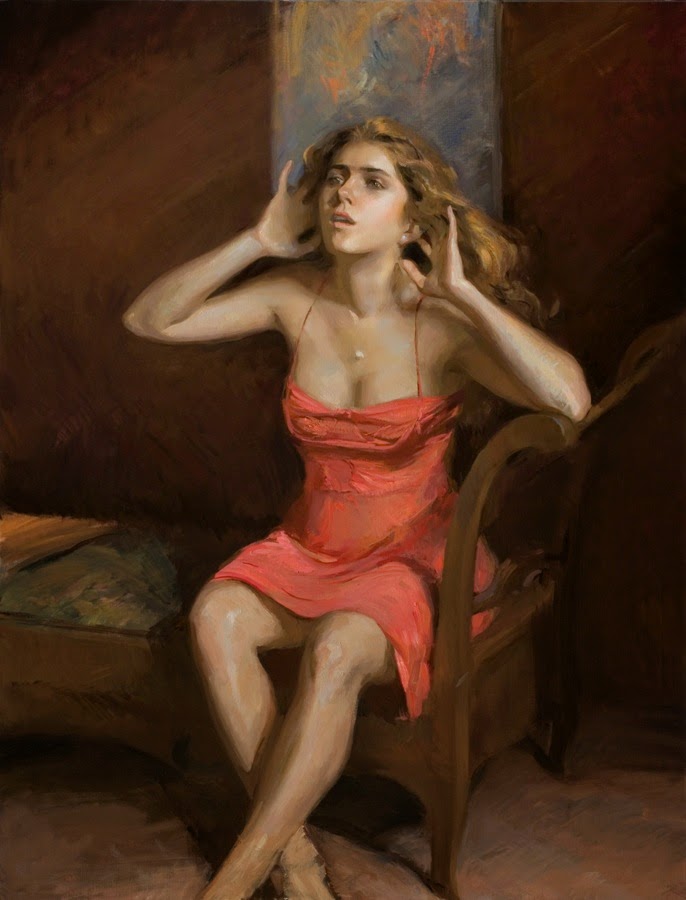
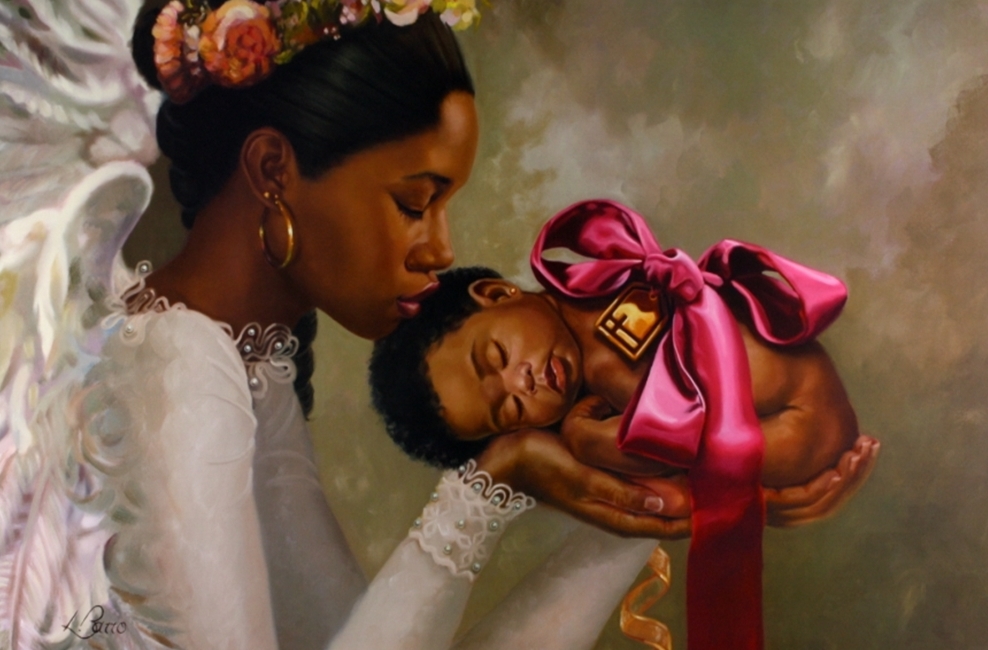
Henry Battle, a.k.a. Hbatto, a Californian native and well traveled Air Force veteran, now rooted in Atlanta GA, describes his style as richly realistic figurative snapshots of life. His subject matter ranges from spiritual and family-oriented, to romantic moments that he freezes in time.

Read More

Henry Lee Battle | Figurative painter


Henry Battle, a.k.a. Hbatto, a Californian native and well traveled Air Force veteran, now rooted in Atlanta GA, describes his style as richly realistic figurative snapshots of life. His subject matter ranges from spiritual and family-oriented, to romantic moments that he freezes in time.

Dalai Lama: "Quando perdi, non perdere la lezione"!

Dalai Lama: "Quando perdi, non perdere la lezione"!

Ci sono solo due giorni all’anno in cui non puoi fare niente: uno si chiama ieri, l’altro si chiama domani, perciò oggi è il giorno giusto per amare, credere, fare e, principalmente, vivere.
La felicità è una combinazione di pace interiore, disponibilità economiche e, soprattutto, pace mondiale.
Benché ci si possa trovare in un ambiente ostile, se l'atteggiamento mentale è fermo e stabile, l'ostilità non sarà causa di grande disturbo.
Di fronte alla distruzione del mio popolo, mi dedico nell'esilio alla sola linea d'azione che mi è stata lasciata: ricordare al mondo per mezzo delle Nazioni Unite e di questo libro, quel che è accaduto e sta accadendo nel Tibet: e far piani per il futuro.

Andrew Benyei
Andrew Benyei

Read More

Dalai Lama: "Quando perdi, non perdere la lezione"!

Ci sono solo due giorni all’anno in cui non puoi fare niente: uno si chiama ieri, l’altro si chiama domani, perciò oggi è il giorno giusto per amare, credere, fare e, principalmente, vivere.
La felicità è una combinazione di pace interiore, disponibilità economiche e, soprattutto, pace mondiale.
Benché ci si possa trovare in un ambiente ostile, se l'atteggiamento mentale è fermo e stabile, l'ostilità non sarà causa di grande disturbo.
Di fronte alla distruzione del mio popolo, mi dedico nell'esilio alla sola linea d'azione che mi è stata lasciata: ricordare al mondo per mezzo delle Nazioni Unite e di questo libro, quel che è accaduto e sta accadendo nel Tibet: e far piani per il futuro.

Andrew Benyei
Andrew Benyei

Angel Ramiro Sanchez, 1974 | Figurative painter

Angel Ramiro Sanchez, 1974 | Figurative painter


Venezuelan painter Angel Ramiro Sanchez was born in 1974 in Maracaibo, Venezuela. At age six was accepted with full scholarship into the Instituto the Niños Cantores del Zulia, school for musically gifted children.
At age fourteen he began five years of apprenticeship with the realist painter, Abdon J. Romero, an eminent specialist in murals for churches and public buildings.
In 1993, a study grant from Mgr. Gustavo Ocando Yamarte, Founder the Niños Cantores, enabled him to travel to Florence, Italy, where he studied at the renowned Accademia di Belle Arti, graduating Magna Cum Laude in 1997.

Read More

Angel Ramiro Sanchez, 1974 | Figurative painter


Venezuelan painter Angel Ramiro Sanchez was born in 1974 in Maracaibo, Venezuela. At age six was accepted with full scholarship into the Instituto the Niños Cantores del Zulia, school for musically gifted children.
At age fourteen he began five years of apprenticeship with the realist painter, Abdon J. Romero, an eminent specialist in murals for churches and public buildings.
In 1993, a study grant from Mgr. Gustavo Ocando Yamarte, Founder the Niños Cantores, enabled him to travel to Florence, Italy, where he studied at the renowned Accademia di Belle Arti, graduating Magna Cum Laude in 1997.

André Derain: "The substance of painting is light"

André Derain: "The substance of painting is light"


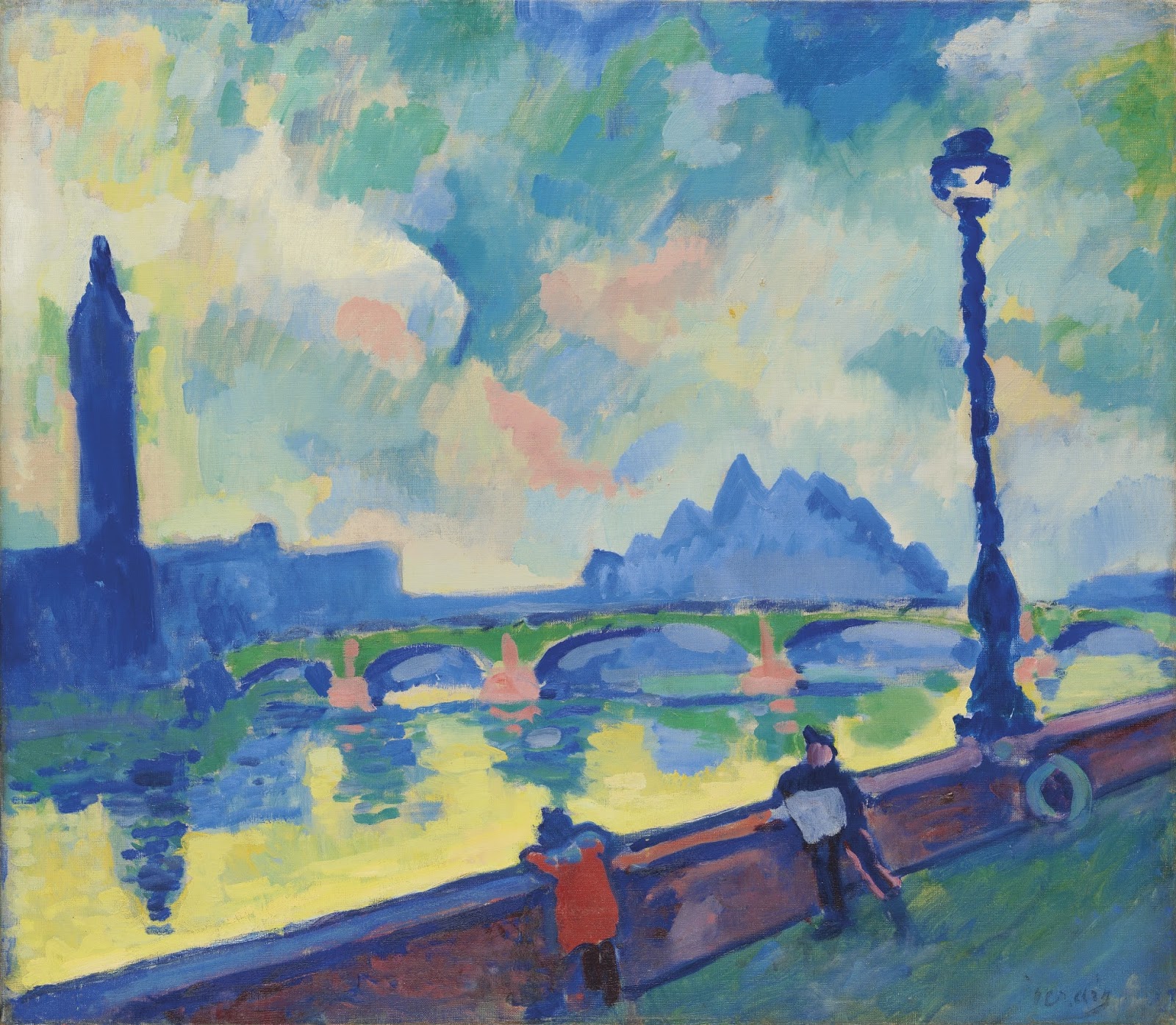
"Fauvism was our ordeal by fire... colours became charges of dynamite. They were expected to charge light... The great merit of this method was to free the picture from all imitative and conventional contact".
"It was the era of photography. This may have influenced us, and played a part in our reaction against anything resembling a snapshot of life".

Read More

André Derain: "The substance of painting is light"


"Fauvism was our ordeal by fire... colours became charges of dynamite. They were expected to charge light... The great merit of this method was to free the picture from all imitative and conventional contact".
"It was the era of photography. This may have influenced us, and played a part in our reaction against anything resembling a snapshot of life".

André Derain | Portraits

André Derain | Portraits

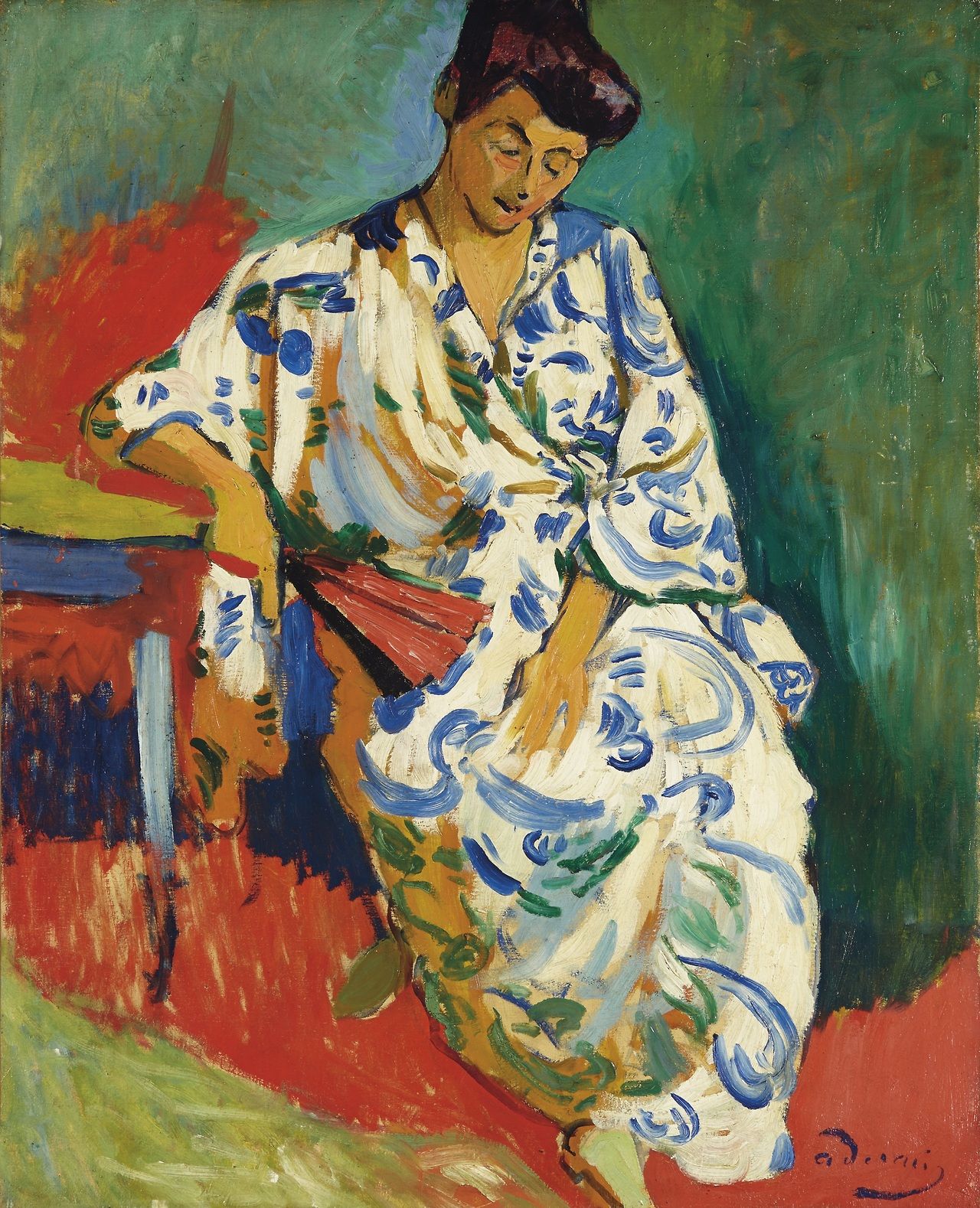
André Derain (1880-1954) was a French painter, sculptor and co-founder of Fauvism with Henri Matisse (1869-1954).
Derain and Matisse worked together through the summer of 1905 in the Mediterranean village of Collioure and later that year displayed their highly innovative paintings at the Salon d'Automne.
The vivid, unnatural colors led the critic Louis Vauxcelles to derisively dub their works as les Fauves, or "the wild beasts", marking the start of the Fauve movement.


Read More

André Derain | Portraits

André Derain (1880-1954) was a French painter, sculptor and co-founder of Fauvism with Henri Matisse (1869-1954).
Derain and Matisse worked together through the summer of 1905 in the Mediterranean village of Collioure and later that year displayed their highly innovative paintings at the Salon d'Automne.
The vivid, unnatural colors led the critic Louis Vauxcelles to derisively dub their works as les Fauves, or "the wild beasts", marking the start of the Fauve movement.


Francisco De Zurbarán | Baroque painter

Francisco De Zurbarán | Baroque painter

Francisco de Zurbarán (baptized November 7, 1598 - August 27, 1664) was a Spanish painter.
He is known primarily for his religious paintings depicting monks, nuns, and martyrs, and for his still-lifes. Zurbarán gained the nickname Spanish Caravaggio, owing to the forceful, realistic use of chiaroscuro in which he excelled.
Zurbarán was born in 1598 in Fuente de Cantos, Extremadura; he was baptized on November 7 of that year.
His parents were Luis de Zurbarán, a haberdasher, and his wife, Isabel Márquez.
In childhood he set about imitating objects with charcoal.
In 1614 his father sent him to Seville to apprentice for three years with Pedro Díaz de Villanueva, an artist of whom very little is known.


Read More

Francisco De Zurbarán | Baroque painter

Francisco de Zurbarán (baptized November 7, 1598 - August 27, 1664) was a Spanish painter.
He is known primarily for his religious paintings depicting monks, nuns, and martyrs, and for his still-lifes. Zurbarán gained the nickname Spanish Caravaggio, owing to the forceful, realistic use of chiaroscuro in which he excelled.
Zurbarán was born in 1598 in Fuente de Cantos, Extremadura; he was baptized on November 7 of that year.
His parents were Luis de Zurbarán, a haberdasher, and his wife, Isabel Márquez.
In childhood he set about imitating objects with charcoal.
In 1614 his father sent him to Seville to apprentice for three years with Pedro Díaz de Villanueva, an artist of whom very little is known.


Auguste Charpentier (1813-1880)

Auguste Charpentier (1813-1880)


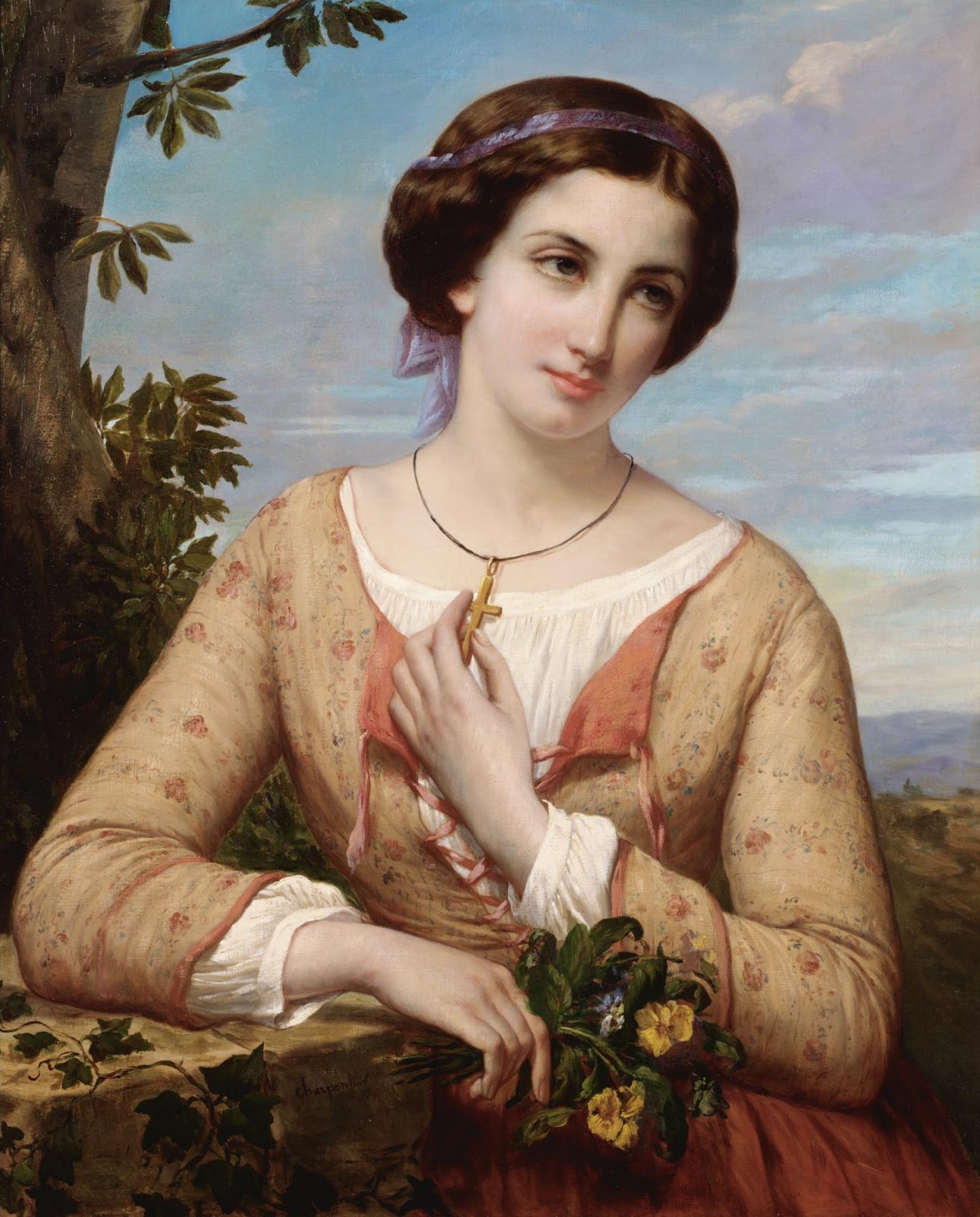
Auguste Charpentier was a French painter, engraver and designer.
Charpentier studied under the direction of Jean-Auguste-Dominique Ingres and François Gérard at the École beaux-arts de Paris.
He exhibited at the Paris Salon from 1833-1870, and was awarded a second-class medal in 1840.

Read More

Auguste Charpentier (1813-1880)


Auguste Charpentier was a French painter, engraver and designer.
Charpentier studied under the direction of Jean-Auguste-Dominique Ingres and François Gérard at the École beaux-arts de Paris.
He exhibited at the Paris Salon from 1833-1870, and was awarded a second-class medal in 1840.

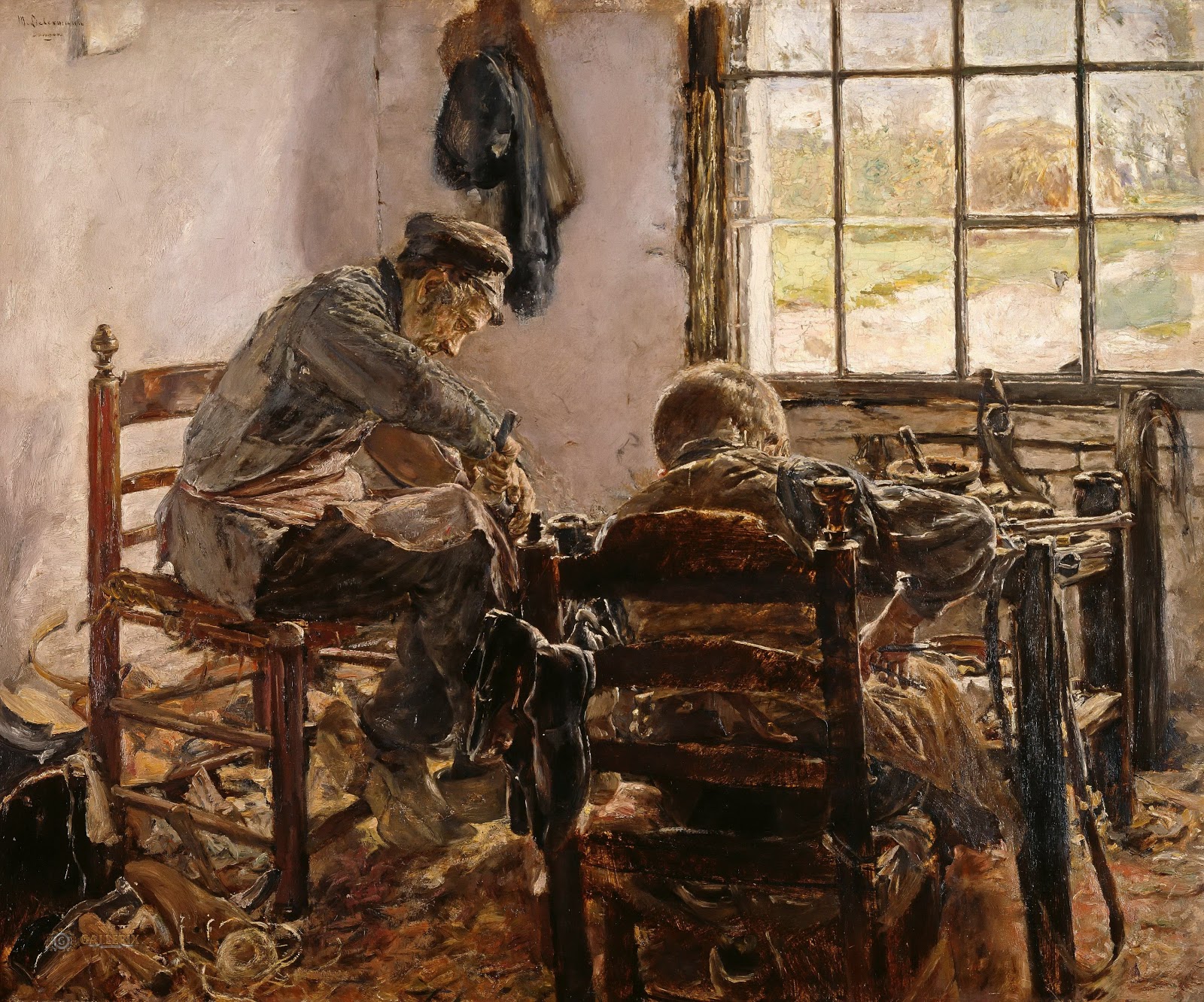
Max Liebermann (1847-1935) | Vita ed Opere

Max Liebermann (1847-1935) | Vita ed Opere

Il pittore Tedesco Max Liebermann nacque in una famiglia ebraica. Studiò a Berlino e a Weimar, poi, attratto dalle innovazioni della pittura francese, dal 1873-1878 soggiornò a Parigi.
Tornato in Germania, si stabilì dapprima a Monaco poi a Berlino.
In questi anni non fu l'impressionismo a richiamare la sua attenzione, quanto il realismo di Gustave Courbet e di Jean-François Millet, di cui apprezzò particolarmente il messaggio sociale.


Read More

Max Liebermann (1847-1935) | Vita ed Opere

Il pittore Tedesco Max Liebermann nacque in una famiglia ebraica. Studiò a Berlino e a Weimar, poi, attratto dalle innovazioni della pittura francese, dal 1873-1878 soggiornò a Parigi.
Tornato in Germania, si stabilì dapprima a Monaco poi a Berlino.
In questi anni non fu l'impressionismo a richiamare la sua attenzione, quanto il realismo di Gustave Courbet e di Jean-François Millet, di cui apprezzò particolarmente il messaggio sociale.


Giorgio Vasari | The Adoration of the Magi, 1566-1567

Giorgio Vasari | The Adoration of the Magi, 1566-1567


Title: The Adoration of the Magi
Artist: Giorgio Vasari🎨 (Italian Mannerist Writer and Painter, 1511-1574)
Date created: 1566-1567
Medium: Oil on panel
Dimensions: 65.00 x 48.00 cm (framed: 95.00 x 69.00 x 10.00 cm)
Current location: Scottish National Gallery

This panel is an autograph, small-scale replica of an altarpiece painted in 1566-7 for the newly elected Pope Pius V, which was destined for the pope’s burial chapel in the church of Santa Croce in his native town of Bosco Marengo in Piemonte.

Read More

Giorgio Vasari | The Adoration of the Magi, 1566-1567


Title: The Adoration of the Magi
Artist: Giorgio Vasari🎨 (Italian Mannerist Writer and Painter, 1511-1574)
Date created: 1566-1567
Medium: Oil on panel
Dimensions: 65.00 x 48.00 cm (framed: 95.00 x 69.00 x 10.00 cm)
Current location: Scottish National Gallery

This panel is an autograph, small-scale replica of an altarpiece painted in 1566-7 for the newly elected Pope Pius V, which was destined for the pope’s burial chapel in the church of Santa Croce in his native town of Bosco Marengo in Piemonte.

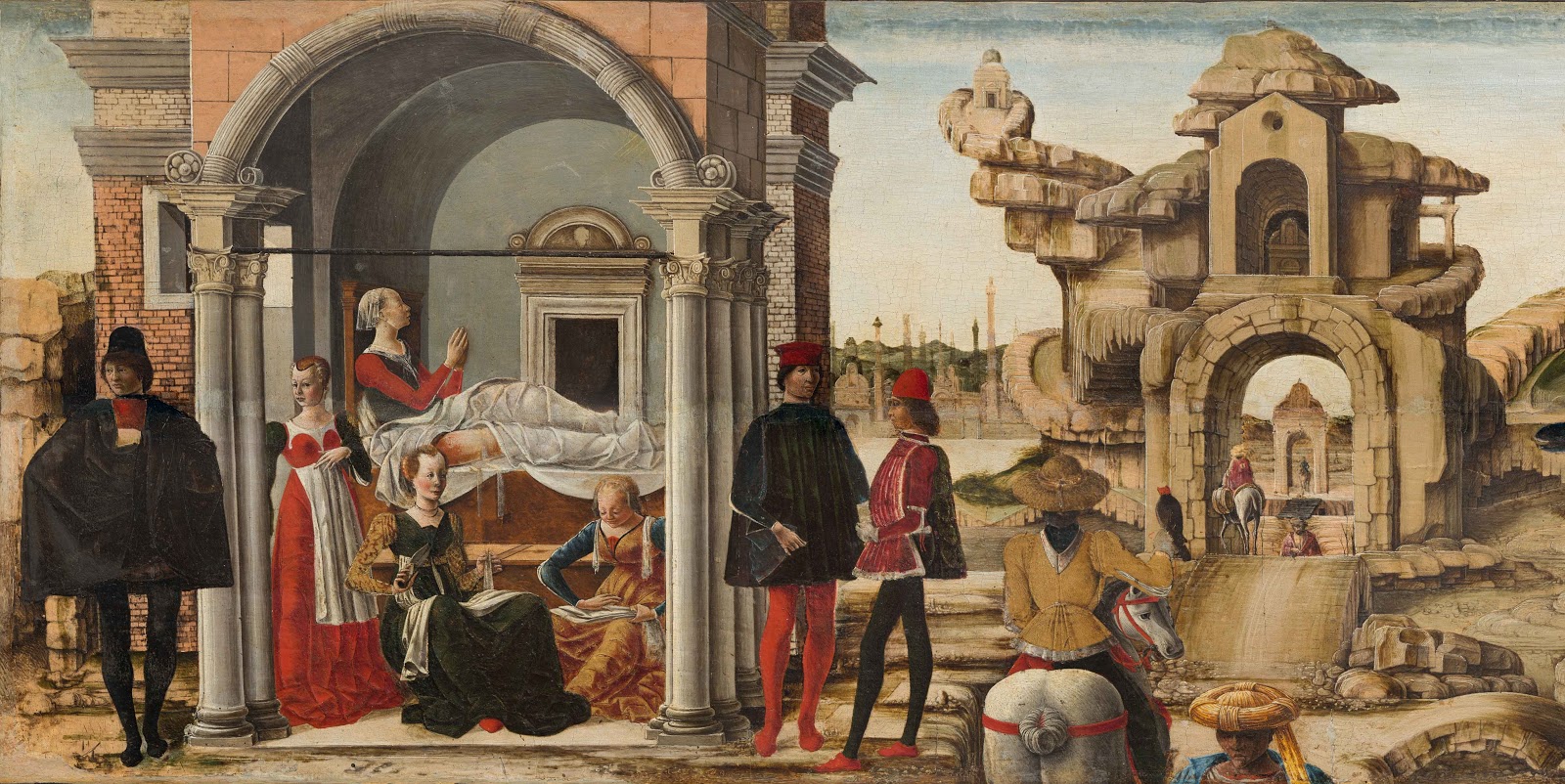
Ercole de' Roberti | The miracles of St Vincent Ferrer, 1473

Ercole de' Roberti | The miracles of St Vincent Ferrer, 1473


Author: Ercole de' Roberti (Italian Early Renaissance painter, 1450-1496);
Title: The miracles of St Vincent Ferrer;
Date: 1473;
Medium:Tempera on wood;
Dimensions: 30 x 215 cm;
Current location: Vatican Museums

This work by Ercole de' Roberti forms the predella of the altarpiece painted by his teacher, Francesco del Cossa🎨, for the Griffoni Chapel in S. Petronio, Bologna in 1473.
The central panel is preserved in the National Gallery of London, while the side panels are in the Pinacoteca of Brera in Milan.

Read More

Ercole de' Roberti | The miracles of St Vincent Ferrer, 1473


Author: Ercole de' Roberti (Italian Early Renaissance painter, 1450-1496);
Title: The miracles of St Vincent Ferrer;
Date: 1473;
Medium:Tempera on wood;
Dimensions: 30 x 215 cm;
Current location: Vatican Museums

This work by Ercole de' Roberti forms the predella of the altarpiece painted by his teacher, Francesco del Cossa🎨, for the Griffoni Chapel in S. Petronio, Bologna in 1473.
The central panel is preserved in the National Gallery of London, while the side panels are in the Pinacoteca of Brera in Milan.

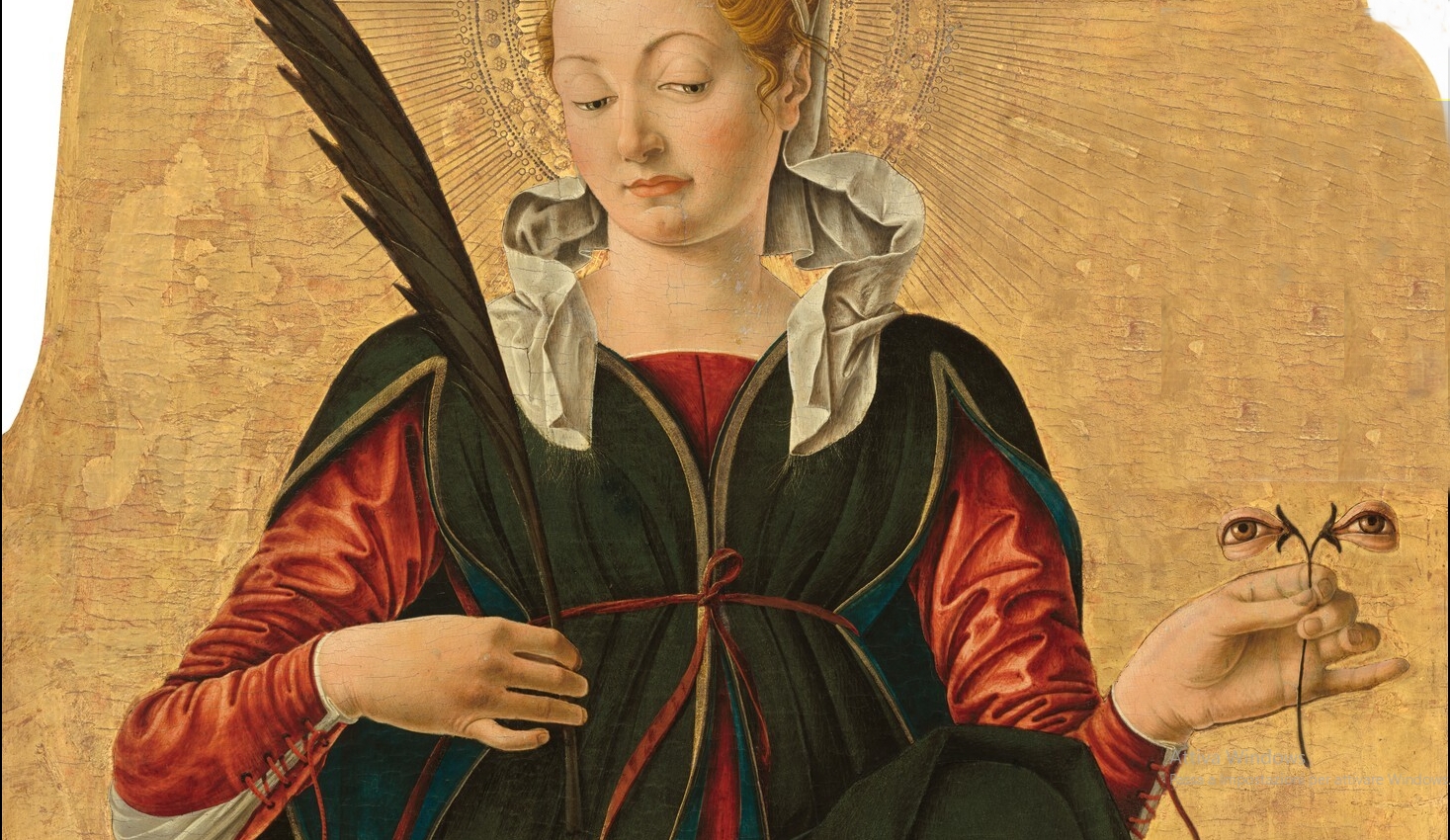
Francesco del Cossa | Saint Lucy, ca. 1473/1474

Francesco del Cossa | Saint Lucy, ca. 1473/1474


Artist: Francesco del Cossa (Italian Early Renaissance painter, 1435-1477);
Title: Saint Lucy / Santa Lucia;
Date: c. 1473-1474;
Medium: Tempera on poplar panel;
Dimensions overall: 77.2 × 56 cm (30 3/8 × 22 1/16 in.);
Sold: May 1936 to the Samuel H. Kress Foundation, New York;
Gift: 1939 to The National Gallery of Art, Washington DC;
Current location: The National Gallery of Art, Washington DC.

This work originally formed part of the Griffoni Altarpiece commissioned by Floriano Griffoni for his family chapel in the church of San Petronio in Bologna.

Read More

Francesco del Cossa | Saint Lucy, ca. 1473/1474


Artist: Francesco del Cossa (Italian Early Renaissance painter, 1435-1477);
Title: Saint Lucy / Santa Lucia;
Date: c. 1473-1474;
Medium: Tempera on poplar panel;
Dimensions overall: 77.2 × 56 cm (30 3/8 × 22 1/16 in.);
Sold: May 1936 to the Samuel H. Kress Foundation, New York;
Gift: 1939 to The National Gallery of Art, Washington DC;
Current location: The National Gallery of Art, Washington DC.

This work originally formed part of the Griffoni Altarpiece commissioned by Floriano Griffoni for his family chapel in the church of San Petronio in Bologna.

Moïse Kisling | Modern painter

Moïse Kisling | Modern painter

Moïse Kisling (1891-1953), born Mojżesz Kisling, was a Polish-born French painter.
He moved to Paris in 1910 at the age of 19, and became a French citizen in 1915, after serving and being wounded with the French Foreign Legion in World War I.
He emigrated to the United States in 1940, after the fall of France, and returned there in 1946.
Born in Kraków, Austria-Hungary, he studied at the School of Fine Arts in Kraków.
His teachers encouraged the young man to go to Paris, France, considered the international center for artistic creativity in the early 20th century.


Read More

Moïse Kisling | Modern painter

Moïse Kisling (1891-1953), born Mojżesz Kisling, was a Polish-born French painter.
He moved to Paris in 1910 at the age of 19, and became a French citizen in 1915, after serving and being wounded with the French Foreign Legion in World War I.
He emigrated to the United States in 1940, after the fall of France, and returned there in 1946.
Born in Kraków, Austria-Hungary, he studied at the School of Fine Arts in Kraków.
His teachers encouraged the young man to go to Paris, France, considered the international center for artistic creativity in the early 20th century.


Tondo Art

Tondo Art

Woman with wax tablets and stylus, so called Sappho | Fresco | Pompeii, Naples, National Archaeological Museum

A tondo (plural "tondi" or "tondos") is a Renaissance🎨 term for a circular work of art, either a painting or a sculpture.
The word derives from the Italian rotondo, "round".
The term is usually not used in English for small round paintings, but only those over about 60 cm (two feet) in diameter, thus excluding many round portrait miniatures - for sculpture the threshold is rather lower.

Read More

Tondo Art

Woman with wax tablets and stylus, so called Sappho | Fresco | Pompeii, Naples, National Archaeological Museum

A tondo (plural "tondi" or "tondos") is a Renaissance🎨 term for a circular work of art, either a painting or a sculpture.
The word derives from the Italian rotondo, "round".
The term is usually not used in English for small round paintings, but only those over about 60 cm (two feet) in diameter, thus excluding many round portrait miniatures - for sculpture the threshold is rather lower.

Betto Lotti | Romantic Realist painter

Betto Lotti | Romantic Realist painter

Benedetto (Betto) Lotti (Taggia, July 12, 1894 - Como, 1977) was an Italian painter and engraver who belonged to the art movement called Novecento Italiano.

Family and early

Betto Lotti was the son of Vincenzo, art teacher, headmaster and painter, and Vittoria dei Marchesi Curlo, both coming from the region of Liguria.
Due to fact that his father was working for the state, the family was constrained to move constantly and the young man had to attend schools in different Italian cities.


Read More

Betto Lotti | Romantic Realist painter

Benedetto (Betto) Lotti (Taggia, July 12, 1894 - Como, 1977) was an Italian painter and engraver who belonged to the art movement called Novecento Italiano.

Family and early

Betto Lotti was the son of Vincenzo, art teacher, headmaster and painter, and Vittoria dei Marchesi Curlo, both coming from the region of Liguria.
Due to fact that his father was working for the state, the family was constrained to move constantly and the young man had to attend schools in different Italian cities.


Giovanni Bellini | Madonna and Child, 1470

Giovanni Bellini | Madonna and Child, 1470


Artist: Giovanni Bellini (Italian High Renaissance painter, ca.1430-1516)
Date:ca. 1470
Medium: Tempera, oil, and gold on wood
Dimensions: 21 1/4 x 15 3/4 in. (54 x 40 cm) (31 x 26 inches framed)
Classification: Paintings
Current location: The Metropolitan Museum of Art.

This early work by the Venetian painter, Giovanni Bellini, reveals the profound influence of his brother-in-law, the Paduan master Andrea Mantegna, both in the figure types and the inclusion of the garland.

Read More

Giovanni Bellini | Madonna and Child, 1470


Artist: Giovanni Bellini (Italian High Renaissance painter, ca.1430-1516)
Date:ca. 1470
Medium: Tempera, oil, and gold on wood
Dimensions: 21 1/4 x 15 3/4 in. (54 x 40 cm) (31 x 26 inches framed)
Classification: Paintings
Current location: The Metropolitan Museum of Art.

This early work by the Venetian painter, Giovanni Bellini, reveals the profound influence of his brother-in-law, the Paduan master Andrea Mantegna, both in the figure types and the inclusion of the garland.

Antonio Sicurezza (1905-1979) | Figurative painter

Antonio Sicurezza (1905-1979) | Figurative painter


Antonio Sicurezza was an Italian painter🎨 representative for the contemporary figurative art of the Lazio region, Italy.
He studied at the Academy of Fine Arts in Naples, winning a scholarship as a worthy competitor among the four faculties. He obtained the diploma in painting under the guidance of the masters Carlo Siviero, Vincenzo Volpe, Vincenzo Migliaro and Paolo Vetri.
The first contact with the territory of Formia was in 1933–1934, when he was called to paint the chapel of St. Anthony in the church of Maranola. Here he met Virginia Mastrogiovanni whom he married in 1934.

Read More

Antonio Sicurezza (1905-1979) | Figurative painter


Antonio Sicurezza was an Italian painter🎨 representative for the contemporary figurative art of the Lazio region, Italy.
He studied at the Academy of Fine Arts in Naples, winning a scholarship as a worthy competitor among the four faculties. He obtained the diploma in painting under the guidance of the masters Carlo Siviero, Vincenzo Volpe, Vincenzo Migliaro and Paolo Vetri.
The first contact with the territory of Formia was in 1933–1934, when he was called to paint the chapel of St. Anthony in the church of Maranola. Here he met Virginia Mastrogiovanni whom he married in 1934.

Leonardo da Vinci | Virgin and laughing Child, 1465

Leonardo da Vinci | Virgin and laughing Child, 1465


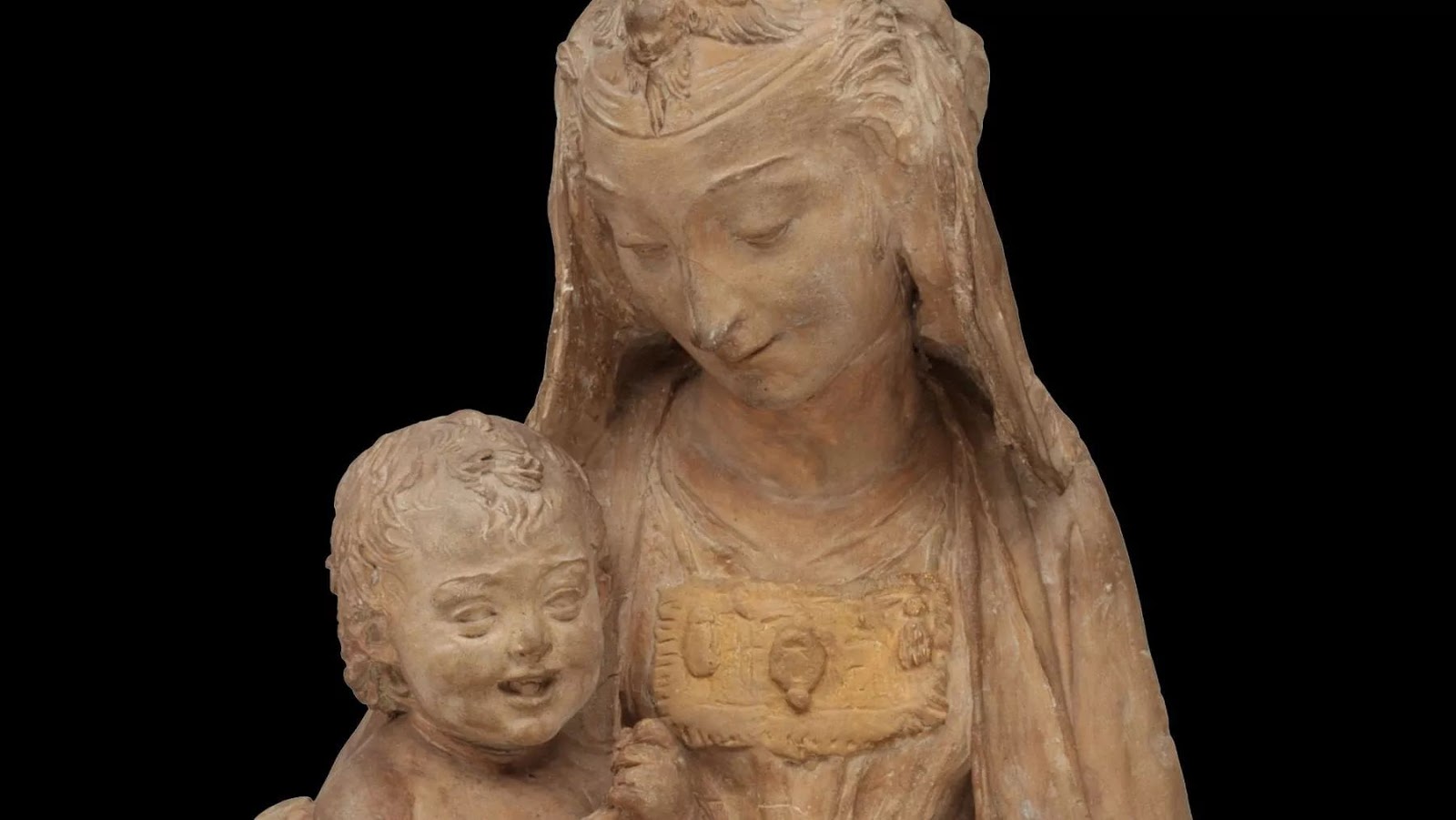
This little masterpiece known as The Virgin with the Laughing Child belongs to London’s Victoria and Albert Museum has been a part of the institution’s collection since 1858, and has attributed by Francesco Caglioti to Leonardo da Vinci (1452-1519).

Read More

Leonardo da Vinci | Virgin and laughing Child, 1465


This little masterpiece known as The Virgin with the Laughing Child belongs to London’s Victoria and Albert Museum has been a part of the institution’s collection since 1858, and has attributed by Francesco Caglioti to Leonardo da Vinci (1452-1519).

Gerard van Honthorst | Adoration of the Christ Child, 1619-1620

Gerard van Honthorst | Adoration of the Christ Child, 1619-1620

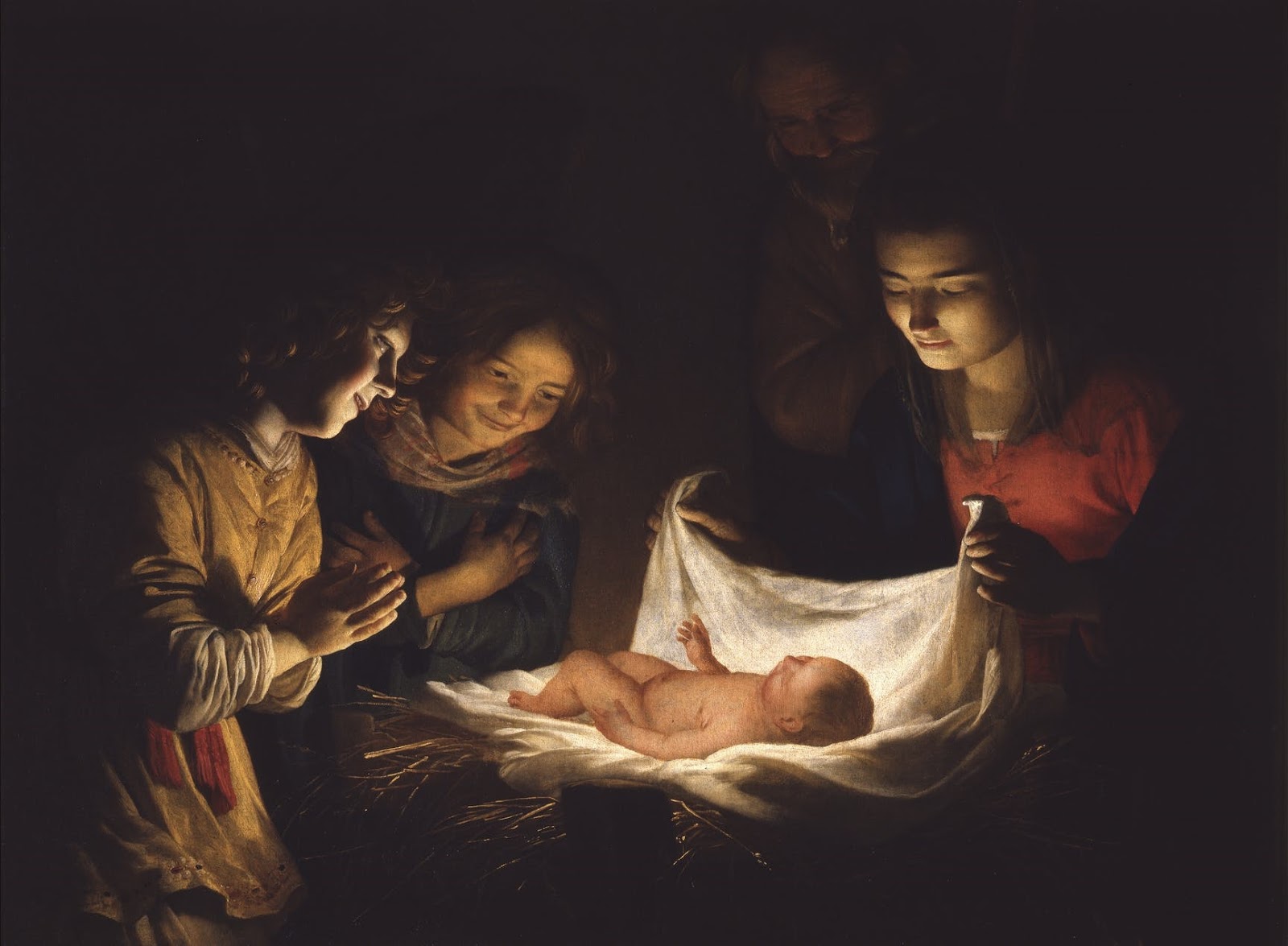
The Dutch painter Gerard van Honthorst (1590-1656) was called Gherardo delle Notti (literally Gerard of the nights) because of his peculiar compositions in nocturnal lighting influenced by Caravaggio that he met in Rome in the first decades of the 17th century.
During his stay in Italy, Honthorst met Grand Duke Cosimo II de’ Medici, who bought some of his works in 1620, among which probably this Adoration of the Child.
The divine light spread from the newborn’s body softens each feature, in particular the facial ones of the Virgin.

Gerard van Honthorst | Adoration of the Christ Child, 1619-1620 | Uffizi Gallery, Florence

Read More

Gerard van Honthorst | Adoration of the Christ Child, 1619-1620

The Dutch painter Gerard van Honthorst (1590-1656) was called Gherardo delle Notti (literally Gerard of the nights) because of his peculiar compositions in nocturnal lighting influenced by Caravaggio that he met in Rome in the first decades of the 17th century.
During his stay in Italy, Honthorst met Grand Duke Cosimo II de’ Medici, who bought some of his works in 1620, among which probably this Adoration of the Child.
The divine light spread from the newborn’s body softens each feature, in particular the facial ones of the Virgin.

Gerard van Honthorst | Adoration of the Christ Child, 1619-1620 | Uffizi Gallery, Florence

Michelangelo Buonarroti | Tondo Doni, 1505-1506

Michelangelo Buonarroti | Tondo Doni, 1505-1506


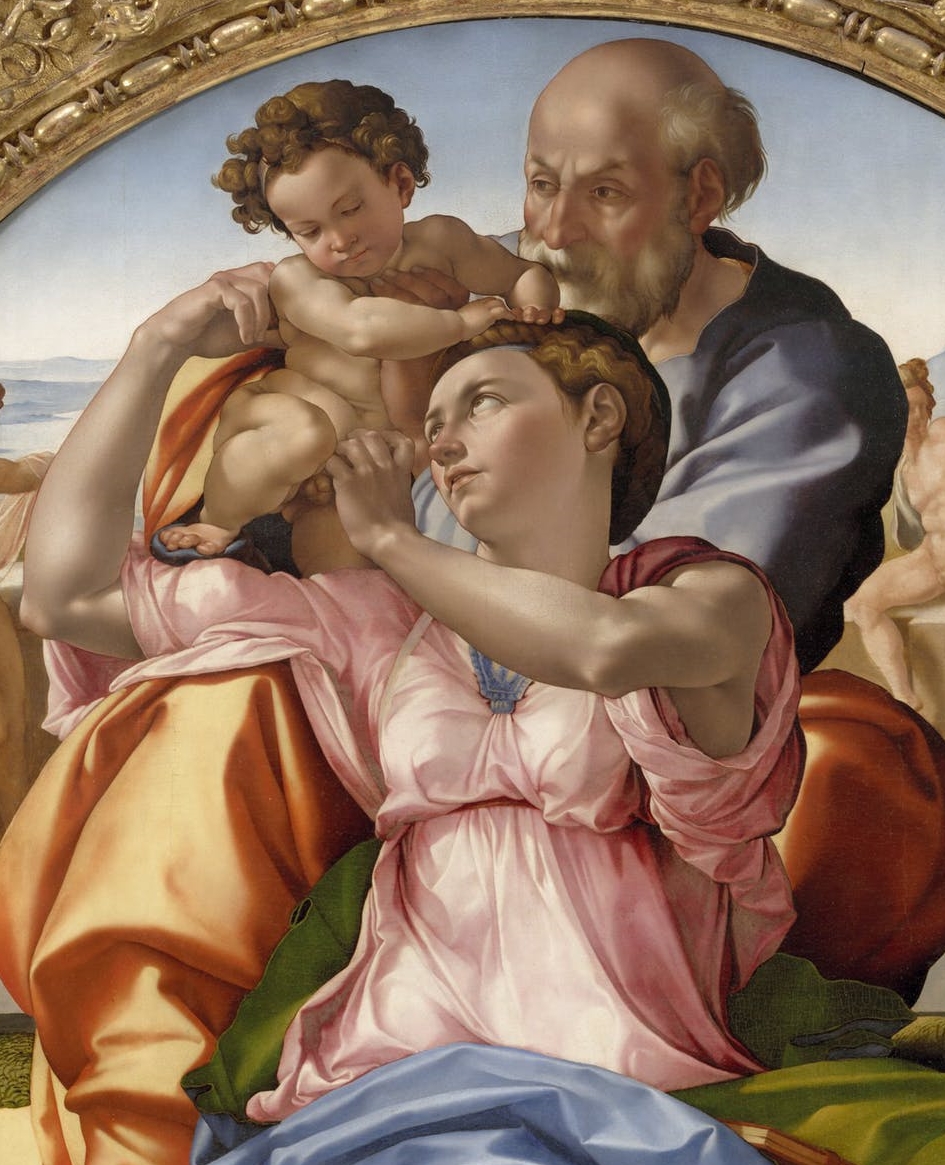
Michelangelo painted this Holy Family for a Florentine merchant, Agnolo Doni, whose prestigious marriage to Maddalena Strozzi in 1504 took place in a period that was crucial for early 16th-century Florentine art.
The presence in the city of Leonardo, Michelangelo and Raphael together, boosted the already lively Florentine art scene, which in the first decade of the century experienced a period of great cultural fervour.

Read More

Michelangelo Buonarroti | Tondo Doni, 1505-1506


Michelangelo painted this Holy Family for a Florentine merchant, Agnolo Doni, whose prestigious marriage to Maddalena Strozzi in 1504 took place in a period that was crucial for early 16th-century Florentine art.
The presence in the city of Leonardo, Michelangelo and Raphael together, boosted the already lively Florentine art scene, which in the first decade of the century experienced a period of great cultural fervour.

Barbara Longhi (Italian Mannerist painter, 1552-1638)

Barbara Longhi (Italian Mannerist painter, 1552-1638)


Barbara Longhi was an Italian painter🎨.
She was much admired in her lifetime as a portraitist, although most of her portraits are now lost or unattributed.
Her work, such as her many Madonna and Child paintings, earned her a fine reputation as an artist.
Longhi is one of the few female artists mentioned in the second edition (1568) of Italian painter and art historian Giorgio Vasari's epic work Lives of the Most Excellent Painters, Sculptors, and Architects. Vasari writes that Longhi "draws very well, and she has begun to colour some things with good grace and manner".


But as Germaine Greer discussed in her The Obstacle Race: The Fortunes of Women Painters and Their Work, such "haphazard" selections of women artists including Longhi rarely offered "serious criticism of their achievement".
Greer then offered her own assessment: "Barbara's output was considerable, all small pictures, remarkable for their purity of line and soft brilliance of colour" and "Barbara Longhi brings to her extremely conservative picture-making a simplicity and intensity of feeling quite beyond her mannerist father and her dilettante brother".


The Museo d'Arte della Città di Ravenna owns seven works by Barbara Longhi, as well as eleven of her father Luca's and three by her brother Francesco.
Her work is represented in the collections of the Musée du Louvre (Paris), Pinacoteca di Brera (Milan), Pinacoteca Nazionale di Bologna, Museo Biblioteca del Grappa, Walters Art Museum (Baltimore, Maryland) and Indianapolis Museum of Art, and also in the Santa Maria Maggiore (Ravenna). | © Wikipedia


Barbara Longhi (Ravenna, 21 settembre 1552 - Ravenna, 23 dicembre 1638) è stata una pittrice Italiana.
Fu stimata ritrattista, ma solo poche sue opere ci sono pervenute, in parte riconducibili all'attività svolta nella bottega del padre, dove le era affidato il compito di produrre piccole tele su tema religioso, destinate alla devozione privata.
Nacque a Ravenna, dove trascorse l'intera sua esistenza.
Era figlia di Luca (1507-1580), noto pittore manierista🎨 e di Bernardina Baronzelli.
Come suo fratello maggiore Francesco (1544-1618), ricevette le prime nozioni pittoriche nella bottega paterna.
Collaborò anche alla realizzazione di pale d'altare, entrando così in contatto con il processo di commercializzazione, che allora si svolgeva attraverso mecenati.
Completò la sua formazione nel 1570, ma i suoi legami con la famiglia e con la bottega del padre rimasero forti.
Si conosce poco della sua vita e s'ignora se si sia mai sposata.
Della sua produzione come ritrattista ci è pervenuto solo il ritratto di un Monaco Camaldolese - uno dei pochi che include una data, anche se l'ultima cifra non è del tutto leggibile (1570 o 1573?) - e unico raffigurante un soggetto maschile adulto.


Lo ha ritratto nel suo studio, vestito del saio bianco camaldolese, tra i suoi libri aperti e scritti a mano. Questo dipinto si conserva oggi al Museo d'arte della città di Ravenna.
Due sue tele di piccolo formato, a soggetto religioso, sono state da lei siglate e una è datata. Una pala d'altare a Russi è firmata per esteso e datata 1618.
La Santa Caterina d'Alessandria, oggi al Museo d'arte della città di Ravenna, proviene dal monastero di Classe in Ravenna.
Nelle Nozze di Cana, dipinto ad olio su un muro del refettorio dello stesso convento di Classe, opera di Luca Longhi del 1579-1580 poi ultimata da suo figlio Francesco, secondo la tradizione riconosciuta la donna in primo piano, rivolta verso lo spettatore, sarebbe un ritratto di Barbara Longhi. | © Wikipedia

Luca Longhi (1507-1580) | Le Nozze di Cana | particolare | Ritratto della figlia Barbara, 1580

Read More

Barbara Longhi (Italian Mannerist painter, 1552-1638)


Barbara Longhi was an Italian painter🎨.
She was much admired in her lifetime as a portraitist, although most of her portraits are now lost or unattributed.
Her work, such as her many Madonna and Child paintings, earned her a fine reputation as an artist.
Longhi is one of the few female artists mentioned in the second edition (1568) of Italian painter and art historian Giorgio Vasari's epic work Lives of the Most Excellent Painters, Sculptors, and Architects. Vasari writes that Longhi "draws very well, and she has begun to colour some things with good grace and manner".


But as Germaine Greer discussed in her The Obstacle Race: The Fortunes of Women Painters and Their Work, such "haphazard" selections of women artists including Longhi rarely offered "serious criticism of their achievement".
Greer then offered her own assessment: "Barbara's output was considerable, all small pictures, remarkable for their purity of line and soft brilliance of colour" and "Barbara Longhi brings to her extremely conservative picture-making a simplicity and intensity of feeling quite beyond her mannerist father and her dilettante brother".


The Museo d'Arte della Città di Ravenna owns seven works by Barbara Longhi, as well as eleven of her father Luca's and three by her brother Francesco.
Her work is represented in the collections of the Musée du Louvre (Paris), Pinacoteca di Brera (Milan), Pinacoteca Nazionale di Bologna, Museo Biblioteca del Grappa, Walters Art Museum (Baltimore, Maryland) and Indianapolis Museum of Art, and also in the Santa Maria Maggiore (Ravenna). | © Wikipedia


Barbara Longhi (Ravenna, 21 settembre 1552 - Ravenna, 23 dicembre 1638) è stata una pittrice Italiana.
Fu stimata ritrattista, ma solo poche sue opere ci sono pervenute, in parte riconducibili all'attività svolta nella bottega del padre, dove le era affidato il compito di produrre piccole tele su tema religioso, destinate alla devozione privata.
Nacque a Ravenna, dove trascorse l'intera sua esistenza.
Era figlia di Luca (1507-1580), noto pittore manierista🎨 e di Bernardina Baronzelli.
Come suo fratello maggiore Francesco (1544-1618), ricevette le prime nozioni pittoriche nella bottega paterna.
Collaborò anche alla realizzazione di pale d'altare, entrando così in contatto con il processo di commercializzazione, che allora si svolgeva attraverso mecenati.
Completò la sua formazione nel 1570, ma i suoi legami con la famiglia e con la bottega del padre rimasero forti.
Si conosce poco della sua vita e s'ignora se si sia mai sposata.
Della sua produzione come ritrattista ci è pervenuto solo il ritratto di un Monaco Camaldolese - uno dei pochi che include una data, anche se l'ultima cifra non è del tutto leggibile (1570 o 1573?) - e unico raffigurante un soggetto maschile adulto.


Lo ha ritratto nel suo studio, vestito del saio bianco camaldolese, tra i suoi libri aperti e scritti a mano. Questo dipinto si conserva oggi al Museo d'arte della città di Ravenna.
Due sue tele di piccolo formato, a soggetto religioso, sono state da lei siglate e una è datata. Una pala d'altare a Russi è firmata per esteso e datata 1618.
La Santa Caterina d'Alessandria, oggi al Museo d'arte della città di Ravenna, proviene dal monastero di Classe in Ravenna.
Nelle Nozze di Cana, dipinto ad olio su un muro del refettorio dello stesso convento di Classe, opera di Luca Longhi del 1579-1580 poi ultimata da suo figlio Francesco, secondo la tradizione riconosciuta la donna in primo piano, rivolta verso lo spettatore, sarebbe un ritratto di Barbara Longhi. | © Wikipedia

Luca Longhi (1507-1580) | Le Nozze di Cana | particolare | Ritratto della figlia Barbara, 1580

Sebastiano del Piombo | Mannerist painter

Sebastiano del Piombo | Mannerist painter


According to Vasari, the painter Sebastiano Luciani (1485-1547), known as Sebastiano del Piombo, was born in Venice.
A musician before becoming a painter, Vasari also states that he trained with Giovanni Bellini. His early works are influenced by the style of Giorgione, as is evident in his painting of Salome (National Gallery, London).
After the premature death of Giorgione, Sebastiano moved to Rome in 1511 on the suggestion of the banker Agostino Chigi, for whom he undertook the fresco decoration of the Villa Farnesina.

Read More

Sebastiano del Piombo | Mannerist painter


According to Vasari, the painter Sebastiano Luciani (1485-1547), known as Sebastiano del Piombo, was born in Venice.
A musician before becoming a painter, Vasari also states that he trained with Giovanni Bellini. His early works are influenced by the style of Giorgione, as is evident in his painting of Salome (National Gallery, London).
After the premature death of Giorgione, Sebastiano moved to Rome in 1511 on the suggestion of the banker Agostino Chigi, for whom he undertook the fresco decoration of the Villa Farnesina.

Istvan Sàndorfi | Hyper-Surrealist painter

Istvan Sàndorfi | Hyper-Surrealist painter

István Sándorfi (1948-2007) also known as Étienne Sandorfi, was a naturalised French painter of Hungarian origin.
He received his formal art education at École nationale supérieure des Beaux-Arts and at École nationale supérieure des arts décoratifs in Paris.
He mastered what art critics now term hyperrealism. But he did so with his very own blend of Surreal elements.


Read More

Istvan Sàndorfi | Hyper-Surrealist painter

István Sándorfi (1948-2007) also known as Étienne Sandorfi, was a naturalised French painter of Hungarian origin.
He received his formal art education at École nationale supérieure des Beaux-Arts and at École nationale supérieure des arts décoratifs in Paris.
He mastered what art critics now term hyperrealism. But he did so with his very own blend of Surreal elements.


Camille Pissarro | Impressionist / Post-Impressionist painter

Camille Pissarro | Impressionist / Post-Impressionist painter

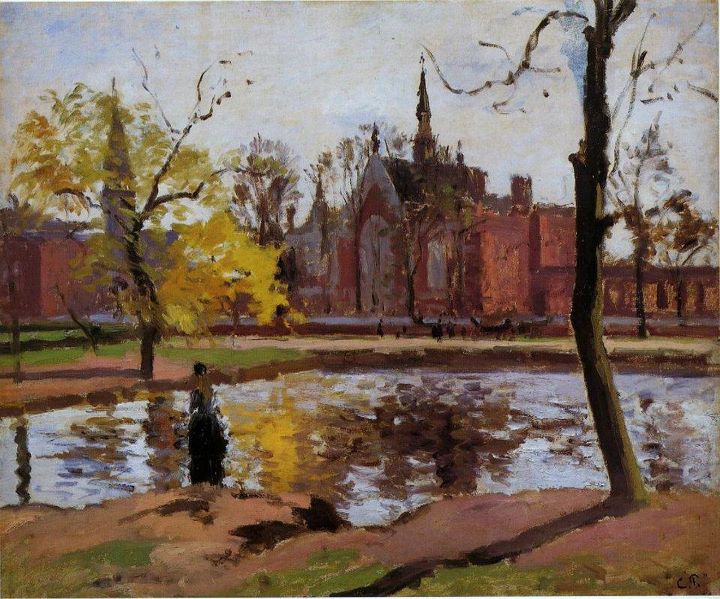
Camille Pissarro, in full Jacob-Abraham-Camille Pissarro (born July 10, 1830, St. Thomas, Danish West Indies-died Nov. 13, 1903, Paris, France), painter and printmaker who was a key figure in the history of Impressionism.
Pissarro was the only artist to show his work in all eight Impressionist group exhibitions; throughout his career he remained dedicated to the idea of such alternative forums of exhibition. He experimented with many styles, including a period when he adopted Georges Seurat’s "pointillist" approach.
A supportive friend and mentor to influential artists such as Paul Cézanne and Paul Gauguin, he was described by many who knew him as "Father Pissarro".


Read More

Camille Pissarro | Impressionist / Post-Impressionist painter

Camille Pissarro, in full Jacob-Abraham-Camille Pissarro (born July 10, 1830, St. Thomas, Danish West Indies-died Nov. 13, 1903, Paris, France), painter and printmaker who was a key figure in the history of Impressionism.
Pissarro was the only artist to show his work in all eight Impressionist group exhibitions; throughout his career he remained dedicated to the idea of such alternative forums of exhibition. He experimented with many styles, including a period when he adopted Georges Seurat’s "pointillist" approach.
A supportive friend and mentor to influential artists such as Paul Cézanne and Paul Gauguin, he was described by many who knew him as "Father Pissarro".


Simone Cantarini | Baroque painter

Simone Cantarini | Baroque painter

Simone Cantarini (1612-1648) was born in Pesaro, in the Marches, a region which was a crossroads for artists from many parts of Italy.
Cantarini began his artistic training quite young, probably 1623-1625, in the studio of Giovanni Giacomo Pandolfi (?1570-1640?), a painter of religious works who combined the local naturalism with the mannerist style of the late sixteenth century.
After a brief trip to Venice, Cantarini moved to the shop of Claudio Ridolfi (?1570-1644), a student of Paolo Veronese🎨 (1528-1588).


Read More

Simone Cantarini | Baroque painter

Simone Cantarini (1612-1648) was born in Pesaro, in the Marches, a region which was a crossroads for artists from many parts of Italy.
Cantarini began his artistic training quite young, probably 1623-1625, in the studio of Giovanni Giacomo Pandolfi (?1570-1640?), a painter of religious works who combined the local naturalism with the mannerist style of the late sixteenth century.
After a brief trip to Venice, Cantarini moved to the shop of Claudio Ridolfi (?1570-1644), a student of Paolo Veronese🎨 (1528-1588).


Guido Cagnacci | The Death of Cleopatra, 1645-55

Guido Cagnacci | The Death of Cleopatra, 1645-55

Artist: Guido Cagnacci (Italian, Santarcangelo di Romagna 1601-1663 Vienna)
Date: ca. 1645-55
Medium: Oil on canvas
Dimensions: 37 3/8 × 29 1/2 in. (95 × 75 cm)
Current location: The Metropolitan Museum of Art, Fifth Avenue in Gallery 637

The subject, from Plutarch's Lives (1st century A.D.), is Cleopatra's suicide by an asp bite following the defeat of her beloved Mark Antony at the battle of Actium.


Read More

Guido Cagnacci | The Death of Cleopatra, 1645-55

Artist: Guido Cagnacci (Italian, Santarcangelo di Romagna 1601-1663 Vienna)
Date: ca. 1645-55
Medium: Oil on canvas
Dimensions: 37 3/8 × 29 1/2 in. (95 × 75 cm)
Current location: The Metropolitan Museum of Art, Fifth Avenue in Gallery 637

The subject, from Plutarch's Lives (1st century A.D.), is Cleopatra's suicide by an asp bite following the defeat of her beloved Mark Antony at the battle of Actium.


Allegory of painting

Allegory of painting

Artemisia Gentileschi🎨 (Italian Baroque Era painter, 1593-1652) | Self Portrait as the Allegory of Painting, 1638 (detail) | Royal Collection

First attested in English in 1382, the word allegory comes from Latin allegoria, the latinisation of the Greek ἀλληγορία (allegoría), "veiled language, figurative", which in turn comes from both ἄλλος (allos), "another, different" and ἀγορεύω (agoreuo), "to harangue, to speak in the assembly", which originates from ἀγορά (agora), "assembly".

Giovanni Antonio Pellegrini (Italian Rococo Era painter, 1675-1741) | Allegory of Painting

As a literary device, an allegory is a metaphor in which a character, place or event is used to deliver a broader message about real-world issues and occurrences.
Allegory (in the sense of the practice and use of allegorical devices and works) has occurred widely throughout history in all forms of art, largely because it can readily illustrate or convey complex ideas and concepts in ways that are comprehensible or striking to its viewers, readers, or listeners.
Writers or speakers typically use allegories as literary devices or as rhetorical devices that convey (semi-)hidden or complex meanings through symbolic figures, actions, imagery, or events, which together create the moral, spiritual, or political meaning the author wishes to convey.
Many allegories use personifications of abstract concepts.

François Boucher (French Rococo Era painter, 1703-1770) | Cupids Allegory of Painting

Artemisia Gentileschi (Italian Baroque Era painter, 1593-1652) | Allegory of Painting

Domenico Corvi (Italian Rococo painter, 1721-1803) | Allegory of Painting

Artemisia Gentileschi (Italian Baroque Era painter, 1593-1652) | Self Portrait as an Allegory of Painting, 1635

Johannes Vermeer🎨 (Dutch Baroque Era painter, 1632-1675) | The Allegory of Painting, 1666

Johannes Vermeer (Dutch Baroque Era painter, 1632-1675) | The Allegory of Painting, 1666 (detail)

Johannes Vermeer (Dutch Baroque Era painter, 1632-1675) | The Allegory of Painting, 1666 (detail)

Johannes Vermeer (Dutch Baroque Era painter, 1632-1675) | The Allegory of Painting, 1666 (detail)

Johannes Vermeer (Dutch Baroque Era painter, 1632-1675) | The Allegory of Painting, 1666 (detail)

François Boucher (French Rococo Era painter, 1703-1770) | Allegory of Painting

Gerrit van Honthorst (Dutch Baroque Era painter, ca.1590-1656) | Allegory of painting

Rosalba Carriera (Italian Rococo Era painter, 1675-1757) | Allegory of Painting | National Gallery of Art

Artemisia Gentileschi (Italian Baroque Era painter, 1593-1652) | Self Portrait as the Allegory of Painting, 1638 | Royal Collection (detail)

Artemisia Gentileschi (Italian Baroque Era painter, 1593-1652) | Self Portrait as the Allegory of Painting, 1638 | Royal Collection

Frans van Mieris the elder (Dutch Golden Age painter, 1635-1681) | Allegory of Painting, 1661 | The Getty Museum

Frans van Mieris the elder (Dutch Golden Age painter, 1635-1681) | Allegory of Painting, 1661 (detail) | The Getty Museum

Frans van Mieris the elder (Dutch Golden Age painter, 1635-1681) | Allegory of Painting, 1661 (detail) | The Getty Museum

Francesco Trevisani (Italian Rococo Era painter, 1656-1746) | An allegory of painting

La parola allegorìa deriva dal greco antico αλληγορία, composto da ἀλλή + ἀγορεύω, letteralmente "un altro" + "parlare", vale a dire: parlare d'altro, leggere tra le righe, sottintendere qualcosa che non è espressamente indicato in un contesto determinato.
L'allegoria è quella figura retorica che esprime un concetto in altro modo (attraverso simboli).
L'allegoria è una figura retorica per cui, in letteratura, qualcosa di astratto viene espresso attraverso un'immagine concreta.
L'allegoria è spesso usata anche in altri campi artistici, dalla pittura alla scultura alle altre arti figurative.

Carlo Maratta (Italian Baroque Era painter, 1625-1713) | An allegory of Painting

Giovanni Martinelli (Italian Baroque Era painter, ca.1610-1659) | Allegory of painting | Uffizi

Simone Cantarini detto il Pesarese (Italian Baroque Era painter, 1612-1648) | Allegoria della Pittura

Read More

Allegory of painting

Artemisia Gentileschi🎨 (Italian Baroque Era painter, 1593-1652) | Self Portrait as the Allegory of Painting, 1638 (detail) | Royal Collection

First attested in English in 1382, the word allegory comes from Latin allegoria, the latinisation of the Greek ἀλληγορία (allegoría), "veiled language, figurative", which in turn comes from both ἄλλος (allos), "another, different" and ἀγορεύω (agoreuo), "to harangue, to speak in the assembly", which originates from ἀγορά (agora), "assembly".

Giovanni Antonio Pellegrini (Italian Rococo Era painter, 1675-1741) | Allegory of Painting

As a literary device, an allegory is a metaphor in which a character, place or event is used to deliver a broader message about real-world issues and occurrences.
Allegory (in the sense of the practice and use of allegorical devices and works) has occurred widely throughout history in all forms of art, largely because it can readily illustrate or convey complex ideas and concepts in ways that are comprehensible or striking to its viewers, readers, or listeners.
Writers or speakers typically use allegories as literary devices or as rhetorical devices that convey (semi-)hidden or complex meanings through symbolic figures, actions, imagery, or events, which together create the moral, spiritual, or political meaning the author wishes to convey.
Many allegories use personifications of abstract concepts.

François Boucher (French Rococo Era painter, 1703-1770) | Cupids Allegory of Painting

Artemisia Gentileschi (Italian Baroque Era painter, 1593-1652) | Allegory of Painting

Domenico Corvi (Italian Rococo painter, 1721-1803) | Allegory of Painting

Artemisia Gentileschi (Italian Baroque Era painter, 1593-1652) | Self Portrait as an Allegory of Painting, 1635

Johannes Vermeer🎨 (Dutch Baroque Era painter, 1632-1675) | The Allegory of Painting, 1666

Johannes Vermeer (Dutch Baroque Era painter, 1632-1675) | The Allegory of Painting, 1666 (detail)

Johannes Vermeer (Dutch Baroque Era painter, 1632-1675) | The Allegory of Painting, 1666 (detail)

Johannes Vermeer (Dutch Baroque Era painter, 1632-1675) | The Allegory of Painting, 1666 (detail)

Johannes Vermeer (Dutch Baroque Era painter, 1632-1675) | The Allegory of Painting, 1666 (detail)

François Boucher (French Rococo Era painter, 1703-1770) | Allegory of Painting

Gerrit van Honthorst (Dutch Baroque Era painter, ca.1590-1656) | Allegory of painting

Rosalba Carriera (Italian Rococo Era painter, 1675-1757) | Allegory of Painting | National Gallery of Art

Artemisia Gentileschi (Italian Baroque Era painter, 1593-1652) | Self Portrait as the Allegory of Painting, 1638 | Royal Collection (detail)

Artemisia Gentileschi (Italian Baroque Era painter, 1593-1652) | Self Portrait as the Allegory of Painting, 1638 | Royal Collection

Frans van Mieris the elder (Dutch Golden Age painter, 1635-1681) | Allegory of Painting, 1661 | The Getty Museum

Frans van Mieris the elder (Dutch Golden Age painter, 1635-1681) | Allegory of Painting, 1661 (detail) | The Getty Museum

Frans van Mieris the elder (Dutch Golden Age painter, 1635-1681) | Allegory of Painting, 1661 (detail) | The Getty Museum

Francesco Trevisani (Italian Rococo Era painter, 1656-1746) | An allegory of painting

La parola allegorìa deriva dal greco antico αλληγορία, composto da ἀλλή + ἀγορεύω, letteralmente "un altro" + "parlare", vale a dire: parlare d'altro, leggere tra le righe, sottintendere qualcosa che non è espressamente indicato in un contesto determinato.
L'allegoria è quella figura retorica che esprime un concetto in altro modo (attraverso simboli).
L'allegoria è una figura retorica per cui, in letteratura, qualcosa di astratto viene espresso attraverso un'immagine concreta.
L'allegoria è spesso usata anche in altri campi artistici, dalla pittura alla scultura alle altre arti figurative.

Carlo Maratta (Italian Baroque Era painter, 1625-1713) | An allegory of Painting

Giovanni Martinelli (Italian Baroque Era painter, ca.1610-1659) | Allegory of painting | Uffizi

Simone Cantarini detto il Pesarese (Italian Baroque Era painter, 1612-1648) | Allegoria della Pittura