
Symbolism initially developed as a French literary movement in the 1880s, gaining popular credence with the publication in 1886 of Jean Moréas’ manifesto in Le Figaro.
Reacting against the rationalism and materialism that had come to dominate Western European culture, Moréas proclaimed the validity of pure subjectivity and the expression of an idea over a realistic description of the natural world.
This philosophy, which would incorporate the poet Stéphane Mallarmé’s conviction that reality was best expressed through poetry because it paralleled nature rather than replicating it, became a central tenet of the movement.

Marie Spartali Stillman (1844-1927) Love's Messenger, 1885
In Mallarmé’s words “To name an object is to suppress three-quarters of the enjoyment to be found in the poem… suggestion, that is the dream”.
Though it began as a literary concept, Symbolism was soon identified with the artwork of a younger generation of painters who were similarly rejecting the conventions of Naturalism.
Symbolist painters believed that art should reflect an emotion or idea rather than represent the natural world in the objective, quasi-scientific manner embodied by Realism and Impressionism.
Returning to the personal expressivity advocated by the Romantics earlier in the nineteenth century, they felt that the symbolic value or meaning of a work of art stemmed from the re-creation of emotional experiences in the viewer through color, line, and composition.
In painting, Symbolism represents a synthesis of form and feeling, of reality and the artist’s inner subjectivity.
In an article on Paul Gauguin published in 1891, Albert Aurier gave the first definition of symbolism as an aesthetic, describing it as the subjective vision of an artist expressed through a simplified and non-naturalistic style and hailing Gauguin as its leader.
However, the groundwork for pictorial Symbolism was laid as early as the 1870s by an older generation of artists such as:
Gustave Moreau (1826-1898),
Puvis de Chavannes (1824-1898),
Odilon Redon (1840-1916),
Eugène Carrière (1849-1906),
Arnold Böcklin (1827-1901),
Edward Burne-Jones (1833-1898).
All would have a profound influence on Gauguin and his contemporaries in the later nineteenth century.

Odilon Redon (French, Bordeaux 1840-1916 Paris) Pandora, 1914
Wanting to imbue their works with spiritual value, these progenitors of Symbolism produced imaginary dream worlds populated with mysterious figures from biblical stories and Greek mythology as well as fantastical, often monstrous, creatures.
Their suggestive imagery established what would become the most pervasive themes in Symbolist art: love, fear, anguish, death, sexual awakening, and unrequited desire.
Woman became the favored symbol for the expression of these universal emotions, appearing alternately as wistful virgins and menacing femmes fatales.
In this latter category, Moreau popularized the motifs of Salome brandishing the head of John the Baptist and the man-eating sphinx through paintings such as Oedipus and the Sphinx in the Salons of the mid-1860s and 1870s.
These two mythical female types - the virgin and the femme fatale - would become staples of Symbolist imagery, appearing frequently in both visual and literary sources from the 1880s through the first decade of the twentieth century.

Arnold Böcklin | Island of the Dead, 1880
Unlike the Impressionists, the Symbolists who emerged in the 1880s were a diverse group of artists often working independently with varying aesthetic goals.
Rather than sharing a single artistic style, they were unified by a shared pessimism and weariness of the decadence they perceived in modern society.
The Symbolists sought escape from reality, expressing their personal dreams and visions through color, form, and composition. Their almost universal preference for broad strokes of unmodulated color and flat, often abstract forms was inspired by Puvis de Chavannes, who created greatly simplified forms in order to clearly express abstract ideas.
His muted palette and decorative treatment of forms made a considerable impact on a new generation of artists, most notably Gauguin (1848-1903) and the young Pablo Picasso (1881-1973).
Gauguin’s Symbolism was unique in that he sought escape from civilization in less industrialized, so-called primitive cultures rather than in the imaginary dream world of his predecessors.
Vision of the Sermon (1888; National Galleries of Scotland, Edinburgh) marks his first intentionally Symbolist picture painted in the Synthetic style that he developed with Émile Bernard (1868-1941) in Brittany in 1888, which aimed to synthesize abstracted form with emotional or spiritual experience.
Here, Gauguin combined heavily outlined, simplified shapes with solid patches of vivid color to symbolically express the ardent piety of simple Breton women.
This painting exerted a tremendous influence on the group of artists known as the Nabis, who enthusiastically adopted his aesthetic in the late 1880s and 1890s.

Dante Gabriel Rossetti | Beata Beatrix (1864-70) | Tate
Gauguin’s search for a lost paradise ultimately led him to the South Seas, where he filled his canvases, prints, and sculptures with highly personal and esoteric imagery that deliberately eludes a clear or finite interpretation.
Describing his greatest Symbolist masterpiece, the monumental Where Do We Come From? What Are We? Where Are We Going? (1897-98; Museum of Fine Arts, Boston), Gauguin echoed Mallarmé in proclaiming that “explanatory attributes - known symbols - would congeal the canvas into a melancholy reality, and the problem indicated would no longer be a poem”.

Odilon Redon | Profile of a Woman with a Vase of Flowers, 1895-1905 | Tate
Though it began in France, Symbolism was an international avant-garde movement that spread across Europe and North America during the last two decades of the nineteenth century.
The Norwegian Edvard Munch (1863-1944) was closely associated with Symbolist circles, spending time in Paris before settling in Germany in the early 1890s.
Munch’s intensely personal style is often referred to as Symbolic Naturalism as his subjects are not exotic or fantastical but based on the real anxieties of modern existence. Virtually all of the canvases he produced between 1893-1902 belong to a series called the Frieze of Life.
These paintings explore themes of illness, loneliness, despair, and mental suffering associated with love, conditions that Munch deemed emblematic of “modern psychic life”.
The Scream of 1893 (Munch-Museet, Oslo) best exemplifies fin-de-siècle feelings of isolation, disillusionment, and psychological anguish conveyed through distorted forms, expressive colors, and fluid brushwork.

Edvard Munch | The Scream, 1893
In 1892, the eccentric “Sâr” Péladan founded the Salon de la Rose + Croix, inviting artists with strong Symbolist tendencies to exhibit their artwork.
Ferdinand Hodler (Swiss, 1853-1918), Jan Toorop (Dutch, 1858-1928), and a number of Belgians, including Fernand Khnopff (1858-1921), were among the international participants. Also working in Belgium, though rarely exhibiting his work, was James Ensor (1860-1949), who developed a unique Symbolist style based on grotesque and carnivalesque figures.
Picasso, an avid admirer of Gauguin, whose works he first encountered while visiting Paris in 1901, enthusiastically embraced Symbolism during his formative years in Barcelona.
His Blue Period works, such as The Blind Man’s Meal, depict mentally and physically downtrodden characters in the greatly simplified style characteristic of pictorial Symbolism.

Arnold Böcklin | Island of the Dead, 1880 (detail)
In Central Europe, Symbolism witnessed a late flourishing in the works of the Vienna Secession and Gustav Klimt (1862-1918) in particular, whose canvases display a deep fascination with both the productive and destructive forces of female sexuality (Salome, 1909; Museo Ca’ Pesaro, Venice).
Klimt’s highly ornamental style reveals the close connection between Symbolism and parallel movements in the decorative arts such as Art Nouveau.
The Symbolists’ rejection of naturalism and narrative in favor of the subjective representation of an idea or emotion would have a significant effect on the artwork of the twentieth century, particularly the formulation of German Expressionism and Abstraction. | Nicole Myers - © Department of European Paintings, The Metropolitan Museum of Art
Symbolist Artists published on Tutt'Art@


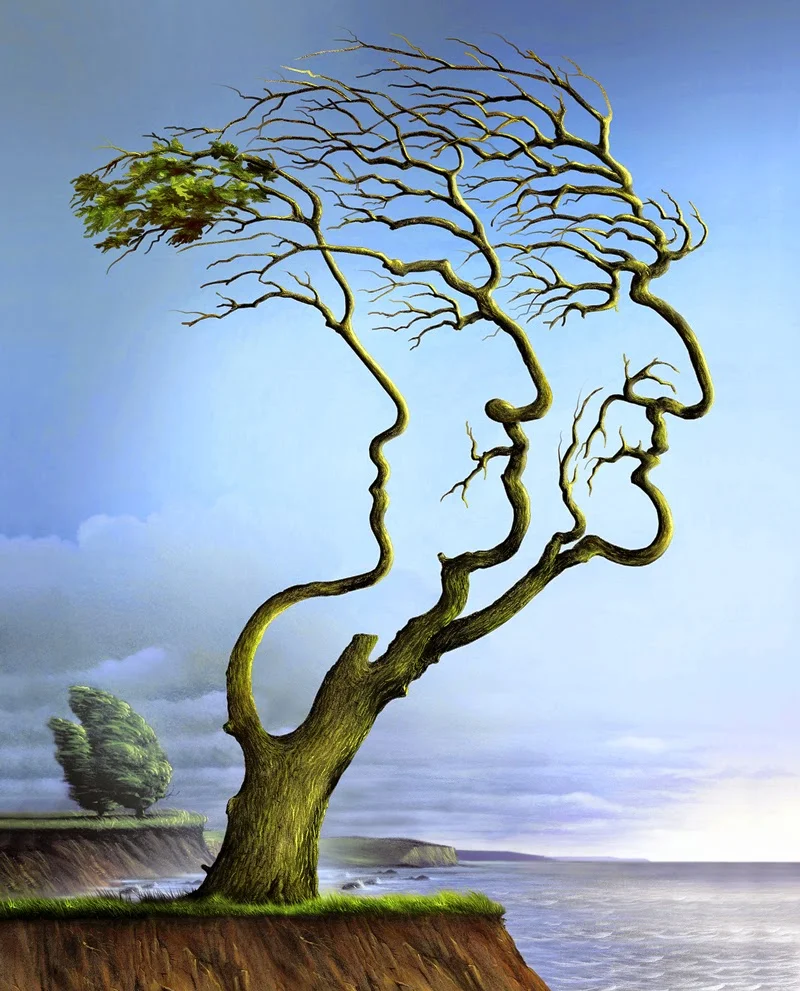


Il Simbolismo è un movimento culturale sviluppatosi in Francia nel XIX secolo che si manifestò nella letteratura, nelle arti figurative e di riflesso nella musica.
Sebbene manifestazioni di arte simbolista si siano avute anche prima, convenzionalmente si fa coincidere la data di nascita del Simbolismo con la pubblicazione di Corrispondenze, Manifesto del Simbolismo del poeta Charles Baudelaire.
Nelle arti figurative il simbolismo nasce in accordo con le teorie e i lavori dei neo-impressionisti soprattutto per quanto riguarda la rappresentazione di soggetti ispirati dalla natura a cui i simbolisti attingono fermamente. Il simbolismo è dedicato ad un pubblico colto e sensibile per via dei suoi contenuti molto complessi da decifrare.
Scopo dei simbolisti è quello di superare la pura visività dell'impressionismo in senso spiritualistico (e non scientifico, come avviene invece tra i neo-impressionisti), cercando di trovare delle corrispondenze tra mondo oggettivo e sensazioni soggettive.

Influenzati dalla letteratura simbolista francese, soprattutto da Stéphane Mallarmé e da Baudelaire, tentano di recuperare nei loro quadri la spiritualità di tutto ciò che esiste nella realtà ma non è direttamente visibile dall'occhio umano.
Alla nuova tendenza si accostarono i pittori postimpressionisti per superare la rappresentazione dell'oggetto e sostituirla con l'espressione del proprio "io".
Questi pittori rifiutarono la resa dell'illusione nella pittura, che per loro doveva essere in grado infatti di trasfigurare la realtà, nell'esaltazione delle linee e dei colori che avevano maggiormente suscitato la loro reazione emotiva.
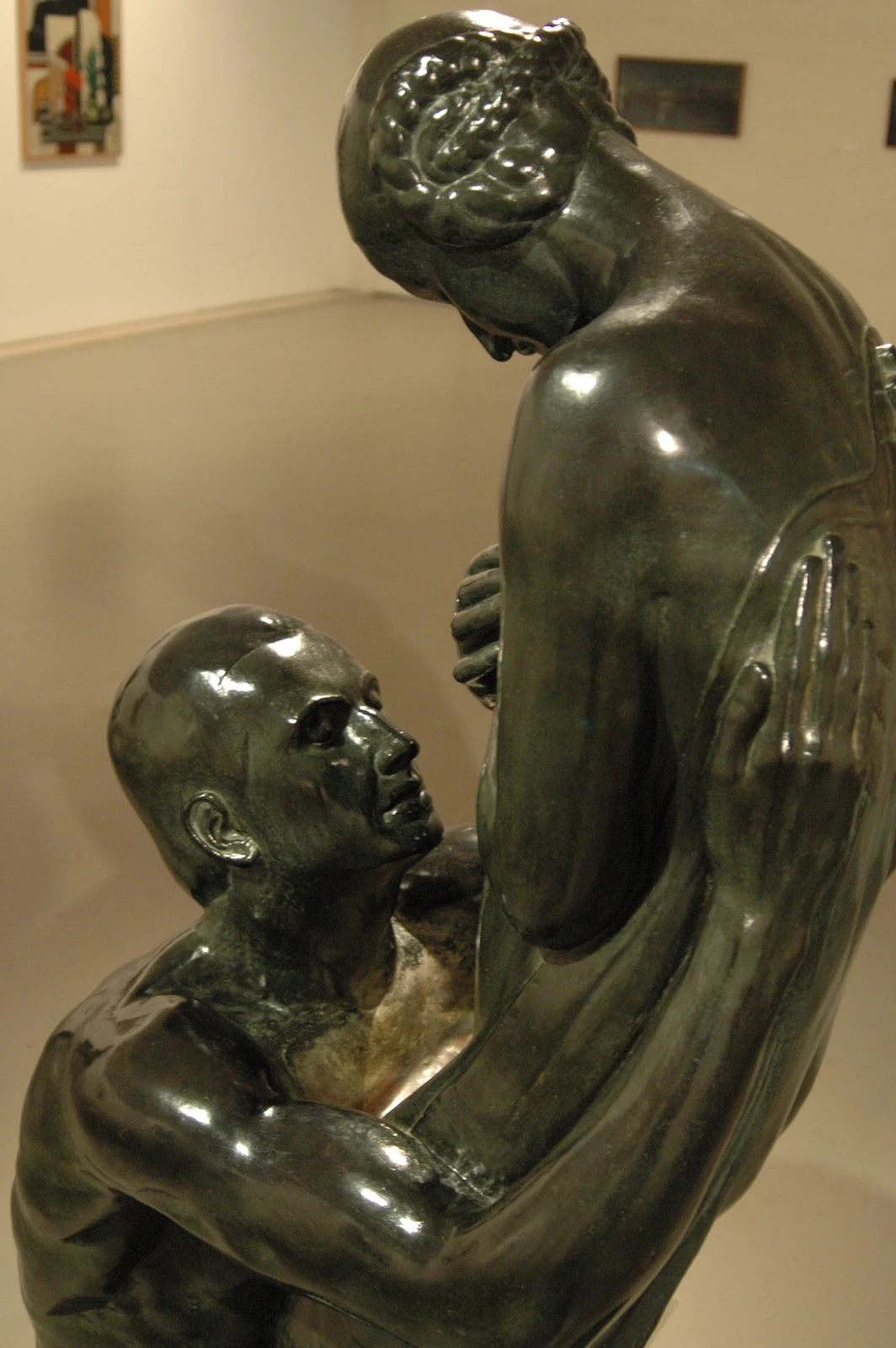
In Francia gli artisti simbolisti più rappresentativi furono Pierre Puvis de Chavannes, Gustave Moreau, creatore di immagini fortemente evocative e Odilon Redon, personalità complessa dall'opera molto diversificata.
Si possono stabilire dei canoni fondamentali per il simbolismo: l'ideismo, cioè l'espressione delle idee per mezzo delle forme; la sintesi, cioè la riduzione in essenza dei simboli per meglio suggerire l'evocazione; il soggettivismo, cioè il considerare l'oggetto come segno dell'idea concepita dal soggetto. Tutto questo è generalmente accompagnato da un'intensa emotività, più o meno velata. | © Wikipedia
 Facebook
 X
X
 LinkedIn
 Telegram
 WhatsApp
 Iscriviti al canale