Visualizzazione post con etichetta Wassily Kandinsky. Mostra tutti i post
Wassily Kandinsky | Post-Impressionism period, 1896-1909

Wassily Kandinsky | Post-Impressionism period, 1896-1909


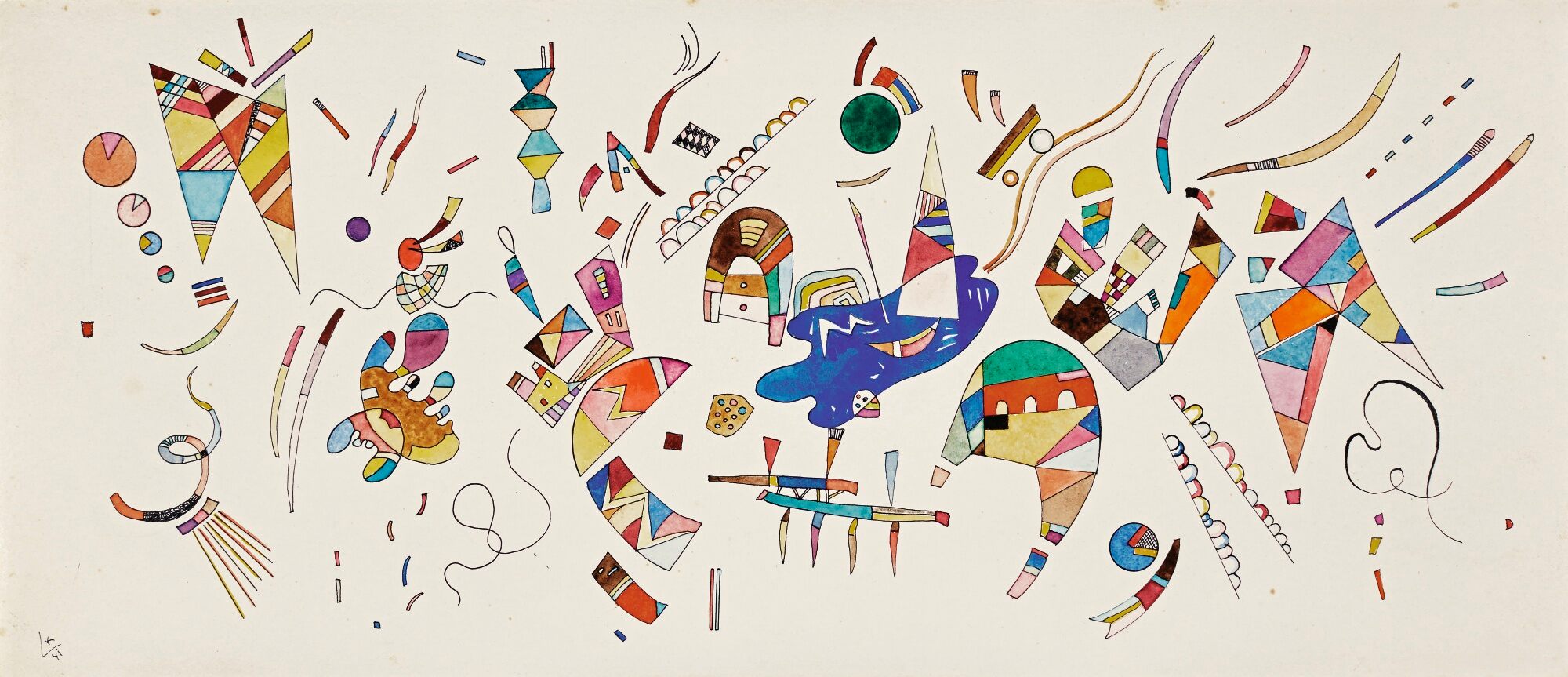
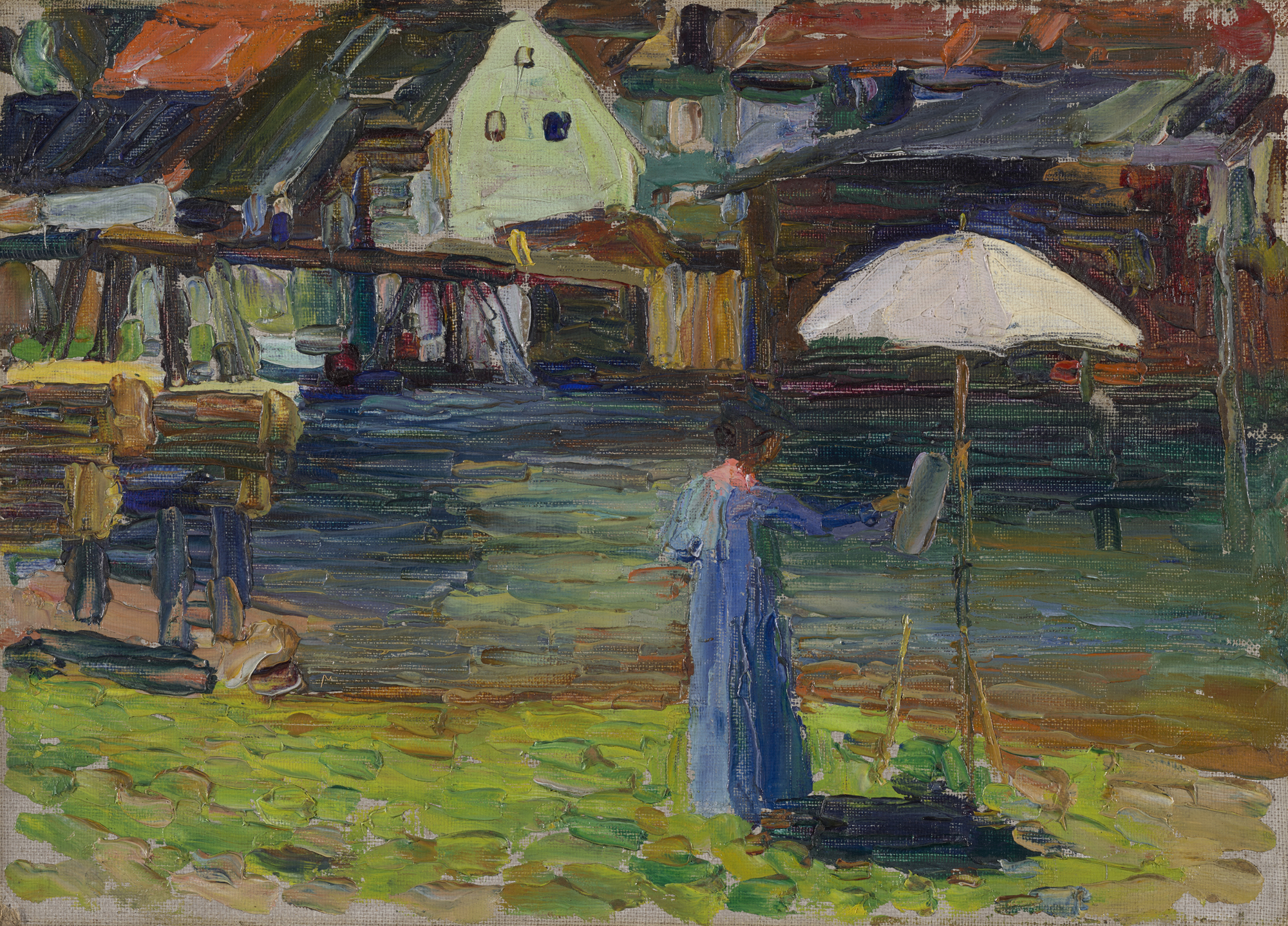
One of the pioneers of Abstraction in Western art, Wassily Kandinsky's (1866-1944) early work was influenced by Art Nouveau, Impressionist and Post-Impressionist styles.
The number of his existing paintings increased at the beginning of the 20th century; much remains of the landscapes and towns he painted, using broad swaths of colour and recognisable forms.
Such works reveal Kandinsky’s strong interest in the tradition of capturing light and the life of cities evident in Impressionism and Post-Impressionism, as well as his love of vibrant and expressive color.

Read More

Wassily Kandinsky | Post-Impressionism period, 1896-1909


One of the pioneers of Abstraction in Western art, Wassily Kandinsky's (1866-1944) early work was influenced by Art Nouveau, Impressionist and Post-Impressionist styles.
The number of his existing paintings increased at the beginning of the 20th century; much remains of the landscapes and towns he painted, using broad swaths of colour and recognisable forms.
Such works reveal Kandinsky’s strong interest in the tradition of capturing light and the life of cities evident in Impressionism and Post-Impressionism, as well as his love of vibrant and expressive color.

Gabriele Münter e Wassily Kandinsky | Amore ai tempi dell'astrattismo

Gabriele Münter e Wassily Kandinsky | Amore ai tempi dell'astrattismo

Gabriele Münter (1877-1962) è stata una pittrice espressionista Tedesca.
Vasilij Vasil'evič Kandinsky / Василий Васильевич Кандинский (1866-1944) è stato un pittore Russo, naturalizzato francese, precursore e fondatore della pittura Astratta.
Insieme, con Franz Marc ed altri, fondarono il movimento artistico espressionista Der Blaue Reiter (Il cavaliere azzurro).

La Münter era di Berlino e proveniva da una famiglia benestante che aveva vissuto a lungo negli Stati Uniti.
Nel 1901 si iscrisse ad un corso d'arte a Monaco di Baviera.
L'anno successivo, poiché alle donne erano precluse le Accademie, iniziò a prendere lezioni presso la scuola d'arte privata Phalanx-Schule (appena fondata da W. Kandinsky) dove seguì i corsi di Wilhelm Husgen e quelli di Wassily Kandinsky.

Wassily Kandinsky | Ritratto Gabriele Münter, 1903 | Lenbachhaus, Monaco di Baviera

Read More

Gabriele Münter e Wassily Kandinsky | Amore ai tempi dell'astrattismo

Gabriele Münter (1877-1962) è stata una pittrice espressionista Tedesca.
Vasilij Vasil'evič Kandinsky / Василий Васильевич Кандинский (1866-1944) è stato un pittore Russo, naturalizzato francese, precursore e fondatore della pittura Astratta.
Insieme, con Franz Marc ed altri, fondarono il movimento artistico espressionista Der Blaue Reiter (Il cavaliere azzurro).

La Münter era di Berlino e proveniva da una famiglia benestante che aveva vissuto a lungo negli Stati Uniti.
Nel 1901 si iscrisse ad un corso d'arte a Monaco di Baviera.
L'anno successivo, poiché alle donne erano precluse le Accademie, iniziò a prendere lezioni presso la scuola d'arte privata Phalanx-Schule (appena fondata da W. Kandinsky) dove seguì i corsi di Wilhelm Husgen e quelli di Wassily Kandinsky.

Wassily Kandinsky | Ritratto Gabriele Münter, 1903 | Lenbachhaus, Monaco di Baviera

Wassily Kandinsky | Lo spirituale nell'arte | Il linguaggio delle forme e dei colori

Wassily Kandinsky | Lo spirituale nell'arte | Il linguaggio delle forme e dei colori

Lo spirituale nell'arte, 1910

L'uomo che non ha musica in se stesso
che l`armonia dei suoni non commuove
sa il tradimento, e la perfida frode.
Le sue emozioni sono una notte cupa
i suoi pensieri un Erebo nero.
Alla musica credi, non a lui.


Il suono musicale giunge direttamente all'anima. E vi trova subito un'eco, perché l'uomo "ha la musica in sé".

"Si sa che il giallo, l'arancione e il rosso ispirano e rappresentano un'idea di gioia, di ricchezza" (Delacroix).


Read More

Wassily Kandinsky | Lo spirituale nell'arte | Il linguaggio delle forme e dei colori

Lo spirituale nell'arte, 1910

L'uomo che non ha musica in se stesso
che l`armonia dei suoni non commuove
sa il tradimento, e la perfida frode.
Le sue emozioni sono una notte cupa
i suoi pensieri un Erebo nero.
Alla musica credi, non a lui.


Il suono musicale giunge direttamente all'anima. E vi trova subito un'eco, perché l'uomo "ha la musica in sé".

"Si sa che il giallo, l'arancione e il rosso ispirano e rappresentano un'idea di gioia, di ricchezza" (Delacroix).


Wassily Kandinsky | VII - Teoria della Pittura

Wassily Kandinsky | VII - Teoria della Pittura

Lo spirituale nell'arte, 1910
Seconda parte: La Pittura

Dalla natura della nostra armonia si deduce che oggi non si può costruire una teoria compiuta, creare un basso continuo in pittura. Questi tentativi condurrebbero in pratica allo stesso risultato dei cucchiaini di Leonardo, che citavamo prima. Ma sarebbe imprudente affermare che in pittura non esisteranno mai regole fisse, princìpi paragonabili al basso continuo, e che qualsiasi regola condurrebbe inevitabilmente all'accademismo.

Anche la musica ha una sua grammatica: una grammatica che si modifica nel tempo, come ogni cosa vivente, ma che è sempre stata utile, come una specie di vocabolario.

Wassily Kandinsky | Pond in the park

Read More

Wassily Kandinsky | VII - Teoria della Pittura

Lo spirituale nell'arte, 1910
Seconda parte: La Pittura

Dalla natura della nostra armonia si deduce che oggi non si può costruire una teoria compiuta, creare un basso continuo in pittura. Questi tentativi condurrebbero in pratica allo stesso risultato dei cucchiaini di Leonardo, che citavamo prima. Ma sarebbe imprudente affermare che in pittura non esisteranno mai regole fisse, princìpi paragonabili al basso continuo, e che qualsiasi regola condurrebbe inevitabilmente all'accademismo.

Anche la musica ha una sua grammatica: una grammatica che si modifica nel tempo, come ogni cosa vivente, ma che è sempre stata utile, come una specie di vocabolario.

Wassily Kandinsky | Pond in the park

Wassily Kandinsky | VIII - L'Opera d'Arte e l'Artista, 1910

Wassily Kandinsky | VIII - L'Opera d'Arte e l'Artista, 1910

Lo spirituale nell'arte, 1910
Seconda parte: La Pittura

La vera opera d'arte nasce "dall'artista" in modo misterioso, enigmatico, mistico.
Staccandosi da lui assume una sua personalità, e diviene un soggetto indipendente con un suo respiro spirituale e una sua vita concreta.
Diventa un aspetto dell'essere. Non è dunque un fenomeno casuale, una presenza anche spiritualmente indifferente, ma ha come ogni essere energie creative, attive.

Wassily Kandinsky | Delicate tension, 1923

Read More

Wassily Kandinsky | VIII - L'Opera d'Arte e l'Artista, 1910

Lo spirituale nell'arte, 1910
Seconda parte: La Pittura

La vera opera d'arte nasce "dall'artista" in modo misterioso, enigmatico, mistico.
Staccandosi da lui assume una sua personalità, e diviene un soggetto indipendente con un suo respiro spirituale e una sua vita concreta.
Diventa un aspetto dell'essere. Non è dunque un fenomeno casuale, una presenza anche spiritualmente indifferente, ma ha come ogni essere energie creative, attive.

Wassily Kandinsky | Delicate tension, 1923

Wassily Kandinsky | VIII - Art and Artists

Wassily Kandinsky | VIII - Art and Artists

Concerning the Spiritual in Art, 1910
Part II: About painting

In an obscure and puzzling way, the artist develops a work of art. As it gains a life of its own, it becomes an entity, an independent spiritual life, which as a being, leads the life of material realism.
It is, therefore, not simply a phenomenon created casually and Inconsequentially indifferent to spiritual life.
Instead as a living being, it possesses creative active forces. It lives, has power, and actively forms the above-mentioned spiritual atmosphere.
From an innermost point of view, the question finally should be answered as to whether creation is strong or weak. If too weak in its form, it is impotent to cause any kind of spiritual vibration.

Wassily Kandinsky | Succession, 1935

Read More

Wassily Kandinsky | VIII - Art and Artists

Concerning the Spiritual in Art, 1910
Part II: About painting

In an obscure and puzzling way, the artist develops a work of art. As it gains a life of its own, it becomes an entity, an independent spiritual life, which as a being, leads the life of material realism.
It is, therefore, not simply a phenomenon created casually and Inconsequentially indifferent to spiritual life.
Instead as a living being, it possesses creative active forces. It lives, has power, and actively forms the above-mentioned spiritual atmosphere.
From an innermost point of view, the question finally should be answered as to whether creation is strong or weak. If too weak in its form, it is impotent to cause any kind of spiritual vibration.

Wassily Kandinsky | Succession, 1935

Wassily Kandinsky | VII - Painting Theory

Wassily Kandinsky | VII - Painting Theory

Concerning the Spiritual in Art, 1910
Part II: About painting

From the nature of modern harmony, it results that never has there been a time when it was more difficult than it is today to formulate a complete theory, or to lay down a firm artistic basis.
All attempts to do so would have one result, namely, that already cited in the case of Leonardo and his system of little spoons. It would, however, be precipitate to say that there are no basic principles nor firm rules in painting, or that a search for them leads inevitably to academism. Even music has a grammar, which, although modified from time to time, is of continual help and value as a kind of dictionary.


Read More

Wassily Kandinsky | VII - Painting Theory

Concerning the Spiritual in Art, 1910
Part II: About painting

From the nature of modern harmony, it results that never has there been a time when it was more difficult than it is today to formulate a complete theory, or to lay down a firm artistic basis.
All attempts to do so would have one result, namely, that already cited in the case of Leonardo and his system of little spoons. It would, however, be precipitate to say that there are no basic principles nor firm rules in painting, or that a search for them leads inevitably to academism. Even music has a grammar, which, although modified from time to time, is of continual help and value as a kind of dictionary.


Wassily Kandinsky | VI. The language of Form and Color

Wassily Kandinsky | VI. The language of Form and Color

Concerning the Spiritual in Art, 1910
Part II: About painting

The man that hath no music in himself,
Or is not moved with concord of sweet sounds,
Is fit for treasons, stratagems, and spoils;
The motions of his spirit are dull as night;
And his affections dark as Erebus;
Let no such man be trusted. Mark the music.

(The Merchant of Venice, Act v, Scene I.)

"Musical sound acts directly on the soul and finds an echo there because, though to varying extents, music is innate in man".
"Everyone knows that yellow, orange, and red suggest ideas of joy and plenty" (Delacroix).


Read More

Wassily Kandinsky | VI. The language of Form and Color

Concerning the Spiritual in Art, 1910
Part II: About painting

The man that hath no music in himself,
Or is not moved with concord of sweet sounds,
Is fit for treasons, stratagems, and spoils;
The motions of his spirit are dull as night;
And his affections dark as Erebus;
Let no such man be trusted. Mark the music.

(The Merchant of Venice, Act v, Scene I.)

"Musical sound acts directly on the soul and finds an echo there because, though to varying extents, music is innate in man".
"Everyone knows that yellow, orange, and red suggest ideas of joy and plenty" (Delacroix).


Wassily Kandinsky | IV - The Pyramid

Wassily Kandinsky | IV - The Pyramid

Concerning the Spiritual in Art, 1910

And so at different points along the road are the different arts, saying what they are best able to say, and in the language which is peculiarly their own. Despite, or perhaps thanks to, the differences between them, there has never been a time when the arts approached each other more nearly than they do today, in this later phase of spiritual development.

In each manifestation is the seed of a striving towards the abstract, the non-material.
Consciously or unconsciously they are obeying Socrates' command - Know thyself. Consciously or unconsciously artists are studying and proving their material, setting in the balance the spiritual value of those elements, with which it is their several privilege to work.


Read More

Wassily Kandinsky | IV - The Pyramid

Concerning the Spiritual in Art, 1910

And so at different points along the road are the different arts, saying what they are best able to say, and in the language which is peculiarly their own. Despite, or perhaps thanks to, the differences between them, there has never been a time when the arts approached each other more nearly than they do today, in this later phase of spiritual development.

In each manifestation is the seed of a striving towards the abstract, the non-material.
Consciously or unconsciously they are obeying Socrates' command - Know thyself. Consciously or unconsciously artists are studying and proving their material, setting in the balance the spiritual value of those elements, with which it is their several privilege to work.


Wassily Kandinsky | Lo spirituale nell'arte / La Pittura - L'effetto del colore

Wassily Kandinsky | Lo spirituale nell'arte / La Pittura - L'effetto del colore


Lo spirituale nell'arte, 1910

Se si osserva una tavolozza coperta di colori si hanno due risultati:

1 - Si ha un effetto puramente fisico, cioè l'occhio è affascinato dalla bellezza c dalle qualità dei colori. L'osservatore prova un senso di appagamento, di gioia come un buongustaio che gusta una squisitezza. Oppure l'occhio viene stuzzicato, come lo è il palato da un cibo piccante.
O, ancora, può calmarsi e raffreddarsi, come quando un dito tocca il ghiaccio. Sono tutto sensazioni fisiche, che in quanto tali durano poco.
Sensazioni superficiali, del resto, che non fanno molta impressione a chi è insensibile. Proprio come, se si tocca il ghiaccio, si prova solo una sensazione fisica di freddo, che svanisce quando il dito si scalda, così, girato lo sguardo si dimentica l'effetto fisico del colore.

Read More

Wassily Kandinsky | Lo spirituale nell'arte / La Pittura - L'effetto del colore


Lo spirituale nell'arte, 1910

Se si osserva una tavolozza coperta di colori si hanno due risultati:

1 - Si ha un effetto puramente fisico, cioè l'occhio è affascinato dalla bellezza c dalle qualità dei colori. L'osservatore prova un senso di appagamento, di gioia come un buongustaio che gusta una squisitezza. Oppure l'occhio viene stuzzicato, come lo è il palato da un cibo piccante.
O, ancora, può calmarsi e raffreddarsi, come quando un dito tocca il ghiaccio. Sono tutto sensazioni fisiche, che in quanto tali durano poco.
Sensazioni superficiali, del resto, che non fanno molta impressione a chi è insensibile. Proprio come, se si tocca il ghiaccio, si prova solo una sensazione fisica di freddo, che svanisce quando il dito si scalda, così, girato lo sguardo si dimentica l'effetto fisico del colore.

Wassily Kandinsky | IV - La Piramide

Wassily Kandinsky | IV - La Piramide

Lo spirituale nell'arte, 1910

Così, lentamente molte arti si avviano a dire quello che hanno da dire, con i loro mezzi specifici.
E nonostante questa separazione, o grazie ad essa, le arti non sono state mai tanto unite come in quest'ultima fase della svolta spirituale.
In tutte si avverte la tendenza all'antinaturalismo, all'astrazione e all'interiorità. Consciamente o inconsciamente ubbidiscono al detto di Socrate: "Conosci te stesso!". Consciamente o inconsciamente, gli artisti si occupano sempre più del loro materiale, lo saggiano, pesano sulla bilancia spirituale il valore interiore degli elementi creativi.

Wassily Kandinsky | Unstable Compensation, 1930

Read More

Wassily Kandinsky | IV - La Piramide

Lo spirituale nell'arte, 1910

Così, lentamente molte arti si avviano a dire quello che hanno da dire, con i loro mezzi specifici.
E nonostante questa separazione, o grazie ad essa, le arti non sono state mai tanto unite come in quest'ultima fase della svolta spirituale.
In tutte si avverte la tendenza all'antinaturalismo, all'astrazione e all'interiorità. Consciamente o inconsciamente ubbidiscono al detto di Socrate: "Conosci te stesso!". Consciamente o inconsciamente, gli artisti si occupano sempre più del loro materiale, lo saggiano, pesano sulla bilancia spirituale il valore interiore degli elementi creativi.

Wassily Kandinsky | Unstable Compensation, 1930

Wassily Kandinsky | III - The Spiritual revolution, 1910

Wassily Kandinsky | III - The Spiritual revolution, 1910

Concerning the Spiritual in Art, 1910

The spiritual triangle moves slowly onwards and upwards. Today one of the largest of the lower segments has reached the point of using the first battle cry of the materialist creed. The dwellers in this segment group themselves round various banners in religion. They call themselves Jews, Catholics, Protestants, etc. But they are really atheists, and this a few either of the boldest or the narrowest openly avow. "Heaven is empty", "God is dead".

In politics these people are democrats and republicans. The fear, horror and hatred which yesterday they felt for these political creeds they now direct against anarchism, of which they know nothing but its much dreaded name.


Read More

Wassily Kandinsky | III - The Spiritual revolution, 1910

Concerning the Spiritual in Art, 1910

The spiritual triangle moves slowly onwards and upwards. Today one of the largest of the lower segments has reached the point of using the first battle cry of the materialist creed. The dwellers in this segment group themselves round various banners in religion. They call themselves Jews, Catholics, Protestants, etc. But they are really atheists, and this a few either of the boldest or the narrowest openly avow. "Heaven is empty", "God is dead".

In politics these people are democrats and republicans. The fear, horror and hatred which yesterday they felt for these political creeds they now direct against anarchism, of which they know nothing but its much dreaded name.


Wassily Kandinsky | III. La svolta spirituale

Wassily Kandinsky | III. La svolta spirituale

Lo spirituale nell'arte, 1910

Il triangolo procede lentamente verso l'alto. Oggi una delle più ampie sezioni inferiori ha raggiunto il livello dei primi postulati del "dogma" materialistico. Da un punto di vista religioso i suoi abitanti hanno vari nomi. Si chiamano Ebrei, Cattolici, Protestanti, ecc. In realtà sono atei, come i più audaci (o i più limitati) di loro riconoscono apertamente.
Il "cielo" è vuoto.
"Dio è morto".
Politicamente sono democratici o repubblicani. La paura, il disprezzo e l'odio che un tempo nutrivano per queste tendenze politiche li hanno riversati oggi sull'anarchia, di cui conoscono solo il terribile nome. In economia sono socialisti. Affilano la spada della giustizia per vibrare il colpo mortale all'idra capitalista e tagliare la testa al male.

Wassily Kandinsky | Amsterdam view from the window

Read More

Wassily Kandinsky | III. La svolta spirituale

Lo spirituale nell'arte, 1910

Il triangolo procede lentamente verso l'alto. Oggi una delle più ampie sezioni inferiori ha raggiunto il livello dei primi postulati del "dogma" materialistico. Da un punto di vista religioso i suoi abitanti hanno vari nomi. Si chiamano Ebrei, Cattolici, Protestanti, ecc. In realtà sono atei, come i più audaci (o i più limitati) di loro riconoscono apertamente.
Il "cielo" è vuoto.
"Dio è morto".
Politicamente sono democratici o repubblicani. La paura, il disprezzo e l'odio che un tempo nutrivano per queste tendenze politiche li hanno riversati oggi sull'anarchia, di cui conoscono solo il terribile nome. In economia sono socialisti. Affilano la spada della giustizia per vibrare il colpo mortale all'idra capitalista e tagliare la testa al male.

Wassily Kandinsky | Amsterdam view from the window

Wassily Kandinsky | I - Dell'Estetica, 1910

Wassily Kandinsky | I - Dell'Estetica, 1910

Lo spirituale nell'arte, 1910
I. Introduzione

Ogni opera d’arte è figlia del suo tempo, e spesso è madre dei nostri sentimenti.
Analogamente, ogni periodo culturale esprime una sua arte, che non si ripeterà mai più.
Lo sforzo di ridar vita a princìpi estetici del passato può creare al massimo delle opere d'arte che sembrano bambini nati morti. Noi non possiamo, ad esempio, avere la sensibilità e la vita interiore degli antichi Greci.
E se in scultura tentassimo di adottare i loro princìpi non faremmo che produrre forme simili alle loro, ma prive di anima.
Come le imitazioni delle scimmie. Esteriormente i movimenti delle scimmie sono perfettamente uguali a quelli dell'uomo.

Wassily Kandinsky | Oval n°2, 1925

Read More

Wassily Kandinsky | I - Dell'Estetica, 1910

Lo spirituale nell'arte, 1910
I. Introduzione

Ogni opera d’arte è figlia del suo tempo, e spesso è madre dei nostri sentimenti.
Analogamente, ogni periodo culturale esprime una sua arte, che non si ripeterà mai più.
Lo sforzo di ridar vita a princìpi estetici del passato può creare al massimo delle opere d'arte che sembrano bambini nati morti. Noi non possiamo, ad esempio, avere la sensibilità e la vita interiore degli antichi Greci.
E se in scultura tentassimo di adottare i loro princìpi non faremmo che produrre forme simili alle loro, ma prive di anima.
Come le imitazioni delle scimmie. Esteriormente i movimenti delle scimmie sono perfettamente uguali a quelli dell'uomo.

Wassily Kandinsky | Oval n°2, 1925

Wassily Kandinsky | The movement of the Triangle

Wassily Kandinsky | The movement of the Triangle

Concerning the Spiritual in Art, 1910

Many grievous obstacles along this road must be conquered, so as to arrive at the first stage; and even then an evil, unseeing hand may toss more obstacles in the way, so that this road sometimes appears to be totally impassable, as all landmarks vanish.
It is then that there unfailingly arises some human being, no different from the rest of humanity but for a secret power of "Vision" within him.
He sees and points the way. Sometimes he would prefer to lay aside his power, as it is a heavy cross to bear; but he cannot do so. Though scorned and hated, he never lets go but drags the cartload of protesting humanity after him, ever forcing it forward and upward, over all obstacles in his way.


Read More

Wassily Kandinsky | The movement of the Triangle

Concerning the Spiritual in Art, 1910

Many grievous obstacles along this road must be conquered, so as to arrive at the first stage; and even then an evil, unseeing hand may toss more obstacles in the way, so that this road sometimes appears to be totally impassable, as all landmarks vanish.
It is then that there unfailingly arises some human being, no different from the rest of humanity but for a secret power of "Vision" within him.
He sees and points the way. Sometimes he would prefer to lay aside his power, as it is a heavy cross to bear; but he cannot do so. Though scorned and hated, he never lets go but drags the cartload of protesting humanity after him, ever forcing it forward and upward, over all obstacles in his way.


Wassily Kandinsky | About General Aesthetic, 1910

Wassily Kandinsky | About General Aesthetic, 1910

Concerning the Spiritual in Art, 1910
Kandinsky's Introduction

Every work of art Is a child of its time, while often it is the parent of our emotions.
Thus, every cultural period creates art of its own, which can never be repeated again. An effort to revive art-principles of the past, at best, can only result in works of art resembling a still-born child. For example, it is impossible for us to relive or feel the inner spirit of the ancient Greeks.
The sculptor's attempts to employ Greek principles can only achieve a similarity in form, while the work itself remains for all time without a soul.


Read More

Wassily Kandinsky | About General Aesthetic, 1910

Concerning the Spiritual in Art, 1910
Kandinsky's Introduction

Every work of art Is a child of its time, while often it is the parent of our emotions.
Thus, every cultural period creates art of its own, which can never be repeated again. An effort to revive art-principles of the past, at best, can only result in works of art resembling a still-born child. For example, it is impossible for us to relive or feel the inner spirit of the ancient Greeks.
The sculptor's attempts to employ Greek principles can only achieve a similarity in form, while the work itself remains for all time without a soul.


Kandinsky | Lo Spirito dei colori

Kandinsky | Lo Spirito dei colori


"Ogni opera d’arte è figlia del suo tempo, e spesso è madre dei nostri sentimenti" - Kandinsky

"Mi sembrava che l'anima viva dei colori emettesse un richiamo musicale, quando l'inflessibile volontà del pennello strappava loro una parte di vita", scriveva Wassily Kandinsky (1866-1944), il fondatore dell'Arte Astratta.
Nel sangue russo di Kandinsky si erano confusi quello tedesco della nonna materna e quello orientale della bisnonna paterna, che era una principessa cinese.
La musica diede una particolare impulso alla sua anima, Mussorgskij, Rimskji-Korsakov, Balakirev, Cui e Borodin erano i suoi preferiti.
Mentre, Monet, con i suoi Covoni esposti a Mosca nel 1895, gli diede la certezza della sua vocazione: egli ricorderà sempre quelle tele per l'impressione che ne aveva ricevuta d'esser la pittura in essa indipendente e comunque assai più forte della realtà per suo mezzo raffigurata.

Read More

Kandinsky | Lo Spirito dei colori


"Ogni opera d’arte è figlia del suo tempo, e spesso è madre dei nostri sentimenti" - Kandinsky

"Mi sembrava che l'anima viva dei colori emettesse un richiamo musicale, quando l'inflessibile volontà del pennello strappava loro una parte di vita", scriveva Wassily Kandinsky (1866-1944), il fondatore dell'Arte Astratta.
Nel sangue russo di Kandinsky si erano confusi quello tedesco della nonna materna e quello orientale della bisnonna paterna, che era una principessa cinese.
La musica diede una particolare impulso alla sua anima, Mussorgskij, Rimskji-Korsakov, Balakirev, Cui e Borodin erano i suoi preferiti.
Mentre, Monet, con i suoi Covoni esposti a Mosca nel 1895, gli diede la certezza della sua vocazione: egli ricorderà sempre quelle tele per l'impressione che ne aveva ricevuta d'esser la pittura in essa indipendente e comunque assai più forte della realtà per suo mezzo raffigurata.

Wassily Kandinsky | Lend your ears to music../ Presta le tue orecchie alla musica..

Wassily Kandinsky | Lend your ears to music../ Presta le tue orecchie alla musica..

"…Lend your ears to music, open your eyes to painting, and … stop thinking!

Just ask yourself whether the work has enabled you to “walk about” into a hitherto unknown world.

If the answer is yes, what more do you want?"

Sergey Shenderovsky, 1964

Read More

Wassily Kandinsky | Lend your ears to music../ Presta le tue orecchie alla musica..

"…Lend your ears to music, open your eyes to painting, and … stop thinking!

Just ask yourself whether the work has enabled you to “walk about” into a hitherto unknown world.

If the answer is yes, what more do you want?"

Sergey Shenderovsky, 1964

Wassily Kandinsky | Life and Artworks

Wassily Kandinsky | Life and Artworks

Wassily Wassilyevich Kandinsky / Васи́лий Васи́льевич Канди́нский (1866-1944) was a Russian painter and art theorist.
Kandinsky is generally credited as the pioneer of abstract art.
Born in Moscow, Kandinsky spent his childhood in Odessa, where he graduated at Grekov Odessa Art school.
He enrolled at the University of Moscow, studying law and economics. Successful in his profession - he was offered a professorship (chair of Roman Law) at the University of Dorpat - Kandinsky began painting studies (life-drawing, sketching and anatomy) at the age of 30.


Read More

Wassily Kandinsky | Life and Artworks

Wassily Wassilyevich Kandinsky / Васи́лий Васи́льевич Канди́нский (1866-1944) was a Russian painter and art theorist.
Kandinsky is generally credited as the pioneer of abstract art.
Born in Moscow, Kandinsky spent his childhood in Odessa, where he graduated at Grekov Odessa Art school.
He enrolled at the University of Moscow, studying law and economics. Successful in his profession - he was offered a professorship (chair of Roman Law) at the University of Dorpat - Kandinsky began painting studies (life-drawing, sketching and anatomy) at the age of 30.


Wassily Kandinsky | Abstract painter

Wassily Kandinsky | Abstract painter


Wassily Wassilyevich Kandinsky / Васи́лий Васи́льевич Канди́нский (16 December [O.S. 4 December] 1866 - 13 December 1944) was a Russian painter🎨 and art theorist.
Kandinsky is generally credited as the pioneer of abstract art🎨.
Born in Moscow, Kandinsky spent his childhood in Odessa, where he graduated at Grekov Odessa Art school.
He enrolled at the University of Moscow, studying law and economics. Successful in his profession - he was offered a professorship (chair of Roman Law) at the University of Dorpat - Kandinsky began painting studies (life-drawing, sketching and anatomy) at the age of 30.


In 1896, Kandinsky settled in Munich, studying first at Anton Ažbe's private school and then at the Academy of Fine Arts.
He returned to Moscow in 1914, after the outbreak of World War I. Following the Russian Revolution, Kandinsky "became an insider in the cultural administration of Anatoly Lunacharsky" and helped establish the Museum of the Culture of Painting.
However, by then "his spiritual outlook... was foreign to the argumentative materialism of Soviet society", and opportunities beckoned in Germany, to which he returned in 1920.


There he taught at the Bauhaus school of art and architecture from 1922 until the Nazis closed it in 1933.
He then moved to France, where he lived for the rest of his life, becoming a French citizen in 1939 and producing some of his most prominent art. He died in Neuilly-sur-Seine in 1944. | © Wikipedia


Vasilij Vasil'evič Kandinskij / Василий Васильевич Кандинский (Mosca, 16 dicembre 1866 - Neuilly-sur-Seine, 13 dicembre 1944) fu un pittore Franco-Russo, romanizzato anche come Vassily Kandinsky, precursore e fondatore della pittura astratta.
  • «L'arte oltrepassa i limiti nei quali il tempo vorrebbe comprimerla, e indica il contenuto del futuro.» Vasilij Kandinskij

Read More

Wassily Kandinsky | Abstract painter


Wassily Wassilyevich Kandinsky / Васи́лий Васи́льевич Канди́нский (16 December [O.S. 4 December] 1866 - 13 December 1944) was a Russian painter🎨 and art theorist.
Kandinsky is generally credited as the pioneer of abstract art🎨.
Born in Moscow, Kandinsky spent his childhood in Odessa, where he graduated at Grekov Odessa Art school.
He enrolled at the University of Moscow, studying law and economics. Successful in his profession - he was offered a professorship (chair of Roman Law) at the University of Dorpat - Kandinsky began painting studies (life-drawing, sketching and anatomy) at the age of 30.


In 1896, Kandinsky settled in Munich, studying first at Anton Ažbe's private school and then at the Academy of Fine Arts.
He returned to Moscow in 1914, after the outbreak of World War I. Following the Russian Revolution, Kandinsky "became an insider in the cultural administration of Anatoly Lunacharsky" and helped establish the Museum of the Culture of Painting.
However, by then "his spiritual outlook... was foreign to the argumentative materialism of Soviet society", and opportunities beckoned in Germany, to which he returned in 1920.


There he taught at the Bauhaus school of art and architecture from 1922 until the Nazis closed it in 1933.
He then moved to France, where he lived for the rest of his life, becoming a French citizen in 1939 and producing some of his most prominent art. He died in Neuilly-sur-Seine in 1944. | © Wikipedia


Vasilij Vasil'evič Kandinskij / Василий Васильевич Кандинский (Mosca, 16 dicembre 1866 - Neuilly-sur-Seine, 13 dicembre 1944) fu un pittore Franco-Russo, romanizzato anche come Vassily Kandinsky, precursore e fondatore della pittura astratta.
  • «L'arte oltrepassa i limiti nei quali il tempo vorrebbe comprimerla, e indica il contenuto del futuro.» Vasilij Kandinskij