Visualizzazione post con etichetta Verist painter. Mostra tutti i post
Tranquillo Cremona | Romantic painter

Tranquillo Cremona | Romantic painter

Tranquillo Cremona (10 April 1837 - 10 June 1878) was an Italian painter.
He was born in Pavia and was the brother of the mathematician Luigi Cremona.
He trained as a young man with Giovanni Carnovali. He lived in Venice from 1852-1859.
Cremona moved to Milan and he became part of the Scapigliatura movement which was characterized by bohemian attitudes and included poets, writers, musicians and artists infused with a combination of rebellious, and later anti-academic and anarchic, tendencies.


Read More

Tranquillo Cremona | Romantic painter

Tranquillo Cremona (10 April 1837 - 10 June 1878) was an Italian painter.
He was born in Pavia and was the brother of the mathematician Luigi Cremona.
He trained as a young man with Giovanni Carnovali. He lived in Venice from 1852-1859.
Cremona moved to Milan and he became part of the Scapigliatura movement which was characterized by bohemian attitudes and included poets, writers, musicians and artists infused with a combination of rebellious, and later anti-academic and anarchic, tendencies.


Pasquale Celommi | A good catch, 1895

Pasquale Celommi | A good catch, 1895

Pasquale Celommi (1851-1928) was an Italian painter, known for his outdoor scenes of Italian life in verist style.
Born in Montepagano, Abruzzo, Italy, he developed a keen eye for detail and depicted everyday life with a captivating realism.
Thanks to the help of a local landowner, Don Camillo Mezzopreti, and to a contribution of 30 lire by the Municipality, he managed to study until the year 1873, when he enrolled in the Academy of Fine Arts in Florence.


Read More

Pasquale Celommi | A good catch, 1895

Pasquale Celommi (1851-1928) was an Italian painter, known for his outdoor scenes of Italian life in verist style.
Born in Montepagano, Abruzzo, Italy, he developed a keen eye for detail and depicted everyday life with a captivating realism.
Thanks to the help of a local landowner, Don Camillo Mezzopreti, and to a contribution of 30 lire by the Municipality, he managed to study until the year 1873, when he enrolled in the Academy of Fine Arts in Florence.


Pasquale Celommi | Verist painter

Pasquale Celommi | Verist painter

Pasquale Celommi (1851-1928) was born in Montepagano - Italy, into a family of fishermen.
Celommi showed an early interest in art and often drew in his home as a child.
Celommi decided to receive academic training and moved Florence to study under Antonio Ciseri at the Academy of Florence.
He was a strong student and often praised by his teacher Ciseri. Celommi started exhibiting his work in various regions of Italy.
Celommi had a large exhibition in Turin and eventually in Rome.


Read More

Pasquale Celommi | Verist painter

Pasquale Celommi (1851-1928) was born in Montepagano - Italy, into a family of fishermen.
Celommi showed an early interest in art and often drew in his home as a child.
Celommi decided to receive academic training and moved Florence to study under Antonio Ciseri at the Academy of Florence.
He was a strong student and often praised by his teacher Ciseri. Celommi started exhibiting his work in various regions of Italy.
Celommi had a large exhibition in Turin and eventually in Rome.


Antonio Mancini | Verist painter

Antonio Mancini | Verist painter

Antonio Mancini (14 November 1852 - 28 December 1930) was an Italian painter.
Mancini was born in Rome and showed precocious ability as an artist.
At the age of twelve, he was admitted to the Institute of Fine Arts in Naples, where he studied under Domenico Morelli (1823-1901), a painter of historical scenes who favored dramatic chiaroscuro and vigorous brushwork, and Filippo Palizzi.
Mancini developed quickly under their guidance, and in 1872, he exhibited two paintings at the Paris Salon.


Read More

Antonio Mancini | Verist painter

Antonio Mancini (14 November 1852 - 28 December 1930) was an Italian painter.
Mancini was born in Rome and showed precocious ability as an artist.
At the age of twelve, he was admitted to the Institute of Fine Arts in Naples, where he studied under Domenico Morelli (1823-1901), a painter of historical scenes who favored dramatic chiaroscuro and vigorous brushwork, and Filippo Palizzi.
Mancini developed quickly under their guidance, and in 1872, he exhibited two paintings at the Paris Salon.


Pellizza da Volpedo | Spring Idyll / Girotondo, 1906

Pellizza da Volpedo | Spring Idyll / Girotondo, 1906

"Spring Idyll" is an oil on canvas created in 1906 by Giuseppe Pellizza da Volpedo (Italian Neo-Impressionist painter, 1868-1907).
The painting, measuring Ø 101 cm, is part of the collection of the GAM - Galleria d'Arte Moderna in Milan.
This is the second version - left incomplete by Giuseppe Pellizza da Volpedo and then finished by the painter Angelo Barabino (1883-1950) - of another canvas that was long considered lost and then reappeared for auction at Sotheby's in London in 1980, having been kept in a private collection in England for almost 40 years.

Giuseppe Pellizza da Volpedo | Idillio campestre nei prati della pieve a Volpedo (Il girotondo), 1906 | GAM - Galleria d'Arte Moderna di Milano

Read More

Pellizza da Volpedo | Spring Idyll / Girotondo, 1906

"Spring Idyll" is an oil on canvas created in 1906 by Giuseppe Pellizza da Volpedo (Italian Neo-Impressionist painter, 1868-1907).
The painting, measuring Ø 101 cm, is part of the collection of the GAM - Galleria d'Arte Moderna in Milan.
This is the second version - left incomplete by Giuseppe Pellizza da Volpedo and then finished by the painter Angelo Barabino (1883-1950) - of another canvas that was long considered lost and then reappeared for auction at Sotheby's in London in 1980, having been kept in a private collection in England for almost 40 years.

Giuseppe Pellizza da Volpedo | Idillio campestre nei prati della pieve a Volpedo (Il girotondo), 1906 | GAM - Galleria d'Arte Moderna di Milano

Luigi Nono | Verist painter

Luigi Nono | Verist painter

Luigi Nono (1850-1918) was an Venetian painter.
A young Nono entered the Accademia of Venice, then under the leadership of Pompeo Marino Molmenti. But by at the age of twenty years, he went to Polcenigo in the Friulian countryside, and he began to refine his style of landscape paintings, including Sull' Avemaria, Le sorgenti del Gorgazzo, Ritorno dai campi and Verso sera.
He later returned to painting genre subjects of everyday life, and these paintings would prove to be his most influential.


Read More

Luigi Nono | Verist painter

Luigi Nono (1850-1918) was an Venetian painter.
A young Nono entered the Accademia of Venice, then under the leadership of Pompeo Marino Molmenti. But by at the age of twenty years, he went to Polcenigo in the Friulian countryside, and he began to refine his style of landscape paintings, including Sull' Avemaria, Le sorgenti del Gorgazzo, Ritorno dai campi and Verso sera.
He later returned to painting genre subjects of everyday life, and these paintings would prove to be his most influential.


Antonio Mancini | Carminella, 1870

Antonio Mancini | Carminella, 1870

Nato a Roma da una famiglia di umili origini proveniente da Narni, Antonio Mancini (Roma, 1852-1930) cresce nel paese umbro e vi trascorre la sua infanzia ricevendo la sua prima formazione presso gli scolopi della chiesa di S. Agostino.
Probabilmente per assecondare il suo precoce talento e avviarlo a buoni studi artistici, la famiglia si trasferisce da Narni a Napoli nel 1865.
Qui frequenta la scuola dell'oratorio dei gerolomini e la scuola serale presso la chiesa di S. Domenico Maggiore, dove incontra il coetaneo Vincenzo Gemito con cui, nello stesso anno, inizia a frequentare lo studio dello scultore Stanislao Lista.

Antonio Mancini | Carminella, 1870 | Galleria Nazionale d'Arte Moderna e Contemporanea, Roma

Read More

Antonio Mancini | Carminella, 1870

Nato a Roma da una famiglia di umili origini proveniente da Narni, Antonio Mancini (Roma, 1852-1930) cresce nel paese umbro e vi trascorre la sua infanzia ricevendo la sua prima formazione presso gli scolopi della chiesa di S. Agostino.
Probabilmente per assecondare il suo precoce talento e avviarlo a buoni studi artistici, la famiglia si trasferisce da Narni a Napoli nel 1865.
Qui frequenta la scuola dell'oratorio dei gerolomini e la scuola serale presso la chiesa di S. Domenico Maggiore, dove incontra il coetaneo Vincenzo Gemito con cui, nello stesso anno, inizia a frequentare lo studio dello scultore Stanislao Lista.

Antonio Mancini | Carminella, 1870 | Galleria Nazionale d'Arte Moderna e Contemporanea, Roma

Alfredo Savini | Verist painter

Alfredo Savini | Verist painter

Alfredo Savini (1868-1924) was an Italian painter.
Son of the painter Alfonso Savini (1836-1908), Alfredo Savini attended the Academy of Fine Arts in Bologna.
In 1900 he was appointed, by competition, director of the "Gian Bettino Cignaroli" Academy of Fine Arts in Verona, succeeding Moses Bianchi, and held this position until 1924, when, still in full activity, he died on 28 October.


Read More

Alfredo Savini | Verist painter

Alfredo Savini (1868-1924) was an Italian painter.
Son of the painter Alfonso Savini (1836-1908), Alfredo Savini attended the Academy of Fine Arts in Bologna.
In 1900 he was appointed, by competition, director of the "Gian Bettino Cignaroli" Academy of Fine Arts in Verona, succeeding Moses Bianchi, and held this position until 1924, when, still in full activity, he died on 28 October.


Adolfo Feragutti Visconti | Verist painter

Adolfo Feragutti Visconti | Verist painter

Adolfo Feragutti Visconti (1850 in Pura, Canton Ticino - 1924 in Milan) was an Italian / Swiss painter, of eclectic styles and subjects, including orientalist themes, genre works and landscapes.
Orphan of father by the age of 16, Fergutti Visconti enrolled at the Brera Academy of Fine Arts when he was 18, where he studied with Luigi Bisi, and made his debut in 1873 as a perspective painter.
Attracted by the work of the Milanese Scapigliatura movement, he was one of the first members of the Famiglia Artistica.


Read More

Adolfo Feragutti Visconti | Verist painter

Adolfo Feragutti Visconti (1850 in Pura, Canton Ticino - 1924 in Milan) was an Italian / Swiss painter, of eclectic styles and subjects, including orientalist themes, genre works and landscapes.
Orphan of father by the age of 16, Fergutti Visconti enrolled at the Brera Academy of Fine Arts when he was 18, where he studied with Luigi Bisi, and made his debut in 1873 as a perspective painter.
Attracted by the work of the Milanese Scapigliatura movement, he was one of the first members of the Famiglia Artistica.


Vincenzo Volpe | Verist painter

Vincenzo Volpe | Verist painter

Vincenzo Volpe (December 14, 1855 – February 9, 1929) was an Italian painter.
From 1874 to 1890, he painted mostly genre scenes.
From 1891 to 1896, he concentrated on religious art, then returned to genre works and portraits.
Vincenzo Volpe was born in Grottaminarda, Campania.
His family moved to Naples when he was eight, and in 1871 he enrolled at the Accademia di Belle Arti there and studied with Domenico Morelli.


Read More

Vincenzo Volpe | Verist painter

Vincenzo Volpe (December 14, 1855 – February 9, 1929) was an Italian painter.
From 1874 to 1890, he painted mostly genre scenes.
From 1891 to 1896, he concentrated on religious art, then returned to genre works and portraits.
Vincenzo Volpe was born in Grottaminarda, Campania.
His family moved to Naples when he was eight, and in 1871 he enrolled at the Accademia di Belle Arti there and studied with Domenico Morelli.


Giambattista Bassi | Master of Verismo

Giambattista Bassi | Master of Verismo

Gian Battista Bassi was an Italian painter. In his day he was defined as the "Master of Verismo".
Born in 1784 in Massa Lombarda, Giambattista Bassi joined the Academy of Fine Arts in Bologna in 1810, and thanks to one of his paintings, he was awarded a three year stay in Rome.
Among many, he became friends with Tommaso Minardi, Antonio Canova and Pietro Giordani, thanks to whom Bassi was able to obtain his first important commission: two paintings for the King of Naples.


Read More

Giambattista Bassi | Master of Verismo

Gian Battista Bassi was an Italian painter. In his day he was defined as the "Master of Verismo".
Born in 1784 in Massa Lombarda, Giambattista Bassi joined the Academy of Fine Arts in Bologna in 1810, and thanks to one of his paintings, he was awarded a three year stay in Rome.
Among many, he became friends with Tommaso Minardi, Antonio Canova and Pietro Giordani, thanks to whom Bassi was able to obtain his first important commission: two paintings for the King of Naples.


Il Verismo, la pittura degli umili

Il Verismo, la pittura degli umili

Filippo Palizzi (Italian, 1818-1899) | Girl on the rock in Sorrento, 1871

The "Verismo" (meaning "realism", from Italian vero, meaning "true") refers to a 19th-century Italian painting🎨 style. This style was practiced most characteristically by the Macchiaioli group of painters🎨, who were forerunners of the French Impressionists.
The link pin between European verismo in painting and the States could be considered to be the work of John Singer Sargent🎨, in regard to technique, but not in comments on the working classes.

Read More

Il Verismo, la pittura degli umili

Filippo Palizzi (Italian, 1818-1899) | Girl on the rock in Sorrento, 1871

The "Verismo" (meaning "realism", from Italian vero, meaning "true") refers to a 19th-century Italian painting🎨 style. This style was practiced most characteristically by the Macchiaioli group of painters🎨, who were forerunners of the French Impressionists.
The link pin between European verismo in painting and the States could be considered to be the work of John Singer Sargent🎨, in regard to technique, but not in comments on the working classes.

Arnaldo Ferraguti | Genre / Vertist painter

Arnaldo Ferraguti | Genre / Vertist painter


Arnaldo Ferraguti (1862-1925) was an Italian painter and illustrator, often painting genre subjects.
He was born in Ferrara but trained at the Accademia di Belle Arti of Naples, then under the leadership of Domenico Morelli. He befriended the painter Francesco Paolo Michetti and his circle at Francavilla al Mare.

Read More

Arnaldo Ferraguti | Genre / Vertist painter


Arnaldo Ferraguti (1862-1925) was an Italian painter and illustrator, often painting genre subjects.
He was born in Ferrara but trained at the Accademia di Belle Arti of Naples, then under the leadership of Domenico Morelli. He befriended the painter Francesco Paolo Michetti and his circle at Francavilla al Mare.

Francesco Paolo Michetti | Genre painter

Francesco Paolo Michetti | Genre painter

Francesco Paolo Michetti (1851-1929) was an Italian painter known especially for his genre works.
He was born in Tocco da Casauria in the Province of Chieti. His father having died when he was a boy, Michetti was forced to work with a local artisan.
In 1868, Michetti was awarded a stipend by the province to study at the Accademia (now Istituto) in Naples under Domenico Morelli.


Read More

Francesco Paolo Michetti | Genre painter

Francesco Paolo Michetti (1851-1929) was an Italian painter known especially for his genre works.
He was born in Tocco da Casauria in the Province of Chieti. His father having died when he was a boy, Michetti was forced to work with a local artisan.
In 1868, Michetti was awarded a stipend by the province to study at the Accademia (now Istituto) in Naples under Domenico Morelli.


Pellizza da Volpedo | Il Quarto Stato / The Fourth Estate, 1901

Pellizza da Volpedo | Il Quarto Stato / The Fourth Estate, 1901

The monumental painting Il Quarto Stato /The Fourth Estate by Giuseppe Pellizza da Volpedo (1868-1907) portrays a group of workers on strike.
It symbolises the social protest at the beginning of the 20th century, as well as the emergence of a new social class - the proletariat - which becomes aware of its rights within the new industrial society.

Giuseppe Pellizza da Volpedo | Il Quarto Stato / The Fourth Estate, 1901 (detail) | GAM - Galleria d'Arte Moderna di Milano, Milano

Read More

Pellizza da Volpedo | Il Quarto Stato / The Fourth Estate, 1901

The monumental painting Il Quarto Stato /The Fourth Estate by Giuseppe Pellizza da Volpedo (1868-1907) portrays a group of workers on strike.
It symbolises the social protest at the beginning of the 20th century, as well as the emergence of a new social class - the proletariat - which becomes aware of its rights within the new industrial society.

Giuseppe Pellizza da Volpedo | Il Quarto Stato / The Fourth Estate, 1901 (detail) | GAM - Galleria d'Arte Moderna di Milano, Milano

Giuseppe Pelizza da Volpedo | Neo-Impressionist painter

Giuseppe Pelizza da Volpedo | Neo-Impressionist painter

Giuseppe Pellizza da Volpedo (July 28, 1868 - June 14, 1907) was an Italian Neo-Impressionist painter.
He was born and died in Volpedo, in the Piedmont region of northern Italy.
Pellizza was a pupil of Pio Sanquirico. He used a Divisionist technique in which a painting is created by juxtaposing small dots of paint according to specific color theory.


Read More

Giuseppe Pelizza da Volpedo | Neo-Impressionist painter

Giuseppe Pellizza da Volpedo (July 28, 1868 - June 14, 1907) was an Italian Neo-Impressionist painter.
He was born and died in Volpedo, in the Piedmont region of northern Italy.
Pellizza was a pupil of Pio Sanquirico. He used a Divisionist technique in which a painting is created by juxtaposing small dots of paint according to specific color theory.


Giovanni Fattori | Macchiaioli painter

Giovanni Fattori | Macchiaioli painter

Italian painter Giovanni Fattori (1825-1908) was one of the leaders of the group known as the Macchiaioli.
He was initially a painter of historical themes and military subjects.
In his middle years, inspired by the Barbizon school, he became one of the leading Italian plein-air, painting landscapes, rural scenes, and scenes of military life.


Read More

Giovanni Fattori | Macchiaioli painter

Italian painter Giovanni Fattori (1825-1908) was one of the leaders of the group known as the Macchiaioli.
He was initially a painter of historical themes and military subjects.
In his middle years, inspired by the Barbizon school, he became one of the leading Italian plein-air, painting landscapes, rural scenes, and scenes of military life.


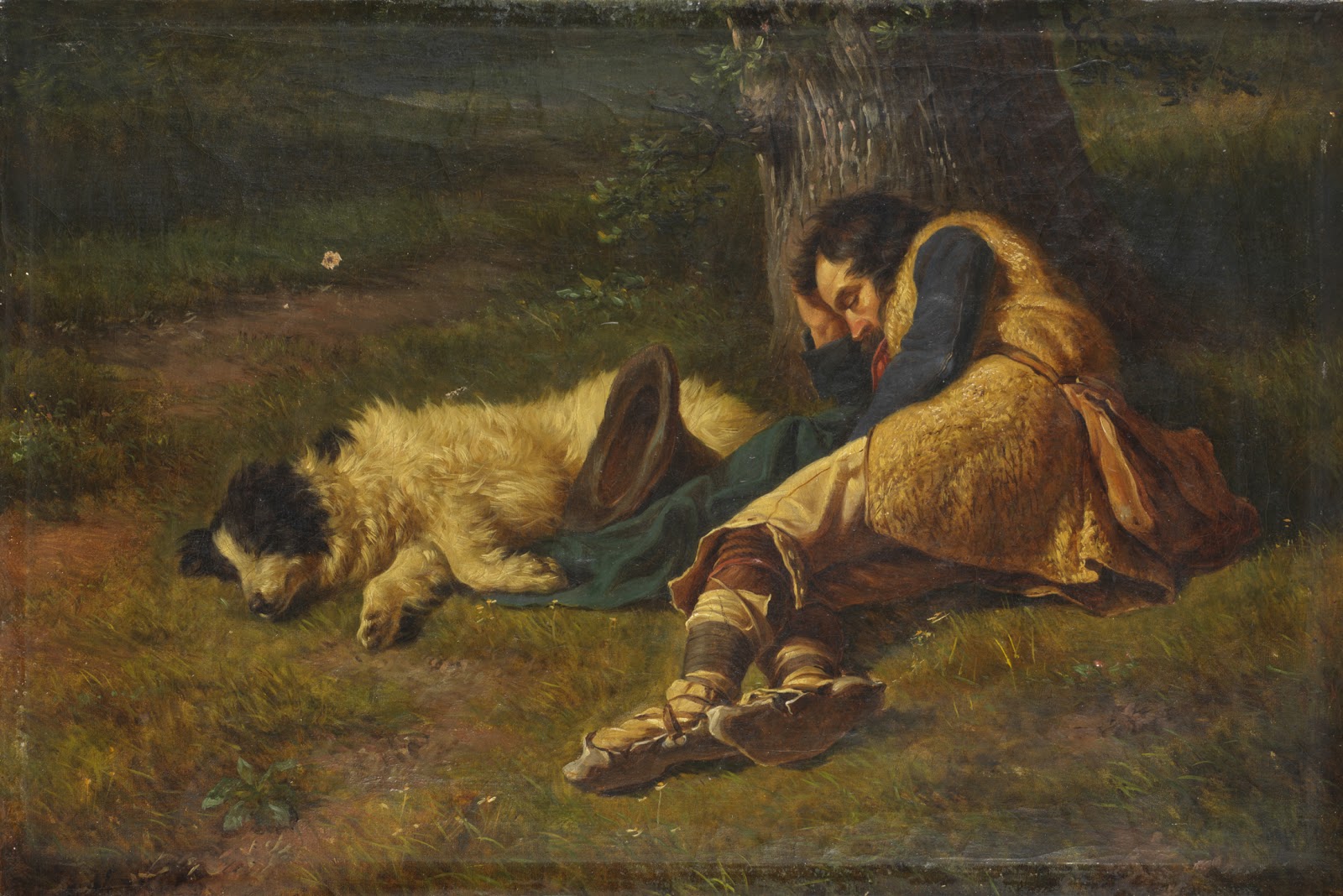
Filippo Palizzi | Pastore addormentato con il suo cane, 1850-1855

Filippo Palizzi | Pastore addormentato con il suo cane, 1850-1855

Filippo Palizzi (1818-1899) con il fratello Giuseppe, rappresenta il primo tentativo di un indirizzo verista nella pittura italiana dell'Ottocento.
Sulla scia della Scuola di Posillipo e di una spontanea inclinazione orientò il suo lavoro verso una dettagliata osservazione del vero.
Fu tra i primi pittori a interessarsi di fotografia ed a praticarla, sulla base di conoscenze tecniche molto approfondite.


Read More

Filippo Palizzi | Pastore addormentato con il suo cane, 1850-1855

Filippo Palizzi (1818-1899) con il fratello Giuseppe, rappresenta il primo tentativo di un indirizzo verista nella pittura italiana dell'Ottocento.
Sulla scia della Scuola di Posillipo e di una spontanea inclinazione orientò il suo lavoro verso una dettagliata osservazione del vero.
Fu tra i primi pittori a interessarsi di fotografia ed a praticarla, sulla base di conoscenze tecniche molto approfondite.


Filippo Palizzi | Verist painter

Filippo Palizzi | Verist painter

Filippo Palizzi (1818-1899) was an Italian painter. Filippo Palizzi was born in Vasto (Chieti).
He moved to Naples in 1837 and enrolled at the Royal Institute of Fine Arts, but withdrew after a few months to attend the private school of the painter Giuseppe Bonolis.
Contact with his brother Giuseppe, who moved to France in 1844, introduced him to the painting of the Barbizon School.


Read More

Filippo Palizzi | Verist painter

Filippo Palizzi (1818-1899) was an Italian painter. Filippo Palizzi was born in Vasto (Chieti).
He moved to Naples in 1837 and enrolled at the Royal Institute of Fine Arts, but withdrew after a few months to attend the private school of the painter Giuseppe Bonolis.
Contact with his brother Giuseppe, who moved to France in 1844, introduced him to the painting of the Barbizon School.