Picasso: Painting is a blind man's profession..

Picasso: Painting is a blind man's profession..

Pablo Picasso - Two figures, 1904
La pittura è una professione da cieco: uno non dipinge ciò che vede, ma ciò che sente, ciò che dice a se stesso riguardo a ciò che ha visto - Pablo Picasso
Barry Gross, 1948 | Portrait / Surrealist painter

Barry Gross, 1948 | Portrait / Surrealist painter

In art historical terms, the early works of Barry Gross, American painter, combine the hyperfocus of Surrealism with Renaissance spirituality and humanism.
It is then all set to motion with the dynamism and drama of Baroque.
Dali and Fra Angelico join forces with Bernini.


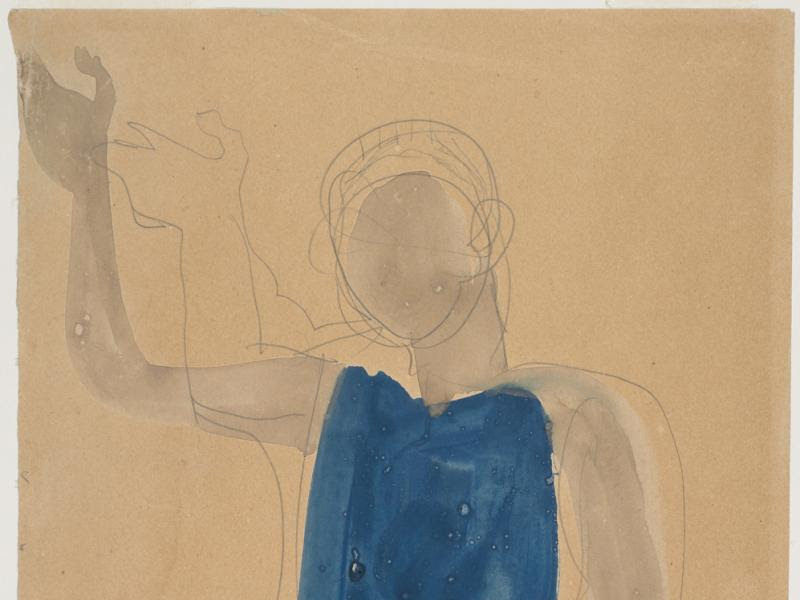
Auguste Rodin | Drawings

Auguste Rodin | Drawings


Auguste Rodin (1840-1917) was a prolific draughtsman, producing some 10,000 drawings, over 7,000 of which are now in the Musée Rodin, Paris.
His drawings were seldom used as studies or projects for a sculpture or monument. The draughtsman’s oeuvre developed in tandem with the sculptor’s.

Rainer Maria Rilke | Letters on Cézanne /Lettere su Cézanne

Rainer Maria Rilke | Letters on Cézanne /Lettere su Cézanne


The extraordinary letters (translated from the german by Jane Bannard Greene), show to what degree the eye of one artist can penetrate to the essence of another art.
The most distinguished of modern German poets, Rainer Maria Rilke, was born when Paul Cézanne had already been painting nearly a decade.

Leonardo da Vinci | Quale scienza è meccanica, e quale non è meccanica

Leonardo da Vinci | Quale scienza è meccanica, e quale non è meccanica

Trattato della Pittura
Parte prima | Capitolo 29


Dicono quella cognizione esser meccanica la quale è partorita dall'esperienza, e quella esser scientifica che nasce e finisce nella mente, e quella essere semimeccanica che nasce dalla scienza e finisce nella operazione manuale.


Ma a me pare che quelle scienze sieno vane e piene di errori le quali non sono nate dall'esperienza, madre di ogni certezza, e che non terminano in nota esperienza, cioè che la loro origine, o mezzo, o fine, non passa per nessuno de' cinque sensi.