Visualizzazione post con etichetta Art history. Mostra tutti i post
Leonardo and Michelangelo: The 1504 Duel in Florence

Leonardo and Michelangelo: The 1504 Duel in Florence

The "duel" between Leonardo da Vinci and Michelangelo Buonarroti refers to a legendary artistic competition, when the Florentine Republic commissioned both masters to paint massive, opposing battle frescoes in the Palazzo Vecchio Grand Hall of the Five Hundred.
In 1504, Michelangelo Buonarroti was commissioned by Pier Soderini to complete a celebrative fresco depicting the Battle of Cascina, to be placed in the Florentine Room of the Great Council (or Salone dei Cinquecento) of Palazzo Vecchio while Leonardo da Vinci was commissioned to complete another painting on the opposite wall to celebrate the equally important Florentine victory at the 1440 Battle of Anghiari, effectively pitting the two rivals against one another.

Leonardo da Vinci | Study of a Warrior's Head for the Battle of Anghiari, 1504-1505 | Museum of Fine Arts, Budapest

Read More

Leonardo and Michelangelo: The 1504 Duel in Florence

The "duel" between Leonardo da Vinci and Michelangelo Buonarroti refers to a legendary artistic competition, when the Florentine Republic commissioned both masters to paint massive, opposing battle frescoes in the Palazzo Vecchio Grand Hall of the Five Hundred.
In 1504, Michelangelo Buonarroti was commissioned by Pier Soderini to complete a celebrative fresco depicting the Battle of Cascina, to be placed in the Florentine Room of the Great Council (or Salone dei Cinquecento) of Palazzo Vecchio while Leonardo da Vinci was commissioned to complete another painting on the opposite wall to celebrate the equally important Florentine victory at the 1440 Battle of Anghiari, effectively pitting the two rivals against one another.

Leonardo da Vinci | Study of a Warrior's Head for the Battle of Anghiari, 1504-1505 | Museum of Fine Arts, Budapest

18th century Art History / Sitemap

18th century Art History / Sitemap

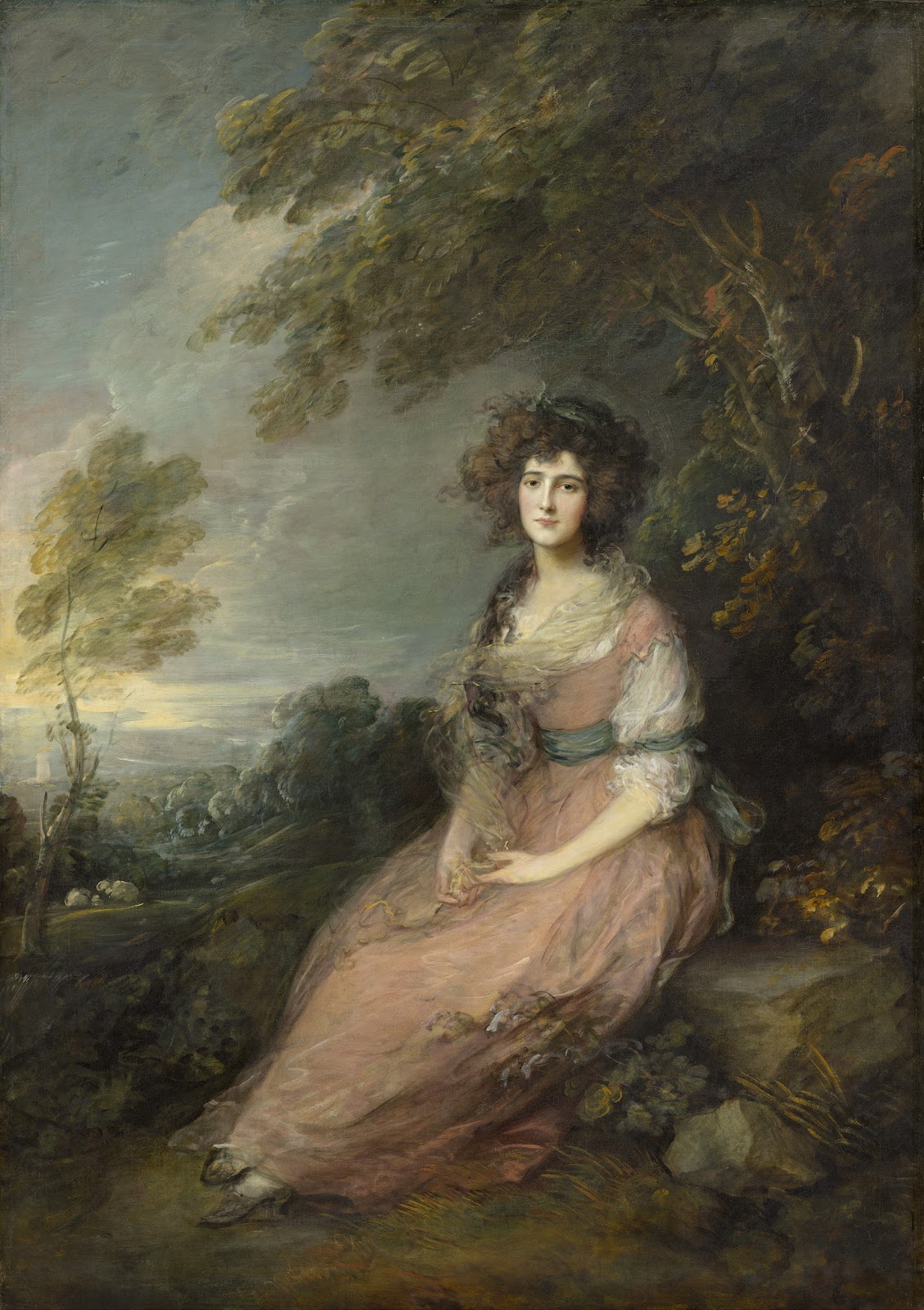
18th-century Art was a period of dramatic shifts, evolving from the ornate and playful Rococo style to the serious, structured ideals of Neoclassicism, and finally giving way to the emotional depth of early Romanticism.
This century's art was deeply shaped by the Enlightenment, a renewed passion for classical antiquity following the discovery of Pompeii, and the political upheavals of the American and French Revolutions.


Read More

18th century Art History / Sitemap

18th-century Art was a period of dramatic shifts, evolving from the ornate and playful Rococo style to the serious, structured ideals of Neoclassicism, and finally giving way to the emotional depth of early Romanticism.
This century's art was deeply shaped by the Enlightenment, a renewed passion for classical antiquity following the discovery of Pompeii, and the political upheavals of the American and French Revolutions.


How ChatGPT helps painters: Color techniques, palettes and professional workflow

How ChatGPT helps painters: Color techniques, palettes and professional workflow

Most discussions about AI for artists remain superficial.

In reality, ChatGPT can be deeply integrated into the technical painting process, especially in color, mixing, and composition.

🎨 1. Reconstructing master palettes

Artists can ask ChatGPT to recreate palettes used by masters:

  • Van Gogh (chrome yellow, ultramarine, viridian)
  • Renoir (flesh tones, cerulean blue, light ochre)
  • Renaissance palettes (earth pigments, vermilion, lapis lazuli)


Read More

How ChatGPT helps painters: Color techniques, palettes and professional workflow

Most discussions about AI for artists remain superficial.

In reality, ChatGPT can be deeply integrated into the technical painting process, especially in color, mixing, and composition.

🎨 1. Reconstructing master palettes

Artists can ask ChatGPT to recreate palettes used by masters:

  • Van Gogh (chrome yellow, ultramarine, viridian)
  • Renoir (flesh tones, cerulean blue, light ochre)
  • Renaissance palettes (earth pigments, vermilion, lapis lazuli)


Market painting | The historical origins

Market painting | The historical origins

Market paintings capture the vibrant energy and cultural diversity of trading spaces across the world, from bustling open-air bazaars to serene floral stalls.
Market scenes have been a popular genre for centuries, capturing the vibrancy of daily life, commerce and culture.
These paintings often use "visual seduction" to make the depicted commodities - like fruits, vegetables, or flowers - as alluring to the viewer as the art itself.
This subject is a favorite for artists to explore crowd dynamics, architectural perspective, and color theory through various mediums like oil and watercolor.


Read More

Market painting | The historical origins

Market paintings capture the vibrant energy and cultural diversity of trading spaces across the world, from bustling open-air bazaars to serene floral stalls.
Market scenes have been a popular genre for centuries, capturing the vibrancy of daily life, commerce and culture.
These paintings often use "visual seduction" to make the depicted commodities - like fruits, vegetables, or flowers - as alluring to the viewer as the art itself.
This subject is a favorite for artists to explore crowd dynamics, architectural perspective, and color theory through various mediums like oil and watercolor.


Genre Art History and Sitemap

Genre Art History and Sitemap

Genre painting, painting of scenes from everyday life, of ordinary people in work or recreation, depicted in a generally realistic manner.
Genre art contrasts with that of landscape, portraiture, still life, religious themes, historic events, or any kind of traditionally idealized subject matter.
Intimate scenes from daily life are almost invariably the subject of genre painting.
The elimination of imaginative content and of idealization focuses attention upon the shrewd observation of types, costumes and settings.
The term arose in 18th-century France to describe painters specializing in one kind genre of picture, such as flowers or animals or middle-class life, and was originally used derogatively by advocates of the ideal or grand manner in art.


Read More

Genre Art History and Sitemap

Genre painting, painting of scenes from everyday life, of ordinary people in work or recreation, depicted in a generally realistic manner.
Genre art contrasts with that of landscape, portraiture, still life, religious themes, historic events, or any kind of traditionally idealized subject matter.
Intimate scenes from daily life are almost invariably the subject of genre painting.
The elimination of imaginative content and of idealization focuses attention upon the shrewd observation of types, costumes and settings.
The term arose in 18th-century France to describe painters specializing in one kind genre of picture, such as flowers or animals or middle-class life, and was originally used derogatively by advocates of the ideal or grand manner in art.


Russian Art History and Sitemap

Russian Art History and Sitemap

Early Russian painting is represented in icons and vibrant frescos.
In the early 15th century, the master icon painter Andrei Rublev created some of Russia's most treasured religious art.
The Russian Academy of Arts, which was established in 1757, to train Russian artists, brought Western techniques of secular painting to Russia.
In the 18th century, academicians Ivan Argunov, Dmitry Levitzky, Vladimir Borovikovsky became influential.


Read More

Russian Art History and Sitemap

Early Russian painting is represented in icons and vibrant frescos.
In the early 15th century, the master icon painter Andrei Rublev created some of Russia's most treasured religious art.
The Russian Academy of Arts, which was established in 1757, to train Russian artists, brought Western techniques of secular painting to Russia.
In the 18th century, academicians Ivan Argunov, Dmitry Levitzky, Vladimir Borovikovsky became influential.


Come ChatGPT aiuta i pittori: Tecniche di colore, palette e metodi professionali

Come ChatGPT aiuta i pittori: Tecniche di colore, palette e metodi professionali

Quando si parla di intelligenza artificiale per artisti, spesso si resta in superficie. In realtà, ChatGPT può diventare uno strumento estremamente utile all’interno del processo pittorico, soprattutto per chi lavora con colore, tecnica e composizione.

🎨 1. Analisi e ricostruzione delle palette dei grandi maestri

Un pittore può chiedere a ChatGPT di ricostruire le palette cromatiche utilizzate da artisti storici, ad esempio:

  • palette tipica di Van Gogh (gialli cromo, blu oltremare, verdi viridian);
  • palette impressionista di Renoir (rosa carne, blu ceruleo, ocra chiara);
  • palette rinascimentale (terre naturali, lapislazzuli, vermiglione).


Read More

Come ChatGPT aiuta i pittori: Tecniche di colore, palette e metodi professionali

Quando si parla di intelligenza artificiale per artisti, spesso si resta in superficie. In realtà, ChatGPT può diventare uno strumento estremamente utile all’interno del processo pittorico, soprattutto per chi lavora con colore, tecnica e composizione.

🎨 1. Analisi e ricostruzione delle palette dei grandi maestri

Un pittore può chiedere a ChatGPT di ricostruire le palette cromatiche utilizzate da artisti storici, ad esempio:

  • palette tipica di Van Gogh (gialli cromo, blu oltremare, verdi viridian);
  • palette impressionista di Renoir (rosa carne, blu ceruleo, ocra chiara);
  • palette rinascimentale (terre naturali, lapislazzuli, vermiglione).


Giorgio Vasari: "Vita di Sandro Botticello - Pittor Fiorentino"

Giorgio Vasari: "Vita di Sandro Botticello - Pittor Fiorentino"

Ne’ medesimi tempi del Magnifico Lorenzo Vecchio de’ Medici, che fu veramente per le persone d’ingegno un secol d’oro, fiorì ancora Alessandro, chiamato a l’uso nostro Sandro e detto di Botticello per la cagione che appresso vedremo.
Costui fu figliuolo di Mariano Filipepi, cittadino fiorentino dal quale diligentemente allevato e fatto instruire in tutte quelle cose che usanza è di insegnarsi a’ fanciulli in quella età, prima che e’ si ponghino a le botteghe, ancora che agevolmente apprendesse tutto quello che e’ voleva, era nientedimanco inquieto sempre; né si contentava di scuola alcuna, di leggere, di scrivere o di abbaco; di maniera che il padre infastidito di questo cervello sì stravagante, per disperato lo pose a lo orefice con un suo compare chiamato Botticello, assai competente maestro allora in quell’arte.


Read More

Giorgio Vasari: "Vita di Sandro Botticello - Pittor Fiorentino"

Ne’ medesimi tempi del Magnifico Lorenzo Vecchio de’ Medici, che fu veramente per le persone d’ingegno un secol d’oro, fiorì ancora Alessandro, chiamato a l’uso nostro Sandro e detto di Botticello per la cagione che appresso vedremo.
Costui fu figliuolo di Mariano Filipepi, cittadino fiorentino dal quale diligentemente allevato e fatto instruire in tutte quelle cose che usanza è di insegnarsi a’ fanciulli in quella età, prima che e’ si ponghino a le botteghe, ancora che agevolmente apprendesse tutto quello che e’ voleva, era nientedimanco inquieto sempre; né si contentava di scuola alcuna, di leggere, di scrivere o di abbaco; di maniera che il padre infastidito di questo cervello sì stravagante, per disperato lo pose a lo orefice con un suo compare chiamato Botticello, assai competente maestro allora in quell’arte.


Award winning Artists | Sitemap

Award winning Artists | Sitemap

Lists of Award winning Artists cover some of the notable awards presented for art, some for a specific form or genre, some for artists from one country or region, some more general.
In the world of Art, being an "award-winning" artist means having your creative work formally recognized by an institution or peer group as meeting a high standard of excellence, innovation, or cultural impact.
Historically, these awards have served as "cultural artifacts" - records of what a society or institution valued at a specific moment in time.


Read More

Award winning Artists | Sitemap

Lists of Award winning Artists cover some of the notable awards presented for art, some for a specific form or genre, some for artists from one country or region, some more general.
In the world of Art, being an "award-winning" artist means having your creative work formally recognized by an institution or peer group as meeting a high standard of excellence, innovation, or cultural impact.
Historically, these awards have served as "cultural artifacts" - records of what a society or institution valued at a specific moment in time.


21st Century Art History / Sitemap

21st Century Art History / Sitemap

21st-century art is defined by a globalized, pluralistic approach that resists any single "organizing principle" or "ism".
Emerging from the late 20th century's postmodern foundations, it focuses on the intersection of advanced technology, diverse identities, and social practice.

Key Characteristics

Globalization: Increased interconnectivity allows artists to blend local histories with global visual culture.
Technological Fusion: Art now incorporates digital imaging, the internet, and emerging technologies like Artificial Intelligence and blockchain.
Participatory Art: Shift from passive observation to works where social interaction is the core content.
Interdisciplinary Themes: Artists frequently explore identity, gender, climate, and power dynamics across diverse media like fashion, video games, and traditional painting.


Read More

21st Century Art History / Sitemap

21st-century art is defined by a globalized, pluralistic approach that resists any single "organizing principle" or "ism".
Emerging from the late 20th century's postmodern foundations, it focuses on the intersection of advanced technology, diverse identities, and social practice.

Key Characteristics

Globalization: Increased interconnectivity allows artists to blend local histories with global visual culture.
Technological Fusion: Art now incorporates digital imaging, the internet, and emerging technologies like Artificial Intelligence and blockchain.
Participatory Art: Shift from passive observation to works where social interaction is the core content.
Interdisciplinary Themes: Artists frequently explore identity, gender, climate, and power dynamics across diverse media like fashion, video games, and traditional painting.


ChatGPT and the new frontier of Creativity

ChatGPT and the new frontier of Creativity

An essay on the relationship between Art, creativity and Artificial Intelligence

Every era in the history of art has experienced a technological revolution.
Perspective during the Renaissance, photography in the nineteenth century, cinema in the twentieth century.
Today we are living through another transformation: Artificial Intelligence.
Among the most well-known tools is ChatGPT, developed by the technology company OpenAI.
It is not a machine designed to replace human beings, but rather a tool for dialogue and knowledge, capable of helping people write, study, analyze, and even discuss art.


Read More

ChatGPT and the new frontier of Creativity

An essay on the relationship between Art, creativity and Artificial Intelligence

Every era in the history of art has experienced a technological revolution.
Perspective during the Renaissance, photography in the nineteenth century, cinema in the twentieth century.
Today we are living through another transformation: Artificial Intelligence.
Among the most well-known tools is ChatGPT, developed by the technology company OpenAI.
It is not a machine designed to replace human beings, but rather a tool for dialogue and knowledge, capable of helping people write, study, analyze, and even discuss art.


Australian Art History and Sitemap

Australian Art History and Sitemap

Australian Art is a vast narrative spanning over 65,000 years, beginning with the world's oldest continuous artistic tradition and evolving through colonial, modernist, and contemporary movements.
The trajectory of Australian art reflects a shifting dialogue between Indigenous connections to Country and Western attempts to capture the unique light and landscape of the continent.

Indigenous Australian Art (c. 65,000 Years Ago - Present)

Indigenous art is deeply rooted in the Dreamtime (Jukurrpa), communicating ancestral ties and spiritual connections to the land.


Read More

Australian Art History and Sitemap

Australian Art is a vast narrative spanning over 65,000 years, beginning with the world's oldest continuous artistic tradition and evolving through colonial, modernist, and contemporary movements.
The trajectory of Australian art reflects a shifting dialogue between Indigenous connections to Country and Western attempts to capture the unique light and landscape of the continent.

Indigenous Australian Art (c. 65,000 Years Ago - Present)

Indigenous art is deeply rooted in the Dreamtime (Jukurrpa), communicating ancestral ties and spiritual connections to the land.


History of Poetry

History of Poetry

Poetry is one of the oldest forms of human expression, predating literacy and evolving from oral traditions used to preserve history, genealogy and law.
The word "poet" originates from the Greek poiētēs, meaning "maker".

The Echo in the Cave

The first voice wasn't a voice at all, not really.
It was a rhythm.
In the dim coolness of a limestone cave, millennia ago, Elara, a woman of the Clan of the Whispering Winds, beat a steady pulse on a stretched animal skin.

Enheduanna's head - celebrated as the earliest known named Author in world history | Morgan Library / The Penn Museum

Read More

History of Poetry

Poetry is one of the oldest forms of human expression, predating literacy and evolving from oral traditions used to preserve history, genealogy and law.
The word "poet" originates from the Greek poiētēs, meaning "maker".

The Echo in the Cave

The first voice wasn't a voice at all, not really.
It was a rhythm.
In the dim coolness of a limestone cave, millennia ago, Elara, a woman of the Clan of the Whispering Winds, beat a steady pulse on a stretched animal skin.

Enheduanna's head - celebrated as the earliest known named Author in world history | Morgan Library / The Penn Museum

Chicago Armory Show of 1913

Chicago Armory Show of 1913

The Armory Show of 1913, formally titled the International Exhibition of Modern Art, was a landmark event organized by the Association of American Painters and Sculptors that introduced modern European art to American audiences on a massive scale.
Held from February 17 to March 15 at New York City's 69th Regiment Armory on Lexington Avenue, it later traveled to Chicago and Boston, drawing huge crowds and sparking intense debate about the nature of art.

Vincent van Gogh | Two Peasant Women Digging in Field with Snow, 1890

Read More

Chicago Armory Show of 1913

The Armory Show of 1913, formally titled the International Exhibition of Modern Art, was a landmark event organized by the Association of American Painters and Sculptors that introduced modern European art to American audiences on a massive scale.
Held from February 17 to March 15 at New York City's 69th Regiment Armory on Lexington Avenue, it later traveled to Chicago and Boston, drawing huge crowds and sparking intense debate about the nature of art.

Vincent van Gogh | Two Peasant Women Digging in Field with Snow, 1890

Irish Art History and Sitemap

Irish Art History and Sitemap

The history of Irish art starts around 3200 BC with Neolithic stone carvings at the Newgrange megalithic tomb, part of the Brú na Bóinne complex which still stands today, County Meath.
In early-Bronze Age Ireland there is evidence of Beaker culture and a widespread metalworking.
Trade-links with Britain and Northern Europe introduced La Tène culture and Celtic art to Ireland by about 300 BC, but while these styles later changed or disappeared under the Roman subjugation, Ireland was left alone to develop Celtic designs: notably Celtic crosses, spiral designs, and the intricate interlaced patterns of Celtic knotwork.

Phoebe Anna Traquair | Arts and Crafts Movement painter

Read More

Irish Art History and Sitemap

The history of Irish art starts around 3200 BC with Neolithic stone carvings at the Newgrange megalithic tomb, part of the Brú na Bóinne complex which still stands today, County Meath.
In early-Bronze Age Ireland there is evidence of Beaker culture and a widespread metalworking.
Trade-links with Britain and Northern Europe introduced La Tène culture and Celtic art to Ireland by about 300 BC, but while these styles later changed or disappeared under the Roman subjugation, Ireland was left alone to develop Celtic designs: notably Celtic crosses, spiral designs, and the intricate interlaced patterns of Celtic knotwork.

Phoebe Anna Traquair | Arts and Crafts Movement painter

Les Nabis | Art history and Sitemap

Les Nabis | Art history and Sitemap

Ambitious decorative painting enjoyed a resurgence in Europe from the late 1880s through the early twentieth century.
In Paris, Pierre Bonnard, Maurice Denis and Édouard Vuillard were among the most influential artists to embrace decoration as painting’s primary function.
Their works celebrate pattern and ornament, challenge the boundaries that divide fine arts from crafts, and, in many cases, complement the interiors for which they were commissioned.
Disaffected with the rigidly representational painting methods taught at the Académie Julian, Bonnard and Denis joined with other like-minded students in the fall of 1888 to form a brotherhood called the “Nabis”, a Hebrew word meaning “prophets”.


Read More

Les Nabis | Art history and Sitemap

Ambitious decorative painting enjoyed a resurgence in Europe from the late 1880s through the early twentieth century.
In Paris, Pierre Bonnard, Maurice Denis and Édouard Vuillard were among the most influential artists to embrace decoration as painting’s primary function.
Their works celebrate pattern and ornament, challenge the boundaries that divide fine arts from crafts, and, in many cases, complement the interiors for which they were commissioned.
Disaffected with the rigidly representational painting methods taught at the Académie Julian, Bonnard and Denis joined with other like-minded students in the fall of 1888 to form a brotherhood called the “Nabis”, a Hebrew word meaning “prophets”.


Magic Realism | Art history and Sitemap

Magic Realism | Art history and Sitemap

Giorgio De Chirico 1888-1978 | Italian surrealist painter | The Metaphysical art movement
Giorgio de Chirico

Magic Realism, also sometimes called fantastic realism, is a genre that blends realistic depictions of the everyday world with elements of fantasy, myth, or the surreal.
It's not merely about adding monsters or fantastical creatures into a realistic scene.
It's more nuanced than that. It's about portraying the ordinary with an air of mystery, strangeness, and sometimes a subtle political or social commentary.
The "magic" isn't explicitly explained; it's accepted as part of the natural order within the artwork's world.

Read More

Magic Realism | Art history and Sitemap

Giorgio De Chirico 1888-1978 | Italian surrealist painter | The Metaphysical art movement
Giorgio de Chirico

Magic Realism, also sometimes called fantastic realism, is a genre that blends realistic depictions of the everyday world with elements of fantasy, myth, or the surreal.
It's not merely about adding monsters or fantastical creatures into a realistic scene.
It's more nuanced than that. It's about portraying the ordinary with an air of mystery, strangeness, and sometimes a subtle political or social commentary.
The "magic" isn't explicitly explained; it's accepted as part of the natural order within the artwork's world.

20th / 21st Century Artists | Sitemap

20th / 21st Century Artists | Sitemap


Art of the 20th and 21st centuries is marked by a rapid succession of diverse and often radical art movements that broke from tradition to explore new mediums, styles, and concepts.
These movements reflect the significant social, political, and technological changes of their times.

20th Century Art Movements

The 20th century saw the United States emerge as a global hub for visual expression, with artists exploring both realism and abstraction, and a focus on expressing a spiritual response to the changed conditions of life.

Read More

20th / 21st Century Artists | Sitemap


Art of the 20th and 21st centuries is marked by a rapid succession of diverse and often radical art movements that broke from tradition to explore new mediums, styles, and concepts.
These movements reflect the significant social, political, and technological changes of their times.

20th Century Art Movements

The 20th century saw the United States emerge as a global hub for visual expression, with artists exploring both realism and abstraction, and a focus on expressing a spiritual response to the changed conditions of life.

Egyptian Art History and Sitemap

Egyptian Art History and Sitemap

Ancient Egyptian art is a highly stylized and symbolic tradition that remained remarkably consistent for over 3,000 years, deeply intertwined with the civilization's religious beliefs, particularly those concerning the afterlife and the concept of universal order (Ma'at).
Most surviving art comes from tombs and monuments, and thus focuses on achieving immortality.
The contemporary history of Egyptian art is characterized by a dynamic interplay between national identity, social commentary, and a rich historical heritage, evolving from Western-influenced modernism to a diverse, globally recognized scene.

Thutmose | The Sculptor of the bust of Nefertiti

Read More

Egyptian Art History and Sitemap

Ancient Egyptian art is a highly stylized and symbolic tradition that remained remarkably consistent for over 3,000 years, deeply intertwined with the civilization's religious beliefs, particularly those concerning the afterlife and the concept of universal order (Ma'at).
Most surviving art comes from tombs and monuments, and thus focuses on achieving immortality.
The contemporary history of Egyptian art is characterized by a dynamic interplay between national identity, social commentary, and a rich historical heritage, evolving from Western-influenced modernism to a diverse, globally recognized scene.

Thutmose | The Sculptor of the bust of Nefertiti

15th-16th century Art | Sitemap

15th-16th century Art | Sitemap

The 15th and 16th centuries saw the flowering of the Renaissance, a period of renewed interest in classical antiquity that emphasized humanism, naturalism, and the development of new artistic techniques.
It began in Italy and later spread throughout Europe, with distinct regional styles and priorities.

Key periods

The Early Renaissance (15th century)

Originating in Florence, the Early Renaissance, or Quattrocento, established the foundations for the later High Renaissance.
Masaccio (1401-1428): Credited with popularizing linear perspective and creating realistic figures with solidity and emotion.
Donatello (1386-1466): His bronze David was the first free-standing nude sculpture since antiquity, demonstrating classical influence.
Sandro Botticelli (1445-1510): Known for elegant mythological paintings like The Birth of Venus and Primavera.
Jan van Eyck (1390-1441): A pioneer of the Northern Renaissance who mastered oil painting and meticulous detail, as seen in The Arnolfini Portrait.


Read More

15th-16th century Art | Sitemap

The 15th and 16th centuries saw the flowering of the Renaissance, a period of renewed interest in classical antiquity that emphasized humanism, naturalism, and the development of new artistic techniques.
It began in Italy and later spread throughout Europe, with distinct regional styles and priorities.

Key periods

The Early Renaissance (15th century)

Originating in Florence, the Early Renaissance, or Quattrocento, established the foundations for the later High Renaissance.
Masaccio (1401-1428): Credited with popularizing linear perspective and creating realistic figures with solidity and emotion.
Donatello (1386-1466): His bronze David was the first free-standing nude sculpture since antiquity, demonstrating classical influence.
Sandro Botticelli (1445-1510): Known for elegant mythological paintings like The Birth of Venus and Primavera.
Jan van Eyck (1390-1441): A pioneer of the Northern Renaissance who mastered oil painting and meticulous detail, as seen in The Arnolfini Portrait.