Joanna Szewczyk-Oczkowska is an established Polish contemporary painter with more than 30 years of artistic experience, whose art leans heavily into magical realism, emotional portraiture and dark surrealism.
Her work blurs the lines between expressive realism and structural abstraction.
She heavily utilizes palette knives, multi-layered paint applications, and controlled dripping techniques to construct depth and motion.
Her paintings frequently juxtapose softly modeled human portraits against dynamic, geometric, or architectural backgrounds.
Joanna Szewczyk-Oczkowska is an established Polish contemporary painter with more than 30 years of artistic experience, whose art leans heavily into magical realism, emotional portraiture and dark surrealism.
Her work blurs the lines between expressive realism and structural abstraction.
She heavily utilizes palette knives, multi-layered paint applications, and controlled dripping techniques to construct depth and motion.
Her paintings frequently juxtapose softly modeled human portraits against dynamic, geometric, or architectural backgrounds.
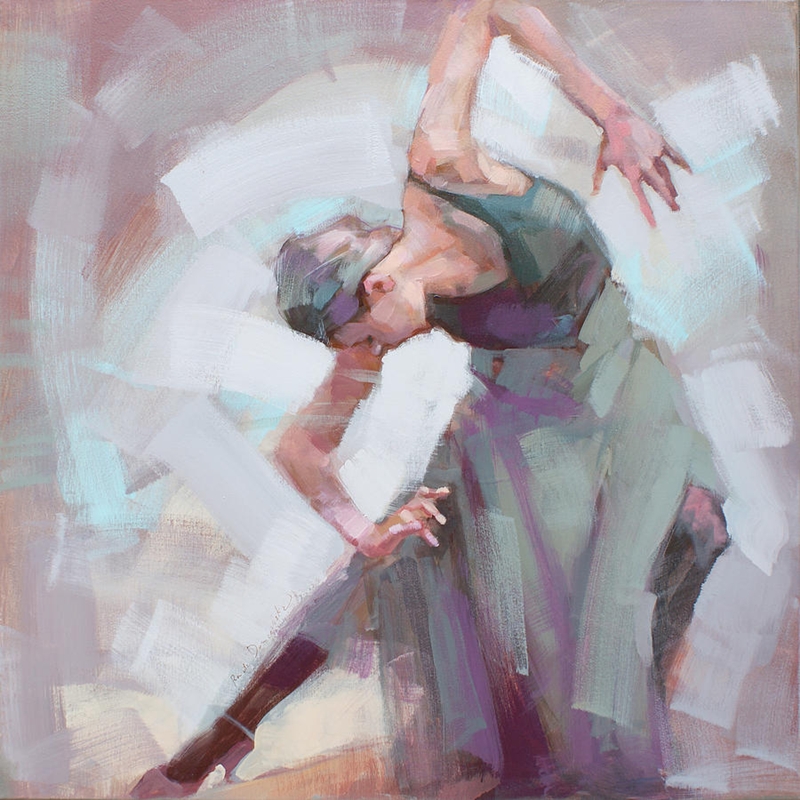
Renata Domagalska, Polish painter, known for working in the Expressive Figurative style, presently live in Spain.
Predominant motif of my art is the human.
I'm fascinated by dynamic and motion of life that`s why they are a motor of my art creation: flamenco dance, tango, folklore, figure, the atmosphere of sunny southern countries, small towns with their little streets teeming with life, fragments of nature.
Renata Domagalska, Polish painter, known for working in the Expressive Figurative style, presently live in Spain.
Predominant motif of my art is the human.
I'm fascinated by dynamic and motion of life that`s why they are a motor of my art creation: flamenco dance, tango, folklore, figure, the atmosphere of sunny southern countries, small towns with their little streets teeming with life, fragments of nature.
- "My name is Justyna Kopania. I am a painter. Art is my asylum, life, poetry, music, the best cigar, tasty strong tea, everything.
My Art reflects the world I perceive with all my senses; people I meet and love; nature I admire, and all the things that affect the way I am.
The Man is my main inspiration and This Man is the principal topic of my project.
I am focusing on Their psyche, attitudes, as well as Their appearance, manners and all the complex processes that take place both outside and inside the Man'.
- "My name is Justyna Kopania. I am a painter. Art is my asylum, life, poetry, music, the best cigar, tasty strong tea, everything.
My Art reflects the world I perceive with all my senses; people I meet and love; nature I admire, and all the things that affect the way I am.
The Man is my main inspiration and This Man is the principal topic of my project.
I am focusing on Their psyche, attitudes, as well as Their appearance, manners and all the complex processes that take place both outside and inside the Man'.
Magdalena Serwin is an Polish artist born in the Jastrzębiu-Zdroju region, specializing in oil and putty technique.
Graduate of the State Higher Vocational School in Raciborz with a major in applied arts. Under the tutelage of great artists she explored the arts of painting, graphic arts as well as photography.
To a large extent, however, self-taught, for whom painting is a passion and at the same time a kind of peace, a respite from everyday matters.
When painting a picture, he always tries to find something unusual in the ordinary.
Ordinary characters, not known to anyone, with whom any viewer can identify, make friends....
Magdalena Serwin is an Polish artist born in the Jastrzębiu-Zdroju region, specializing in oil and putty technique.
Graduate of the State Higher Vocational School in Raciborz with a major in applied arts. Under the tutelage of great artists she explored the arts of painting, graphic arts as well as photography.
To a large extent, however, self-taught, for whom painting is a passion and at the same time a kind of peace, a respite from everyday matters.
When painting a picture, he always tries to find something unusual in the ordinary.
Ordinary characters, not known to anyone, with whom any viewer can identify, make friends....
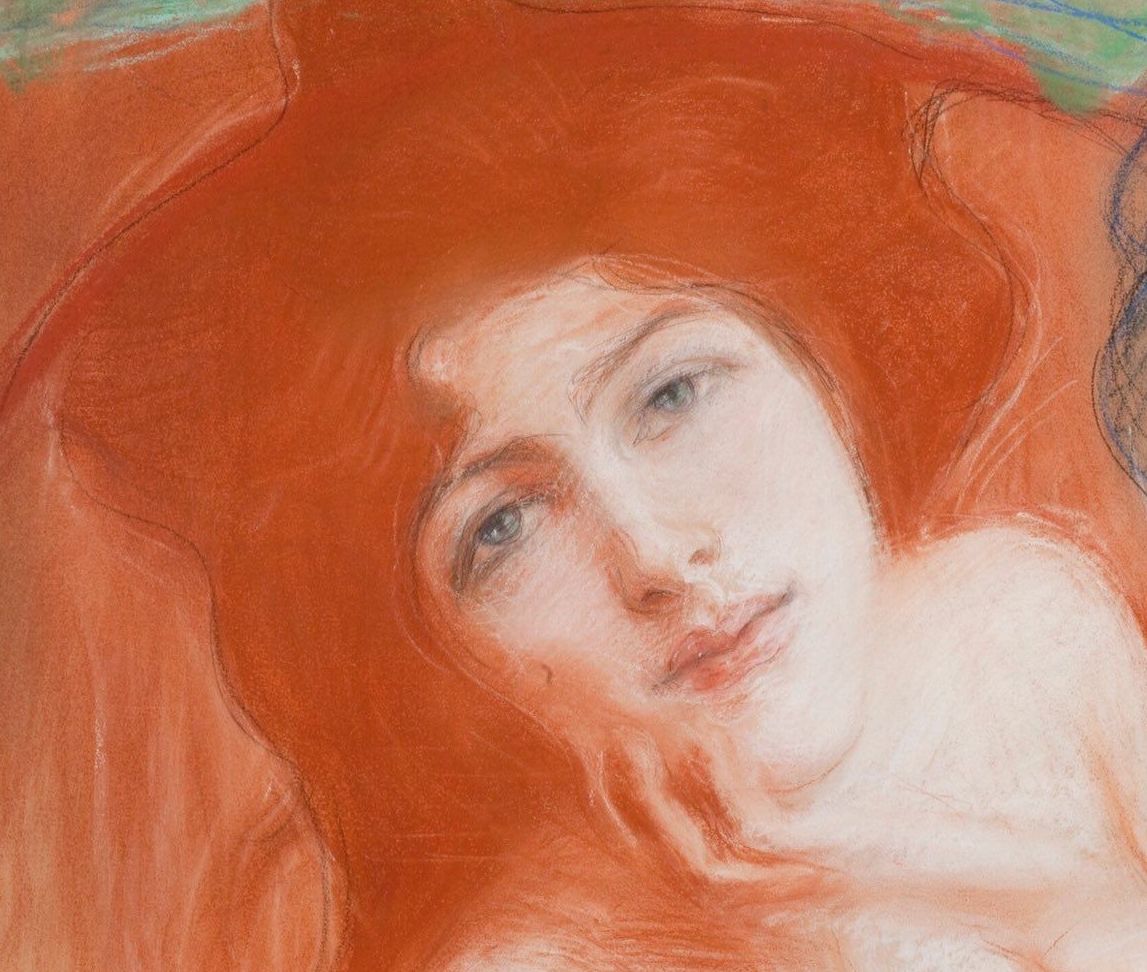
Igor Talwinski (1907-1983) was a notable Polish-born French painter, active primarily in France and England, known for his portraits and figure studies, particularly female figures.
His work is characterized by a figurative style, with soft modeling of faces and bodies often contrasted by lively brushwork in the backgrounds.
He was mobilized in September 1939 and was taken prisoner by the Germans.
Igor Talwinski (1907-1983) was a notable Polish-born French painter, active primarily in France and England, known for his portraits and figure studies, particularly female figures.
His work is characterized by a figurative style, with soft modeling of faces and bodies often contrasted by lively brushwork in the backgrounds.
He was mobilized in September 1939 and was taken prisoner by the Germans.
Tomasz "Alen" Kopera è un pittore Polacco, rappresentante del Realismo Magico.
Laureato in ingegneria civile presso l'Università di Scienza e Tecnologia di Breslavia, nel 2005 si è trasferito in Irlanda del Nord, dove ha vissuto e lavorato per oltre un decennio.
Attualmente vive in Polonia.
Il suo talento artistico si manifesta fin dalla prima infanzia.
Tomasz "Alen" Kopera è un pittore Polacco, rappresentante del Realismo Magico.
Laureato in ingegneria civile presso l'Università di Scienza e Tecnologia di Breslavia, nel 2005 si è trasferito in Irlanda del Nord, dove ha vissuto e lavorato per oltre un decennio.
Attualmente vive in Polonia.
Il suo talento artistico si manifesta fin dalla prima infanzia.
The painting is part of the Collection of Polish businessman and art collector Marek Roefler/ Villa la Fleur, Konstancin-Jeziorna, Poland.
Russian Dancer, posthumously titled in reference to the Ballets Russes - the troupe founded by Serge Diaghilev, which took Paris by storm in the 1910s and 1920s with its innovative choreography and gleaming costumes and sets designed by Russian artists-portrays a woman dressed in folk attire from southern Russia.
The painting is part of the Collection of Polish businessman and art collector Marek Roefler/ Villa la Fleur, Konstancin-Jeziorna, Poland.
Russian Dancer, posthumously titled in reference to the Ballets Russes - the troupe founded by Serge Diaghilev, which took Paris by storm in the 1910s and 1920s with its innovative choreography and gleaming costumes and sets designed by Russian artists-portrays a woman dressed in folk attire from southern Russia.
Descritta dal comitato per il Nobel come il "Mozart della poesia" ma con "qualcosa della furia di Beethoven", Wisława Szymborska (1923-2012) è stata insignita del Premio Nobel per la letteratura nel 1996 "per una poesia che, con ironica precisione, permette al contesto storico e biologico di venire alla luce in frammenti d'umana realtà".
Il discorso della poetessa Wislawa Szymborska alla consegna del premio Nobel
7 dicembre 1996
(✔en) In un discorso, a quanto pare, la prima frase è sempre la più difficile.
Ebbene, la prima è comunque andata.
Ma ho la sensazione che anche le frasi successive - la terza, la sesta, la decima e così via, fino all'ultima parola - saranno altrettanto difficili, perché si suppone che io parli di poesia.
Descritta dal comitato per il Nobel come il "Mozart della poesia" ma con "qualcosa della furia di Beethoven", Wisława Szymborska (1923-2012) è stata insignita del Premio Nobel per la letteratura nel 1996 "per una poesia che, con ironica precisione, permette al contesto storico e biologico di venire alla luce in frammenti d'umana realtà".
Il discorso della poetessa Wislawa Szymborska alla consegna del premio Nobel
7 dicembre 1996
(✔en) In un discorso, a quanto pare, la prima frase è sempre la più difficile.
Ebbene, la prima è comunque andata.
Ma ho la sensazione che anche le frasi successive - la terza, la sesta, la decima e così via, fino all'ultima parola - saranno altrettanto difficili, perché si suppone che io parli di poesia.
Described by the Nobel committee as the "Mozart of poetry" but with "something of the fury of Beethoven", Wisława Szymborska (1923-2012) was awarded the 1996 Nobel Prize in Literature "for poetry that with ironic precision allows the historical and biological context to come to light in fragments of human reality".
Wisława Szymborska | Nobel Lecture
December 7, 1996
(✔it) They say the first sentence in any speech is always the hardest. Well, that one's behind me, anyway. But I have a feeling that the sentences to come - the third, the sixth, the tenth, and so on, up to the final line - will be just as hard, since I'm supposed to talk about poetry.
I've said very little on the subject, next to nothing, in fact. And whenever I have said anything, I've always had the sneaking suspicion that I'm not very good at it. This is why my lecture will be rather short. All imperfection is easier to tolerate if served up in small doses.
Described by the Nobel committee as the "Mozart of poetry" but with "something of the fury of Beethoven", Wisława Szymborska (1923-2012) was awarded the 1996 Nobel Prize in Literature "for poetry that with ironic precision allows the historical and biological context to come to light in fragments of human reality".
Wisława Szymborska | Nobel Lecture
December 7, 1996
(✔it) They say the first sentence in any speech is always the hardest. Well, that one's behind me, anyway. But I have a feeling that the sentences to come - the third, the sixth, the tenth, and so on, up to the final line - will be just as hard, since I'm supposed to talk about poetry.
I've said very little on the subject, next to nothing, in fact. And whenever I have said anything, I've always had the sneaking suspicion that I'm not very good at it. This is why my lecture will be rather short. All imperfection is easier to tolerate if served up in small doses.
Jacek Yerka, pittore surrealista Polacco, nato a Torun, vive e lavora con la sua famiglia, in un enclave rurale della sua nativa Polonia.
Inizia con lo studiare Storia dell'Arte e segue corsi di grafica, poi si dedica alla pittura nel 1980.
Dipinge (dapprima solo su tela con olio e acrilico) con meticoloso realismo stile fiammingo.
Nei suoi lavori s'intravvede la pastorale atmosfera della campagna polacca, che però fa da base non strutturale, difatti la magia sognante di Yerka s'ispira ai pittori e personaggi del 15°-16° secolo: Cagliostro. Hieronymus Bosch, Pieter Bruegel, Hugo van der Goes e Jan van Eyck ed anche il moderno Magritte: una magia che in lui è fatta di cultura, grande immaginazione e simbolismo.
Jacek Yerka, pittore surrealista Polacco, nato a Torun, vive e lavora con la sua famiglia, in un enclave rurale della sua nativa Polonia.
Inizia con lo studiare Storia dell'Arte e segue corsi di grafica, poi si dedica alla pittura nel 1980.
Dipinge (dapprima solo su tela con olio e acrilico) con meticoloso realismo stile fiammingo.
Nei suoi lavori s'intravvede la pastorale atmosfera della campagna polacca, che però fa da base non strutturale, difatti la magia sognante di Yerka s'ispira ai pittori e personaggi del 15°-16° secolo: Cagliostro. Hieronymus Bosch, Pieter Bruegel, Hugo van der Goes e Jan van Eyck ed anche il moderno Magritte: una magia che in lui è fatta di cultura, grande immaginazione e simbolismo.