Visualizzazione post con etichetta Sitemaps. Mostra tutti i post
Award winning Artists | Sitemap

Award winning Artists | Sitemap

Lists of Award winning Artists cover some of the notable awards presented for art, some for a specific form or genre, some for artists from one country or region, some more general.
In the world of Art, being an "award-winning" artist means having your creative work formally recognized by an institution or peer group as meeting a high standard of excellence, innovation, or cultural impact.
Historically, these awards have served as "cultural artifacts" - records of what a society or institution valued at a specific moment in time.


21st Century Art History / Sitemap

21st Century Art History / Sitemap

21st-century art is defined by a globalized, pluralistic approach that resists any single "organizing principle" or "ism".
Emerging from the late 20th century's postmodern foundations, it focuses on the intersection of advanced technology, diverse identities, and social practice.

Key Characteristics

Globalization: Increased interconnectivity allows artists to blend local histories with global visual culture.
Technological Fusion: Art now incorporates digital imaging, the internet, and emerging technologies like Artificial Intelligence and blockchain.
Participatory Art: Shift from passive observation to works where social interaction is the core content.
Interdisciplinary Themes: Artists frequently explore identity, gender, climate, and power dynamics across diverse media like fashion, video games, and traditional painting.

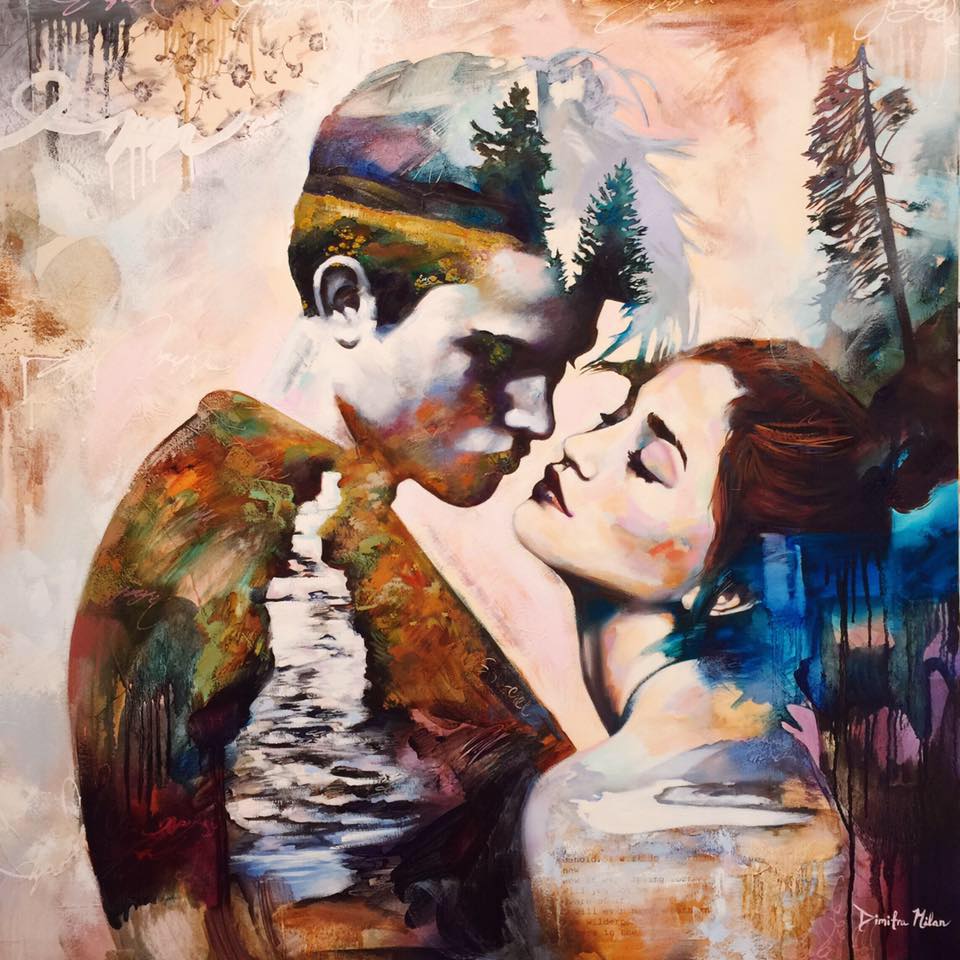
Dimitra Milan, 2000

Australian Art History and Sitemap

Australian Art History and Sitemap

Australian Art is a vast narrative spanning over 65,000 years, beginning with the world's oldest continuous artistic tradition and evolving through colonial, modernist, and contemporary movements.
The trajectory of Australian art reflects a shifting dialogue between Indigenous connections to Country and Western attempts to capture the unique light and landscape of the continent.

Indigenous Australian Art (c. 65,000 Years Ago - Present)

Indigenous art is deeply rooted in the Dreamtime (Jukurrpa), communicating ancestral ties and spiritual connections to the land.


Irish Art History and Sitemap

Irish Art History and Sitemap

The history of Irish art starts around 3200 BC with Neolithic stone carvings at the Newgrange megalithic tomb, part of the Brú na Bóinne complex which still stands today, County Meath.
In early-Bronze Age Ireland there is evidence of Beaker culture and a widespread metalworking.
Trade-links with Britain and Northern Europe introduced La Tène culture and Celtic art to Ireland by about 300 BC, but while these styles later changed or disappeared under the Roman subjugation, Ireland was left alone to develop Celtic designs: notably Celtic crosses, spiral designs, and the intricate interlaced patterns of Celtic knotwork.

Phoebe Anna Traquair | Arts and Crafts Movement painter

Les Nabis | Art history and Sitemap

Les Nabis | Art history and Sitemap

Ambitious decorative painting enjoyed a resurgence in Europe from the late 1880s through the early twentieth century.
In Paris, Pierre Bonnard, Maurice Denis and Édouard Vuillard were among the most influential artists to embrace decoration as painting’s primary function.
Their works celebrate pattern and ornament, challenge the boundaries that divide fine arts from crafts, and, in many cases, complement the interiors for which they were commissioned.
Disaffected with the rigidly representational painting methods taught at the Académie Julian, Bonnard and Denis joined with other like-minded students in the fall of 1888 to form a brotherhood called the “Nabis”, a Hebrew word meaning “prophets”.


Magic Realism | Art history and Sitemap

Magic Realism | Art history and Sitemap

Giorgio De Chirico 1888-1978 | Italian surrealist painter | The Metaphysical art movement
Giorgio de Chirico

Magic Realism, also sometimes called fantastic realism, is a genre that blends realistic depictions of the everyday world with elements of fantasy, myth, or the surreal.
It's not merely about adding monsters or fantastical creatures into a realistic scene.
It's more nuanced than that. It's about portraying the ordinary with an air of mystery, strangeness, and sometimes a subtle political or social commentary.
The "magic" isn't explicitly explained; it's accepted as part of the natural order within the artwork's world.

20th / 21st Century Artists | Sitemap

20th / 21st Century Artists | Sitemap


Art of the 20th and 21st centuries is marked by a rapid succession of diverse and often radical art movements that broke from tradition to explore new mediums, styles, and concepts.
These movements reflect the significant social, political, and technological changes of their times.

20th Century Art Movements

The 20th century saw the United States emerge as a global hub for visual expression, with artists exploring both realism and abstraction, and a focus on expressing a spiritual response to the changed conditions of life.

Egyptian Art History and Sitemap

Egyptian Art History and Sitemap

Ancient Egyptian art is a highly stylized and symbolic tradition that remained remarkably consistent for over 3,000 years, deeply intertwined with the civilization's religious beliefs, particularly those concerning the afterlife and the concept of universal order (Ma'at).
Most surviving art comes from tombs and monuments, and thus focuses on achieving immortality.
The contemporary history of Egyptian art is characterized by a dynamic interplay between national identity, social commentary, and a rich historical heritage, evolving from Western-influenced modernism to a diverse, globally recognized scene.

Thutmose | The Sculptor of the bust of Nefertiti

15th-16th century Art | Sitemap

15th-16th century Art | Sitemap

The 15th and 16th centuries saw the flowering of the Renaissance, a period of renewed interest in classical antiquity that emphasized humanism, naturalism, and the development of new artistic techniques.
It began in Italy and later spread throughout Europe, with distinct regional styles and priorities.

Key periods

The Early Renaissance (15th century)

Originating in Florence, the Early Renaissance, or Quattrocento, established the foundations for the later High Renaissance.
Masaccio (1401-1428): Credited with popularizing linear perspective and creating realistic figures with solidity and emotion.
Donatello (1386-1466): His bronze David was the first free-standing nude sculpture since antiquity, demonstrating classical influence.
Sandro Botticelli (1445-1510): Known for elegant mythological paintings like The Birth of Venus and Primavera.
Jan van Eyck (1390-1441): A pioneer of the Northern Renaissance who mastered oil painting and meticulous detail, as seen in The Arnolfini Portrait.


Romanticism | Art history and Sitemap

Romanticism | Art history and Sitemap

Let's dive into the wonderfully evocative world of Romantic art!
Romantic art, flourishing roughly from the late 18th through the 19th centuries, is a fascinating and complex movement that fundamentally shifted focus away from Enlightenment ideals of reason and order towards a celebration of emotion, imagination, and the sublime.

Eugène Delacroix | Liberty Leading the People (28 July 1830) | Musée du Louvre

Il canale YouTube della Tutt'Art@ | La mappa

Il canale YouTube della Tutt'Art@ | La mappa

Creata nel 2011, la Tutt'Art@ | Pittura * Scultura * Poesia * Musica rappresenta un progetto, un luogo, un sentiero artistico, dove invitare gli artisti e gli amanti dell’arte a confrontarsi con epoche, culture e stili diversi, stimolarli ad interagire tra loro, a scambiarsi le opere, le esperienze e le proprie conoscenze per poter far nascere delle nuove.
Nel progetto Tutt'Art@ trovano spazio di espressione tutti gli artisti in cerca di una seria finestra di visibilità.


Women Artists | Sitemap

Women Artists | Sitemap

Camille Claudel | L'âge mûr /L'Età matura, 1902

"Someone, I say, will remember us in the future".
"Qualcuno, dico, si ricorderà di noi in futuro".

Saffo

The absence of women from the canon of Western art has been a subject of inquiry and reconsideration since the early 1970s.
Linda Nochlin's influential 1971 essay, "Why Have There Been No Great Women Artists?" examined the social and institutional barriers that blocked most women from entering artistic professions throughout history, prompted a new focus on women artists, their art and experiences, and contributed inspiration to the Feminist art movement.

Gli articoli pubblicati da Tutt'Art@ durante il 2024

Gli articoli pubblicati da Tutt'Art@ durante il 2024

Questa raccolta inizia con l'ultimo articolo del 2024: "When was it decided that January 1st is the new year?" / "Quando è stato deciso che il 1° gennaio diventasse il primo giorno dell'anno?", pubblicato il 31 Dicembre 2024 e finisce con l'articolo dedicato al pittore impressionista Olandese René Jansen (1956-2022).

When was it decided that January 1st is the new year? 2024-12-31
Kike Meana, 1969 | Figurative painter 2024-12-29
Marlène Dietrich and Édith Piaf 2024-12-29
Vincent Van Gogh | Butterflies series2024-12-28

José Luis Corella, 1959 | Classical realism painter

Skagen painters | Art History and Sitemap

Skagen painters | Art History and Sitemap

The Skagen Painters (Danish: Skagensmalerne) were a group of Scandinavian artists who gathered in the village of Skagen, the northernmost part of Denmark, from the late 1870s until the turn of the century.
Skagen was a summer destination whose scenic nature, local milieu and social community attracted northern artists to paint en plein air, emulating the French Impressionists - though members of the Skagen colony were also influenced by Realist movements such as the Barbizon school.
They broke away from the rather rigid traditions of the Royal Danish Academy of Fine Arts and the Royal Swedish Academy of Arts, espousing the latest trends that they had learned in Paris.

Peder Severin Krøyer | Summer Evening at Skagen Beach - The Artist and his Wife, 1899 | Hirschsprung Collection

Romanian Art History and Sitemap

Romanian Art History and Sitemap

Romanian art consists of the visual and plastic arts (including Romanian architecture, woodwork, textiles and ceramics) originating from the geographical area of Romania.
The production of art in Romania is as old as the Paleolithic, an example being a cave painting from the Cuciulat Cave (Sălaj County).
During the Neolithic, multiple cultures lived on the modern territory of Romania.
Their material culture included pottery and abstract clay statuettes decorated with geometric patterns.
These may give hints on the way these civilizations used to dress and maybe tattoo.

Demetre Chiparus | Art Déco sculptor

Scottish Art History and Sitemap

Scottish Art History and Sitemap

Scottish art is the body of visual art made in what is now Scotland, or about Scottish subjects, since prehistoric times.
It forms a distinctive tradition within European art, but the political union with England has led its partial subsumation in British art.
The earliest examples of art from what is now Scotland are highly decorated carved stone balls from the Neolithic period.
From the Bronze Age there are examples of carvings, including the first representations of objects, and cup and ring marks.

Stanley Cursiter | Post-Impressionist painter

Bloomsbury Group | Art History and Sitemap

Bloomsbury Group | Art History and Sitemap

Bloomsbury is the name commonly used to identify a circle of intellectuals and artists who lived in Bloomsbury, near central London, in the period 1904-1940.
In 1905, a group of writers and intellectuals began to meet at the London home of the artist Vanessa Bell and her writer sister Virginia Woolf to share ideas and support each other’s creative activities… their meetings continued for the next three decades.
They were in revolt against everything Victorian and played a key role in introducing many modern ideas into Britain.

Roger Fry | A london garden

Post-Impressionism | Art History and Sitemap

Post-Impressionism | Art History and Sitemap

Breaking free of the naturalism of Impressionism in the late 1880s, a group of young painters sought independent artistic styles for expressing emotions rather than simply optical impressions, concentrating on themes of deeper symbolism.
Through the use of simplified colors and definitive forms, their art was characterized by a renewed aesthetic sense as well as abstract tendencies.

Vincent van Gogh | The Starry Night, 1889 | MoMA, Museum of Modern Art

Finnish Art History and Sitemap

Finnish Art History and Sitemap

Hugo Simberg | The Wounded Angel, 1903 | The Finnish National Gallery

Finnish art started to form its individual characteristics in the 19th century, when romantic nationalism began to rise in the autonomous Grand Duchy of Finland.

Prehistoric art

Marks of human activity in Finland has found in Susiluola, Kristinestad.
Some excavation has been considered as a man-made over 100,000 years ago.
After the Ice Age, area of Finland was resettled at around 9,000 years ago and first known sculpture Elk's Head of Huittinen (picture in stamp) has been dated about 5-7000 BCE.

Photographers | Art History and Sitemap

Photographers | Art History and Sitemap


The history of photography began in remote antiquity with the discovery of two critical principles: camera obscura image projection and the observation that some substances are visibly altered by exposure to light.
Apart from a possibly photographic but unrecognized process used on the Turin Shroud there are no artifacts or descriptions that indicate any attempt to capture images with light sensitive materials prior to the 18th century.
Around 1717, Johann Heinrich Schulze captured cut-out letters on a bottle of a light-sensitive slurry, but he apparently never thought of making the results durable.