Textual description of firstImageUrl

François Gall | Impressionist painter


François Gall (22 March 1912, Hungary - 9 December 1987, France) was an Hungarian-born French🎨 modern impressionist painter.
François Gall was born "Ferenc Erdelyi Gall" in 1912 in Kolozsvár, Hungary (now Cluj Napoca).
In 1936, at age 24 years, he moved to Paris.
Early in 1939, Gall returned to Kolosvàr to attend the bedside of his dying father. Once there, he could not return to France as the declaration of war was imminent.
Gall's war time years were finished in Wels, Austria where he was a medic.

Textual description of firstImageUrl

Albert André | Post-Impressionist painter


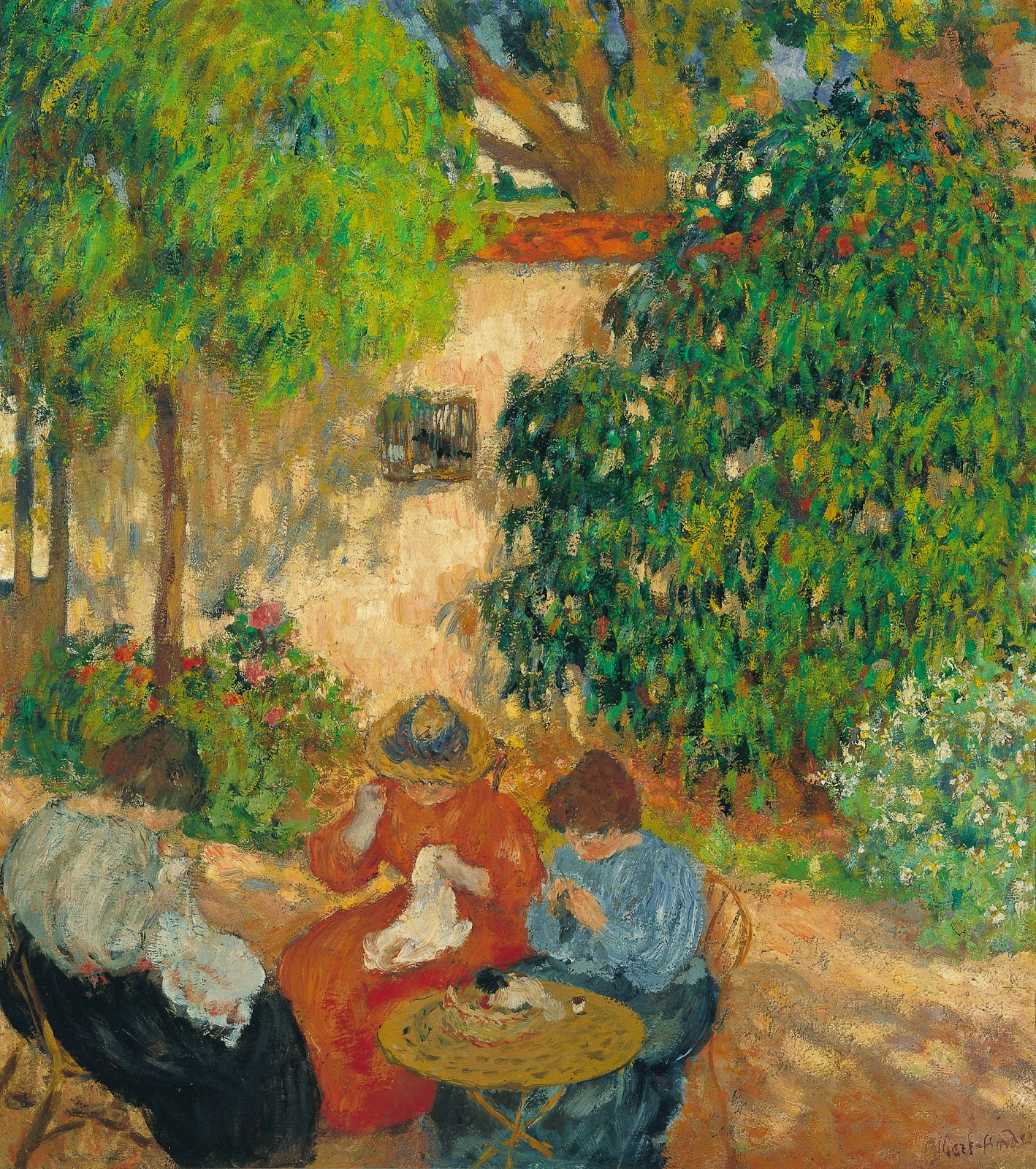
Benjamin André Albert Marie (1869-1954) the well-known Post-Impressionist artist and painter of 'intimiste'interiors, still lifes and Parisian scenes, was born in Lyon.
André spent his childhood vacations in Laudun where his family owned vineyards.
Aged 20 he left for Paris where he studied painting at the Académie Julian.
On the same course were Louis Valtat, Maurice Denis and Pierre Bonnard, and like them he began painting in a Post-Impressionist manner, using the colours, light and subject matter of the mainstream Impressionists but adding more expression and design.

Textual description of firstImageUrl

Pierre-Eugène Montézin | Post-Impressionist painter


Pierre-Eugène Montézin🎨 (1874-1946) was a French artist🎨, who was part of the post-impressionist wave.
Although Pierre-Eugène Montézin was a painter of landscapes, he spent most of his life in Paris.
He loved the open air and the country areas of the Ile-de-France, yet he was born on a narrow street in the French capital.
For biographical notes -in english and italian- and other works by Montézin see:
Textual description of firstImageUrl

Pierre-Eugène Montézin | Painter of Paris


Pierre-Eugène Montézin (1874-1946) was born in the very heart of Paris.
His father was a lace artist, but also a lover of nature who took his young son on expeditions to the country.
These trips were to have a profound effect on his later life and work.
Montézin’s father apprenticed his son to the workshop of a decorator specialising in murals.
However, Montézin also studied under the painter Ernest Quost (1844-1931) and it was Quost together with Montézin’s interest in the Impressionists that persuaded him to embark on a career as a painter.

Textual description of firstImageUrl

Virginie Demont-Breton | Genre painter


Virginie Élodie Marie Thérèse Demont-Breton (26 July 1859, Courrières - 10 January 1935, Paris) was a French painter🎨.
Her father Jules Breton🎨 and her uncle Émile Breton were both well-known painters.
Through her father she was introduced to other painters- the most influential being Rosa Bonheur who became a role-model and mentor to Virginie. She married the painter Adrien Demont in 1880.

Textual description of firstImageUrl

Robert Sarsony, 1938 | Impressionist painter


American artist🎨 Robert Sarsony is a self-taught painter and printmaker who began exhibiting in local shows in New Jersey in 1963. The following year he made his New York debut in a group show at Allied Artists.
From 1969-1974 he did a series of paintings based on book and magazine illustrations - "pop antiques," he calls them - from the 1920s-1940s.
Subjects ranged from silent movie photographs and pictures of important historical events to reproductions taken from period children's books.

Textual description of firstImageUrl

Juarez Machado, 1941 | Pittore Art déco

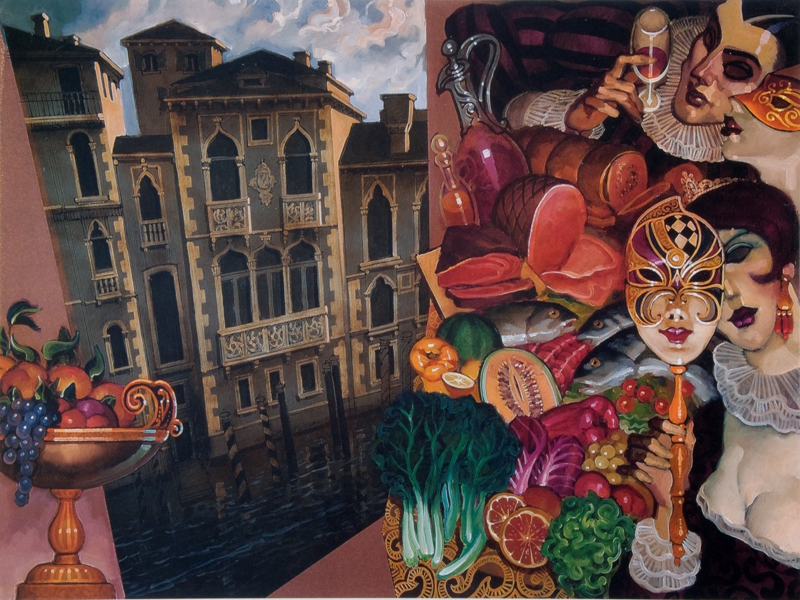
Juarez Machado è un pittore Brasiliano, noto per le sue figure in Art Déco style.
Machado è nato a Joinville.
Pittore, scultore, disegnatore, fumettista, mimo, disegnatore, scrittore, fotografo ed anche attore.
Nel 1954 si trasferisce a Curitiba, dove s'iscrive alla Scuola di Musica e Belle Arti di Paraná.
Nel 1964 espone la prima volta con una mostra personale presso la Galleria Cocaco, Curitiba, iniziando una carriera di grande successo.


Textual description of firstImageUrl

Cesare Maggi | Divisionist painter


Cesare Maggi (Rome, 1881 - Turin, 1961) was an Italian painter🎨.
Born into a family of actors, Maggi embarked on classical studies at his father’s wish but also took up painting at a very early age, first with the Livornese artist Vittorio Matteo Corcos🎨 in 1897 and then with Gaetano Esposito in Naples.
His debut in Florence at the Esposizione Annuale della Società di Belle Arti di Firenze in 1898 was followed by a short trip to Paris to catch up with the latest developments.

Textual description of firstImageUrl

Juarez Machado, 1941 | The Last Tango

Brazilian painter Juarez Machado was born in the city of Joinville, in the state of Santa Catarina, Brazil.
He studied at the School of Art in the state of Paranâ, in the city of Curitiba, and participated actively in its artistic movement.
In 1966 he took up residence in Rio de Janeiro, intensifying his activities.
In addition to painting he also dabbled in illustrating, scenography, sculpture, drawing and engraving.


Textual description of firstImageUrl

Lucia Sarto, 1950 | Romantic / Impressionist painter


Lucia Sarto🎨, Italian painter🎨, was born in the Province of Udine.
In Trieste, when she was barely eleven, she was awarded the First Prize on the occasion of a Regional School painting contest.
She was barely eleven years old when she was awarded First Prize in a regional school's painting contest in Trieste.


Textual description of firstImageUrl

Market painting | Page 3

Constantine Paul Lafargue (1729-1782)

Textual description of firstImageUrl

Wassily Kandinsky (1866-1944)


MoMa - Wassily Wassilyevich Kandinsky🎨 /Васи́лий Васи́льевич Канди́нский (16 December [O.S. 4 December] 1866 - 13 December 1944) was a Russian painter🎨 and art theorist.
Kandinsky is generally credited as the pioneer of abstract art🎨.
Born in Moscow, Kandinsky spent his childhood in Odessa, where he graduated at Grekov Odessa Art school.
He enrolled at the University of Moscow, studying law and economics. Successful in his profession - he was offered a professorship (chair of Roman Law) at the University of Dorpat - Kandinsky began painting studies (life-drawing, sketching and anatomy) at the age of 30.


In 1896, Kandinsky settled in Munich, studying first at Anton Ažbe's private school and then at the Academy of Fine Arts.
He returned to Moscow in 1914, after the outbreak of World War I.
Following the Russian Revolution, Kandinsky "became an insider in the cultural administration of Anatoly Lunacharsky" and helped establish the Museum of the Culture of Painting.


However, by then "his spiritual outlook... was foreign to the argumentative materialism of Soviet society", and opportunities beckoned in Germany, to which he returned in 1920.
There he taught at the Bauhaus school of art and architecture from 1922 until the Nazis closed it in 1933.
He then moved to France, where he lived for the rest of his life, becoming a French citizen in 1939 and producing some of his most prominent art.
He died in Neuilly-sur-Seine in 1944.


Kandinskij ‹kand'ìnsk'i›, Vasilij Vasil´evič - Pittore (Mosca 1866 - Neuilly-sur-Seine 1944).
Il principale esponente dell'astrattismo, in particolare dell'astrattismo non-geometrico, la sua ricerca di puri valori formali ha condotto a risultati della più grande importanza, soprattutto nello sviluppo dei rapporti linea-colore.
La sua arte, sulla quale influì verosimilmente la teoria della Einfühlung di W. Worringer, è indubbiamente ricca di motivi culturali e intellettualistici, ma giunge spesso a valori di libera poesia.
Tra le sue opere si ricordano in particolare:
Il corteo della sposa (1902-03, Monaco, Städtische Galerie), Der Blaue Reiter (1903, Zurigo, collezione E.G. Bührle), Murnau (1909, Düsseldorf, Kunstmuseum), il primo acquerello astratto (1910, Neuilly-sur-Seine, collezione N. Kandinskij), Composizione IV (Düsseldorf, Schloss Jägerhof), Cerchio policromo (1921, New Haven, Yale University Gallery), Composizione VIII (New York, Guggenheim Museum).


Vita
La sua formazione culturale fu complessa: si occupò di letteratura, di musica (Wagner), di etnografia. Nel 1897 si recò a Monaco e si dedicò interamente alla pittura; studiò con F. von Stuck; viaggiò in Europa e in Oriente; fu in stretto contatto col musicista e pittore lituano M. K. Čiurljonis, che si dedicava allora a esprimere mediante variazioni coloristiche alcune sinfonie musicali.
Venne poi a contatto con gli espressionisti; fu tra i fondatori del gruppo Der Blaue Reiter.
Nel 1910 eseguì i primi dipinti totalmente privi di riferimento al mondo oggettivo e per lo più intesi a esprimere visivamente emozioni musicali; contemporaneamente scriveva Über das Geistige in der Kunst e tentava di sviluppare una teoria dei segni e dei colori.


Nel 1913 pubblicò uno scritto autobiografico: Rückblicke.
Nel 1914 tornò in Russia, partecipò attivamente ai movimenti d'avanguardia, insegnò (1920) nell'univ. di Mosca.
Tornò in Germania (1921) e, fino al 1933, insegnò nel Bauhaus di Weimar e di Dessau. Nel 1923 pubblicò il trattato Punkt und Linie zu Fläche.
Nel 1934 si stabilì a Parigi seguitando a dipingere composizioni astratte, ma più misurate e non prive di caratteri decorativi.
  • Opere
Tra le sue opere, oltre a quelle citate sopra, occorre citare gli acquerelli conservati nella collezione Kandinskij di Neuilly, oltre che gli ultimi, del 1939-44, con forme allusive a immagini. | © Treccani