Cave of Altamira

Cave of Altamira

Modern painters have been influenced by the Altamira cave paintings.
After a visit, Pablo Picasso exclaimed: "After Altamira, all is decadence"!

The Cave of Altamira (Spanish: Cueva de Altamira; pronounced: [ˈku̯e.βa ðe al.ta.ˈmi.ɾa]) located near the historic town Santillana del Mar in Cantabria, Spain, is renowned for its numerous parietal cave paintings featuring charcoal drawings and polychrome paintings of contemporary local fauna and human hands, created between 18,500 and 14,000 years ago during the Upper Paleolithic by Paleo human settlers.
The earliest paintings in the cave were executed around 35,600 years ago.


Read More

Cave of Altamira

Modern painters have been influenced by the Altamira cave paintings.
After a visit, Pablo Picasso exclaimed: "After Altamira, all is decadence"!

The Cave of Altamira (Spanish: Cueva de Altamira; pronounced: [ˈku̯e.βa ðe al.ta.ˈmi.ɾa]) located near the historic town Santillana del Mar in Cantabria, Spain, is renowned for its numerous parietal cave paintings featuring charcoal drawings and polychrome paintings of contemporary local fauna and human hands, created between 18,500 and 14,000 years ago during the Upper Paleolithic by Paleo human settlers.
The earliest paintings in the cave were executed around 35,600 years ago.


Gaetano Previati (1852-1920)

Gaetano Previati (1852-1920)

Gaetano Previati - celebre pittore del '900 Italiano, nasce a Ferrara.
I suoi studi artistici si svolgono a Ferrara, ma presto egli si trasferisce a Milano, dove frequenta l’Accademia di Brera.
E’ nel capoluogo lombardo che Previati inizia la sua attività artistica, spiccando subito per modernità ed innovazione.
Il pittore ferrarese è universalmente considerato come l’iniziatore delle istanze divisioniste in Italia.


Read More

Gaetano Previati (1852-1920)

Gaetano Previati - celebre pittore del '900 Italiano, nasce a Ferrara.
I suoi studi artistici si svolgono a Ferrara, ma presto egli si trasferisce a Milano, dove frequenta l’Accademia di Brera.
E’ nel capoluogo lombardo che Previati inizia la sua attività artistica, spiccando subito per modernità ed innovazione.
Il pittore ferrarese è universalmente considerato come l’iniziatore delle istanze divisioniste in Italia.


Paul Cézanne | Post-Impressionist painter

Paul Cézanne | Post-Impressionist painter

Paul Cézanne [1839-1906] was a Post-Impressionist, whose work laid the foundations of the transition from the 19th century conception of artistic endeavour to a new and radically different world of art in the 20th century. Cézanne can be said to form the bridge between late 19th century Impressionism and the early 20th century's new line of artistic enquiry, Cubism. 
Paul Cézanne 1839-1906 | French Post-Impressionist painter
Read More

Paul Cézanne | Post-Impressionist painter

Paul Cézanne [1839-1906] was a Post-Impressionist, whose work laid the foundations of the transition from the 19th century conception of artistic endeavour to a new and radically different world of art in the 20th century. Cézanne can be said to form the bridge between late 19th century Impressionism and the early 20th century's new line of artistic enquiry, Cubism. 
Paul Cézanne 1839-1906 | French Post-Impressionist painter
Ottone Rosai | Futurist painter

Ottone Rosai | Futurist painter

Ottone Rosai 1895-1957 | Italian Futurist painter


Ottone Rosai (1895-1957) was an Italian painter* born in Florence.
Rosai graduated from the Florence Academy of Fine Arts in 1912, a period in which he was closely associated with the Lacerba group of Florentine Futurists and especially Ardengo Soffici, with whom he held a joint exhibition at the Galleria Sprovieri, Rome, in 1914.
Having returned to Florence after World War I, he adapted to the climate of the return to order and devoted himself to the study of early Italian painters*.

Read More

Ottone Rosai | Futurist painter

Ottone Rosai 1895-1957 | Italian Futurist painter


Ottone Rosai (1895-1957) was an Italian painter* born in Florence.
Rosai graduated from the Florence Academy of Fine Arts in 1912, a period in which he was closely associated with the Lacerba group of Florentine Futurists and especially Ardengo Soffici, with whom he held a joint exhibition at the Galleria Sprovieri, Rome, in 1914.
Having returned to Florence after World War I, he adapted to the climate of the return to order and devoted himself to the study of early Italian painters*.

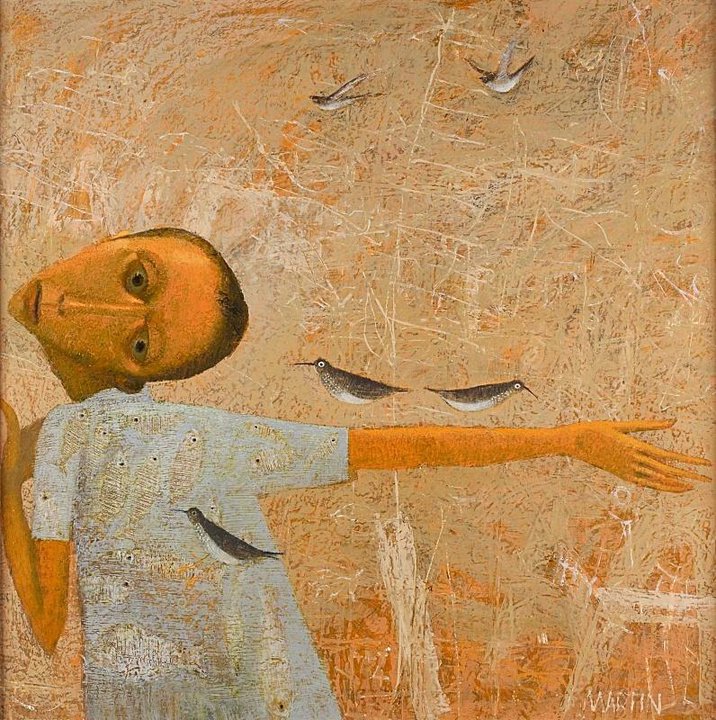
Paul Martin, 1948 | Symbolist painter

Paul Martin, 1948 | Symbolist painter

Paul Martin studied Painting and Printmaking at Birmingham College of Art and the Royal Academy Schools between 1967 and 1973.
A graduate of the Royal Academy of Art, Paul Martin has exhibited regularly over the years, his last show at Bourne Fine Art was in 2001.
Paul Martin’s paintings are large in scale and theme, figurative and multi layered.
There is much symbolism and a multiplicity of references in the work of Paul Martin.

Paul Martin 1948 | British Symbolist painter

Read More

Paul Martin, 1948 | Symbolist painter

Paul Martin studied Painting and Printmaking at Birmingham College of Art and the Royal Academy Schools between 1967 and 1973.
A graduate of the Royal Academy of Art, Paul Martin has exhibited regularly over the years, his last show at Bourne Fine Art was in 2001.
Paul Martin’s paintings are large in scale and theme, figurative and multi layered.
There is much symbolism and a multiplicity of references in the work of Paul Martin.

Paul Martin 1948 | British Symbolist painter