Visualizzazione post con etichetta Fauve Art. Mostra tutti i post
Henri Manguin | Il pittore Fauve

Henri Manguin | Il pittore Fauve

Henri Manguin ( 1874-1949 ) è stato un importante pittore Francese , figura centrale del movimento dei Fauves. Soprannominato " il pi...
Read More

Henri Manguin | Il pittore Fauve

Henri Manguin (1874-1949) è stato un importante pittore Francese, figura centrale del movimento dei Fauves.
Soprannominato "il pittore voluttuoso" per la sua capacità di celebrare la gioia di vivere attraverso colori caldi e luminosi, Manguin si distinse per uno stile che, pur essendo audace, mantenne sempre un equilibrio armonioso rispetto all'espressività più aggressiva di altri esponenti del gruppo.
Manguin entrò nell'École des Beaux-Arts per studiare sotto Gustave Moreau, così come Henri Matisse e Charles Camoin con cui divenne amico intimo.


Robert Antoine Pinchon | Post-Impressionist painter

Robert Antoine Pinchon | Post-Impressionist painter

Claude Monet referred to him: " As a surprising touch in the service of a surprising eye ". Among Robert Antoine Pynchons' ...
Read More

Robert Antoine Pinchon | Post-Impressionist painter

Claude Monet referred to him: "As a surprising touch in the service of a surprising eye".

Among Robert Antoine Pynchons' important works are a series of paintings of the River Seine, mostly around Rouen and landscapes depicting places in or near Upper Normandy.
Robert Antoine Pinchon (1886-1943) was a French Post-Impressionist landscape painter of the Rouen School- l'École de Rouen.
He was consistent throughout his career in his dedication to painting landscapes en plein air.


Othon Friesz | Fauve painter

Othon Friesz | Fauve painter

Achille-Émile Othon Friesz ( 6 February 1879 - 10 January 1949) , who later called himself Othon Friesz, a native of Le Havre, was a French ...
Read More

Othon Friesz | Fauve painter

Achille-Émile Othon Friesz (6 February 1879 - 10 January 1949), who later called himself Othon Friesz, a native of Le Havre, was a French artist of the Fauvist movement.
Othon Friesz was born in Le Havre, the son of a long line of shipbuilders and sea captains.
He went to school in his native city.
It was while he was at the Lycée that he met his lifelong friend Raoul Dufy.


Henri Matisse | Orientalist Odalisque

Henri Matisse | Orientalist Odalisque

In 1917 Matisse relocated to Cimiez on the French Riviera, a suburb of the city of Nice. His work of the decade or so following this reloca...
Read More

Henri Matisse | Orientalist Odalisque

In 1917 Matisse relocated to Cimiez on the French Riviera, a suburb of the city of Nice.
His work of the decade or so following this relocation shows a relaxation and a softening of his approach.
This "return to order" is characteristic of much art of the post-World War I period and can be compared with the neoclassicism of Picasso and Stravinsky as well as the return to traditionalism of Derain.


Jacqueline Marval | The Female Fauve

Jacqueline Marval | The Female Fauve

Jacqueline Marval was the pseudonym for Marie Josephine Vallet (1866-1932) , who was a French painter , lithographer and sculptor. Vallet w...
Read More

Jacqueline Marval | The Female Fauve

Jacqueline Marval was the pseudonym for Marie Josephine Vallet (1866-1932), who was a French painter, lithographer and sculptor.
Vallet was born in Quaix-en-Chartreuse into a family of school teachers.
She was married in 1866, to a traveling salesperson, Albert Valentin, but separated from her husband in 1891 after the death of her son.


Henri Evenepoel | Fauve painter

Henri Evenepoel | Fauve painter

Henri-Jacques-Edouard Evenepoel was born on this day October 3 , 1872, in Nice. The artist died at the age of 27, in 1899. Evenepoel was a ...
Read More

Henri Evenepoel | Fauve painter

Henri-Jacques-Edouard Evenepoel was born on this day October 3, 1872, in Nice. The artist died at the age of 27, in 1899.
Evenepoel was a French-born Belgian artist, whose most important works are associated with Fauvism.
He first studied art in Brussels at the Académie Royale des Beaux-Arts between 1889 and 1890, and entered Paris's Ecole des Beaux-Arts in 1892.
Evenepoel entered the atelier of Gustave Moreau in 1893, which put him in contact with Henri Matisse, Georges Rouault, Albert Marquet, Edgar Maxence, Charles Milcendeau and Léon Printemps.


Henri Matisse | The Series of the Romanian Blouses

Henri Matisse | The Series of the Romanian Blouses

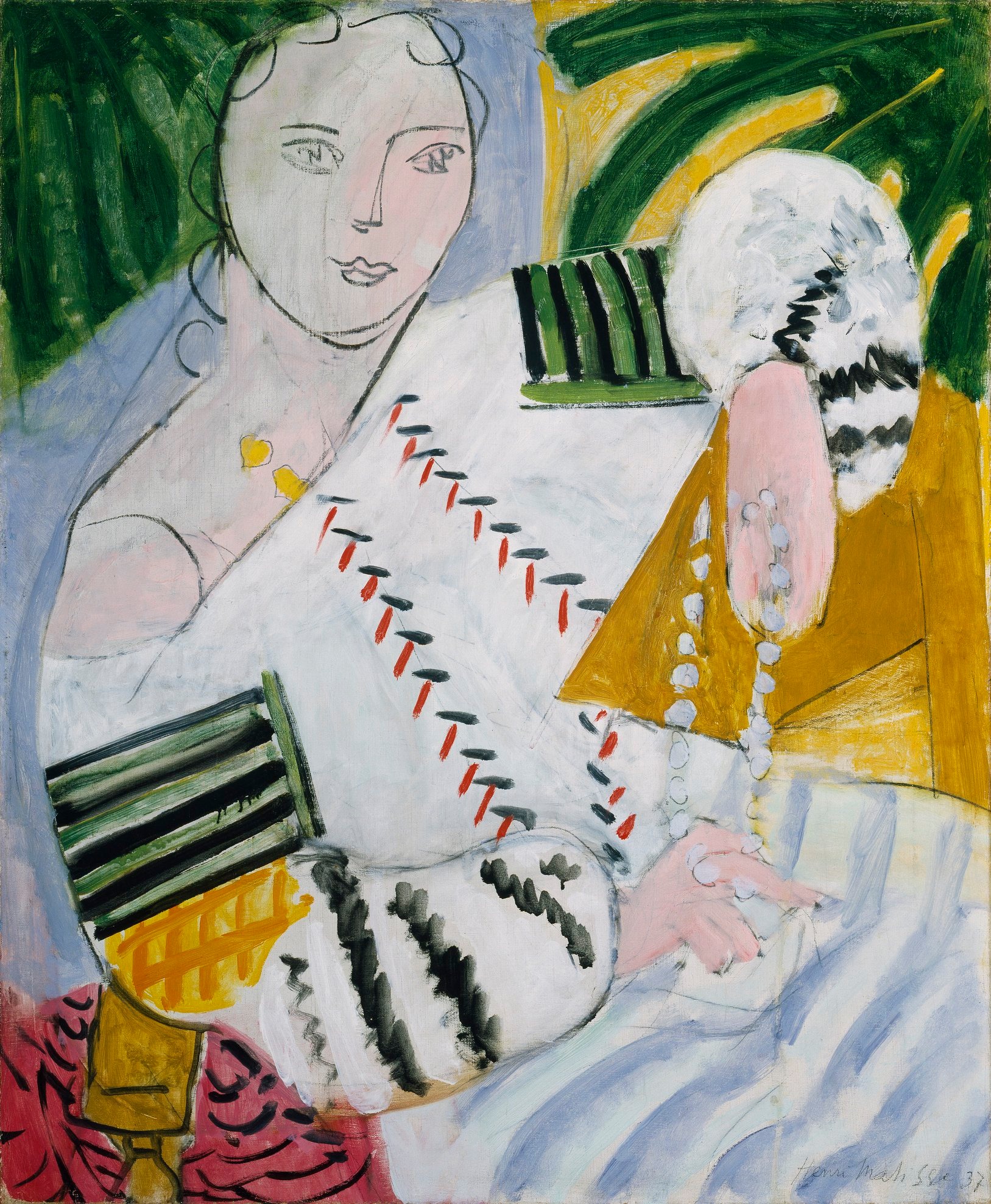
Henri Matisse | Romanian Blouse with Green Sleeves, 1937 | Cincinnati Art Museum Henri Matisse's ' Romanian Blouse ' is an exp...
Read More

Henri Matisse | The Series of the Romanian Blouses

Henri Matisse | Romanian Blouse with Green Sleeves, 1937 | Cincinnati Art Museum

Henri Matisse's 'Romanian Blouse' is an exploration of composition, line, and form.
The movement of broad exuberant brushwork across the flat two-dimensional plane of the canvas emphasizes the energy of the composition and evokes the sitter's personality.
The Cincinnati Art Museum's painting is one of several paintings and drawings on a single theme - female models clothed in a boldly patterned Moroccan robes or embroidered Romanian blouses - that Matisse made in the late 1930s and early 1940s.

Henri Matisse | Romanian Blouse with Green Sleeves, 1937 | Cincinnati Art Museum

Jean Metzinger | Woman with a Mirror, 1916

Jean Metzinger | Woman with a Mirror, 1916

Femme au miroir / Woman with a Mirror / Femme à sa toilette or Lady at her Dressing Table, is a painting by the French artist Jean Metzinge...
Read More

Jean Metzinger | Woman with a Mirror, 1916

Femme au miroir / Woman with a Mirror / Femme à sa toilette or Lady at her Dressing Table, is a painting by the French artist Jean Metzinger.
This distilled synthetic form of Cubism exemplifies Metzinger's continued interest, in 1916, towards less surface activity, with a strong emphasis on larger, flatter, overlapping abstract planes.
The manifest primacy of the underlying geometric configuration, rooted in the abstract, controls nearly every element of the composition.


Henri Matisse | Notes of a Painter, 1908

Henri Matisse | Notes of a Painter, 1908

Quotes from: ' Notes d'un Peintre ' ( Notes of a Painter ), Henri Matisse, in ' La Grande Revue ', Paris, 25 December 19...
Read More

Henri Matisse | Notes of a Painter, 1908

Quotes from: 'Notes d'un Peintre' (Notes of a Painter), Henri Matisse, in 'La Grande Revue', Paris, 25 December 1908; as quoted in Artists on Art - from the 14th - 20th centuries, ed. by Robert Goldwater and Marco Treves; Pantheon Books, 1972, London


"What I am after, above all, is expression. Sometimes it has been conceded that I have a certain technical ability but that, my ambition being limited, I am unable to proceed beyond a purely visual satisfaction such as can be procured from the mere sight of a picture.
But the purpose of a painter must not be conceived as separate from his pictorial means, and these pictorial means must be the more complete (I do not mean complicated) the deeper is his thought. I am unable to distinguish between the feeling I have for life and my way of expressing it".


Henri Matisse | Canal du Midi, 1898

Henri Matisse | Canal du Midi, 1898

Canal du Midi belongs to a series of pictures painted by Henri Matisse near Toulouse during the winter of 1898-1899. Matisse, who left Mor...
Read More

Henri Matisse | Canal du Midi, 1898

Canal du Midi belongs to a series of pictures painted by Henri Matisse near Toulouse during the winter of 1898-1899. Matisse, who left Moreau's studio in the autumn of 1897, married Amélie Parayre in January of the following year. After a brief honeymoon in London, the couple sojourned for six months in Ajaccio, Corsica.
Then, in August 1898, Matisse and his wife travelled to Toulouse, and stayed for six months with Amélie's parents.
This was the first time Matisse visited the South and he always remembered it as his first encounter with light and colour. Many of the landscapes he painted during that period, including the one we are commenting on, were probably executed outdoors, directly from the model. Yet the colour in them is not naturalistic.


Louis Valtat | Still life of flowers

Louis Valtat | Still life of flowers

Louis Valtat was a French painter and printmaker, associated with the Fauves, who exhibited at the first Salon des Indépendants of 1884. ...
Read More

Louis Valtat | Still life of flowers


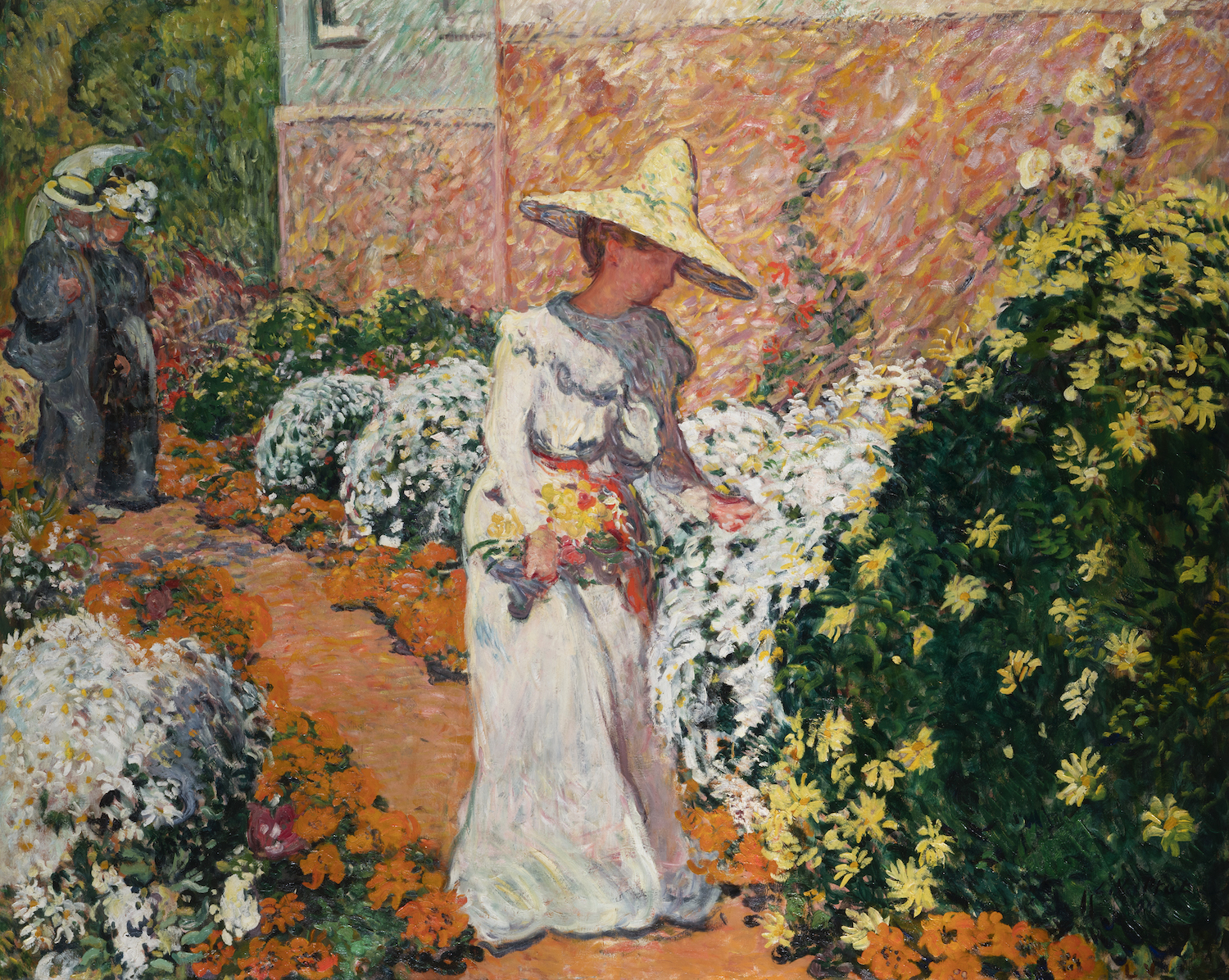
Louis Valtat was a French painter and printmaker, associated with the Fauves, who exhibited at the first Salon des Indépendants of 1884.
He is noted as a key figure in the stylistic transition in painting from Monet to Matisse.
Louis Valtat was born in Normandy in 1869, he is the son of the famous painter François Victor Valtat.
Two years later, Louis Valtat entered the School of Fine Arts and attended courses at the Julian Academy, where he met the Nabis group, including Edouard Vuillard.

Raoul Dufy | Still Life

Raoul Dufy | Still Life

Raoul Dufy ( 1877-1953 ) was a French Fauvist painter, brother of Jean Dufy. He developed a colorful, decorative style that became fash...
Read More

Raoul Dufy | Still Life


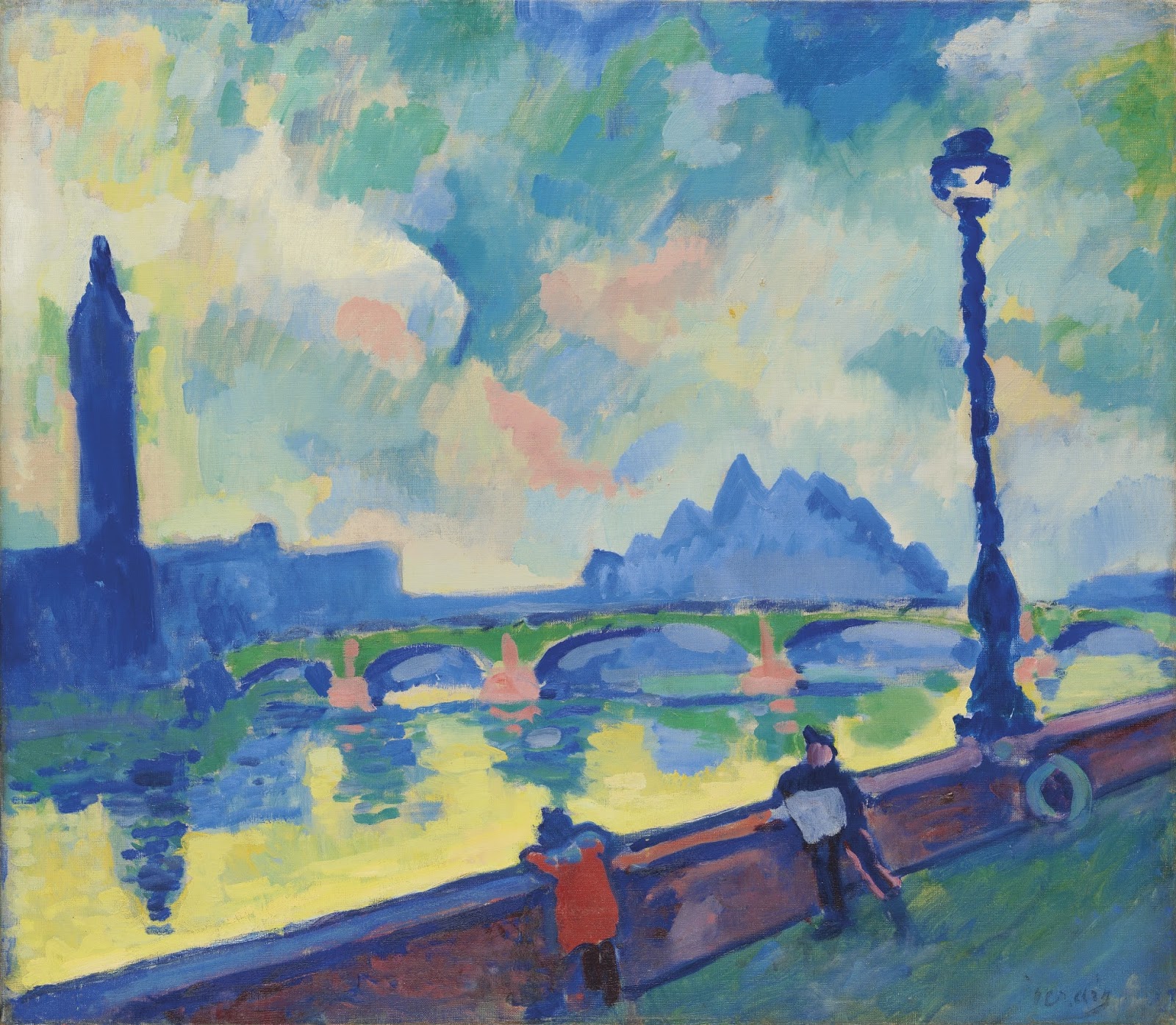
Raoul Dufy (1877-1953) was a French Fauvist painter, brother of Jean Dufy.
He developed a colorful, decorative style that became fashionable for designs of ceramics and textiles, as well as decorative schemes for public buildings.
He is noted for scenes of open-air social events.
He was also a draftsman, printmaker, book illustrator, scenic designer, a designer of furniture, and a planner of public spaces.

André Derain | Still life

André Derain | Still life

André Derain ( 1880-1954 ), French painter , sculptor, printmaker and designer - was one of the principal Fauvists. Derain studied painting...
Read More

André Derain | Still life

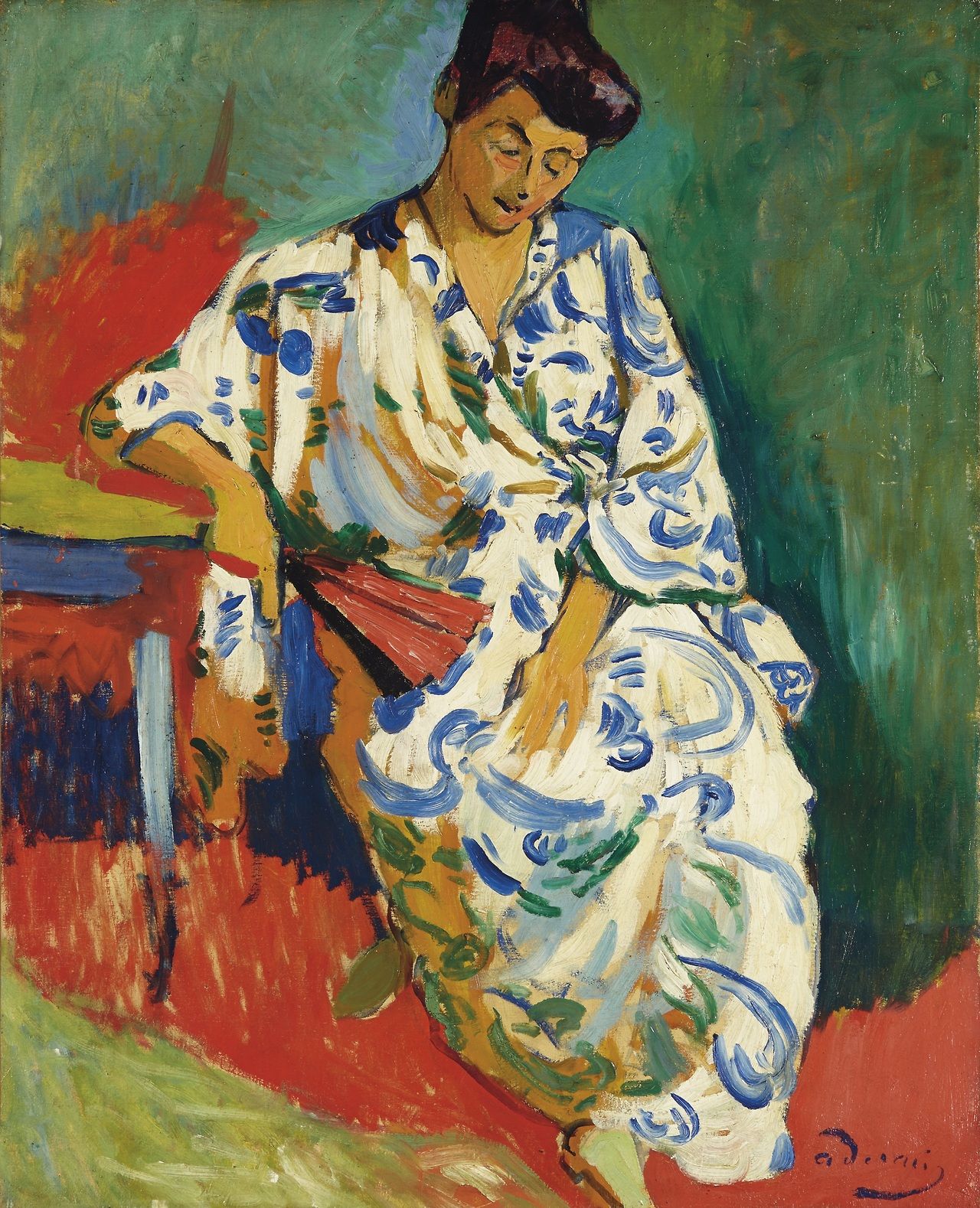
André Derain (1880-1954), French painter, sculptor, printmaker and designer - was one of the principal Fauvists.
Derain studied painting in Paris at the Académie Carriere from 1898-1899.
He developed his early style in association with Maurice de Vlaminck, whom he met in 1900, and with Henri Matisse, who had been Derain’s fellow student at the Académie Carriere.
Together with these two painters, Derain was one of the major exponents of Fauvism from 1905-1908.


Jean Metzinger | Cubist painter | Page 2

Jean Metzinger | Cubist painter | Page 2

Jean Metzinger was born in Nantes, France, on June 24, 1883. At the age of twenty he moved to Paris to pursue a career as a painter. One o...
Read More

Jean Metzinger | Cubist painter | Page 2


Jean Metzinger was born in Nantes, France, on June 24, 1883. At the age of twenty he moved to Paris to pursue a career as a painter. One of his early friends in Paris was Robert Delaunay.
About 1908 he met the writer Max Jacob, who introduced him to Guillaume Apollinaire and his circle, which included Georges Braque and Pablo Picasso.
Picasso was to have a significant influence on Metzinger from this time to about 1923.
In 1910 and 1911 Metzinger published several articles on contemporary painting and afterward periodically contributed to the literature on Modern art.

Maurice de Vlaminck | Paysages

Maurice de Vlaminck | Paysages

Maurice De Vlaminck ( 1876-1958 ) was a French painter . He is considered one of the principal figures in the Fauve Movement , a group of...
Read More

Maurice de Vlaminck | Paysages


Maurice De Vlaminck (1876-1958) was a French painter.
He is considered one of the principal figures in the Fauve Movement, a group of modern artists who from 1904-1908 were united in their use of intense color.
Vlaminck was born in Paris of ‘bohemian’ musical parents and he in turn became an accomplished musician.

Raoul Dufy | Fauve painter

Raoul Dufy | Fauve painter

French painter in oil and watercolour, illustrator and designer, Raoul Dufy ( 1877-1953) was born at Le Havre. Took a job in commerce b...
Read More

Raoul Dufy | Fauve painter


French painter in oil and watercolour, illustrator and designer, Raoul Dufy (1877-1953) was born at Le Havre. Took a job in commerce but also began in 1892 to attend evening classes at the municipal Ecole des Beaux-Arts, where he met Othon Friesz.
Awarded a scholarship in 1900 and went to Paris where he studied for four years under Bonnat at the Ecole des Beaux-Arts.
Influenced at first by the Impressionists, then from 1905 by the Fauve style of Matisse and began to work in richer colours.

André Derain: "The substance of painting is light"

André Derain: "The substance of painting is light"

• " Fauvism was our ordeal by fire... colours became charges of dynamite. They were expected to charge light... The great merit of t...
Read More

André Derain: "The substance of painting is light"


"Fauvism was our ordeal by fire... colours became charges of dynamite. They were expected to charge light... The great merit of this method was to free the picture from all imitative and conventional contact".
"It was the era of photography. This may have influenced us, and played a part in our reaction against anything resembling a snapshot of life".

André Derain | Portraits

André Derain | Portraits

André Derain ( 1880-1954 ) was a French painter , sculptor and co-founder of Fauvism with Henri Matisse (1869-1954) . Derain and Matisse w...
Read More

André Derain | Portraits

André Derain (1880-1954) was a French painter, sculptor and co-founder of Fauvism with Henri Matisse (1869-1954).
Derain and Matisse worked together through the summer of 1905 in the Mediterranean village of Collioure and later that year displayed their highly innovative paintings at the Salon d'Automne.
The vivid, unnatural colors led the critic Louis Vauxcelles to derisively dub their works as les Fauves, or "the wild beasts", marking the start of the Fauve movement.


Henri Matisse al Museo Hermitage di San Pietroburgo

Henri Matisse al Museo Hermitage di San Pietroburgo

La sala 440 del Museo Statale del Hermitage a San Pietroburgo, in Russia, è dedicata ai dipinti di Henri Matisse (1869-1954). I celebri dip...
Read More

Henri Matisse al Museo Hermitage di San Pietroburgo

La sala 440 del Museo Statale del Hermitage a San Pietroburgo, in Russia, è dedicata ai dipinti di Henri Matisse (1869-1954).
I celebri dipinti monumentali includono la coppia di pannelli conosciuti come Dance and Music (entrambi 1910), Family Portrait (1911), Conversation (tra il 1909-1912).


Henri Matisse | Art Quotes

Henri Matisse | Art Quotes

"What I am after, above all, is expression". " Ciò che sto cercando, soprattutto, è l'espressione ". "I ...
Read More

Henri Matisse | Art Quotes

  • "What I am after, above all, is expression".
  • "Ciò che sto cercando, soprattutto, è l'espressione".
  • "I have worked to enrich my intelligence and meet my mind’s various needs, striving with all of my being for an understanding of the different interpretations of art given by the ancient and modern masters".
  • "Ho lavorato per arricchire la mia intelligenza, per soddisfare le differenti esigenze del mio spirito, sforzando tutto il mio essere alla comprensione delle diverse interpretazioni dell'arte plastica date dagli antichi maestri e dai moderni".