Visualizzazione post con etichetta Secession Art. Mostra tutti i post
Edwin Lord Weeks | Orientalist painter

Edwin Lord Weeks | Orientalist painter

Edwin Lord Weeks (1849-1903) was born at Boston, Massachusetts.
He was a pupil of Léon Bonnat and of Jean-Léon Gérôme, at Paris.
He made many voyages to the East, and was distinguished as a painter of oriental scenes.
Weeks' parents were affluent spice and tea merchants from Newton, a suburb of Boston and as such they were able to accept, probably encourage, and certainly finance their son's youthful interest in painting and travelling.


Read More

Edwin Lord Weeks | Orientalist painter

Edwin Lord Weeks (1849-1903) was born at Boston, Massachusetts.
He was a pupil of Léon Bonnat and of Jean-Léon Gérôme, at Paris.
He made many voyages to the East, and was distinguished as a painter of oriental scenes.
Weeks' parents were affluent spice and tea merchants from Newton, a suburb of Boston and as such they were able to accept, probably encourage, and certainly finance their son's youthful interest in painting and travelling.


Egon Schiele | The genius who died at 28

Egon Schiele | The genius who died at 28


Painter and precociously talented draftsman; accepted into Vienna's Academy of Fine Arts in 1906 at age sixteen.
From 1907 was mentored by Gustav Klimt, who invited him to exhibit at monumental 1909 Kunstschau exhibition.
From 1910, works characterized by virtuosic use of line in penetrating portraits with expressive, contorted, sexually explicit bodies.

Read More

Egon Schiele | The genius who died at 28


Painter and precociously talented draftsman; accepted into Vienna's Academy of Fine Arts in 1906 at age sixteen.
From 1907 was mentored by Gustav Klimt, who invited him to exhibit at monumental 1909 Kunstschau exhibition.
From 1910, works characterized by virtuosic use of line in penetrating portraits with expressive, contorted, sexually explicit bodies.

Sexto Canegallo | Pointillist / Futurist painter

Sexto Canegallo | Pointillist / Futurist painter

Italian painter Giuseppe Sexto Canegallo (1892-1966) was born on 2 February 1892 in Sestri Ponente.
He attended the Linguistic Academy in Genoa, where he was a student of Lazzaro Luxardo, Tullio Salvatore Quinzio, Lorenzo Massa and Alfredo Luxoro.
His artistic style was initially influenced by the pointillist poetics of Plinio Nomellini, together with other artists such as Angelo Morbelli, Gaetano Previati and Rubaldo Merello.


Read More

Sexto Canegallo | Pointillist / Futurist painter

Italian painter Giuseppe Sexto Canegallo (1892-1966) was born on 2 February 1892 in Sestri Ponente.
He attended the Linguistic Academy in Genoa, where he was a student of Lazzaro Luxardo, Tullio Salvatore Quinzio, Lorenzo Massa and Alfredo Luxoro.
His artistic style was initially influenced by the pointillist poetics of Plinio Nomellini, together with other artists such as Angelo Morbelli, Gaetano Previati and Rubaldo Merello.


Egon Schiele | Quotes / Poems

Egon Schiele | Quotes / Poems

"Art cannot be modern. Art is primordially eternal".
"Bodies have their own light which they consume to live: they burn, they are not lit from the outside".
"I must see new things and investigate them. I want to taste dark water and see crackling trees and wild winds".
"At present, I am mainly observing the physical motion of mountains, water, trees and flowers. One is everywhere reminded of similar movements in the human body, of similar impulses of joy and suffering in plants..."
"I was in love with everything- I wanted to look with love at the angry people so that their eyes would be forced to respond; and I wanted to bring gifts to the envious and tell them that I am worthless.".

Read More

Egon Schiele | Quotes / Poems

"Art cannot be modern. Art is primordially eternal".
"Bodies have their own light which they consume to live: they burn, they are not lit from the outside".
"I must see new things and investigate them. I want to taste dark water and see crackling trees and wild winds".
"At present, I am mainly observing the physical motion of mountains, water, trees and flowers. One is everywhere reminded of similar movements in the human body, of similar impulses of joy and suffering in plants..."
"I was in love with everything- I wanted to look with love at the angry people so that their eyes would be forced to respond; and I wanted to bring gifts to the envious and tell them that I am worthless.".

Oskar Kokoschka | The bride of the wind / La sposa del vento, 1913-1914

Oskar Kokoschka | The bride of the wind / La sposa del vento, 1913-1914

"The Bride of the Wind" / "Die Windsbraut" or "The Tempest" is a 1913-1914 painting by Oskar Kokoschka.
The oil on canvas work is housed in the Kunstmuseum Basel.
Kokoschka's best known work, it is an allegorical picture featuring a self-portrait by the artist, lying alongside his lover Alma Mahler (Viennese-born composer, 1879-1964).

In 1912 Alma met the young painter Oskar Kokoschka, who was known as the enfant terrible of the Viennese art scene.
He was violent and unbridled, and the press derided him as "the wildest beast of all".


Read More

Oskar Kokoschka | The bride of the wind / La sposa del vento, 1913-1914

"The Bride of the Wind" / "Die Windsbraut" or "The Tempest" is a 1913-1914 painting by Oskar Kokoschka.
The oil on canvas work is housed in the Kunstmuseum Basel.
Kokoschka's best known work, it is an allegorical picture featuring a self-portrait by the artist, lying alongside his lover Alma Mahler (Viennese-born composer, 1879-1964).

In 1912 Alma met the young painter Oskar Kokoschka, who was known as the enfant terrible of the Viennese art scene.
He was violent and unbridled, and the press derided him as "the wildest beast of all".


Oskar Kokoschka | Expressionist painter

Oskar Kokoschka | Expressionist painter

Oskar Kokoschka, (born March 1, 1886, Pöchlarn, Austria-died February 22, 1980, Villeneuve, Switzerland), Austrian painter and writer who was one of the leading exponents of Expressionism.
In his early portraits, gesture intensifies the psychological penetration of character; especially powerful among his later works are allegories of the artist’s emphatic humanism.
His dramas, poems, and prose are significant for their psychological insight and stylistic daring.

Early life and works

When Kokoschka was three years old, his father went bankrupt in a financial crash. The family was forced to move to Vienna, where his father worked as a traveling salesman and his mother cared for the children on limited means.


Read More

Oskar Kokoschka | Expressionist painter

Oskar Kokoschka, (born March 1, 1886, Pöchlarn, Austria-died February 22, 1980, Villeneuve, Switzerland), Austrian painter and writer who was one of the leading exponents of Expressionism.
In his early portraits, gesture intensifies the psychological penetration of character; especially powerful among his later works are allegories of the artist’s emphatic humanism.
His dramas, poems, and prose are significant for their psychological insight and stylistic daring.

Early life and works

When Kokoschka was three years old, his father went bankrupt in a financial crash. The family was forced to move to Vienna, where his father worked as a traveling salesman and his mother cared for the children on limited means.


Gustav Klimt | L'astro del Secessionismo viennese

Gustav Klimt | L'astro del Secessionismo viennese

Sempre più in contrasto con i rigidi canoni accademici, nel 1897 il pittore Austriaco Gustav Klimt (1862-1918) fondò, insieme ad altri diciannove artisti la Wiener Sezession (Secessione Viennese), attuando anche il progetto di un periodico-manifesto del gruppo, Ver Sacrum (Primavera sacra), del quale verranno pubblicati 96 numeri, fino al 1903.
Gli artisti della Secessione aspiravano, oltre a portare l'arte al di fuori dei confini della tradizione accademica, in un florilegio di arti plastiche, design e architettura, anche ad una rinascita delle arti e dei mestieri: non vi era uno stile prediletto, sicché sotto l'egida di questo gruppo si riunirono i simbolisti, i naturalisti ed i modernisti.


Read More

Gustav Klimt | L'astro del Secessionismo viennese

Sempre più in contrasto con i rigidi canoni accademici, nel 1897 il pittore Austriaco Gustav Klimt (1862-1918) fondò, insieme ad altri diciannove artisti la Wiener Sezession (Secessione Viennese), attuando anche il progetto di un periodico-manifesto del gruppo, Ver Sacrum (Primavera sacra), del quale verranno pubblicati 96 numeri, fino al 1903.
Gli artisti della Secessione aspiravano, oltre a portare l'arte al di fuori dei confini della tradizione accademica, in un florilegio di arti plastiche, design e architettura, anche ad una rinascita delle arti e dei mestieri: non vi era uno stile prediletto, sicché sotto l'egida di questo gruppo si riunirono i simbolisti, i naturalisti ed i modernisti.


Alphonse Mucha | Art Nouveau painter

Alphonse Mucha | Art Nouveau painter


Czech painter, illustrator and graphic artist, Alphonse Maria Mucha (1860-1939) is most often remembered for the prominent role he played in shaping the aesthetics of French Art Nouveau at the turn of the century.
He produced illustrations, advertisements, decorative panels, and designs, which became among the best-known images of the period.

Read More

Alphonse Mucha | Art Nouveau painter


Czech painter, illustrator and graphic artist, Alphonse Maria Mucha (1860-1939) is most often remembered for the prominent role he played in shaping the aesthetics of French Art Nouveau at the turn of the century.
He produced illustrations, advertisements, decorative panels, and designs, which became among the best-known images of the period.

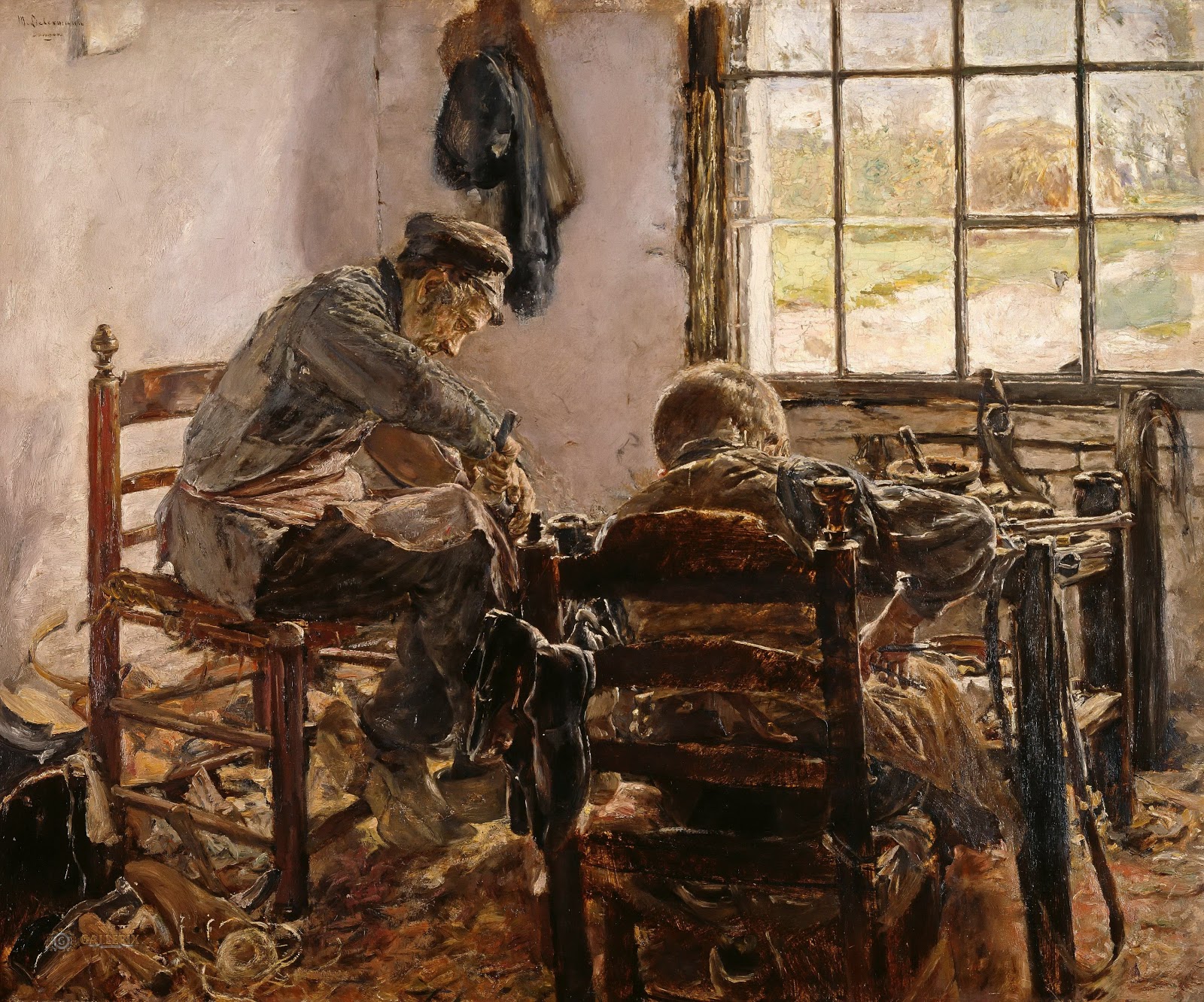
Max Liebermann (1847-1935) | Vita ed Opere

Max Liebermann (1847-1935) | Vita ed Opere

Il pittore Tedesco Max Liebermann nacque in una famiglia ebraica. Studiò a Berlino e a Weimar, poi, attratto dalle innovazioni della pittura francese, dal 1873-1878 soggiornò a Parigi.
Tornato in Germania, si stabilì dapprima a Monaco poi a Berlino.
In questi anni non fu l'impressionismo a richiamare la sua attenzione, quanto il realismo di Gustave Courbet e di Jean-François Millet, di cui apprezzò particolarmente il messaggio sociale.


Read More

Max Liebermann (1847-1935) | Vita ed Opere

Il pittore Tedesco Max Liebermann nacque in una famiglia ebraica. Studiò a Berlino e a Weimar, poi, attratto dalle innovazioni della pittura francese, dal 1873-1878 soggiornò a Parigi.
Tornato in Germania, si stabilì dapprima a Monaco poi a Berlino.
In questi anni non fu l'impressionismo a richiamare la sua attenzione, quanto il realismo di Gustave Courbet e di Jean-François Millet, di cui apprezzò particolarmente il messaggio sociale.


Franz Von Stuck | Symbolist painter

Franz Von Stuck | Symbolist painter


Franz Stuck (February 23, 1863 - August 30, 1928) was a German painter🎨, sculptor, printmaker, and architect.
In 1906, Stuck was awarded🎨 the Order of Merit of the Bavarian Crown and was henceforth known as Franz Ritter von Stuck.
  • Life and career
Born at Tettenweis near Passau, Stuck displayed an affinity for drawing and caricature from an early age. To begin his artistic education he relocated in 1878 to Munich, where he would settle for life.
From 1881-1885 Stuck attended the Munich Academy.

Read More

Franz Von Stuck | Symbolist painter


Franz Stuck (February 23, 1863 - August 30, 1928) was a German painter🎨, sculptor, printmaker, and architect.
In 1906, Stuck was awarded🎨 the Order of Merit of the Bavarian Crown and was henceforth known as Franz Ritter von Stuck.
  • Life and career
Born at Tettenweis near Passau, Stuck displayed an affinity for drawing and caricature from an early age. To begin his artistic education he relocated in 1878 to Munich, where he would settle for life.
From 1881-1885 Stuck attended the Munich Academy.

Max Liebermann (German, 1847-1935)

Max Liebermann (German, 1847-1935)


Max Liebermann (20 July 1847 - 8 February 1935) was a German painter🎨 and printmaker of Ashkenazi Jewish ancestry, and one of the leading proponents of Impressionism🎨 in Germany.
The son of a Jewish fabric manufacturer turned banker from Berlin, Liebermann grew up in an imposing town house alongside the Brandenburg Gate.
He first studied law and philosophy at the University of Berlin, but later studied painting and drawing in Weimar in 1869, in Paris in 1872, and in the Netherlands in 1876-77.

Read More

Max Liebermann (German, 1847-1935)


Max Liebermann (20 July 1847 - 8 February 1935) was a German painter🎨 and printmaker of Ashkenazi Jewish ancestry, and one of the leading proponents of Impressionism🎨 in Germany.
The son of a Jewish fabric manufacturer turned banker from Berlin, Liebermann grew up in an imposing town house alongside the Brandenburg Gate.
He first studied law and philosophy at the University of Berlin, but later studied painting and drawing in Weimar in 1869, in Paris in 1872, and in the Netherlands in 1876-77.

Egon Schiele | Expressionist painter

Egon Schiele | Expressionist painter


Egon Schiele, (1890, Tulln, near Vienna - 1918, Vienna), Austrian Expressionist painter, draftsman and printmaker noted for the eroticism of his figurative works.
As a student at the Vienna Academy of Fine Arts (1907-09), Schiele was strongly influenced by the Jugendstil movement, the German Art Nouveau.
He met Gustav Klimt, leader of the Vienna Sezession group, and the linearity and subtlety of Schiele’s work owe much to Klimt’s decorative elegance.

Read More

Egon Schiele | Expressionist painter


Egon Schiele, (1890, Tulln, near Vienna - 1918, Vienna), Austrian Expressionist painter, draftsman and printmaker noted for the eroticism of his figurative works.
As a student at the Vienna Academy of Fine Arts (1907-09), Schiele was strongly influenced by the Jugendstil movement, the German Art Nouveau.
He met Gustav Klimt, leader of the Vienna Sezession group, and the linearity and subtlety of Schiele’s work owe much to Klimt’s decorative elegance.

Max Liebermann | Impressionist painter

Max Liebermann | Impressionist painter

Max Liebermann, (born July 20, 1847, Berlin, Ger. - died February 8, 1935, Berlin), painter and printmaker who is known for his naturalistic studies of the life and labour of the poor. He was also the foremost proponent of Impressionism🎨 in Germany.


Read More

Max Liebermann | Impressionist painter

Max Liebermann, (born July 20, 1847, Berlin, Ger. - died February 8, 1935, Berlin), painter and printmaker who is known for his naturalistic studies of the life and labour of the poor. He was also the foremost proponent of Impressionism🎨 in Germany.


Gustav Klimt | Drawings

Gustav Klimt | Drawings

In 1963, the Albertina museum in Vienna began researching the drawings of Gustav Klimt.
The research project Gustav Klimt. Die Zeichnungen, has since been associated with intensive exhibition and publication activities.
Between 1980 and 1984 Alice Strobl published the three-volume catalogue raisonné, which records and describes all drawings by Gustav Klimt known at the time in chronological order.
An additional supplementary volume was published in 1989.


Read More

Gustav Klimt | Drawings

In 1963, the Albertina museum in Vienna began researching the drawings of Gustav Klimt.
The research project Gustav Klimt. Die Zeichnungen, has since been associated with intensive exhibition and publication activities.
Between 1980 and 1984 Alice Strobl published the three-volume catalogue raisonné, which records and describes all drawings by Gustav Klimt known at the time in chronological order.
An additional supplementary volume was published in 1989.


Gustav Klimt | Art Nouveau painter

Gustav Klimt | Art Nouveau painter

Klimt, Gustav (1862-1918) - Austrian painter, draughtsman, and designer, one of the leading figures in one of the most exciting epochs of Vienna's cultural history.
Early in his career he was highly successful as a painter of lavish ornamental schemes in the grandiose tradition of Makart, whose staircase decoration in the Kunsthistorisches Museum in Vienna he completed after Makart's death in 1884.


Read More

Gustav Klimt | Art Nouveau painter

Klimt, Gustav (1862-1918) - Austrian painter, draughtsman, and designer, one of the leading figures in one of the most exciting epochs of Vienna's cultural history.
Early in his career he was highly successful as a painter of lavish ornamental schemes in the grandiose tradition of Makart, whose staircase decoration in the Kunsthistorisches Museum in Vienna he completed after Makart's death in 1884.


Secession | Art History and Sitemap

Secession | Art History and Sitemap

Secession (German: Sezession) refers to a number of modernist artist groups that separated from the support of official academic art and its administrations in the late 19th and early 20th century.
The first secession from the official politics occurred in France, when, in 1890, the "Salon au Champs-de-Mars" was established, headed by Meissonnier and Puvis de Chavannes. In the years following artists in various European countries took up this impulse, primarily in Germany, Austria–Hungary, and Belgium, which 'seceded' from traditional art movements and embraced progressive styles.


Read More

Secession | Art History and Sitemap

Secession (German: Sezession) refers to a number of modernist artist groups that separated from the support of official academic art and its administrations in the late 19th and early 20th century.
The first secession from the official politics occurred in France, when, in 1890, the "Salon au Champs-de-Mars" was established, headed by Meissonnier and Puvis de Chavannes. In the years following artists in various European countries took up this impulse, primarily in Germany, Austria–Hungary, and Belgium, which 'seceded' from traditional art movements and embraced progressive styles.


Alphonse Mucha | Master of Art Nouveau

Alphonse Mucha | Master of Art Nouveau

Alphonse Maria Mucha 1860-1939 | Czech Art Nouveau Printmaker

Alphonse Mucha was born in what is now the Czech Republic in 1860 and moved to Paris in 1890 where he became the star of the poster-art movement under the patronage of the Sarah Bernhardt.
After World War I he returned to Czechoslovakia and became the father of a slavic arts and crafts movement which combined elements of art nouveau with classic national themes.
In addition to commercial art, jewelry design, interior decoration, sculpture and stage design, Mucha experimented with lettering and calligraphy to produce excellent source material for unique typefaces. Mucha's style is virtually synonymous with French Art Nouveau and he is one of the most imitated artists and designers of all time.

Read More

Alphonse Mucha | Master of Art Nouveau

Alphonse Maria Mucha 1860-1939 | Czech Art Nouveau Printmaker

Alphonse Mucha was born in what is now the Czech Republic in 1860 and moved to Paris in 1890 where he became the star of the poster-art movement under the patronage of the Sarah Bernhardt.
After World War I he returned to Czechoslovakia and became the father of a slavic arts and crafts movement which combined elements of art nouveau with classic national themes.
In addition to commercial art, jewelry design, interior decoration, sculpture and stage design, Mucha experimented with lettering and calligraphy to produce excellent source material for unique typefaces. Mucha's style is virtually synonymous with French Art Nouveau and he is one of the most imitated artists and designers of all time.

Klimt's Schubert am Klavier, burned by the Nazis in 1945

Klimt's Schubert am Klavier, burned by the Nazis in 1945


Gustav Klimt's decorations for Palais Dumba -Vienna University- were his most controversial and radical paintings. These cosmic dream pictures were attacked for their eroticism and atheism in his lifetime – today they might secure his reputation as a great modernist. But together with other paintings, including Schubert at the Piano (above), they are said to have been burned by the SS in 1945.
Read More

Klimt's Schubert am Klavier, burned by the Nazis in 1945


Gustav Klimt's decorations for Palais Dumba -Vienna University- were his most controversial and radical paintings. These cosmic dream pictures were attacked for their eroticism and atheism in his lifetime – today they might secure his reputation as a great modernist. But together with other paintings, including Schubert at the Piano (above), they are said to have been burned by the SS in 1945.
Felice Casorati | Magic Realism painter

Felice Casorati | Magic Realism painter

Born in Novara, Felice Casorati (1883-1963) spent his formative years in Padua, where he developed an interest in music and literature.
He began to paint in 1902, and read law at the University of Padua, graduating in 1906, while frequenting the studio of Giovanni Viannello (1873-1926).
Casorati's early paintings were in the symbolist mode of the Vienna Secession.
His adherence to this style was strengthened by seeing Klimt's installation at the 1910 Venice Biennale, where he met the Austrian painter.


Read More

Felice Casorati | Magic Realism painter

Born in Novara, Felice Casorati (1883-1963) spent his formative years in Padua, where he developed an interest in music and literature.
He began to paint in 1902, and read law at the University of Padua, graduating in 1906, while frequenting the studio of Giovanni Viannello (1873-1926).
Casorati's early paintings were in the symbolist mode of the Vienna Secession.
His adherence to this style was strengthened by seeing Klimt's installation at the 1910 Venice Biennale, where he met the Austrian painter.