Renzo Verdone (1939-2011) | Symbolist painter

Renzo Verdone (1939-2011) | Symbolist painter

Nato a Roma, giovanissimo lascia l'Italia e matura la sua preparazione artistica a stretto contatto con i gruppi sperimentali delle Gewerbeschule di Berna e di Zurigo, dove compie accurati studi di ricerca figurativa, scultura e nudo. Perviene ad un grado di sintesi in cui tensione spirituale e situazione umana si contrappongono dinamicamente in una visione che presenta palpiti di tenera umanità e sensazioni di raffinato ed impietoso verismo.

Renzo Verdone 1939 | Italian Symbolist painter

Read More

Renzo Verdone (1939-2011) | Symbolist painter

Nato a Roma, giovanissimo lascia l'Italia e matura la sua preparazione artistica a stretto contatto con i gruppi sperimentali delle Gewerbeschule di Berna e di Zurigo, dove compie accurati studi di ricerca figurativa, scultura e nudo. Perviene ad un grado di sintesi in cui tensione spirituale e situazione umana si contrappongono dinamicamente in una visione che presenta palpiti di tenera umanità e sensazioni di raffinato ed impietoso verismo.

Renzo Verdone 1939 | Italian Symbolist painter

John Bradshaw Crandell | Pin-Up painter

John Bradshaw Crandell | Pin-Up painter

John Bradshaw Crandell (1896-1966) was an American painter and illustrator, was known as the artist of the stars, a glamour painter.
Among those who posed for Crandell were Carol Lombard, Bette Davis, Judy Garland, Veronica Lake and Lana Turner.
In 1921 he began his career with an ad for Lorraine hair nets sold exclusively by F. W. Woolworth.


Read More

John Bradshaw Crandell | Pin-Up painter

John Bradshaw Crandell (1896-1966) was an American painter and illustrator, was known as the artist of the stars, a glamour painter.
Among those who posed for Crandell were Carol Lombard, Bette Davis, Judy Garland, Veronica Lake and Lana Turner.
In 1921 he began his career with an ad for Lorraine hair nets sold exclusively by F. W. Woolworth.


Fernand Toussaint | Still Life

Fernand Toussaint | Still Life


Fernand Toussaint (1873-1956)🎨 rightfully takes his place among the most important Belgian Post-Impressionist painters of the 20 th century.
With his refined taste and sensitivities, Toussaint also excelled as a painter of flowers🎨 e had a particular predilection for roses, often in full bloom, but more modest and even fragile flowers such as pansies and sweet peas were depicted with the same delicate attention and emotion.

Read More

Fernand Toussaint | Still Life


Fernand Toussaint (1873-1956)🎨 rightfully takes his place among the most important Belgian Post-Impressionist painters of the 20 th century.
With his refined taste and sensitivities, Toussaint also excelled as a painter of flowers🎨 e had a particular predilection for roses, often in full bloom, but more modest and even fragile flowers such as pansies and sweet peas were depicted with the same delicate attention and emotion.

La Fontana di Trevi ~ Roma Barocca e Rococò

La Fontana di Trevi ~ Roma Barocca e Rococò

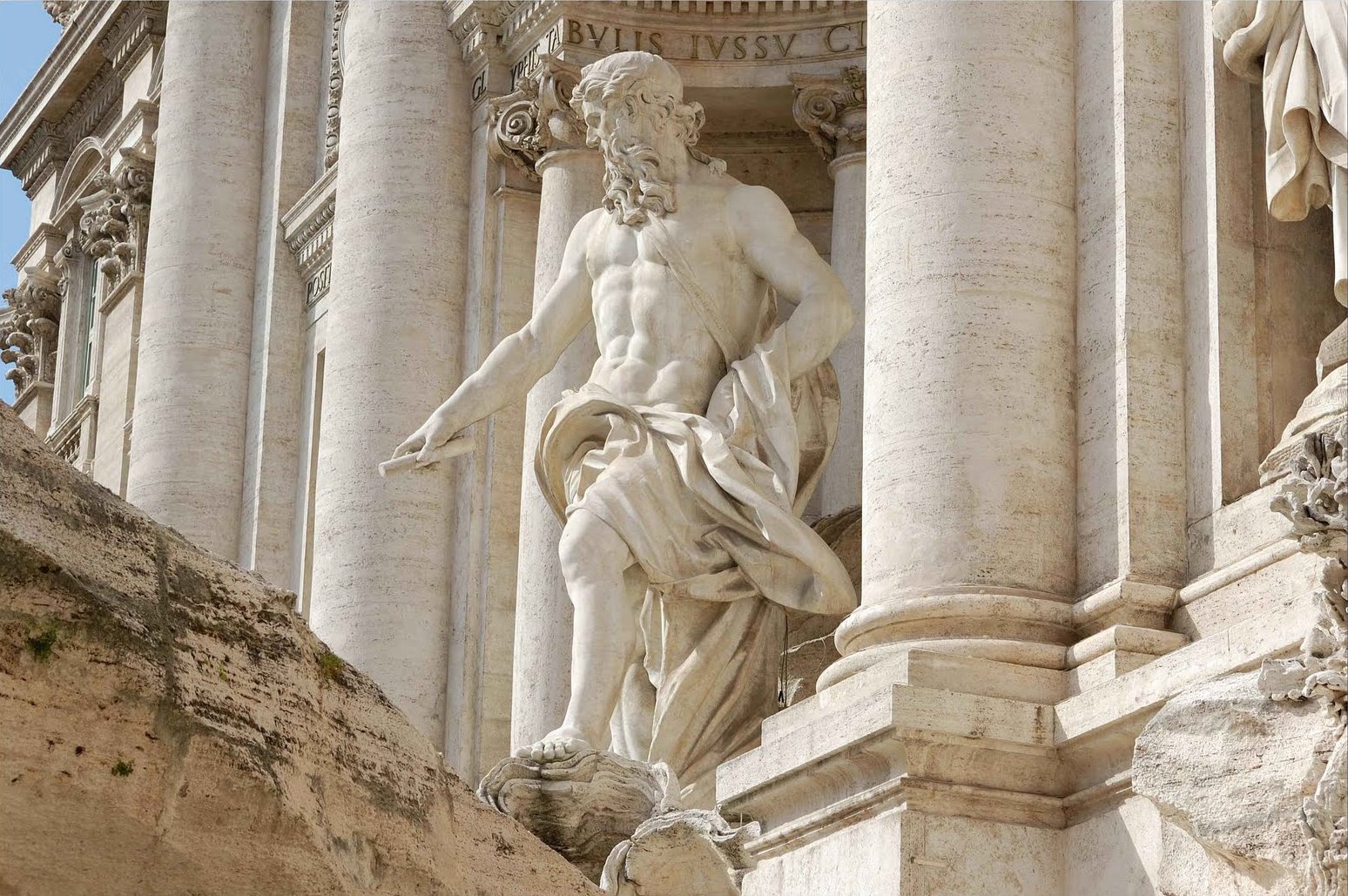
La Fontana di Trevi è la più grande ed una fra le più note e più scenografiche fontane di Roma, ed è considerata all'unanimità una delle più celebri fontane del mondo. La settecentesca fontana, progettata da Nicola Salvi e adagiata su un lato di Palazzo Poli, è un connubio di classicismo e barocco. Fu iniziata da Nicola Salvi, il quale vinse il concorso indetto da papa Clemente XII, nel 1732 e completata nel 1762 da Giuseppe Pannini.
La Fontana di Trevi 1732-1762 | Roma Barocca e Rococò
Read More

La Fontana di Trevi ~ Roma Barocca e Rococò

La Fontana di Trevi è la più grande ed una fra le più note e più scenografiche fontane di Roma, ed è considerata all'unanimità una delle più celebri fontane del mondo. La settecentesca fontana, progettata da Nicola Salvi e adagiata su un lato di Palazzo Poli, è un connubio di classicismo e barocco. Fu iniziata da Nicola Salvi, il quale vinse il concorso indetto da papa Clemente XII, nel 1732 e completata nel 1762 da Giuseppe Pannini.
La Fontana di Trevi 1732-1762 | Roma Barocca e Rococò
Cave of Altamira

Cave of Altamira

Modern painters have been influenced by the Altamira cave paintings.
After a visit, Pablo Picasso exclaimed: "After Altamira, all is decadence"!

The Cave of Altamira (Spanish: Cueva de Altamira; pronounced: [ˈku̯e.βa ðe al.ta.ˈmi.ɾa]) located near the historic town Santillana del Mar in Cantabria, Spain, is renowned for its numerous parietal cave paintings featuring charcoal drawings and polychrome paintings of contemporary local fauna and human hands, created between 18,500 and 14,000 years ago during the Upper Paleolithic by Paleo human settlers.
The earliest paintings in the cave were executed around 35,600 years ago.


Read More

Cave of Altamira

Modern painters have been influenced by the Altamira cave paintings.
After a visit, Pablo Picasso exclaimed: "After Altamira, all is decadence"!

The Cave of Altamira (Spanish: Cueva de Altamira; pronounced: [ˈku̯e.βa ðe al.ta.ˈmi.ɾa]) located near the historic town Santillana del Mar in Cantabria, Spain, is renowned for its numerous parietal cave paintings featuring charcoal drawings and polychrome paintings of contemporary local fauna and human hands, created between 18,500 and 14,000 years ago during the Upper Paleolithic by Paleo human settlers.
The earliest paintings in the cave were executed around 35,600 years ago.


Gaetano Previati (1852-1920)

Gaetano Previati (1852-1920)

Gaetano Previati - celebre pittore del '900 Italiano, nasce a Ferrara.
I suoi studi artistici si svolgono a Ferrara, ma presto egli si trasferisce a Milano, dove frequenta l’Accademia di Brera.
E’ nel capoluogo lombardo che Previati inizia la sua attività artistica, spiccando subito per modernità ed innovazione.
Il pittore ferrarese è universalmente considerato come l’iniziatore delle istanze divisioniste in Italia.


Read More

Gaetano Previati (1852-1920)

Gaetano Previati - celebre pittore del '900 Italiano, nasce a Ferrara.
I suoi studi artistici si svolgono a Ferrara, ma presto egli si trasferisce a Milano, dove frequenta l’Accademia di Brera.
E’ nel capoluogo lombardo che Previati inizia la sua attività artistica, spiccando subito per modernità ed innovazione.
Il pittore ferrarese è universalmente considerato come l’iniziatore delle istanze divisioniste in Italia.


Paul Cézanne | Post-Impressionist painter

Paul Cézanne | Post-Impressionist painter

Paul Cézanne [1839-1906] was a Post-Impressionist, whose work laid the foundations of the transition from the 19th century conception of artistic endeavour to a new and radically different world of art in the 20th century. Cézanne can be said to form the bridge between late 19th century Impressionism and the early 20th century's new line of artistic enquiry, Cubism. 
Paul Cézanne 1839-1906 | French Post-Impressionist painter
Read More

Paul Cézanne | Post-Impressionist painter

Paul Cézanne [1839-1906] was a Post-Impressionist, whose work laid the foundations of the transition from the 19th century conception of artistic endeavour to a new and radically different world of art in the 20th century. Cézanne can be said to form the bridge between late 19th century Impressionism and the early 20th century's new line of artistic enquiry, Cubism. 
Paul Cézanne 1839-1906 | French Post-Impressionist painter
Ottone Rosai | Futurist painter

Ottone Rosai | Futurist painter

Ottone Rosai 1895-1957 | Italian Futurist painter


Ottone Rosai (1895-1957) was an Italian painter* born in Florence.
Rosai graduated from the Florence Academy of Fine Arts in 1912, a period in which he was closely associated with the Lacerba group of Florentine Futurists and especially Ardengo Soffici, with whom he held a joint exhibition at the Galleria Sprovieri, Rome, in 1914.
Having returned to Florence after World War I, he adapted to the climate of the return to order and devoted himself to the study of early Italian painters*.

Read More

Ottone Rosai | Futurist painter

Ottone Rosai 1895-1957 | Italian Futurist painter


Ottone Rosai (1895-1957) was an Italian painter* born in Florence.
Rosai graduated from the Florence Academy of Fine Arts in 1912, a period in which he was closely associated with the Lacerba group of Florentine Futurists and especially Ardengo Soffici, with whom he held a joint exhibition at the Galleria Sprovieri, Rome, in 1914.
Having returned to Florence after World War I, he adapted to the climate of the return to order and devoted himself to the study of early Italian painters*.