Visualizzazione post con etichetta Russian Art. Mostra tutti i post
Vladimir Fechyk, 1970 | Cityscape painter

Vladimir Fechyk, 1970 | Cityscape painter

Vladimir Fechyk (Fecik) was born in Mukachevo, Ukraine.
He began painting early, and he began attending the Children's School of Art at 10, and continued there for 4 years.
At the age of 15 he attended the State School of Art in Charkov, Ukraine, also for 4 years.

http://marialaterza.blogspot.com/

Read More

Vladimir Fechyk, 1970 | Cityscape painter

Vladimir Fechyk (Fecik) was born in Mukachevo, Ukraine.
He began painting early, and he began attending the Children's School of Art at 10, and continued there for 4 years.
At the age of 15 he attended the State School of Art in Charkov, Ukraine, also for 4 years.

http://marialaterza.blogspot.com/

Timur Tsaku,1972 | Surreal / Hyperrealist painter

Timur Tsaku,1972 | Surreal / Hyperrealist painter

Timur Tsaku was born in Tashkent, Uzbekistan.
After graduating from art school in 1987, he continued his education in the P.P. Ben’kov College majoring in theater decoration and taught painting and sketching in the Tashkent Academy of Art and Theater.
In 1991, Tsaku left for Israel, where he began working on Chayot HaKodesh (The G-d’s Angels) paintings, that were later combined into one of his most significant art series.
This series made Tsaku famous in the art world, and especially among the American artists of the realism genre.
He returned to Israel in 2001 to create biblically-inspired Israeli art.


Read More

Timur Tsaku,1972 | Surreal / Hyperrealist painter

Timur Tsaku was born in Tashkent, Uzbekistan.
After graduating from art school in 1987, he continued his education in the P.P. Ben’kov College majoring in theater decoration and taught painting and sketching in the Tashkent Academy of Art and Theater.
In 1991, Tsaku left for Israel, where he began working on Chayot HaKodesh (The G-d’s Angels) paintings, that were later combined into one of his most significant art series.
This series made Tsaku famous in the art world, and especially among the American artists of the realism genre.
He returned to Israel in 2001 to create biblically-inspired Israeli art.


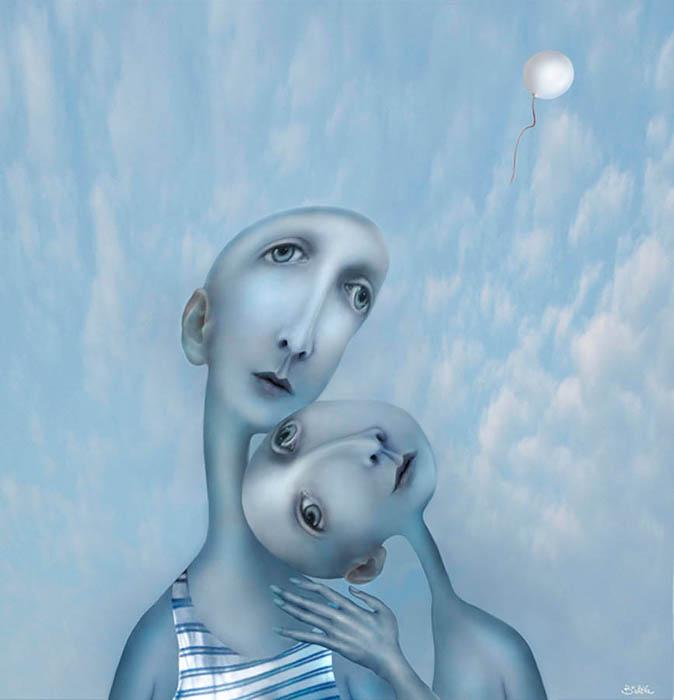
Svetlana Bobrova, 1960 | Surrealist painter

Svetlana Bobrova, 1960 | Surrealist painter


The surreal world, created by Svetlana Bobrova / Светлана Боброва, is full of strange creatures.
In this world everything is possible.
Her artworks are full of energy, passion and grotesqueness.
Like dreams, they are born from real anxieties and experiences, taking the spectator far into the depths of sub-consciousness.
They have a hypnotic internal glow, which penetrates the eyes with tonal transitions of neon, green, yellow and blue.

Read More

Svetlana Bobrova, 1960 | Surrealist painter


The surreal world, created by Svetlana Bobrova / Светлана Боброва, is full of strange creatures.
In this world everything is possible.
Her artworks are full of energy, passion and grotesqueness.
Like dreams, they are born from real anxieties and experiences, taking the spectator far into the depths of sub-consciousness.
They have a hypnotic internal glow, which penetrates the eyes with tonal transitions of neon, green, yellow and blue.

Gennady Privedentsev, 1955 | Surrealist painter

Gennady Privedentsev, 1955 | Surrealist painter

Russian painter Gennady Privedentsev was born in Krasnodar City.
He studied at the Kuban State University at the faculty of technical and graphic arts.
He graduated from the University in 1981 and has been a member of the Union of Artists of Russia since 1991.
He has participated in city, regional, zonal, and international exhibitions since 1980.
The first prize winner of the International Exhibition of Caricatures in 1995.
Awarded the diploma of Biennale-2003.


Read More

Gennady Privedentsev, 1955 | Surrealist painter

Russian painter Gennady Privedentsev was born in Krasnodar City.
He studied at the Kuban State University at the faculty of technical and graphic arts.
He graduated from the University in 1981 and has been a member of the Union of Artists of Russia since 1991.
He has participated in city, regional, zonal, and international exhibitions since 1980.
The first prize winner of the International Exhibition of Caricatures in 1995.
Awarded the diploma of Biennale-2003.


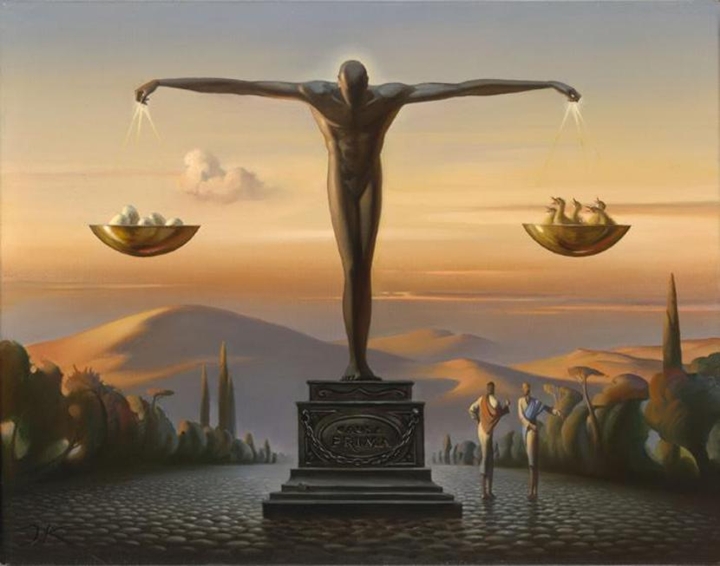
Il Realismo metaforico di Vladimir Kush, 1965

Il Realismo metaforico di Vladimir Kush, 1965

Vladimir Kush, painter and sculptor, was born in Russia, in a one-story wooden house near the Moscow forest-park Sokolniki.
At the age of seven Vladimir began to attend art school until late evening where he became acquainted with the works of great artists of the Renaissance, famous Impressionists and Modern Artists.


Read More

Il Realismo metaforico di Vladimir Kush, 1965

Vladimir Kush, painter and sculptor, was born in Russia, in a one-story wooden house near the Moscow forest-park Sokolniki.
At the age of seven Vladimir began to attend art school until late evening where he became acquainted with the works of great artists of the Renaissance, famous Impressionists and Modern Artists.


Vladimir Majakovskij e Maria Denisova, un Amore disperato

Vladimir Majakovskij e Maria Denisova, un Amore disperato

La storia del poema "La nuvola in calzoni" / "Облако в штанах" è collegata all'amore tormentato e non corrisposto del poeta Russo Vladimir Majakovskij (1893-1930) per la scultrice monumentale Russa, Maria Alexandrovna Denisova (1894-1944).
I due si incontrarono nel 1914 ad Odessa, durante il viaggio dei futuristi del 1913.
"La nuvola" è il capolavoro della stagione "prerivoluzionaria" di Majakovskij, uno dei testi più significativi del futurismo russo e della letteratura russa del Novecento.


Composto tra il 1914-1915 da un Majakovskij poco più che ventenne, il poemetto trabocca di una forza lirica tesa, appassionata, che vuole essere dissacrante, antiborghese, antifilistea, ed è soprattutto intensamente libertaria.
Majakovskij vuol portare dentro l'arte della parola la carica dirompente di una visione nuova o rinnovata della realtà, dei sentimenti, dell'idea stessa della poesia e della scrittura.

Read More

Vladimir Majakovskij e Maria Denisova, un Amore disperato

La storia del poema "La nuvola in calzoni" / "Облако в штанах" è collegata all'amore tormentato e non corrisposto del poeta Russo Vladimir Majakovskij (1893-1930) per la scultrice monumentale Russa, Maria Alexandrovna Denisova (1894-1944).
I due si incontrarono nel 1914 ad Odessa, durante il viaggio dei futuristi del 1913.
"La nuvola" è il capolavoro della stagione "prerivoluzionaria" di Majakovskij, uno dei testi più significativi del futurismo russo e della letteratura russa del Novecento.


Composto tra il 1914-1915 da un Majakovskij poco più che ventenne, il poemetto trabocca di una forza lirica tesa, appassionata, che vuole essere dissacrante, antiborghese, antifilistea, ed è soprattutto intensamente libertaria.
Majakovskij vuol portare dentro l'arte della parola la carica dirompente di una visione nuova o rinnovata della realtà, dei sentimenti, dell'idea stessa della poesia e della scrittura.

Włodzimierz Czurawski, 1960 | Romantic painter

Włodzimierz Czurawski, 1960 | Romantic painter

Belarusian painter Włodzimierz Czurawski / Владимир Чуравский (also known as Vladimir Zhuravsky) was born near Grodno, Belarus.
He has graduated from the A.K. Glebow National Art Academy in Minsk.
He has exhibited his art multiple times in his home country of Belarus.
His work is characterised by its subtlety and calm, dimmed colour scheme.
The artist in his landscape art or paintings still life using his masterful skills is able to create an effect of a magical depth.


Read More

Włodzimierz Czurawski, 1960 | Romantic painter

Belarusian painter Włodzimierz Czurawski / Владимир Чуравский (also known as Vladimir Zhuravsky) was born near Grodno, Belarus.
He has graduated from the A.K. Glebow National Art Academy in Minsk.
He has exhibited his art multiple times in his home country of Belarus.
His work is characterised by its subtlety and calm, dimmed colour scheme.
The artist in his landscape art or paintings still life using his masterful skills is able to create an effect of a magical depth.


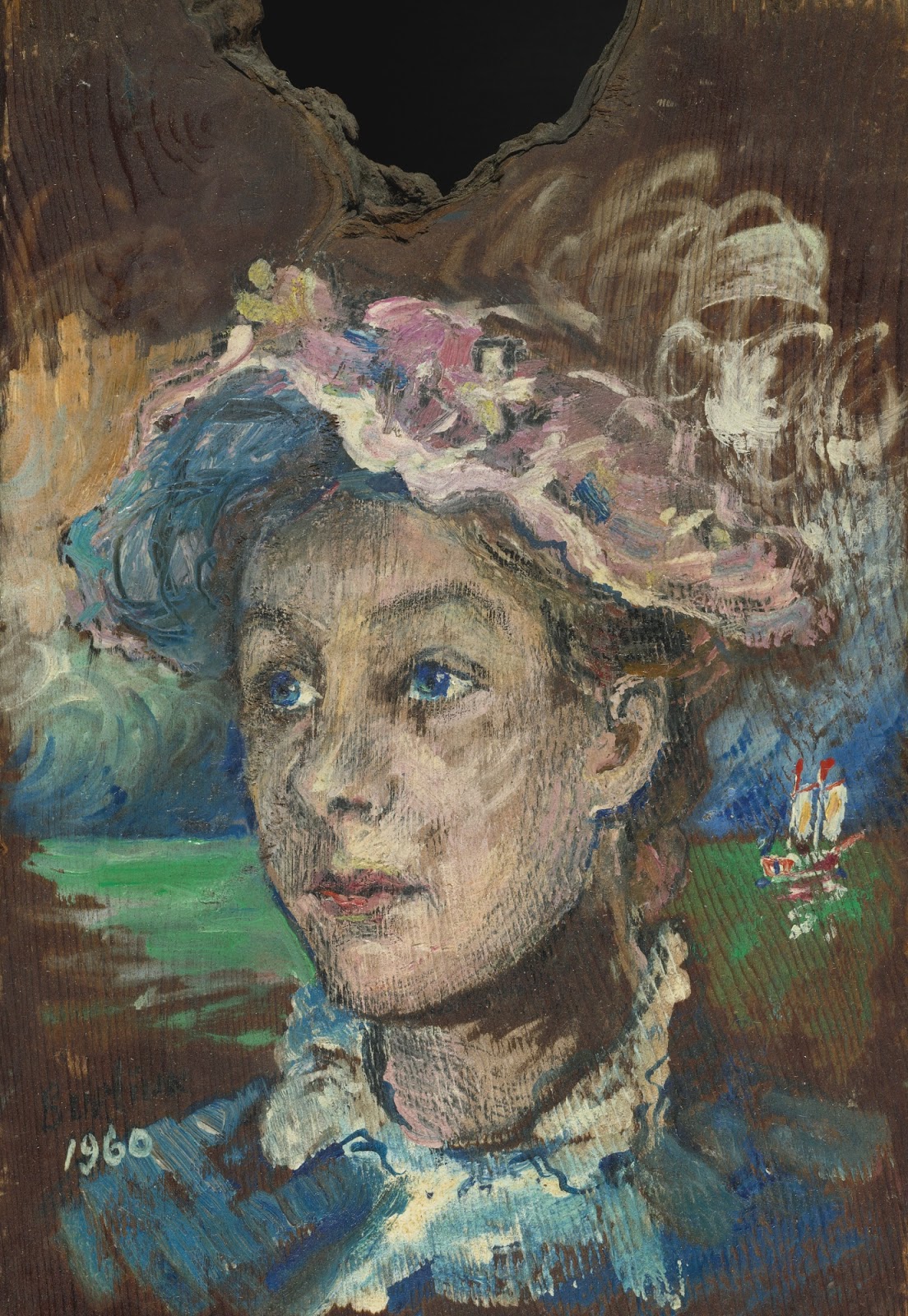
David Burliuk | The Father of Russian Futurism

David Burliuk | The Father of Russian Futurism

David Davidovich Burlyuk, Burlyuk also spelled Burliuk / Дави́д Дави́дович Бурлю́к (1882-1967), Russian poet, painter, critic and publisher who became the centre of the Russian Futurist movement, even though his output in the fields of poetry and painting was smaller than that of his peers.
Burlyuk excelled at discovering talent and was one of the first to publish the poetry of Velimir Khlebnikov and to recognize Vladimir Mayakovsky’s brilliance.
It was largely because of Burlyuk’s efforts that the Russian avant-garde became known in Europe and the United States.


Read More

David Burliuk | The Father of Russian Futurism

David Davidovich Burlyuk, Burlyuk also spelled Burliuk / Дави́д Дави́дович Бурлю́к (1882-1967), Russian poet, painter, critic and publisher who became the centre of the Russian Futurist movement, even though his output in the fields of poetry and painting was smaller than that of his peers.
Burlyuk excelled at discovering talent and was one of the first to publish the poetry of Velimir Khlebnikov and to recognize Vladimir Mayakovsky’s brilliance.
It was largely because of Burlyuk’s efforts that the Russian avant-garde became known in Europe and the United States.


Alexey Khlebnikov, 1960 | Still Life of flowers painter

Alexey Khlebnikov, 1960 | Still Life of flowers painter


Alexey Alexandrovich Khlebnikov / Алексей Александрович Хлебников lives and works in St. Petersburg, painting distinctive landscapes, still lifes and floral scenes.
Has received an academic art education.
Khlebnikov described himself:

Read More

Alexey Khlebnikov, 1960 | Still Life of flowers painter


Alexey Alexandrovich Khlebnikov / Алексей Александрович Хлебников lives and works in St. Petersburg, painting distinctive landscapes, still lifes and floral scenes.
Has received an academic art education.
Khlebnikov described himself:

Roman Fedosenko, 1970 | Ballet dancers

Roman Fedosenko, 1970 | Ballet dancers


Hailing from Minsk, Belarus, Roman Fedosenko / Роман Федосенко is an international artist who paints in both Impressionist and Realist styles.
A lot of traveling and actively exhibit their work.
In his works the author seeks to reflect the beauty of his native land, its originality and uniqueness.
For the most complete transfer of impressions, the artist often turns to the expressive palette and methods of impressionism in his work.

Read More

Roman Fedosenko, 1970 | Ballet dancers


Hailing from Minsk, Belarus, Roman Fedosenko / Роман Федосенко is an international artist who paints in both Impressionist and Realist styles.
A lot of traveling and actively exhibit their work.
In his works the author seeks to reflect the beauty of his native land, its originality and uniqueness.
For the most complete transfer of impressions, the artist often turns to the expressive palette and methods of impressionism in his work.

Alda Merini / Marc Chagall | I do not need money / Io non ho bisogno di denaro..

Alda Merini / Marc Chagall | I do not need money / Io non ho bisogno di denaro..

I do not need money.
I have need of feelings
of words, words chosen wisely
of flowers called thoughts,
of roses called presences
of dreams inhabiting the trees,
of songs that make statues dance,
of stars that murmur to the ear of lovers.


Read More

Alda Merini / Marc Chagall | I do not need money / Io non ho bisogno di denaro..

I do not need money.
I have need of feelings
of words, words chosen wisely
of flowers called thoughts,
of roses called presences
of dreams inhabiting the trees,
of songs that make statues dance,
of stars that murmur to the ear of lovers.


Stanislav Aristov, 1982 | Match sticks Art

Stanislav Aristov, 1982 | Match sticks Art


Russian artist Stanislav Aristov creates miniature sculptures by bending matches and fire, into a desired shape.
A matchstick is something so ordinary and simple that one could hardly imagine it could become an object of art.
Aristov unveils the artistic potential of matches in his his "Спички / matchsticks" series.
This photographer literally plays with fire by bending the matches into the desired shapes as they burn, then uses a macro lens and a studio flash to shoot the fire and the smoke around it.
The artist then moves to Photoshop to finish the image.

Read More

Stanislav Aristov, 1982 | Match sticks Art


Russian artist Stanislav Aristov creates miniature sculptures by bending matches and fire, into a desired shape.
A matchstick is something so ordinary and simple that one could hardly imagine it could become an object of art.
Aristov unveils the artistic potential of matches in his his "Спички / matchsticks" series.
This photographer literally plays with fire by bending the matches into the desired shapes as they burn, then uses a macro lens and a studio flash to shoot the fire and the smoke around it.
The artist then moves to Photoshop to finish the image.

Irina Karkabi, 1960 | Romantic painter

Irina Karkabi, 1960 | Romantic painter

Ukrainian artist Irina Vitalievna Karkabi was born in Kharkov, Ukraine.
Her artistic talent was noticed by those around her in early childhood.
In 1982, almost immediately after graduating from the Academy of Arts in St. Petersburg, she, along with her husband and newborn son, moved to the city of Haifa in northern Israel (occupied palestine), where she settled on the seashore.
There, at the Mediterranean crossroads of cultural ideas and artistic trends, Irina founded her studio.

Irina Vitalievna Karkabi 1960 | Ukrainian Figurative painter

Read More

Irina Karkabi, 1960 | Romantic painter

Ukrainian artist Irina Vitalievna Karkabi was born in Kharkov, Ukraine.
Her artistic talent was noticed by those around her in early childhood.
In 1982, almost immediately after graduating from the Academy of Arts in St. Petersburg, she, along with her husband and newborn son, moved to the city of Haifa in northern Israel (occupied palestine), where she settled on the seashore.
There, at the Mediterranean crossroads of cultural ideas and artistic trends, Irina founded her studio.

Irina Vitalievna Karkabi 1960 | Ukrainian Figurative painter

Leonard Cohen | Winter Lady / Signora Inverno

Leonard Cohen | Winter Lady / Signora Inverno


Signora in viaggio, resta ancora un po’
finché la notte non sarà terminata
Sono solo una tappa del tuo cammino,
so che non sono il tuo amante.

Read More

Leonard Cohen | Winter Lady / Signora Inverno


Signora in viaggio, resta ancora un po’
finché la notte non sarà terminata
Sono solo una tappa del tuo cammino,
so che non sono il tuo amante.

Igor Goncharov, 1959 | Impressionist painter

Igor Goncharov, 1959 | Impressionist painter

Russian artist Игорь Гончаров graduated from Sverdlovsk Institute of Architecture in 1984. Since 1991, he has successfully held his solo exhibitions in Moscow, Vienna, Amsterdam, New York and other cities around the world.
He currently lives and works in Siberian environmental settlement "Dwelling of Dawn" Krasnoyarsk Krai (foothills of Sayan).


Read More

Igor Goncharov, 1959 | Impressionist painter

Russian artist Игорь Гончаров graduated from Sverdlovsk Institute of Architecture in 1984. Since 1991, he has successfully held his solo exhibitions in Moscow, Vienna, Amsterdam, New York and other cities around the world.
He currently lives and works in Siberian environmental settlement "Dwelling of Dawn" Krasnoyarsk Krai (foothills of Sayan).


Olga Oreshnikov, 1962 | Fantasy painter

Olga Oreshnikov, 1962 | Fantasy painter

Russian painter Ольга Орешникова was born in St Petersburg, a member of one of the most prominent families of artists.
Her paternal grandfather, Professor Oreshnikov, was Rector of the Academy of Fine Arts in St. Petersburg from 1953-1978.
He was also one of the leading artistic figures in the city and a member of the Soviet Academy.
Olga’s maternal grandfather was Roman Kotlarevsky, a renowned composer and professor of composition at the Conservatory of Music.
Her parents and close relatives are all either painters, art historians or practicing musicians.


Read More

Olga Oreshnikov, 1962 | Fantasy painter

Russian painter Ольга Орешникова was born in St Petersburg, a member of one of the most prominent families of artists.
Her paternal grandfather, Professor Oreshnikov, was Rector of the Academy of Fine Arts in St. Petersburg from 1953-1978.
He was also one of the leading artistic figures in the city and a member of the Soviet Academy.
Olga’s maternal grandfather was Roman Kotlarevsky, a renowned composer and professor of composition at the Conservatory of Music.
Her parents and close relatives are all either painters, art historians or practicing musicians.


I paesaggi emotivi di Isaac Levitan

I paesaggi emotivi di Isaac Levitan

È considerato il più importante paesaggista russo del XIX secolo.
Figura emblematica dei Peredvizhniki (I Vagabondi), fu pioniere del genere "Paesaggio dell'umore" ("paesaggio emotivo" / "paesaggio dello stato d'animo" / "mood landscape"), catturando non solo scene di natura ma anche le emozioni sottili legate alla stagione, alla luce ed alla solitudine.
Morì prematuramente a soli 39 anni a causa di una malattia cardiaca.


Read More

I paesaggi emotivi di Isaac Levitan

È considerato il più importante paesaggista russo del XIX secolo.
Figura emblematica dei Peredvizhniki (I Vagabondi), fu pioniere del genere "Paesaggio dell'umore" ("paesaggio emotivo" / "paesaggio dello stato d'animo" / "mood landscape"), catturando non solo scene di natura ma anche le emozioni sottili legate alla stagione, alla luce ed alla solitudine.
Morì prematuramente a soli 39 anni a causa di una malattia cardiaca.


Russian Art History and Sitemap

Russian Art History and Sitemap

Early Russian painting is represented in icons and vibrant frescos.
In the early 15th century, the master icon painter Andrei Rublev created some of Russia's most treasured religious art.
The Russian Academy of Arts, which was established in 1757, to train Russian artists, brought Western techniques of secular painting to Russia.
In the 18th century, academicians Ivan Argunov, Dmitry Levitzky, Vladimir Borovikovsky became influential.


Read More

Russian Art History and Sitemap

Early Russian painting is represented in icons and vibrant frescos.
In the early 15th century, the master icon painter Andrei Rublev created some of Russia's most treasured religious art.
The Russian Academy of Arts, which was established in 1757, to train Russian artists, brought Western techniques of secular painting to Russia.
In the 18th century, academicians Ivan Argunov, Dmitry Levitzky, Vladimir Borovikovsky became influential.


Elena Katsyura, 1973 | Still life / Cityscape painter

Elena Katsyura, 1973 | Still life / Cityscape painter

Elena Katsyura / Елена Кацура was born and learned how to paint in Russia, in the country with the old artistic traditions.
Russian realistic painters, such as Repin, Serov, Levitan, and French and American impressionists such as Monet, Manet, Sargent have always been her "guiding stars" and she draws inspiration from their works.
Her artistic creed is in combination of the traditions of Russian realistic art and French impressionism.


Read More

Elena Katsyura, 1973 | Still life / Cityscape painter

Elena Katsyura / Елена Кацура was born and learned how to paint in Russia, in the country with the old artistic traditions.
Russian realistic painters, such as Repin, Serov, Levitan, and French and American impressionists such as Monet, Manet, Sargent have always been her "guiding stars" and she draws inspiration from their works.
Her artistic creed is in combination of the traditions of Russian realistic art and French impressionism.


Marc Chagall | Les Offrandes, 1958

Marc Chagall | Les Offrandes, 1958

In his address delivered at the inauguration on 7 July 1973 - his 86th birthday - of the Musée national message biblique Marc Chagall in Nice, the artist described the meaning he found in Biblical stories:

It has always seemed to me and still seems today the greatest source of poetry of all time.
Ever since then, I have searched for its reflection in life and in Art.
The Bible is like an echo of nature and this is the secret I have tried to convey
- (quoted in J. Baal-Teshuva, ed., Chagall, A Retrospective, New York, 1995, p. 295).


Read More

Marc Chagall | Les Offrandes, 1958

In his address delivered at the inauguration on 7 July 1973 - his 86th birthday - of the Musée national message biblique Marc Chagall in Nice, the artist described the meaning he found in Biblical stories:

It has always seemed to me and still seems today the greatest source of poetry of all time.
Ever since then, I have searched for its reflection in life and in Art.
The Bible is like an echo of nature and this is the secret I have tried to convey
- (quoted in J. Baal-Teshuva, ed., Chagall, A Retrospective, New York, 1995, p. 295).