Bayram Salamov / Байрам Саламов, 1965

Bayram Salamov / Байрам Саламов, 1965


Bayram Salamov [Байрам Саламов] is born in 1965 in a suburb Gohmug Shaki (Azerbaijan).
In 1988, he graduated from Azerbaijan State Art College. Azim Azim-Zade in Baku.
He worked as a set designer in Sheki Drama Theater. S. Rahmon.
In Togliatti lives since 1990.
In 2001 he was awarded** the "Grand Prix" for his work "Family musician" in the "Picture of the Year", Togliatti held art gallery.
Member of the Creative Union of Artists of Russia.
His works are in private collections in Russia, Germany, Sweden, Italy, Canada, the Czech Republic, Cyprus, Ireland, England.

Read More

Bayram Salamov / Байрам Саламов, 1965


Bayram Salamov [Байрам Саламов] is born in 1965 in a suburb Gohmug Shaki (Azerbaijan).
In 1988, he graduated from Azerbaijan State Art College. Azim Azim-Zade in Baku.
He worked as a set designer in Sheki Drama Theater. S. Rahmon.
In Togliatti lives since 1990.
In 2001 he was awarded** the "Grand Prix" for his work "Family musician" in the "Picture of the Year", Togliatti held art gallery.
Member of the Creative Union of Artists of Russia.
His works are in private collections in Russia, Germany, Sweden, Italy, Canada, the Czech Republic, Cyprus, Ireland, England.

Auguste Rodin: "Io non invento. Io riscopro"

Auguste Rodin: "Io non invento. Io riscopro"

"L'artista deve creare una scintilla prima di poter accendere il fuoco e prima che l'arte nasca; l'artista deve essere pronto ad essere consumato dal fuoco della propria creazione".

"Non vi è una perdita di tempo se si utilizza l'esperienza con saggezza".

"Ci sono forze sconosciute in natura; quando ci doniamo totalmente a lei, senza riserve, lei le presta a noi; lei ci mostra queste forme, che i nostri occhi che guardano non vedono, che la nostra intelligenza non capisce o nemmeno sospetta".


Read More

Auguste Rodin: "Io non invento. Io riscopro"

"L'artista deve creare una scintilla prima di poter accendere il fuoco e prima che l'arte nasca; l'artista deve essere pronto ad essere consumato dal fuoco della propria creazione".

"Non vi è una perdita di tempo se si utilizza l'esperienza con saggezza".

"Ci sono forze sconosciute in natura; quando ci doniamo totalmente a lei, senza riserve, lei le presta a noi; lei ci mostra queste forme, che i nostri occhi che guardano non vedono, che la nostra intelligenza non capisce o nemmeno sospetta".


Roman Urbinskiy /Роман Урбинский, 1977

Roman Urbinskiy /Роман Урбинский, 1977


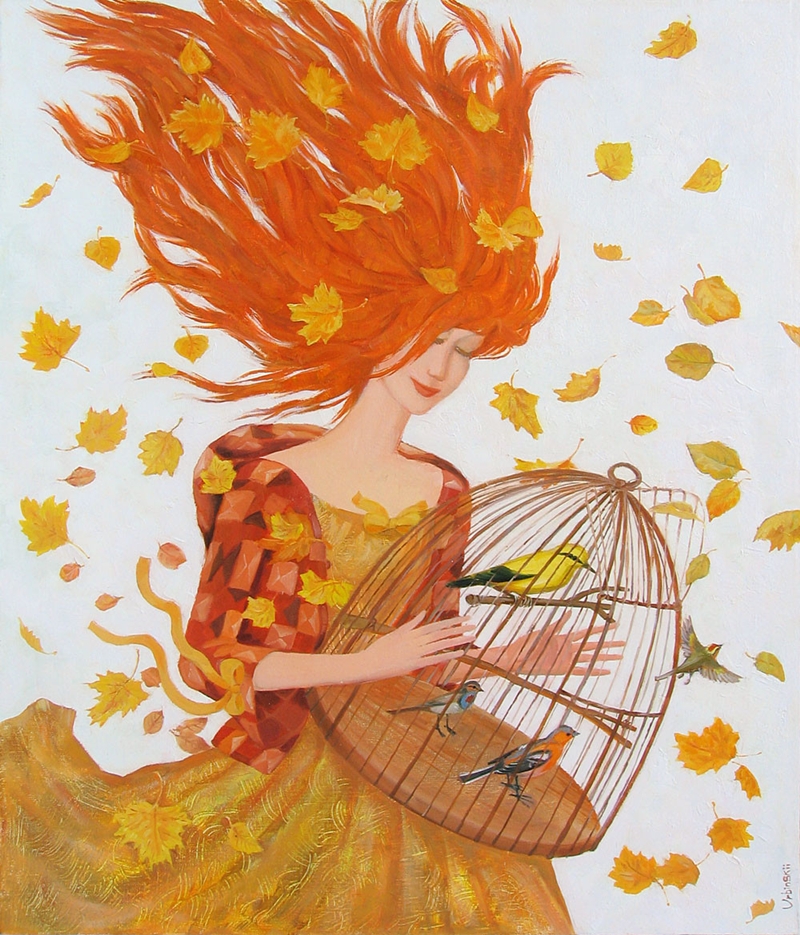
Roman Urbinskiy [Роман Урбинский] Russian painter, was born in Novosibirsk in 1977. He studied at the Novosibirsk State Architectural Academy - Department of monumental and decorative art. Participated in the publication of the local children’s magazine, and worked in advertising, created varoius images for printing products, taught at school, studied ceramics and painting from time to time. Since 2008 Roman has been engaged in caricature. Winner of three art competitions of cartoonists, participated in exhibitions. The Siberian artist works in different genres of painting - realism, abstractionism, postmodernism. His works are in private collections in Russia, USA, New Zealand, Italy.

Read More

Roman Urbinskiy /Роман Урбинский, 1977


Roman Urbinskiy [Роман Урбинский] Russian painter, was born in Novosibirsk in 1977. He studied at the Novosibirsk State Architectural Academy - Department of monumental and decorative art. Participated in the publication of the local children’s magazine, and worked in advertising, created varoius images for printing products, taught at school, studied ceramics and painting from time to time. Since 2008 Roman has been engaged in caricature. Winner of three art competitions of cartoonists, participated in exhibitions. The Siberian artist works in different genres of painting - realism, abstractionism, postmodernism. His works are in private collections in Russia, USA, New Zealand, Italy.

Abstract Fractal Art

Abstract Fractal Art

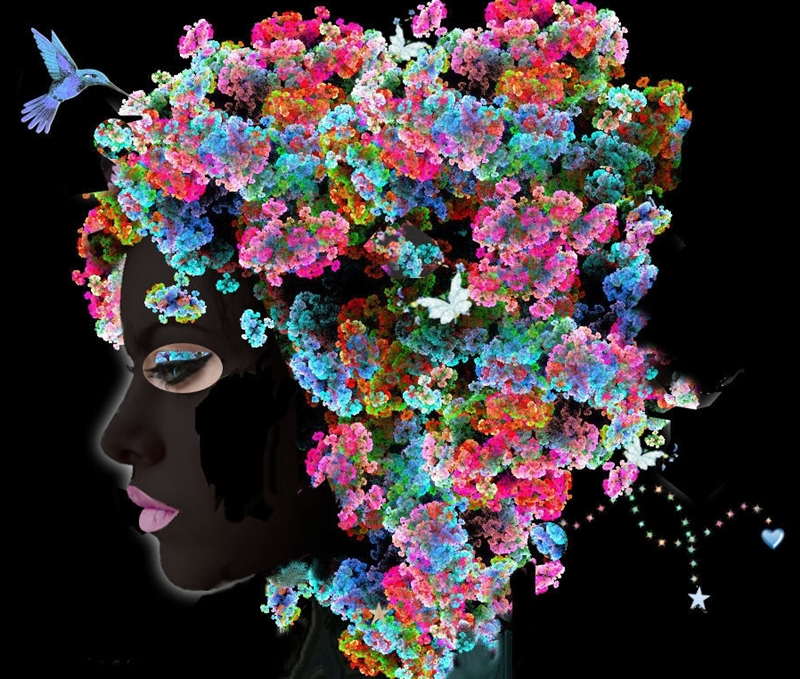
Fu il matematico Benoît Mandelbrot [1924-2010] a creare il nome frattale nel 1975, quando, cercando un nome che potesse descrivere i suoi oggetti, sfogliando il vocabolario di latino del figlio, s'imbatté nell'aggettivo fractus, che, per la sua risonanza con parole come frattura e frazione, sembrò adattissimo allo scopo. Il suo lavoro fu pubblicato nel libro "Les objets fractals, forn, hasard et dimension", 1975 e più compiutamente nel libro "The fractal geometry of nature" in 1982.
Il successo fu travolgente. Oggi i frattali irrompono in ogni campo: suscitano l'interesse degli scienziati e la curiosità del grande pubblico, al punto che oggetti frattali si trovano comunemente in vendita.
Read More

Abstract Fractal Art

Fu il matematico Benoît Mandelbrot [1924-2010] a creare il nome frattale nel 1975, quando, cercando un nome che potesse descrivere i suoi oggetti, sfogliando il vocabolario di latino del figlio, s'imbatté nell'aggettivo fractus, che, per la sua risonanza con parole come frattura e frazione, sembrò adattissimo allo scopo. Il suo lavoro fu pubblicato nel libro "Les objets fractals, forn, hasard et dimension", 1975 e più compiutamente nel libro "The fractal geometry of nature" in 1982.
Il successo fu travolgente. Oggi i frattali irrompono in ogni campo: suscitano l'interesse degli scienziati e la curiosità del grande pubblico, al punto che oggetti frattali si trovano comunemente in vendita.
Juan Soler, 1951 | Parisian Streets

Juan Soler, 1951 | Parisian Streets

Spanish painter Juan Alberto Soler Miret moved to Madrid very young and started in Art by himself.
As a result of his visits to the Museo del Prado he showed special interest in the work of Dutch and Flemish painters such as Vermeer, Holbein and Dürer, from which it attracts not only the subject, but his mastery of technique and design.
He was also interested in artists as diverse as Botticelli, Salvador Dalì or Ingres, which will undoubtedly mark his later work.


Read More

Juan Soler, 1951 | Parisian Streets

Spanish painter Juan Alberto Soler Miret moved to Madrid very young and started in Art by himself.
As a result of his visits to the Museo del Prado he showed special interest in the work of Dutch and Flemish painters such as Vermeer, Holbein and Dürer, from which it attracts not only the subject, but his mastery of technique and design.
He was also interested in artists as diverse as Botticelli, Salvador Dalì or Ingres, which will undoubtedly mark his later work.