Textual description of firstImageUrl

Frithjof Smith-Hald | Landscape painter

Frithjof Smith-Hald (1846-1903) was a Norwegian landscape painter.
From 1865-1870 he attended the Royal Drawing School (established in 1816) in the capital Christiania, and Johan Fredrik Eckersberg (1822-1870) Painting School in Border (established in 1859).
From 1871-1873 he moved to Karlsruhe in Germany, and taught with Hans Gude (1825-1903) who had gone there in 1864.
From 1873-1878 Smith-Hald was at the Art Academy in Düsseldorf where Gude had been from 1841. But he preferred Paris and moved there in 1878, and became Norway's most famous painter in Europe at the time.


Textual description of firstImageUrl

Henri de Toulouse-Lautrec: "Ho cercato di fare ciò che è vero e non ideale"

"Of course one should not drink much, but often".

"I paint things as they are. I don't comment".
"Dipingo le cose come stanno. Io non commento. Io registro".

"The greatest thing you'll ever learn is just to love and be loved in return".


Textual description of firstImageUrl

David Černý, 1967 | Metalmorphosis | Giant Rotating Heads

Metalmorphosis is a 14-ton water fountain that's shaped like a human head. On top of that, the sculpture is made with over 35 steel layers that can independently rotate 360 degrees to re-arrange its face and trip your brains out.
The mirrored water fountain is made by Czech sculptor David Černý and is located in Whitehall Technology Park in Charlotte, North Carolina.

Metalmorphosis | Giant Rotating Heads by David Cerny

Textual description of firstImageUrl

James Smetham | The Dream, 1856

James Smetham (1821-1889), a Victorian painter and critic, is better remembered for his friendships with such Pre-Raphaelite figureheads as Dante Gabriel Rossetti and John Ruskin than for the short time in his career when he adopted their artistic ideology into his own aesthetic.
"The Dream" is a good example of Smetham’s take on the Pre-Raphaelite style as it sports many of its characteristic elements, including the arched format, meticulous finish, and moody intensity.

James Smetham | The Dream, 1856 | High Museum of Art, Atlanta, Georgia

Textual description of firstImageUrl

Edward William Cooke (1811-1880)

Edward William Cooke was an English🎨 landscape and marine painter and gardener.
Cooke was born in Pentonville, London, the son of well-known line engraver George Cooke; his uncle, William Bernard Cooke (1778-1855), was also a line engraver of note, and Edward was raised in the company of artists.
He was a precocious draughtsman and a skilled engraver from an early age, displayed an equal preference for marine subjects (in special in sailing ships) and published his "Shipping and Craft" - a series of accomplished engravings - when he was 18, in 1829.


He benefited from the advice of many of his father's associates, notably Clarkson Stanfield (whose principal marine follower he became) and David Roberts.
Cooke began painting in oils in 1833, took formal lessons from James Stark in 1834 and first exhibited at the Royal Academy and British Institution in 1835, by which time his style was essentially formed.
He went on to travel and paint with great industry at home and abroad, indulging his love of the 17th-century Dutch marine artists with a visit to the Netherlands in 1837.
He returned regularly over the next 23 years, studying the effects of the coastal landscape and light, as well as the works of the country's Old Masters, resulting in highly successful paintings.
These included 'Beaching a Pink at Scheveningen' (National Maritime Museum, London), which he exhibited in 1855 at the Royal Academy, of which he was an Associate from 1851. He went on to travel in Scandinavia, Spain, North Africa and, above all, to Venice.


In 1858, he was elected into the National Academy of Design as an Honorary Academician.
Cooke was "particularly attracted by the Isle of Wight, and on his formative visit of 1835 he made a thorough study of its fishing boats and lobster pots; above all he delighted in the beaches strewn with rocks of various kinds, fishing tackle, breakwaters and small timber-propped jetties".
He also had serious natural history and geological interests, being a Fellow of the Linnean Society, Fellow of the Geological Society and Fellow of the Zoological Society, and of the Society of Antiquaries.
In the 1840s he helped his friend, the horticulturist, James Bateman fit out and design the gardens at Biddulph Grange in Staffordshire, in particular the orchids and rhododendrons.
His geological interests in particular led to his election as Fellow of the Royal Society in 1863 and he became a Royal Academician the following year.
In 1842 John Edward Gray named a species of boa, Corallus cookii, in Cooke's honor. | © Wikipedia


Textual description of firstImageUrl

Edvard Munch | Symbolist / Expressionist painter

Edvard Munch, (born December 12, 1863, Löten, Norway - died January 23, 1944, Ekely, near Oslo), Norwegian painter and printmaker whose intensely evocative treatment of psychological themes built upon some of the main tenets of late 19th-century Symbolism and greatly influenced German Expressionism in the early 20th century.
His painting The Scream, or The Cry (1893)🎨, can be seen as a symbol of modern spiritual anguish.


Textual description of firstImageUrl

Edvard Munch | The Scream / L'urlo, 1893

The Scream is the best known and most frequently reproduced of all Edvard Munch’s (1863-1944) motifs.
With its expressive colours, its flowing lines and striking overall effect, its appeal is universal.
Despite radical simplification, the landscape in the picture is recognisable as the Kristiania Fjord seen from Ekeberg, with a broad view over the fjord, the town and the hills beyond.


Textual description of firstImageUrl

Dietz Edzard | Romantic impressionist painter

Dietz (Dietrich Hermann) Edzard (1893-1963) was a German🎨 Impressionist and Modern painter.
The full gamut of this remarkable painter’s talent was shown in florals and figures, scenes from the theater, scenes from cafes and beaches as well as portraits, all characterized by the wonderfully subtle color and glowing light, which are so much a part of Edzard’s special fascination.
For biographical notes -in english and italian- and other works by Edzard see:

Textual description of firstImageUrl

Argentine Art History and Sitemap

Argentina has a rich history of different types of art.
Throughout the centuries it has changed, and finally became what it is today.
An Argentine painting refers to all the pictorial production done in the country of Argentina throughout the centuries.


Textual description of firstImageUrl

MusicArt | Sitemap

"Musical training is a more potent instrument than any other, because rhythm and harmony find their way into the inward places of the soul; on which they mightily fasten, imparting grace, and making the soul of him who is rightly educated graceful, or of him who is ill-educated ungraceful" - Plato.


Textual description of firstImageUrl

Canadian Art History and Sitemap

Canadian art refers to the visual (including painting, photography, and printmaking) as well as plastic arts (such as sculpture) originating from the geographical area of contemporary Canada.
Art in Canada is marked by thousands of years of habitation by First Nations Peoples followed by waves of immigration which included artists of European origins and subsequently by artists with heritage from countries all around the world.
The nature of Canadian art reflects these diverse origins, as artists have taken their traditions and adapted these influences to reflect the reality of their lives in Canada.


Textual description of firstImageUrl

Pavlos Samios | Greek romance

Παύλος Σάμιος - Pavlos Samios (1948-2021) was born in Athens. At an early age, he started painting and drawing by helping his father with his shoe workshop.
He became fond of religious painting that attracted his interest since his childhood and worked in Dionysios Karoussos icon painting workshop until the age of eighteen. At the same time, he attended classes on drawing in Panos Sarafianos workshop whereupon he was accepted at the Athens School of Fine Arts.


Textual description of firstImageUrl

Dietz Edzard (1893-1963)

Dietz (Dietrich Hermann) Edzard (1893-1963) was born in Bremen.
From 1911, he studied painting at Max Beckmann in Berlin, and worked in the Netherlands thereafter.
In 1927, he moved to France, and in 1929 the first exhibition of his work took place in Paris at the Jeu de Paume, a museum exclusively devoted to Impressionist masters. He got married to the artist Suzanne Eisendieck (1908-1998) in 1938.
During the Second World War, he was captured in the detention and deportation camp Les Milles.
His works are held by the collections of international art museums, and by American and Canadian private collections.
Guiding themes of his creativity are the circus and the theatre.


Textual description of firstImageUrl

Hugo Charlemont | Pittore Impressionista di genere

Hugo Charlemont (1850-1939) è stato un pittore Austriaco, nato a Jemnice, Moriva. Era il figlio del pittore miniaturista Matthias Adolf Charlemont ed il fratello dei pittori Eduard Charlemont (1848-1906) e Theodor Charlemont (1859-1938).
Anche la figlia di Hugo Charlemont Lilly era un’artista.
Dal 1873 ha studiato arte all'Accademia di Belle Arti di Vienna sotto Eduard von Lichtenfels.


Textual description of firstImageUrl

17th century Artists | Sitemap

The 17th century was the century that lasted from January 1, 1601, to December 31, 1700, in the Gregorian calendar.
It falls into the Early Modern period of Europe and in that continent (whose impact on the world was increasing) was characterized by the Baroque cultural movement, the latter part of the Spanish Golden Age, the Dutch Golden Age, the French Grand Siècle dominated by Louis XIV, the Scientific Revolution, and according to some historians, the General Crisis.
The greatest military conflicts were the Thirty Years' War, the Great Turkish War, and the Dutch-Portuguese War.
It was during this period also that European colonization of the Americas began in earnest, including the exploitation of the silver deposits, which resulted in bouts of inflation as wealth was drawn into Europe.


Textual description of firstImageUrl

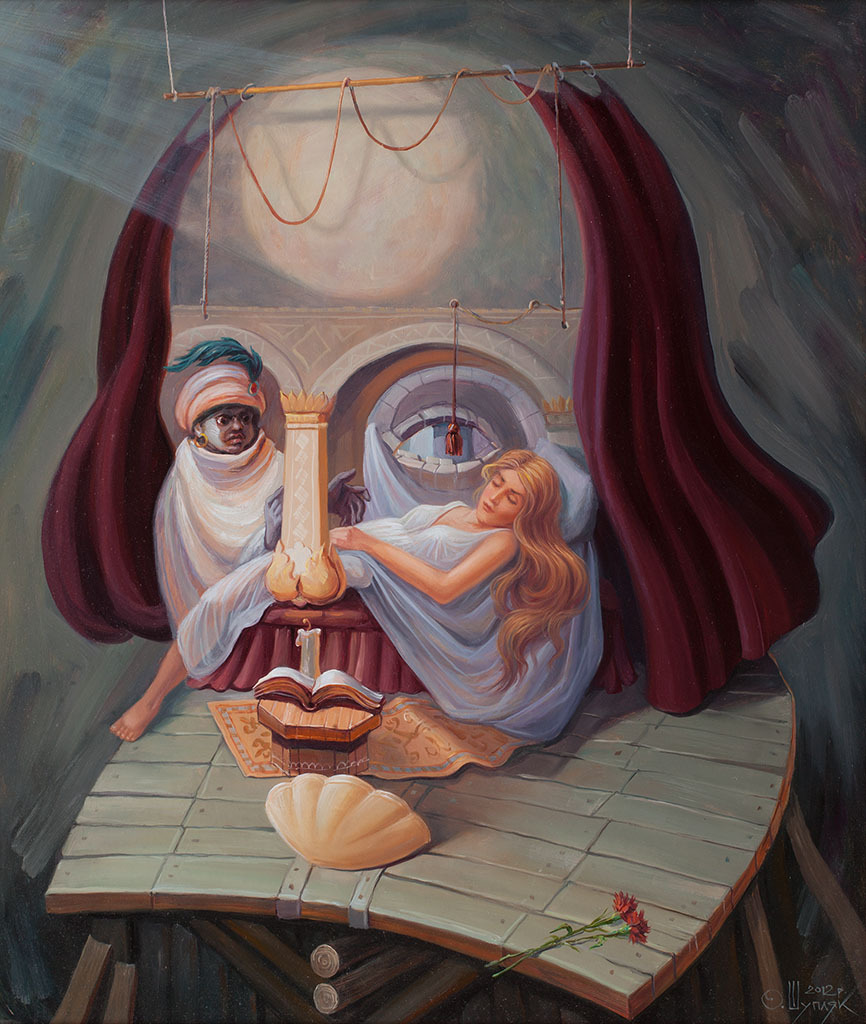
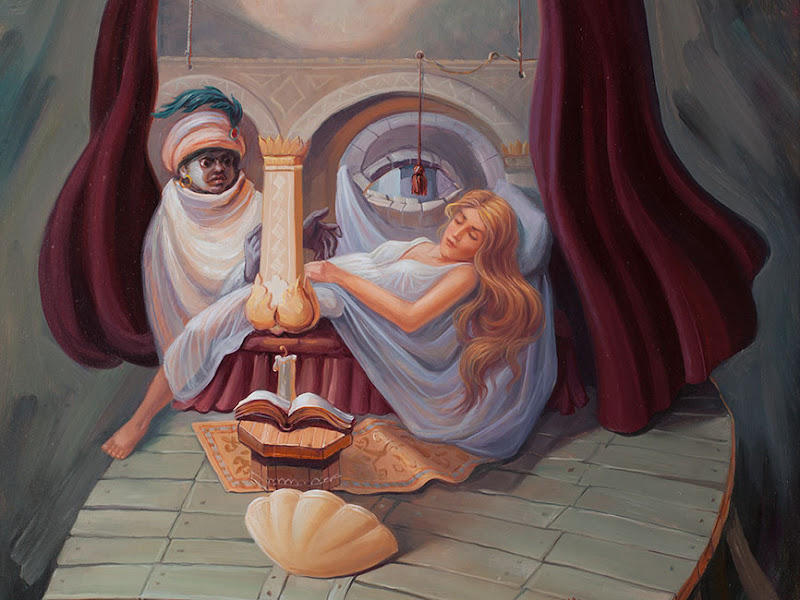
Oleg Shuplyak, 1967 | Optical Illusion painter


Oлег Щупляк is an Ukrainian painter whose works involve portraits of famous personalities drawn in such a way that common objects and scenery make up their distinctive faces in amalgamated form.
The pictures are brilliantly, and evocatively multilayered with uncommon depth. Born in the Ternopol region of the Ukraine, Shuplyak studied architecture at the Lviv Polytechnic Institute, but his passion was always painting.

Textual description of firstImageUrl

Cartoline d'epoca di Auguri di Buona Pasqua / Vintage Easter postcards

The egg is an ancient symbol of new life and rebirth. In Christianity it became associated with Jesus' crucifixion and resurrection.
The custom of the Easter egg originated in the early Christian community of Mesopotamia, who stained eggs red in memory of the blood of Christ, shed at his crucifixion.
As such, for Christians, the Easter egg is a symbol of the empty tomb.
The oldest tradition is to use dyed chicken eggs, but a modern custom is to substitute decorated chocolate, or plastic eggs filled with candy such as jellybeans.
The Easter Bunny is a popular legendary anthropomorphic Easter gift-giving character analogous to Santa Claus in American culture.


Textual description of firstImageUrl

Marco Grassi, 1987 | Pittore iperrealista

Marco Grassi è nato a Reggio Emilia (Italia), dove risiede a lavora attualmente. Dopo aver conseguito il diploma di Ragioniere, decide di perseguire la strada dell’arte, iscrivendosi nel 2006 all'Accademia di Belle Arti di Bologna; terminato il ciclo di studi sceglie di dedicarsi a tempo pieno all'attività pittorica, passione che lo accompagna da molti anni.
Dopo alcune manifestazioni artistiche in ambito locale, e collaborazioni con artisti di rilievo, la sua prima mostra personale si svolgerà nella sua città natale, Reggio Emilia, il giorno 14 Dicembre 2013, un evento fortemente voluto da Pietro Franesi, Direttore della Biennale di New York e Dubai, che lo porterà a partecipare alla prossima manifestazione prevista a Marzo 2014.


Textual description of firstImageUrl

18th century Artists | Sitemap

18th century Art - Painting, sculpture, music, architecture, interior design, evolving from the Baroque to an elegant Rococó style and Neoclassicism, and, at the end of the century, another transformation to the Romantic style.

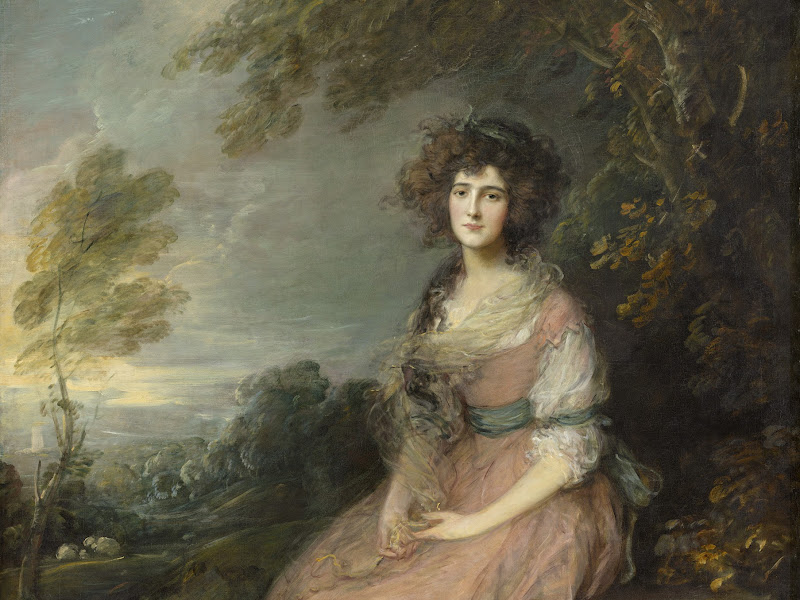
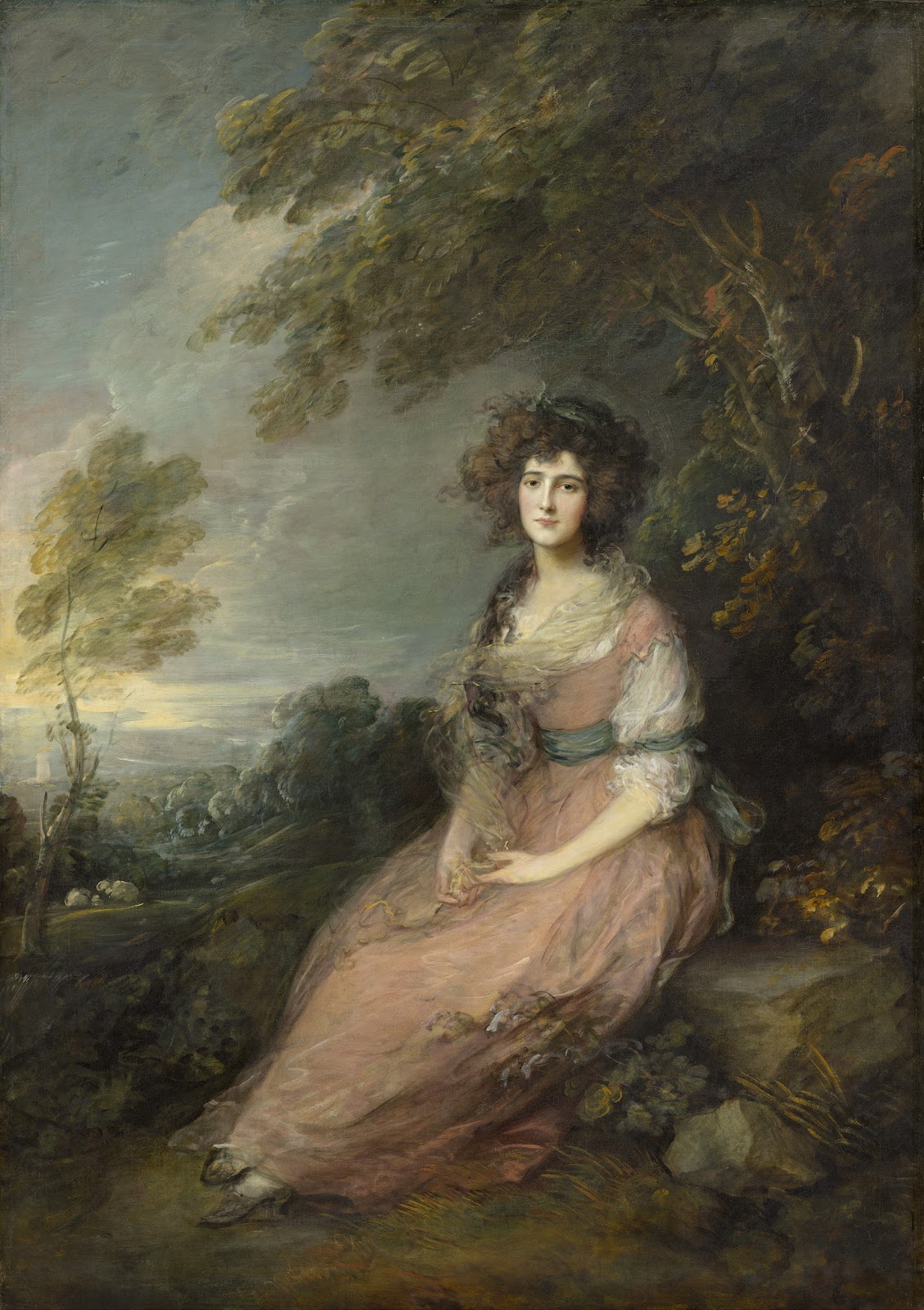
Thomas Gainsborough | Rococo Era /Romantic painter

Textual description of firstImageUrl

Chinese Art History and Sitemap

The Chinese art in the Republic of China (Taiwan) and that of overseas Chinese can also be considered part of Chinese art where it is based in or draws on Chinese heritage and Chinese culture.
Early "stone age art" dates back to 10,000 BC, mostly consisting of simple pottery and sculptures.
After this early period Chinese art, like Chinese history, is typically classified by the succession of ruling dynasties of Chinese emperors, most of which lasted several hundred years.
Chinese art has arguably the oldest continuous tradition in the world, and is marked by an unusual degree of continuity within, and consciousness of, that tradition, lacking an equivalent to the Western collapse and gradual recovery of classical styles.

DU Kun 杜昆, 1982 ~ Revels of the Rock Gods | Surrealist painter

Textual description of firstImageUrl

Confucio | Aforismi / Quotes

  • Be not ashamed of mistakes and thus make them crimes.
  • Before you embark on a journey of revenge, dig two graves.
  • Everything has its beauty but not everyone sees it.
  • Forget injuries, never forget kindnesses.
  • He who will not economize will have to agonize.
  • I hear and I forget. I see and I remember. I do and I understand.
Hartwig Kopp-Delaney | Symbolist / Mystical Digital painter

Textual description of firstImageUrl

16th century Art | Sitemap

The 16th century begins with the Julian year 1501 and ends with either the Julian or the Gregorian year 1600 (depending on the reckoning used; the Gregorian calendar introduced a lapse of 10 days in October 1582).
The 16th century is regarded by historians as the century in which the rise of the West occurred. During the 16th century, Spain and Portugal explored the world's seas and opened worldwide oceanic trade routes.
Large parts of the New World became Spanish and Portuguese colonies, and while the Portuguese became the masters of Asia's and Africa's Indian Ocean trade, the Spanish opened trade across the Pacific Ocean, linking the Americas with Asia.

Francesco Bacchiacca ~ High Renaissance painter