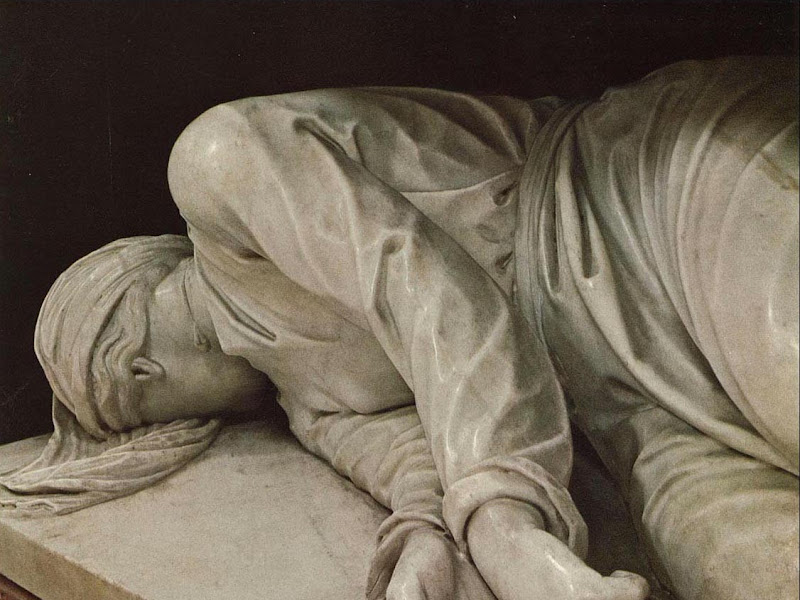
Stefano Maderno | Baroque sculptor

Stefano Maderno | Baroque sculptor

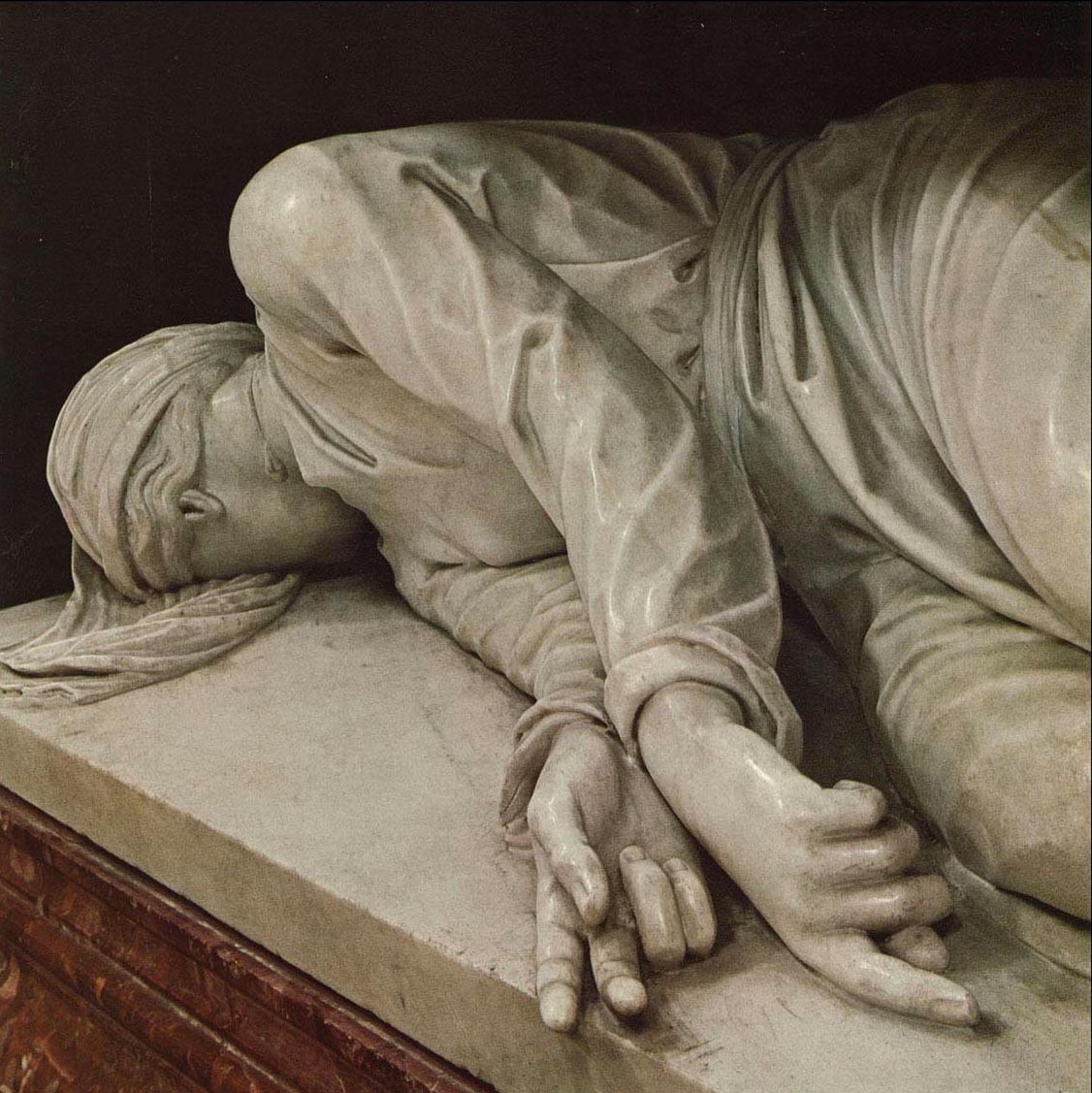
Stefano Maderno (1576-1636), a sculptor of the Roman School and of the era just preceding Bernini, his contemporary.
He is believed to be of Lombard origin from the neighbourhood of Como; probably he was related to Carlo Maderna, the architect and sculptor, who was also born near Como, at Bissone.
Stefano's works are found frequently in churches upon which Carlo was engaged.

Read More

Stefano Maderno | Baroque sculptor

Stefano Maderno (1576-1636), a sculptor of the Roman School and of the era just preceding Bernini, his contemporary.
He is believed to be of Lombard origin from the neighbourhood of Como; probably he was related to Carlo Maderna, the architect and sculptor, who was also born near Como, at Bissone.
Stefano's works are found frequently in churches upon which Carlo was engaged.


Catherine Calcagni | Forse...se tu baciassi me..

Catherine Calcagni | Forse...se tu baciassi me..

Forse...
se tu
baciassi me
sentiresti
un senso di te
inebriante
bere in acque


Read More

Catherine Calcagni | Forse...se tu baciassi me..

Forse...
se tu
baciassi me
sentiresti
un senso di te
inebriante
bere in acque


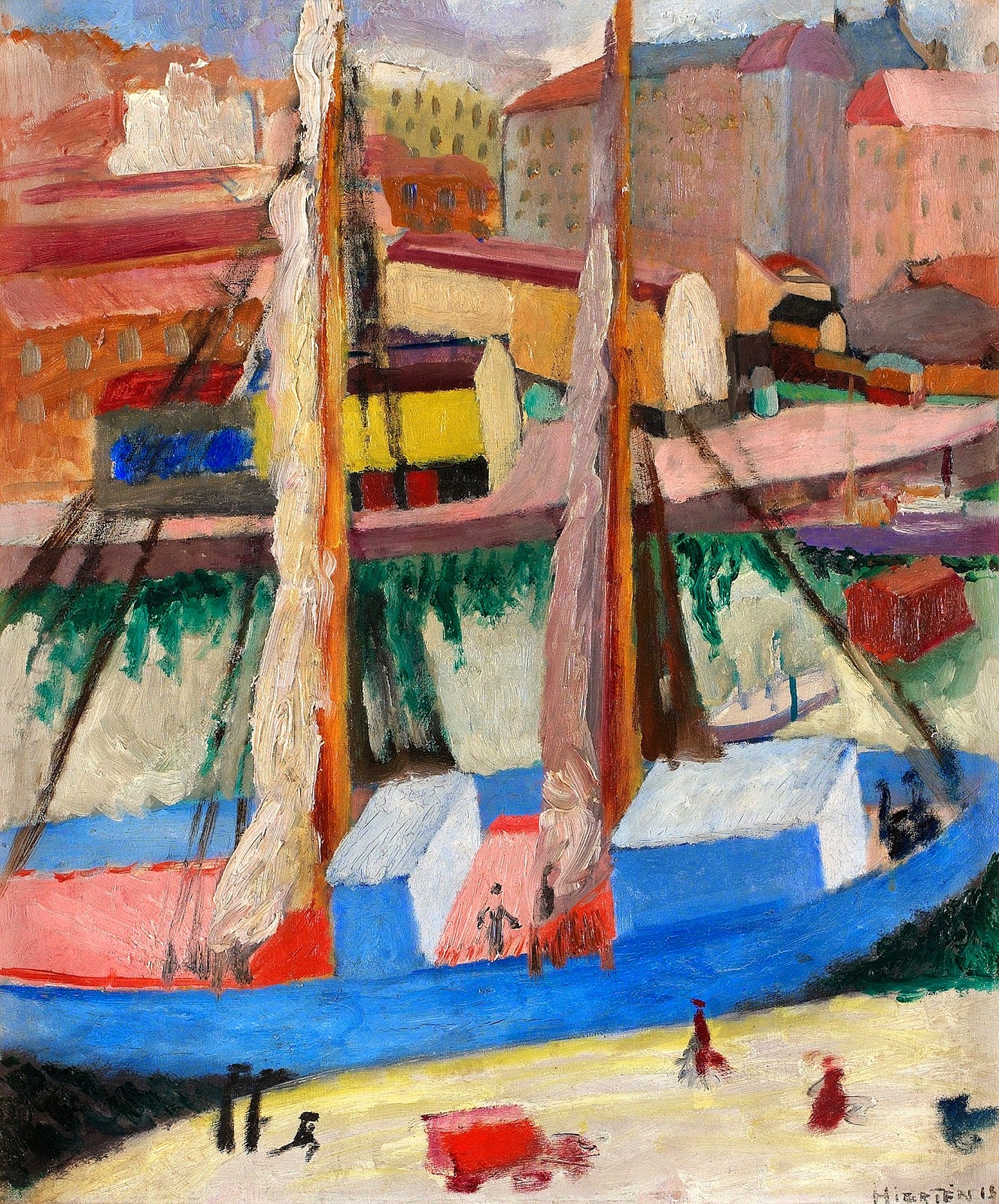
Sigrid Hjertén | Modern Expressionist painter

Sigrid Hjertén | Modern Expressionist painter


Sigrid Hjertén (27 October 1885 - 24 March 1948) was a Swedish modernist painter.
Hjertén is considered a major figure in Swedish modernism.
Periodically she was highly productive and participated in 106 exhibitions.
Sigrid Hjerén's total production amounted to slightly more than 500 paintings, together with sketches, watercolors and drawings.

Read More

Sigrid Hjertén | Modern Expressionist painter


Sigrid Hjertén (27 October 1885 - 24 March 1948) was a Swedish modernist painter.
Hjertén is considered a major figure in Swedish modernism.
Periodically she was highly productive and participated in 106 exhibitions.
Sigrid Hjerén's total production amounted to slightly more than 500 paintings, together with sketches, watercolors and drawings.

Eugène Henri Cauchois | Still Life painter

Eugène Henri Cauchois | Still Life painter


Eugène Henri Cauchois (1850-1911) was born in the city of Rouen on February 14, 1850.
He received his artistic training under the master painters Ferdinand Duboc and Alexandre Cabanel.
His soft, colorful and lustrous still‑lives reflect a strong influence from the renowned Impressionist artists of his time.

Read More

Eugène Henri Cauchois | Still Life painter


Eugène Henri Cauchois (1850-1911) was born in the city of Rouen on February 14, 1850.
He received his artistic training under the master painters Ferdinand Duboc and Alexandre Cabanel.
His soft, colorful and lustrous still‑lives reflect a strong influence from the renowned Impressionist artists of his time.

Samuel Uhrdin | Genre painter

Samuel Uhrdin | Genre painter

Samuel (Sam) Uhrdin (1886-1964) was a Swedish painter who was born in Siljansnäs, Dalarna, Sweden.


Read More

Samuel Uhrdin | Genre painter

Samuel (Sam) Uhrdin (1886-1964) was a Swedish painter who was born in Siljansnäs, Dalarna, Sweden.


Isaac Grunewald | Modern Expressionist painter

Isaac Grunewald | Modern Expressionist painter


Isaac Grünewald (1889-1946) was a Swedish-Jewish Expressionist painter born in Stockholm. He was the leading and central name in the first generation of Swedish modernists from 1910 up until his death in 1946, in other words during almost his entire career spanning four decades. He was a highly productive painter as well as a writer and public speaker.
Read More

Isaac Grunewald | Modern Expressionist painter


Isaac Grünewald (1889-1946) was a Swedish-Jewish Expressionist painter born in Stockholm. He was the leading and central name in the first generation of Swedish modernists from 1910 up until his death in 1946, in other words during almost his entire career spanning four decades. He was a highly productive painter as well as a writer and public speaker.
Albert Goodwin | Victorian Visionary landscapes

Albert Goodwin | Victorian Visionary landscapes

Albert Goodwin (1845-1932) was a British landscape painter, specialising in watercolours. Goodwin was a prolific artist, producing over 800 works and continuing to paint well into his eighties. His work shows the influences of Turner and the Pre-Raphaelite Brotherhood.
Goodwin was born in Maidstone in Kent, the son of a builder and one of 9 children. After leaving school he became an apprentice draper. His exceptional artistic ability was recognised at an early age and he went on to study with the Pre-Raphaelite artists Arthur Hughes and Ford Madox Brown - the latter predicting that he would become "one of the greatest landscape painters of the age".
Read More

Albert Goodwin | Victorian Visionary landscapes

Albert Goodwin (1845-1932) was a British landscape painter, specialising in watercolours. Goodwin was a prolific artist, producing over 800 works and continuing to paint well into his eighties. His work shows the influences of Turner and the Pre-Raphaelite Brotherhood.
Goodwin was born in Maidstone in Kent, the son of a builder and one of 9 children. After leaving school he became an apprentice draper. His exceptional artistic ability was recognised at an early age and he went on to study with the Pre-Raphaelite artists Arthur Hughes and Ford Madox Brown - the latter predicting that he would become "one of the greatest landscape painters of the age".
Museum Masterpieces [Part.2]

Museum Masterpieces [Part.2]

Gyula Benczúr (Hungarian painter, 1844-1920) | Narcissus, 1881 | Hungarian National Gallery


Gyula Benczúr, a contemporary of Mihály Munkácsyand Pál Szinyei Merse, was a consistently outstanding exponent of academicism from his time at the Academy in Munich, and later a much feted artist in Budapest.
He was accomplished in every aspect of painting that could be learned from studying the works of his Renaissance and Baroque forebears.
These skills, encompassing composition and the precise, sensual depiction of details, are demonstrated in his Narcissus of 1881.
Surprisingly, however, Benczúr’s treatment of this Ovidian theme deviates from the traditional iconography.

Read More

Museum Masterpieces [Part.2]

Gyula Benczúr (Hungarian painter, 1844-1920) | Narcissus, 1881 | Hungarian National Gallery


Gyula Benczúr, a contemporary of Mihály Munkácsyand Pál Szinyei Merse, was a consistently outstanding exponent of academicism from his time at the Academy in Munich, and later a much feted artist in Budapest.
He was accomplished in every aspect of painting that could be learned from studying the works of his Renaissance and Baroque forebears.
These skills, encompassing composition and the precise, sensual depiction of details, are demonstrated in his Narcissus of 1881.
Surprisingly, however, Benczúr’s treatment of this Ovidian theme deviates from the traditional iconography.

Vincent Van Gogh | Drawings for study

Vincent Van Gogh | Drawings for study

Perhaps the most prolific post-impressionist painter of all time, Vincent Van Gogh gave us his mind, his heart, his soul, and, most notably, his ear. His works are probably better known generally than those of any other painter in history.
Born in 1853, Van Gogh was the son of a Dutch Protestant minister.
Early in his life, he possessed a moody temperament that would later haunt him in his efforts to become a successful artist.
His brief and turbulent life is thought to epitomize the mad genius legend.


Read More

Vincent Van Gogh | Drawings for study

Perhaps the most prolific post-impressionist painter of all time, Vincent Van Gogh gave us his mind, his heart, his soul, and, most notably, his ear. His works are probably better known generally than those of any other painter in history.
Born in 1853, Van Gogh was the son of a Dutch Protestant minister.
Early in his life, he possessed a moody temperament that would later haunt him in his efforts to become a successful artist.
His brief and turbulent life is thought to epitomize the mad genius legend.