Giovanni Boldini | Master of Swish

Giovanni Boldini | Master of Swish

Master of Swish
- Time Magazine, April 3, 1933, p. 28-29

With her tongue ever so slightly in her check, Mrs. Chester Dale, collector and authority on French painting, helped organize four months ago an exhibition of the paintings of the late Alphonse Bouguereau, barroom decorator par excellence of the Gay Nineties.
Critics in the chill light of a formal art gallery were not impressed with the "Back to Bouguereau" movement.


Read More

Giovanni Boldini | Master of Swish

Master of Swish
- Time Magazine, April 3, 1933, p. 28-29

With her tongue ever so slightly in her check, Mrs. Chester Dale, collector and authority on French painting, helped organize four months ago an exhibition of the paintings of the late Alphonse Bouguereau, barroom decorator par excellence of the Gay Nineties.
Critics in the chill light of a formal art gallery were not impressed with the "Back to Bouguereau" movement.


Karl von Blaas | Academic Classicism painter

Karl von Blaas | Academic Classicism painter

Karl von Blaas (28 April 1815 in Nauders - 19 March 1894 in Vienna) was an Austrian painter known for his portraits and religious compositions executed on canvas as well as in the form of frescoes.

Karl Von Blaas was born to a peasant family at Nauders in the Tyrol on 28 April 1815.
He is best known as a history painter and painter of portraits. His first art lessons were in Innsbruck, where he received an education as a writer.
But he was more interested in art, and so, like many painters at the time, he aspired to visit Italy to realize his goal of an in-depth art education. His uncle, a judge in Verona, recognized his talent and gave him financial support for study in Venice, which he undertook in 1832.


Read More

Karl von Blaas | Academic Classicism painter

Karl von Blaas (28 April 1815 in Nauders - 19 March 1894 in Vienna) was an Austrian painter known for his portraits and religious compositions executed on canvas as well as in the form of frescoes.

Karl Von Blaas was born to a peasant family at Nauders in the Tyrol on 28 April 1815.
He is best known as a history painter and painter of portraits. His first art lessons were in Innsbruck, where he received an education as a writer.
But he was more interested in art, and so, like many painters at the time, he aspired to visit Italy to realize his goal of an in-depth art education. His uncle, a judge in Verona, recognized his talent and gave him financial support for study in Venice, which he undertook in 1832.


Theodor Josef Ethofer | Genre painter

Theodor Josef Ethofer | Genre painter

Theodor Josef Ethofer (October 29, 1849 in Vienna - Leopoldstadt; † October 24, 1915 in Baden near Vienna) was an Austrian painter, known for Figure, genre and Austrian native costume painting.
Theodor Ethofer studied painting at the Academy of Fine Arts Vienna under Carl Wurzinger.
He spent the period from 1872-1887 in Italy, visiting Venice, Florence, Rome, Naples, Sicily, Spain and Tunis, among other places. After a stay in Vienna, he settled in Salzburg in 1898, where he owned a studio in the Künstlerhaus.


Read More

Theodor Josef Ethofer | Genre painter

Theodor Josef Ethofer (October 29, 1849 in Vienna - Leopoldstadt; † October 24, 1915 in Baden near Vienna) was an Austrian painter, known for Figure, genre and Austrian native costume painting.
Theodor Ethofer studied painting at the Academy of Fine Arts Vienna under Carl Wurzinger.
He spent the period from 1872-1887 in Italy, visiting Venice, Florence, Rome, Naples, Sicily, Spain and Tunis, among other places. After a stay in Vienna, he settled in Salzburg in 1898, where he owned a studio in the Künstlerhaus.


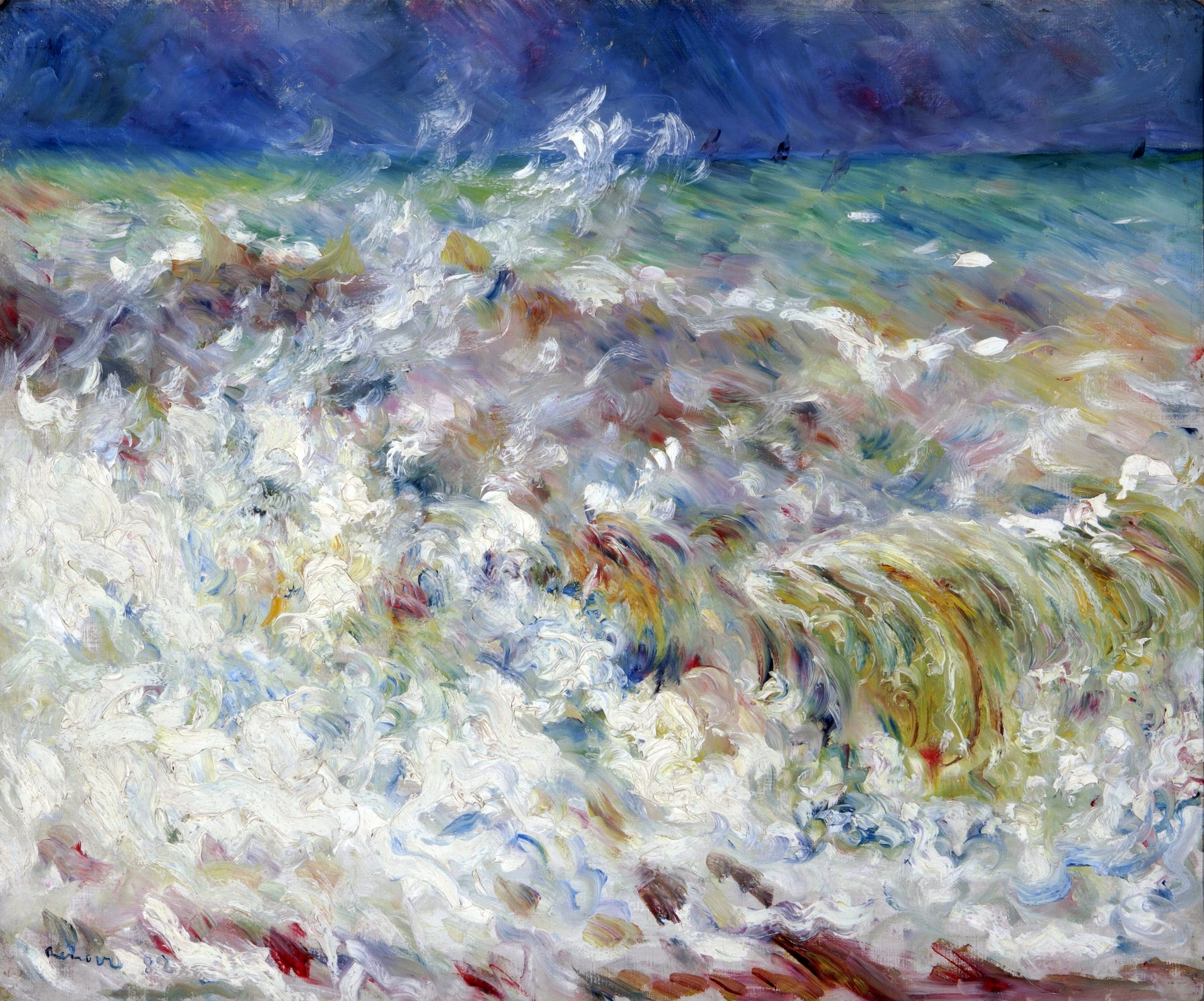
Pierre-Auguste Renoir | The Wave / L'Onda, 1882

Pierre-Auguste Renoir | The Wave / L'Onda, 1882

Each summer between 1879 and 1882 Pierre-Auguste Renoir traveled to Wargemont near Dieppe on the Normandy coast to visit his friend and patron Paul Bérard.
Renoir and Bérard, a banker and French diplomat, had met in 1878, when the artist was still struggling to find collectors for his Impressionist canvases.
Renoir and Bérard quickly formed a bond, leading to numerous commissioned portraits of the financier’s children and affording the artist a comfortable place to go for the summer well removed from the oppressive heat of Paris.

Pierre-Auguste Renoir | The Wave, 1882 | Dixon Gallery and Gardens, Memphis, United States

Read More

Pierre-Auguste Renoir | The Wave / L'Onda, 1882

Each summer between 1879 and 1882 Pierre-Auguste Renoir traveled to Wargemont near Dieppe on the Normandy coast to visit his friend and patron Paul Bérard.
Renoir and Bérard, a banker and French diplomat, had met in 1878, when the artist was still struggling to find collectors for his Impressionist canvases.
Renoir and Bérard quickly formed a bond, leading to numerous commissioned portraits of the financier’s children and affording the artist a comfortable place to go for the summer well removed from the oppressive heat of Paris.

Pierre-Auguste Renoir | The Wave, 1882 | Dixon Gallery and Gardens, Memphis, United States

Gustave Caillebotte at the Museum Barberini

Gustave Caillebotte at the Museum Barberini

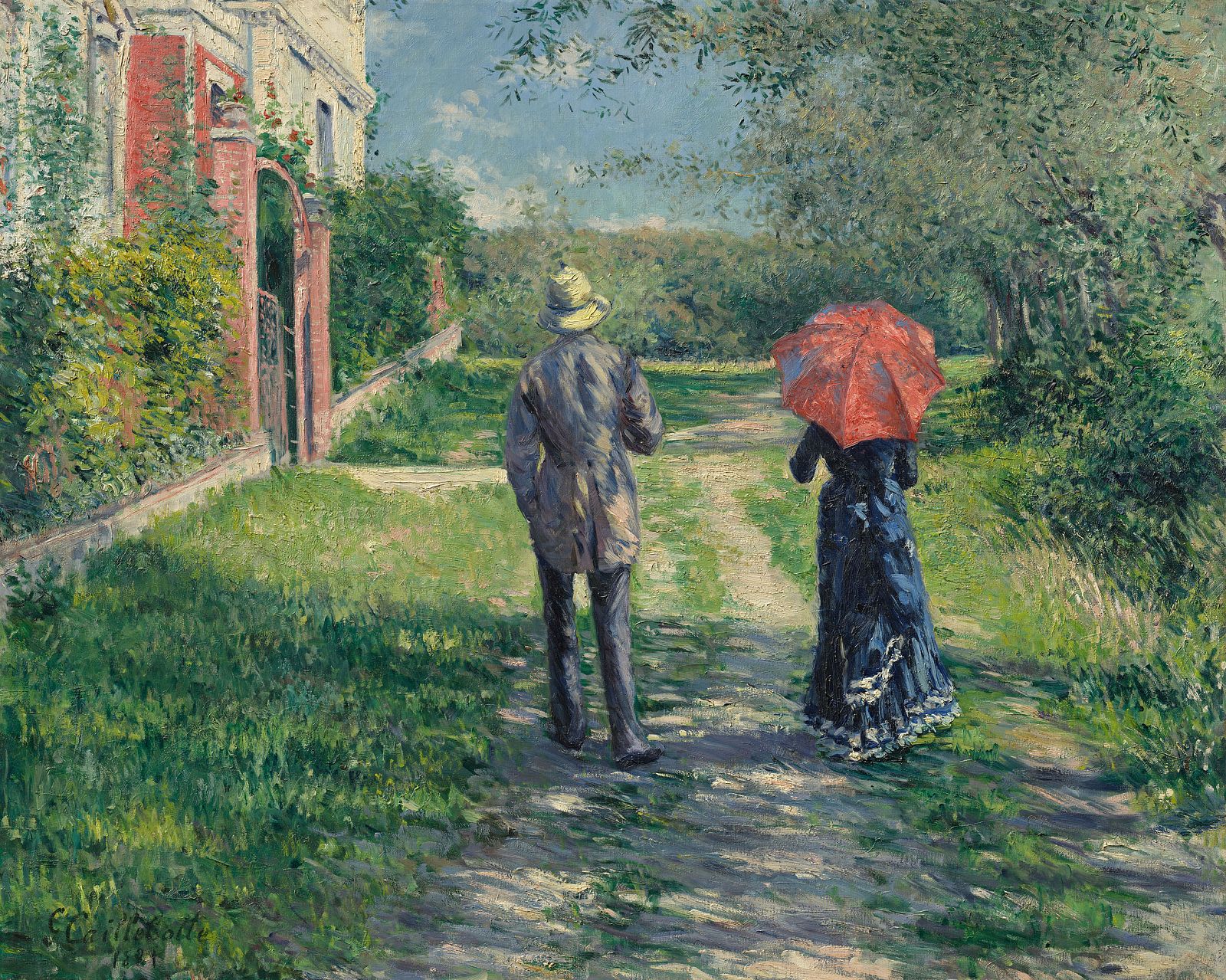
Gustave Caillebotte | Couple on a Walk, 1881 | Museum Barberini

In the 1860s the seaside resorts in Normandy became the most popular summer retreats of the Parisian bourgeoisie. Here a young couple (likely the artist and his partner, Charlotte Berthier) are strolling past the luxurious Villa italiennein Trouville.
The red parasol adds an accent to the picture, in which fresh green tones are dominant. The depiction of the figures from behind allows viewers to put themselves in the role of the vacationers.

Every summer from 1880-1884, Gustave Caillebotte spent a number of weeks in Normandy, where he sailed in regattas and painted.
During this time he produced around fifty depictions of the area surrounding Trouville, a beach resort that had grown into a favorite holiday destination of the Parisian upper classes since the mid-nineteenth century.


Read More

Gustave Caillebotte at the Museum Barberini

Gustave Caillebotte | Couple on a Walk, 1881 | Museum Barberini

In the 1860s the seaside resorts in Normandy became the most popular summer retreats of the Parisian bourgeoisie. Here a young couple (likely the artist and his partner, Charlotte Berthier) are strolling past the luxurious Villa italiennein Trouville.
The red parasol adds an accent to the picture, in which fresh green tones are dominant. The depiction of the figures from behind allows viewers to put themselves in the role of the vacationers.

Every summer from 1880-1884, Gustave Caillebotte spent a number of weeks in Normandy, where he sailed in regattas and painted.
During this time he produced around fifty depictions of the area surrounding Trouville, a beach resort that had grown into a favorite holiday destination of the Parisian upper classes since the mid-nineteenth century.


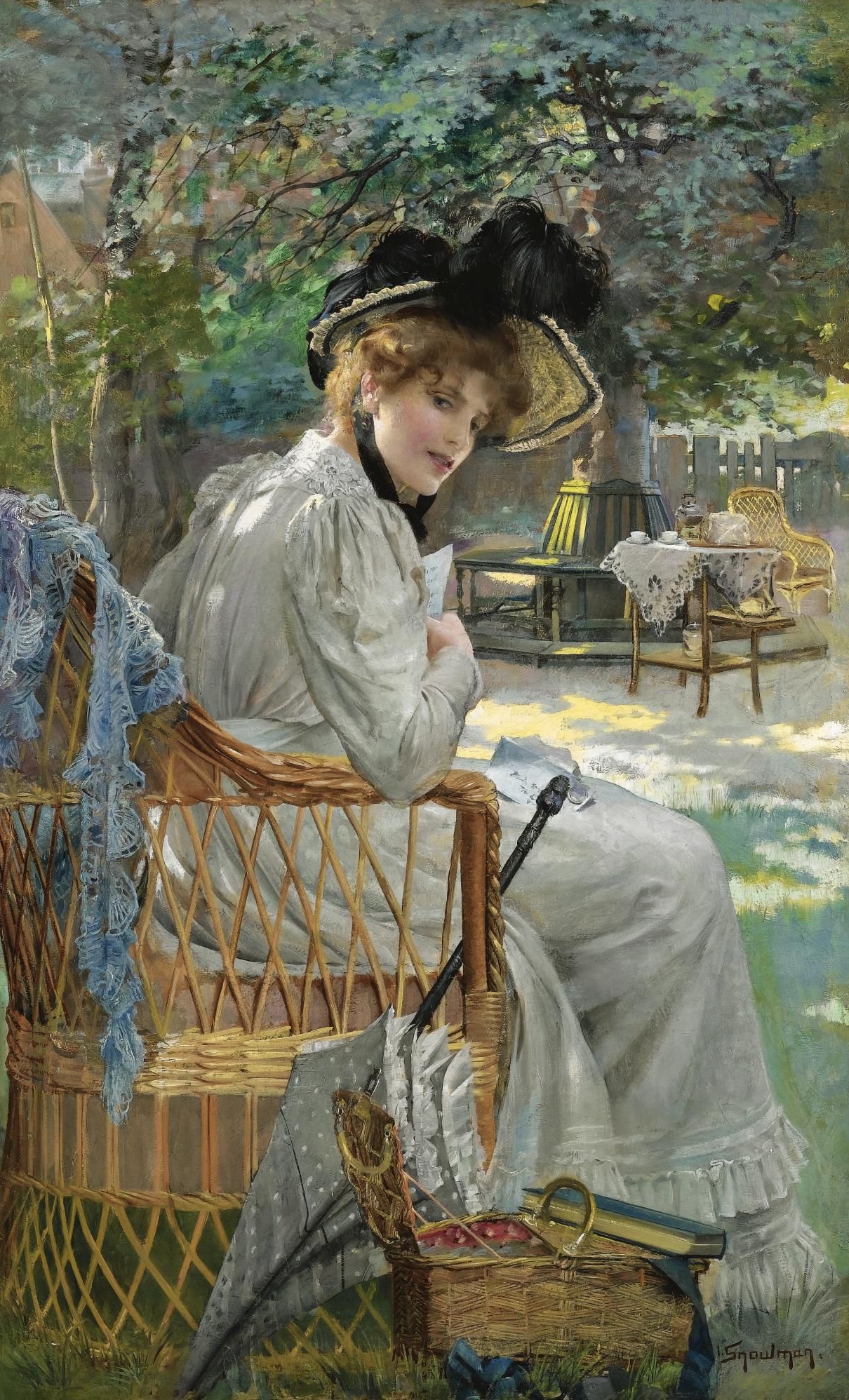
Isaac Snowman | Genre painter

Isaac Snowman | Genre painter

Isaac Snowman (1873-1947) was an Anglo-Jewish artist who made Jewish cultural themes his subject.

Early life

He was educated at the City of London School. In 1890 he entered the Royal Academy School, where he gained a free medal, and afterward a scholarship in the Institution of British Artists.
He showed his interest in Jewish matters by his drawings A Difficult Passage in the Talmud and The Blessing of Sabbath Lights, as well as by his Early Morning Prayer in the Synagogue.


Read More

Isaac Snowman | Genre painter

Isaac Snowman (1873-1947) was an Anglo-Jewish artist who made Jewish cultural themes his subject.

Early life

He was educated at the City of London School. In 1890 he entered the Royal Academy School, where he gained a free medal, and afterward a scholarship in the Institution of British Artists.
He showed his interest in Jewish matters by his drawings A Difficult Passage in the Talmud and The Blessing of Sabbath Lights, as well as by his Early Morning Prayer in the Synagogue.


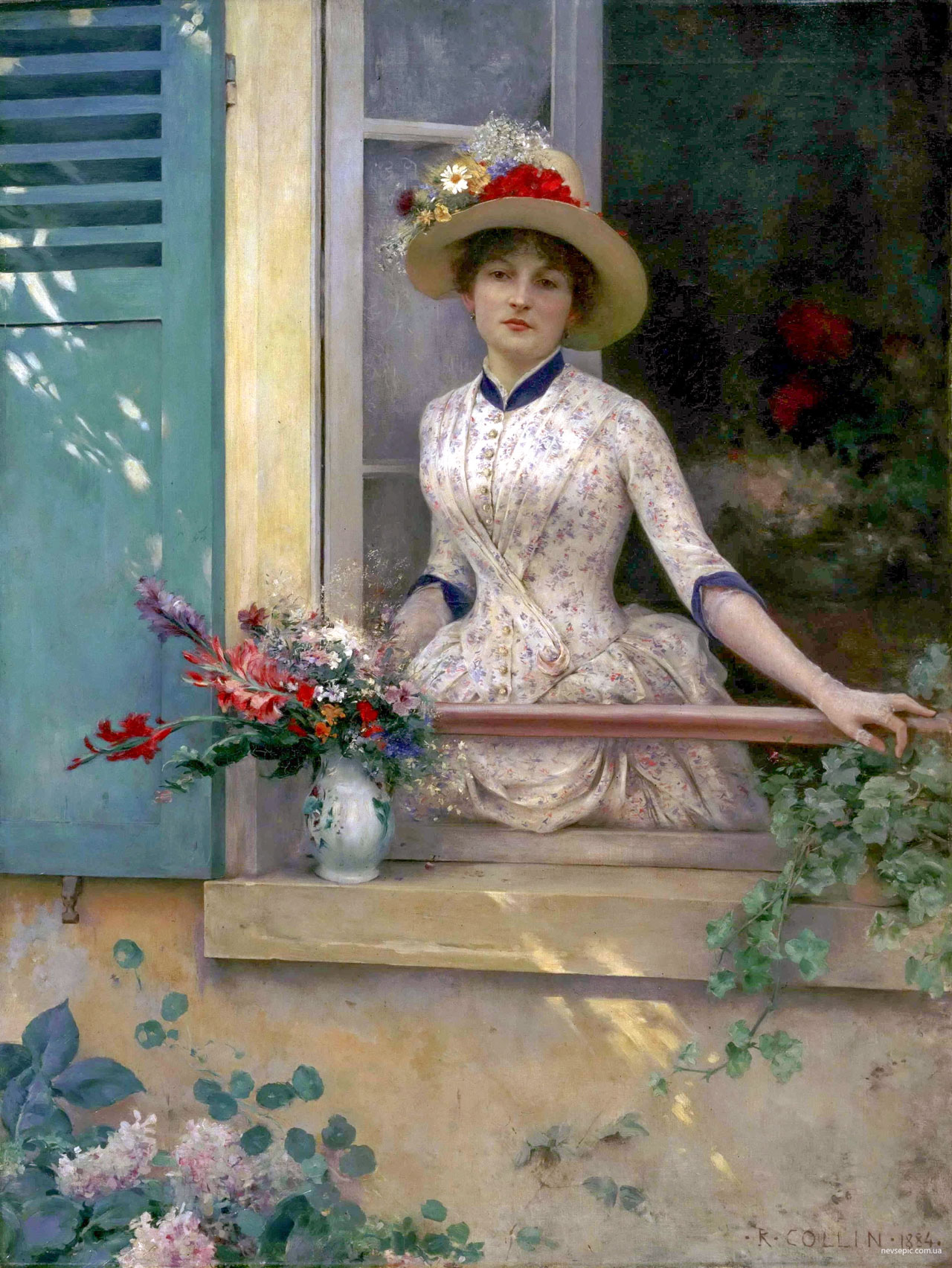
Raphaël Collin | Symbolist painter

Raphaël Collin | Symbolist painter

Louis-Joseph-Raphaël Collin (17 June 1850 - 21 October 1916) was a French painter born and raised in Paris, where he became a prominent academic painter and a teacher.
He is principally known for the links he created between French and Japanese art, in both painting and ceramics.
Collin studied at the school of Saint-Louis, then went to Verdun where he was at school with Jules Bastien-Lepage; they became close friends.
Collin then went to Paris and studied in the atelier of Bouguereau and then joined Lepage at Alexandre Cabanel's atelier where they both worked alongside Fernand Cormon, Aimé Morot and Benjamin Constant.


Read More

Raphaël Collin | Symbolist painter

Louis-Joseph-Raphaël Collin (17 June 1850 - 21 October 1916) was a French painter born and raised in Paris, where he became a prominent academic painter and a teacher.
He is principally known for the links he created between French and Japanese art, in both painting and ceramics.
Collin studied at the school of Saint-Louis, then went to Verdun where he was at school with Jules Bastien-Lepage; they became close friends.
Collin then went to Paris and studied in the atelier of Bouguereau and then joined Lepage at Alexandre Cabanel's atelier where they both worked alongside Fernand Cormon, Aimé Morot and Benjamin Constant.


Seward Johnson | The Awakening, 1980

Seward Johnson | The Awakening, 1980

The Awakening, is a 21 m statue of a giant embedded in the earth, struggling to free himself, located at National Harbor in Prince George's County, Maryland, USA, just outside the District of Columbia.
The statue consists of five separate aluminum pieces buried in the ground, giving the impression of a distressed giant attempting to free himself from the ground.
The left hand and right foot barely protrude, while the bent left leg and knee jut into the air.
The 5.2 m high right arm and hand reach farther out of the ground. The bearded face, with the mouth in mid-scream, struggles to emerge from the earth.

Seward Johnson Jr - Awakening - Roma

Read More

Seward Johnson | The Awakening, 1980

The Awakening, is a 21 m statue of a giant embedded in the earth, struggling to free himself, located at National Harbor in Prince George's County, Maryland, USA, just outside the District of Columbia.
The statue consists of five separate aluminum pieces buried in the ground, giving the impression of a distressed giant attempting to free himself from the ground.
The left hand and right foot barely protrude, while the bent left leg and knee jut into the air.
The 5.2 m high right arm and hand reach farther out of the ground. The bearded face, with the mouth in mid-scream, struggles to emerge from the earth.

Seward Johnson Jr - Awakening - Roma

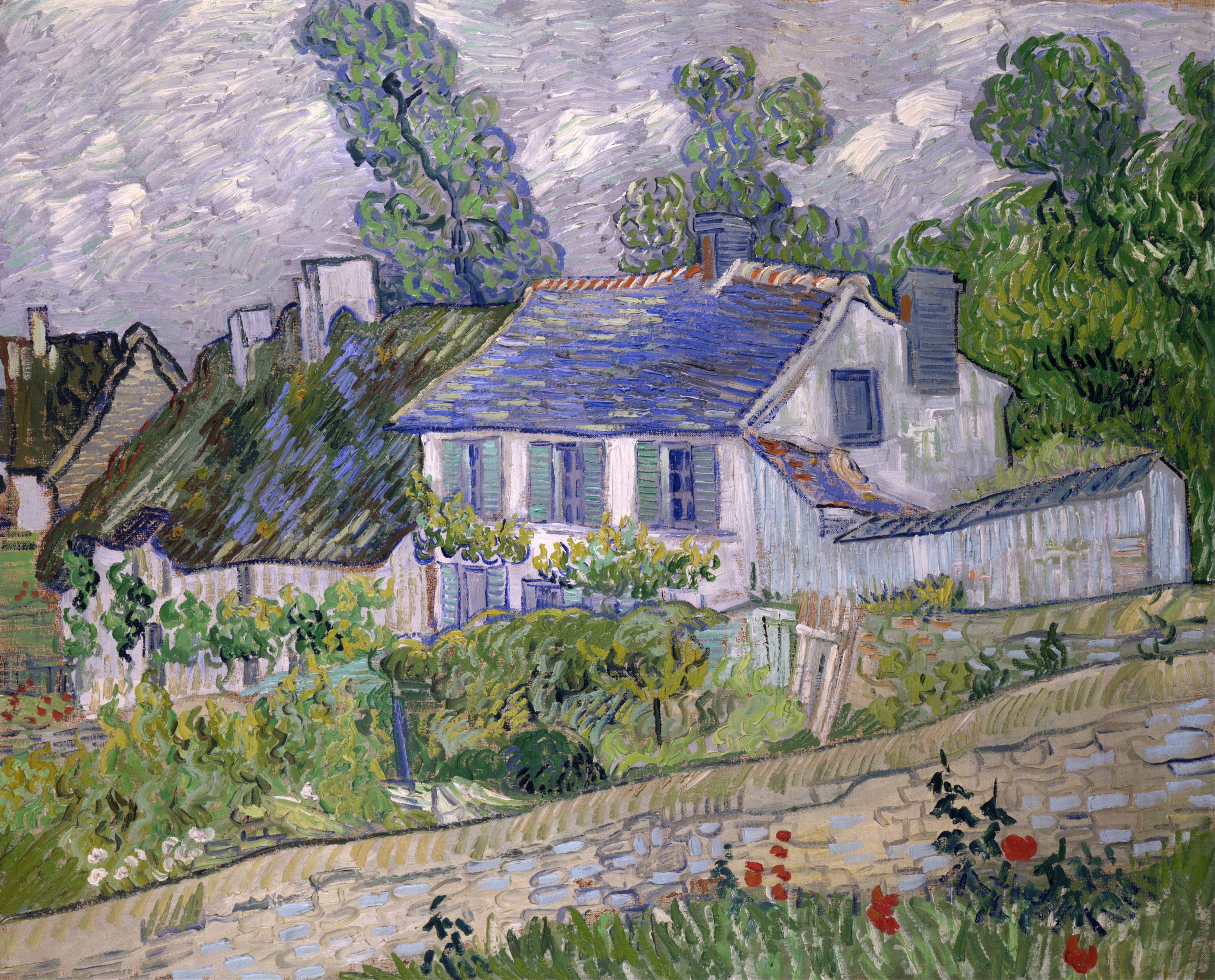
Vincent van Gogh | Houses at Auvers, 1890

Vincent van Gogh | Houses at Auvers, 1890

"Houses at Auvers" is an oil painting by Vincent van Gogh, located at the Toledo Museum of Art.
It was created towards the end of May or beginning of June 1890, shortly after he had moved to Auvers-sur-Oise, a small town northwest of Paris, France.
His move was prompted by his dissatisfaction with the boredom and monotony of asylum life at Saint-Rémy, as well as by his emergence as an artist of some renown following Albert Aurier's celebrated January 1890, Mercure de France, review of his work.
In his final two months at Saint-Rémy, van Gogh painted from memory a number of canvases he called, "reminisces of the North", harking back to his Dutch roots.
The influence of this return to the North continued at Auvers, notably in The Church at Auvers.
He did not, however, repeat his studies of peasant life of the sort he had made in his Nuenen period. His paintings of dwellings at Auvers encompassed a range of social domains. | Source: © Wikipedia

Vincent van Gogh | Houses at Auvers, 1890 | Toledo Museum of Art

Read More

Vincent van Gogh | Houses at Auvers, 1890

"Houses at Auvers" is an oil painting by Vincent van Gogh, located at the Toledo Museum of Art.
It was created towards the end of May or beginning of June 1890, shortly after he had moved to Auvers-sur-Oise, a small town northwest of Paris, France.
His move was prompted by his dissatisfaction with the boredom and monotony of asylum life at Saint-Rémy, as well as by his emergence as an artist of some renown following Albert Aurier's celebrated January 1890, Mercure de France, review of his work.
In his final two months at Saint-Rémy, van Gogh painted from memory a number of canvases he called, "reminisces of the North", harking back to his Dutch roots.
The influence of this return to the North continued at Auvers, notably in The Church at Auvers.
He did not, however, repeat his studies of peasant life of the sort he had made in his Nuenen period. His paintings of dwellings at Auvers encompassed a range of social domains. | Source: © Wikipedia

Vincent van Gogh | Houses at Auvers, 1890 | Toledo Museum of Art