Textual description of firstImageUrl

Modigliani, the Secret of empty eyes in his portraits

"When I know your soul, I will paint your eyes" - Amedeo Modigliani (Italian painter and sculptor of the École de Paris, 1884-1920) once said.

Of all the striking characteristics seen in Modigliani’s portraits, be they the elongated visages or the disfigured features, the mysterious, hazy eyes of the sitters capture the true essence of the painter’s style.
In fact, while he would outline the eyes, he'd rarely paint the pupils, except when he had a close, nurturing relationship with them - enabling a basis for emotional intelligence.


Textual description of firstImageUrl

Johann Strauss | Morning Papers, Op 279 | Viennese waltz

Morgenblätter (Morning Papers), Op. 279, is a Viennese waltz composed by Johann Strauss II (1825-1899) in 1863 and first performed on 12 January 1864 at the Sofiensaal in Vienna.
The work's genesis was attributed to the composition of a waltz by Jacques Offenbach later titled "Abendblätter" when Offenbach dedicated his work to the influential Vienna Authors' and Journalists' Association (Presseclub Concordia).

Camille Claudel | La valse, 1889-1905

Textual description of firstImageUrl

Torna a Surriento!

"Torna a Surriento" is a Neapolitan song composed in 1894 by Italian musician Ernesto De Curtis to words by his brother, the poet and painter Giambattista De Curtis.
The song was copyrighted officially in 1905, and has become one of the most popular of this traditional genre.
Others include:
╰┈➤ "O sole mio",
╰┈➤ "Funiculì funiculà",
╰┈➤ "Santa Lucia".


Textual description of firstImageUrl

La Bocca della Verità / The Mouth of Truth, Roma 1485

The Mouth of Truth / Bocca della Verità is an ancient Roman marble disc with a relief carving of a man's face.
According to legend the face's mouth closes if a liar sticks his hand in it.
The massive marble mask weighs about 1300 kg and probably depicts the face of the sea god Oceanus. The eyes, nostrils and mouth are open.

Audrey Hepburn and Gregory Peck in Vacanze Romane, 1953

Textual description of firstImageUrl

Giotto | The allegories of Vices, 1303-1305

In the Scrovegni Chapel in Padua, between 1303-1305, Italian painter and architect from Florence Giotto di Bondone (1266/7-1337), painted 14 allegories, in monochrome - seven allegorical representations of virtues and seven allegorical representations of vices.


Textual description of firstImageUrl

Danilo Martinis, 1976 | Abstract painter

Born in Milan, Danilo Martinis currently lives and works in Como.
He started drawing by pencil at the age of 5, and never stopped since then.
In September 2009 he started his career as professional artist.
Danilo Martinis has an important background of research and stylistic evolution behind him with an initial interest in Action Painting.


Textual description of firstImageUrl

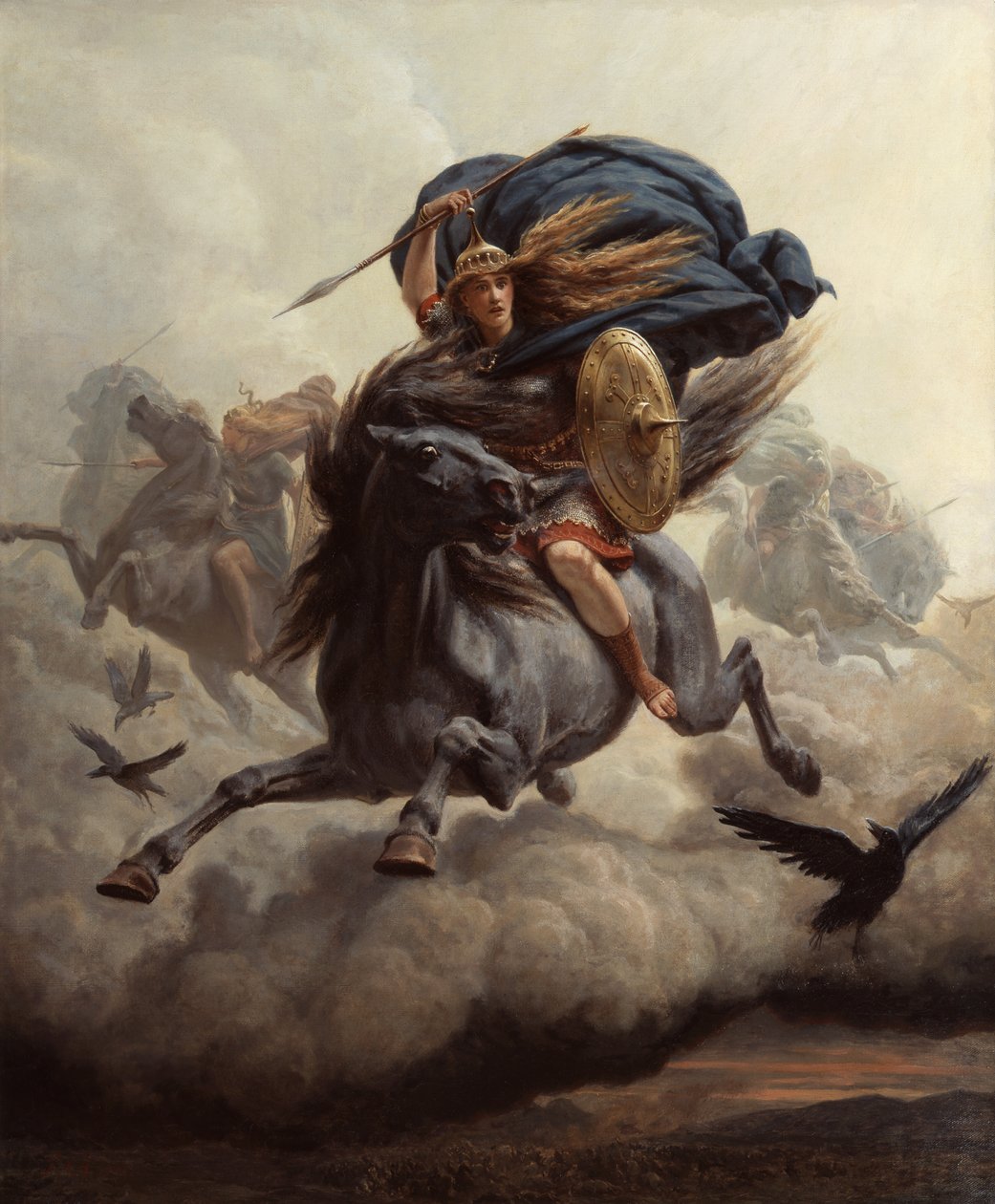
Richard Wagner | Ride of the Valkyries

The Ride of the Valkyries (German: Walkürenritt or Ritt der Walküren) is the popular name of the prelude to the first scene of the third and last act of Die Walküre, the second of the four epic music dramas that constitute the operatic cycle Der Ring des Nibelungen (English: The Ring of the Nibelung), composed by Richard Wagner.
As a separate piece, the "Ride" is often heard in a purely instrumental version, which may be as short as three minutes.

Peter Nicolai Arbo (Norwegian historical painter, 1831-1892) | The Valkyrie

Textual description of firstImageUrl

Paul Seignac | Genre painter

During the 19th century, genre scenes were a popular subject throughout Europe.
The French painter Paul Guillaume Seignac (1826-1904) specialized in genre paintings depicting children, rural life and everyday scenes.