Vincent Van Gogh | Self-portraits

Vincent Van Gogh | Self-portraits

Vincent Van Gogh did not have money to pay models to pose for portraits nor did he have many people commissioning him to do portraits, so Van Gogh painted his own portrait.
He painted over 30 self-portraits between the years 1886-1889.
His collection of self-portraits places him among the most prolific self-portraitists of all time.
Van Gogh used portrait painting as a method of introspection, a method to make money and a method of developing his skills as an artist.


Read More

Vincent Van Gogh | Self-portraits

Vincent Van Gogh did not have money to pay models to pose for portraits nor did he have many people commissioning him to do portraits, so Van Gogh painted his own portrait.
He painted over 30 self-portraits between the years 1886-1889.
His collection of self-portraits places him among the most prolific self-portraitists of all time.
Van Gogh used portrait painting as a method of introspection, a method to make money and a method of developing his skills as an artist.


Zoe Mozert | Pin-up illustrator

Zoe Mozert | Pin-up illustrator

Zoë Mozert (1907-1993), born Alice Adelaide Moser, was an American illustrator.
She was one of the early 20th Century's most famous pin-up artists and models.
In 1925 Mozert entered the Philadelphia School of Industrial Art where she studied under Thornton Oakley, a former student of Howard Pyle.

Zoë Mozert 1907-1993 | American Pin-up illustrator

Read More

Zoe Mozert | Pin-up illustrator

Zoë Mozert (1907-1993), born Alice Adelaide Moser, was an American illustrator.
She was one of the early 20th Century's most famous pin-up artists and models.
In 1925 Mozert entered the Philadelphia School of Industrial Art where she studied under Thornton Oakley, a former student of Howard Pyle.

Zoë Mozert 1907-1993 | American Pin-up illustrator

Giorgione | High Renaissance painter

Giorgione | High Renaissance painter

Giorgione, also called Giorgio da Castelfranco (born c. 1477/78, Castelfranco Veneto, Republic of Venice, Italy - died before November 7, 1510, Venice), extremely influential Italian painter who was one of the initiators of a High Renaissance style in Venetian art.
His qualities of mood and mystery were epitomized in The Tempest (c. 1505), an evocative pastoral scene, which was among the first of its genre in Venetian painting.


Read More

Giorgione | High Renaissance painter

Giorgione, also called Giorgio da Castelfranco (born c. 1477/78, Castelfranco Veneto, Republic of Venice, Italy - died before November 7, 1510, Venice), extremely influential Italian painter who was one of the initiators of a High Renaissance style in Venetian art.
His qualities of mood and mystery were epitomized in The Tempest (c. 1505), an evocative pastoral scene, which was among the first of its genre in Venetian painting.


Pam Hawkes | Portrait painter

Pam Hawkes | Portrait painter

Full-time painter Pam Hawkes was born in Birmingham, England, and still lives in the Midlands. She received her bachelor’s degree in fine art from Coventry University/Solihull College and her master’s in fine art from the University of Central England.

From 1998-2011, Hawkes was Visiting Lecturer in Fine Art at Solihull College and University of Wolverhampton.

Since 2001, Hawkes has exhibited her work in several dozen group and solo shows. Her paintings were included in the 2011 British Art Fair in London and at Catto Gallery and Flying Colours Gallery in 2012. Hawkes was given a solo exhibition in September 2013 at Celia Lendis Gallery, Moreton in the Marsh, England.

Pam Hawkes | British portrait painter

Read More

Pam Hawkes | Portrait painter

Full-time painter Pam Hawkes was born in Birmingham, England, and still lives in the Midlands. She received her bachelor’s degree in fine art from Coventry University/Solihull College and her master’s in fine art from the University of Central England.

From 1998-2011, Hawkes was Visiting Lecturer in Fine Art at Solihull College and University of Wolverhampton.

Since 2001, Hawkes has exhibited her work in several dozen group and solo shows. Her paintings were included in the 2011 British Art Fair in London and at Catto Gallery and Flying Colours Gallery in 2012. Hawkes was given a solo exhibition in September 2013 at Celia Lendis Gallery, Moreton in the Marsh, England.

Pam Hawkes | British portrait painter

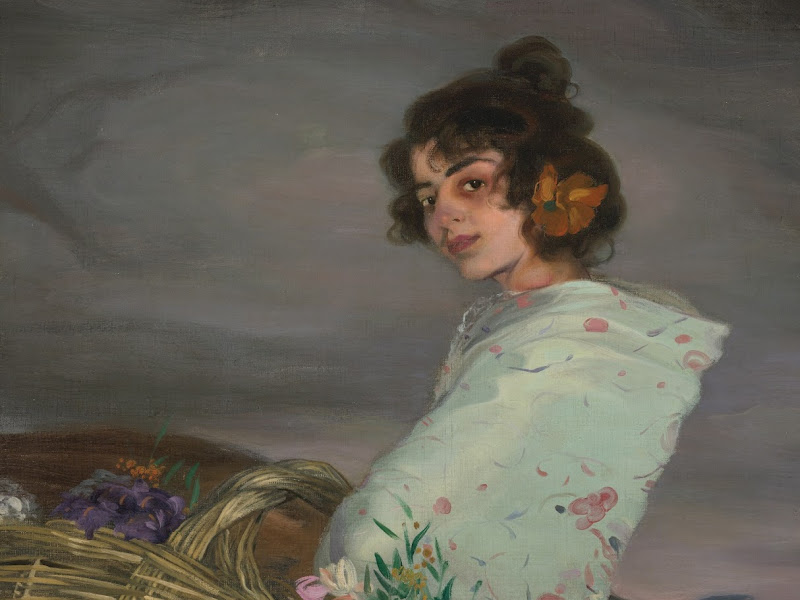
Ignacio Zuloaga | Genre /Realist painter

Ignacio Zuloaga | Genre /Realist painter

Ignacio Zuloaga, in full Ignacio Zuloaga y Zabaleta (1870, Eibar, Spain - 1945, Madrid), Spanish genre and portrait painter noted for his theatrical paintings of figures from Spanish culture and folklore.
The son of a successful metalworker, Zuloaga was a largely self-taught artist who learned to paint by copying Old Masters in the Prado Museum in Madrid.
Beginning about 1890, he split his time between Paris and Spain.


Read More

Ignacio Zuloaga | Genre /Realist painter

Ignacio Zuloaga, in full Ignacio Zuloaga y Zabaleta (1870, Eibar, Spain - 1945, Madrid), Spanish genre and portrait painter noted for his theatrical paintings of figures from Spanish culture and folklore.
The son of a successful metalworker, Zuloaga was a largely self-taught artist who learned to paint by copying Old Masters in the Prado Museum in Madrid.
Beginning about 1890, he split his time between Paris and Spain.


Brenda Burke | Classical realist painter

Brenda Burke | Classical realist painter


Award-winning artist** with works in the collection of the British Royal Family and with notable collectors worldwide.
Internationally recognized as a brilliant and sensitive portrait painter, classically trained in Europe, Brenda Burke sees every aspect of life as a creative challenge.
Her collectors avidly wait for each new series she creates, as she applies the various skills of the old masters to create fresh and exciting contemporary masterpieces.

Read More

Brenda Burke | Classical realist painter


Award-winning artist** with works in the collection of the British Royal Family and with notable collectors worldwide.
Internationally recognized as a brilliant and sensitive portrait painter, classically trained in Europe, Brenda Burke sees every aspect of life as a creative challenge.
Her collectors avidly wait for each new series she creates, as she applies the various skills of the old masters to create fresh and exciting contemporary masterpieces.

Eva Antonini | Figurative sculptor

Eva Antonini | Figurative sculptor


Eva Antonini was born in Rapperswil-Switzerland, the place of her childhood and adolescence.
As a young girl, Eva reveals a natural proneness for molding clay, matter that later will be privileged in the creation of sculptures of medium and large dimensions.
From 1981-1985 she lives in Geneva, where she takes her first steps in the working world, following her diverse and complex education: language studies; singing, music and dance; a horizon of journeys, stays in England, Italy and United States with stops in the Middle and Far East.

Read More

Eva Antonini | Figurative sculptor


Eva Antonini was born in Rapperswil-Switzerland, the place of her childhood and adolescence.
As a young girl, Eva reveals a natural proneness for molding clay, matter that later will be privileged in the creation of sculptures of medium and large dimensions.
From 1981-1985 she lives in Geneva, where she takes her first steps in the working world, following her diverse and complex education: language studies; singing, music and dance; a horizon of journeys, stays in England, Italy and United States with stops in the Middle and Far East.

Brigitte Teman, 1969 | Figurative sculptor

Brigitte Teman, 1969 | Figurative sculptor


Brigitte Teman was born in Châlons-en Champagne. From her studies in dental surgery she learned anatomy and the precision of movement. Her passion for art being stronger, she gave up dentistry and devoted herself entirely to sculpture.
Under the double influence of Rembrandt Bugatti and François Pompon, the two great masters of 20th-century animal sculpture, Brigitte Teman developed a style where she favours the beauty of line and forms by basing herself on a premise of smooth/taut which allows them to be starkly brought out.

Read More

Brigitte Teman, 1969 | Figurative sculptor


Brigitte Teman was born in Châlons-en Champagne. From her studies in dental surgery she learned anatomy and the precision of movement. Her passion for art being stronger, she gave up dentistry and devoted herself entirely to sculpture.
Under the double influence of Rembrandt Bugatti and François Pompon, the two great masters of 20th-century animal sculpture, Brigitte Teman developed a style where she favours the beauty of line and forms by basing herself on a premise of smooth/taut which allows them to be starkly brought out.

Il Dio di Capo Artemisio

Il Dio di Capo Artemisio

Il Cronide di Capo Artemisio, meglio conosciuto come  il Dio di Capo Artemisio - è una statua bronzea dell'antica Grecia, databile al 460 avanti Cristo circa ed é conservata nel Museo Archeologico Nazionale di Atene. Fu ritrovata nei fondali marini antistanti al Capo Artemisio, nell'odierna Eubea, ed è una delle pochissime opere bronzee originali che ci sono giunte. Il ritrovamento della statua avvenne nel 1926, mentre il recupero fu completato nel 1928. Essa si trovava nei pressi di un relitto databile intorno al 200 a.C., del quale si sa poco, in quanto la spedizione di recupero fu interrotta a causa della morte di un sub e mai più ripresa. Si presume che la nave fosse di origine romana, una delle tante navi che all'epoca solcavano quei mari per portare elementi di arte greca verso Roma. Anche se così fosse, a causa dell'interruzione dell'operazione di recupero, non è ancora chiaro se la statua fosse imbarcata sul vascello o meno. Si è cercato senza successo di accostare il Cronide a uno degli grandi bronzisti greci dell'epoca, i cui nomi ci sono stati tramandati dalle fonti: Onata di Egina, Pitagora di Samo o Calamide. La mancanza però di opere certe e l'inesistenza di accenni diretti al dio di Capo Artemisio rendono impossibile formulare un'attribuzione sicura.

Read More

Il Dio di Capo Artemisio

Il Cronide di Capo Artemisio, meglio conosciuto come  il Dio di Capo Artemisio - è una statua bronzea dell'antica Grecia, databile al 460 avanti Cristo circa ed é conservata nel Museo Archeologico Nazionale di Atene. Fu ritrovata nei fondali marini antistanti al Capo Artemisio, nell'odierna Eubea, ed è una delle pochissime opere bronzee originali che ci sono giunte. Il ritrovamento della statua avvenne nel 1926, mentre il recupero fu completato nel 1928. Essa si trovava nei pressi di un relitto databile intorno al 200 a.C., del quale si sa poco, in quanto la spedizione di recupero fu interrotta a causa della morte di un sub e mai più ripresa. Si presume che la nave fosse di origine romana, una delle tante navi che all'epoca solcavano quei mari per portare elementi di arte greca verso Roma. Anche se così fosse, a causa dell'interruzione dell'operazione di recupero, non è ancora chiaro se la statua fosse imbarcata sul vascello o meno. Si è cercato senza successo di accostare il Cronide a uno degli grandi bronzisti greci dell'epoca, i cui nomi ci sono stati tramandati dalle fonti: Onata di Egina, Pitagora di Samo o Calamide. La mancanza però di opere certe e l'inesistenza di accenni diretti al dio di Capo Artemisio rendono impossibile formulare un'attribuzione sicura.