18th century Art History / Sitemap

18th century Art History / Sitemap

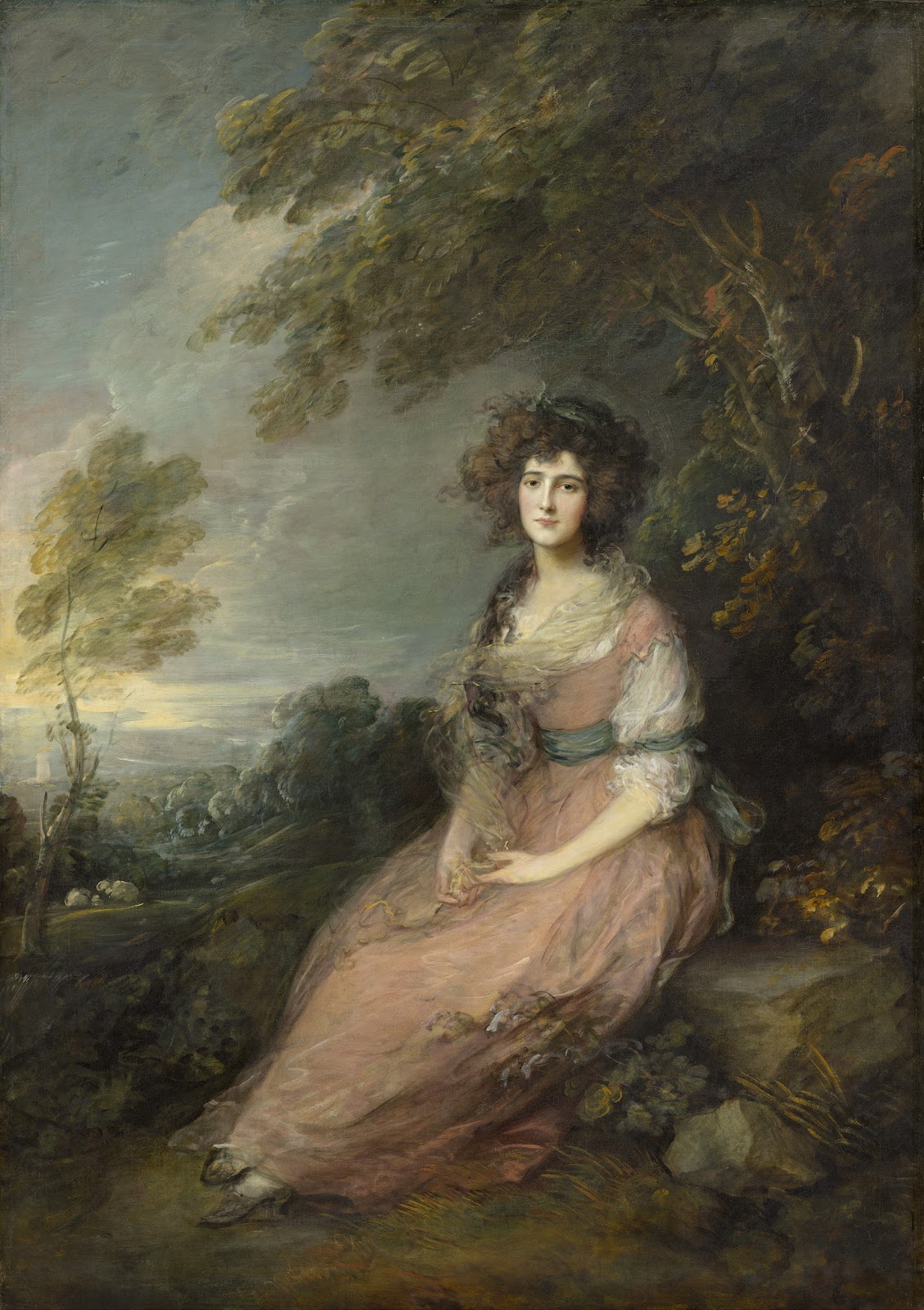
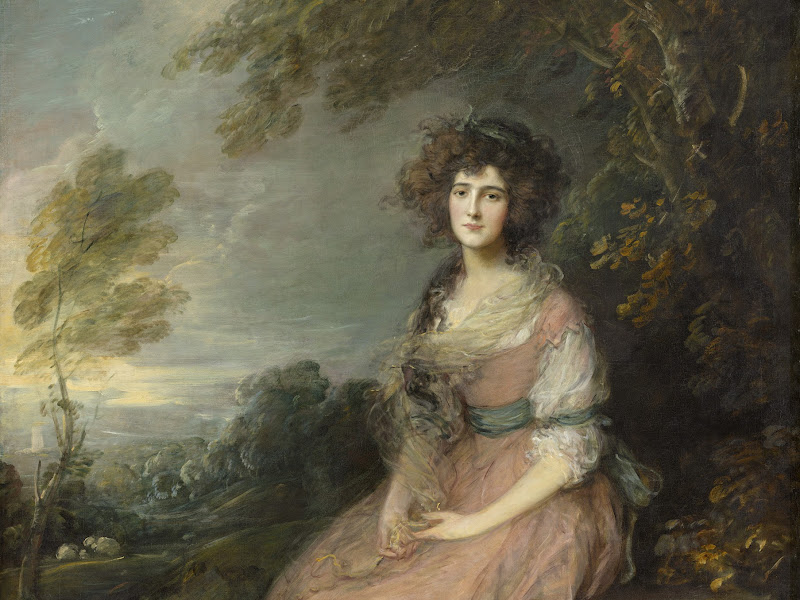
18th-century Art was a period of dramatic shifts, evolving from the ornate and playful Rococo style to the serious, structured ideals of Neoclassicism, and finally giving way to the emotional depth of early Romanticism.
This century's art was deeply shaped by the Enlightenment, a renewed passion for classical antiquity following the discovery of Pompeii, and the political upheavals of the American and French Revolutions.


Read More

18th century Art History / Sitemap

18th-century Art was a period of dramatic shifts, evolving from the ornate and playful Rococo style to the serious, structured ideals of Neoclassicism, and finally giving way to the emotional depth of early Romanticism.
This century's art was deeply shaped by the Enlightenment, a renewed passion for classical antiquity following the discovery of Pompeii, and the political upheavals of the American and French Revolutions.


How ChatGPT helps painters: Color techniques, palettes and professional workflow

How ChatGPT helps painters: Color techniques, palettes and professional workflow

Most discussions about AI for artists remain superficial.

In reality, ChatGPT can be deeply integrated into the technical painting process, especially in color, mixing, and composition.

🎨 1. Reconstructing master palettes

Artists can ask ChatGPT to recreate palettes used by masters:

  • Van Gogh (chrome yellow, ultramarine, viridian)
  • Renoir (flesh tones, cerulean blue, light ochre)
  • Renaissance palettes (earth pigments, vermilion, lapis lazuli)


Read More

How ChatGPT helps painters: Color techniques, palettes and professional workflow

Most discussions about AI for artists remain superficial.

In reality, ChatGPT can be deeply integrated into the technical painting process, especially in color, mixing, and composition.

🎨 1. Reconstructing master palettes

Artists can ask ChatGPT to recreate palettes used by masters:

  • Van Gogh (chrome yellow, ultramarine, viridian)
  • Renoir (flesh tones, cerulean blue, light ochre)
  • Renaissance palettes (earth pigments, vermilion, lapis lazuli)


Lea Reinhart | Still life painter

Lea Reinhart | Still life painter

Lea Reinhart (Brno 1877 - 1970 Vienna) was an Austrian painter, known for Miniatures and still life painting.
She presumably studied at the Vienna Art School for Women under guidance of the Viennese painters Robert Scheffer and Adalbert Franz Seligman.
Her miniatures and still life paintings enjoy great popularity.


Read More

Lea Reinhart | Still life painter

Lea Reinhart (Brno 1877 - 1970 Vienna) was an Austrian painter, known for Miniatures and still life painting.
She presumably studied at the Vienna Art School for Women under guidance of the Viennese painters Robert Scheffer and Adalbert Franz Seligman.
Her miniatures and still life paintings enjoy great popularity.


Market painting | The historical origins

Market painting | The historical origins

Market paintings capture the vibrant energy and cultural diversity of trading spaces across the world, from bustling open-air bazaars to serene floral stalls.
Market scenes have been a popular genre for centuries, capturing the vibrancy of daily life, commerce and culture.
These paintings often use "visual seduction" to make the depicted commodities - like fruits, vegetables, or flowers - as alluring to the viewer as the art itself.
This subject is a favorite for artists to explore crowd dynamics, architectural perspective, and color theory through various mediums like oil and watercolor.


Read More

Market painting | The historical origins

Market paintings capture the vibrant energy and cultural diversity of trading spaces across the world, from bustling open-air bazaars to serene floral stalls.
Market scenes have been a popular genre for centuries, capturing the vibrancy of daily life, commerce and culture.
These paintings often use "visual seduction" to make the depicted commodities - like fruits, vegetables, or flowers - as alluring to the viewer as the art itself.
This subject is a favorite for artists to explore crowd dynamics, architectural perspective, and color theory through various mediums like oil and watercolor.


Edwin Lord Weeks | Orientalist painter

Edwin Lord Weeks | Orientalist painter

Edwin Lord Weeks (1849-1903) was born at Boston, Massachusetts.
He was a pupil of Léon Bonnat and of Jean-Léon Gérôme, at Paris.
He made many voyages to the East, and was distinguished as a painter of oriental scenes.
Weeks' parents were affluent spice and tea merchants from Newton, a suburb of Boston and as such they were able to accept, probably encourage, and certainly finance their son's youthful interest in painting and travelling.


Read More

Edwin Lord Weeks | Orientalist painter

Edwin Lord Weeks (1849-1903) was born at Boston, Massachusetts.
He was a pupil of Léon Bonnat and of Jean-Léon Gérôme, at Paris.
He made many voyages to the East, and was distinguished as a painter of oriental scenes.
Weeks' parents were affluent spice and tea merchants from Newton, a suburb of Boston and as such they were able to accept, probably encourage, and certainly finance their son's youthful interest in painting and travelling.


Il gabbiano Jonathan Livingston, 1970 | Prima parte

Il gabbiano Jonathan Livingston, 1970 | Prima parte

Richard Bach: "Al vero Gabbiano Jonathan che vive nel profondo di tutti noi!"

"Il gabbiano Jonathan Livingston" (Jonathan Livingston Seagull) è un celebre romanzo breve di Richard Bach (1936).
Best seller in molti paesi del mondo negli anni settanta, diventato per molti un vero e proprio cult, Jonathan Livingston è essenzialmente una fiaba a contenuto morale e spirituale.
La metafora principale del libro, ovvero il percorso di autoperfezionamento del gabbiano che impara a volare/vivere attraverso l'abnegazione, ricordando il periodo del Rinascimento, il sacrificio e la gioia di farlo è stata letta da diverse generazioni secondo diverse prospettive ideologiche, dal cattolicesimo al pensiero positivo, l'anarchismo cristiano e la New Age.


Read More

Il gabbiano Jonathan Livingston, 1970 | Prima parte

Richard Bach: "Al vero Gabbiano Jonathan che vive nel profondo di tutti noi!"

"Il gabbiano Jonathan Livingston" (Jonathan Livingston Seagull) è un celebre romanzo breve di Richard Bach (1936).
Best seller in molti paesi del mondo negli anni settanta, diventato per molti un vero e proprio cult, Jonathan Livingston è essenzialmente una fiaba a contenuto morale e spirituale.
La metafora principale del libro, ovvero il percorso di autoperfezionamento del gabbiano che impara a volare/vivere attraverso l'abnegazione, ricordando il periodo del Rinascimento, il sacrificio e la gioia di farlo è stata letta da diverse generazioni secondo diverse prospettive ideologiche, dal cattolicesimo al pensiero positivo, l'anarchismo cristiano e la New Age.


Genre Art History and Sitemap

Genre Art History and Sitemap

Genre painting, painting of scenes from everyday life, of ordinary people in work or recreation, depicted in a generally realistic manner.
Genre art contrasts with that of landscape, portraiture, still life, religious themes, historic events, or any kind of traditionally idealized subject matter.
Intimate scenes from daily life are almost invariably the subject of genre painting.
The elimination of imaginative content and of idealization focuses attention upon the shrewd observation of types, costumes and settings.
The term arose in 18th-century France to describe painters specializing in one kind genre of picture, such as flowers or animals or middle-class life, and was originally used derogatively by advocates of the ideal or grand manner in art.


Read More

Genre Art History and Sitemap

Genre painting, painting of scenes from everyday life, of ordinary people in work or recreation, depicted in a generally realistic manner.
Genre art contrasts with that of landscape, portraiture, still life, religious themes, historic events, or any kind of traditionally idealized subject matter.
Intimate scenes from daily life are almost invariably the subject of genre painting.
The elimination of imaginative content and of idealization focuses attention upon the shrewd observation of types, costumes and settings.
The term arose in 18th-century France to describe painters specializing in one kind genre of picture, such as flowers or animals or middle-class life, and was originally used derogatively by advocates of the ideal or grand manner in art.


Russian Art History and Sitemap

Russian Art History and Sitemap

Early Russian painting is represented in icons and vibrant frescos.
In the early 15th century, the master icon painter Andrei Rublev created some of Russia's most treasured religious art.
The Russian Academy of Arts, which was established in 1757, to train Russian artists, brought Western techniques of secular painting to Russia.
In the 18th century, academicians Ivan Argunov, Dmitry Levitzky, Vladimir Borovikovsky became influential.


Read More

Russian Art History and Sitemap

Early Russian painting is represented in icons and vibrant frescos.
In the early 15th century, the master icon painter Andrei Rublev created some of Russia's most treasured religious art.
The Russian Academy of Arts, which was established in 1757, to train Russian artists, brought Western techniques of secular painting to Russia.
In the 18th century, academicians Ivan Argunov, Dmitry Levitzky, Vladimir Borovikovsky became influential.


Giorgio Conta, 1978 | Figurative sculptor

Giorgio Conta, 1978 | Figurative sculptor

Italian artist Giorgio Conta was born in Cles and lives and works in Monclassico in Val di Sole (TN).
He grew up in an artistic environment where, being his father a well known artist, he came into contact with various personalities from the art and culture world, including the great pianist Arturo Benedetti Michel-angeli, close friend of the family, who expressed the wish to be his Godfather.
After having earned his high-school diploma he attended a sculpture school devoting himself to painting and drawing as well.


Read More

Giorgio Conta, 1978 | Figurative sculptor

Italian artist Giorgio Conta was born in Cles and lives and works in Monclassico in Val di Sole (TN).
He grew up in an artistic environment where, being his father a well known artist, he came into contact with various personalities from the art and culture world, including the great pianist Arturo Benedetti Michel-angeli, close friend of the family, who expressed the wish to be his Godfather.
After having earned his high-school diploma he attended a sculpture school devoting himself to painting and drawing as well.