Maria Giulia Alemanno | Magical Realism painter

Maria Giulia Alemanno | Magical Realism painter

And the ORISHAS are like dead thar are not dead.
A long chain that rivets the present and the past, linking the souls of today and yesterday, beyond time and space.
Africa and America, what it was and it will be, hearth and sky.
They are like the ancestors’ spirits, the incarnation of generations, the survival of ties, the alphabet of continuità and memory.
Maria Giulia Alemanno, Lellina, like a Malinke griot, lives to tell stories.
And she, an Italian, has searched and found them in the deepness of Cuba.


Read More

Maria Giulia Alemanno | Magical Realism painter

And the ORISHAS are like dead thar are not dead.
A long chain that rivets the present and the past, linking the souls of today and yesterday, beyond time and space.
Africa and America, what it was and it will be, hearth and sky.
They are like the ancestors’ spirits, the incarnation of generations, the survival of ties, the alphabet of continuità and memory.
Maria Giulia Alemanno, Lellina, like a Malinke griot, lives to tell stories.
And she, an Italian, has searched and found them in the deepness of Cuba.

Giampaolo Talani, 1955 | Abstract painter / sculptor

Giampaolo Talani, 1955 | Abstract painter / sculptor

Giampaolo Talani was born in San Vincenzo (LI).
After attending Art School in Lucca and in Florence he went to the Academy of Fine Arts in Florence where he met Goffredo Trovarelli as his teacher.
Throughout his studies he experimented with all art classical techniques but finally he chose painting, he also devoted himself to the fresco technique in which he is one of the greatest contemporary experts.
In his youth he painted the great cycle of fresco paintings in the church of San Vincenzo, and that was followed by other works: the "Preaching of San Bernardino" in the Episcopal Palace of Massa Marittima, the Sanctuary of Our Lady of Frassine.


Read More

Giampaolo Talani, 1955 | Abstract painter / sculptor

Giampaolo Talani was born in San Vincenzo (LI).
After attending Art School in Lucca and in Florence he went to the Academy of Fine Arts in Florence where he met Goffredo Trovarelli as his teacher.
Throughout his studies he experimented with all art classical techniques but finally he chose painting, he also devoted himself to the fresco technique in which he is one of the greatest contemporary experts.
In his youth he painted the great cycle of fresco paintings in the church of San Vincenzo, and that was followed by other works: the "Preaching of San Bernardino" in the Episcopal Palace of Massa Marittima, the Sanctuary of Our Lady of Frassine.


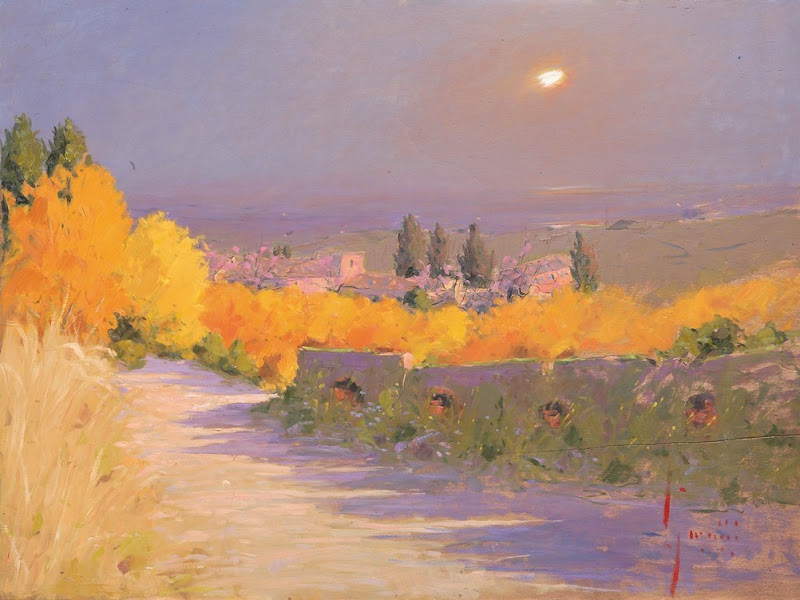
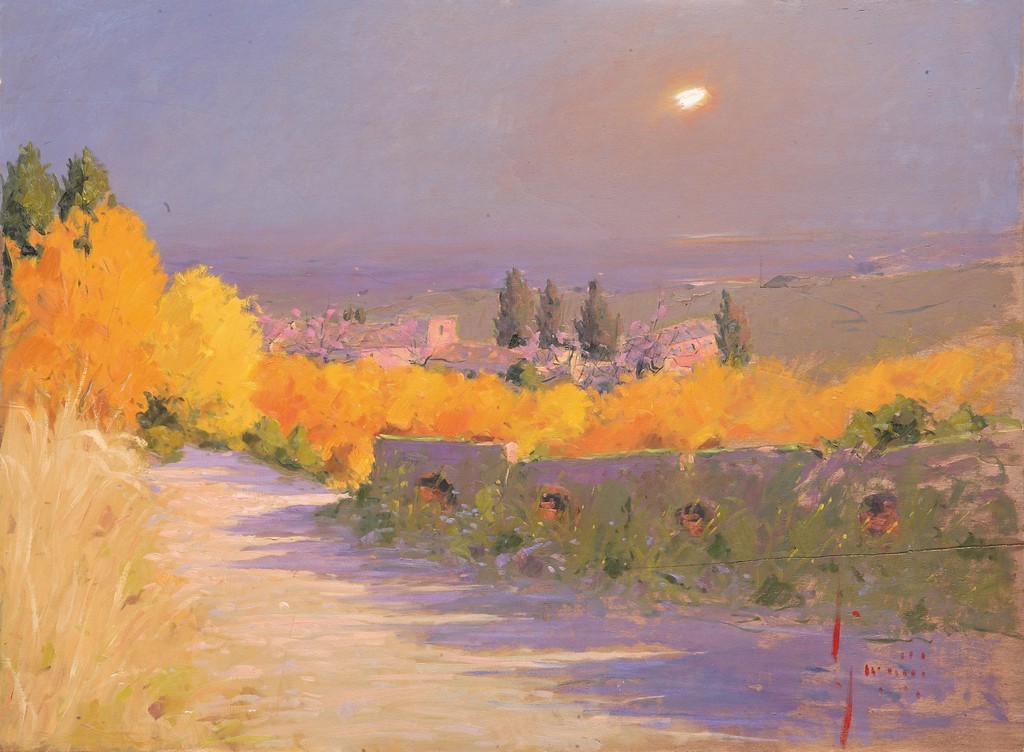
Aldo Mazzi, 1937 | Plein air painter

Aldo Mazzi, 1937 | Plein air painter

Aldo Mazzi was born in Livorno, Italy where he lives and works without rest in his studio located inside of the historical "Casini di Ardenza".

Mazzi is a self-taught artist who paints since his early youth and who can be appreciated as a part of the "macchiaiola" and "post-macchiaiola" tradition, always strongly related to the live painting, the so-called "En plein air".


Read More

Aldo Mazzi, 1937 | Plein air painter

Aldo Mazzi was born in Livorno, Italy where he lives and works without rest in his studio located inside of the historical "Casini di Ardenza".

Mazzi is a self-taught artist who paints since his early youth and who can be appreciated as a part of the "macchiaiola" and "post-macchiaiola" tradition, always strongly related to the live painting, the so-called "En plein air".


Dino Pelagatti | Post Macchiaioli painter

Dino Pelagatti | Post Macchiaioli painter

Dino Pelagatti (1932-2016) nasce a Livorno il 2 Agosto del 1932.
Inizialmente influenzato dallo stile dei pittori Post Macchiaioli, nel corso degli anni ha rinnovato la tecnica delle sue raffigurazioni creando uno stile personalizzato e contemporaneo.
Gli anni della guerra vengono percepiti dal giovane Pelagatti come una difficile esperienza umana perché con la sua famiglia non abbandonò mai Livorno. Nel dopoguerra risultò difficile per Pelagatti rendere mestiere vero e proprio la pittura a causa del forte orientamento popolare verso pittori Macchiaioli e Post Macchiaioli già affermati. 


Read More

Dino Pelagatti | Post Macchiaioli painter

Dino Pelagatti (1932-2016) nasce a Livorno il 2 Agosto del 1932.
Inizialmente influenzato dallo stile dei pittori Post Macchiaioli, nel corso degli anni ha rinnovato la tecnica delle sue raffigurazioni creando uno stile personalizzato e contemporaneo.
Gli anni della guerra vengono percepiti dal giovane Pelagatti come una difficile esperienza umana perché con la sua famiglia non abbandonò mai Livorno. Nel dopoguerra risultò difficile per Pelagatti rendere mestiere vero e proprio la pittura a causa del forte orientamento popolare verso pittori Macchiaioli e Post Macchiaioli già affermati. 


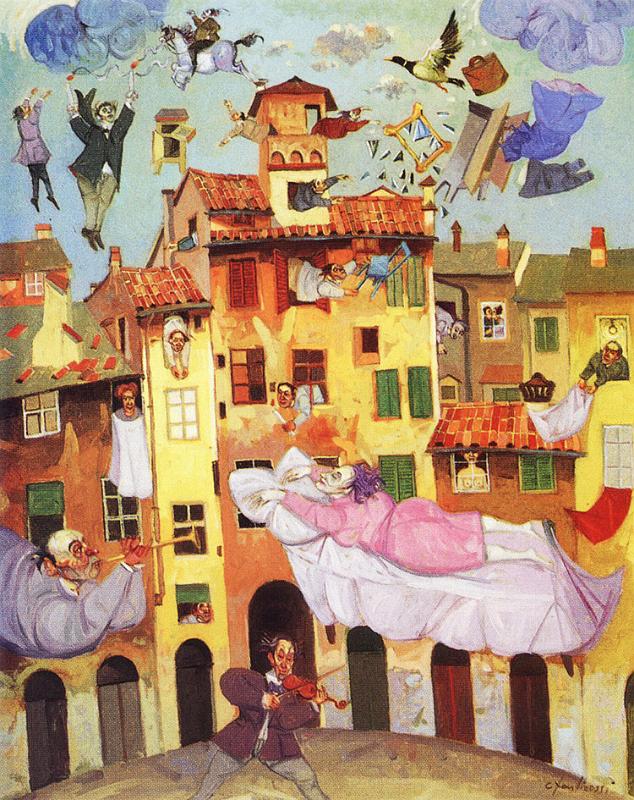
Roberto Fontirossi, 1940 | Surrealist /Visionary painter

Roberto Fontirossi, 1940 | Surrealist /Visionary painter

Roberto Fontirossi is an Italian painter, known for working in the surrealist style. Fontirossi was born in Lucca, Italy, where he lives and works.
1961 - First Solo Show at Galleria S. Salvatore in Lauro, Roma.
1964 - IX Quadriennale di Roma, awarded the Premio per il Bianco e Nero.
His work can be found in many private and public collections.


Read More

Roberto Fontirossi, 1940 | Surrealist /Visionary painter

Roberto Fontirossi is an Italian painter, known for working in the surrealist style. Fontirossi was born in Lucca, Italy, where he lives and works.
1961 - First Solo Show at Galleria S. Salvatore in Lauro, Roma.
1964 - IX Quadriennale di Roma, awarded the Premio per il Bianco e Nero.
His work can be found in many private and public collections.


Francesco Tammaro, 1939 | Belle Époque painter

Francesco Tammaro, 1939 | Belle Époque painter

Francesco Tammaro was born in Naples in 1939 where he attended the Instituto D'Arte di Napoli, one of the most reputed Fine Art schools in Italy. Shortly after graduation he traveled to France where he lived for a few years.
Tammaro is best know for his characteristic views of Paris, the famous cafes of Paris, interior Bistros as well as his pastoral picnic scenes on the banks of the Seine.
The artist is now also a valued and appreciated teacher of art at the Fine Arts Academy, who has the capacity of awakening in his students the love of a style of art which seems to be disappearing, suffocated by superficiality and abstraction.


Read More

Francesco Tammaro, 1939 | Belle Époque painter

Francesco Tammaro was born in Naples in 1939 where he attended the Instituto D'Arte di Napoli, one of the most reputed Fine Art schools in Italy. Shortly after graduation he traveled to France where he lived for a few years.
Tammaro is best know for his characteristic views of Paris, the famous cafes of Paris, interior Bistros as well as his pastoral picnic scenes on the banks of the Seine.
The artist is now also a valued and appreciated teacher of art at the Fine Arts Academy, who has the capacity of awakening in his students the love of a style of art which seems to be disappearing, suffocated by superficiality and abstraction.


Svetlana Shalygina, 1973 | Abstract Figurative painter

Svetlana Shalygina, 1973 | Abstract Figurative painter

Svetlana Shalygina was born into a poor, humble working class family in Efremov, Russia. She and an older sister were raised in a small, studio apartment 200 miles south of Moscow by parents who worked in a local factory but were very devoted to their children. Svetlana grew up close to nature in wide-open Russian countryside and picturesque valleys which she sketched and painted throughout her childhood. It was here she developed a strong interest in Russian classical art, poetry, music and literature.


Read More

Svetlana Shalygina, 1973 | Abstract Figurative painter

Svetlana Shalygina was born into a poor, humble working class family in Efremov, Russia. She and an older sister were raised in a small, studio apartment 200 miles south of Moscow by parents who worked in a local factory but were very devoted to their children. Svetlana grew up close to nature in wide-open Russian countryside and picturesque valleys which she sketched and painted throughout her childhood. It was here she developed a strong interest in Russian classical art, poetry, music and literature.


François Boucher | The Four Seasons

François Boucher | The Four Seasons

Source: The Frick Collection, New York

The son of a painter, François Boucher (1703-1770) was born in Paris and trained first with his father, then briefly with François Lemoine.
In 1723 he won the Academy’s first prize for painting but was denied the sojourn in Rome that normally resulted from the competition.
To earn his living the young artist produced reproductive engravings throughout the 1720s, notably after drawings and paintings by Watteau.

François Boucher - The Four Seasons, Autumn, 1755

Read More

François Boucher | The Four Seasons

Source: The Frick Collection, New York

The son of a painter, François Boucher (1703-1770) was born in Paris and trained first with his father, then briefly with François Lemoine.
In 1723 he won the Academy’s first prize for painting but was denied the sojourn in Rome that normally resulted from the competition.
To earn his living the young artist produced reproductive engravings throughout the 1720s, notably after drawings and paintings by Watteau.

François Boucher - The Four Seasons, Autumn, 1755

Camille Lambert | Post Impressionist painter

Camille Lambert | Post Impressionist painter

Camille-Nicolas Lambert (1876-1963) was born in Arlon, Belgium in 1874. He was a student of the Académie des Beaux-Arts de Liége and Anvers.
He won the second place Prix de Rome in 1898, and third place Prix de Rome in 1901 and 1904. Lambert exhibited at the Salon des Artistes Français in Paris and the Société Nationale des Beaux-Arts in Brussels. He was a member of circle Pour l'Art, and he exhibited in 1912 at the 20th Salon.


Read More

Camille Lambert | Post Impressionist painter

Camille-Nicolas Lambert (1876-1963) was born in Arlon, Belgium in 1874. He was a student of the Académie des Beaux-Arts de Liége and Anvers.
He won the second place Prix de Rome in 1898, and third place Prix de Rome in 1901 and 1904. Lambert exhibited at the Salon des Artistes Français in Paris and the Société Nationale des Beaux-Arts in Brussels. He was a member of circle Pour l'Art, and he exhibited in 1912 at the 20th Salon.


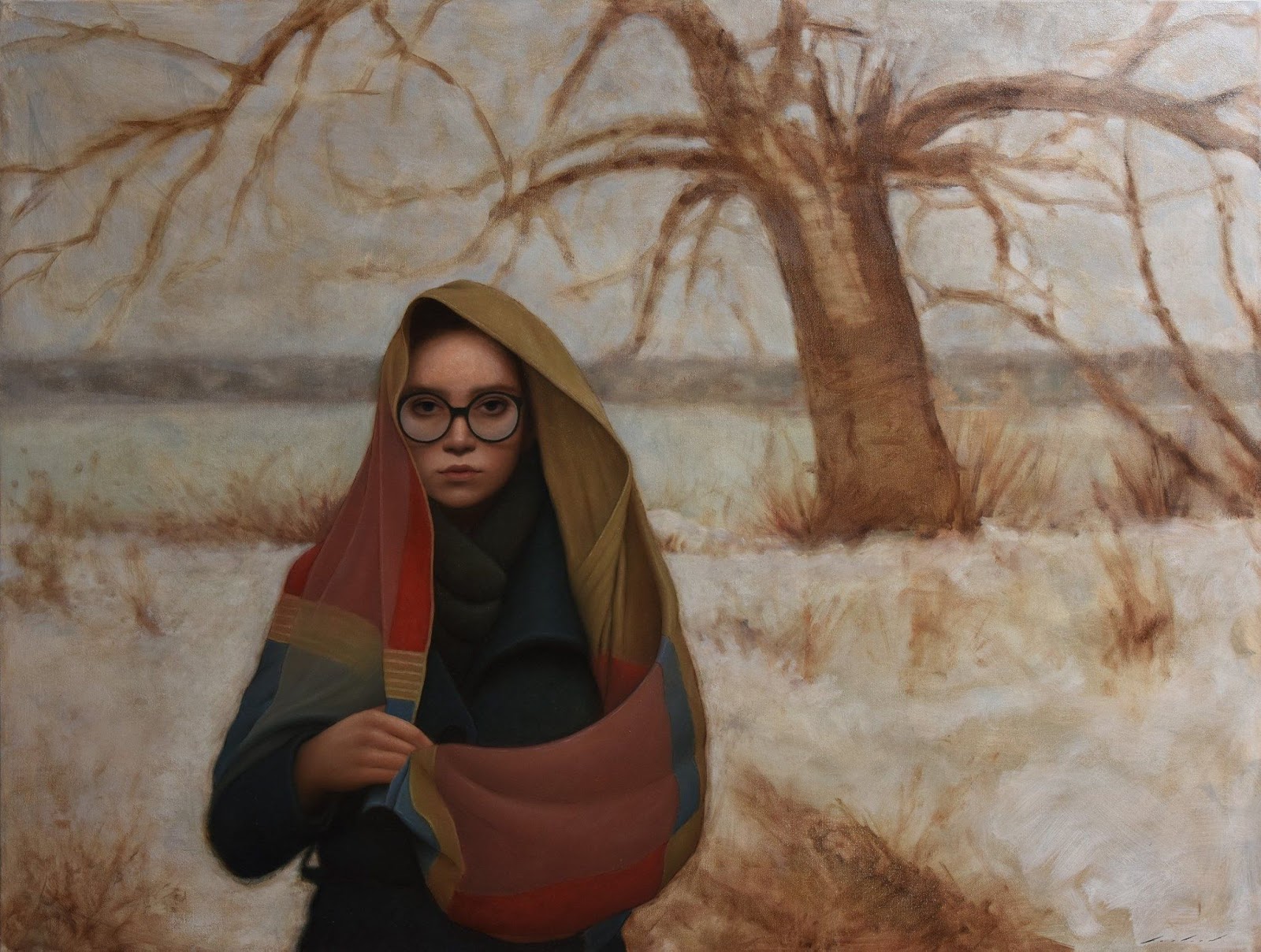
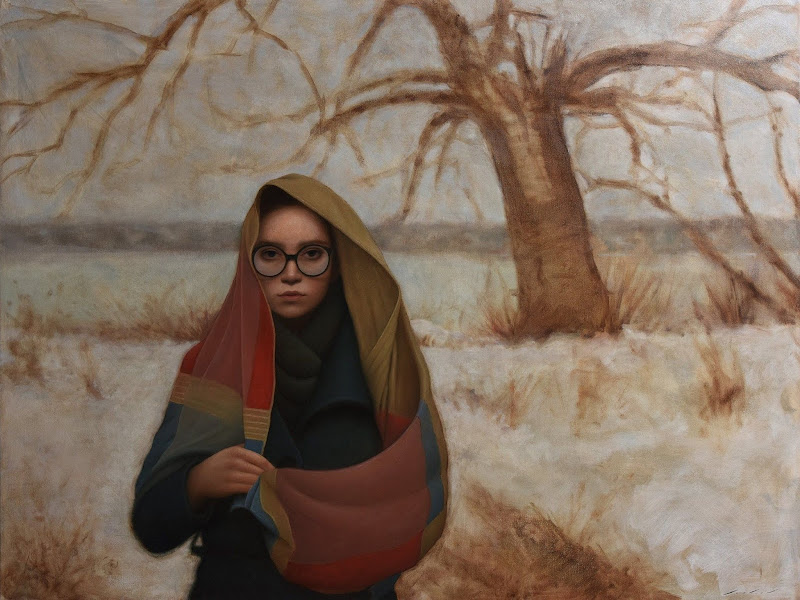
Danny Ferland, 1975 | Portrait painter

Danny Ferland, 1975 | Portrait painter

Danny Ferland was born in Quebec City, Quebec.
He was self taught for many years before discovering the magnificence of figurative art during a European trip in 2002.
Seeing the historical artworks in countless museums is what made him realize the outmost importance of genuine academic training.
In 2008 he moved to New York city after being accepted into the Janus Collaborative school of art.


Read More

Danny Ferland, 1975 | Portrait painter

Danny Ferland was born in Quebec City, Quebec.
He was self taught for many years before discovering the magnificence of figurative art during a European trip in 2002.
Seeing the historical artworks in countless museums is what made him realize the outmost importance of genuine academic training.
In 2008 he moved to New York city after being accepted into the Janus Collaborative school of art.


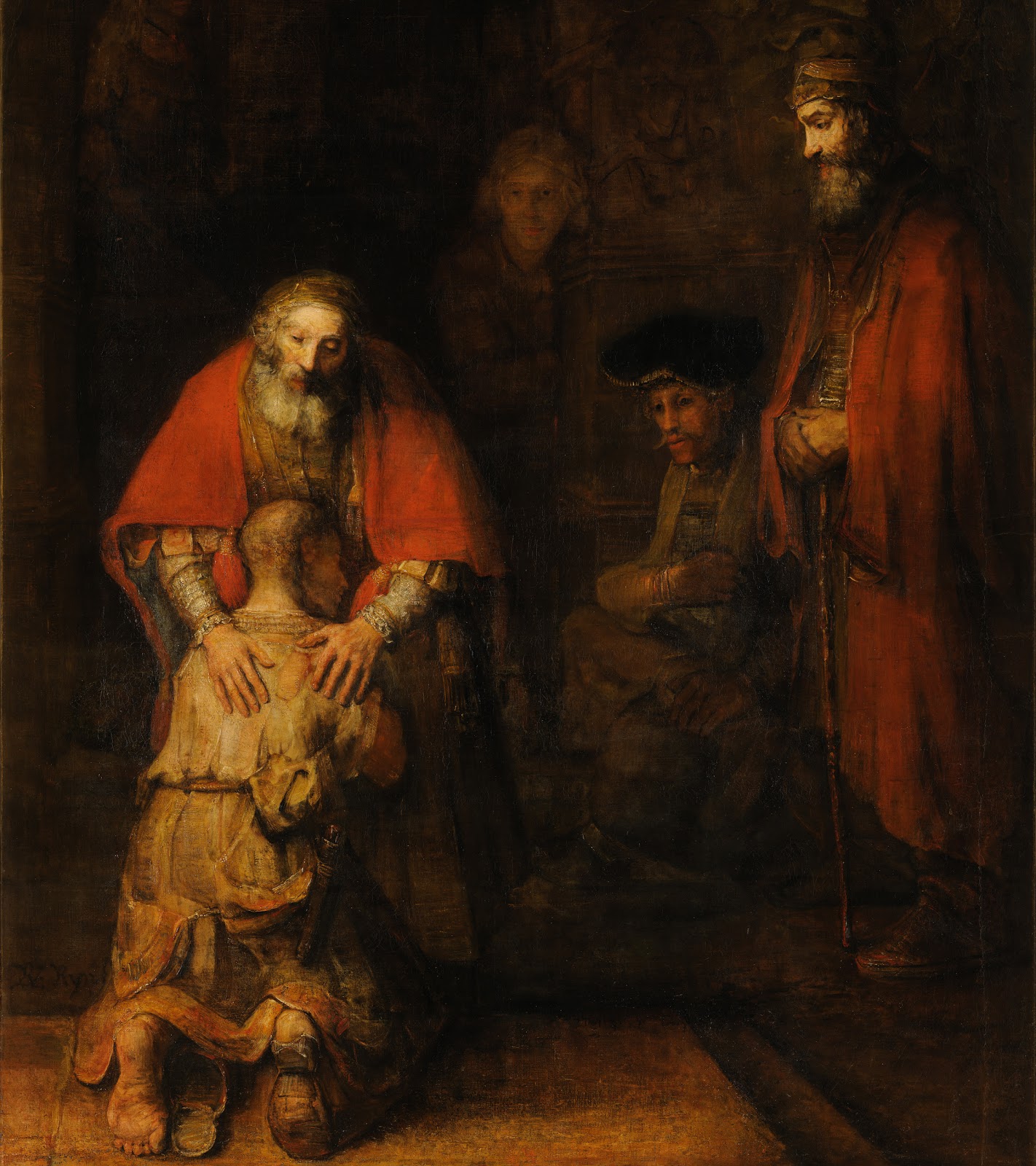
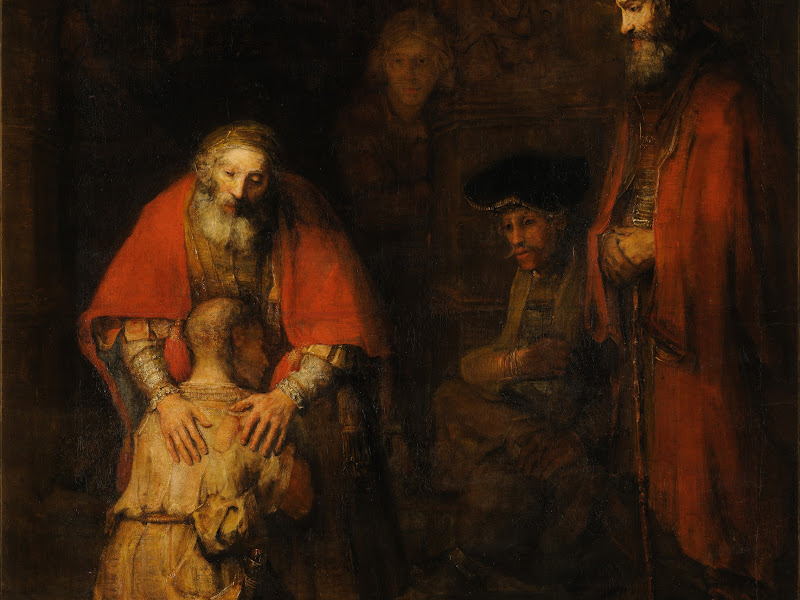
Rembrandt | The Return of the Prodigal Son, 1668

Rembrandt | The Return of the Prodigal Son, 1668

In the Gospel According to Luke (15: 11-32), Christ relates the parable of the Prodigal Son.
A son asks his father for his inheritance and leaves the parental home, only to fritter away all his wealth.
Arriving at last at sickness and poverty, he returns to his father's house. The old man is blinded by tears as he forgives his son, just as God forgives all those who repent.
This whole work is dominated by the idea of the victory of love, goodness and charity.
The event is treated as the highest act of human wisdom and spiritual nobility, and it takes place in absolute silence and stillness.


Read More

Rembrandt | The Return of the Prodigal Son, 1668

In the Gospel According to Luke (15: 11-32), Christ relates the parable of the Prodigal Son.
A son asks his father for his inheritance and leaves the parental home, only to fritter away all his wealth.
Arriving at last at sickness and poverty, he returns to his father's house. The old man is blinded by tears as he forgives his son, just as God forgives all those who repent.
This whole work is dominated by the idea of the victory of love, goodness and charity.
The event is treated as the highest act of human wisdom and spiritual nobility, and it takes place in absolute silence and stillness.


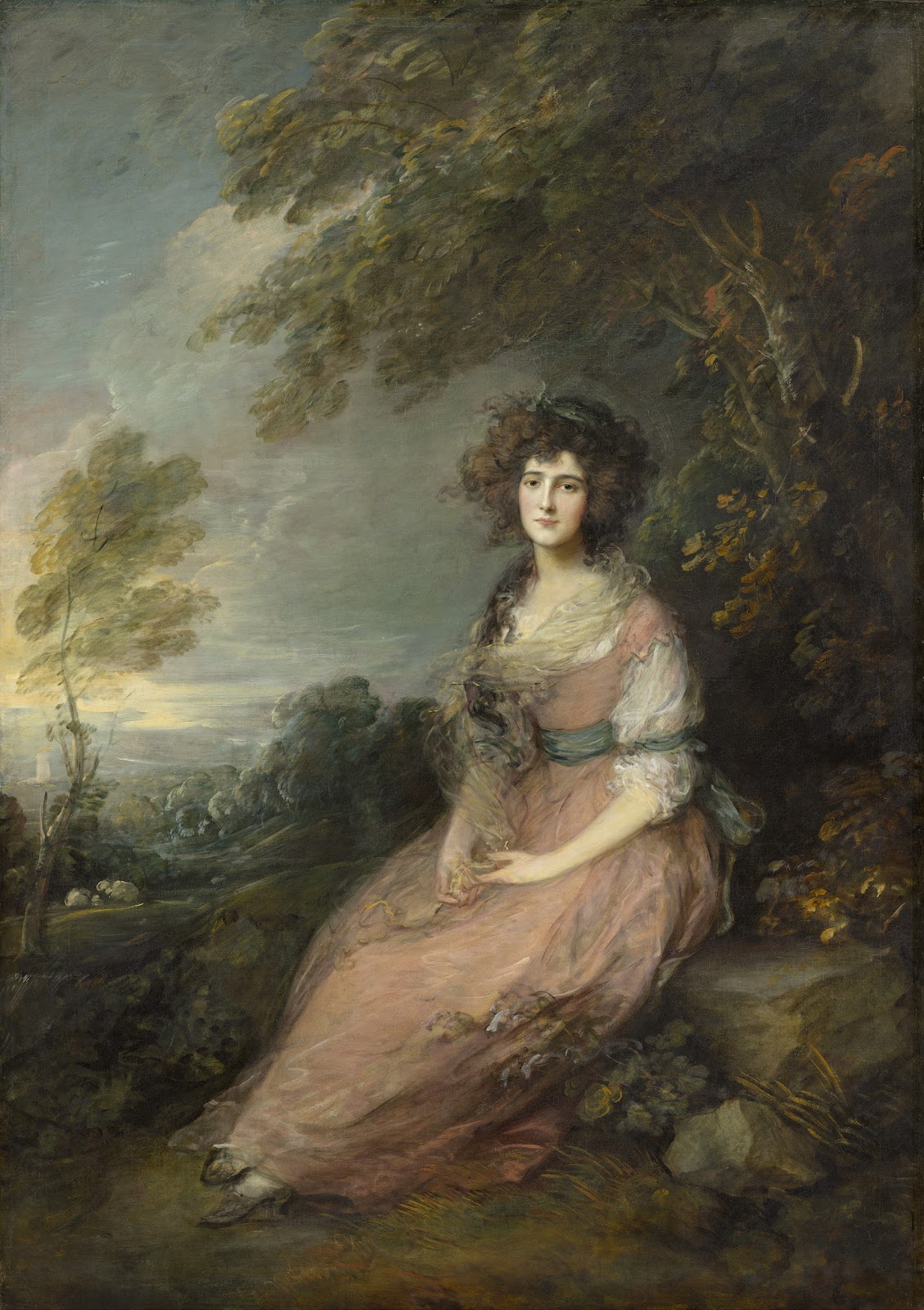
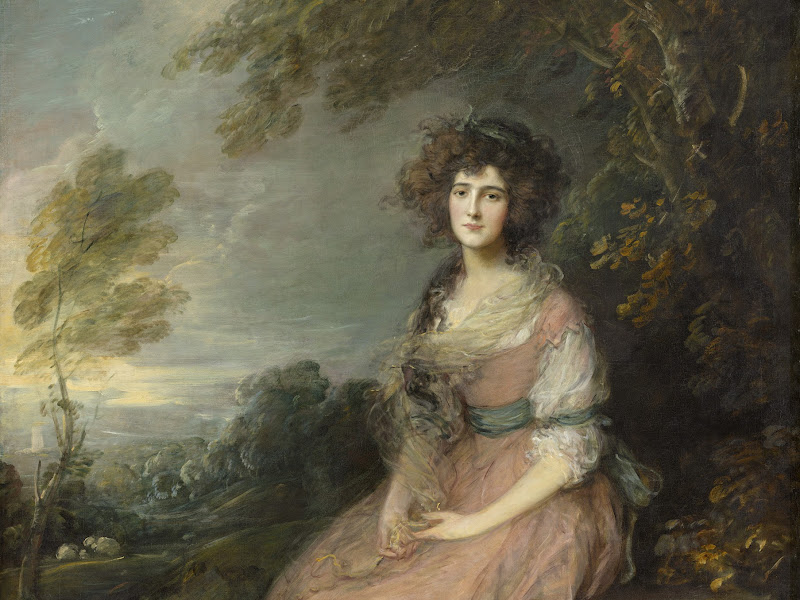
Thomas Gainsborough | Rococo / Romantic painter

Thomas Gainsborough | Rococo / Romantic painter

Tate, Britain / The portrait and landscape painter Thomas Gainsborough (1727-1788)🎨 was born at Sudbury, Suffolk, the fifth son of a cloth merchant.
He was apprenticed at the age of thirteen to a London silversmith, and was taught by Hubert Gravelot, a French book-illustrator.
By 1745 he had established his own studio in London. He married Margaret Burr in 1746, and by 1748 had taken up residence in Suffolk.
He moved to Ipswich in 1752, and settled at Bath as a portraitist in 1759.
He took as an apprentice his nephew, Gainsborough Dupont (1754-97) in 1772.


Read More

Thomas Gainsborough | Rococo / Romantic painter

Tate, Britain / The portrait and landscape painter Thomas Gainsborough (1727-1788)🎨 was born at Sudbury, Suffolk, the fifth son of a cloth merchant.
He was apprenticed at the age of thirteen to a London silversmith, and was taught by Hubert Gravelot, a French book-illustrator.
By 1745 he had established his own studio in London. He married Margaret Burr in 1746, and by 1748 had taken up residence in Suffolk.
He moved to Ipswich in 1752, and settled at Bath as a portraitist in 1759.
He took as an apprentice his nephew, Gainsborough Dupont (1754-97) in 1772.


Thomas Gainsborough | The Mall in St. James Park, 1783 | Art in Detail

Thomas Gainsborough | The Mall in St. James Park, 1783 | Art in Detail

National Gallery, London / Thomas Gainsborough was, with Reynolds (his main rival), the leading portrait painter in England in the later 18th century. The feathery brushwork of his mature work and rich sense of colour contribute to the enduring popularity of his portraits. Unlike Reynolds, he avoids references to Italian Renaissance art or the Antique, and shows his sitters in fashionable contemporary dress.


Read More

Thomas Gainsborough | The Mall in St. James Park, 1783 | Art in Detail

National Gallery, London / Thomas Gainsborough was, with Reynolds (his main rival), the leading portrait painter in England in the later 18th century. The feathery brushwork of his mature work and rich sense of colour contribute to the enduring popularity of his portraits. Unlike Reynolds, he avoids references to Italian Renaissance art or the Antique, and shows his sitters in fashionable contemporary dress.


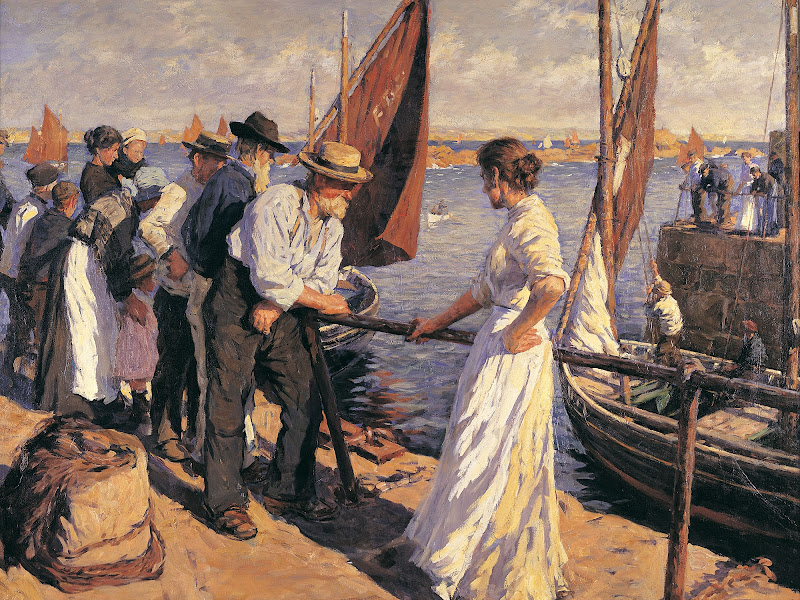
Stanhope Forbes | Plein Air /Genre painter

Stanhope Forbes | Plein Air /Genre painter

Tate, London / Stanhope Alexander Forbes (1857-1947) Painter of realistic genre, frequently in the open air, historical subjects and landscapes. Born 18 November 1857 in Dublin, son of a railway manager and a French mother. Studied at Lambeth School of Art, the R.A. Schools 1874-1878 and for two years in Paris under Bonnat. Influenced by Bastien-Lepage and painted in Brittany with La Thangue 1880. Settled in Cornwall 1884 and became a leading member of the ‘Newlyn School’.


Read More

Stanhope Forbes | Plein Air /Genre painter

Tate, London / Stanhope Alexander Forbes (1857-1947) Painter of realistic genre, frequently in the open air, historical subjects and landscapes. Born 18 November 1857 in Dublin, son of a railway manager and a French mother. Studied at Lambeth School of Art, the R.A. Schools 1874-1878 and for two years in Paris under Bonnat. Influenced by Bastien-Lepage and painted in Brittany with La Thangue 1880. Settled in Cornwall 1884 and became a leading member of the ‘Newlyn School’.


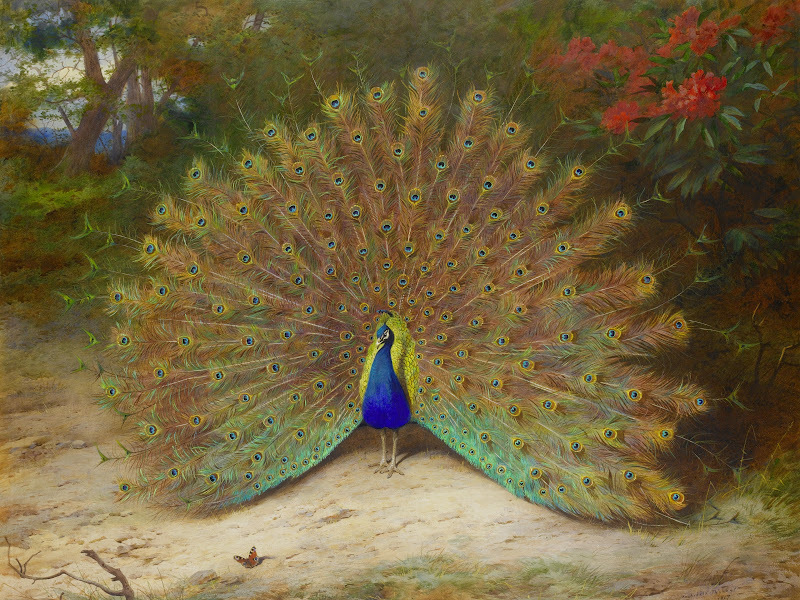
Archibald Thorburn | Naturalism wildlife painter

Archibald Thorburn | Naturalism wildlife painter

Archibald Thorburn (31 May 1860 - 9 October 1935 Hascombe, Surrey) was a Scottish /British animal painter and bird illustrator, painting mostly in watercolour.
He regularly visited Scotland to sketch birds in the wild, his favourite haunt being the Forest of Gaick near Kingussie in Invernesshire. His widely reproduced images of British wildlife, with their evocative and dramatic backgrounds, are enjoyed as much today as they were by sportsmen and birdlovers of a century ago.

Peacock and Peacock Butterfly

Read More

Archibald Thorburn | Naturalism wildlife painter

Archibald Thorburn (31 May 1860 - 9 October 1935 Hascombe, Surrey) was a Scottish /British animal painter and bird illustrator, painting mostly in watercolour.
He regularly visited Scotland to sketch birds in the wild, his favourite haunt being the Forest of Gaick near Kingussie in Invernesshire. His widely reproduced images of British wildlife, with their evocative and dramatic backgrounds, are enjoyed as much today as they were by sportsmen and birdlovers of a century ago.

Peacock and Peacock Butterfly