Visualizzazione post con etichetta Symbolist Art. Mostra tutti i post
Rainer Maria Rilke | Do not be afraid, it’s me / Non aver paura, sono io..

Rainer Maria Rilke | Do not be afraid, it’s me / Non aver paura, sono io..

Do not be afraid, it’s me.
You do not feel that I infringe on you,
with all your senses?

He put wings, my heart,
and now, white flies around your face.
Do not you see my soul before you,
adorned with silence?


Read More

Rainer Maria Rilke | Do not be afraid, it’s me / Non aver paura, sono io..

Do not be afraid, it’s me.
You do not feel that I infringe on you,
with all your senses?

He put wings, my heart,
and now, white flies around your face.
Do not you see my soul before you,
adorned with silence?


Jean-Claude Campana, 1941 | It's Carnival time

Jean-Claude Campana, 1941 | It's Carnival time

Jean-Claude Campana is an French painter, who has been painting for more than thirty years, started his career by exhibiting together with Baboulène, Buffet, Hilaire, Brayer...
The approach of these Masters encourages the talent of Campana, who already in his youth, builds up a strong character.
Strengthened by his expérience in surrealism, symbolism and realism, Jean-Claude Campana has been devoted to Venice since about a fifteen years, in a very personal style.


Read More

Jean-Claude Campana, 1941 | It's Carnival time

Jean-Claude Campana is an French painter, who has been painting for more than thirty years, started his career by exhibiting together with Baboulène, Buffet, Hilaire, Brayer...
The approach of these Masters encourages the talent of Campana, who already in his youth, builds up a strong character.
Strengthened by his expérience in surrealism, symbolism and realism, Jean-Claude Campana has been devoted to Venice since about a fifteen years, in a very personal style.


Agnes Slott-Møller | Symbolist painter

Agnes Slott-Møller | Symbolist painter

Agnes Slott-Møller, born Rambusch (10 June, 1862, in Nyboder - June 11, 1937 in Løgismose) was the daughter of the later commander in the Navy Jacob Heinrich Victor Rambusch (1825-1886) and his wife Constantine Juliane born Hansen (1834-1891).
She was a Danish painter and sculptor who was influenced by Italian art before the Renaissance, British Pre-Raphaelites and the Arts and Crafts Movement in his image and style.


Read More

Agnes Slott-Møller | Symbolist painter

Agnes Slott-Møller, born Rambusch (10 June, 1862, in Nyboder - June 11, 1937 in Løgismose) was the daughter of the later commander in the Navy Jacob Heinrich Victor Rambusch (1825-1886) and his wife Constantine Juliane born Hansen (1834-1891).
She was a Danish painter and sculptor who was influenced by Italian art before the Renaissance, British Pre-Raphaelites and the Arts and Crafts Movement in his image and style.


Alphonse Osbert | Symbolist / Pointillist painter

Alphonse Osbert | Symbolist / Pointillist painter

Alphonse Osbert (23 March 1857 - 11 August 1939) was a French Symbolist painter.
Educated at the École des Beaux-Arts, his earliest passion was for the great Spanish masters, particularly Jusepe de Ribera. A shift away from his academic style took place in the late 1880s under the influence of several acquaintances associated with Post-Impressionism* and Symbolism*.


Read More

Alphonse Osbert | Symbolist / Pointillist painter

Alphonse Osbert (23 March 1857 - 11 August 1939) was a French Symbolist painter.
Educated at the École des Beaux-Arts, his earliest passion was for the great Spanish masters, particularly Jusepe de Ribera. A shift away from his academic style took place in the late 1880s under the influence of several acquaintances associated with Post-Impressionism* and Symbolism*.


Jens Ferdinand Willumsen | Symbolist / Expressionist painter

Jens Ferdinand Willumsen | Symbolist / Expressionist painter


Jens Ferdinand Willumsen (1863-1958) was a Danish painter, sculptor, graphic artist, architect and photographer.
He became associated with the movements of Symbolism and Expressionism.
J. F. Willumsen was born in Copenhagen, Denmark.
He was the son of Hans Willumsen and Ane Kirstine.

Read More

Jens Ferdinand Willumsen | Symbolist / Expressionist painter


Jens Ferdinand Willumsen (1863-1958) was a Danish painter, sculptor, graphic artist, architect and photographer.
He became associated with the movements of Symbolism and Expressionism.
J. F. Willumsen was born in Copenhagen, Denmark.
He was the son of Hans Willumsen and Ane Kirstine.

Alexi Torres, 1976 | Symbolist painter

Alexi Torres, 1976 | Symbolist painter


Cuban painter Alexi Torres creates works that capture the creative powers of the universe as well as the problems facing it.
He grapples with how to express the influences of the past, possibilities of the future and the responsibilities of the now.
Torres creates woven canvasses which immortalize influential figures and emblems past and present.

Read More

Alexi Torres, 1976 | Symbolist painter


Cuban painter Alexi Torres creates works that capture the creative powers of the universe as well as the problems facing it.
He grapples with how to express the influences of the past, possibilities of the future and the responsibilities of the now.
Torres creates woven canvasses which immortalize influential figures and emblems past and present.

Charles Conder | Symbolist / Impressionist painter

Charles Conder | Symbolist / Impressionist painter

Charles Edward Conder (24 October 1868 - 9 February 1909) was an English-born painter, lithographer and designer.
He emigrated to Australia and was a key figure in the Heidelberg School, arguably the beginning of a distinctively Australian tradition in Western art.
Conder was born in Tottenham, Middlesex, the second son, of six children, of James Conder, civil engineer and Mary Ann Ayres.


Read More

Charles Conder | Symbolist / Impressionist painter

Charles Edward Conder (24 October 1868 - 9 February 1909) was an English-born painter, lithographer and designer.
He emigrated to Australia and was a key figure in the Heidelberg School, arguably the beginning of a distinctively Australian tradition in Western art.
Conder was born in Tottenham, Middlesex, the second son, of six children, of James Conder, civil engineer and Mary Ann Ayres.


Federico García Lorca | Indovinello della chitarra / Riddle of the guitar

Federico García Lorca | Indovinello della chitarra / Riddle of the guitar

Nel rotondo
crocevia
sei fanciulle
ballano.

Tre d’argento
e tre di carne.

Federico Beltrán Masses | Tres Para Uno / Three for one, 1934

Read More

Federico García Lorca | Indovinello della chitarra / Riddle of the guitar

Nel rotondo
crocevia
sei fanciulle
ballano.

Tre d’argento
e tre di carne.

Federico Beltrán Masses | Tres Para Uno / Three for one, 1934

Dimitri Vojnov, 1946 | Symbolist / Surrealist painter

Dimitri Vojnov, 1946 | Symbolist / Surrealist painter

Dimitri Vojnov had always a strong interest for the great painters of art history and Renaissance, such as Piero della Francesca or Hans Holbein. He uses as a background coloring an intense cobalt blue that is a reference to the Renaissance period.
Undoubtedly his work shows his long term classical academic education in painting which fascinates with provocative and erotic illustrations, which often are exaggerated in a grotesque way.


Read More

Dimitri Vojnov, 1946 | Symbolist / Surrealist painter

Dimitri Vojnov had always a strong interest for the great painters of art history and Renaissance, such as Piero della Francesca or Hans Holbein. He uses as a background coloring an intense cobalt blue that is a reference to the Renaissance period.
Undoubtedly his work shows his long term classical academic education in painting which fascinates with provocative and erotic illustrations, which often are exaggerated in a grotesque way.


Oscar Wilde | Se non avessimo amato / Ay! had we never loved

Oscar Wilde | Se non avessimo amato / Ay! had we never loved

Se noi non avessimo amato,
Chi sa se quel narciso avrebbe attratto l'ape
Nel suo grembo dorato,
Se quella pianta di rose avrebbe ornato
Di lampade rosse i suoi rami!

Caspar David Friedrich | Ruins of the Oybin, 1835 | Hermitage Museum

Read More

Oscar Wilde | Se non avessimo amato / Ay! had we never loved

Se noi non avessimo amato,
Chi sa se quel narciso avrebbe attratto l'ape
Nel suo grembo dorato,
Se quella pianta di rose avrebbe ornato
Di lampade rosse i suoi rami!

Caspar David Friedrich | Ruins of the Oybin, 1835 | Hermitage Museum

Oscar Wilde | Flower of Love

Oscar Wilde | Flower of Love

Sweet, I blame you not, for mine the fault was, had I not been made of common clay
I had climbed the higher heights unclimbed yet, seen the fuller air, the larger day.

From the wildness of my wasted passion I had struck a better, clearer song,
Lit some lighter light of freer freedom, battled with some Hydra-headed wrong.

Had my lips been smitten into music by the kisses that but made them bleed,
You had walked with Bice and the angels on that verdant and enamelled meed.


Read More

Oscar Wilde | Flower of Love

Sweet, I blame you not, for mine the fault was, had I not been made of common clay
I had climbed the higher heights unclimbed yet, seen the fuller air, the larger day.

From the wildness of my wasted passion I had struck a better, clearer song,
Lit some lighter light of freer freedom, battled with some Hydra-headed wrong.

Had my lips been smitten into music by the kisses that but made them bleed,
You had walked with Bice and the angels on that verdant and enamelled meed.


Federico García Lorca | Desiderio / Wish

Federico García Lorca | Desiderio / Wish

Solo il tuo cuore ardente…
niente più.
Il mio paradiso…
un campo senza usignolo né lire,
con un fiume discreto e una fontanella.

Senza lo sprone del vento sopra le fronde
né la stella che vuole essere foglia.

Tranquillo Cremona | The ivy / Edera, 1878

Read More

Federico García Lorca | Desiderio / Wish

Solo il tuo cuore ardente…
niente più.
Il mio paradiso…
un campo senza usignolo né lire,
con un fiume discreto e una fontanella.

Senza lo sprone del vento sopra le fronde
né la stella che vuole essere foglia.

Tranquillo Cremona | The ivy / Edera, 1878

Pierre Puvis de Chavannes | Symbolist painter

Pierre Puvis de Chavannes | Symbolist painter

French painter Pierre Cécile Puvis de Chavannes (1824-1898) is known for his mural painting - large-scale decorative painting - in the Symbolism style.
Puvis's work is seen as symbolist in nature, even though he studied with some of the romanticists, and he is credited with influencing an entire generation of painters and sculptors, particularly the works of the Modernists.
One of his protégés was Georges de Feure.


Read More

Pierre Puvis de Chavannes | Symbolist painter

French painter Pierre Cécile Puvis de Chavannes (1824-1898) is known for his mural painting - large-scale decorative painting - in the Symbolism style.
Puvis's work is seen as symbolist in nature, even though he studied with some of the romanticists, and he is credited with influencing an entire generation of painters and sculptors, particularly the works of the Modernists.
One of his protégés was Georges de Feure.


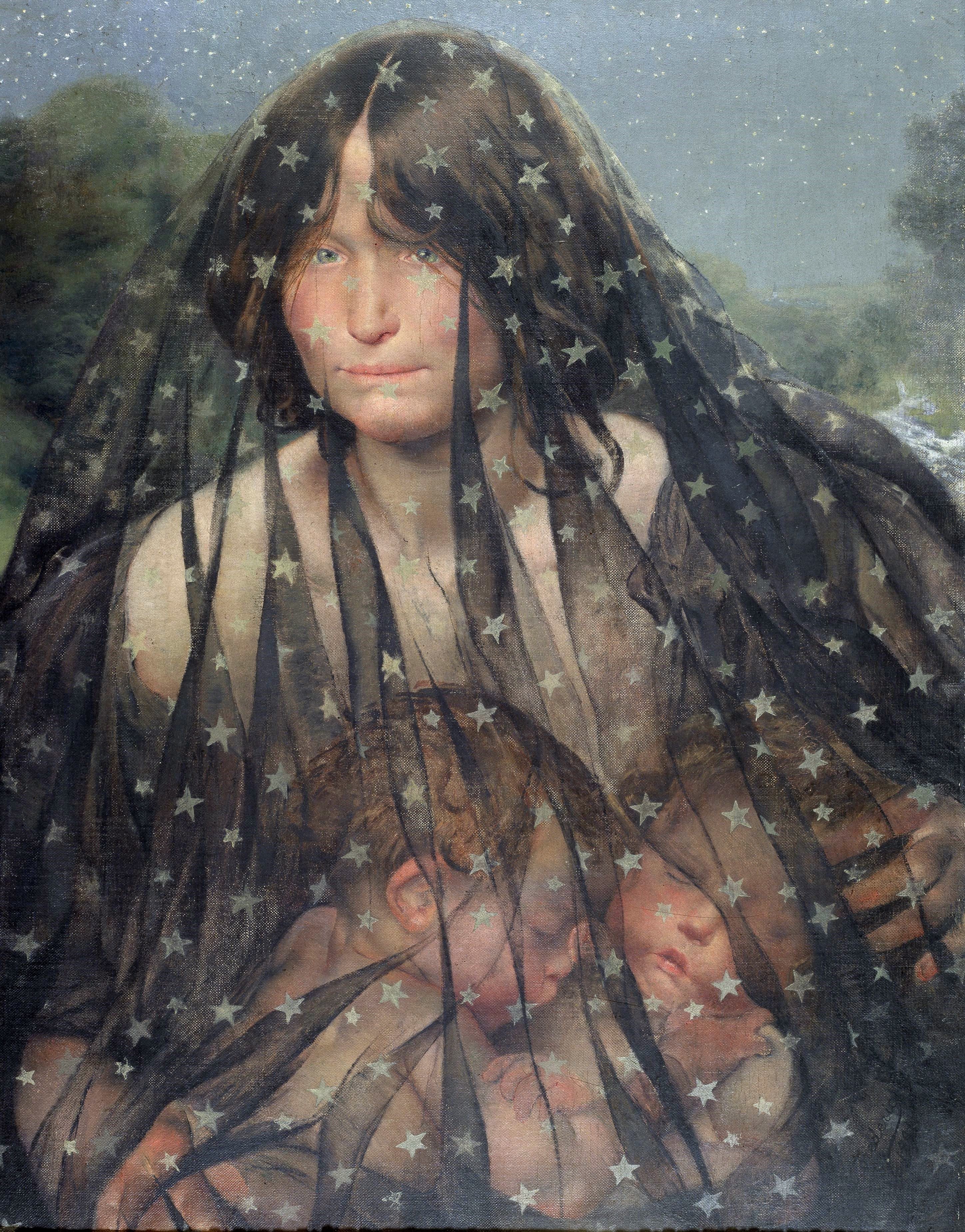
Léon Frédéric | Symbolist painter

Léon Frédéric | Symbolist painter

Léon-Henri-Marie Frédéric (1856-1940) was a Belgian Symbolist painter.
His earliest paintings joined Christian mysticism with pantheistic themes, while his later works increasingly reflected social concerns.
Much of his work also shows the influence of fifteenth and sixteenth century Flemish art and Renaissance painting styles.


Read More

Léon Frédéric | Symbolist painter

Léon-Henri-Marie Frédéric (1856-1940) was a Belgian Symbolist painter.
His earliest paintings joined Christian mysticism with pantheistic themes, while his later works increasingly reflected social concerns.
Much of his work also shows the influence of fifteenth and sixteenth century Flemish art and Renaissance painting styles.


Eduard Veith | Symbolist painter

Eduard Veith | Symbolist painter

Eduard Veith (1858-1925) was an Austrian portrait painter and stage designer.
Many of his works were influenced by Symbolism.
He was born to the decorative painter, Julius Veith (1820-1887), and his wife Susanna, née Schleif (1827-1883).
At first, he received training to follow in his father's profession.


Later, he went to Vienna, where he took classes at the Museum of Applied Arts from Professor Ferdinand Laufberger.
He capped off his studies by creating sgraffito for exhibition buildings at the Exposition Universelle in Paris.
He then returned home, where he assisted his father with painting churches, synagogues and other ceremonial buildings.
This was followed by several study trips; to Italy, Belgium and Tunisia.


He finally settled in Vienna; becoming a free-lance artist and working mostly by commission.
From 1890, he was a member of the Vienna Künstlerhaus.
In 1896, he received a gold medal at the Große Berliner Kunstausstellung.
In 1905, he was appointed a Professor at the University of Technology.

In 1911, he married Bertha Griesbeck (1872-1952), from Augsburg.
He later taught at the University of Applied Arts Museum of Applied Arts, and became a Professor there in 1920.
During his years in Vienna, he maintained contact with his home town, and held exhibitions there.
In addition to his paintings, he did interior decorations for a number of the buildings on the Ringstraße, and trompe l'oeil stage sets.


He often collaborated with the architects, Fellner and Helmer, who built dozens of theatres and opera houses throughout the Austro-Hungarian Empire.
He died shortly before his sixty-seventh birthday, and was interred at Döbling Cemetery.
His grave is adorned with a sculpture by Georg Leisek. | Source: © Wikipedia


Eduard Veith (1858-1925) è stato un pittore di genere, ritrattista, scenografo e professore universitario Austriaco.
Molte delle sue opere furono influenzate dal Simbolismo.
Nacque dal pittore decorativo Julius Veith (1820-1887) e da sua moglie Susanna, nata Schleif (1827-1883).


Inizialmente ha ricevuto una formazione per seguire la professione di suo padre.
Successivamente si recò a Vienna, dove prese lezioni al Museo delle Arti Applicate dal professor Ferdinand Laufberger.
Ha coronato i suoi studi creando graffiti per gli edifici espositivi dell'Exposition Universelle di Parigi.
Tornò poi a casa, dove aiutò il padre a dipingere chiese, sinagoghe ed altri edifici cerimoniali.


Seguirono numerosi viaggi di studio; verso Italia, Belgio e Tunisia.
Alla fine si stabilì a Vienna; diventando un artista freelance e lavorando principalmente su commissione.
Dal 1890 fu membro del Künstlerhaus di Vienna.
Nel 1896 ricevette una medaglia d'oro alla Große Berliner Kunstausstellung.


Nel 1905 fu nominato professore presso l'Università della Tecnologia.
Nel 1911 sposò Bertha Griesbeck (1872-1952), di Augusta.
Successivamente insegnò al Museo di Arti Applicate dell'Università di Arti Applicate e lì divenne professore nel 1920.
Durante i suoi anni a Vienna mantenne i contatti con la sua città natale e vi tenne mostre.


Oltre ai suoi dipinti, realizzò decorazioni interne per numerosi edifici sulla Ringstraße e scenografie trompe l'oeil.
Collaborò spesso con gli architetti Fellner and Helmer, che costruirono decine di teatri e teatri d'opera in tutto l'impero austro-ungarico.
Morì poco prima del suo sessantasettesimo compleanno e fu sepolto nel cimitero di Döbling.
La sua tomba è ornata da una scultura di Georg Leisek. | Fonte: © British Wikipedia


Read More

Eduard Veith | Symbolist painter

Eduard Veith (1858-1925) was an Austrian portrait painter and stage designer.
Many of his works were influenced by Symbolism.
He was born to the decorative painter, Julius Veith (1820-1887), and his wife Susanna, née Schleif (1827-1883).
At first, he received training to follow in his father's profession.


Later, he went to Vienna, where he took classes at the Museum of Applied Arts from Professor Ferdinand Laufberger.
He capped off his studies by creating sgraffito for exhibition buildings at the Exposition Universelle in Paris.
He then returned home, where he assisted his father with painting churches, synagogues and other ceremonial buildings.
This was followed by several study trips; to Italy, Belgium and Tunisia.


He finally settled in Vienna; becoming a free-lance artist and working mostly by commission.
From 1890, he was a member of the Vienna Künstlerhaus.
In 1896, he received a gold medal at the Große Berliner Kunstausstellung.
In 1905, he was appointed a Professor at the University of Technology.

In 1911, he married Bertha Griesbeck (1872-1952), from Augsburg.
He later taught at the University of Applied Arts Museum of Applied Arts, and became a Professor there in 1920.
During his years in Vienna, he maintained contact with his home town, and held exhibitions there.
In addition to his paintings, he did interior decorations for a number of the buildings on the Ringstraße, and trompe l'oeil stage sets.


He often collaborated with the architects, Fellner and Helmer, who built dozens of theatres and opera houses throughout the Austro-Hungarian Empire.
He died shortly before his sixty-seventh birthday, and was interred at Döbling Cemetery.
His grave is adorned with a sculpture by Georg Leisek. | Source: © Wikipedia


Eduard Veith (1858-1925) è stato un pittore di genere, ritrattista, scenografo e professore universitario Austriaco.
Molte delle sue opere furono influenzate dal Simbolismo.
Nacque dal pittore decorativo Julius Veith (1820-1887) e da sua moglie Susanna, nata Schleif (1827-1883).


Inizialmente ha ricevuto una formazione per seguire la professione di suo padre.
Successivamente si recò a Vienna, dove prese lezioni al Museo delle Arti Applicate dal professor Ferdinand Laufberger.
Ha coronato i suoi studi creando graffiti per gli edifici espositivi dell'Exposition Universelle di Parigi.
Tornò poi a casa, dove aiutò il padre a dipingere chiese, sinagoghe ed altri edifici cerimoniali.


Seguirono numerosi viaggi di studio; verso Italia, Belgio e Tunisia.
Alla fine si stabilì a Vienna; diventando un artista freelance e lavorando principalmente su commissione.
Dal 1890 fu membro del Künstlerhaus di Vienna.
Nel 1896 ricevette una medaglia d'oro alla Große Berliner Kunstausstellung.


Nel 1905 fu nominato professore presso l'Università della Tecnologia.
Nel 1911 sposò Bertha Griesbeck (1872-1952), di Augusta.
Successivamente insegnò al Museo di Arti Applicate dell'Università di Arti Applicate e lì divenne professore nel 1920.
Durante i suoi anni a Vienna mantenne i contatti con la sua città natale e vi tenne mostre.


Oltre ai suoi dipinti, realizzò decorazioni interne per numerosi edifici sulla Ringstraße e scenografie trompe l'oeil.
Collaborò spesso con gli architetti Fellner and Helmer, che costruirono decine di teatri e teatri d'opera in tutto l'impero austro-ungarico.
Morì poco prima del suo sessantasettesimo compleanno e fu sepolto nel cimitero di Döbling.
La sua tomba è ornata da una scultura di Georg Leisek. | Fonte: © British Wikipedia


Kehinde Wiley, 1977 | Symbolist painter

Kehinde Wiley, 1977 | Symbolist painter

The Fine Arts Museums of San Francisco describe Kehinde Wiley:
An Archaeology of Silence as "the senseless deaths of men and women around the world... transformed into a powerful elegy of resistance".

Kehinde Wiley is an American portrait painter based in New York City, who is known for his highly naturalistic paintings of Black people, frequently referencing the work of Old Master paintings.
He was commissioned in 2017 to paint a portrait of former President Barack Obama for the Smithsonian National Portrait Gallery, which has portraits of all previous American presidents.


Read More

Kehinde Wiley, 1977 | Symbolist painter

The Fine Arts Museums of San Francisco describe Kehinde Wiley:
An Archaeology of Silence as "the senseless deaths of men and women around the world... transformed into a powerful elegy of resistance".

Kehinde Wiley is an American portrait painter based in New York City, who is known for his highly naturalistic paintings of Black people, frequently referencing the work of Old Master paintings.
He was commissioned in 2017 to paint a portrait of former President Barack Obama for the Smithsonian National Portrait Gallery, which has portraits of all previous American presidents.


August Malmström | Symbolist painter

August Malmström | Symbolist painter


Johan August Malmström (1829-1901) was a Swedish artist and professor at the Academy of Fine Arts 1867-1894 and its director 1887-1893.
Attracted by Gothicism, he fondly drew motifs from Norse mythology.
He was also much appreciated for his rural motifs with children.

Read More

August Malmström | Symbolist painter


Johan August Malmström (1829-1901) was a Swedish artist and professor at the Academy of Fine Arts 1867-1894 and its director 1887-1893.
Attracted by Gothicism, he fondly drew motifs from Norse mythology.
He was also much appreciated for his rural motifs with children.

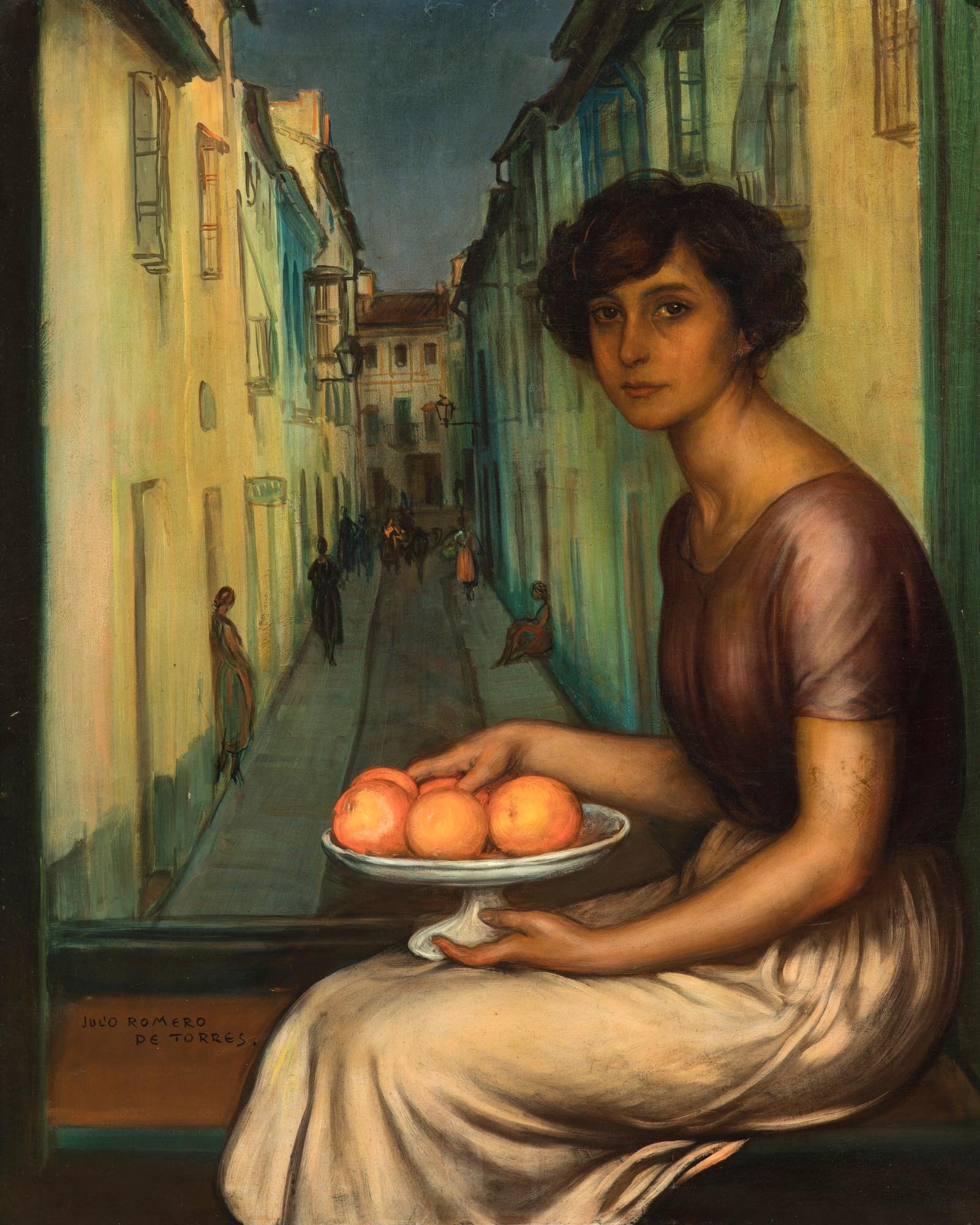
Julio Romero de Torres | Symbolist painter

Julio Romero de Torres | Symbolist painter


Julio Romero de Torres (1874-1930) was the son of Rafael Romero Barros, a painter and curator of what was then called the Museum of Painting in Cordoba.
He would be marked by family life which revolved around his father’s studio, the classrooms of the School of Fine Arts and Music Conservatory and the galleries of the museum, located in the same grounds as the family home.
This indisputably conditioned his future and was the backdrop to his first steps as a painter.
At the age of ten he began studying music and painting and was only fourteen and fifteen when he received prizes in the competitions organised by the Provincial School and the Athenaeum.

Read More

Julio Romero de Torres | Symbolist painter


Julio Romero de Torres (1874-1930) was the son of Rafael Romero Barros, a painter and curator of what was then called the Museum of Painting in Cordoba.
He would be marked by family life which revolved around his father’s studio, the classrooms of the School of Fine Arts and Music Conservatory and the galleries of the museum, located in the same grounds as the family home.
This indisputably conditioned his future and was the backdrop to his first steps as a painter.
At the age of ten he began studying music and painting and was only fourteen and fifteen when he received prizes in the competitions organised by the Provincial School and the Athenaeum.

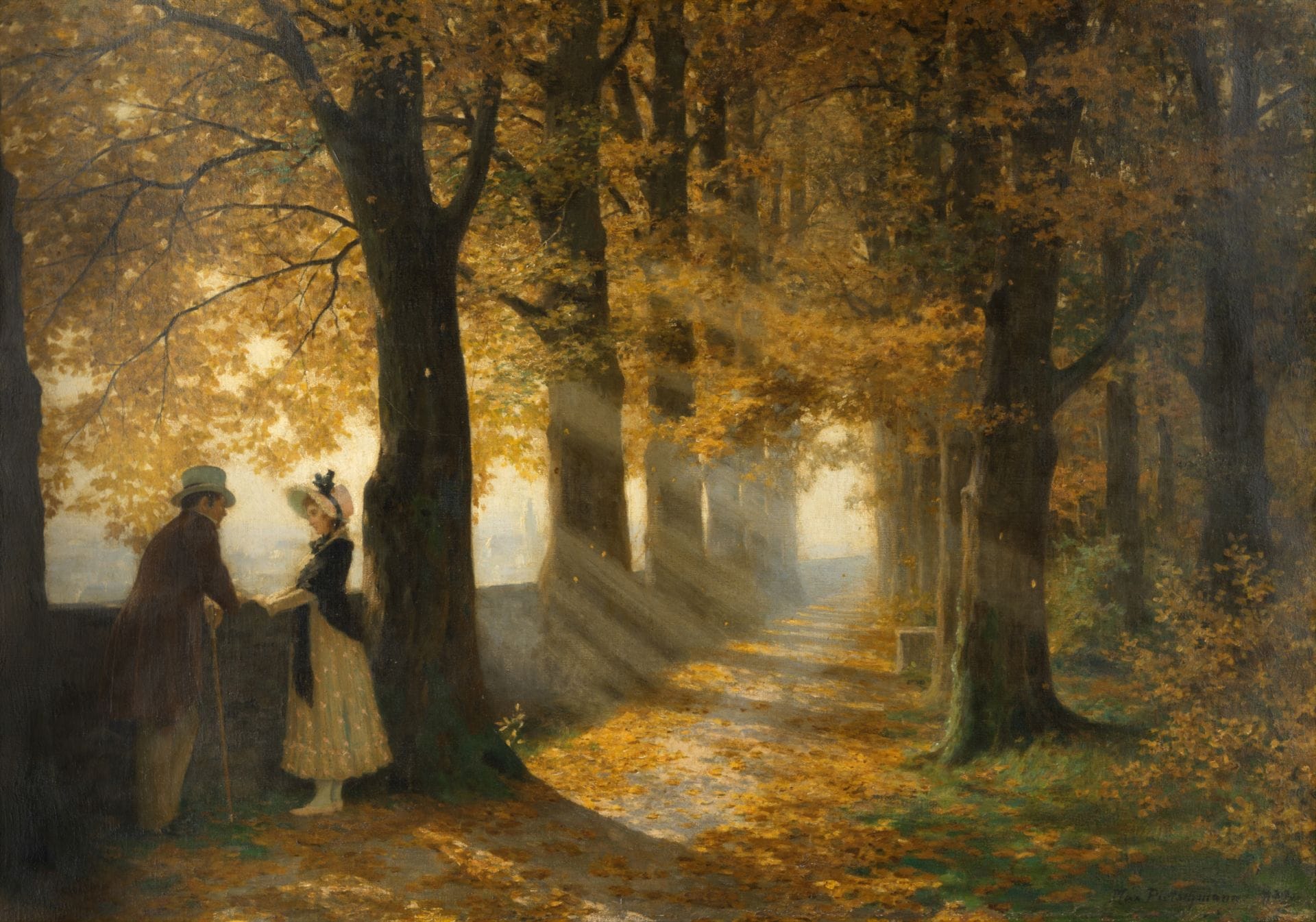
Max Pietschmann | Symbolist painter

Max Pietschmann | Symbolist painter

Ernst Max Pietschmann (1865-1952) was a German Symbolist painter.
Max Pietschmann studied at the Dresden Academy of Fine Arts from 1883 to 1889.
His teachers included Leon Pohle and Ferdinand Pauwels.
Pietschmann belonged to the painters' colony in Goppeln near Bannewitz, which specialized in plein air painting.


Read More

Max Pietschmann | Symbolist painter

Ernst Max Pietschmann (1865-1952) was a German Symbolist painter.
Max Pietschmann studied at the Dresden Academy of Fine Arts from 1883 to 1889.
His teachers included Leon Pohle and Ferdinand Pauwels.
Pietschmann belonged to the painters' colony in Goppeln near Bannewitz, which specialized in plein air painting.


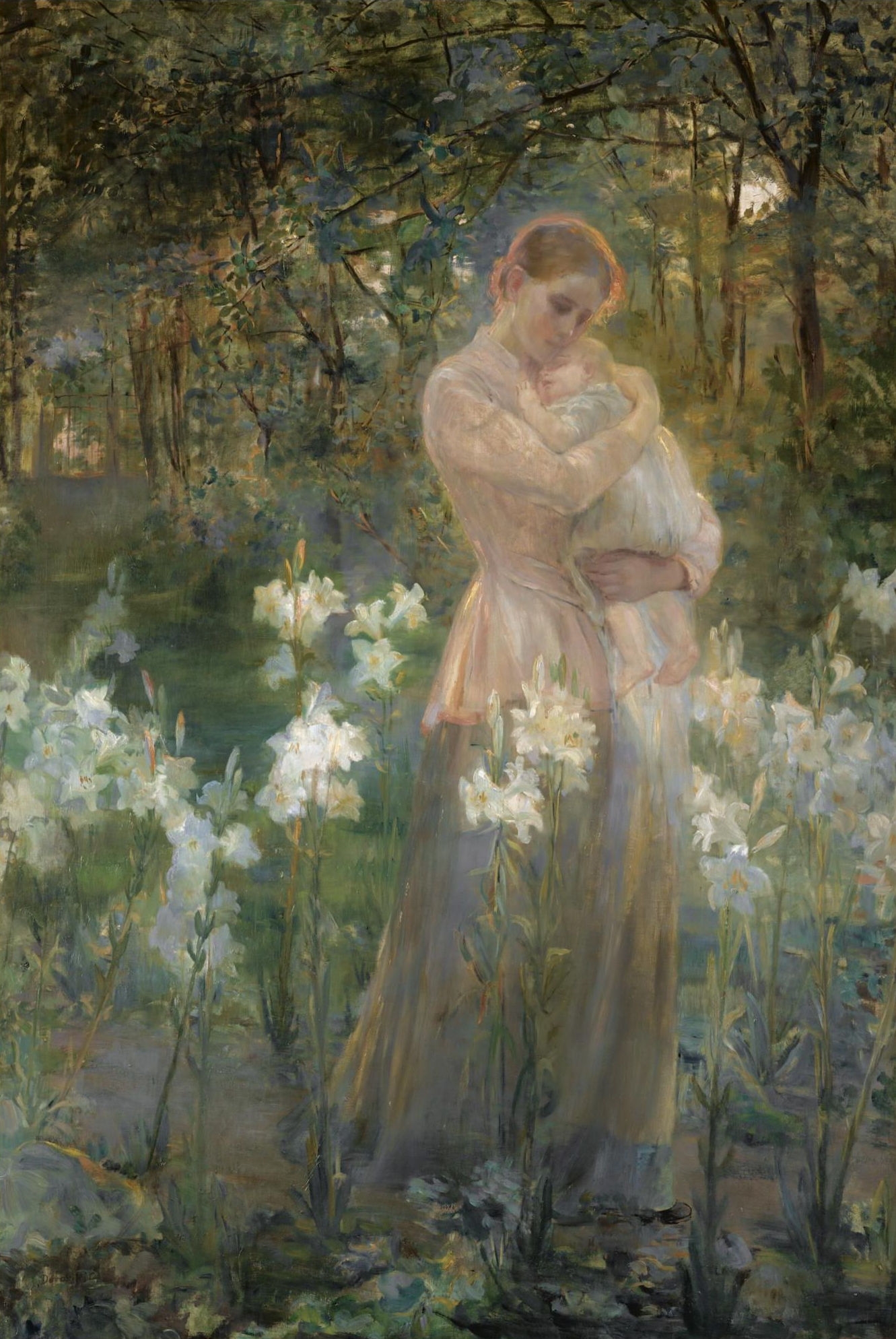
Dora Hitz | Impressionist / Symbolist painter

Dora Hitz | Impressionist / Symbolist painter

Dora Hitz (30 March 1856, Altdorf bei Nürnberg - 20 November 1924, Berlin) was a Court Painter to the Romanian Royal Family, a member of the November Group and co-founder of the Berlin Secession.
Dora Hitz mainly painted figures, especially portraits of women, girls and mothers, sometimes in the style of symbolism.
Since her stay in France she has painted oil paintings, gouaches and watercolors in the Impressionist style.

When she was six years old, her family moved to Ansbach and at thirteen she was sent to Munich to study at the "Damenmalschule der Frau Staatsrat Weber", an art school for young women, where she studied with Wilhelm von Lindenschmit the Younger.


Read More

Dora Hitz | Impressionist / Symbolist painter

Dora Hitz (30 March 1856, Altdorf bei Nürnberg - 20 November 1924, Berlin) was a Court Painter to the Romanian Royal Family, a member of the November Group and co-founder of the Berlin Secession.
Dora Hitz mainly painted figures, especially portraits of women, girls and mothers, sometimes in the style of symbolism.
Since her stay in France she has painted oil paintings, gouaches and watercolors in the Impressionist style.

When she was six years old, her family moved to Ansbach and at thirteen she was sent to Munich to study at the "Damenmalschule der Frau Staatsrat Weber", an art school for young women, where she studied with Wilhelm von Lindenschmit the Younger.