Textual description of firstImageUrl

Sebastiano Ricci | Baroque painter

Sebastiano Ricci (1659-1734) was born in Belluno. At the age of fourteen, Sebastiano Ricci left his birthplace for Venice, where he soon entered the studio of Federico Cervelli (1625 - before 1700), a Milanese painter active there since the mid-1650s.
While contemporary biographers sometimes discounted Sebastiano's debt to Cervelli, modern scholars generally agree that the Milanese master gave him solid practical instruction and introduced him to the Venetian painters of the seventeenth century.


Textual description of firstImageUrl

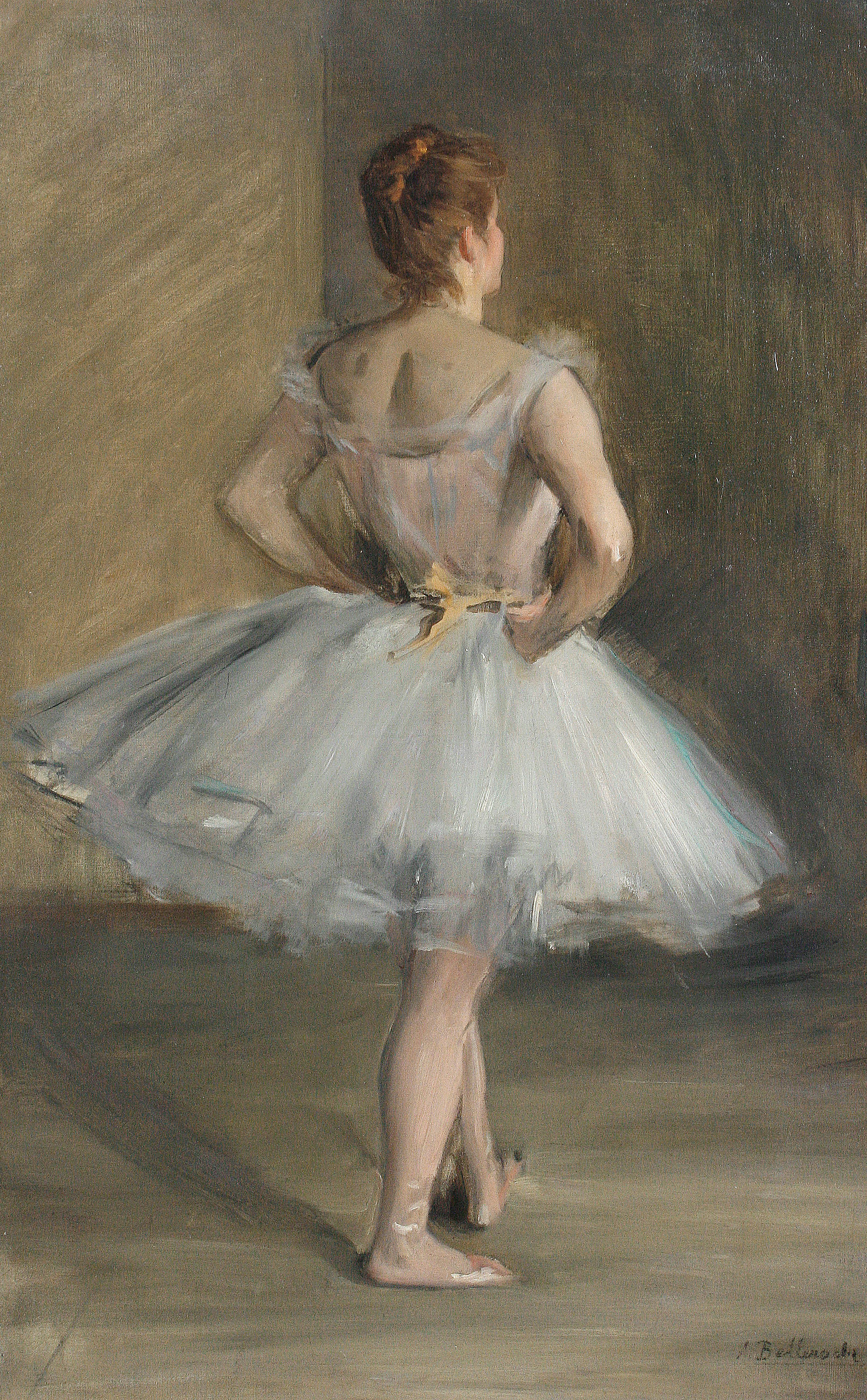
Albert de Belleroche | Painter of Belle Époque

Count Albert Gustavus de Belleroche (1864-1944), also known as Albert Belleroche, was a Welsh painter and lithographer, who lived most of his childhood and his adulthood in Paris and England.
He began as a painter, but at the turn of the century focused on lithography, for which he is most well-known. He was awarded the Chevalier de l’Ordre de Leopold by King Albert I of Belgium in 1933.


Textual description of firstImageUrl

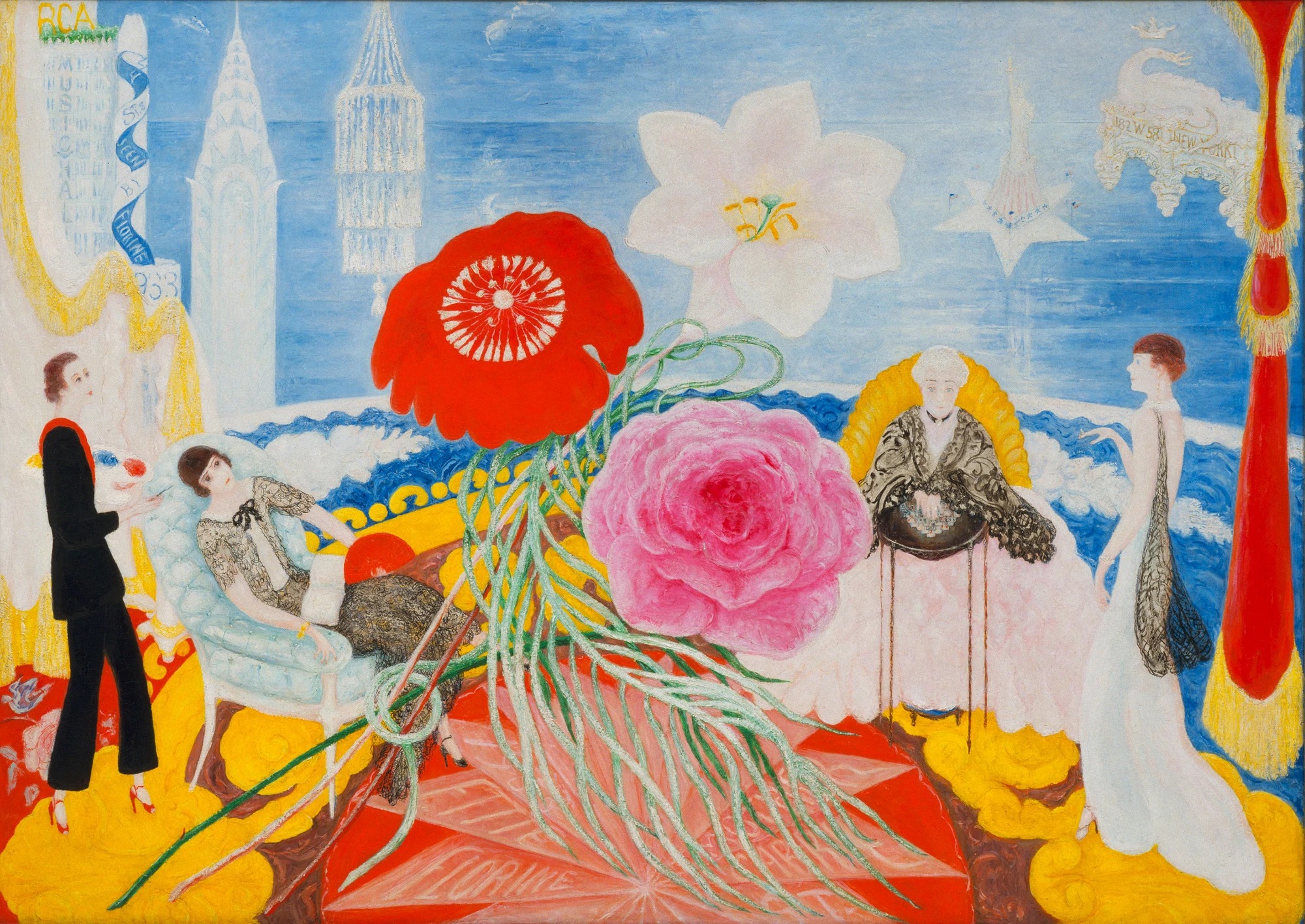
Florine Stettheimer | Rococo-inspired modernist painter

Florine Stettheimer (1871-1944) was an American modernist painter, feminist, theatrical designer, poet and salonnière.
Stettheimer developed a feminine, theatrical painting style depicting her friends, family, and experiences in New York City.
She made the first feminist nude self-portrait and paintings depicting controversies of race and sexual preference.
She and her sisters hosted a salon that attracted members of the avant-garde.


Textual description of firstImageUrl

Jaroslav Seifert | Rondò di primavera

Tu devi credermi, io sarei felice
se sorrisi mandassero i tuoi occhi
quando stasera dovrai ricucire
ciò che le mie mani ti hanno strappato.

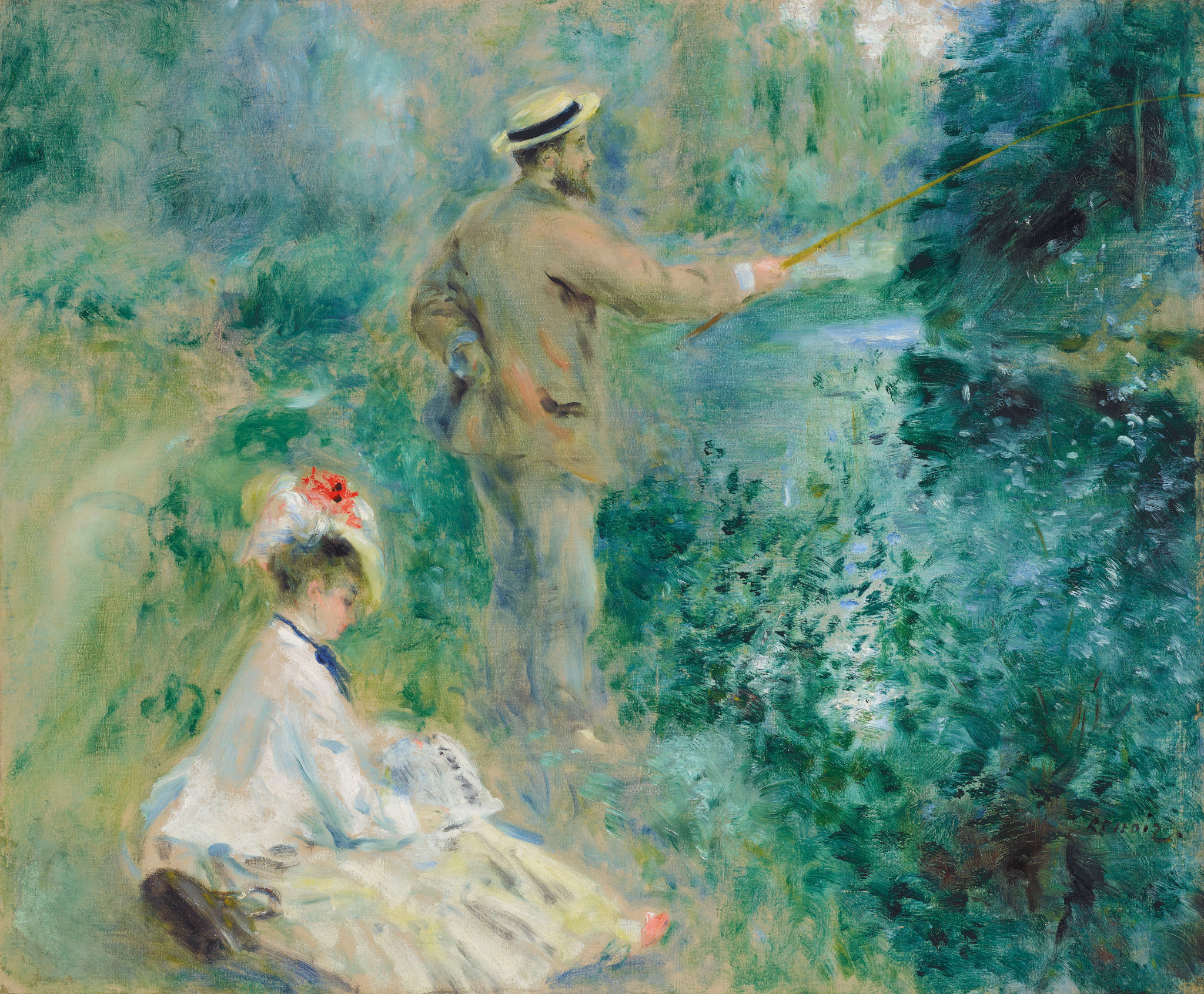
Pierre-Auguste Renoir

Textual description of firstImageUrl

Stephen Gjertson, 1949 | Classical realism painter

Stephen Gjertson was born in Minneapolis, Minnesota.
Trained by Richard Lack (1928-2009) at Atelier Lack during the early 70's, Gjertson has spent twenty years creating works that reflect his love of nature and family, and his deeply held religious convictions.
His style is natural and personal, revealing his respect for, and knowledge of, both the academic and impressionist traditions.


Textual description of firstImageUrl

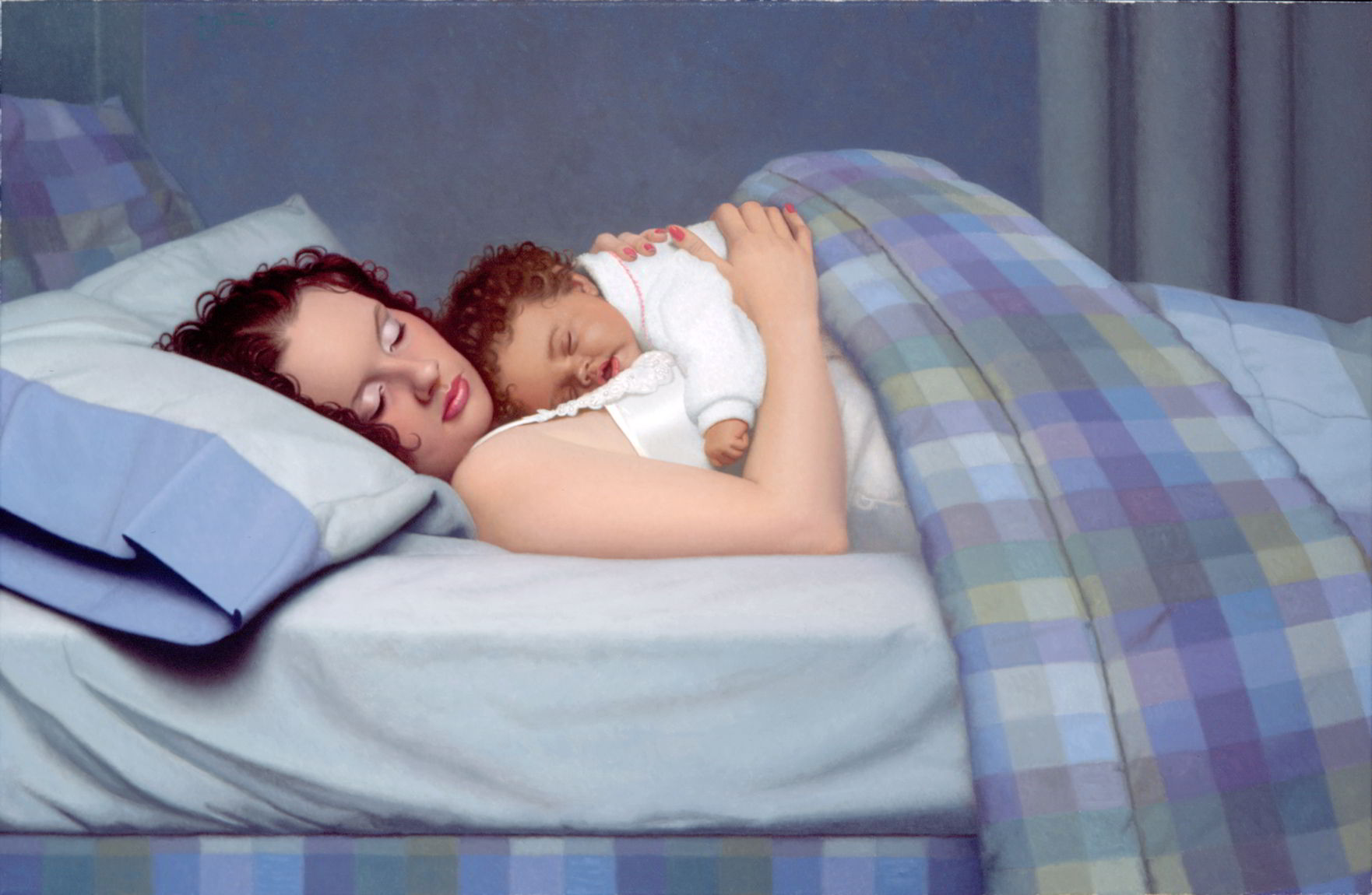
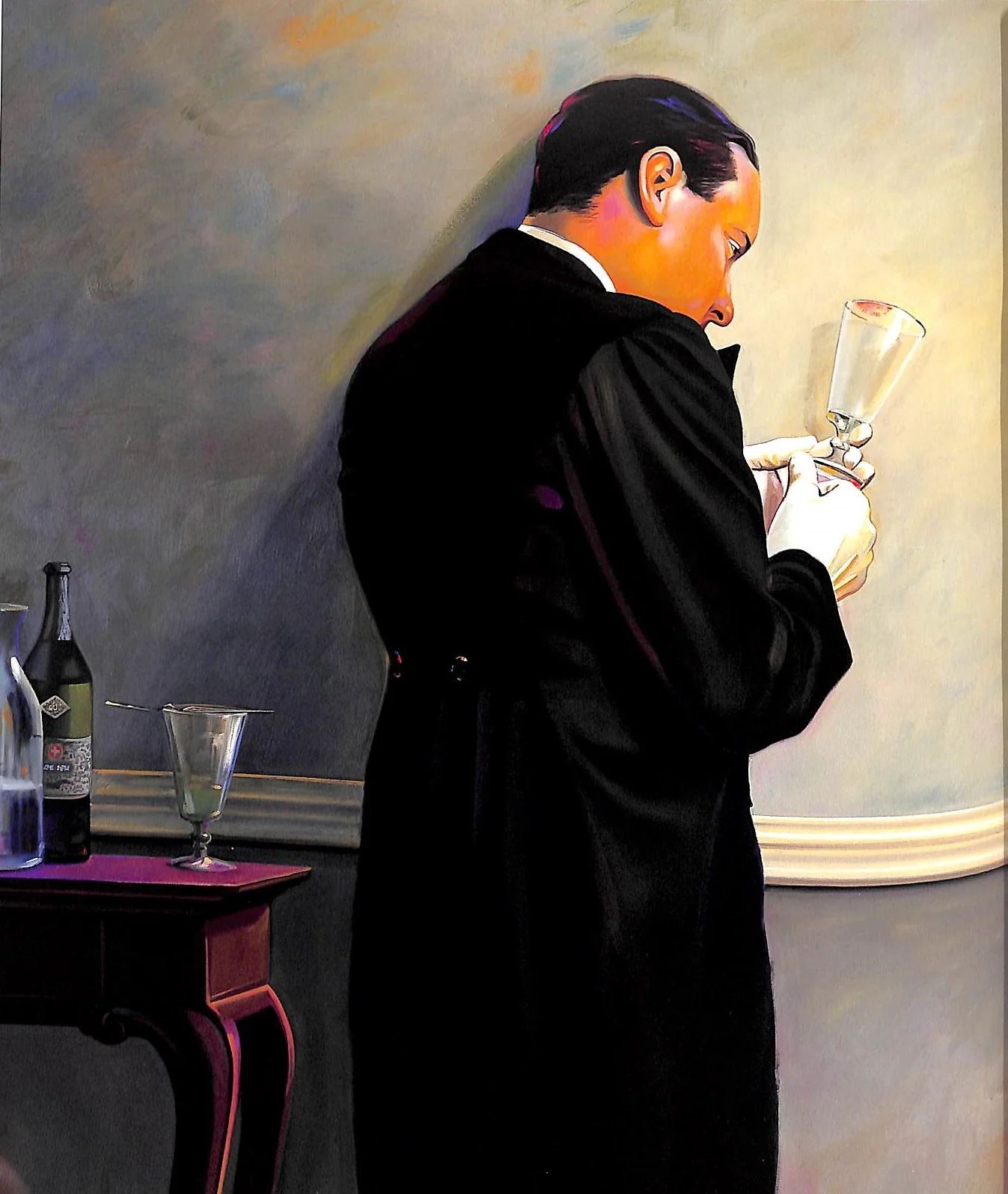
Mark Stock | The Butlers in Love

Mark Stock (1951-2014) was an American painter.
He was born in Frankfurt, Germany.
The son of an Army officer, Stock lived in many states across America before settling in St. Petersburg, Florida.
He received his Bachelor of Arts degree from the University of South Florida in Tampa, where he studied under Theo Wujcik.
Upon graduating in 1976, Stock was hired to work at Gemini G.E.L. in Los Angeles as a lithographer.


Textual description of firstImageUrl

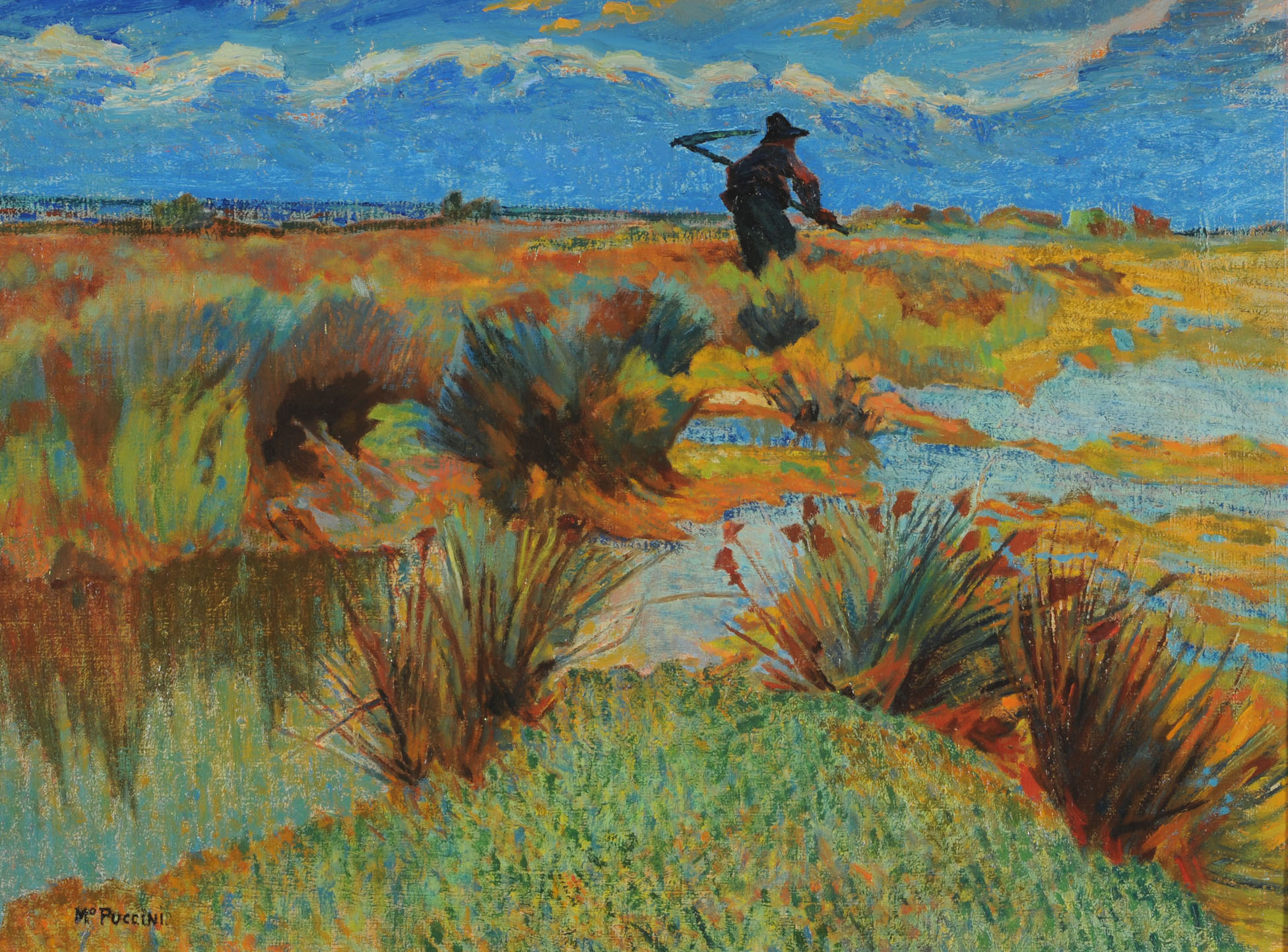
Mario Puccini | The Italian van Gogh

Mario Puccini (1869, Livorno - 1920, Florence) was an Italian Post-Macchiaioli painter, who specialized in landscapes and village scenes.
He was sometimes referred to as "The Italian Van Gogh".
His father was a baker. He worked in his father's bakery and sketched as a hobby until his talent was noticed by Giovanni Fattori, who encouraged him to enroll at the Academy of Fine Arts of Florence, which he did, against parental objections, in 1884 when he was only fifteen.


Textual description of firstImageUrl

Alexis Le Borgne, 1995 | Watercolor painter

Alexis Le Borgne is an award-winning French-Vietnamese professional artist based in France.
He describes his art as evolving with time and being marked by continuous questioning and desire to learn in perpetuity.
From still lifes to interior scenes, as well as the animal world, imaginary landscapes and character settings, each of Le Borgne's subjects "brings its stone to the edifice", helping him to better understand and grasp the world around him.


Textual description of firstImageUrl

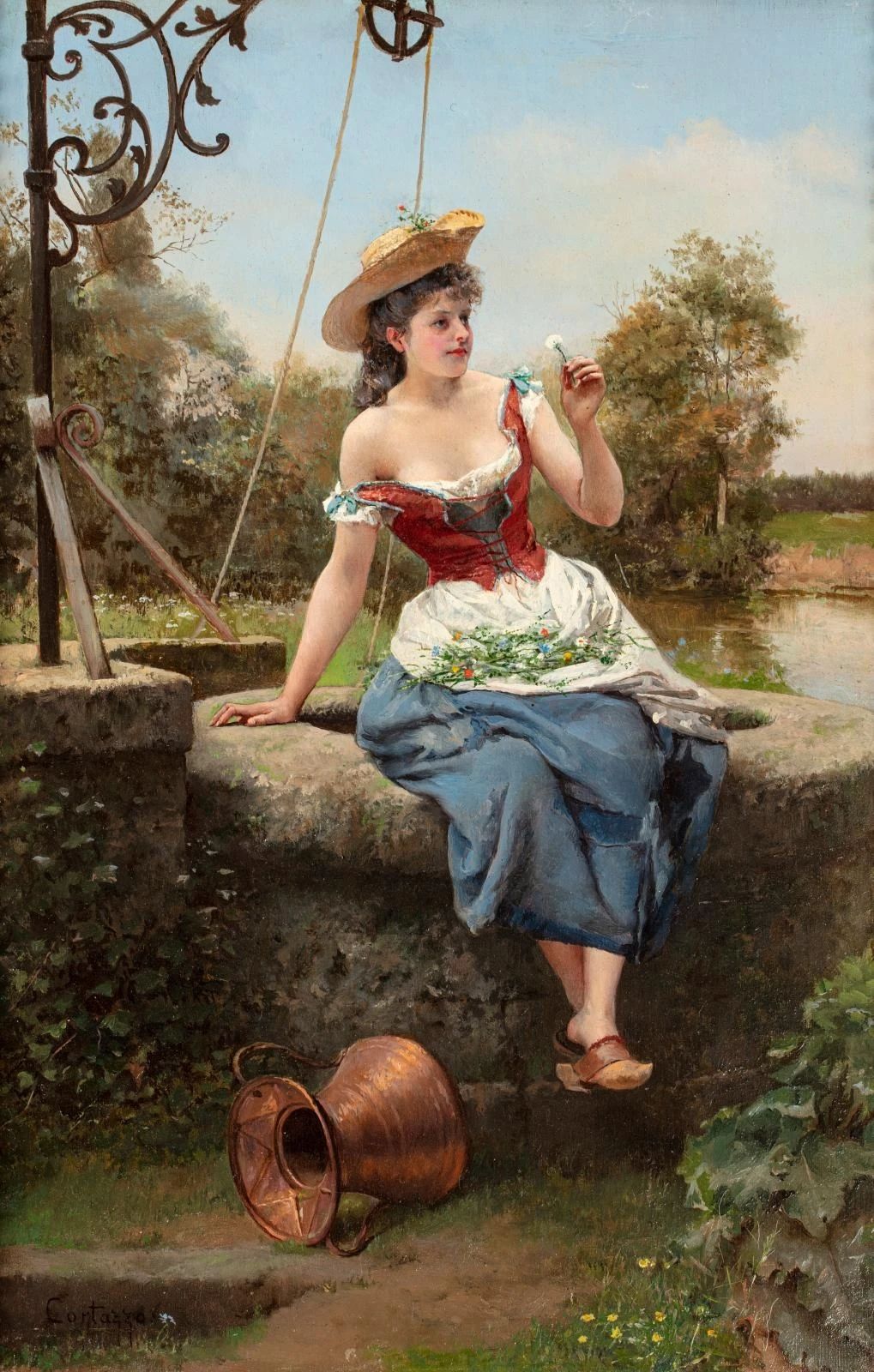
Oreste Cortazzo | Painter of the Belle Époque

Oreste Cortazzo (1836, Rome - 1910, Paris) was an Italian-born French painter, graphic artist and illustrator.
His family originally came from Ceraso, in the Province of Salerno.
Around 1848, he began an apprenticeship with his father, Michele (1808-1865), who was also a painter and a great admirer of Titian. (Some of Michele's works may be seen at the Palace of Caserta, near Naples.)


Textual description of firstImageUrl

Jaroslav Seifert | Di pomeriggio uno scroscio di pioggia..

Di pomeriggio uno scroscio di pioggia
fece profumare anche l’erba pesta
e la sera, piena di primaverile malinconia,
lenta s’univa alla notte.


Textual description of firstImageUrl

Pierre-Auguste Renoir | Tête de jeune fille coiffée d'un chapeau de jardin, 1895

"I have taken up again, never to abandon it, my old style, soft and light of touch", Renoir wrote to his dealer Durand-Ruel in 1888, full of enthusiasm for his latest efforts.
"This is to give you some idea of my new and final manner of painting - like Fragonard, but not so good" (quoted in J. House, Renoir in the Barnes Foundation, New Haven, 2012, p. 121).
Renoir's new approach represented a sea-change after the controversial Ingres-inspired method he cultivated in the previous decade.

Pierre-Auguste Renoir | Tête de jeune fille coiffée d'un chapeau de jardin, 1895 | Christie's

Textual description of firstImageUrl

Jaroslav Seifert | Se al cuore si potesse dire / If one could tell one’s heart…

Se al cuore si potesse dire:
non correre!
Se potessi ordinargli: brucia!
Già si spegne.

Marc Chagall

Textual description of firstImageUrl

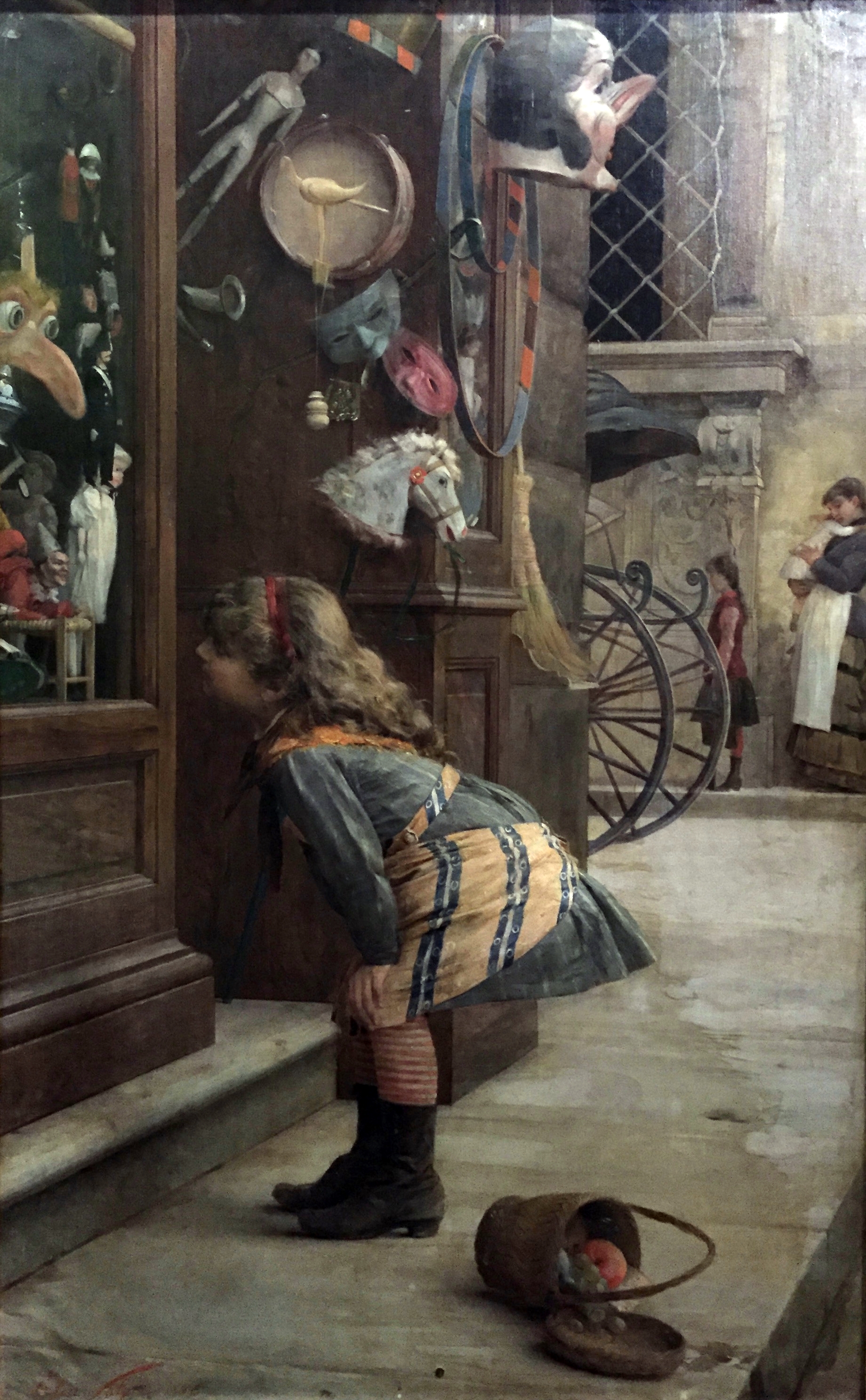
Romà Ribera | Painter of the Belle Époque

Romà Ribera i Cirera (Barcelona, 1848-1935) was a Catalan genre painter.
He specialized in contemporary scenes from upper-class social events, rendered in meticulous detail, but also did numerous scenes from life in the 17th and 18th centuries.
He studied at the Escola de la Llotja and at the private school operated by Pere Borrell del Caso.
In 1873, he went to Rome to complete his studies.
While there, he met Marià Fortuny, who works would influence his style.


Textual description of firstImageUrl

Rosario de Velasco | Magic Realism painter

Rosario de Velasco Belausteguigoitia (Madrid, 1904 - Barcelona, 1991) Spanish painter.
Born in Madrid, in her early years she started an active painting career.
Pupil of Fernando Álvarez de Sotomayor y Zaragoza, developed a neo-traditional style imbued with Magic Realism.
Her favourite subjects were seascapes, portraits and landscapes.


Textual description of firstImageUrl

Felix Schlesinger | Genre painter

Felix Schlesinger (1833-1910) was a German genre painter of the Düsseldorf School.
Felix Schlesinger was born in a family of painters.
In 1848, he received his first artistic training from Friedrich Heimerdinger at his birthplace Hamburg, later in Antwerp, at the Düsseldorf Art Academy and in Paris.
Between 1861 and 1863 he worked mainly in Frankfurt am Main, before he finally settled in Munich.


Textual description of firstImageUrl

Danny Day, 1964 | Romantic Realism painter

Danny Day has established a reputation worldwide for the high quality of his original works of art.
Danny has made it a lifelong quest to master and refine his version of realism, perfecting the "master’s technique" of oils on canvas.
Rich color and eye popping clarity are the hallmarks embodied in his works, which range in genre from sports to wildlife, auto racing, and lush romantic portraits.
Danny has also added commercial photography to his repertoire.


Textual description of firstImageUrl

Désiré Thomassin | Naturalist painter

Désiré Thomassin was an Austrian painter and composer.
His father was the charge d’affaires of the Duchy of Parma in Vienna, his mother was from Regensburg.
After the death of the father in 1867 the remaining family moved to Regensburg.
There he finished his school and attended the local lyzeum for two terms till 1878.
Then he studied music in Munich under Josef Rheinberger (composition) and Max Hieber (violin).


Textual description of firstImageUrl

Carl Schlesinger | Genre / Landscape painter

Carl Schlesinger (1825-1893) was a Swiss-German genre and landscape painter.
Schlesinger began his painting apprenticeship in Hamburg, with Gerdt Hardorff and Hermann Kauffmann and continued it in 1844 at the Prague Academy with Christian Ruben.


Textual description of firstImageUrl

Konstantinos Kavafis | Candele / Candles / Κεριά

Stanno i giorni futuri innanzi a noi
come una fila di candele accese
dorate, calde e vivide.

Restano indietro i giorni del passato,
penosa riga di candele spente:
le più vicine danno fumo ancora,
fredde, disfatte, e storte.

Matthias Stom | An Old Woman and a Boy by Candlelight | Birmingham Museum

Textual description of firstImageUrl

Ludovico Marchetti | Genre painter

Ludovico Marchetti (Rome, 1853-1909, Paris) was an Italian-born painter of genre scenes, who spent most of his life in France.
His artistic education began in the studios of Mariano Fortuny, a Spanish painter who lived in Rome during the 1870s.
Shortly after completing his studies there, in 1878, aged twenty-five, he moved to France, where he would remain for the rest of his life.


Textual description of firstImageUrl

Adrien Moreau | Genre painter

Adrien Moreau (1843-1906) was a French genre and historical painter, sculptor and illustrator.
Moreau was born in Troyes in Aube department.
He began his artistic training as an apprentice glassmaker, but left for Paris to study at the École des Beaux-Arts under Léon Cogniet and Isidore Pils.


Textual description of firstImageUrl

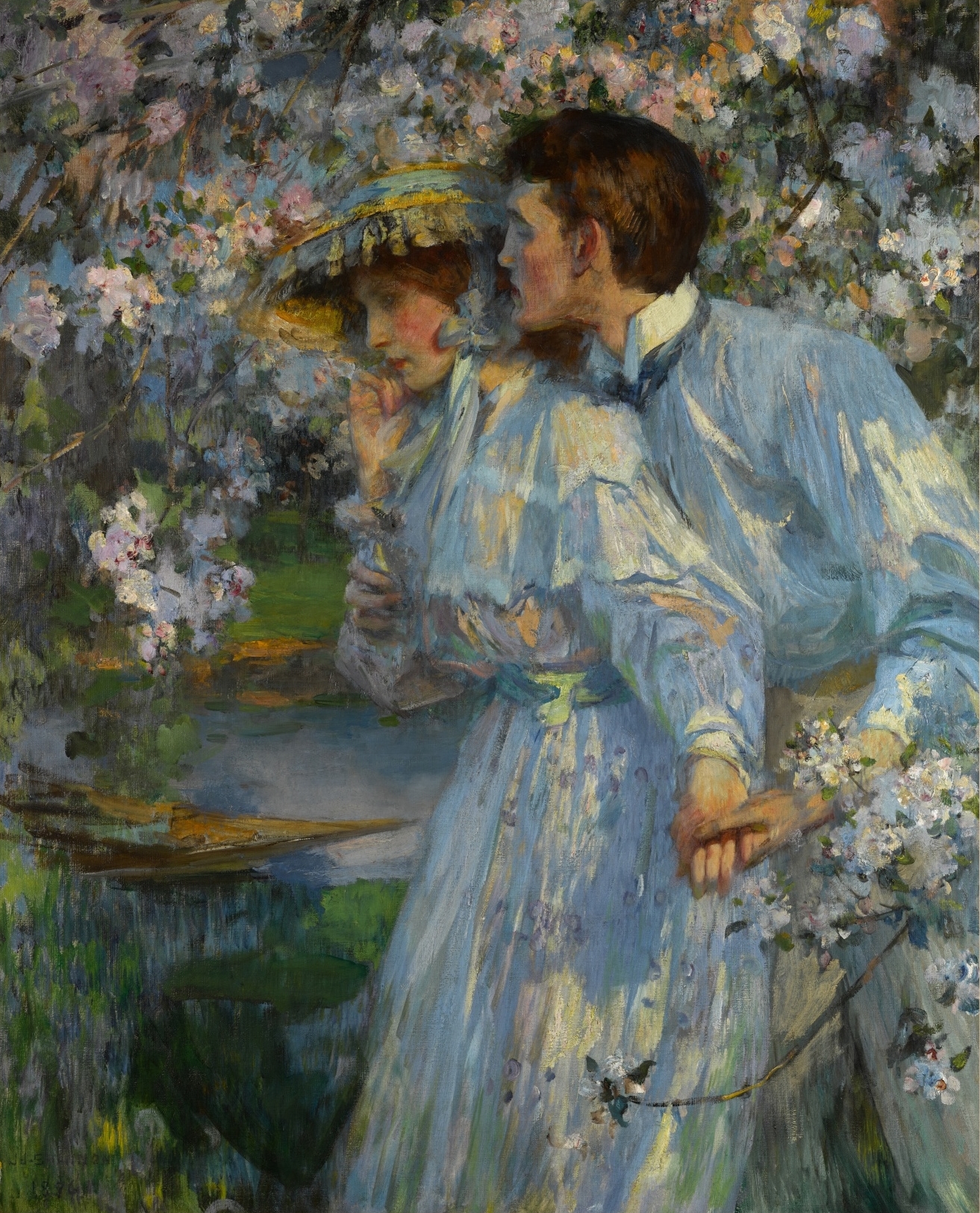
James Jebusa Shannon | Portrait / Genre painter

Sir James Jebusa Shannon RA (1862-1923) was an Anglo-American artist.
Shannon was born in Auburn, New York, and at the age of eight was taken by his parents to Canada.
When he was sixteen, he went to England, where he studied at South Kensington, and after three years won the gold medal for figure painting.


Textual description of firstImageUrl

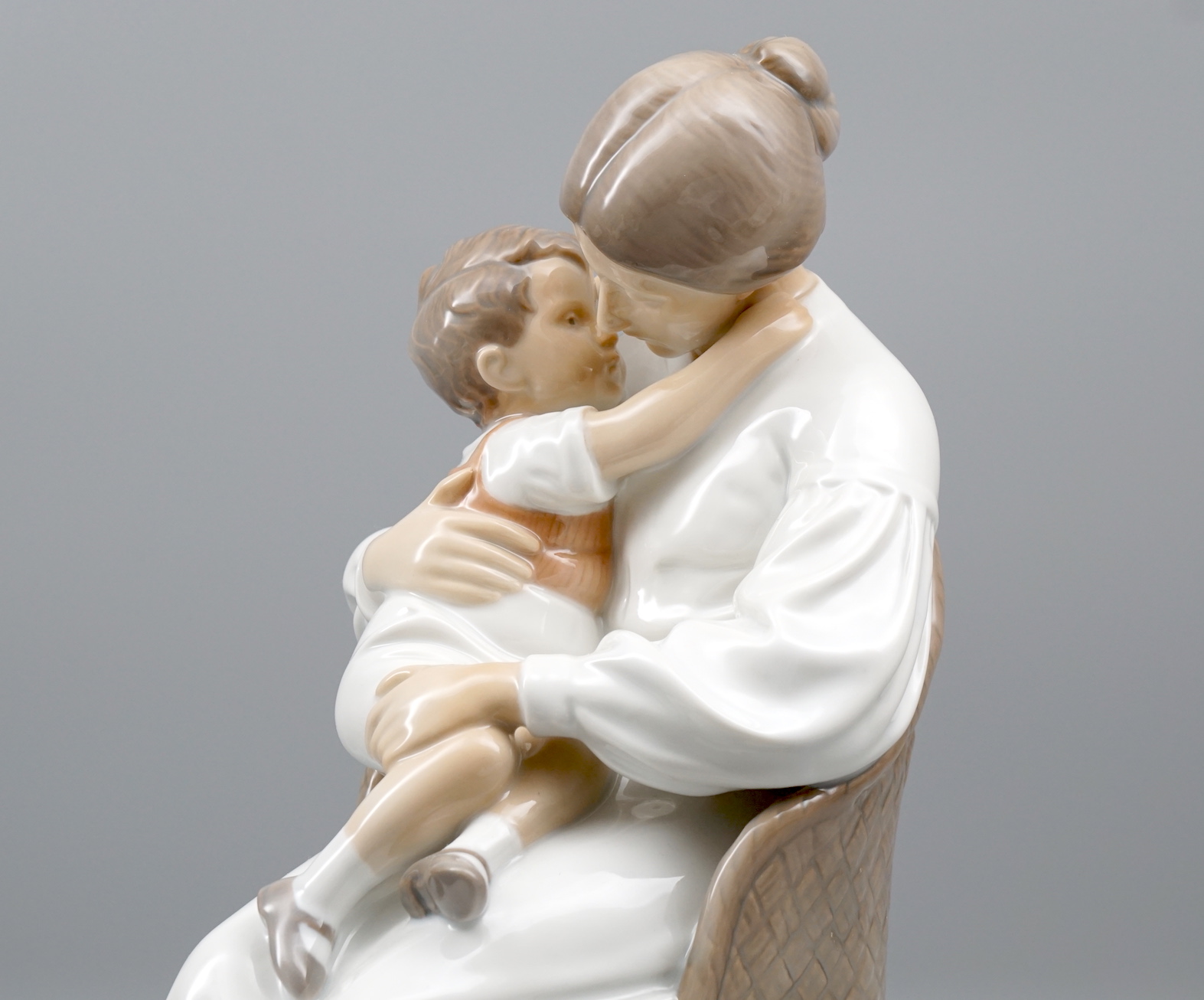
Ingeborg Plockross Irminger (1872-1962)

Ingeborg Plockross Irminger (1872-1962) was a Danish artist who is remembered both for her sculptures and for the miniature porcelain statues of animals and human figures she designed while working for Bing and Grøndahl.
A bronze cast of her 1903 bust of the writer Herman Bang was installed on Sankt Annæ Plads in Copenhagen in 2012.


Textual description of firstImageUrl

Valdemar Irminger | Romantic painter

Valdemar Heinrich Nicolas Irminger (1850-1938) was a Danish painter.
Born in Copenhagen, Irminger attended the Royal Danish Academy of Fine Arts from 1867 and 1873.
He went to Italy on a scholarship from 1884 to 1887.
In 1888, he won the Academy's medal for Motiv fra Børnehospitalet ved Refsnæs (View from the Children's Hospital at Refsnæs) and the following year for Fra et Børnehospital (From a Children's Hospital).


Textual description of firstImageUrl

Albert Ludovici Jr. | Genre painter

Following the profession of his father Albert Johann Ludovici (1820-1894), Albert Ludovici Jr. R.B.A. (1852-1932) spent his life between Paris and London, painting scenes of society at leisure.
His genre paintings were the most popular, particularly his studies of the interaction of couples, whether in public places or of private moments in their homes and lives - these paintings have universal appeal.
But he also painted landscapes and interior scenes in both watercolour and gouache as well as in oils.


Textual description of firstImageUrl

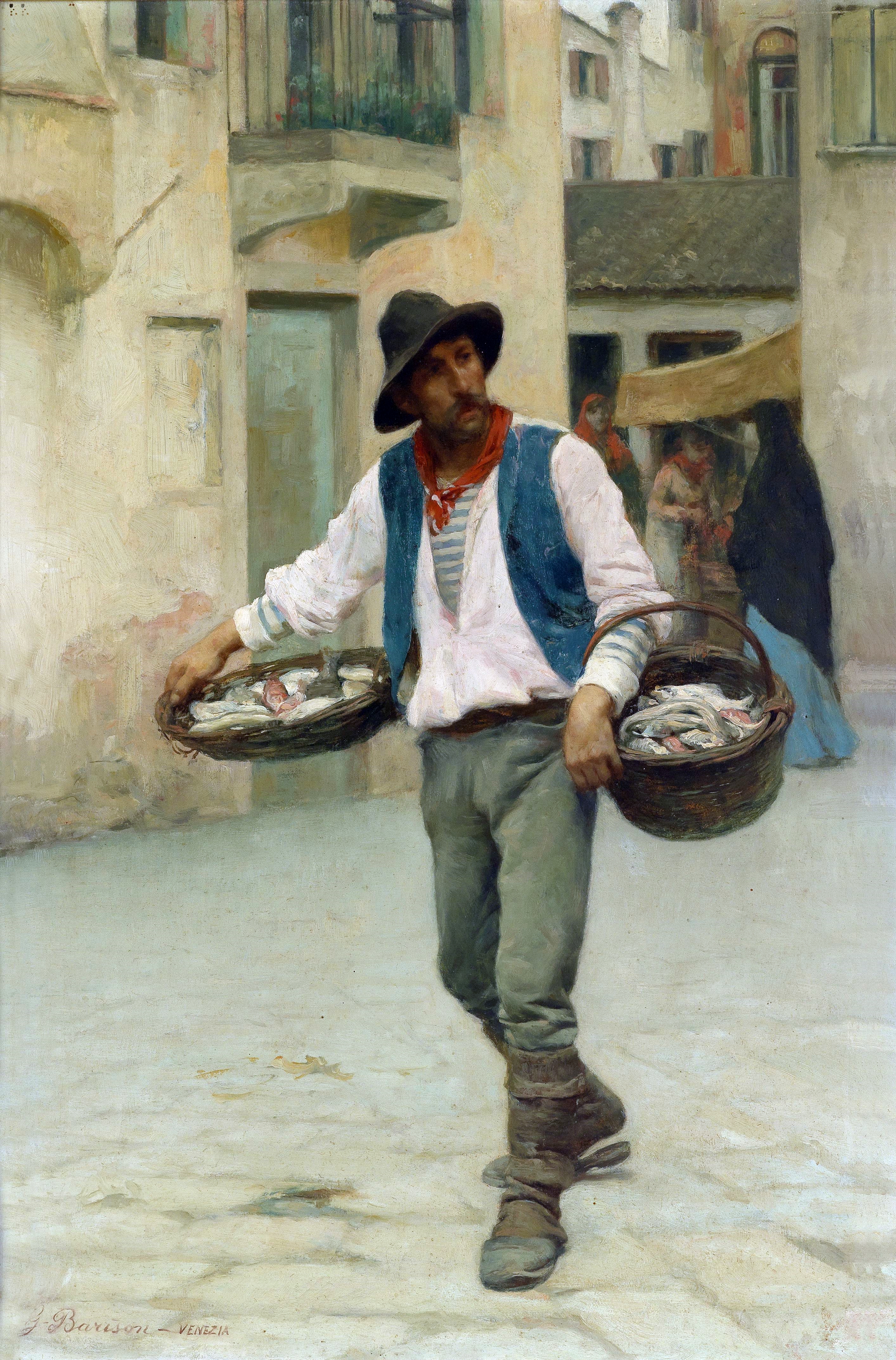
Giuseppe Barison | Genre painter

Giuseppe Barison (1853-1931) was a Triestiner painter and engraver, active in Venice.
He was born in Trieste, Austrian Empire to a family of modest means.
His father was a tailor. Barison found a patron in the aristocratic Anna De Rin, who placed him in apprenticeship with the painter Carl Haase (1820-1876) in Trieste, and then enrolled him in the Academy of Fine Arts in Vienna.


Textual description of firstImageUrl

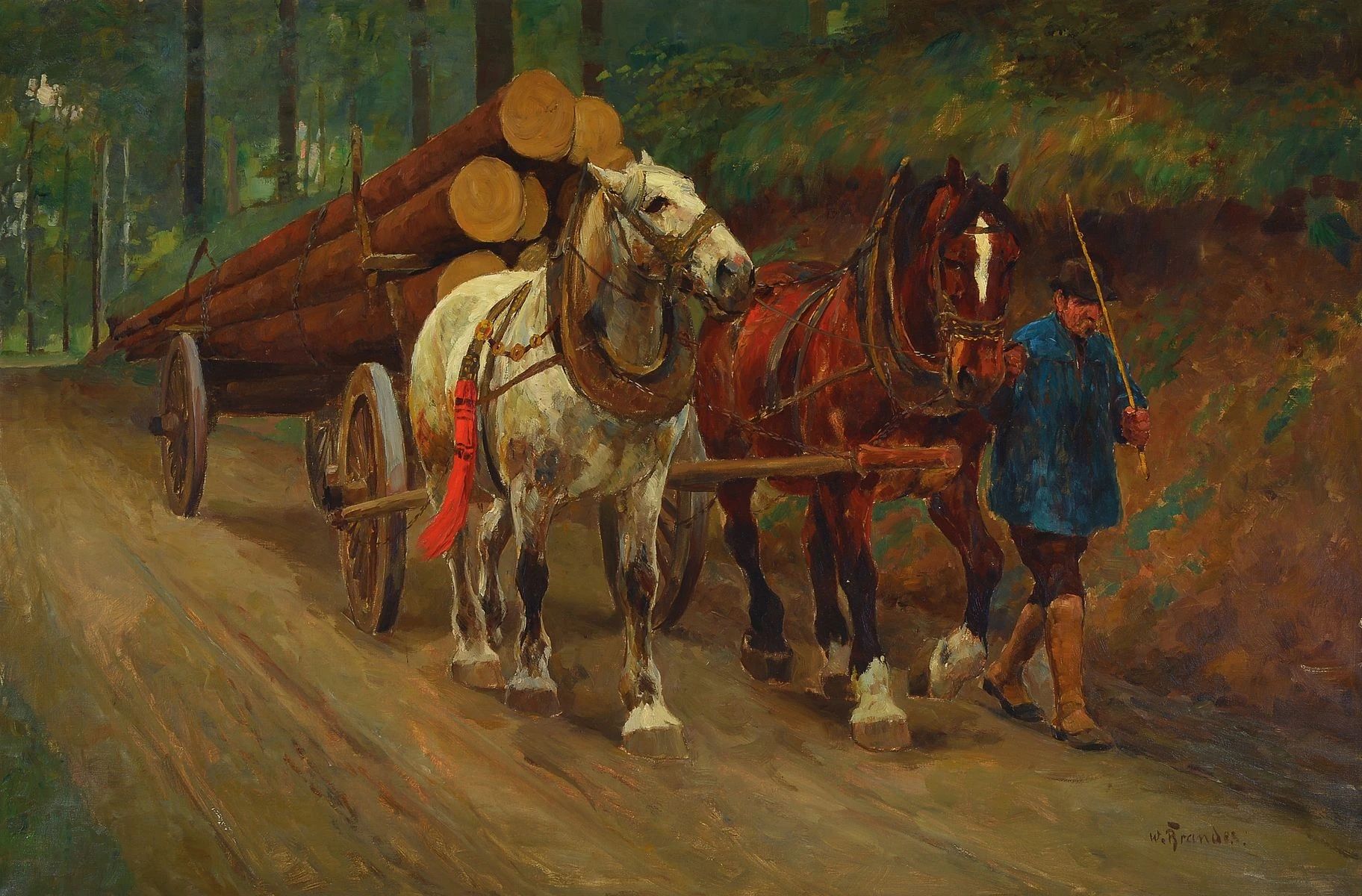
Willy Brandes | Genre painter

Willy Brandes (1876-1946) was a German painter.
Willy Brandes was born in Bornstädt near Potsdam.
At a young age he began an apprenticeship as a decorative painter.
He studied under Albert Hertel (1843-1912) and Paul Friedrich Meyerheim (1842-1915) at the Berlin Academy and later was a master student of Eugen Bracht (1842-1921).


Textual description of firstImageUrl

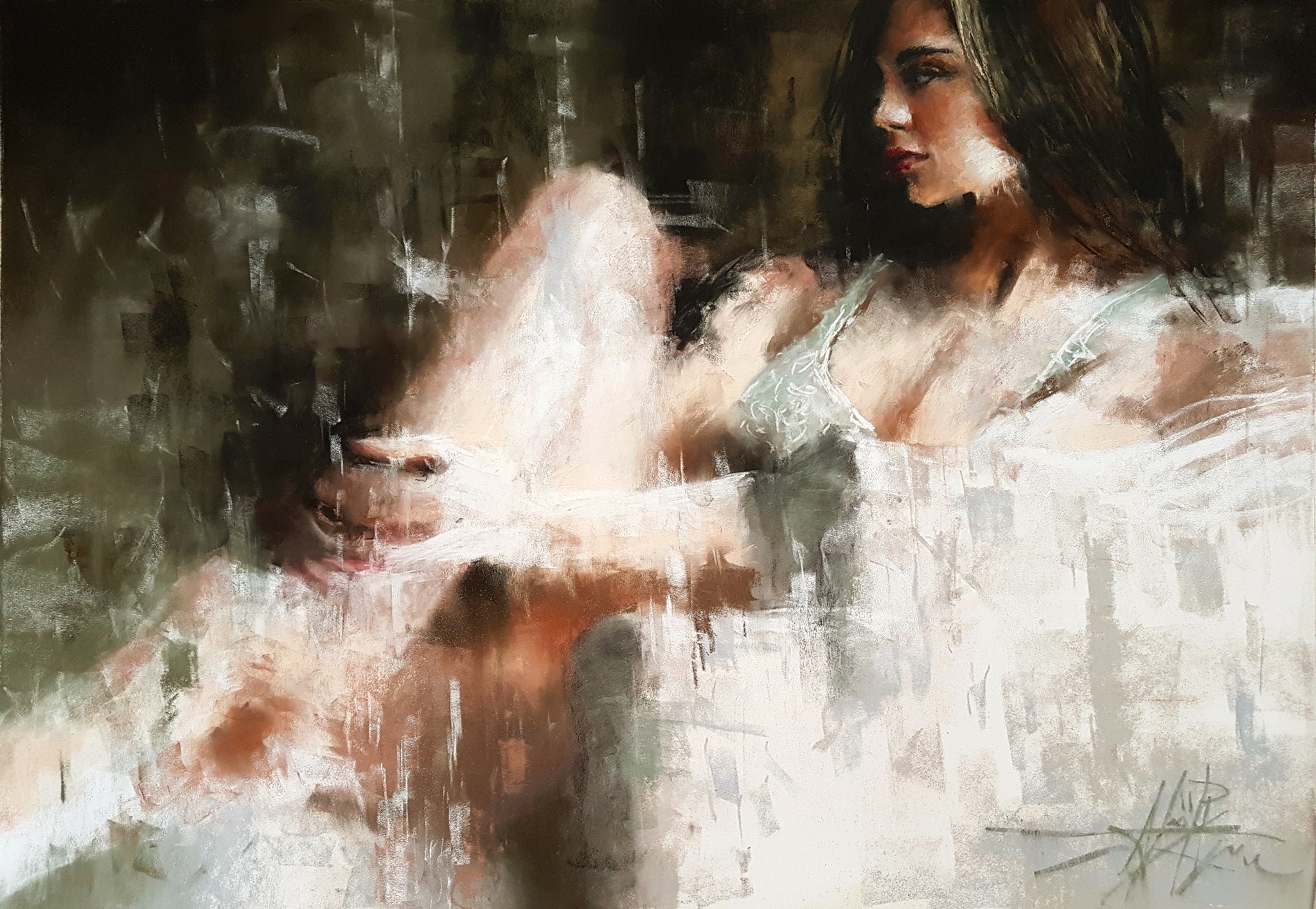
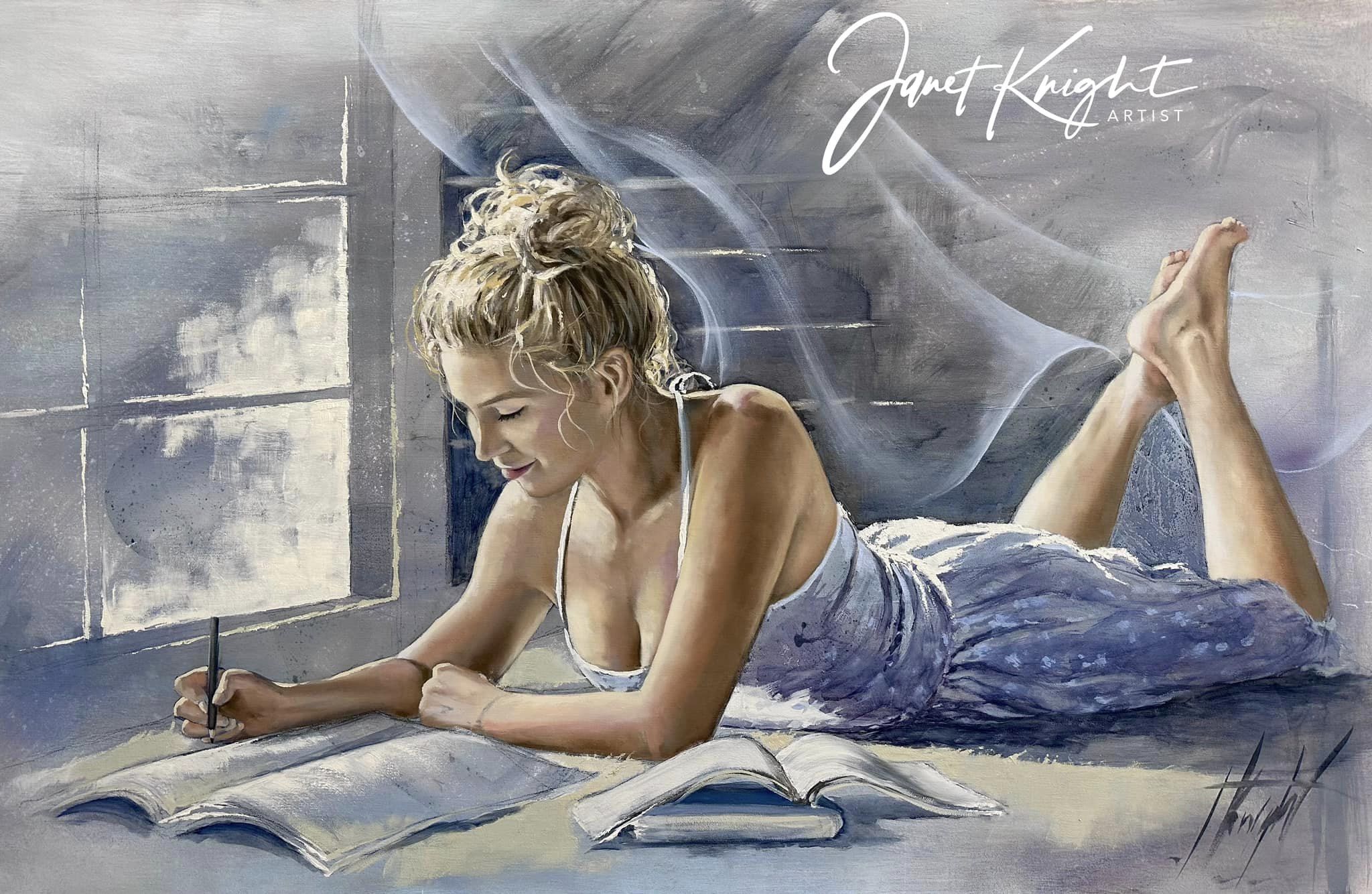
Janet Knight | Figurative painter

Janet Knight is an professional award winning Melbourne artist.
With painting experience of over 25 years, Janet graduated from Ballarat University majoring in graphic design.
Janet’s current works are an indication of her dedication to her passion and her field.
With her connection to nature and the environment Janet’s unique personal skills and interpretation she always manages to finish a piece with a unique style all of her own.


Textual description of firstImageUrl

Józef Chełmoński | Genre painter

Józef Marian Chełmoński (1849-1914) was a Polish painter of the realist school with roots in the historical and social context of the late Romantic period in partitioned Poland.
He is famous for monumental paintings now at the Sukiennice National Art Gallery in Kraków and at the MNW in Warsaw.
Chełmoński was born in the village of Boczki near Łowicz in central Congress Poland under the Russian military control.
His first drawing teacher was his father Józef Adam (a small leaseholder and administrator of Boczki village). His mother was Izabela née Łoskowska.


Textual description of firstImageUrl

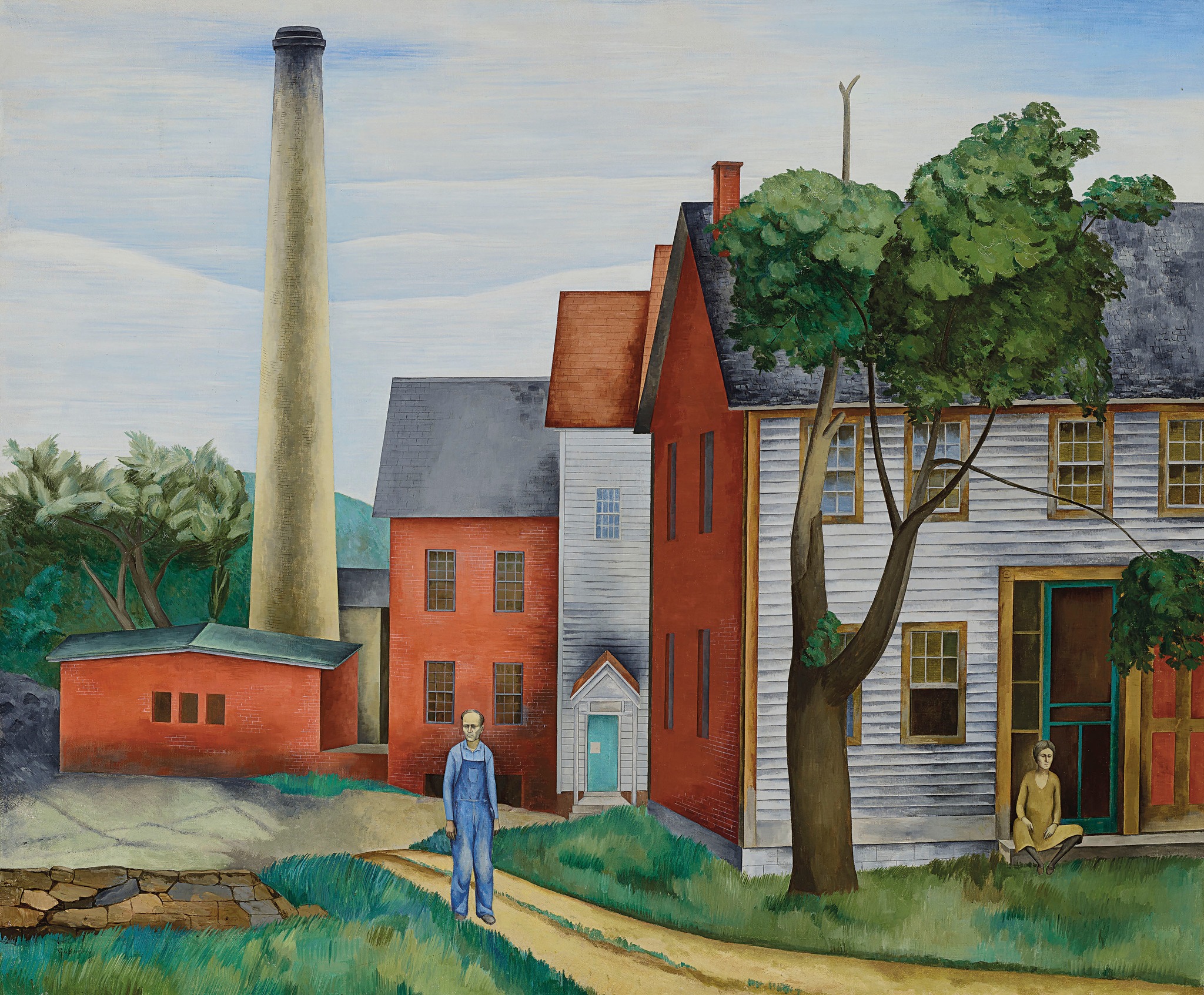
Louis Guglielmi | Magic Realist painter

Osvaldo Louis Guglielmi (1906-1956) was an American painter.
He was well known in New York, but soon forgotten after his death, as abstract expressionism came to overshadow artists like him.
There are elements of precisionism, surrealism, geometric abstraction, regionalism and social realism in his work.
His paintings often commented on poverty and other social and political themes; bleakness and death appear regularly in his pre-war works. With Walter Quirt and James Guy, he was a prominent exponent of "social surrealism".


After the war, his painting became more planar and abstract, with elements of cubism, and he disavowed the personal sadness in his earlier works in favor of expressing the "exuberance and organic means of life itself".
The New York Times also attributed his decline to his being "a relentless borrower, an irrepressible eclectic who seemed to prey voraciously on the styles of others".
Born in Cairo, Egypt, as a child he lived in Milan and Geneva while his Italian father, a professional violinist, toured the world.
In 1914 his parents brought him to the United States, where they lived in Italian Harlem, New York.


He was interested in sculpture at a young age and worked at a casting factory.
He attended the National Academy of Design in the evening beginning in 1920, while also attending high school, and attended full-time from 1923 to 1926.
The next year he became a naturalized citizen.

The Great Depression brought financial hardship, but the difficult times inspired his artwork.
From 1935 to 1939, he worked with the Federal Art Project, which supported artists during the Depression.


In the 1930s he spent many summers at the MacDowell Colony for artists in Peterborough, New Hampshire.
Guglielmi had his first one-man show in 1938, exhibiting his new work Mental Geography.
Inspired by the Spanish Civil War-depicting a bombed-out Brooklyn Bridge -it was a warning that European fascism might spread.

Guglielmi was part of the 1943 "American Realists and Magic Realists" exhibition at the Museum of Modern Art.
He was with the Army Corps of Engineers in the war between 1943 and 1945, and did not paint.


In the 1950s, he held positions at Louisiana State University, first as a visiting artist and then as an associate professor.
He died in 1956 of a heart attack in Amagansett, New York.
Guglielmi's work is in the collection of the Art Institute of Chicago, the Detroit Institute of Arts, the Metropolitan Museum of Art, the Museum of Modern Art, the San Francisco Museum of Modern Art, the Smithsonian American Art Museum and the Whitney Museum of American Art. | Source: © Wikipedia


Osvaldo Louis Guglielmi (1906-1956) è stato un pittore Americano.
Era molto conosciuto a New York, ma presto dimenticato dopo la sua morte, poiché l'espressionismo astratto arrivò a mettere in ombra artisti come lui.
Ci sono elementi di precisione, surrealismo, astrazione geometrica, regionalismo e realismo sociale nel suo lavoro.
I suoi dipinti spesso commentavano la povertà ed altri temi sociali e politici; desolazione e morte appaiono regolarmente nelle sue opere prebelliche.
Con Walter Quirt e James Guy fu un esponente di spicco del "surrealismo sociale".


Dopo la guerra, la sua pittura divenne più planare e astratta, con elementi di cubismo, e rinnegò la tristezza personale nelle sue opere precedenti in favore dell'espressione "dell'esuberanza e dei mezzi organici della vita stessa".
Anche il New York Times attribuì il suo declino al suo essere "un mutuatario implacabile, un eclettico irrefrenabile che sembrava predare voracemente lo stile degli altri".
Nato al Cairo, in Egitto, da bambino ha vissuto a Milano e Ginevra, mentre suo padre italiano, violinista professionista, girava il mondo.
Nel 1914 i suoi genitori lo portarono negli Stati Uniti, dove vissero ad Italian Harlem, New York.
Si interessò alla scultura in giovane età e lavorò in una fabbrica di fusione.


Frequentò serale l'Accademia Nazionale di Design a partire dal 1920, frequentando contemporaneamente anche il liceo, che frequentò a tempo pieno dal 1923 al 1926.
L'anno successivo divenne cittadino naturalizzato.
La Grande Depressione portò difficoltà finanziarie, ma i tempi difficili ispirarono le sue opere d'arte.

Dal 1935 al 1939 lavorò con il Federal Art Project, che sostenne gli artisti durante la Depressione.
Negli anni '30 trascorse molte estati alla MacDowell Colony per artisti a Peterborough, nel New Hampshire.
Guglielmi tenne la sua prima mostra personale nel 1938, esponendo la sua nuova opera Geografia mentale.


Ispirato alla guerra civile spagnola, raffigurante un ponte di Brooklyn bombardato, era un avvertimento che il fascismo europeo avrebbe potuto diffondersi.
Guglielmi fece parte della mostra "American Realists and Magic Realists" del 1943 al Museum of Modern Art.
Era con il Corpo degli Ingegneri dell'Esercito nella guerra tra il 1943 e il 1945 e non dipingeva.
Negli anni '50 ricoprì incarichi presso la Louisiana State University, prima come artista in visita e poi come professore associato.


Morì nel 1956 per un attacco di cuore ad Amagansett, New York.
Il lavoro di Guglielmi è nella collezione dell'Art Institute of Chicago, del Detroit Institute of Arts, del Metropolitan Museum of Art, del Museum of Modern Art, del San Francisco Museum of Modern Art, lo Smithsonian American Art Museum ed il Whitney Museum of American Art.


Textual description of firstImageUrl

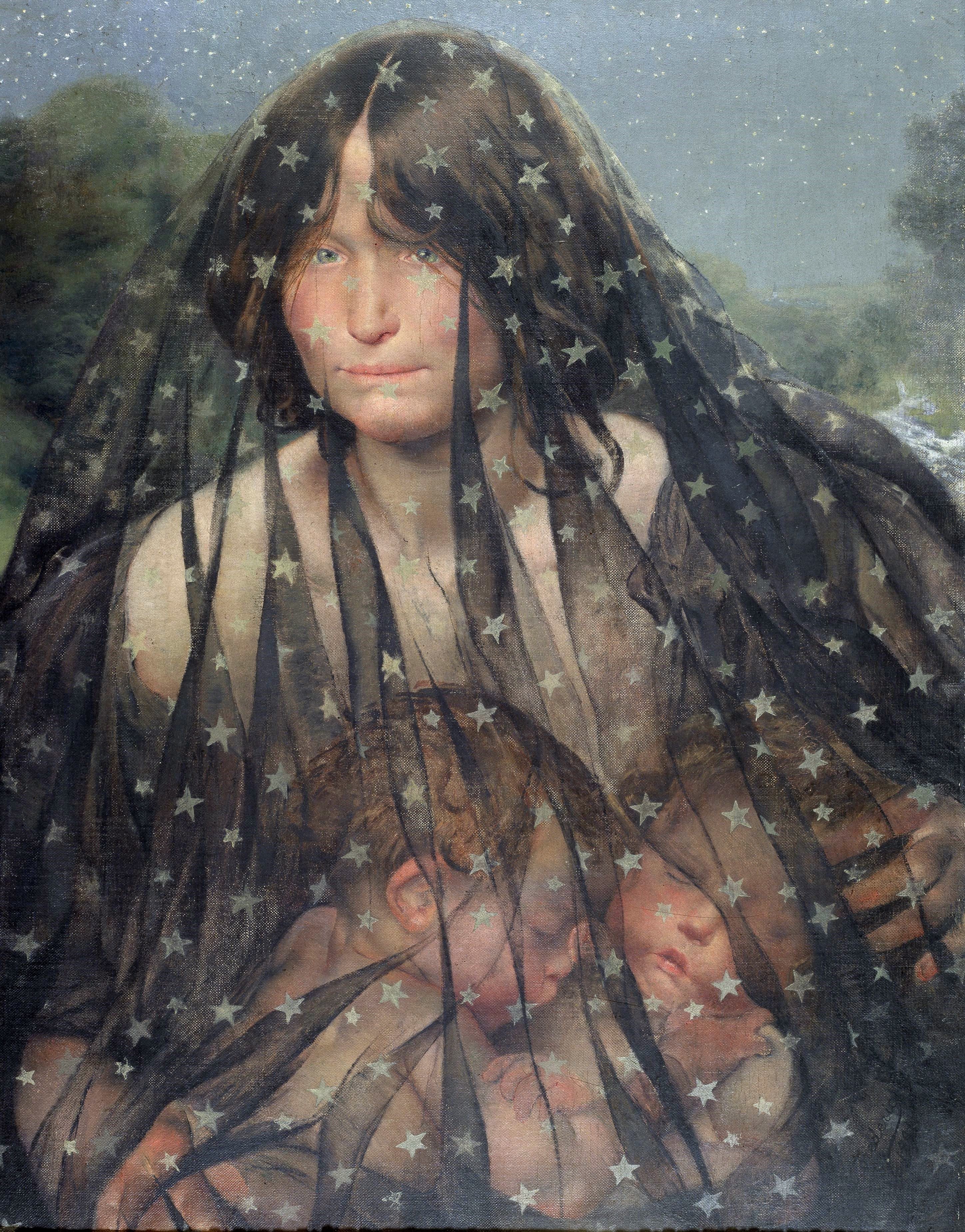
Léon Frédéric | Symbolist painter

Léon-Henri-Marie Frédéric (1856-1940) was a Belgian Symbolist painter.
His earliest paintings joined Christian mysticism with pantheistic themes, while his later works increasingly reflected social concerns.
Much of his work also shows the influence of fifteenth and sixteenth century Flemish art and Renaissance painting styles.


Textual description of firstImageUrl

Elia Volpi (1858-1938)

Elia Volpi (1858-1938) was an Italian art dealer, antiques dealer and painter, famous for having created the collection of Palazzo Davanzati in Florence.
Born in Città di Castello, Volpi was a well known antiquarian who collected many important works of art, now widely dispersed especially in U.S.A.
Volpi studied at the Florence Academy, under A. Gatti.


Textual description of firstImageUrl

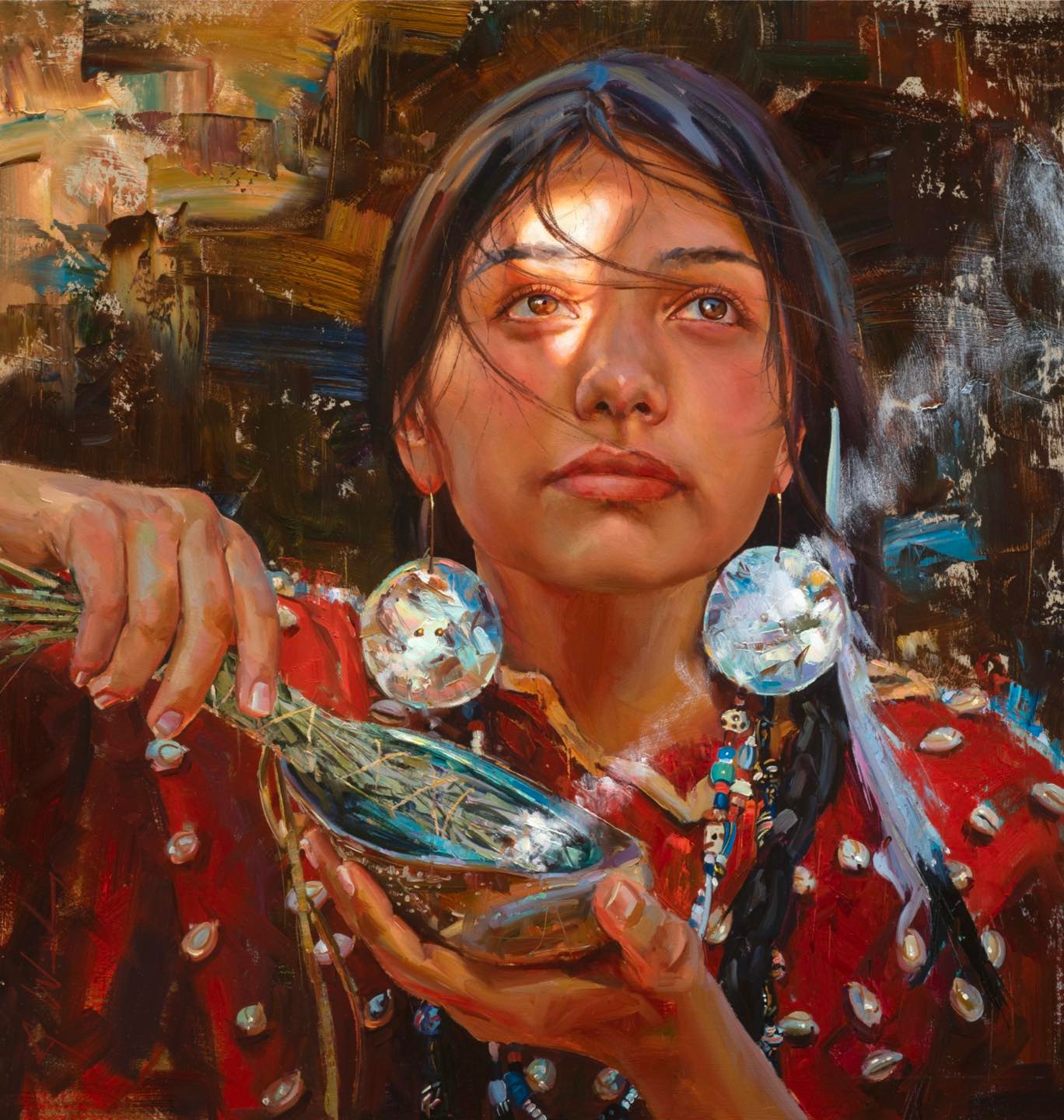
Jeremy Winborg, 1979

Jeremy Winborg is best known for his figurative work of Native American subjects that blend realism with abstract backgrounds.
Winborg has had a passion for creating art since he was a child.
He grew up in Utah working in an art studio alongside his father who was an illustrator.
Winborg began receiving awards and honors at a young age.
"Being an artist was the only profession I ever considered when I was growing up".


Textual description of firstImageUrl

Salvador Dalí | Fleurs, 1948

Salvador Dalí often showcased his sense of humor and imagination by painting flowers.
In 1972, Dalí released 15 color lithographs of “Surrealist Flowers”, featuring many of his most famous symbols.
In one print, the petals of white lilies morph into melting clocks.

In another, a bouquet of tulips sprouts actual lips.
The suite also features roses covered in drawers, anemones growing forks and gladioli wearing hoop earrings.
Dalí returned to florals in 1981, painting a playful mix of butterflies, insects and roses in a series he self-referentially titled “Flordalí”.
While Flordali II (1981) exceeded $320,000 at a Christie’s auction in 2016, editioned prints of the motif remain on the market.


Textual description of firstImageUrl

Marius van Dokkum, 1957

Many of Marius van Dokkum’s paintings contain mild social criticism.
Marius van Dokkum is averse to cynicism, he wants to give the audience a (laugh) mirror.
As a child, Van Dokkum already knew that he would become an artist.