Tranquillo Cremona | Romantic painter

Tranquillo Cremona | Romantic painter

Tranquillo Cremona (10 April 1837 - 10 June 1878) was an Italian painter.
He was born in Pavia and was the brother of the mathematician Luigi Cremona.
He trained as a young man with Giovanni Carnovali. He lived in Venice from 1852-1859.
Cremona moved to Milan and he became part of the Scapigliatura movement which was characterized by bohemian attitudes and included poets, writers, musicians and artists infused with a combination of rebellious, and later anti-academic and anarchic, tendencies.


Read More

Tranquillo Cremona | Romantic painter

Tranquillo Cremona (10 April 1837 - 10 June 1878) was an Italian painter.
He was born in Pavia and was the brother of the mathematician Luigi Cremona.
He trained as a young man with Giovanni Carnovali. He lived in Venice from 1852-1859.
Cremona moved to Milan and he became part of the Scapigliatura movement which was characterized by bohemian attitudes and included poets, writers, musicians and artists infused with a combination of rebellious, and later anti-academic and anarchic, tendencies.


Gustav Vigeland | Figurative sculptor

Gustav Vigeland | Figurative sculptor

Gustav Vigeland (1869-1943), born as Adolf Gustav Thorsen, was a Norwegian sculptor.
Gustav Vigeland occupies a special position among Norwegian sculptors, both in the power of his creative imagination and in his productivity.
He is most associated with the Vigeland installation (Vigelandsanlegget) in Frogner Park, Oslo.
The Vigeland installation made Frogner Park into Norway's most popular tourist attraction, and the park also contains Frogner Manor with the Oslo Museum and the Henriette Wegner Pavilion.
Vigeland was also the designer of the Nobel Peace Prize medal.


Read More

Gustav Vigeland | Figurative sculptor

Gustav Vigeland (1869-1943), born as Adolf Gustav Thorsen, was a Norwegian sculptor.
Gustav Vigeland occupies a special position among Norwegian sculptors, both in the power of his creative imagination and in his productivity.
He is most associated with the Vigeland installation (Vigelandsanlegget) in Frogner Park, Oslo.
The Vigeland installation made Frogner Park into Norway's most popular tourist attraction, and the park also contains Frogner Manor with the Oslo Museum and the Henriette Wegner Pavilion.
Vigeland was also the designer of the Nobel Peace Prize medal.


Cristoforo Stati | Orpheus with Violin, 1600-1601

Cristoforo Stati | Orpheus with Violin, 1600-1601

Orpheus by Italian sculptor Cristoforo Stati / Cristofano da Bracciano (1556-1619), famous for taming beasts with his music, is here shown entertaining himself, his body swaying to the sound of the lira da braccio.
The statue was carved for the Palazzo Corsi, Florence. | © The Metropolitan Museum of Art


Read More

Cristoforo Stati | Orpheus with Violin, 1600-1601

Orpheus by Italian sculptor Cristoforo Stati / Cristofano da Bracciano (1556-1619), famous for taming beasts with his music, is here shown entertaining himself, his body swaying to the sound of the lira da braccio.
The statue was carved for the Palazzo Corsi, Florence. | © The Metropolitan Museum of Art


Joachim Patinir | Renaissance painter

Joachim Patinir | Renaissance painter


Joachim Patinir, in full Joachim de Patinir, Patinir also spelled Patinier or Patenier, (1485, Bouvignes or Dinan, Namur, Belgium - October 5, 1524, Antwerp), Flemish painter, the first Western artist known to have specialized in landscape painting.
Little is known of his early life, but his work reflects an early knowledge of the painting of Gerard David, the last of the Early Netherlandish painters.
He may have studied under Hiëronymus Bosch, the painter of fantastic allegories and landscapes.

Read More

Joachim Patinir | Renaissance painter


Joachim Patinir, in full Joachim de Patinir, Patinir also spelled Patinier or Patenier, (1485, Bouvignes or Dinan, Namur, Belgium - October 5, 1524, Antwerp), Flemish painter, the first Western artist known to have specialized in landscape painting.
Little is known of his early life, but his work reflects an early knowledge of the painting of Gerard David, the last of the Early Netherlandish painters.
He may have studied under Hiëronymus Bosch, the painter of fantastic allegories and landscapes.

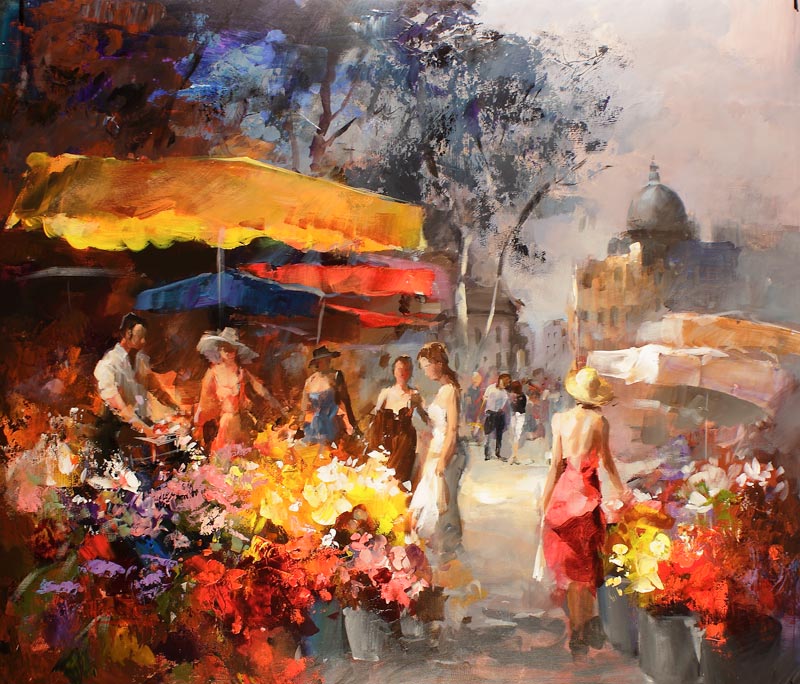
I giardini idilliaci di Willem Haenraets

I giardini idilliaci di Willem Haenraets

Nato a Rotterdam, Willem Haenraets è un celebre pittore impressionista Olandese universalmente riconosciuto per il suo stile romantico, aereo e caratterizzato dall'uso di colori pastello soffusi.
Haenraets aveva solo 16 anni quando iniziò la sua formazione all'Accademia di Maastricht, ad cui seguì un ulteriore percorso di studi presso l'Accademia d'arte di Anversa.
Grazie ad una borsa di studio per studenti di talento, acquisì la sua maturità artistica come allievo maestro dei rinomati professori Sarina e Vaarten.


Read More

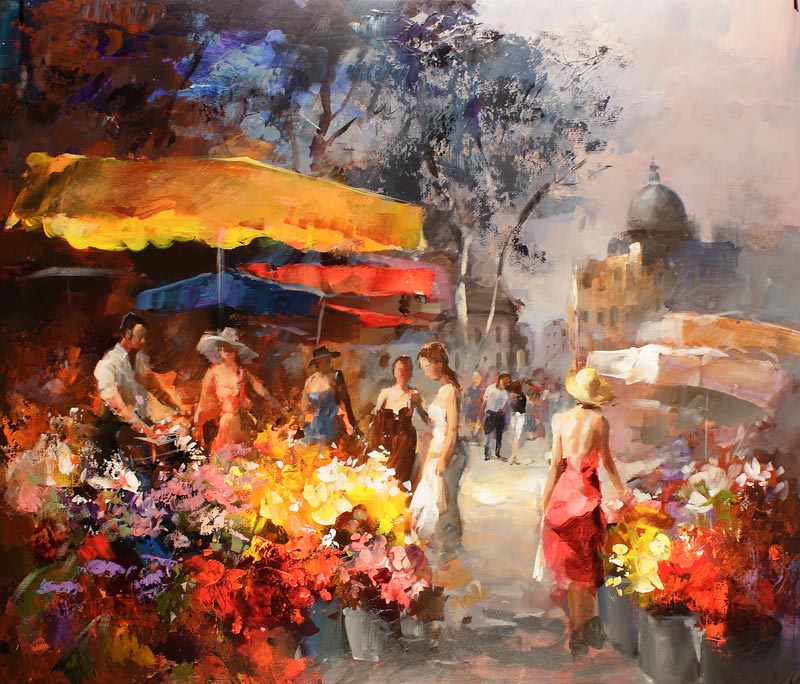
I giardini idilliaci di Willem Haenraets

Nato a Rotterdam, Willem Haenraets è un celebre pittore impressionista Olandese universalmente riconosciuto per il suo stile romantico, aereo e caratterizzato dall'uso di colori pastello soffusi.
Haenraets aveva solo 16 anni quando iniziò la sua formazione all'Accademia di Maastricht, ad cui seguì un ulteriore percorso di studi presso l'Accademia d'arte di Anversa.
Grazie ad una borsa di studio per studenti di talento, acquisì la sua maturità artistica come allievo maestro dei rinomati professori Sarina e Vaarten.


Brent Lynch, 1948 | Figurative painter

Brent Lynch, 1948 | Figurative painter

A powerful landscape and figurative painter, Brent Lynch pursues the abstract quality of mood, light, color and composition.
The mystery and energy of a landscape or the human form are hallmarks of his work.
For over 25 years, Brent has enjoyed an influential and award-winning career in the arts.
He was best known for his unique illustrations for event posters representing performance arts such as ballet, opera and theater as well as sporting events including the Olympic Games.


Read More

Brent Lynch, 1948 | Figurative painter

A powerful landscape and figurative painter, Brent Lynch pursues the abstract quality of mood, light, color and composition.
The mystery and energy of a landscape or the human form are hallmarks of his work.
For over 25 years, Brent has enjoyed an influential and award-winning career in the arts.
He was best known for his unique illustrations for event posters representing performance arts such as ballet, opera and theater as well as sporting events including the Olympic Games.


Vladimir Majakovskij e Maria Denisova, un Amore disperato

Vladimir Majakovskij e Maria Denisova, un Amore disperato

La storia del poema "La nuvola in calzoni" / "Облако в штанах" è collegata all'amore tormentato e non corrisposto del poeta Russo Vladimir Majakovskij (1893-1930) per la scultrice monumentale Russa, Maria Alexandrovna Denisova (1894-1944).
I due si incontrarono nel 1914 ad Odessa, durante il viaggio dei futuristi del 1913.
"La nuvola" è il capolavoro della stagione "prerivoluzionaria" di Majakovskij, uno dei testi più significativi del futurismo russo e della letteratura russa del Novecento.


Composto tra il 1914-1915 da un Majakovskij poco più che ventenne, il poemetto trabocca di una forza lirica tesa, appassionata, che vuole essere dissacrante, antiborghese, antifilistea, ed è soprattutto intensamente libertaria.
Majakovskij vuol portare dentro l'arte della parola la carica dirompente di una visione nuova o rinnovata della realtà, dei sentimenti, dell'idea stessa della poesia e della scrittura.

Read More

Vladimir Majakovskij e Maria Denisova, un Amore disperato

La storia del poema "La nuvola in calzoni" / "Облако в штанах" è collegata all'amore tormentato e non corrisposto del poeta Russo Vladimir Majakovskij (1893-1930) per la scultrice monumentale Russa, Maria Alexandrovna Denisova (1894-1944).
I due si incontrarono nel 1914 ad Odessa, durante il viaggio dei futuristi del 1913.
"La nuvola" è il capolavoro della stagione "prerivoluzionaria" di Majakovskij, uno dei testi più significativi del futurismo russo e della letteratura russa del Novecento.


Composto tra il 1914-1915 da un Majakovskij poco più che ventenne, il poemetto trabocca di una forza lirica tesa, appassionata, che vuole essere dissacrante, antiborghese, antifilistea, ed è soprattutto intensamente libertaria.
Majakovskij vuol portare dentro l'arte della parola la carica dirompente di una visione nuova o rinnovata della realtà, dei sentimenti, dell'idea stessa della poesia e della scrittura.

Jack Vettriano / Leonard Cohen | The Stranger song, 1967

Jack Vettriano / Leonard Cohen | The Stranger song, 1967

"The Stranger Song" è uno dei brani più intensi e poeticamente complessi di Leonard Cohen, pubblicato originariamente nel 1967 come quarta traccia del suo iconico album di debutto, Songs of Leonard Cohen.
Il brano si distingue per l'ipnotico schema di fingerpicking sulla chitarra acustica e per un testo ricco di metafore legate al gioco d'azzardo, ai treni ed all'impossibilità di trovare un legame stabile.


Read More

Jack Vettriano / Leonard Cohen | The Stranger song, 1967

"The Stranger Song" è uno dei brani più intensi e poeticamente complessi di Leonard Cohen, pubblicato originariamente nel 1967 come quarta traccia del suo iconico album di debutto, Songs of Leonard Cohen.
Il brano si distingue per l'ipnotico schema di fingerpicking sulla chitarra acustica e per un testo ricco di metafore legate al gioco d'azzardo, ai treni ed all'impossibilità di trovare un legame stabile.


Fabian Perez, 1967 | Figurative painter

Fabian Perez, 1967 | Figurative painter

For Fabian Perez, the purpose of art is to perpetuate beauty: "That is what I am always striving for. God created the world and embellished it with the wonders of nature.
I think it is the artist’s job to embellish it with his work.
I am constantly fighting for a more romantic world, one where the woman and the man have defined roles and power isn’t always the goal.
I would like to say that it is not important what you have, but how you enjoy it".


Read More

Fabian Perez, 1967 | Figurative painter

For Fabian Perez, the purpose of art is to perpetuate beauty: "That is what I am always striving for. God created the world and embellished it with the wonders of nature.
I think it is the artist’s job to embellish it with his work.
I am constantly fighting for a more romantic world, one where the woman and the man have defined roles and power isn’t always the goal.
I would like to say that it is not important what you have, but how you enjoy it".