Dutch Conceptual Artist Hans Jochem Bakker as a self taught undergone remarkable development. He was initially inspired by the mystical world of Salvador Dali with his talent was not trained for that of his fellow artists. Even celebrities like Miró and Picasso influenced the early work of Jochem. Between 1980-1990 took place a sensational change. The very detailed at times surreal work gave way to the broad approach of the expression. Notable are the movement and energy that are reflected in the new work. Old motifs such as birds, horses, bullfights and women remain interested in his work and persistence.
Home » Tutti i post
Hans Jochem Bakker, 1948 | Portrait Mixed media painter
Ger Doornink, 1949 | Portrait Mixed media painter
Dutch Conceptual Artist Ger Doornink is a creative multitalent specialized in painting, illustration and photography. He is combining different techniques the outcome is often more than surprising.
Doornink received an education at the Arnhem Art Academy in Publicity. Doornink is a very versatile artist who started his career as designer and photographer in the advertisement business and the fashion world. Here he build quite the reputation, using an alias: Gerry the Cat.
He lived and worked in Tokyo, where he became acquainted with the Japanese style, and used this in his designs.
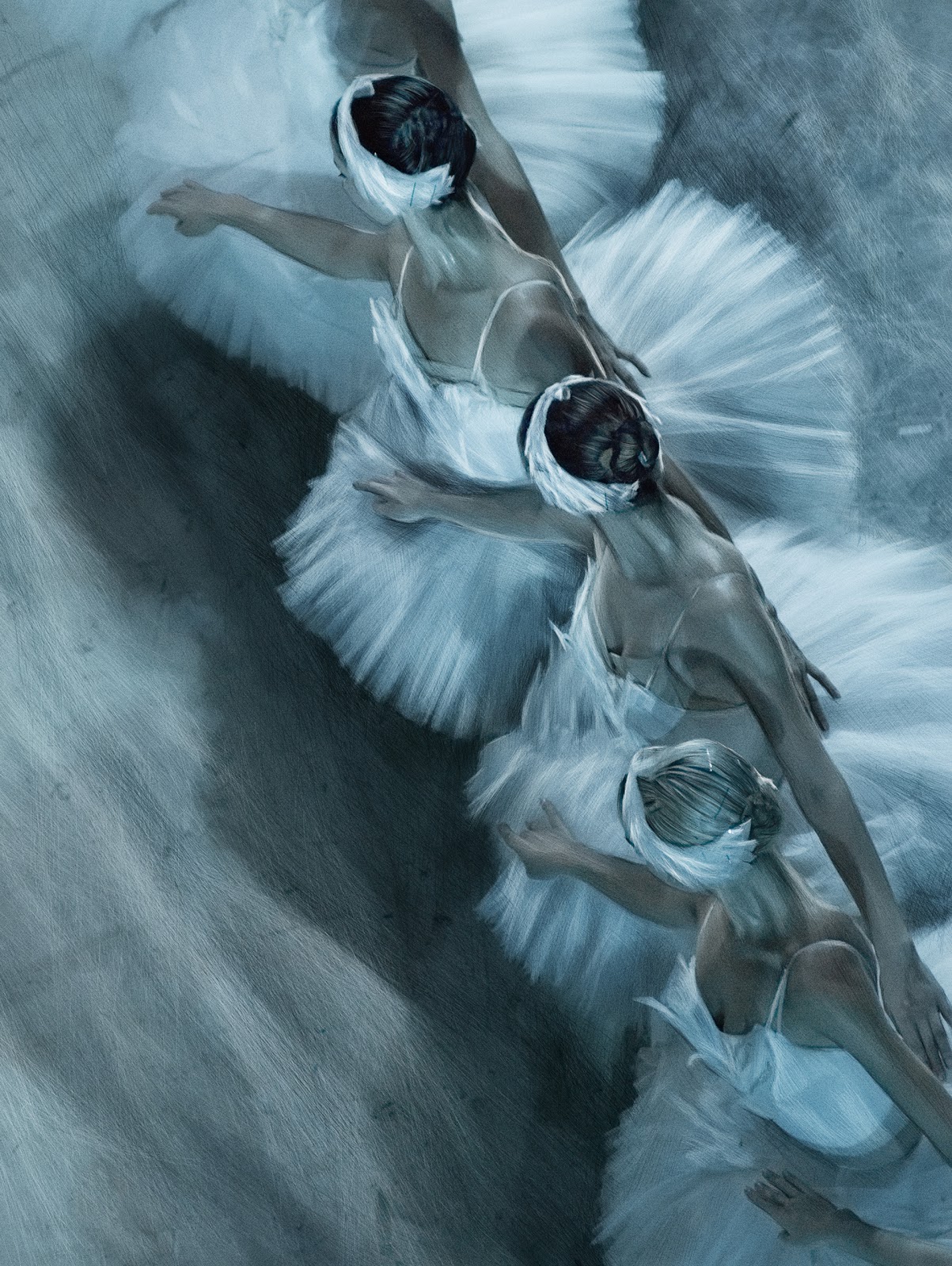
Mark Olich, 1974 | Ballet dancers | Conceptual photography
Марк Олич is a Russian photographer born in Omsk. A graduate of theatre and art schools, Mark has been engaged with photography since 2002.
Mark has always drawn but suffered from a creative crisis after moving to St. Petersburg.
He became a set designer at the Mariinsky Theatre, where he began to capture ‘behind the scenes’, images of the dancers training and rehearsing in the theater.
The aim of his work is to show what is happening in the boundary that separates the inside, the backstage, from the outer, public performance.
Dan McCaw, 1942 | Romantic impressionist painter
American painter Dan McCaw raised in Montana and during his academic art career attended the Montana Institute of Technology, in Butte Montana; Academy of Art University, in San Francisco; Art Center College of Design, in Pasadena, California; and the Bongart School of Art, in Santa Monica, California.
A solid foundation of design, color and value distinguishes McCaw's expressive paintings and provides a starting point for an exciting exploration of new ways to look at familiar objects.
Ernest Lawson | Impressionist painter
Ernest Lawson (1873-1939), a progressive artist and member of a group of artists called The Eight, achieved early recognition with his impressionist landscape paintings but later in life experienced personal tragedy and artistic isolation. Born in Nova Scotia in 1873, Lawson studied at the Art Students League, New York, from 1891-1892 and took summer classes in Cos Cob, Connecticut, under J. Alden Weir and John Twachtman. Lawson’s early work has delicate tones and harmonious textures reminiscent of Twachtman’s style. While living in France from 1893-1896, Lawson briefly attended the Académie Julian.
Irina Rumyantseva, 1983 | Abstract Mixed media painter
Irina Rumyantseva was born in St Petersburg, Russia. She achieved the highest grade for her art studies at university and soon became a highly respected artist in Russia. At the age of 26 she came to England to further her career.
Since then she hasn't looked back, her name has become hugely popular in the UK and in many parts of the world. Her unique style of painting is highly sought after and to achieve so much in this short space of time, one can only imagine what the future brings for this talented artist.
Laurence Amélie | Fashion /Impressionist Romantic painter
Laurence Amélie, daughter of renowned Swiss abstract painter Gérard Schneider, continues the family tradition of painting following a successful career as Creative Director and Fashion designer of Bon Point in Paris.
Laurence paints from her idyllic country setting near Fontainebleau. It is the house where her father, a contemporary of Picasso, painted during the highly active mid-century abstract period.
Vyacheslav Khabirov, 1967
Vyacheslav Khabirov was born in Kazakhstan in the town of Ust-Kamenogorsk.
In his early childhood he showed great interest and love for art.
When a boy of 13, Vyacheslav began painting in oil as he considered it to be the best means of creating his landscapes.
Being a student of an Art school Vyacheslav participated in republic-wide exhibitions that took place in the capital of Kazakhstan Alma-Ata.
Maria Boohtiyarova and Andrei Belichenko
Andrei Belichenko / Андрей Беличенко and Maria Boohtiyarova / Мария Бахтиярова are two Russian artists, known for working in the Figurative style.
Andrei Belichenko was born in 1974 in Karaganda, Kazakhstan.
Henry Moret | Impressionist painter
Henry Moret (12 December 1856, Cherbourg - 5 May 1913, Paris) was a French Impressionist painter.
He was one of the artists who associated with Gauguin at Pont-Aven in Brittany.
Little is known of Moret's life until he began his military service in 1875.
Jules La Villette, his commander in Lorient, who first noticed his artistic talents, introduced him to Ernest Corroller, a drawing teacher and marine painter.
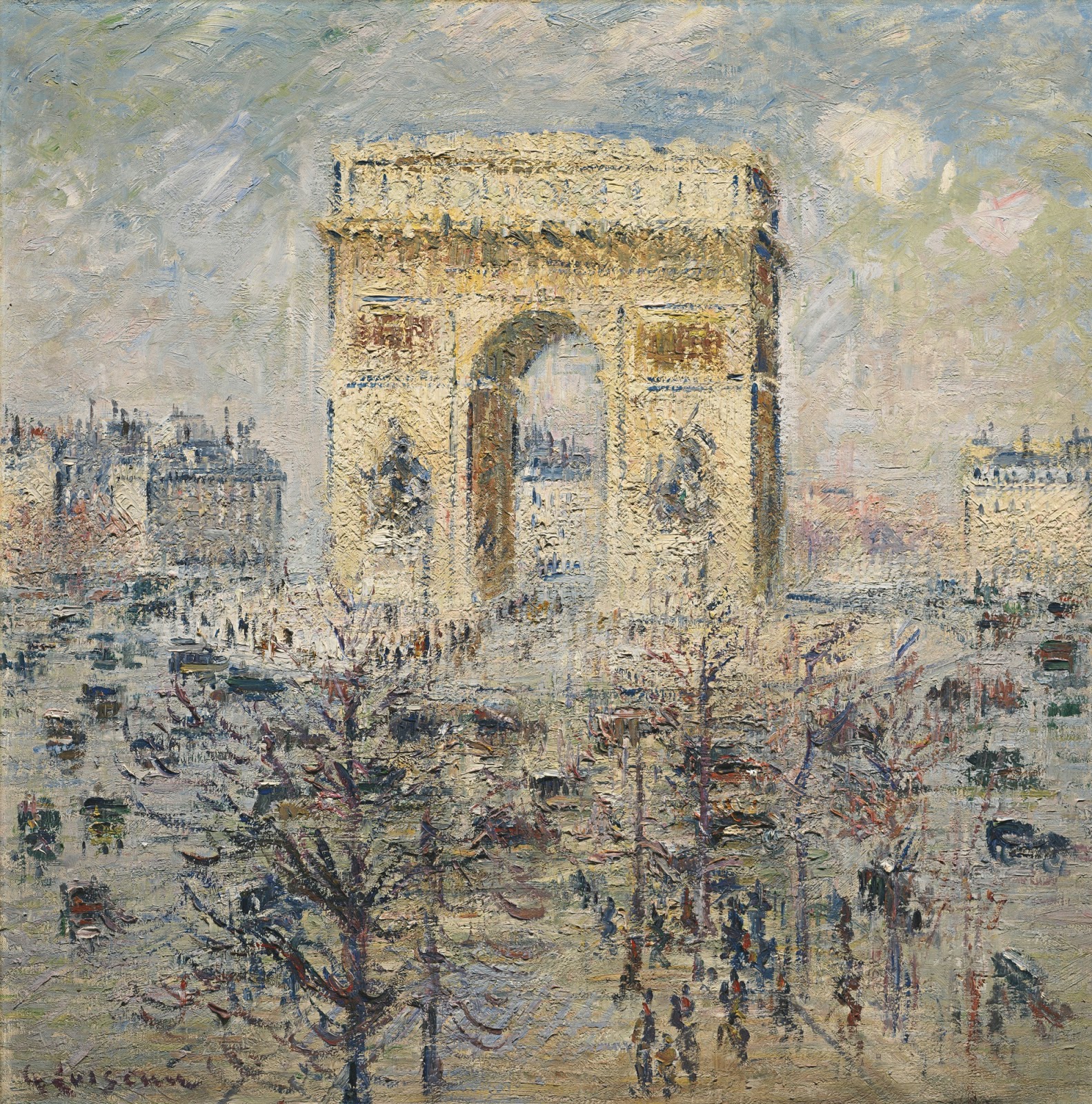
Gustave Loiseau, il pittore che raccontò Parigi
L'espressione pittorica di Loiseau si mantenne sempre nell'alveo della corrente post-impressionista e se egli mostrò qualche evidente influenza da parte di altri maestri, non si può che fare il nome di Claude Monet, specie osservando le sue rappresentazioni dei porti, delle falesie e delle chiese, eseguite in piccole serie.
Loiseau dipingeva all'aria aperta, immerso nei paesaggi che lo ispiravano, in Bretagna, in Normandia, od anche nei centri abitati, come Moret-sur-Loing o la stessa Parigi.
Fidel Garcia, 1960 | Dreams of Love
"Art expresses the soul of humanity in our common journey across the ages" - Fidel Garcia
Born in Mexico City, Fidel Garcia is a self-taught painter and creator.
At age seven, Garcia’s artistic ability became apparent to his father, an artist himself, who encouraged and supported his passion for creativity.
He developed an unique international dimensional style that is imaginatively imbued with the visual power of Renaissance artists such as Spanish Baroque master Diego Velazquez, American master John Singer Sargent, French master William Bouguereau, Spanish surreal master Salvador Dali, and Austrian design master Gustav Klimt.

Gustave Loiseau | Paris painting
French painter🎨 Gustave Loiseau (3 October 1865-10 October 1935) was born in Paris into an affluent commercial family.
He was largely self-taught and during his youth he worked with a decorator, painting the outskirts of Paris in his free time.
An inheritance from his grandmother provided him with a certain degree of financial comfort and independence that allowed him to concentrate fully on paining and to move to Montmartre.
Here he met Maxime Maufra, with whom he remained friends for the rest of his life.
He enrolled at the École des Arts Décoratifs for a year, the only training in colour and drawing which he received.
Giorgio Morandi | Modern Still Life painter
Giorgio Morandi (July 20, 1890 - June 18, 1964) was born on July 20, 1890, in Bologna, Italy, one of the oldest and most prestigious University towns in Europe.
Nearly all his life was spent there working quietly in a modest studio and apartment that he shared with his three sisters. Except for occasional trips to Venice, Florence or Rome for exhibitions of his paintings and etchings, or summer excursions to the village of Grizzana in the Apennine hills above his native city, Morandi scarcely ever left Bologna.
Antonietta Raphaël | The Roman School
Antonietta Simonovna Raphaël Mafai (1895 - 5 September 1975) was an Italian sculptor and painter of Jewish heritage and Lithuanian birth, who founded the Scuola Romana (Roman School) movement together with her husband Mario Mafai.
She was an artist characterised by a profound anti-academic conviction, also affirmed by her sculptures which, especially after World War II, dominated her output.
They highlighted the tender and vibrant carnality present in stone, with works such as Miriam dormiente (Sleeping Miriam) and Nemesis.
Mario Mafai | The Roman school
Mario Mafai (12 February 1902 - 31 March 1965) was an Italian painter. With his wife Antonietta Raphaël he founded the modern art movement called the Scuola Romana, or Roman school.
Mafai left school very early, preferring to attend, with Scipione, the Accademia di Belle Arti di Roma.
His influences in those years were Roman galleries and museums, and the Fine Arts Library at Palazzo Venezia.
Jonas Lie | Expressionist painter
Jonas Lie (April 29, 1880 - January 18, 1940) was a Norwegian-born American painter.
He is best known for colorful paintings of coastlines of New England and city scenes of New York City.
Jonas Lie was born in Moss, in Østfold county, Norway.
His father Sverre Lie, was a civil Norwegian engineer and his mother Helen Augusta Steele, was an American from Hartford, Connecticut.
His father was a brother of Thomasine Lie who had married their cousin Jonas Lie, the famous Norwegian author, whom the painter was named after.
Boris Grigoriev | Russian Avant Garde movement
Boris Dimitrievitch Grigoriev /Бори́с Дми́триевич Григо́рьев was a Russian painter born in Moscow. He was a part of the Russian Avant Garde movement who also wrote regularly for the magazine “Satyricon” and “New Satyricon”. For biographical notes -in english and italian- see Part 1 - Boris Grigoriev [1886-1939].
Paul Cézanne | The Drawings / Watercolours
"C’è una logica colorata: il pittore non deve che obbedire a lei, mai alla logica della mente".
"There are two things in the painter, the eye and the mind; each of them should aid the other".
Vilhelm Bjerke Petersen | Surrealist /Abstract painter
Vilhelm Bjerke Petersen (December 24, 1909 - September 13, 1957) was a Danish painter, writer and art theorist.
Born in Copenhagen, he studied under Axel Revold at the Norwegian National Academy of Fine Arts from 1927-1929, and then, under Paul Klee and Wassily Kandinsky at Bauhaus Dessau from 1930 to 1931.
He was a Surrealist painter and agitated for the style in several publications.
Stanislas Lepine | Seine painting
Born in Caen in 1836, Victor Edouard Stanislas Lépine (1836-1892) began his artistic career following the manner of the ship-painter Johan Barthold Jongkind and specialising in the rendering of nautical views such as Sailing Boats in Caen Harbour. In 1855 the painter moved to Paris and in 1859 he made his début at the Salon, exhibiting Port of Caen, Moonlight Effect.
Stanislas Lépine specialised in painting picturesque urban views, recurrently choosing to feature the River Seine and the old streets of Paris. In 1860 Lépine undertook a more professional apprenticeship under the guidance of Jean Baptiste-Camille Corot and during this period met the artist Henri Fantin-Latour (1836-1904).
Harald Engman | Cityscape painter
Harald Rudyard Engman (1903-1968) was a Danish painter. Above all, he is remembered for his fierce use of satire in criticizing and resisting the German occupation of Denmark during World War II.
Little has been published about Engman's life. It is known that he traveled as a working seaman and spent some time living in New York City's Chinatown around 1920.
He began to show paintings in Copenhagen in the mid 1920s. He became part of a group of self-styled "Underground Painters".
His shows always inspired controversy as he utilized caricature and satire to mercilessly criticize social ills and those in power especially the growing power of the Nazi Party in Germany.
Jan Mankes | Symbolist / Realist painter
Jan Mankes (15 August 1889, Meppel, Drenthe - 23 April 1920, Eerbeek) was a Dutch painter*. He produced around 200 paintings, 100 drawings and 50 prints before dying of tuberculosis at the age of 30.
His restrained, detailed work ranged from self-portraits to landscapes and studies of birds and animals. His work is now exhibited in his native Netherlands in the Museum of Modern Art Arnhem, Museum Belvédère Heerenveen and Museum MORE Gorssel.
Howard Schatz, 1940 | Surrealist photographer
The photographs of Howard Schatz are exhibited in museums and photography galleries internationally and are included in innumerable private collections.
He has received international acclaim for his work and has won virtually every award in his field including numerous “Photographer of the Year” awards and Gold Medals in the most prestigious competitions.
His work has been published in twenty-three monographs.
William Merritt Chase | The Plein Air Scenes
William Merritt Chase [1849-1916] won many honors at home and abroad, was a member of the National Academy of Design, New York, and from 1885 to 1895 was president of the Society of American Artists.
He became a member of the Ten American Painters after John Henry Twachtman died.
Chase's creativity declined in his later years, especially as modern art took hold in America, but he continued to paint and teach into the 1910s.
During this period Chase taught such up and coming young artists as Arthur Hill Gilbert and Edward Hopper.
One of his last teaching positions was at Carmel, California in the summer of 1914.
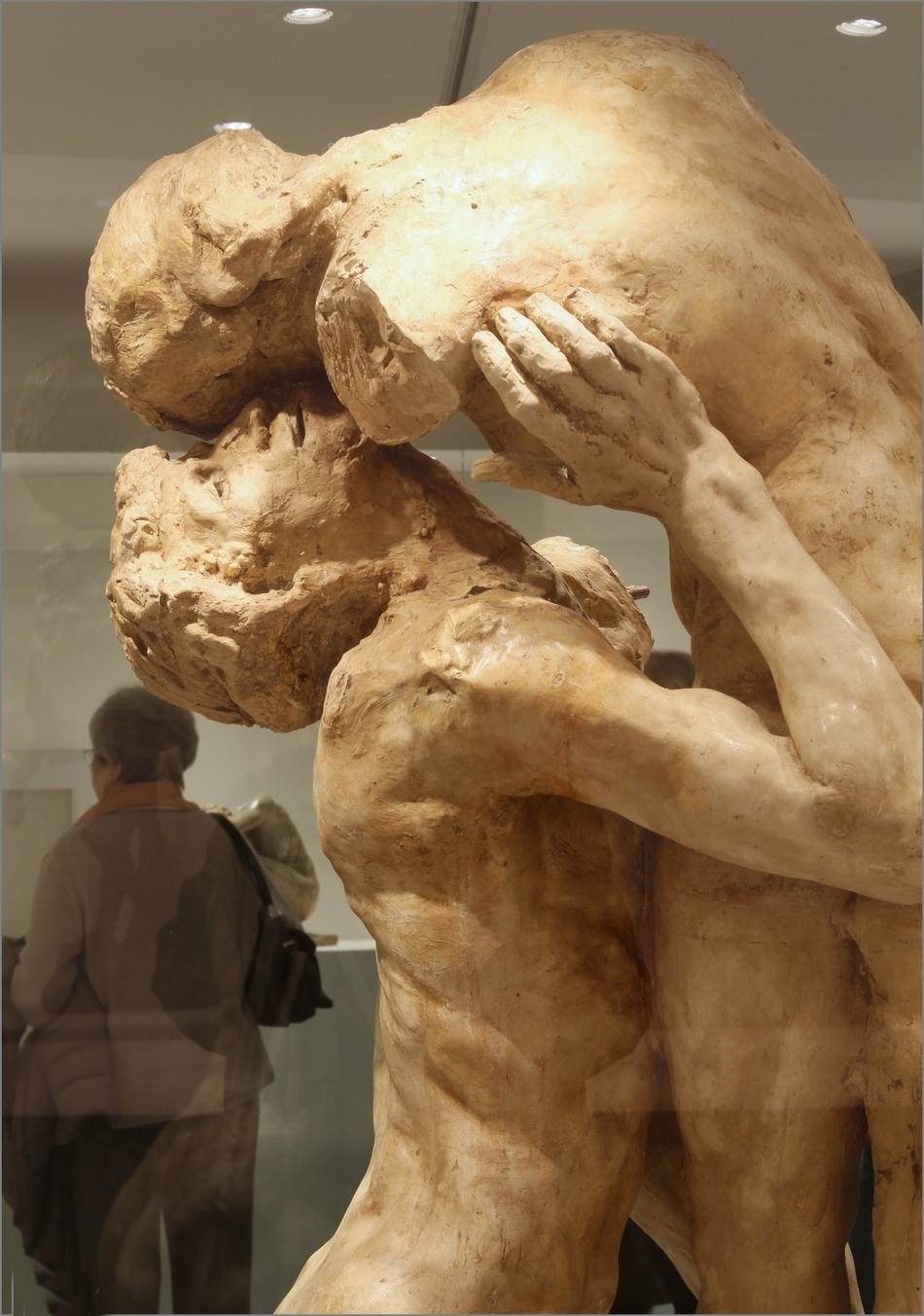
Camille Claudel | L’Abandon, 1988-1905
The present work, known in its final state as L’Abandon, can trace its origin to the 1888 plaster by Claudel known as Sakountala. Based on the eponymous Indian legend of the 5th century in which the heroine loses the affection of her beloved prince, only to regain it once more, the plaster was awarded an honorable mention at the Salon that same year. In fact, Sakountala most likely inspired Rodin and his famous composition of the following year, L’Eternelle idole.
Max Buri | Portrait / Genre painter
Max Alfred Buri (1868-1915) was an Swiss painter. While still at school he was given drawing lessons by Paul Volmar (1832-1906) in Berne.
From 1883 he was a pupil of Fritz Schider (1846-1907) in Basle, where he became acquainted with the works of Hans Holbein the younger and Arnold Böcklin.
In 1886 he went to the Akademie der Bildenden Künste in Munich, transferring in 1887 to Simon Hollosy's painting school.
Picasso: Painting is a blind man's profession..
Pablo Picasso - Two figures, 1904
La pittura è una professione da cieco: uno non dipinge ciò che vede, ma ciò che sente, ciò che dice a se stesso riguardo a ciò che ha visto - Pablo Picasso
Barry Gross, 1948 | Portrait / Surrealist painter
In art historical terms, the early works of Barry Gross, American painter, combine the hyperfocus of Surrealism with Renaissance spirituality and humanism.
It is then all set to motion with the dynamism and drama of Baroque.
Auguste Rodin | Drawings
Auguste Rodin (1840-1917) was a prolific draughtsman, producing some 10,000 drawings, over 7,000 of which are now in the Musée Rodin, Paris.
His drawings were seldom used as studies or projects for a sculpture or monument. The draughtsman’s oeuvre developed in tandem with the sculptor’s.
Rainer Maria Rilke | Letters on Cézanne /Lettere su Cézanne
The extraordinary letters (translated from the german by Jane Bannard Greene), show to what degree the eye of one artist can penetrate to the essence of another art.
The most distinguished of modern German poets, Rainer Maria Rilke, was born when Paul Cézanne had already been painting nearly a decade.
Leonardo da Vinci | Quale scienza è meccanica, e quale non è meccanica
Trattato della Pittura
Parte prima | Capitolo 29
Dicono quella cognizione esser meccanica la quale è partorita dall'esperienza, e quella esser scientifica che nasce e finisce nella mente, e quella essere semimeccanica che nasce dalla scienza e finisce nella operazione manuale.
Ma a me pare che quelle scienze sieno vane e piene di errori le quali non sono nate dall'esperienza, madre di ogni certezza, e che non terminano in nota esperienza, cioè che la loro origine, o mezzo, o fine, non passa per nessuno de' cinque sensi.
Leonardo da Vinci | Conclusione del Poeta, del Pittore e del Musico
Trattato della Pittura
Parte prima | Capitolo 28
Tal differenza è in quanto alla figurazione delle cose corporee dal pittore al poeta, quant'è dai corpi smembrati agli uniti, perché il poeta, nel descrivere la bellezza e bruttezza di qualunque corpo, te lo dimostra a membro a membro, ed in diversi tempi, ed il pittore tel fa vedere tutto in un tempo.
Il poeta non può porre colle parole la vera figura delle membra di che si compone un tutto, come il pittore, il quale tel pone innanzi con quella verità ch'è possibile in natura.
Madre Teresa | The most beautiful day / Il giorno più bello
The most beautiful day: Today.
The easiest thing: Equivocate.
The biggest obstacle: Fear.
The gravest error: give up, to despair.
Charles Angrand | Neo-Impressionist painter
Charles Angrand (1854-1926) was a visible presence in the Parisian avant-garde in the late 1880s and early 1890s. Associated with a circle of artists known as the Neo-Impressionists, Angrand emulated the shadowy crayon drawings of Georges Seurat, Neo-Impressionism's standard-bearer.
Here Angrand presents himself, not at all as an artist, but as a bourgeois dandy, impeccably dressed and smoking a small cigar.
Rainer Maria Rilke | La sera / The evening
Mother Teresa /Jeanie Tomanek ~ Love life /Ama la vita
Love life as it is
Love her fully, unpretentious.
Love her when they love you or hate you when.
Love her when no one understands you,
or when you include everyone.
Love her when all forsake you,
or when you exalt like a king.
Love her when they steal everything,
or when you give it.
Love her when it makes sense
or when it seems not to have even a little‘.
Love her in complete happiness,
or in absolute solitude.
Sir George Clausen RA | Realist painter
Sir George Clausen RA (18 April 1852 - 22 November 1944), was an British artist working in oil and watercolour, etching, mezzotint, dry point and occasionally lithographs. He was knighted in 1927.
George Clausen was born in London on 18 April 1852, the son of a decorative artist. From 1867-1873, he attended the design classes at the South Kensington Schools in London with great success.
He then worked in the studio of Edwin Long RA, and subsequently in Paris under Bouguereau and Robert-Fleury. He was an admirer of the naturalism of the painter Jules Bastien-Lepage; about whom he wrote in 1888 and 1892.
Leonardo da Vinci | Il pittore dà i gradi delle cose opposte all'occhio..
Trattato della Pittura
Parte prima | Capitolo 27
Benché le cose opposte all'occhio si tocchino l'un l'altra di mano in mano, nondimeno farò la mia regola di venti in venti braccia, come ha fatto il musico infra le voci, che benché la sia unita ed appiccata insieme, nondimeno ha pochi gradi di voce in voce, domandando quella prima, seconda, terza, quarta e quinta, e cosí di grado in grado ha posto nomi alla varietà di alzare e abbassare la voce.
Leonardo Da Vinci - Musical Rebus
Leonardo da Vinci | Come la Musica si dee chiamare sorella e minore della Pittura
Trattato della Pittura
Parte prima | Capitolo 25
Viola Organista c. 1493-95
La musica non è da essere chiamata altro che sorella della pittura, conciossiaché essa è subietto dell'udito, secondo senso all'occhio, e compone armonia con la congiunzione delle sue parti proporzionali operate nel medesimo tempo, costrette a nascere e morire in uno o piú tempi armonici, i quali tempi circondano la proporzionalità de' membri di che tale armonia si compone, non altrimenti che faccia la linea circonferenziale per le membra di che si genera la bellezza umana.
Marie Laurencin | Cubist painter
Marie Laurencin (1885-1956) French painter, designer, illustrator, etcher and lithographer.
Born in Paris.
Studied at the Académie Humbert, where Braque was a fellow pupil. Met Picasso, André Salmon and Apollinaire; influenced by Picasso and Matisse, and began to paint pictures mainly of sloe-eyed girls in a decorative, arabesque-like style. Painted 'Apollinaire, Picasso and their Friends' 1909.
Iscriviti a:
Commenti (Atom)


.jpg)


.jpg)