Textual description of firstImageUrl

Luigi Pastega | Genre painter

Luigi Pastega (Venice, 1858-1927) was an Italian painter🎨, mainly of genre🎨 subjects.
He was a pupil of Pompeo Marino Molmenti and Napoleone Nani🎨 at the Accademia di Belle Arti in Venice.
He continued to reside in Venice painting vedute and genre subjects in a style that recalled Giacomo Favretto🎨.
  • At Turin, in 1880, he exhibited: Il pasto della gallina;
  • at Milan, in 1881: Sulle fondamenta;
  • at Venice, in 1881: Dame un baso;
  • at the 1882 Promotrice: Il pasto alle galline;
  • in 1883 at Rome: A ti cocoloì; Post prandium;
  • at Turin, in 1884: In un'ora d'ozio and Pecà esser veci!.
  • At the 1887 Venice Exhibition, he sent: Primi saggi; La sagra al nonno; to the 1887 and 1888 Promotrice he sent: A lettera interessante; Una dichiarazione; La fede di stato libero; and a Amore materno.


Luigi Pastega nasce a Venezia nel 1858. Si avviò alle arti nella città lagunare; fu allievo di Pompeo Marino Molmenti e di Napoleone Nani🎨. Seguace prediletto del Favretto🎨, maestro del colorismo veneto.
Esordì a Torino nel 1880 con "Il pasto della gallina". Nel 1881 espose anche a Milano e a Venezia.
Nel 1882 fu protagonista della Promotrice fiorentina e poi ancora riscosse i favori della critica anche a Roma e nuovamente a Torino nel 1884.
Si affermò definitivamente all’ Esposizione Veneziana del 1887 e del 1888 con "Una lettera interessante", "Amor materno", "Una dichiarazione!" ed altre opere riuscitissime.
Di questi anni sono le sue tele più belle, riproducenti l’ ambiente veneziano, dai colori stupefacenti nello stile del suo grande maestro.
Questa produzione già allora fu assai ricercata dai collezionisti stranieri, tant’ è che oggi molte suo opere fanno parte di importanti collezioni private estere. Muore a Venezia il 27 gennaio 1927. | © Wikipedia


Textual description of firstImageUrl

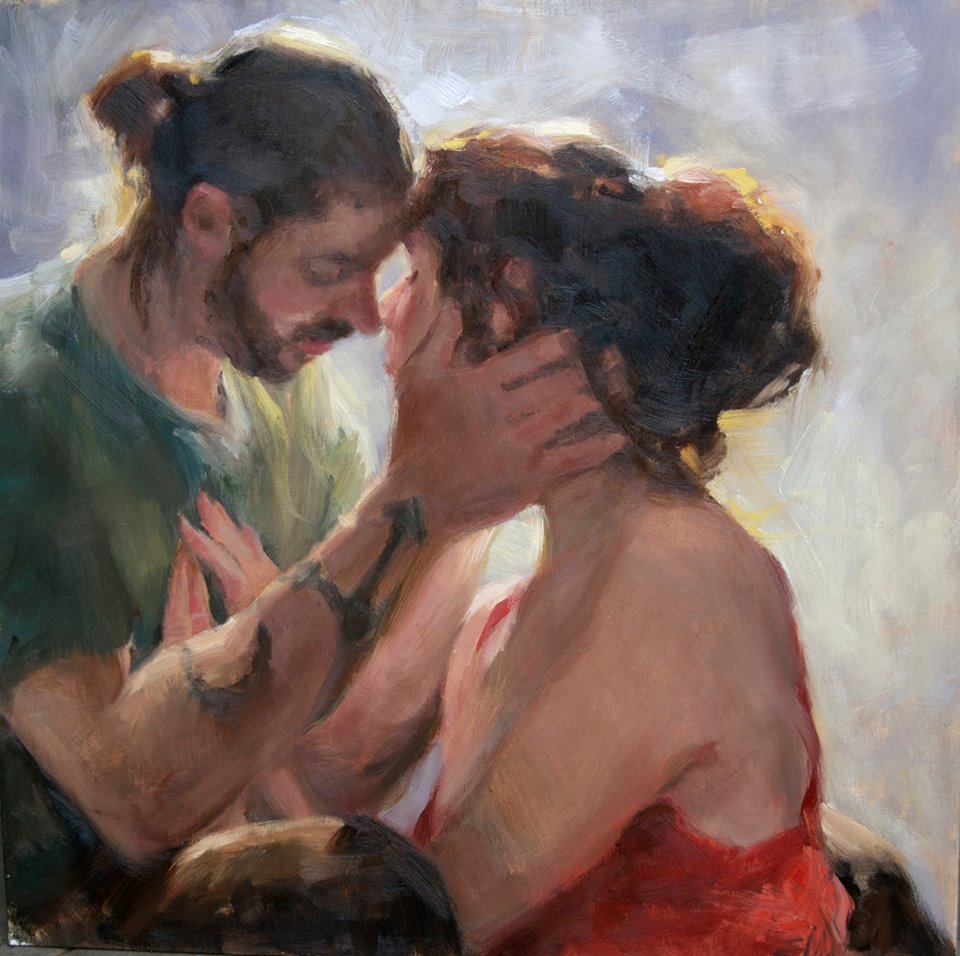
Alessio Issupoff | Genre painter

Born Alexei Vladimirovich Issupov / Алексей Владимирович Исупов (Russia, 1889 - Italy, 1957) into a family of icon makers, the artist studied at the Moscow School of Painting before immigrating to Italy in 1926 where he changed his name to Alessio and ended up spending most of his life.
While actively roaming the country, he executes numerous landscapes and portraits which reflect his Russian heritage while including references to the great masters of the Renaissance.
His dynamic treatment of the brush and bright color palette were greatly appreciated by contemporary critics and collectors. | © Sotheby's


Textual description of firstImageUrl

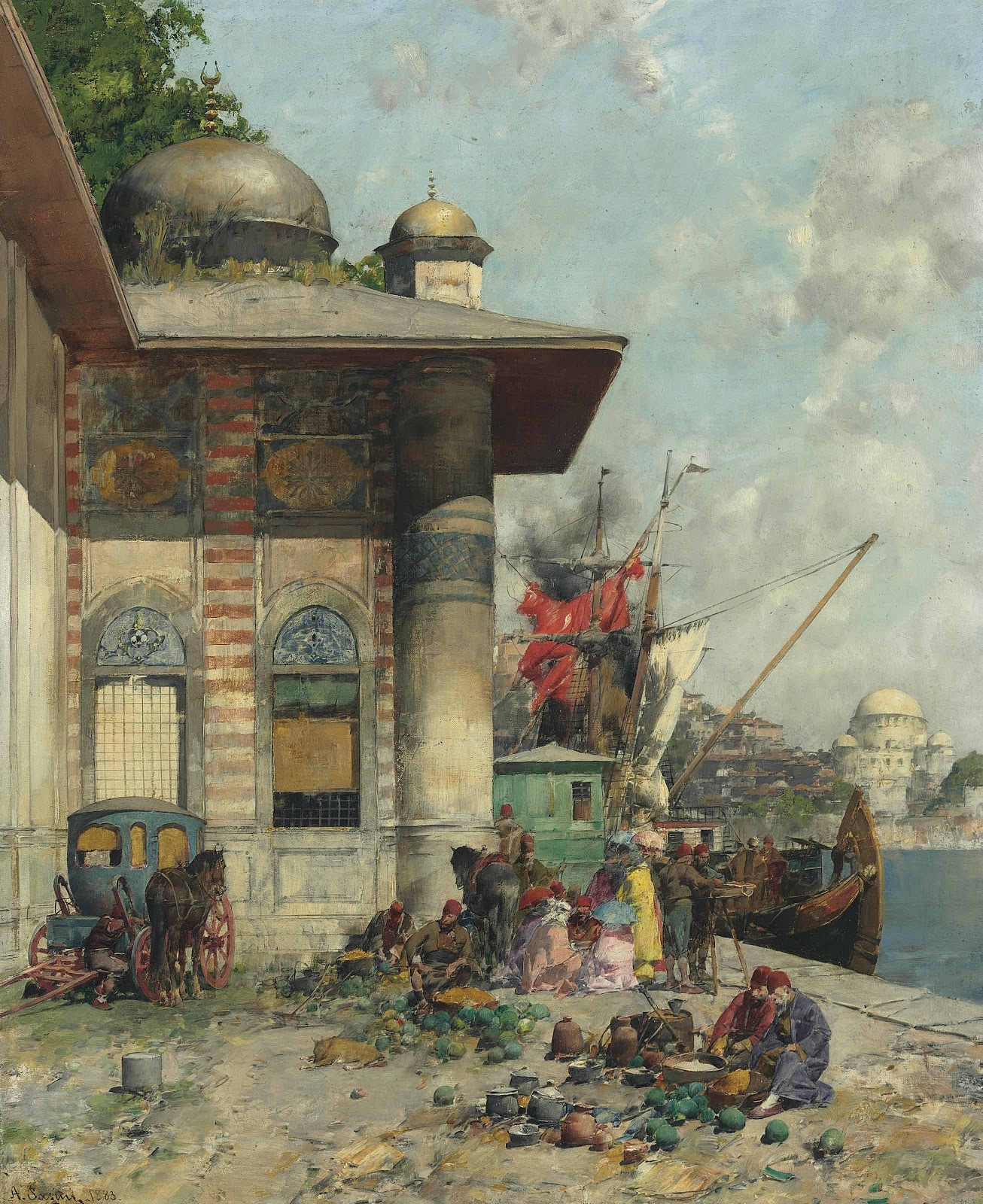
Alberto Pasini | Orientalist / Romantic painter

Alberto Pasini (Busseto, 1828-Cavoretto, 1899) was born in Busseto on 3 September 1826 to Giuseppe and Adelaida Crotti Balestra, the last of five children.
When his father died in 1828, his mother moved with her children to Parma, where she could count on the help of Alberto's uncle, the painter and miniaturist Antonio Pasini, a habitué of the Court circles and a collaborator of the famous typographer Bodoni.
Very soon the young Pasini expressed his own vocation by enrolling at the age of seventeen in the Accademia di Belle Arti in Parma, in the section of landscape painting, and in the drawing section in 1848.


Textual description of firstImageUrl

Market painting | Page 2

Hendrik Martensz Sorgh (Dutch Baroque Era painter, ca.1611-1670)

Textual description of firstImageUrl

Dan Borris | Yoga Dogs and Kittens

Photographer Dan Borris and his wife Alejandra have created these tongue-in-cheek images of popular dog breeds positioned in classic yoga poses.
Alejandra is a former yoga instructor and current animal practitioner.
She holds and coaxes the pets as closely as possible to the final pose.
Dan snaps the photos and finishes the images in Photoshop. The result is a hilarious invitation to get in touch with your inner pup.
After all if a Golden Retriever can hold that yoga pose, so can you! Yoga Dogs is designed to put a smile on your face, and a little more flexibility in your spirit. Play, BarkÖBreathe. Play, Purr...Breathe.


Textual description of firstImageUrl

Market painting

Franz Skarbina (1849-1910)

Textual description of firstImageUrl

Emil Barbarini | Impressionist painter

Emil Barbarini (1855-1930) was born in Vienna where he lived until his death.
He was at first apprentice to and consequently influenced by his father, the Landscape painter Franz Barbarini.
However, Emil soon found his own style which was very different from that of his father.
Apart from landscapes he painted market scenes of Vienna, Krems and other Austrian as well as foreign towns.
Similar to the French, he typically painted the same motifs at different times of the day thus creating variations featuring different shades of light. In his work, harmony dominates over contrast.


Textual description of firstImageUrl

Emil Barbarini | Market painting

The Austrian painter Emil Barbarini (1855-1930) was the son of the well-known landscape painter and etcher Franz Barbarini (1804-1873).
In contrast to the alpine themes of his father, he early started to focus on depictions of market scenes.
His favorite subject was the flower market in front of the Karlskirche in Vienna, but he also executed numerous market impressions of his study trips to the Netherlands and Belgium.


Textual description of firstImageUrl

E. Melinda Morrison | Impressionist painter


As a young woman, her B.A. in fine arts from the University of Texas at Tyler took a backseat to the corporate world for many years: advertising exec; graphic designer and art director of her own company; and later corporate and executive recruiter. Not surprisingly, she was recognized in national competitions for her print design and annual reports, but shortly after her move to Denver in 1994, the satisfied extrovert began to hear from the starving artist. She says she “felt like her soul was drying up”. An oil-painting class at the Art Students’ League of Denver rained water on that desert ground.

Textual description of firstImageUrl

Paintings of Notre-Dame de Paris

Victor Hugo🎨, in The Hunchback of Notre-Dame:
"A vast symphony in stone, so to speak; the colossal work of one man and one people, all together one and complex, like the Iliads and the Romanceros, whose sister it is; prodigious product of the grouping together of all the forces of an epoch, where, upon each stone, one sees the fancy of the workman disciplined by the genius of the artist start forth in a hundred fashions; a sort of human creation, in a word, powerful and fecund as the divine creation of which it seems to have stolen the double character - ariety, eternity".

Sylvius Paoletti (1864-1921) Notre Dame de Paris, 1907

Textual description of firstImageUrl

Donato Creti | Astronomical Observations, 1711

Donato Creti (24 February 1671 - 31 January 1749) was an Italian painter🎨 of the Rococo period, active mostly in Bologna.
The series of Astronomical observations was commissioned in 1711 by the Bolognese count Luigi Marsili.
He had the artist Donato Creti paint all the planets in as many small pictures and made a gift of these to the Pope to convince him of the importance for the Holy Church of an astronomical observatory.
The gift made it possible to achieve his goal, because with the support of Clement XI (pontiff from 1700-1721) the first public astronomical observatory was opened in Bologna a short time later.

Donato Creti | Osservazioni Astronomiche - Marte

Textual description of firstImageUrl

Henry John Stock | Pre-Raphaelite painter

Born in Soho, London, Henry John Stock (1853-1930) made a somewhat unusual start as an artist by going blind in childhood but recovered his sight on going to live at Beaulieu in the New Forest. Fully recovered, he studied at the St. Martin’s School of Art and at the Royal Academy Schools and was befriended by the engraver W. J. Linton, who, perhaps significantly, had engraved the illustrations to Gilchrist’s Life of William Blake🎨, 1863.
He exhibited at the Royal Academy between 1874-1910 and also at the Royal Institute of Painters in Watercolors, becoming a member in 1881, as well as at commercial galleries such as the Fine Arts Society.


Textual description of firstImageUrl

Jean Mannheim | Impressionist painter

Jean Mannheim (November 18, 1863 - September 6, 1945) was a German-born American artist and educator, known for his California Impressionist paintings. He was active in Decatur, Illinois and Pasadena, California.
Jean Mannheim (1861-1945) grew up in Kreuznach, Germany.
At age seventeen, he left home and began to journey throughout Germany making a living by binding books and painting portraits on the side. Shortly after being drafted into the German army, Mannheim defected and traveled to Paris to learn English and began his art studies.
From 1884-1908, Mannheim settled in the US, calling both Decatur, Illinois and Denver, Colorado home at times, while continuing to travel back to Paris for his art studies at respected Paris schools, including the Academie Julian.
During this time he married Eunice Drennan and the couple had two daughters, who were often portrayed in his work over the years.


Textual description of firstImageUrl

Sculptures in Notre-Dame de Paris

Notre-Dame de Paris🎨 - Stone, copper and bronze statues, including statues of the twelve Apostles that surrounded the base of the spire, had been removed from the site days prior to the 2019 fire as part of the renovations.

Adam - West facade

Textual description of firstImageUrl

Elisabeth Vigée Le Brun | Rococo painter

Elisabeth Louise Vigée-Le Brun (1755-1842) was one of the most successful portraitists of 18th century France, gaining renowned in particular for her self-portraits and depictions of courtly women, Queen Marie Antoinette most famously.
Born in Paris as the eldest child of the portraitist Louis Vigée (1715-1767) and Jeanne Maissin, Vigée Le Brun was trained by her father from an early age.
She succeeded in gaining entrance to the Académie de Saint-Luc at the age of just nineteen, a remarkable accomplishment for a woman at the time.


Textual description of firstImageUrl

Giuseppe Canella | Vedutista / Cityscape painter

Giuseppe Canella (28 July 1788 - 11 September 1847), also referred to as Giuseppe Canella the Elder, was an Italian painter🎨.
Initially trained by his father Giovanni, an architect, fresco painter and set designer, Giuseppe Canella started out producing stage sets and decorating stately homes in Verona and Mantua.
His brother, Carlo Canella🎨, was also a painter. It may have been under the influence of Pietro Ronzoni, a landscape painter of international renown active in Verona, that he took up landscape painting.
The first views were not produced until 1815, after a short stay in Venice. After making his debut at the Fine Art Exposition at the Brera Academy of 1818, he made a long journey through Spain, the Netherlands and France for study purposes.


Textual description of firstImageUrl

Notre-Dame de Paris, 1345 | A cathedral of Art and history

Notre-Dame de Paris, also known as Notre-Dame Cathedral or simply Notre-Dame, is a medieval Catholic cathedral on the Île de la Cité in the fourth arrondissement of Paris, France.
The cathedral is considered to be one of the finest examples of French Gothic architecture.
The innovative use of the rib vault and flying buttress, the enormous and colorful rose windows, and the naturalism and abundance of its sculptural decoration all set it apart from earlier Romanesque architecture.


Textual description of firstImageUrl

George Lawrence Bulleid | Victorian-Era painter


British painter🎨 George Lawrence Bulleid (1858-1933) was born in Glastonbury, Somerset in 1858, the son of a local solicitor and Councillor.
Bulleid joined the family firm but in 1881 but soon left to study at the Marylebone and West London School of Art under the instruction of the Principal, George Simpson.
As with so many Victorian artists of the time, he had a strong affection for classicism and antiquity, his early work would typically be of dark and sombre canvases with groups of figures arranged within an architectural structure, or contemplative individuals at moments of decision or classical melancholy.

Textual description of firstImageUrl

Mattia Preti | Baroque Era painter

Mattia Preti (24 February 1613 - 3 January 1699) was an Italian Baroque artist🎨 who worked in Italy and Malta. He was appointed a Member of the Order of Saint John.
Born in the small town of Taverna in Calabria, Preti was called Il Cavalier Calabrese (the Calabrian Knight) after appointment as a Knight of the Order of St. John (Knights of Malta) in 1660.
His early apprenticeship is said to have been with the "Caravaggist" Giovanni Battista Caracciolo, which may account for his lifelong interest in the style of Caravaggio🎨.


Textual description of firstImageUrl

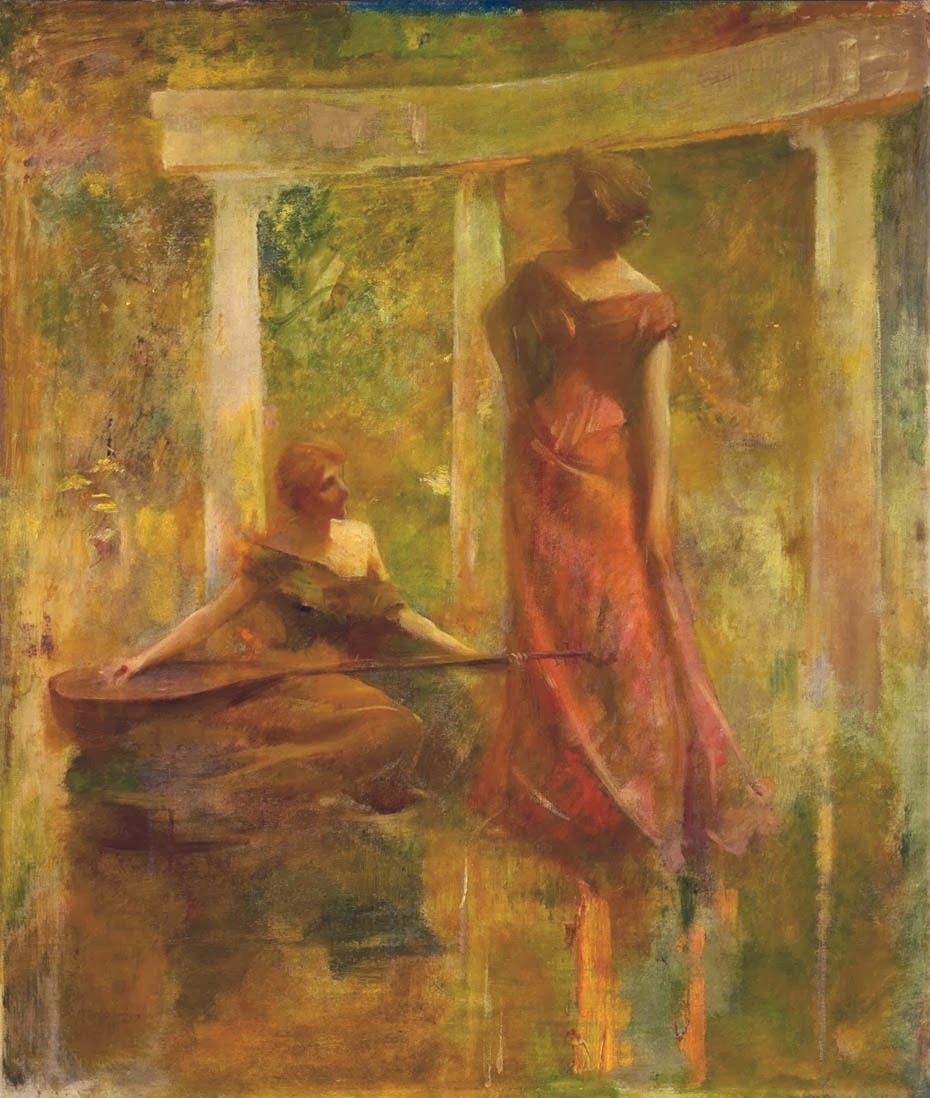
Thomas Dewing | Tonalist painter

Thomas Wilmer Dewing (May 4, 1851 - November 5, 1938) was an American painter working at the turn of the 20th century.
Schooled in Paris, Dewing was noted for his figure paintings of aristocratic women. He was a founding member of the Ten American Painters and taught at the Art Students League of New York. The Freer Gallery of Art at the Smithsonian Institution has a collection of his works.
He was the husband of fellow artist Maria Oakey Dewing.

Personal life and education

Thomas was born in Boston, Massachusetts to parents Sophronia Durant and Paul Dewing, and served as a lithographic apprentice until at least 1870 when he was 19 years old.
He later studied at the Académie Julian in Paris with Gustave Boulanger and Jules Lefebvre beginning in 1876.


Textual description of firstImageUrl

Mahmoud Said | Pioneer of modern Arab art

Mahmoud Said Bey / حمود سعيد (April 8, 1897 - April 8, 1964) was an Alexandrian judge and modern painter.
Mahmoud Said was born in Alexandria, Egypt; his father, Muhammad Said Pasha, was of Turkish origin and was the former Prime Minister of Egypt.
Queen Farida of Egypt was his niece and she described him as "a quiet, gentle, oppressively timid man".
After receiving his high school diploma, he went on to law school, receiving his degree in 1919.


Textual description of firstImageUrl

Irene Sheri, 1968 | Romantic Expressionism painter

Irene Sheri was born in the city of Belgorod-Dnestrovsky, Ukraine.
Her diverse heritage probably makes her one of the brightest example of a new breed of inter-cultural artists emerging from a "Europe without borders".
A mix of Bulgarian and French, she was born and raised in the Ukrainian city of Odessa, where cultures freely mixed, making Odessa one of the most colorful, bright and multinational cities in the world.


Textual description of firstImageUrl

Filippo Palizzi | Girl on the rock in Sorrento, 1871

Filippo Palizzi (Vasto, Chieti, 1818 - Naples 1899) was an Italian painter.
The Girl on the Rock in Sorrento is in the Balzan Collection in Milan, Italy.
The Barbizons were concerned with light and simple rustic and genre scenes.


Textual description of firstImageUrl

Ettore Tito | Genre painter

Ettore Tito (17 December 1859 - 26 June 1941) was an Italian artist, particularly known for his paintings of contemporary life and landscapes in Venice and the surrounding region.
He trained at the Accademia di Belle Arti in Venice and from 1894-1927 was the Professor of Painting there.
Tito exhibited widely and was awarded the Grand Prize in painting at the 1915 Panama-Pacific International Exposition in San Francisco.


Textual description of firstImageUrl

Max Svabinsky (1873-1962)

Max Švabinský (1873-1963) was a Czech painter🎨, draughtsman, graphic artist, and professor in Academy of Graphic Arts in Prague.
Švabinský is considered one of the more notable artists in the history of Czech painting and produced significant work during the first half of the 20th century.
He was relatively unusual among modernist artists in that his work was accepted by the communist regime; this was due at least in part to his having formed his artistic personality prior to 1900, prior to the advent of cubism. | © Wikipedia


Max Švabinský (1873-1963) è stato un pittore Ceco🎨, disegnatore, grafico e professore presso l'Accademia di arti grafiche di Praga.
È uno degli artisti più importanti del XX secolo, ammirato per la straordinaria abilità disegnativa e una grande varietà di tecniche grafiche. Si rese molto benemerito per far conoscere le belle arti ceche a tutta l'Europa.
Dalla fine degli anni Venti, dimorava spesso insieme alla moglie Ela presso la famiglia Vejrych a Kozlov vicino a Česká Třebová. Nel 1910 fu nominato professore dell'Academia di Praga.
Nel giornale Rajské sonáty, ampliò nel 1917 la gamma di proprie possibilità espressive con l'incisione in legno. Inoltre è autore di mosaiche per il Monumento Nazionale sul colle Žižkov a Praga, di cartoni per tre finestre colorate del Duomo di San Vito di Praga, nonché dell' abbozzo di una miniatura grafica per francobollo.
Max Švabinský continuò a disegnare quasi fino agli ultimi giorni della sua vita e morì il 10 febbraio 1962 a Praga.


Textual description of firstImageUrl

Pierre-Auguste Renoir | Seascape, 1879

Artist: Pierre-Auguste Renoir🎨 (French, 1841-1919)
Title: Seascape
Origin: France
Date: 1879
Medium: Oil on canvas
Inscriptions: Inscribed lower right: Renoir'79
Dimensions: 72.6 × 91.6 cm (28 1/2 × 36 in.)
Credit Line: The Art Institute of Chicago, Potter Palmer Collection
Reference Number: 1922.438


The name Renoir is closely associated with paintings of dancers, boaters, women, the celebration of life, and the enjoyment of leisure, which makes Seascape and its storm-tossed ocean quite unusual and unexpected.
For his landscapes, Renoir preferred sunny days with blue skies and calm winds; rarely do we see unsettled weather, and there are only four known winter scenes.


Il nome Renoir è strettamente associato con dipinti di ballerini, diportisti, donne, la celebrazione della vita e il godimento del tempo libero, il che rende Seascape ed il suo oceano tempestato di intemperie inusuali e inaspettati.
Per i suoi paesaggi, Renoir preferiva giornate soleggiate con cielo azzurro e venti calmi; raramente vediamo condizioni meteorologiche instabili e ci sono solo quattro scene invernali conosciute.

Textual description of firstImageUrl

Max Liebermann | Impressionist painter

Max Liebermann, (born July 20, 1847, Berlin, Ger. - died February 8, 1935, Berlin), painter and printmaker who is known for his naturalistic studies of the life and labour of the poor. He was also the foremost proponent of Impressionism🎨 in Germany.


Textual description of firstImageUrl

Claude Monet | The Geese / Le oche, 1874

The Geese was painted a few months after the first Impressionist exhibition and the painting's bright tone and thickly applied touches of color are characteristic of Monet’s🎨 experimental technique during this period.
More unusual is the painting’s vertical format and dense composition.
Tall trees shade a path that leads our eye from the rippling water in the foreground to the diminutive figures of a woman and child standing in front of a sunlit, whitewashed building. | © The Clark Art Institute


Textual description of firstImageUrl

Carlo Grubacs | Venice painter

The Grubacs name is closely associated with views of Venice, especially of the Grand Canal.
The eighteenth-century tradition of veduta painting was carried on by artists such as Carlo Grubacs (1812-1870) and his sons Giovanni and Marco, all of whom remained faithful to their predecessors Canaletto and Guardi.
Italian painter of animated urban waterscapes and architectural features.
Carlo Grubacs was born in Venice.


Textual description of firstImageUrl

The Head of Franz Kafka by David Černý

Other work by artist David Černý is located at yard of the shopping center Quadrio, metro Národní třída in Prague.
This bust of Franz Kafka weighs 39 tons and is composed of 42 moving layers and reaches a height of 11 meters.