Textual description of firstImageUrl

Jean Geoffroy (1853-1924) | Genre painter


Henri-Jules-Jean Geoffroy, also known by the pseudonym Géo was a French painter🎨 and illustrator, known primarily for his genre scenes🎨 with children. Some sources give his first names in reverse order.
His father, Jean-Baptiste (1822-1895), was a tailor and costume designer.
His mother, Rosalie, was the eldest daughter of an English painter named John Dickinson (1791-1830). They moved to Paris when he was only two.


In 1871, he began his studies at the École des Beaux-Arts; originally with Léon Bonnat, then with Eugène Levasseur (1822-1887) and Adolphe Yvon.
His first exhibition came in 1874, at the Salon, followed by the Salon des artistes français, of which he became a member in 1883.
For many years, until 1886, he took additional lessons from Émile Bin.
During these years, he had the patronage of the wood merchant, Laurent-Louis Borniche (1801-1883), who was also an avid art collector and creator of the Pavillon de l'Arsenal art museum. Geoffroy's career culminated with a gold medal🎨 at the Exposition Universelle (1900).
In 1882, he received a major commission from the Ministry of National Education.
In addition to paintings, he provided guidance on how images could be used in the classroom.
He was named an Officer of Public Instruction two years later.
In 1887, he was named a Chevalier in the Legion of Honor.


Another commission for five murals was received in 1893, occasioning trips to Brittany and Algeria to gather material.
He came to be a painter of children because, at the beginning of his career, he shared an apartment with two teachers, Louis and Julie Girard, above their private school.
Years later, when they opened a boarding school, he took inspiration for his works there.
Many document the social advancements made during the Third Republic. When Louis died in 1890, he became Julie's protector.
Around 1876, he met Pierre-Jules Hetzel, who hired him to be an illustrator of books for young people. After 1880, he signed his illustrations with the name "Géo".
He also became friends with Doctor Gaston Variot, who had worked with Louis Pasteur, and became an enthusiastic campaigner for Pasteurization.
He died of an undisclosed illness in 1924 and willed his remaining collection to Julie Girard. The Girard family still maintains his studio. | © Wikipedia


Jean Geoffroy (Marennes (Charente Marittima), 1º marzo 1853 - Parigi, 15 dicembre 1924) è stato un pittore ed illustratore Francese🎨.
Jean Geoffroy era figlio di Jean-Baptiste Geoffroy, sarto, e di Rosalie Dickinson. Sin da bambino fu chiamato con il nomignolo di "Gio" (pron. Jo), che in seguito divenne il suo pseudonimo con il quale firmò diversi lavori di illustrazione a partire dal 1880.
Dopo le scuole iniziali suo padre lo mandò a Parigi, dove poté seguire i corsi dell'École des beaux-arts. Qui fu allievo di Léon Bonnat, poi di Adam Levasseur e di Adolphe Yvon.
A partire dal 1874 Jean Geoffroy iniziò ad esporre i suoi lavori al "Salon de Paris", ed in seguito anche al "Salon des artistes français", di cui divenne socio nel 1883.


In quello stesso anno ricevette una menzione d'onore, nel 1886 una medaglia🎨 di terza classe e infine fu premiato con la medaglia d'oro in occasione dell'Expo di Parigi del 1900.
Nel 1885 fu insignito del titolo di cavaliere della Légion d'honneur.
Geoffroy dipinse in particolare scene di genere e ritratti, ma divenne noto per aver saputo trasferire felicemente sulle sue tele il fascino sereno dell'infanzia.
All'inizio della sua carriera, infatti, Geoffroy abitava nella casa di una coppia di maestri di scuola, in un appartamento situato sopra un istituto scolastico per bambini.
La vicinanza quotidiana di costoro gli fece apprezzare, e quindi poi trasportare nei suoi quadri con assoluta sincerità, il fascino ingenuo degli scolaretti.
Verso il 1876 incontrò l'editore Pierre-Jules Hetzel che lo assunse come illustratore di libri per bambini e giovani. Per questo le sue illustrazioni, dal 1880, sono firmate con lo pseudonimo di "Gio".
Jean Geoffroy morì a Parigi nel 1924 all'età di 71 anni. | © Wikipedia


Textual description of firstImageUrl

Sofonisba Anguissola (1532-1625) | Renaissance painter


Sofonisba Anguissola also known as Sophonisba Angussola or Sophonisba Anguisciola, was an Italian Renaissance painter born in Cremona to a relatively poor noble family.
Anguissola is significant to feminist art historians. Although there has never been a period in Western history in which women were completely absent in the visual arts, Anguissola's great success opened the way for larger numbers of women to pursue serious careers as artists; Lavinia Fontana expressed in a letter written in 1579 that she and another woman, Irene di Spilimbergo, had “set [their] heart[s] on learning how to paint” after seeing one of Anguissola’s portraits.

Textual description of firstImageUrl

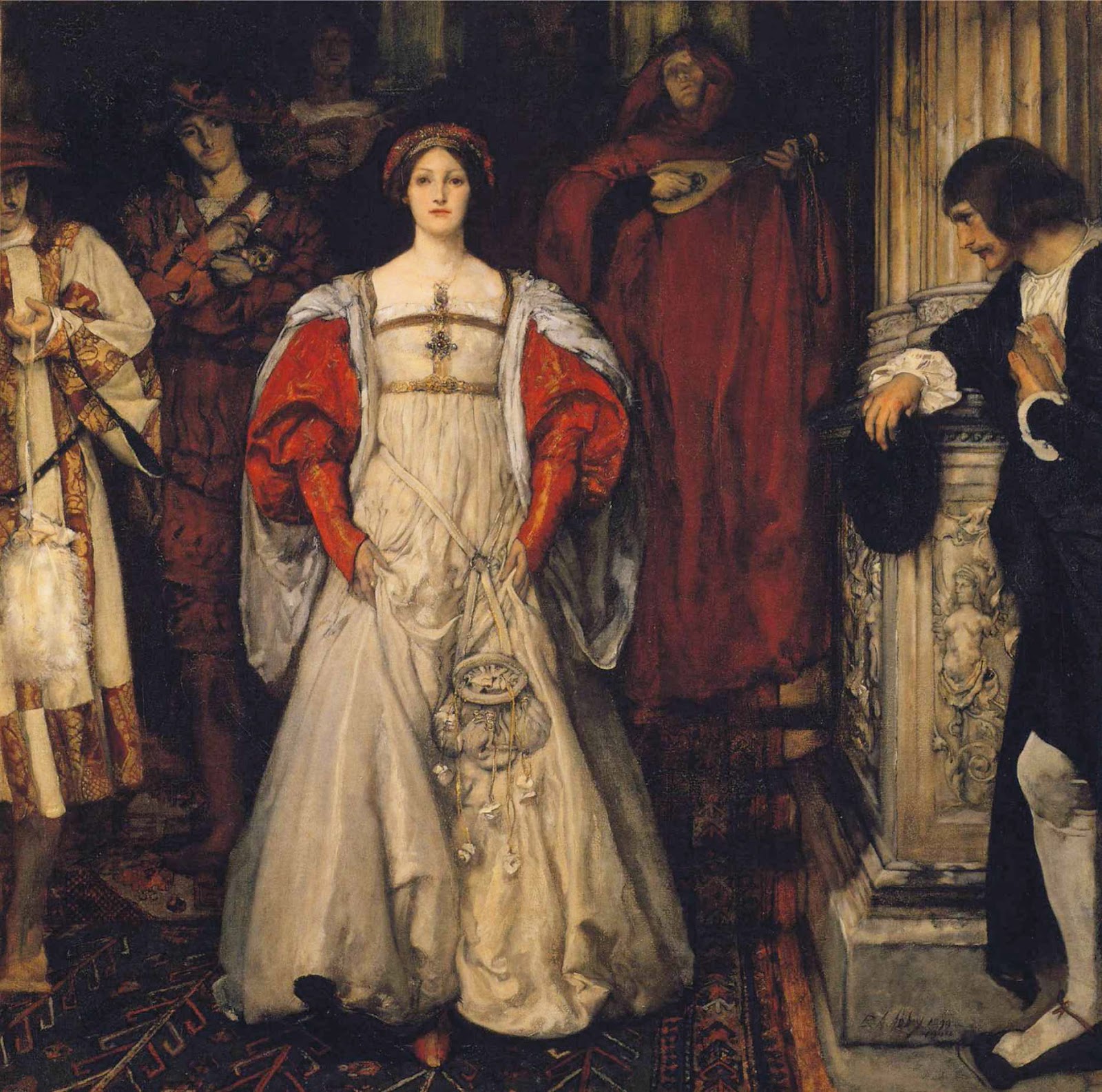
Edwin Austin Abbey / Shakespeare | Who is Sylvia? What is She...

Who is Sylvia - What is she, that all the swains commend her by Edwin Austin Abbey (1899)

The "Two Gentlemen of Verona" is a comedy by William Shakespeare, believed to have been written between 1589-1593.
It is considered by some to be Shakespeare's first play, and is often seen as showing his first tentative steps in laying out some of the themes and motifs with which he would later deal in more detail; for example, it is the first of his plays in which a heroine dresses as a boy.
The play deals with the themes of friendship and infidelity, the conflict between friendship and love, and the foolish behaviour of people in love.
The highlight of the play is considered by some to be Launce, the clownish servant of Proteus, and his dog Crab, to whom "the most scene-stealing non-speaking role in the canon" has been attributed.
Two Gentlemen is often regarded as one of Shakespeare's weakest plays. It has the smallest named cast of any play by Shakespeare.

Textual description of firstImageUrl

Leonardo da Vinci | Quotes / Paintings

"Painting is concerned with all the 10 attributes of sight; which are: Darkness, Light, Solidity and Colour, Form and Position, Distance and Propinquity, Motion and Rest".
"La pittura riguarda tutti i 10 attributi della vista; che sono: oscurità, luce, solidità e colore, forma e posizione, distanza e propinquità, movimento e riposo".
"Learning never exhausts the mind".


Textual description of firstImageUrl

Michelangelo Buonarroti | Crouching Boy, 1530


Author: Michelangelo Buonarroti (Italian High Renaissance / Mannerist Painter / Sculptor, 1475-1564)
Title: Crouching Boy
Place: Italy. Florence
Date: circa 1530-1534
Material: marble
Dimensions: height: 54 cm
Acquisition date: Entered the Hermitage in 1851; transferred from the Academy of Fine Arts

Textual description of firstImageUrl

Claude Monet at the Hermitage Museum


Claude Monet (1840-1926), a leading Impressionist painter is exhibited at the The State Hermitage Museum in Room 403.

The State Hermitage Museum / Госуда́рственный Эрмита́ж is a museum of art and culture in Saint Petersburg, Russia.
The second-largest art museum in the world, it was founded in 1764 when Empress Catherine the Great acquired an impressive collection of paintings from the Berlin merchant Johann Ernst Gotzkowsky.

Textual description of firstImageUrl

Paul de Longpré | Summer fragrance

A famous French and American flower painter, Paul de Longpre (1855-1911) was the most significant watercolor specialist to arrive in Los Angeles in the late 19th century and became the city's first major still-life painter.
It is likely he was the first southern California painter to earn a major national reputation.
He was born in Lyons, France, where he was a member of the aristocratic, although not wealthy, Maucherat de Longpre family.


Textual description of firstImageUrl

Moise Kisling (1891-1953)

Moïse Kisling was a Polish-born French painter.
He moved to Paris in 1910 at the age of 19, and became a French citizen in 1915, after serving and being wounded with the French Foreign Legion in World War I.
He emigrated to the United States in 1940, after the fall of France, and returned there in 1946.
Moïse Kisling died in Sanary-sur-Mer, Var, Provence-Alpes-Côte d'Azur, France on April 29, 1953.
A residential street in the town is named after him.


Textual description of firstImageUrl

Michal Lukasiewicz, 1974 | Pop portrait painter


Michal Lukasiewicz was born in Pulawy, Poland and since 1995 lives and work in Antwerp, Belgium.
"My paintings are of the human form, the soft tenderness that it can transfer to the viewer; never the anger of the world but the peace and harmony that humans are capable of.
I have been influenced by living in Belgium and painters of the Benelux countries and I try to show the placid side of the subject using light, the reflection of light and the shadows to emphasise the subjects form and curves".

Textual description of firstImageUrl

Jean-Baptiste Greuze | Rococo painter

Jean-Baptiste Greuze (1725-1805) was a French painter of portraits, genre scenes and history painting.
Greuze studied first at Lyon and afterward at the Royal Academy in Paris.
He first exhibited at the Salon of 1755 and won an immediate success with his moralizing genre painting of Father Reading the Bible to His Children (1755).


Textual description of firstImageUrl

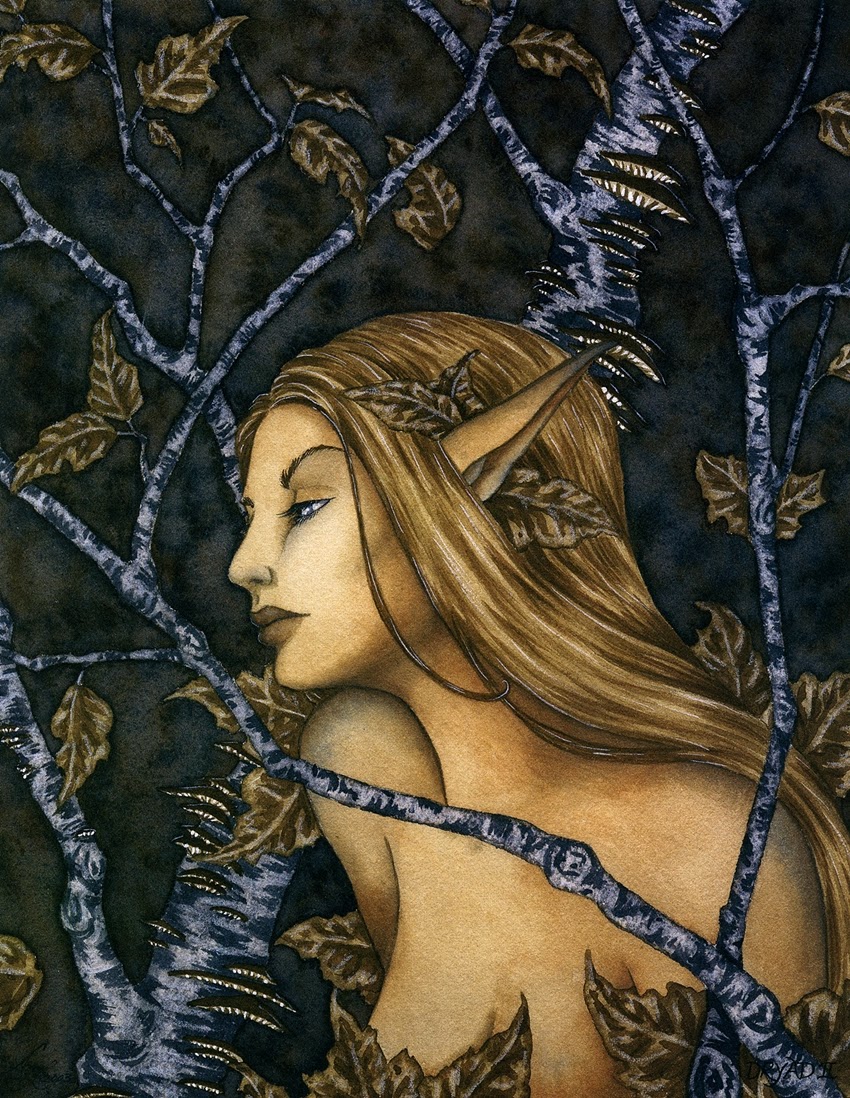
Il mondo magico di Amy Brown, 1972

L'artista del Pacifico nord-occidentale Amy Brown è nata a Bellingham, Washington nel 1972.
Amy Brown crea arte fantasy ad acquerello da oltre 30 anni.
Amy Brown ha iniziato a dipingere fate nel 1992. Le fate le avevano sempre interessate, ma non le aveva mai considerate come un'opzione di carriera.
Da bambina, il suo interesse per le fate è sorto quando è stata introdotta alle opere di Arthur Rackham, Brian Froud ed Alan Lee.
Film come The Dark Crystal, Labyrinth e Legend hanno avuto un ruolo importante nello sviluppo dell'amore della Brown per i racconti fantastici e le creature mistiche.


Textual description of firstImageUrl

Pietro Perugino | The Certosa di Pavia Altarpiece, 1496-1500

Pietro Perugino (Italian Early Renaissance painter, ca.1445-1523) painted this altarpiece for the Duke of Milan, Ludovico Sforza.
It stood in the side chapel dedicated to the Archangel Michael in the Carthusian monastery (also known as a charterhouse or certosa) in Pavia, a town outside Milan.
The Duke was captured by invading French forces in 1499, and the altarpiece was completed in the early sixteenth century by two other painters: Fra Bartolommeo and Mariotto Albertinelli.


Textual description of firstImageUrl

Hyacinthe Collin de Vermont | Allegories of the Four Seasons

Hyacinthe Collin de Vermont | Autumn from Allegories of the Four Seasons

Hyacinthe Collin de Vermont (19 January 1693, Versailles - 16 February 1761, Paris) was a French painter🎨.
He was born into a prosperous family: his father was a teacher and engineer, and his brother François Collin de Blamont (1690-1760) was Surintendant de la Musique de la Chambre.
Collin de Vermont was a pupil of Jean Jouvenet and Hyacinthe Rigaud.
In 1715 Collin came second in the Prix de Rome competition with the Gratitude of the People towards Judith (untraced).

Textual description of firstImageUrl

Edwin Austin Abbey | Pre-Raphaelite painter / Illustrator


Edwin Austin Abbey, American painter🎨 and one of the foremost illustrators of his day.
While working as an illustrator for the publishing house of Harper and Brothers, New York City, Abbey began to create illustrations for the poems of Robert Herrick in 1874.
He went on to create illustrations for some of the works of Oliver Goldsmith and William Shakespeare🎨.

Textual description of firstImageUrl

William-Adolphe Bouguereau (1825-1905)

William-Adolphe Bouguereau was a French academic painter.
In his realistic genre paintings he used mythological themes, making modern interpretations of classical subjects, with an emphasis on the female human body.
During his life he enjoyed significant popularity in France and the United States, was given numerous official honors, and received top prices for his work.


As the quintessential salon painter of his generation, he was reviled by the Impressionist avant-garde. By the early twentieth century, Bouguereau and his art fell out of favor with the public, due in part to changing tastes.

In the 1980s, a revival of interest in figure painting led to a rediscovery of Bouguereau and his work.
Throughout the course of his life, Bouguereau executed 822 known finished paintings, although the whereabouts of many are still unknown.


Textual description of firstImageUrl

Edgar Degas: "People call me the painter of dancing girls.."


"Do it again, ten times, a hundred times. Nothing in art must seem to be an accident, not even movement".
"Bisogna rifare dieci volte, cento volte lo stesso soggetto. Niente, in arte, deve sembrare dovuto al caso".

Textual description of firstImageUrl

Pierre-Auguste Renoir: "I grandi uomini sono modesti”!

"Shall I tell you what I think are the two qualities of a work of art? First, it must be indescribable, and, second, it must be inimitable".
"Vuoi sapere quali sono le due qualità di un'opera d'arte? In primo luogo, deve essere indescrivibile e, in secondo luogo, deve essere inimitabile".
"I grandi uomini sono modesti".


Textual description of firstImageUrl

Pietro Perugino (1450-1523) | Raphael's master


Perugino🎨, byname of Pietro di Cristoforo Vannucci, Italian Renaissance painter🎨 of the Umbria school and the teacher of Raphael🎨.
His work (e.g., Giving of the Keys to St. Peter🎨, 1481-82, a fresco in the Sistine Chapel in Rome) anticipated High Renaissance ideals in its compositional clarity, sense of spaciousness, and economy of formal elements.

Textual description of firstImageUrl

Perugino | The Sistine Chapel frescoes


The wall paintings of the Sistine Chapel🎨 are among the most important examples of the type of painting developed in Florence in the later fifteenth century.
The five artists brought to Rome to execute them came from various different art centres: Botticelli🎨, Ghirlandaio and Rosselli from Florence, Perugino from Umbria🎨, Signorelli from Cortona.

Textual description of firstImageUrl

Perugino | Early Renaissance painter

Pietro Perugino (1450-1523), was born Pietro di Cristoforo Vannucci.
Contemporaries regarded Perugino as one of the leading painters in Florence in the 1480s and as the "best master in Italy" in 1500, but soon afterward his reputation suffered a decline from which it has only partly recovered.
The grounds for this criticism, then as now, is the formulaic quality of his work, in particular his tendency to repeat figure types or even whole compositions again and again.


Textual description of firstImageUrl

Maya Green, 1957 | Abstract painter


Maya Green [Майя Грин] -born Maya Greenblat, is a Ukrainian-Jewish contemporary painter, graphic artist, illustrator and sculptor.
I have been an artist my whole life. Originally, i was born and raised in Ukraine and I first developed my love of art there. Since my childhood, I have been intrigued with the patterning of light and the interaction of color. I studied at the School of Art in Ukraine.

Textual description of firstImageUrl

Luke Hillestad, 1982


I am a Minneapolis based figurative painter. I began painting in 2006 with Rembrandt and Caravaggio books open next to my empty canvas.
Since then, I have worked to create paintings with themes that would be raw and enduring.
My focus has been on narratives of birth, kinship, ritual, and healing. The most beautiful objects are paintings, and the most beautiful subjects should be painted.

Textual description of firstImageUrl

Artus Wolffort | Baroque painter

Artus Wolffort, Artus Wolffaert or Artus Wolffaerts (1581-1641) was a Flemish painter known mainly for his history paintings depicting religious and mythological scenes.
Wolffort and his work were not well known until the late 1970s and some of his paintings were even classified as early works by Rubens.
His oeuvre was reconstructed from a fully signed work (Esther's Toilet in the Harem of Ahasuerus, original untraced, 10 copies of which one fully signed in the Victoria and Albert Museum in London) and various paintings bearing a monogram.


Textual description of firstImageUrl

Giorgio Dante, 1982 | Figurative painter

Giorgio Dante is an Italian figurative painter living and working in Rome, Italy.
After graduating in 2006 at the Academy of Fine Arts in Rome, Dante distinguished himself as an artist of contemporary revival of classical painting.
His work emphasizes traditional methods and techniques of old masters.
Italian art inspired him to paint since his childhood and influenced his choice to pursue an academic figurative style, focused on 19th century European painting (William Bouguereau, Lawrence Alma-Tadema, Lord Leighton, John William Waterhouse, Paul Delaroche, Jan Jaques Henner, ecc).
He exhibited in Europe and Usa.


Textual description of firstImageUrl

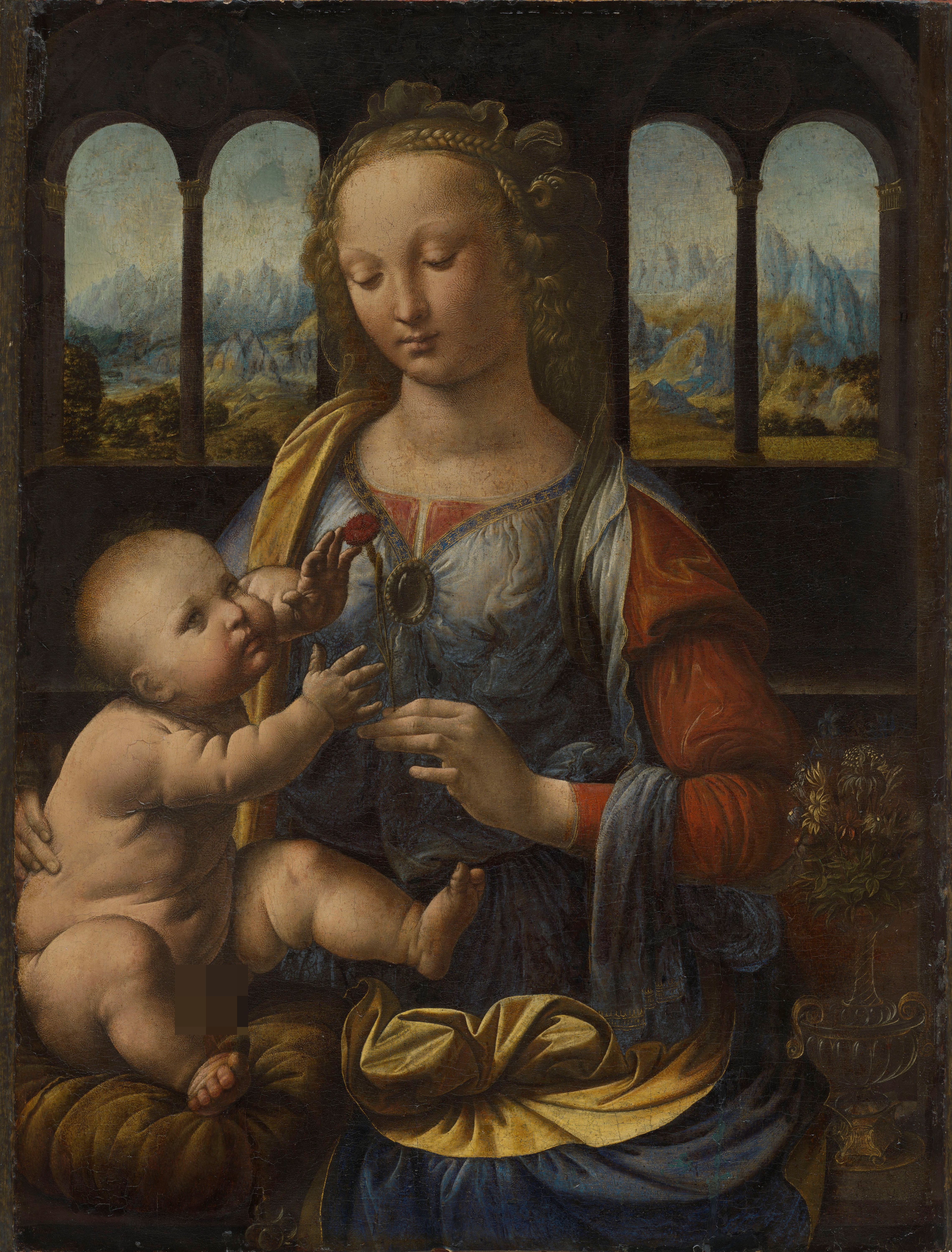
Bernardino Luini | High Renaissance painter


Bernardino Luini - born Bernardino Scapi (1480-1532), was a North Italian painter from Leonardo's circle during the High Renaissance.
Both Luini and Giovanni Antonio Boltraffio were said to have worked with Leonardo directly; he was described as having taken "as much from Leonardo as his native roots enabled him to comprehend".
Consequently, many of his works were attributed to Leonardo.
He was known especially for his graceful female figures with elongated eyes, called Luinesque by Vladimir Nabokov.

Textual description of firstImageUrl

Juan Carlos Verdial, 1957 | Surrealist painter


Cuban painter Juan Carlos Verdial was born in Havana, Cuba. Graduated from Art Academy of San Alejandro, Havana, Cuba.
He is a graduate of the San Alejandro Academy of Art, the oldest and most prestigious Fine Art school in Cuba, and a member of the National Union of Writers and Artists of Cuba (UNEAC).
His works have been shown in close to 100 solo and group exhibitions across South, Central, and North America, including Chile, Panama, Puerto Rico and Costa Rica, as well as Miami, Boston and New York.

Textual description of firstImageUrl

Richard Bergh | Naturalist painter

Sven Richard Bergh (1858–1919) was a Swedish painter, art critic and museum manager. Despite many years in France, he remained unattracted to Impressionism, preferring instead the Naturalism of painters such as Jules Bastien-Lepage. He also rejected the idea of creating landscapes en plein aire.
Both of his parents, Johan Edvard Bergh and Amanda Helander (1825-1888), were artists and, presumably, his first teachers. He began his formal studies with Edvard Perséus, at his private school then, from 1878-1881, at the Royal Swedish Academy of Fine Arts.
His first works were scenes from Swedish history, painted in the Academic style.
In 1881, he went to Paris, where he took lessons from Jean-Paul Laurens at the Académie Colarossi. His first exhibition at the Salon came in 1883 and he completed his studies in 1884.
The following year, he and his friend, Ernst Josephson, became members of the Nordic art colony at Grez-sur-Loing.


Textual description of firstImageUrl

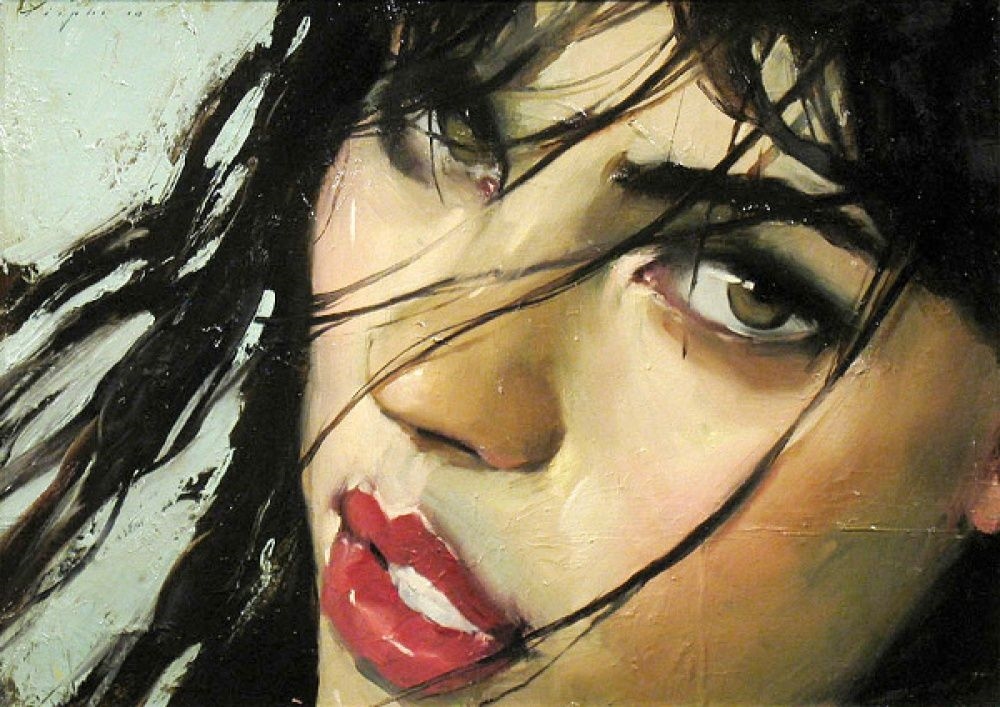
Malcolm T. Liepke, 1953 | Figurative painter


Malcolm T. Liepke, American painter, was born and raised in Minneapolis. As a student he hungered for 'classical' training rather than the 'conceptual' ideas being taught. In a bold move, he left the Art Center College in Los Angeles and went to New York.
That Malcolm Liepke’s paintings are arrestingly beautiful is evident, but they are much more.
Through pattern, colour and bravura brushwork, Liepke delves deeply into profound areas of human nature. He has exhibited extensively internationally enjoying phenomenal success with a string of sell out exhibitions.
He is an experienced, mid-career painter who has exhibited all over the world; his work is represented in numerous private and public collections.

Textual description of firstImageUrl

Carlo Maratta (1625-1713) | Baroque painter


Carlo Maratta, Maratta also spelled Maratti, (born May 15, 1625, Camerano, Papal States [Italy]- died Dec. 15, 1713, Rome), one of the leading painters of the Roman school in the later 17th century and one of the last great masters of Baroque🎨 classicism.
His final works offer an early example of “arcadian good taste” (named for the Academy of Arcadians, of which he was a member), a style that was to dominate Roman art for the first half of the 18th century.

Textual description of firstImageUrl

Rafal Olbinski, 1943 | Surrealist painter

Rafał Olbiński is a Polish-born illustrator, painter and educator, living in the United States.
Olbiński graduated from the architecture program of the Warsaw University of Technology in 1969.
Olbiński immigrated to the United States in 1981, where he soon established himself as a prominent painter, illustrator and designer.


Textual description of firstImageUrl

Boccaccio Boccaccino (1467-1525) | Early Renaissance painter


Boccaccio Boccaccino was a painter of the early Italian Renaissance🎨, belonging to the Emilian school. He is profiled in Vasari's🎨 "Le Vite delle più eccellenti pittori, scultori, ed architettori" (or, in English, Lives of the Most Excellent Painters, Sculptors, and Architects).
He was born in Ferrara and studied there, probably under Domenico Panetti.
Few facts of his life are known.
His principal artistic activity was in Venice, Ferrara, and especially in Cremona, where he founded a school in which Garofalo🎨 was a pupil.

Textual description of firstImageUrl

Laurits Andersen Ring | Style and motifs

Danish artist Laurits Andersen Ring (1854-1933) was one of the finest Danish painters of his generation, a golden generation that established Danish painting in the eyes of the world, numbering amongst his contemporaries his friend Harmmershoi (1864-1916), Holsoe (1863-1935), Ilsted (1861-1933) and Monsted (1859-1941).
A feature often seen in Ring's art is to place one or more objects at the edge of picture, which can be seen in e.g. Runesten ved Roskilde Landevej, Når taget ventes. Jernbaneoverkørsel ved Roskilde Landevej, Summerday by Roskilde Fjord and Lundbyes bænk ved Arresø.


Textual description of firstImageUrl

Jacobello Alberegno (Venice, c.1367-1397)

Jacobello Alberegno | Polyptych of the Apocalypse | Whore of Babylon | Accademia Venice

Jacobello Alberegno also Jacobello Albaragno or Jacopo Alberegno (born before 1367; died before July 14, 1397 in Venice) was an Venetian painter active in the second half of the fourteenth century.
Jacobello Alberegno was fixed in the tradition of early Venetian painting masterpieces.

Textual description of firstImageUrl

Gustave Caillebotte | A Balcony in Paris


Those boulevards, don’t forget, were still pretty new in 1877.
In the mid-19th Century, Napoléon III had ordered a massive redevelopment of the unruly French capital - led by Georges-Eugène Haussmann, the prefect of the Seine, who boldly (you might say pitilessly) cleared out Paris’s dense, politically restless faubourgs.
In their place arose standardised blocks of housing, fronting new extended axes that showcased landmarks like so many imperial baubles.

Textual description of firstImageUrl

Lorenzo Bartolini | Faith in God / Fiducia in Dio, 1835


Lorenzo Bartolini🎨's "Fiducia in Dio" is the artist's best-known work and, more generally, is emblematic of Italian sculpture🎨 in the generation after Canova🎨. The model recalls Canova🎨's Mary Magdalen, but the work is more indebted to the observation of nature than the influence of the antique. It typifies the move towards a softer Neo-classicism which made way for Romanticism in Italian sculpture🎨.

Textual description of firstImageUrl

Camille Claudel | L'âge mûr / L'Età matura, 1902


The Age of Maturity/L'âge mûr is probably the work that most lends itself to an interpretation based on autobiographical narrative: the end of the relationship between Claudel🎨 and Rodin🎨.
In actual fact, the association of the three figures with Camille Claudel🎨, Auguste Rodin🎨 and Rose Beuret arose some time after the sculpture was first exhibited. The critics initially saw it as the “symbolic representation of Destiny, in which the ageing man is torn away from love, youth and life”.

Textual description of firstImageUrl

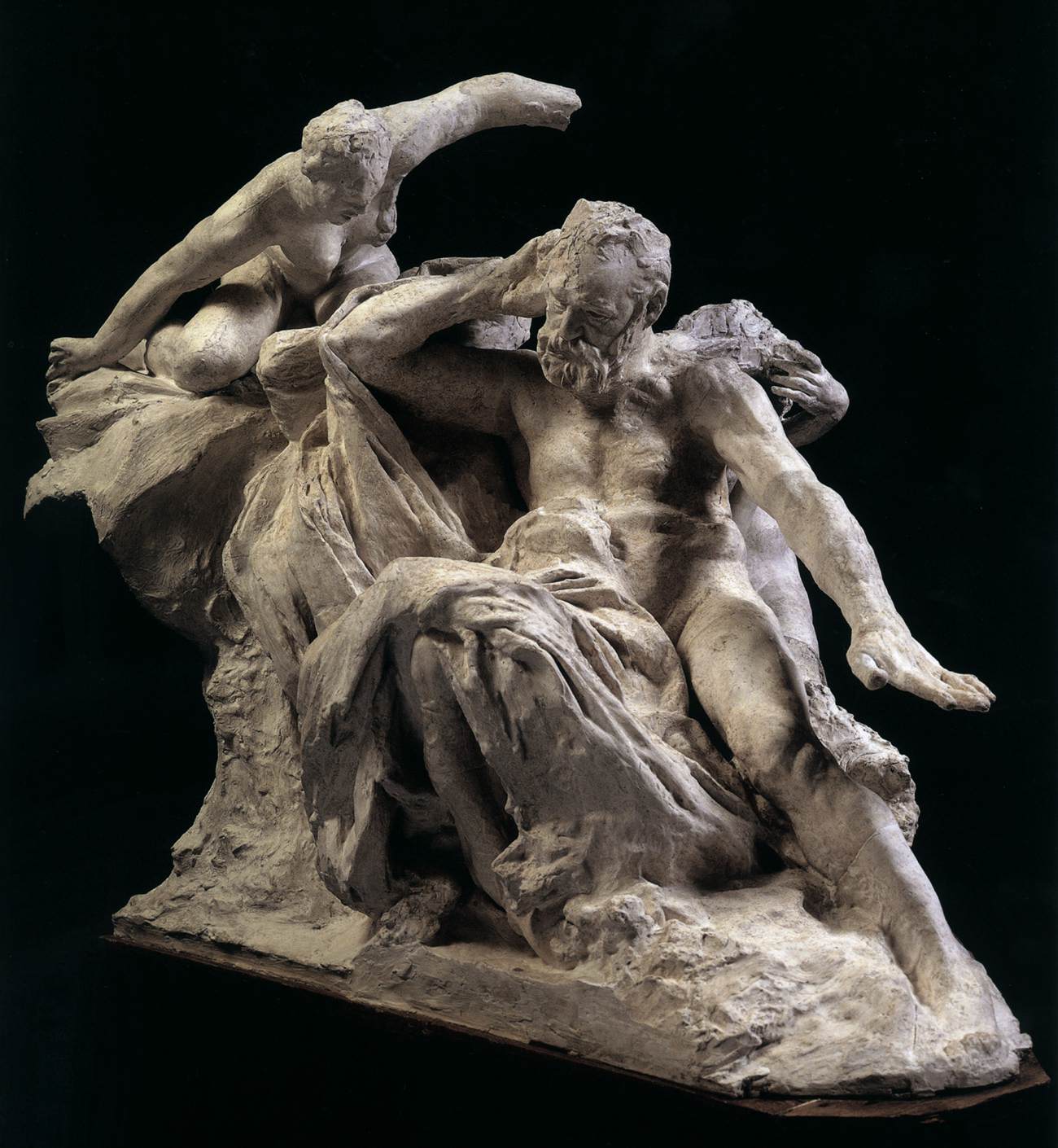
Auguste Rodin | Victor Hugo et les Muses, 1890


After Victor Hugo’s death in 1885, it was decided to erect a monument in his honour in the Panthéon as a pendant to Injalbert’s statue of Mirabeau. Auguste Rodin🎨 was awarded🎨 the commission in 1889. The sculptor chose to depict Victor Hugo in exile, seated amongst the rocks of Guernsey, his arm outstretched as if to calm the waves. It was an image both of the poet lost in contemplation and of the champion of the Republican cause.
This first project, “which lacked clarity and whose silhouette was muddled”,was unanimously rejected. In 1891, the Ministry of Fine Arts found another site for it. It would eventually be erected in the gardens of Palais-Royal.