Textual description of firstImageUrl

Guido Argentini, 1966 | Silver dancers

Guido Argentini, Italian photographer, was born in Florence, Italy. He studied Medicine for three years at the university of Florence.
At 23 he decided to turn his passion for photography into a profession and started to shoot fashion and beauty.


Textual description of firstImageUrl

Yosuke Ueno, 1977 | Pop Surrealist painter

Yosuke, Japanese painter🎨, started to create original characters and draw them since early childhood, and learned his way to paint by himself.
The first solo show was held in Yamaguchi when he was sixteen, 1994.
Known as Spaceegg77, and shows works in Asia, the U.S, and Europe, living in Tokyo.
Also known as a specialist of symbolism and innocence. Sometimes four colors like red, green, yellow, and blue appear in his works.
These colors represent the four bases of DNA: adenine, thymine, guanine and cytosine, that is, A, T, G and C-molecular elements that all animate beings share. Yosuke paints these colors and A, T, G and C with a message that all animate beings should have equal worth.


Textual description of firstImageUrl

Aforismi di Andy Warhol: "In futuro tutti saranno famosi per quindici minuti.."

Affascinato dalla cultura del consumo, dai media e dalla fama, lo stesso Andy Warhol divenne uno degli artisti più famosi e importanti del ventesimo secolo.
Figlio di immigrati cecoslovacchi, Andrew Warhola è cresciuto a Pittsburgh, in Pennsylvania, studiando arte al Carnegie Institute of Technology dal 1945 al 1949.
Subito dopo la laurea si è trasferito a New York City, dove ha abbreviato il suo nome in Andy Warhol e ha iniziato a lavorare come un designer commerciale e artista di vetrine, vincendo numerosi premi per i suoi distintivi design pubblicitari.


Textual description of firstImageUrl

Salvador Dalí | Personality

Dalí was renowned for his eccentric and ostentatious behavior throughout his career.
In 1941, the Director of Exhibitions and Publications at MoMA wrote: "The fame of Salvador Dalí has been an issue of particular controversy for more than a decade...Dalí's conduct may have been undignified, but the greater part of his art is a matter of dead earnest".

When Dalí was elected to the French Academy of Fine Arts in 1979, one of his fellow academicians stated that he hoped Dalí would now abandon his "clowneries".
In 1936, at the premiere screening of Joseph Cornell's film Rose Hobart at Julien Levy's gallery in New York City, Dalí knocked over the projector in a rage.
"My idea for a film is exactly that", he said shortly afterward, "I never wrote it down or told anyone, but it is as if he had stolen it!"


Textual description of firstImageUrl

Gerard van Honthorst | Baroque Era painter

Gerard van Honthorst (1590-1656) became one of the main Dutch followers of Caravaggio, whose style he popularised in Holland on his return from a stay in Rome, 1610-20.
With paintings such as 'Christ before the High Priest' he became one of the few Dutch painters to achieve international fame.


Textual description of firstImageUrl

Józef Pankiewicz | Impressionist painter

Józef Pankiewicz (29 November 1866 in Lublin - 4 July 1940 in La Ciotat) was a Polish impressionist painter, graphic artist and teacher who spent much of his career in France.
From 1884-1885, he studied at the School of Fine Arts in Warsaw under Wojciech Gerson and Aleksander Kamiński.
After obtaining a scholarship, he went to Saint Petersburg to study at the Imperial Academy of Arts.
In 1889, he and his studio partner Władysław Podkowiński went to Paris to participate in the Exposition Universelle and he was awarded a silver medal for his painting of a vegetable market.


Textual description of firstImageUrl

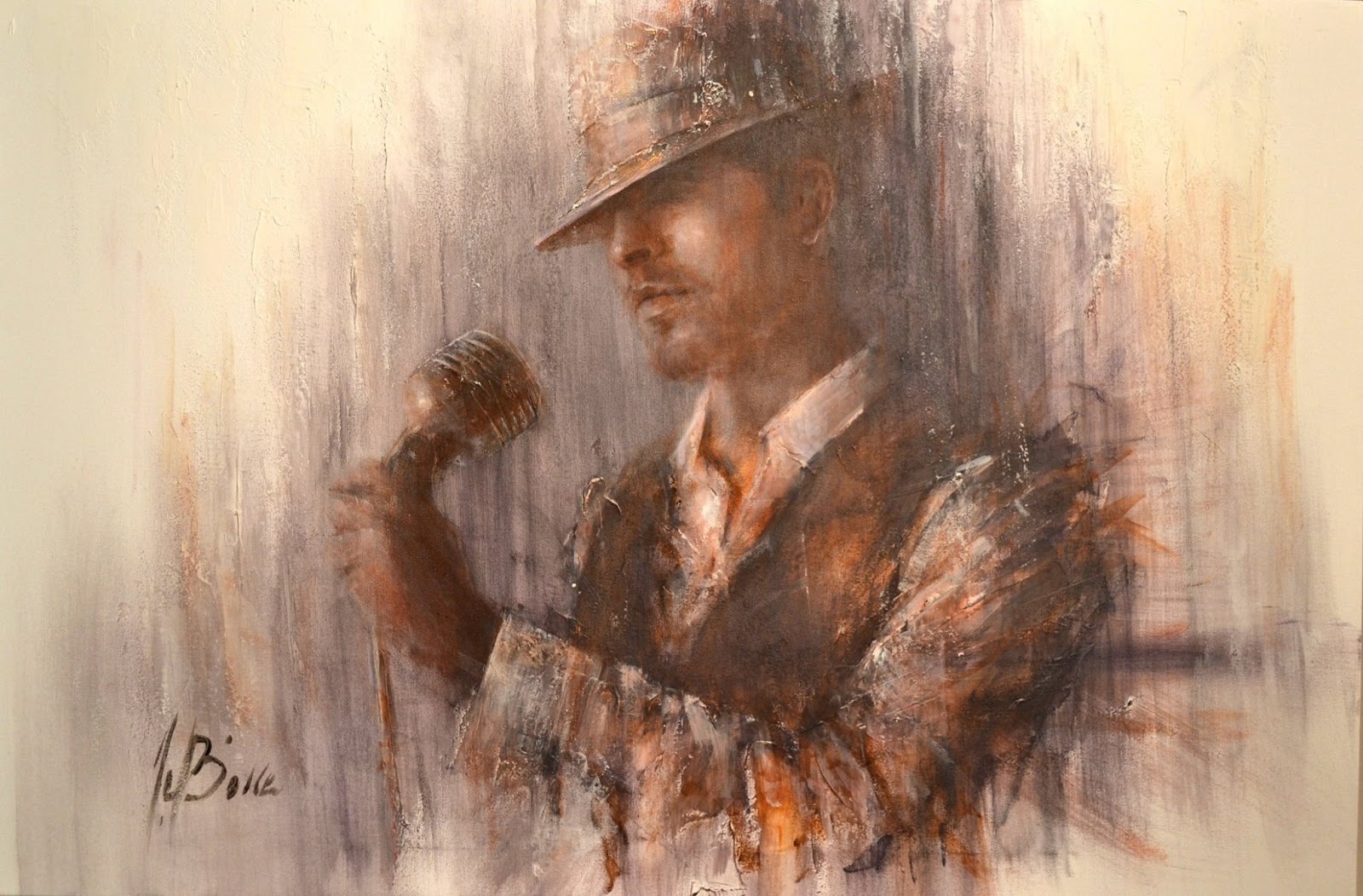
Rémi LaBarre, 1977 | Figurative painter


Rémi LaBarre is a painter based in Montreal, Quebec. Inspired by romance lovers, music, he painted series of modern portraits in a vintage theme.
Rémi LaBarre has participated in numerous group and solo exhibitions and has won different prizes and has received an important press coverage.
In 1977, in Thetford Mines, Rémi LaBarre, Canadian painter, gets a first glance of the world. In his childhood, he draws, often, on paperboards and paper. One day, a friend who paints suggests testing this medium.

Textual description of firstImageUrl

Baroque Art History and Sitemap

Baroque was the principal European style in the visual arts of the 17th century.
The term covers various national styles that range from the complex and dramatic Italian art of the 17th century to the restrained genre scenes, still-lifes and portraits characteristic of the Dutch Baroque.
In Italy, Caravaggio painted altarpieces and introduced innovations such as dramatic lighting effects that influenced painters like Artemisia Gentileschi. Other artists, such as the Giovanni Battista Gaulli and Pietro da Cortona, executed illusionistic ceiling paintings.

Johannes Vermeer | Girl with a Pearl Earring, 1665

Textual description of firstImageUrl

Czech Art History and Sitemap

Alphonse Mucha (Czech Art Nouveau Printmaker, 1860-1939)

Czech art is the visual and plastic arts that have been created in the Czech Republic and the various states that formed the Czech lands in the preceding centuries.
The Czech lands have produced artists that have gained recognition throughout the world, including Alfons Mucha, widely regarded as one of the key exponents of the Art Nouveau style, and František Kupka, a pioneer of abstract art.
The Czech lands have produced several important finds of prehistoric art, notably the Venus of Dolní Věstonice, a pottery Venus figurine of a nude female dated to 29,000–25,000 BC, and a distinct style of Celtic art.

Textual description of firstImageUrl

Victoria Selbach, 1960 | Figurative painter

American painter Victoria Selbach in her youth, studied drawing and pastel at the Carnegie Mellon Museum of Pittsburgh and continued on to art classes at Carnegie Mellon University.
Her years at CMU provided a range of course work including drawing from live models and studying anatomy at the Pitt Medical School Morgue.
Victoria moved to New York City and graduated from Parsons School of Design.
While making New York her home Victoria has traveled extensively and is indebted to all the amazing faces and startling visual environments that have fascinated and inspired her.


Textual description of firstImageUrl

Tracey Harris, 1970 | Realist painter

Tracey Harris is a Contemporary Realist painter specializing in figurative and still life oil paintings. She is an award winning artist who's artworks are collected nationally and internationally.
Education:
1995 - Goldsmiths’ College, University of London, England;
1992 - Kansas City Art Institute, Kansas City, Missouri.
Experience: - Tracey Harris is an emerging artist specializing in contemporary representational painting. She has exhibited internationally and nationally winning numerous awards.
At a recent solo exhibition an art dealer, Timothy Ward, of Ward and Ward, wrote of Harris’ work: “Few modern paintings effectively pay homage to traditional aesthetic choices such as chiaroscuro.


Textual description of firstImageUrl

Alena Plihal | Abstract painter

The canadian painter Alena Plihal was born in Czech Republic and lived in Quebec since 1989. With a degree in plastic arts at UQAM, she continued her training in live model workshops of abstract painting workshops.
The combination of charcoal, pigment, acrylic and oils gives to Alena an extraordinary freedom of expression.
The human body is presented alone and sometimes in loving couple and try to fix the trace of the body, especially speaking of his desire to exist forever and transcend death.


Textual description of firstImageUrl

15th century Artists | Sitemap

At the end of the Middle Ages, art across Europe was dominated by a decorative and refined manner known as the International Style.
Ornate, with brilliant color and gilding, it reflected courtly tastes and continued, for some time, to attract patrons in Milan, Ferrara, and other aristocratic Italian cities, even as more naturalistic Renaissance styles began to take root elsewhere.
By the mid-1400s, in Florence especially, both artists and patrons had begun to embrace new subjects and approaches.


Textual description of firstImageUrl

Ancient Art | Sitemap

Ancient Art refers to the many types of art produced by the advanced cultures of ancient societies with some form of writing, such as those of ancient China, India, Mesopotamia, Persia, Palestine, Egypt, Greece and Rome.
The art of pre-literate societies is normally referred to as prehistoric art and is not covered here.
Although some pre-Columbian cultures developed writing during the centuries before the arrival of Europeans, on grounds of dating these are covered at pre-Columbian art and articles such as Maya art, Aztec art, and Olmec art.


Textual description of firstImageUrl

Johannes Vermeer | Legacy

Originally, Vermeer's (1632-1675) works were largely overlooked by art historians for two centuries after his death. A select number of connoisseurs in the Netherlands did appreciate his work, yet even so, many of his works were attributed to better-known artists such as Metsu or Mieris.
The Delft master's modern rediscovery began about 1860, when German museum director Gustav Waagen saw The Art of Painting in the Czernin gallery in Vienna and recognized the work as a Vermeer, though it was attributed to Pieter de Hooch at that time.
Research by Théophile Thoré-Bürger culminated in the publication of his catalogue raisonné of Vermeer's works in the Gazette des Beaux-Arts in 1866.


Textual description of firstImageUrl

Symbolism Art History and Sitemap

Symbolism initially developed as a French literary movement in the 1880s, gaining popular credence with the publication in 1886 of Jean Moréas’ manifesto in Le Figaro.
Reacting against the rationalism and materialism that had come to dominate Western European culture, Moréas proclaimed the validity of pure subjectivity and the expression of an idea over a realistic description of the natural world.
This philosophy, which would incorporate the poet Stéphane Mallarmé’s conviction that reality was best expressed through poetry because it paralleled nature rather than replicating it, became a central tenet of the movement.

Marie Spartali Stillman (1844-1927) Love's Messenger, 1885

Textual description of firstImageUrl

Photographers | Art History and Sitemap

The history of photography began in remote antiquity with the discovery of two critical principles: camera obscura image projection and the observation that some substances are visibly altered by exposure to light.
Apart from a possibly photographic but unrecognized process used on the Turin Shroud there are no artifacts or descriptions that indicate any attempt to capture images with light sensitive materials prior to the 18th century.
Around 1717, Johann Heinrich Schulze captured cut-out letters on a bottle of a light-sensitive slurry, but he apparently never thought of making the results durable.


Textual description of firstImageUrl

Italian Art History and Sitemap

Italian art has influenced several major movements throughout the centuries and has produced several great artists, including painters, architects and sculptors.
Today, Italy has an important place in the international art scene, with several major art galleries, museums and exhibitions; major artistic centres in the country include Rome, Florence, Venice, Milan, Turin, Genoa, Naples, Palermo, Lecce and other cities.
Italy is home to 53 World Heritage Sites, the largest number of any country in the world.

Leonardo da Vinci | La Gioconda (1503-1505) Musée-du-Louvre

Textual description of firstImageUrl

Austrian Art History and Sitemap


Austria is known for its contributions to music, especially during the Classical and Romantic periods.
The major work of outsiders such as Ludwig van Beethoven (from Bonn [Germany]), Johannes Brahms (from Hamburg), and - in part - Richard Strauss (from Munich) is no less associated with Vienna than that of such natives of Austria and the empire as Joseph Haydn, Wolfgang Amadeus Mozart, Franz Schubert, Anton Bruckner, Gustav Mahler and Hugo Wolf.

Textual description of firstImageUrl

German Art History and Sitemap

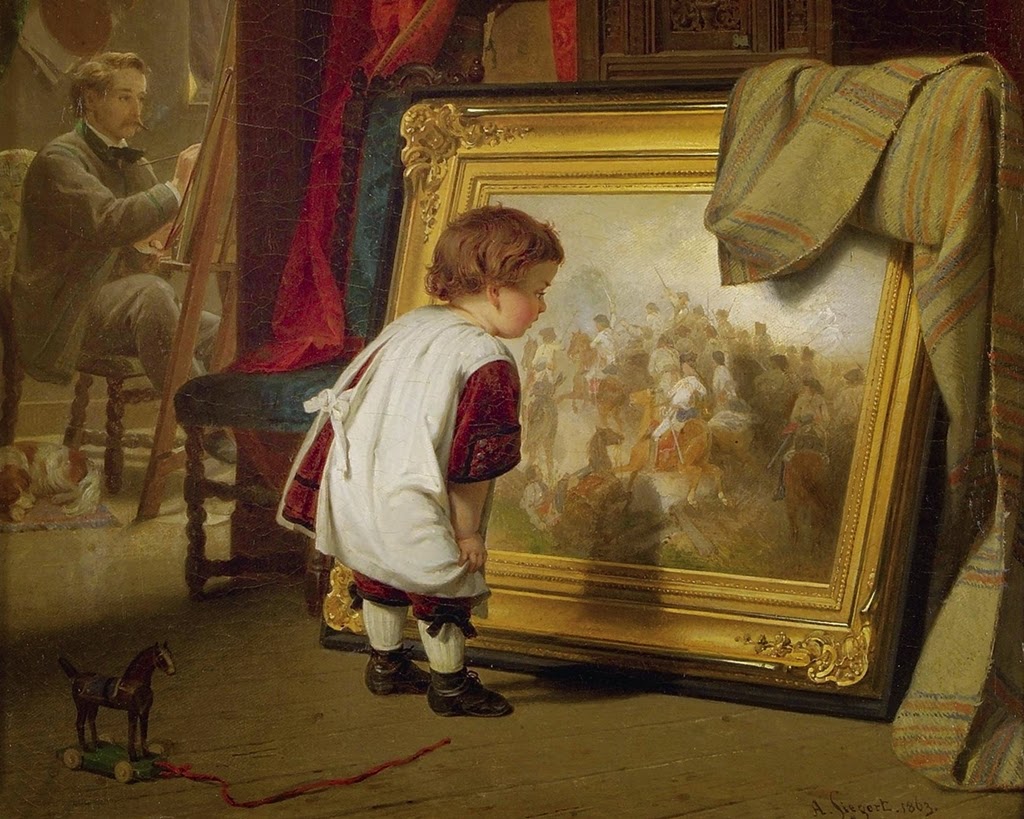
August Friedrich Siegert (1786-1869)

German Art has a long and distinguished tradition in the visual arts, from the earliest known work of figurative art to its current output of contemporary art.
Germany has only been united into a single state since the 19th century, and defining its borders has been a notoriously difficult and painful process.
For earlier periods German art often effectively includes that produced in German-speaking regions including Austria, Alsace and much of Switzerland, as well as largely German-speaking cities or regions to the east of the modern German borders.

Textual description of firstImageUrl

Abstract Artists | Art History and Sitemap

Abstract art, also called nonobjective art or nonrepresentational art, painting, sculpture, or graphic art in which the portrayal of things from the visible world plays no part.
All art consists largely of elements that can be called abstract - ments of form, color, line, tone, and texture.
Prior to the 20th century these abstract elements were employed by artists to describe, illustrate, or reproduce the world of nature and of human civilization - and exposition dominated over expressive function.
Abstract art has its origins in the 19th century.
The period characterized by so vast a body of elaborately representational art produced for the sake of illustrating anecdote also produced a number of painters who examined the mechanism of light and visual perception.

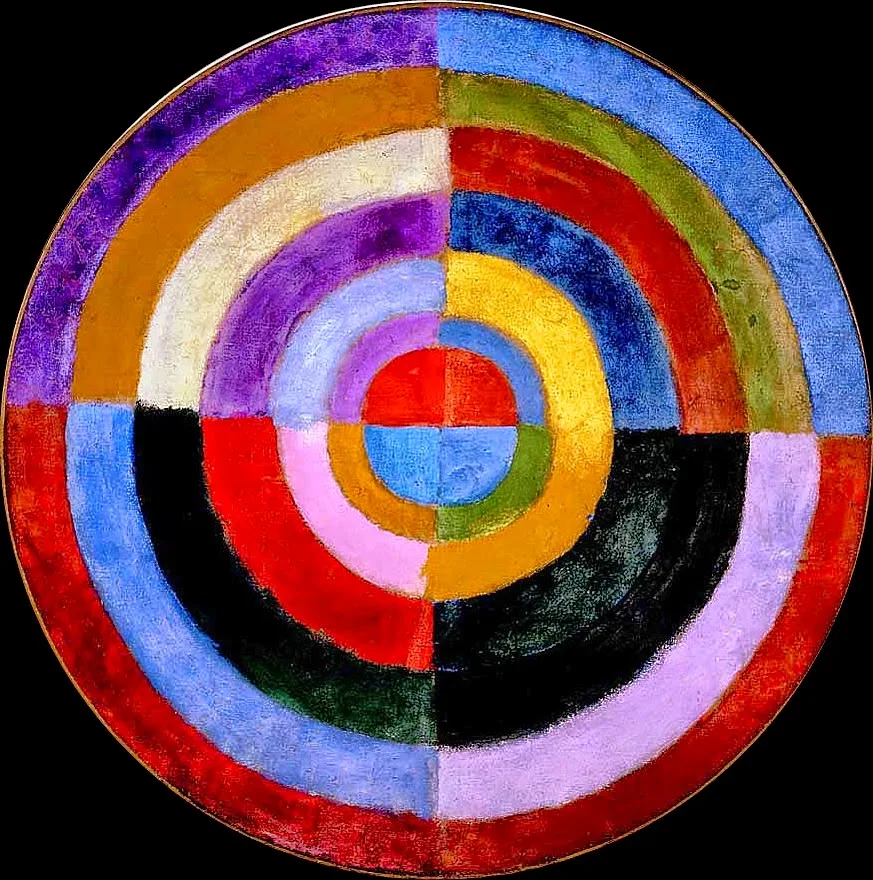
Robert Delaunay 1885-1941 - Le Premier Disque, 1912-1913

Textual description of firstImageUrl

List of Sculptors | Sitemap

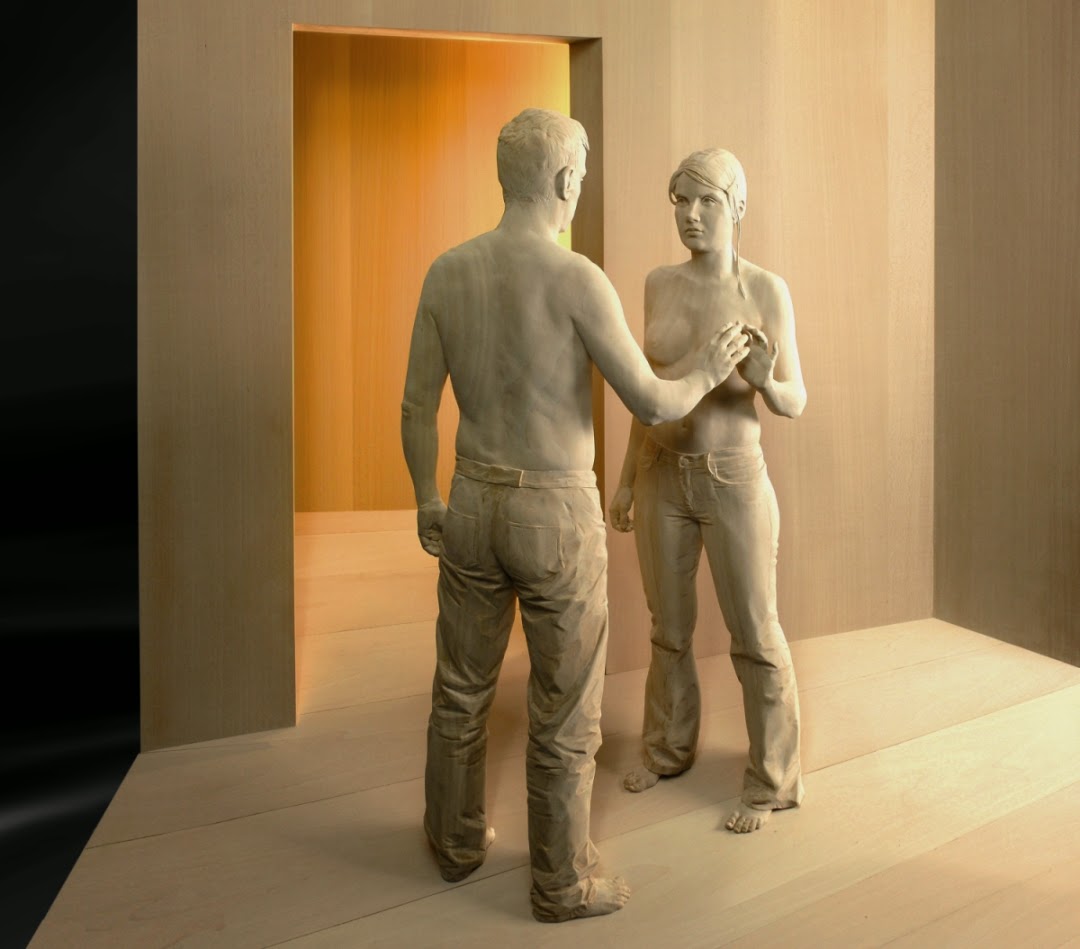
Sculpture is the branch of the visual arts that operates in three dimensions.
Sculpture is the three-dimensional art work which is physically presented in the dimensions of height, width and depth.
It is one of the plastic arts. Durable sculptural processes originally used carving (the removal of material) and modelling (the addition of material, as clay), in stone, metal, ceramics, wood and other materials but, since Modernism, there has been almost complete freedom of materials and process.


Textual description of firstImageUrl

Art Movements and Styles | Sitemap

An art movement is a tendency or style in art with a specific common philosophy or goal, followed by a group of artists during a restricted period of time, (usually a few months, years or decades) or, at least, with the heyday of the movement defined within a number of years.
Art movements were especially important in modern art, when each consecutive movement was considered as a new avant-garde.

Concept

According to theories associated with modernism and the concept of postmodernism, art movements are especially important during the period of time corresponding to modern art.
The period of time called "modern art" is posited to have changed approximately halfway through the 20th century and art made afterward is generally called contemporary art.
Postmodernism in visual art begins and functions as a parallel to late modernism and refers to that period after the "modern" period called contemporary art.


Textual description of firstImageUrl

18th-19th century Artists | Sitemap

18th-19th century Artists: Painters, Sculptors, Photographers, Poets, Musicants, Writers and the artistic movements definition


18th century Art


Textual description of firstImageUrl

Alyssa Monks, 1977 | Figurative /Abstract painter

Alyssa Monks is an American painter currently based in Brooklyn.
She specializes in large oil paintings and is recognized both in the United States and Europe for her work featuring figures obscured by water, steam, and vinyl.
Her notable series of work centering around figures in bathrooms, tubs, and showers garnered attention from the worldwide art community and the press.
Alyssa Monks earned her B.A. from Boston College and she studied painting at Lorenzo de' Medici in Florence.


Textual description of firstImageUrl

French Art History and Sitemap

French art consists of the visual and plastic arts (including French architecture, woodwork, textiles, and ceramics) originating from the geographical area of France.
Modern France was the main centre for the European art of the Upper Paleolithic, then left many megalithic monuments, and in the Iron Age many of the most impressive finds of early Celtic art.
The Gallo-Roman period left a distinctive provincial style of sculpture, and the region around the modern Franco-German border led the empire in the mass production of finely decorated Ancient Roman pottery, which was exported to Italy and elsewhere on a large scale.

Pierre-Auguste Renoir | Jeune fille en rose dans un paysage, 1903

Textual description of firstImageUrl

Philip Hermogenes Calderon | Broken Vows, 1856


Artist: Philip Hermogenes Calderon (British painter, 1833-1898)
Medium: Oil paint on canvas
Dimensions Support: 914 × 679 Mm
Frame: 1205 × 980 × 104 Mm
Collection: Tate
Acquisition: Purchased 1947

The title of this painting suggests that the woman has recently discovered that her lover, whose initials are carved in the fence, has been unfaithful.
Further details, including the discarded necklace and dying flowers, indicate her unhappy situation. The ivy-covered wall may symbolise her previous belief that their love was everlasting.
Disappointed love was a popular theme in Victorian painting, and viewers were expected to unravel the situation from the symbols and expressions of the characters. | © Tate Britain

Textual description of firstImageUrl

British Art History and Sitemap


The Art of the United Kingdom refers to all forms of visual art in or associated with the United Kingdom since the formation of the Kingdom of Great Britain in 1707 and encompass English art, Scottish art, Welsh art and Irish art, and forms part of Western art history.
During the 18th century Britain began to reclaim the leading place England had played in European art during the Middle Ages, being especially strong in portraiture and landscape art.

Textual description of firstImageUrl

Surrealist Artists | History and Sitemap

Surrealism originated in the late 1910s and early '20s as a literary movement that experimented with a new mode of expression called automatic writing, or automatism, which sought to release the unbridled imagination of the subconscious.
Officially consecrated in Paris in 1924 with the publication of the Manifesto of Surrealism by the poet and critic André Breton (1896-1966), Surrealism became an international intellectual and political movement.
Breton, a trained psychiatrist, along with French poets Louis Aragon (1897-1982), Paul Éluard (1895-1952) and Philippe Soupault (1897-1990), were influenced by the psychological theories and dream studies of Sigmund Freud (1856-1939) and the political ideas of Karl Marx (1818-1883).

http://www.tuttartpitturasculturapoesiamusica.com/2013/07/Michael-Alfano.html

Textual description of firstImageUrl

American Art History and Sitemap

Visual art of the United States or American art is visual art made in the United States or by U.S. artists.
Before colonization, there were many flourishing traditions of Native American art, and where the Spanish colonized Spanish Colonial architecture and the accompanying styles in other media were quickly in place.
Early colonial art on the East Coast initially relied on artists from Europe, with John White (1540-1593) the earliest example.
In the late 18th and early 19th centuries, artists primarily painted portraits, and some landscapes in a style based mainly on English painting.

Andrew Wyeth | Christina's World, 1948

Textual description of firstImageUrl

Nabis Art | History and Sitemap

Ambitious decorative painting enjoyed a resurgence in Europe from the late 1880s through the early twentieth century.
In Paris, Pierre Bonnard🎨, Maurice Denis🎨 and Édouard Vuillard🎨 were among the most influential artists to embrace decoration as painting’s primary function.
Their works celebrate pattern and ornament, challenge the boundaries that divide fine arts from crafts, and, in many cases, complement the interiors for which they were commissioned.
Disaffected with the rigidly representational painting methods taught at the Académie Julian, Bonnard and Denis joined with other like-minded students in the fall of 1888 to form a brotherhood called the “Nabis”, a Hebrew word meaning “prophets”.
The group was spearheaded by Paul Sérusier🎨, who had visited Paul Gauguin in Pont-Aven over the summer and was now spreading an aesthetic message based on his interpretation of Gauguin🎨’s Symbolism.

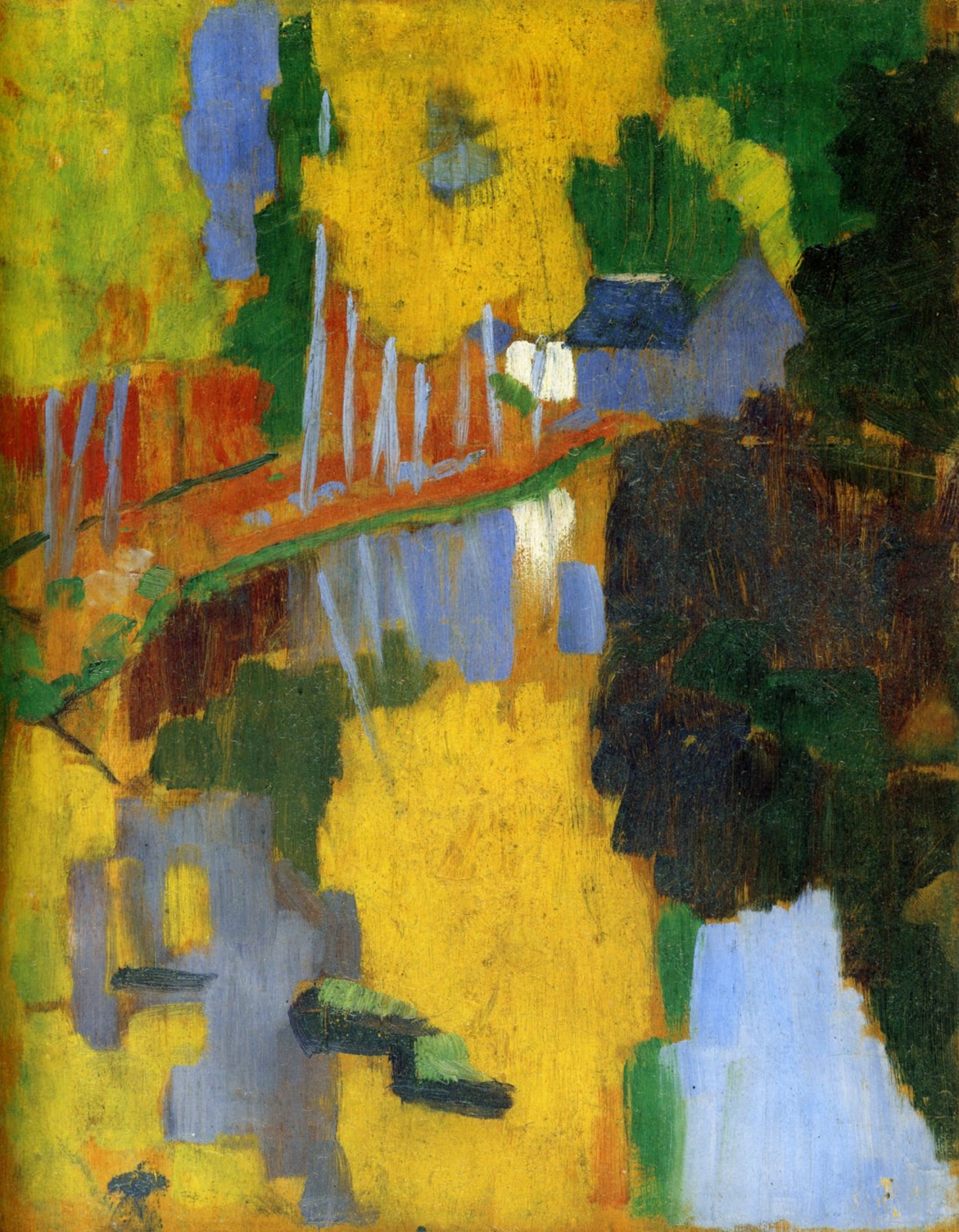
Paul Sérusier - The Bois d'Amour à Pont-Aven / The Talisman (Le Talisman), 1888, Musée d'Orsay, Paris

Textual description of firstImageUrl

Macchiaioli | Art History and Sitemap

The Macchiaioli were a group of Italian painters active in Tuscany in the second half of the nineteenth century, who, breaking with the antiquated conventions taught by the Italian academies of art, did much of their painting outdoors in order to capture natural light, shade and color.
This practice relates the Macchiaioli to the French Impressionists who came to prominence a few years later, although the Macchiaioli pursued somewhat different purposes.


Textual description of firstImageUrl

Art Nouveau | History and Sitemap

From the 1880s until the First World War, western Europe and the United States witnessed the development of Art Nouveau (“New Art”).
Taking inspiration from the unruly aspects of the natural world, Art Nouveau influenced art and architecture especially in the applied arts, graphic work, and illustration.
Sinuous lines and “whiplash” curves were derived, in part, from botanical studies and illustrations of deep-sea organisms such as those by German biologist Ernst Heinrich Haeckel (1834-1919) in Kunstformen der Natur (Art Forms in Nature, 1899).
Other publications, including Floriated Ornament (1849) by Gothic Revivalist Augustus Welby Northmore Pugin (1812-1852) and The Grammar of Ornament (1856) by British architect and theorist Owen Jones (1809-1874), advocated nature as the primary source of inspiration for a generation of artists seeking to break away from past styles.

The Art Nouveau movement | 1890-1910 | Art history

Textual description of firstImageUrl

Pierre-Auguste Renoir | In the Studio, 1877

Pierre-Auguste Renoir often used his friends as models for genre scenes, most of which were posed and painted in the studio.
The sitters for this small painting were the amateur critic Georges Rivière and the artist's model Marguerite Legrand, known professionally as Margot.

  • Artist: Pierre-Auguste Renoir (1841-1919).
  • Title: In the Studio (Georges Riviere and Marguerite Legrand).
  • Date: Between 1876 and 1877.
  • Medium: Oil on canvas.
  • Dimensions: 35 x 25 cm.
  • Collection: Dallas Museum of Art.

Textual description of firstImageUrl

Paul Laurenzi, 1964 | Figurative painter

Paul Laurenzi was born in Antibes, France.
It was after various small interventions in the world of advertising and children's book that Paul Laurenzi, joined an association of painting based in the South of France.
This allows him to participate in various local exhibitions and sympathize with its president, professional artist.
The latter encourages him to present its works in a gallery from Marseille, which so agrees to expose his works of art.
His first "official" exhibition, beside Bernard Buffet's works takes place then, in 1987.


Textual description of firstImageUrl

George Spencer Watson | Romantic / Portrait painter

George Spencer Watson R.O.I., R.P., A.R.A., R.A. (8 March 1869, in London - 11 April 1934, in London) was an English🎨 portrait artist of the late romantic school who sometimes worked in the style of the Italian Renaissance.
  • Career
He studied at the Royal Academy Schools from 1889, and exhibited at the Royal Academy from 1891.
He won Royal Academy Schools Silver Medals in 1889 and 1891, and the Landseer Scholarship in 1892.
He was elected to the Royal Institute of Oil Painters (ROI) in 1900, Royal Society of Portrait Painters (RP) in 1904, Associate of the Royal Academy in 1923, and a Member of the Royal Academy (RA) in 1932.


  • Personal life
in 1909 He married Hilda Mary Gardiner, a dancer and mime artist, and follower of the actor Edward Gordon Craig. They had a daughter, Mary Spencer Watson (1913–2006), who became a sculptor.
In the year of 1923 he bought Dunshay Manor in the hills of the Isle of Purbeck, after already having spent holidays in nearby Swanage.
He died in London and a memorial exhibition was held at the Fine Art Society in the same year. There is a memorial to him in the north vestibule of St James's Church, Piccadilly.
Some of his works are held at Tate Britain, the Harris Art Gallery, Preston and collections in Bournemouth, Liverpool, Plymouth and the National Gallery of Canada.

Born in London, Watson studied at the Royal Academy from 1889; he exhibited there from 1891 and also at the Paris salon. Retrospective exhibitions were held at the Galerie Heinemann, Munich in 1912, and at the Fine Art Society in 1914.
His work A Lady in Black (1922) is owned by the Tate Collection.







Textual description of firstImageUrl

Frank Owen Salisbury (1874-1962)

Francis ("Frank") Owen Salisbury (18 December 1874 - 31 August 1962) was an English artist🎨 who specialized in portraits, large canvases of historical and ceremonial events, stained glass and book illustration.
In his heyday he made a fortune on both sides of the Atlantic and was known as “Britain’s Painter Laureate”.
His art was steadfastly conservative and he was a vitriolic critic of Modern Art - particularly of his contemporaries Picasso🎨, Chagall🎨 and Mondrian🎨.
Salisbury was born in on December 18, 1874, in Harpenden, Hertfordshire, as a son of a plumber and glazier. He learned the art of stained glass in the workshop of his brother in St Albans.


Textual description of firstImageUrl

Antonio Ambrogio Alciati | Romantic / Portrait painter

Born in Vercelli, Italy, in 1878, Antonio Ambrogio Alciati (1878-1929) moved with his mother and his sister to Milan in 1897 to attend the Brera Academy of Fine Arts, where his teachers were Vespasiano Bignami, Giuseppe Mentessi and Cesare Tallone.
Tallone helped him to perfect his portrait painting technique, and introduced him into wealthy Milan middle class society.
Between 1902-1910 he painted a series of pictures inspired by romantic and family subjects, while also working on the decoration of churches and villas in Lombardy.
In the ten years from 1910 his style underwent an evolution as he abandoned the use of shaded tones and a dull, almost monochromatic range of colors, gradually acquiring greater constructive vigor and a variety of bright colors.


Textual description of firstImageUrl

Georgy Kurasov / Георгий Курасов, 1958 | Cubist painter

Georgy Kurasov was born in the USSR, in what was then Leningrad. He still lives and works in the same place, but now the country is Russia and the city is called St Petersburg. Without any effort on his part whatsoever, Georgy seems to have emigrated from one surreal country to another.
His native city was irrational from the very moment of its foundation. Situated on the same latitude as the southern shores of Alaska, on the swampy delta of the River Neva where no one had ever settled before, this new capital city grew up on the very edge of a monstrous empire.