Textual description of firstImageUrl

Christoffer Wilhelm Eckersberg | Neoclassical painter

Having won the Great Grand Prize for painting awarded by the Royal Danish Academy in 1809, the Danish painter Christoffer Wilhelm Eckersberg (1783-1853) set out from Copenhagen the following year with Rome as his ultimate destination.
He spent three years in Paris along the way, including one year as a pupil of the foremost European painter of the era, Jacques-Louis David.
Eckersberg was arguably David's most important foreign follower.
Absorbing both his austere Neoclassical idealism and his admonition never to stray from nature, the master's teachings prepared him for Rome as well as his subsequent career as a mentor to younger painters.


Textual description of firstImageUrl

David Gray | The Storyteller | VideoArt


David Gray - American painter - acquired a strong foundational education in art while obtaining his BFA from Pacific Lutheran University in Tacoma, Washington.
His art education has continued with independent and occasional formal studies in pictorial expression and oil painting.

Textual description of firstImageUrl

Christine Løvmand | Flower painter

Christine Marie Løvmand (19 March 1803 - 10 April 1872) was a Danish artist who specialized in paintings of flowers and still lifes. She was one of the few women at the time who gained recognition as a painter.
As a child, Løvmand helped her sick mother look after the five children in the family. When her father died in 1826, she resolved to work hard to support the family.
From 1824, both Christine and her sister Frederikke started to have painting and drawing lessons with the flower painter Johannes Ludvig Camradt.
In 1827, the two sisters began to exhibit at Charlottenborg Spring Exhibition.


Textual description of firstImageUrl

La Grotta di Altamira | Patrimonio della Umanità

"Dopo Altamira, tutto è decadenza", esclamò Pablo Picasso, 1881-1973, incantato dinanzi allo spettacolo delle pitture rupestri nella grotta spagnola di Altamira.

Molti pittori sono stati influenzati dalle opere delle grotte di Altamira.

Le Grotte di Altamira sono delle caverne spagnole famose per le pitture rupestri del Paleolitico superiore raffiguranti mammiferi selvatici e mani umane. Si trovano nei pressi di Santillana del Mar in Cantabria, 30 chilometri ad ovest di Santander. Queste grotte sono state incluse tra i Patrimoni dell'umanità dell'UNESCO nel 1985.
Nel 2008 il nome del patrimonio è stato modificato da "Grotte di Altamira" in "Arte rupestre paleolitica della Spagna settentrionale" in seguito all'aggiunta di 17 altre grotte.


Textual description of firstImageUrl

Charles Spencelayh | Genre painter

Charles Spencelayh (October 27, 1865 - June 25, 1958) was an English genre painter and portraitist in the Academic style.
Spencelayh was born in Rochester in Kent, and first studied at the National Art Training School, South Kensington. He showed his work at the Paris Salon, but most of his exhibitions were in Britain.
Between 1892-1958, he exhibited more than 70 paintings at the Royal Academy, including "Why War" (1939), which won the Royal Academy ‘Picture of the Year’. He had a solo exhibition at The Sunderland Art Gallery in 1936.


Textual description of firstImageUrl

Karl Alfred Broge (Danish, 1870-1955)

Karl Harald Alfred Broge was a painter of the Danish School, born in Copenhagen in 1870. He was a pupil of Holger Grönvold, and exhibited at the Academy of Arts from 1889 to 1894, where he was a student of Rudolf Bissen for a short while.
He is best known for his sunlit Danish interiors, often with a seated lady, which can command high prices at auction, but also an accomplished painter of Danish Landscapes which he exhibited at the Academy in 1891, 1892 and 1894.
He was appointed director of a “drawing school for women without fortune”.


Textual description of firstImageUrl

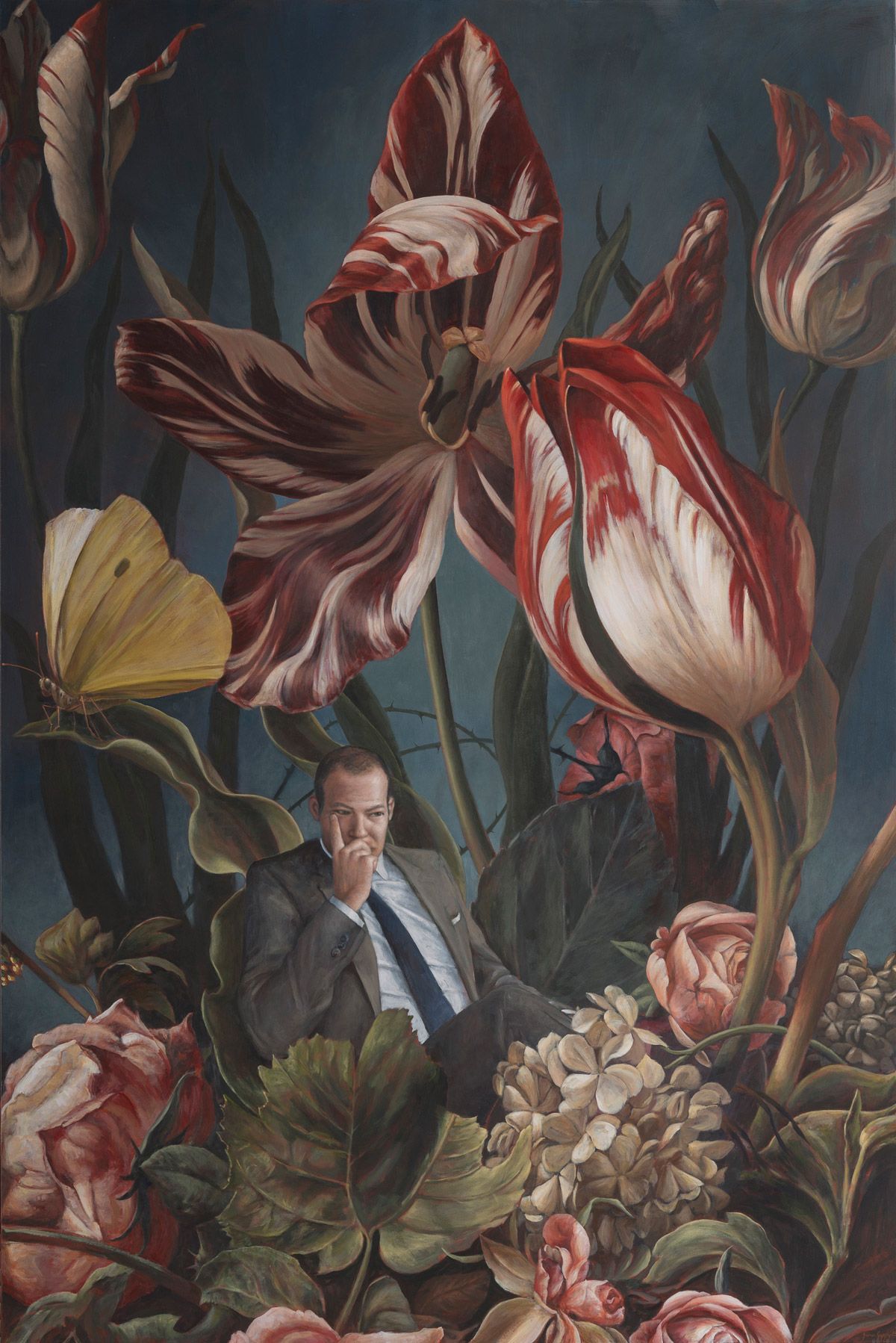
James Guppy, 1954 | Surrealist painter

Born in London, James Guppy has moved to Australia since 1982 and lives in Byron Bay. He has a BA (Hons) in Economics and a Masters in Visual Arts from the UK.

- "When we think of European art, one of the first images that comes to mind is of a richly coloured and modelled oil painting - a portrait, landscape or still life. The illusion in this painting is so real that we feel a heightened sense of the material world: the work seems to be a window into another space.
Throughout my career I have been asking myself whether this heritage has any relevance now. Since the development of photography, the role of figurative painting in portraiture and as social chronicle has all but died and the craft of illusionary painting has become largely relegated to the backwaters of romantic nostalgia and reactionary historicism".


- "Painting in general will clearly continue; but have the figurative traditions of illusionism been technologically outflanked by photography, film and computer generated imagery? Frankly, I don't know and I sometimes wonder at the quixotic nature of my need to find a contemporary relevance for these pre-modernist styles of depiction.
My paintings are all in acrylic. I love oils but the facility I gained as a mural artist working with fast drying paints means I can get the same effects as oils quicker, without worrying about the more complex chemistry of oils. I also get a sort of perverse pleasure creating paintings that can look like they were painted in one medium when in fact they were painted in another.
I use different strategies to develop the subject matter for each series of works. I begin with a point of fascination and the scent of an idea".
- "This period of tracking down the vision may take weeks or years. I will return to themes from years ago if I think I might have something more to add or a new take on it. There is then a slow stumbling towards the form and how the idea or vision might be made to work successfully.
Some works begin with thumbnail sketchs of inner visions and ideas with no models in the outside world (ie. It's all "made up"). As often as not, I am a merciless appropriator, constructing my paintings from details taken from old photos, old masterpieces, flower catalogues, magazines etc.
Some works require the use of models either in conjunction with appropriated material or on their own. In these cases I will either photograph or work from life, whichever is appropriate".


- "The actual execution of a painting begins with a fairly clear vision. At any one time my studio walls are covered with many canvases in varying stages of completion.
When I get "stuck" on a work, I either begin a new one or return to a piece in progress on the wall. I usually have about twenty canvases in various stages of completion. I get "stuck" a lot.
Quite a few works "in progress" will actually end up permanently unresolved waiting in the reject pile till I can reuse the canvas.
The actual execution begins by covering the white gesso with a coloured ground. This might be anything from black, burnt sienna, terra verte or scarlet. I then carefully grid up my design and transpose it to the canvas using white conte.
The first coat of acrylic is applied thick with no water. Subsequent layers are more and more diluted and the brushes tend to get smaller and more delicate as I progress. I usually varnish with two coats of dilute acrylic medium and a final coat of Paraloid varnish.
Paintings are rarely "finished" rather it's the case that I give up and hope that I can resolve the next one a little better. The work then is declared "finished" often by my deliberate signing of it. This stops dead any tendency I might have to continue toying with the piece".


Nato a Londra, James Guppy si è trasferito in Australia dal 1982 e vive a Byron Bay.
Per i primi quindici anni della sua carriera Guppy è stato un artista murale per puoi convertirsi alla tela, poiché gli piaceva trovare le sue opere per le strade.
Nel corso della sua carriera, l'argomento di Guppy è variato da momenti surreali, scene di tensione, esplosioni fluttuanti, donne formidabili ed esseri antropomorfi, tutti eseguiti con un approccio raffinato e intelligente, che appaiono sia drammatici che realistici.
Una parte del fascino delle opere di Guppy risiede nella sua capacità di trasmettere l'impossibilità tangibile, sia che si tratti di cercare di rappresentare la fluidità della sessualità creando generi alternativi (1998); produrre immagini di lavoratori che inchiodano alla sabbia il bordo dell'oceano (2002); o ritrarre uomini in giacca e cravatta che navigano in oceani ruggenti, paesaggi pastorali, paesaggi apocalittici e nuvole cariche di suspense, pur rimanendo disconnessi dal mondo che li circonda mentre svolgono i loro "affari" (2014-2015).



Textual description of firstImageUrl

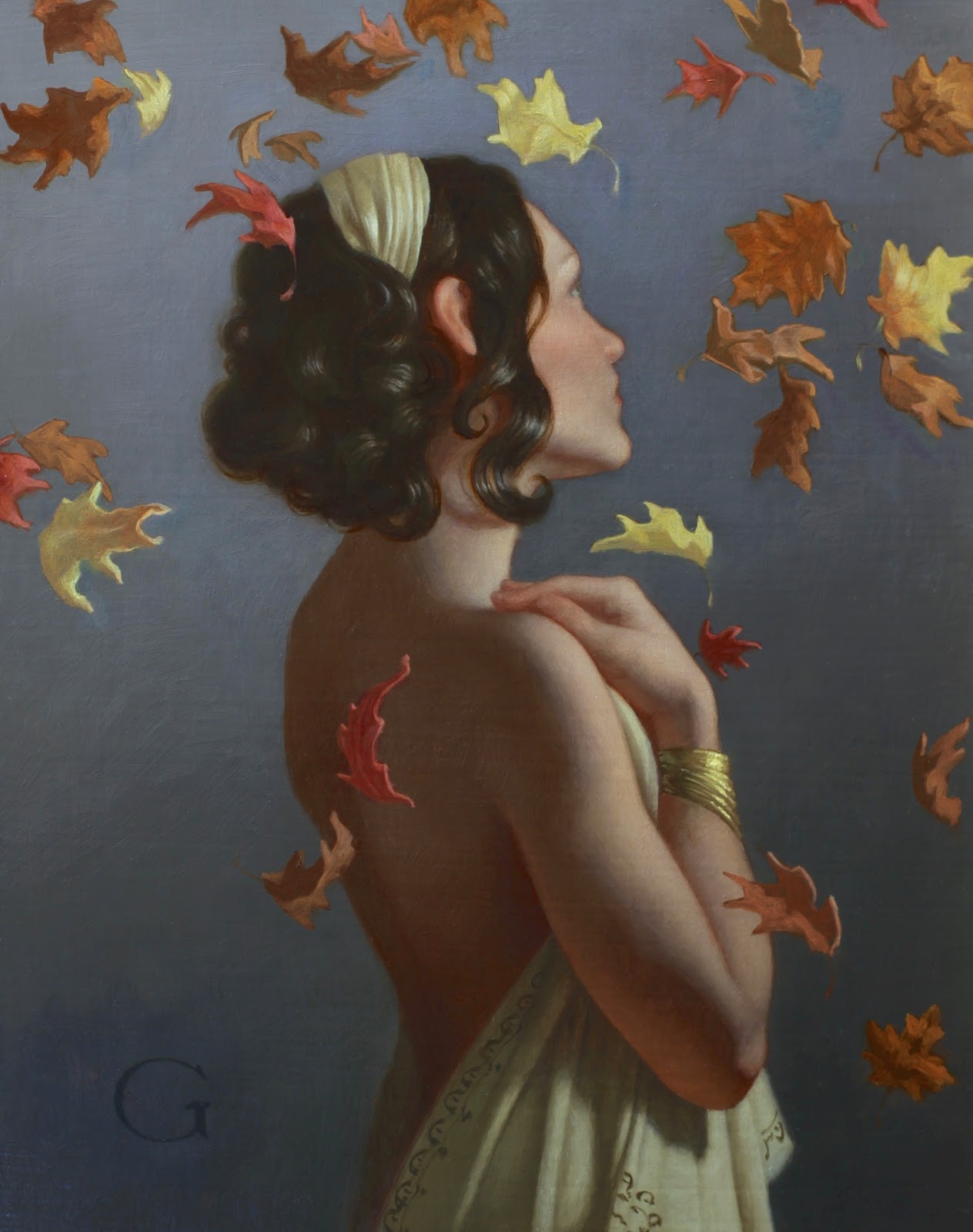
Carrie Graber, 1975 | Modern Figurative painter

American painter Carrie Graber is considered to be among the most talented, exciting and well-collected artists in the world today. With her warm tones and exquisite control of illumination creating a perfect composition of light and contrast, Carrie captures the beauty and subtlety of familiar environments, which are often overlooked.
Her soft, realistic but also bold approach warms the viewers' senses and creates a feeling of intimacy. This is the link between Carrie and one of her main influences, Dutch master painter Vermeer.
Born into an artistic family, Carrie Graber was encouraged to explore her artistic endeavors. From a very young age Carrie was always fascinated with the human figure.


Textual description of firstImageUrl

Wislawa Szymborska | I'm working on the world / Progetto un mondo

Progetto un mondo,
nuova edizione, riveduta,
per gli idioti, ché ridano,
per i malinconici, ché piangano,
per i calvi, ché si pettinino,
per i sordi, ché gli parlino.

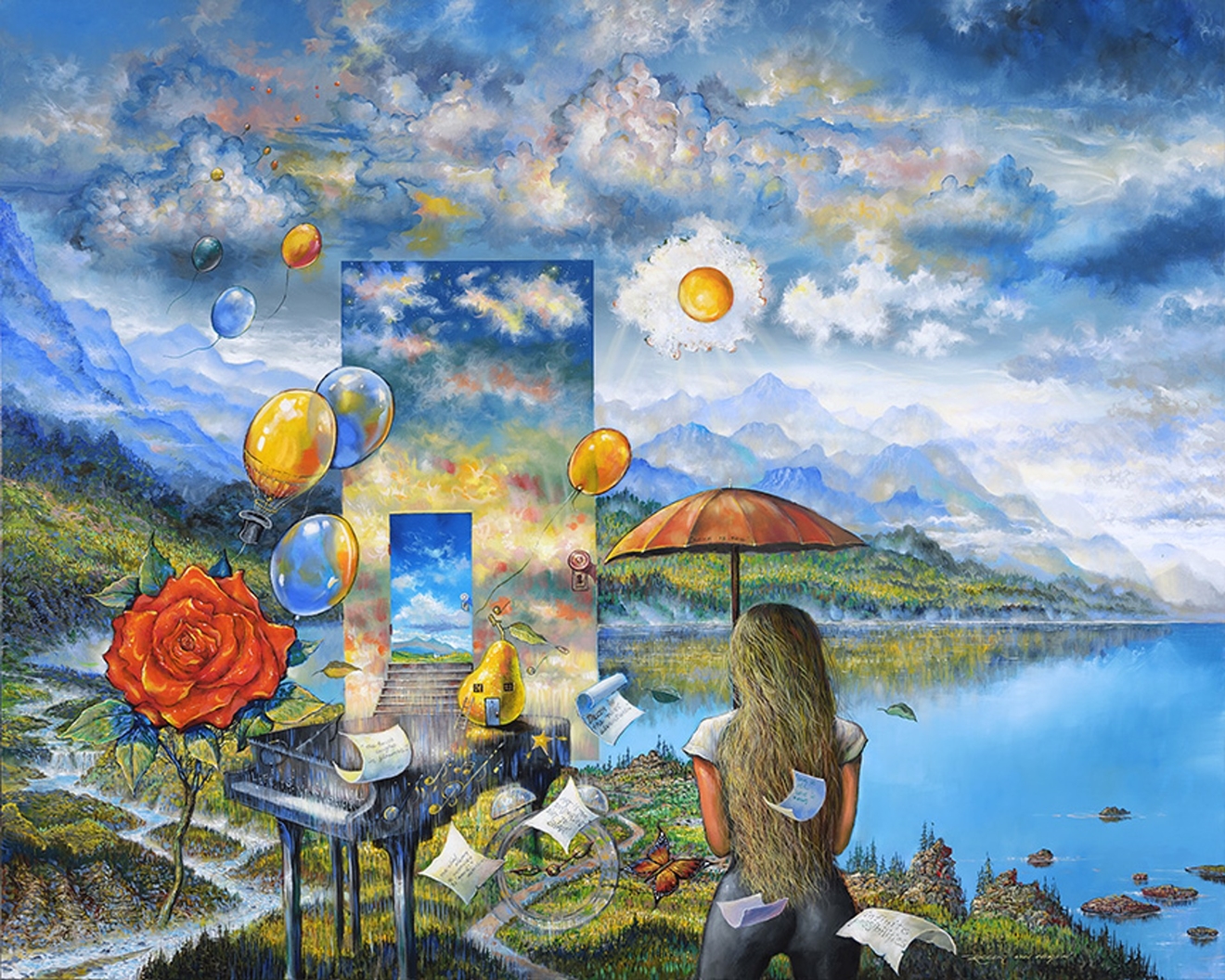
Robert Lyn Nelson | Let It Be

Textual description of firstImageUrl

Wislawa Szymborska | A few words on the soul / Qualche parola sull'anima

We have a soul at times.
No one's got it non-stop,
for keeps.

Day after day,
year after year
may pass without it.

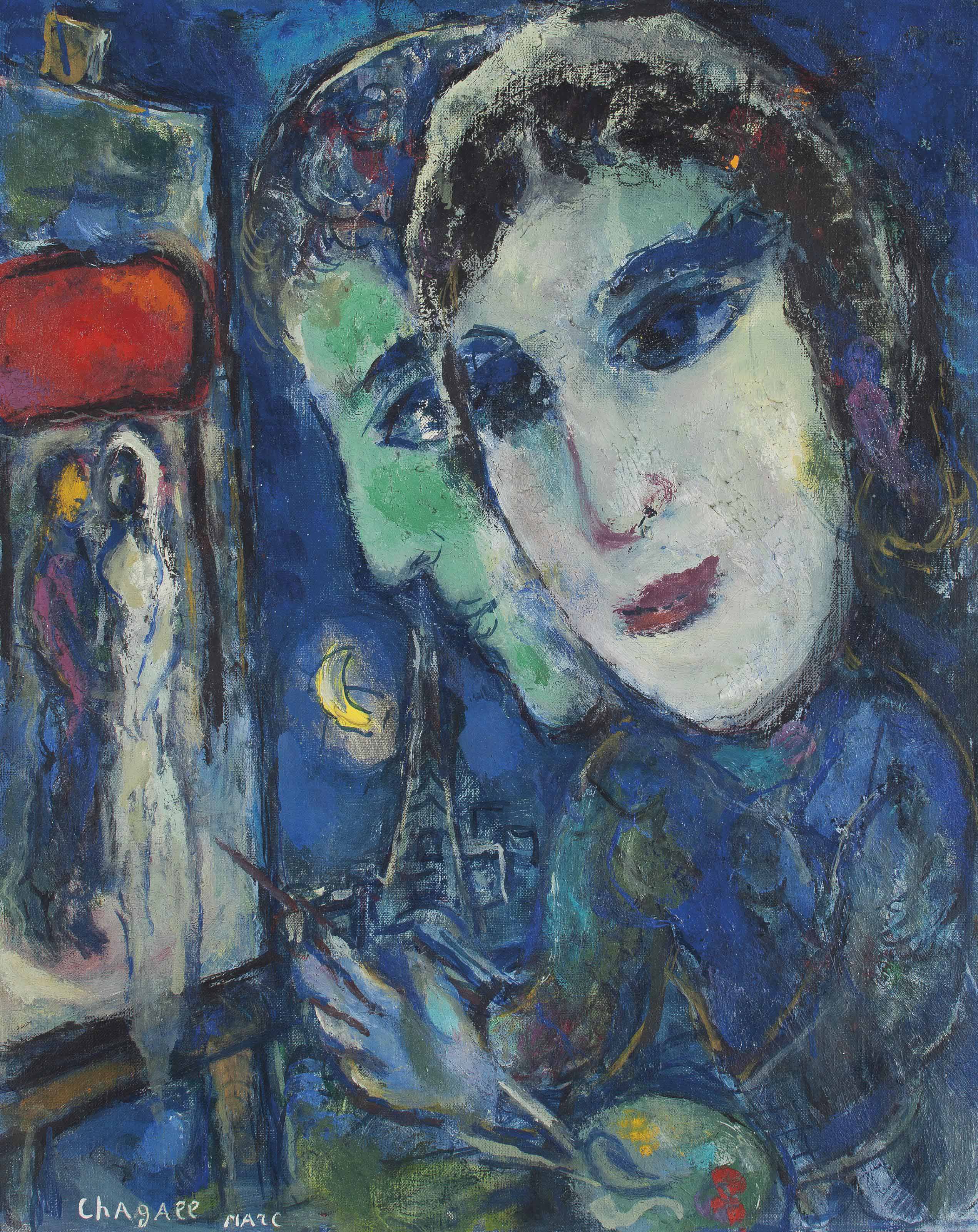
Marc Chagall | Deux tetes

Textual description of firstImageUrl

Mahatma Gandhi: "Occhio per occhio ed il mondo diventa cieco"!

Sii il cambiamento che vuoi vedere nel mondo.
Be the change you wish to see in the world.

Occhio per occhio e il mondo diventa cieco.
An eye for an eye will make the whole world blind.

Le pagine della storia del mondo sono tutte lordate dai sanguinosi racconti delle guerre di religione. Solo con la purezza e le buone azioni dei seguaci si può difendere la religione, mai con la contrapposizione a chi professa altre fedi.

Igor Zenin

Textual description of firstImageUrl

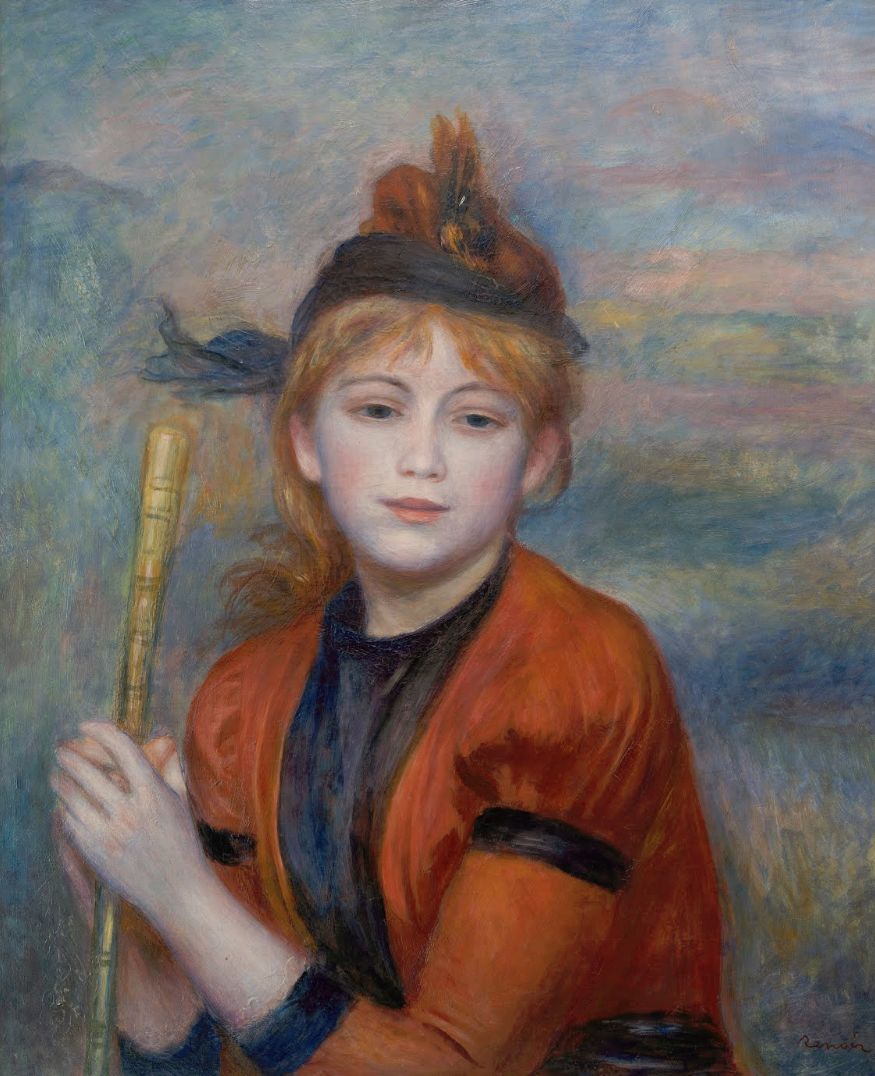
Happy Birthday Renoir! Was born in February 25 - 181 years ago!

Pierre-Auguste Renoir born in February 25, 181 years ago in Limoges, Haute-Vienne, France who was the leading painter in the development of the Impressionist style.
After years as a struggling painter, Renoir helped launch an artistic movement called Impressionism in 1870s.
Unlike most artists Renoir painted quickly - some of his work took only half an hour.
He eventually became one of the most highly regarded artists of his time. He died in Cagnes-sur-Mer, France, in 1919.


Textual description of firstImageUrl

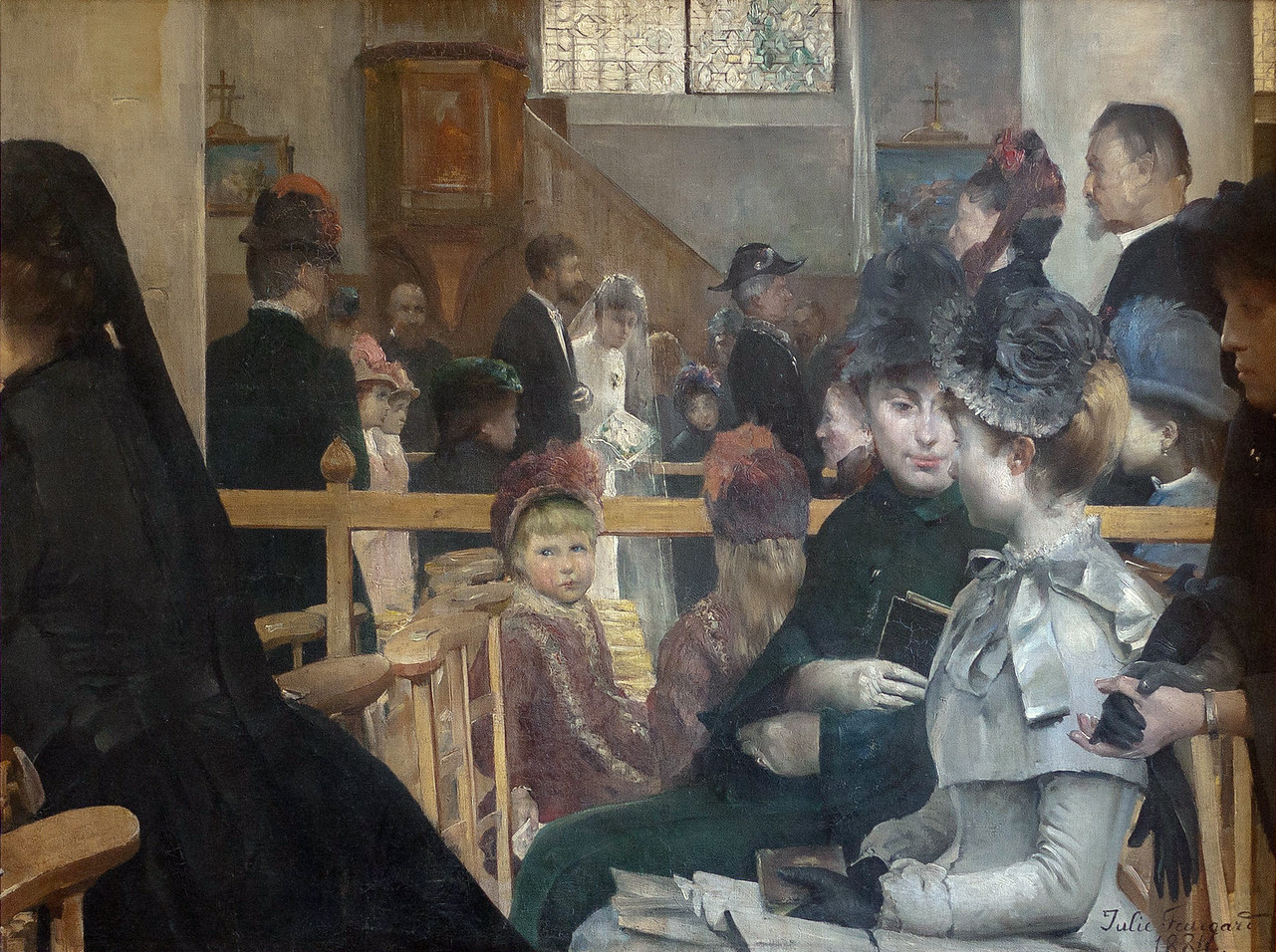
Julie Delance-Feurgard (1859-1892)

Julie Delance-Feurgard was a student at the Académie Julian, where she became close friends with fellow artist Louise Breslau, who painted a portrait of her (now at the Musée Cantonal des Beaux-Arts de Lausanne in Switzerland).
She exhibited at the Salon between 1880-1888, earning honorable mentions for her work there and at the 1889 Exposition Universelle.
Her work received positive attention from critics. She married one of her teachers, Paul-Louis Delance, in 1886, and continued her career, which was cut short by her untimely death in 1892. | Source: © The Clark Art Institute


Textual description of firstImageUrl

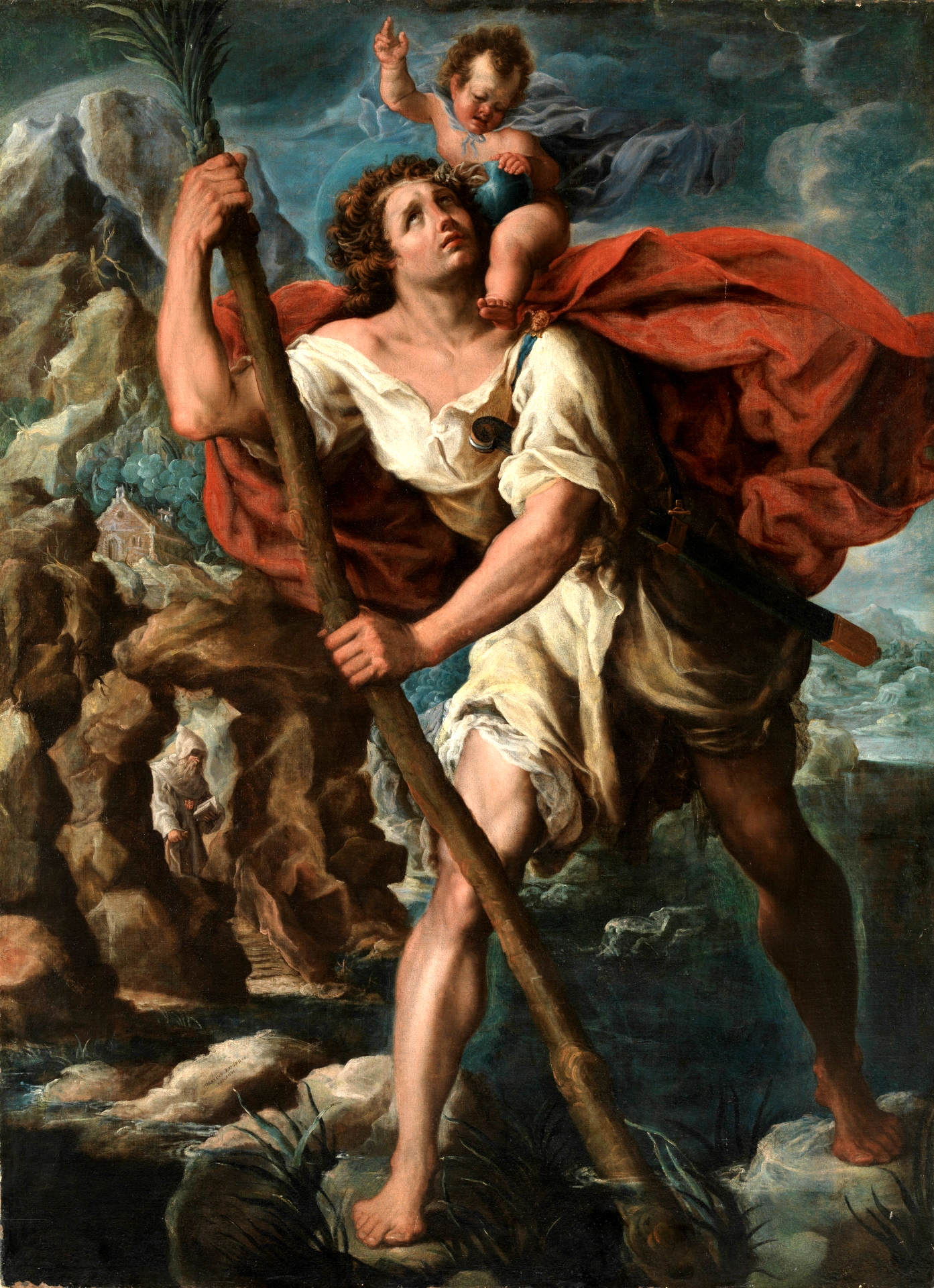
Orazio Borgianni | Baroque painter

Orazio Borgianni (6 April 1574 - 14 January 1616) was an Italian painter and etcher of the Mannerist and early-Baroque periods. He was the stepbrother of the sculptor and architect Giulio Lasso.
Borgianni was born in Rome, where he was documented in February 1604. He was instructed in the art of painting by his brother, Giulio Borgianni, called Scalzo.
The patronage by Philip II of Spain induced him to visit Spain, where he signed an inventory in January 1605.
He returned to Rome from Spain after April 1605 at the height of his career, and most of the work of his maturity was carried out 1605–16.


Textual description of firstImageUrl

Legge di Murphy: "Non discutere mai con un idiota: la gente potrebbe non notare la differenza"!

Della Comitatologia | Capitolo Settimo

Legge di Old e Kahn
L'efficienza di un comitato è inversamente proporzionale
al numero dei partecipanti e al tempo impiegato per raggiungere le decisioni.

Legge diShanahan
La durata di una riunione aumenta col quadrato del numero dei presenti.

Legge dell'insignificanza
Il tempo speso per ogni punto dell'ordine del giorno è sempre inversamente proporzionale
alla somma di denaro che il punto comporta.

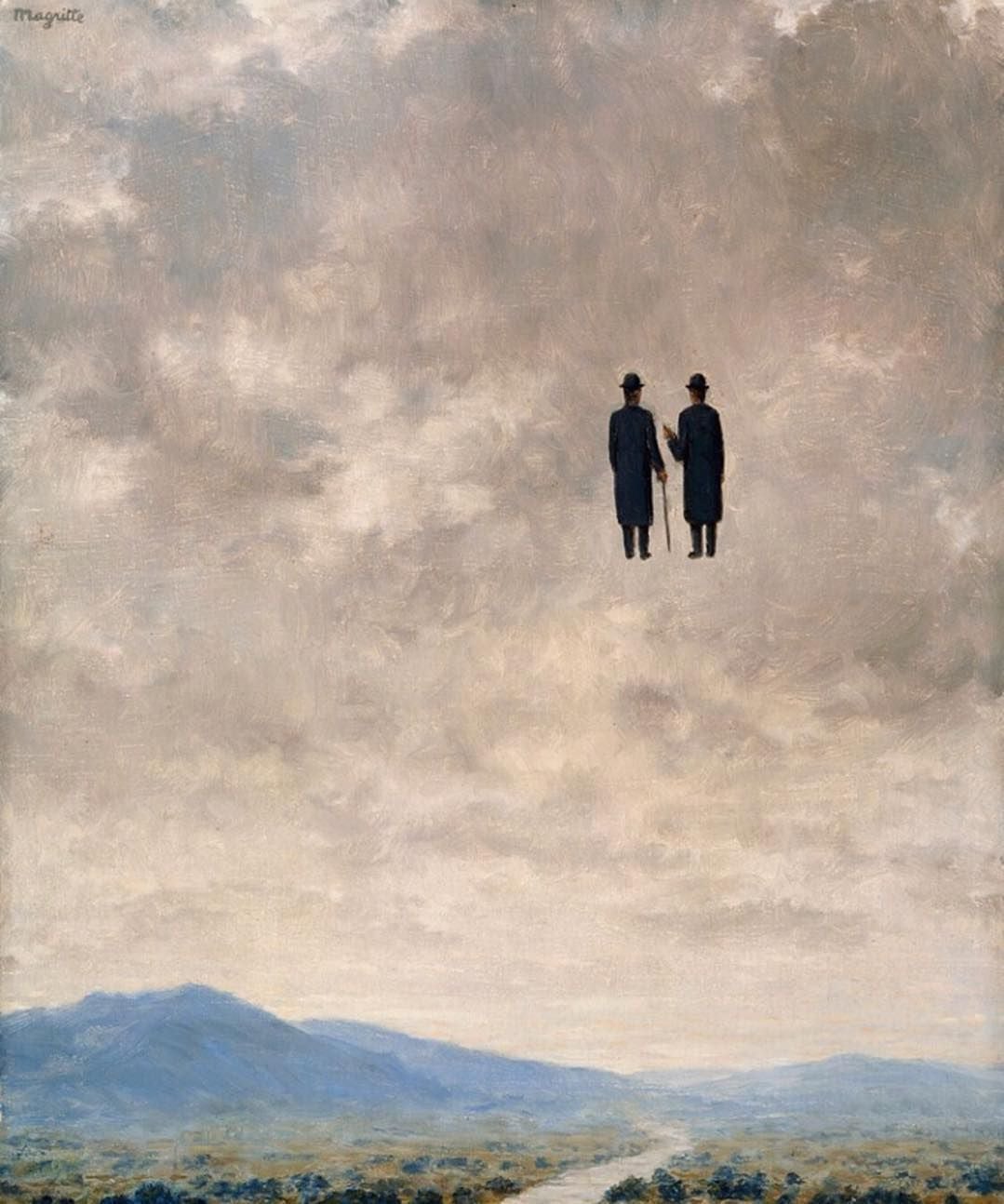
Rene Magritte | The Art of Conversation, 1963

Textual description of firstImageUrl

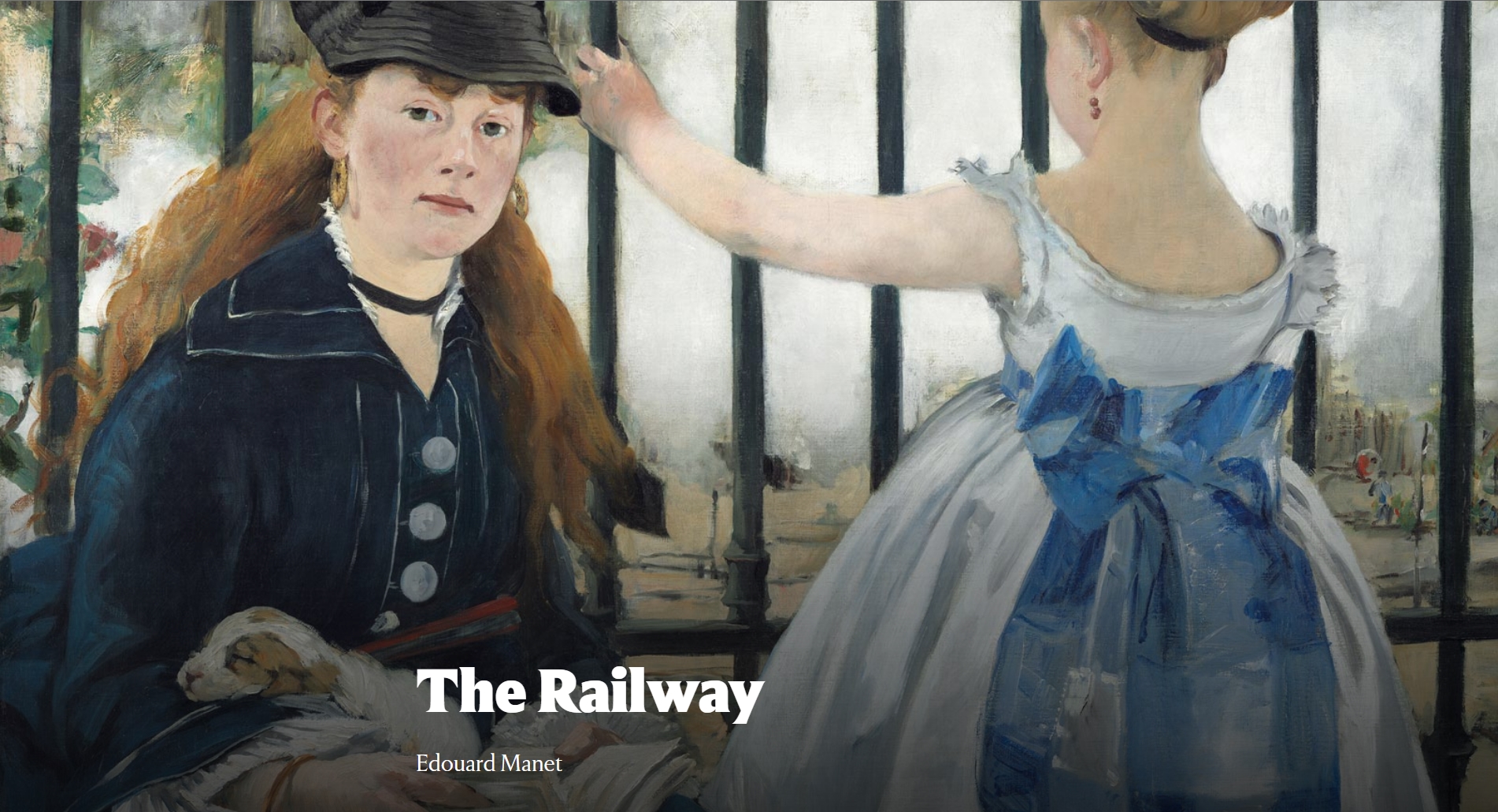
Édouard Manet | The Railway / La Ferrovia, 1873

With her back to us, a young girl stands looking through a fence. Facing us directly, a woman sits with a small dog in her lap and a book in her hand.
Billowing steam from an unseen train obscures the center background, but the edge of a bridge juts out at right, identifying the setting as Gare Saint-Lazare - Paris’ busiest train station and emblem of the city’s unsettling 19th-century makeover. Beyond depicting the modern city, The Railway disturbingly suggests how people experienced it.
Pinned against a long black iron fence, these fashionably dressed female figures are physically cut off from the railroad beyond and also seem estranged from each other: facing in opposite directions, they are absorbed in their individual activities. Manet offers us no clues to their relationship, even as we viewers seem to interrupt the woman reading.
She looks up at us directly with an expression that is neutral and guarded - the characteristic regard of one stranger encountering another in the modern metropolis.


Textual description of firstImageUrl

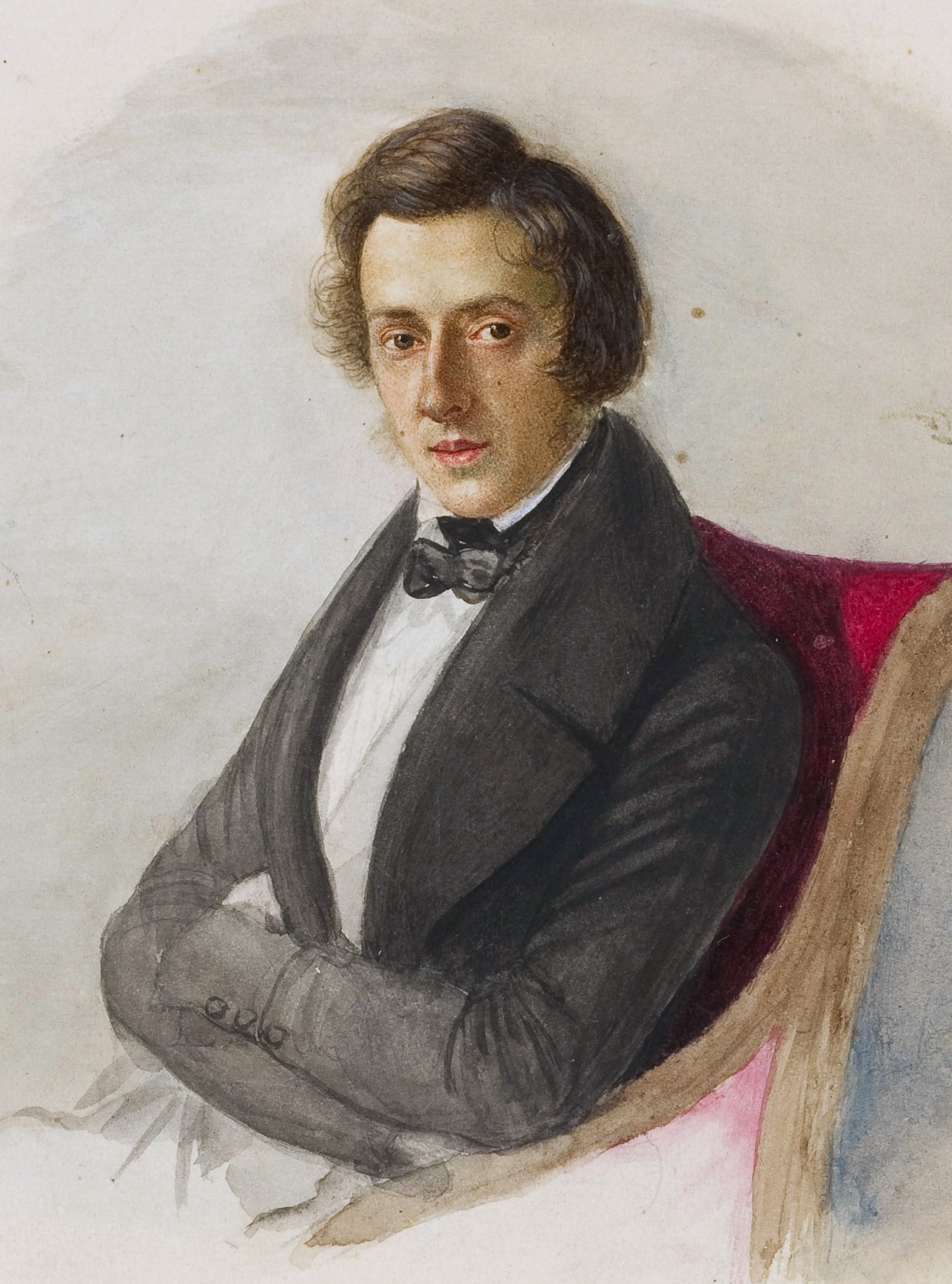
Frédéric Chopin: "Play Mozart in memory of me!"

Frédéric François Chopin (1 March 1810 – 17 October 1849) was a Polish composer and virtuoso pianist of the Romantic period who wrote primarily for solo piano.
He has maintained worldwide renown as a leading musician of his era, one whose "poetic genius was based on a professional technique that was without equal in his generation".

All of Chopin's compositions include the piano.
Most are for solo piano, though he also wrote two piano concertos, a few chamber pieces, and some 19 songs set to Polish lyrics.
His piano writing was technically demanding and expanded the limits of the instrument, his own performances noted for their nuance and sensitivity.
His major piano works also include mazurkas, waltzes, nocturnes, polonaises, the instrumental ballade (which Chopin created as an instrumental genre), études, impromptus, scherzos, preludes, and sonatas, some published only posthumously.

Maria Wodzińska | Portrait of Frédéric Chopin, 1836 | National Museum Warsaw

Textual description of firstImageUrl

Dennis Miller Bunker | Impressionist painter

Dennis Miller Bunker (November 6, 1861 - December 28, 1890) was an American painter and innovator of American Impressionism. His mature works include both brightly colored landscape paintings and dark, finely drawn portraits and figures.
One of the major American painters of the late 19th century, and a friend of many prominent artists of the era, Bunker died from meningitis at the age of 29. Bunker was born in New York City to Matthew Bunker, the secretary-treasurer of the Union Ferry Company, and his wife, Mary Anne Eytinge Bunker (sister of illustrator Sol Eytinge Jr.).
In 1876 he enrolled at the Art Students League of New York and the National Academy of Design.
By 1880 he was participating in the annual exhibitions of the National Academy, the American Watercolor Society, and the Brooklyn Art Association.


Textual description of firstImageUrl

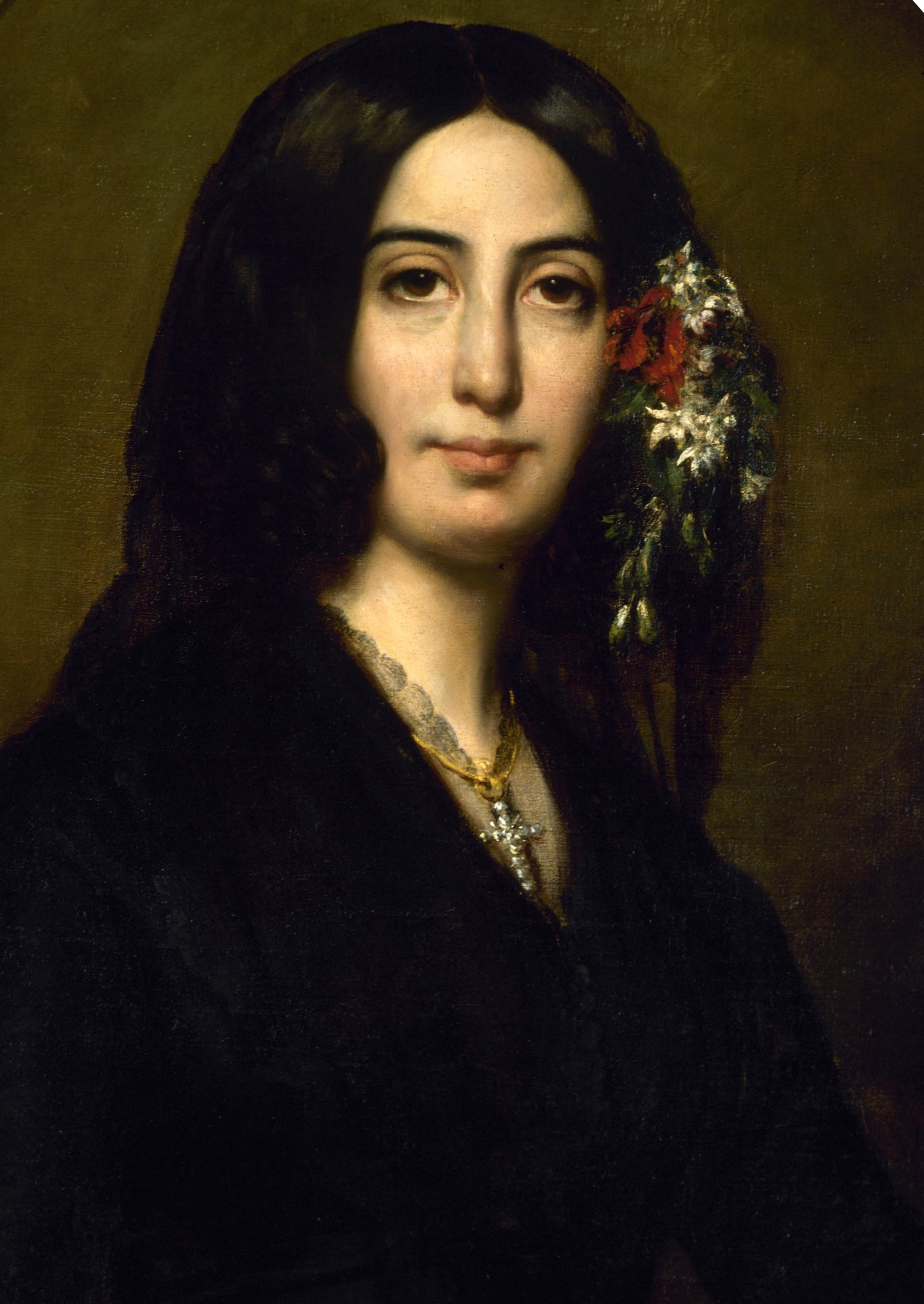
George Sand: "L'intelletto cerca, il cuore trova"

Amantine Lucile Aurore Dupin (1 July 1804 - 8 June 1876), best known by her pen name George Sand, was a French novelist, memoirist and journalist.
One of the most popular writers in Europe in her lifetime, being more renowned than both Victor Hugo and Honoré de Balzac in England in the 1830s and 1840s, Sand is recognised as one of the most notable writers of the European Romantic era.

"Art is a demonstration of which nature is the proof".

"Life resembles a novel more often than novels resemble life".
"La vita assomiglia ad un romanzo più spesso di quanto i romanzi assomiglino alla vita".

"I have an object, a task, let me say the word, a passion. The profession of writing is a violent and almost indestructible one".
"Ho un oggetto, un compito, lasciatemi dire la parola, una passione. La professione dello scrittore è violenta e quasi indistruttibile".

Auguste Charpentier | Portrait of George Sand, 1838 | Musee Carnavalet (detail)

Textual description of firstImageUrl

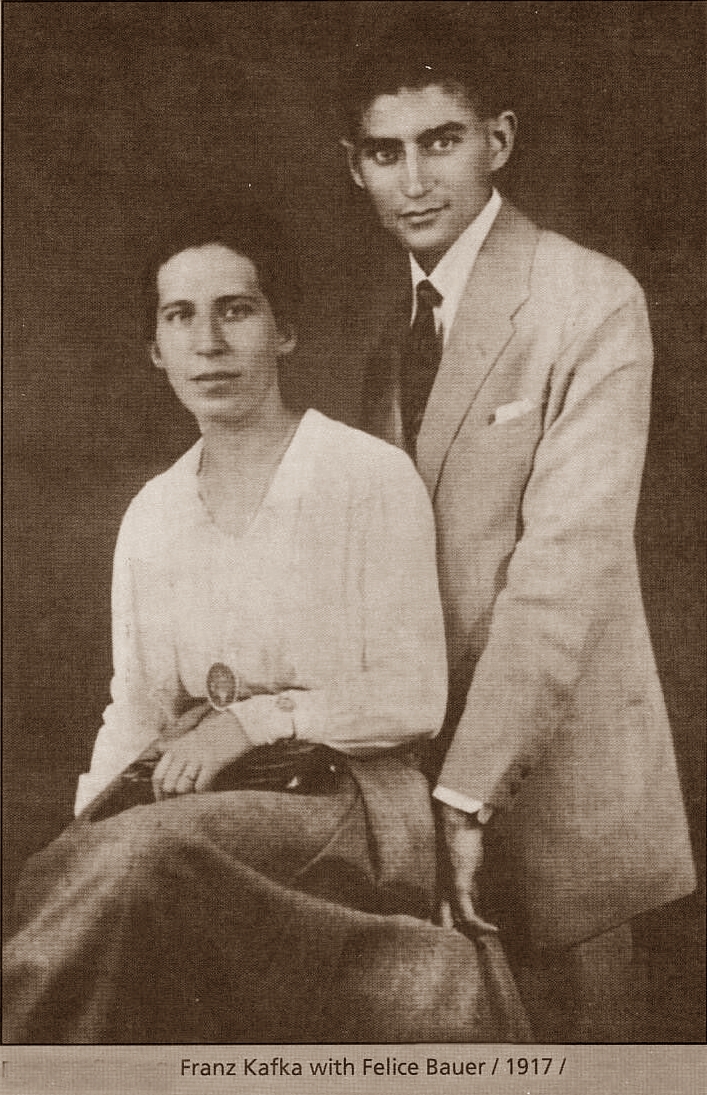
Lettere d'amore di Franz Kafka a Felice Bauer

"L'amore non è un problema, come non lo è un veicolo: problematici sono soltanto il conducente, i viaggiatori e la strada"

Kafka rifiutava la carnalità e la sua stessa corporeità. Egli stesso racconta il disgusto per il proprio corpo quando il padre accompagnandolo in piscina lo costringeva a denudarsi.
Lo stesso senso di ripugnanza egli lo esprimeva nei confronti dell'amore sessuale che descrive ad esempio ne "Il castello" come qualcosa di sporco e che riduceva l'uomo all'animalità.
Nella sua vita Kafka ebbe tre relazioni, maggiormente epistolari.
La più significativa rimase la relazione con la Felice Bauer (1887-1960), una steno-dattilografa prussiana d'origini ebraiche, la donna che liberò la forza creatrice di Kafka.
Franz Kafka, lo scrittore boemo, tra i maggiori del Novecento, incontrò Felice Bauer a Praga, in casa dell'amico Max Brod, la sera del 13 agosto del 1912.
Lui aveva 29 anni e lei 25, arrivata a Praga per lavoro.


Textual description of firstImageUrl

Wisława Szymborska | Ringraziamento / Thank-you note

Devo molto
a quelli che non amo.
Il sollievo con cui accetto
che siano più vicini a un altro.

La gioia di non essere io
il lupo dei loro agnelli.

Mi sento in pace con loro
e in libertà con loro,
e questo l’amore non può darlo,
né riesce a toglierlo.

Alex Venezia | A still moment

Textual description of firstImageUrl

Legge di Murphy: "La gente è sempre disponibile per i lavori già fatti!"

Della Gearchiologia | Capitolo sesto

Legge di Heller
Il primo mito del management è che esiste.

Corollario di Johnson
Nessuno sa veramente mai quel che succede in un qualsiasi punto dell'organizzazione.

Principio di Peter
In una gerarchia ogni membro tende a raggiungere il proprio livello di incompetenza.

Corollari
Col tempo, ogni posizione tende a essere occupata da un membro che è incompetente a svolgere quel lavoro.
Il lavoro viene svolto da quei membri che non hanno ancora raggiunto il proprio livello di incompetenza.

Inversione di Peter
La coerenza interna è assai più apprezzata dell'efficienza.

Erik Viktor Tryggelin (1878-1962) | Evening scene from Stockholm

Textual description of firstImageUrl

Cesare Dandini | Baroque painter

Cesare Dandini (1 October 1596 - 7 February 1657) was an Italian painter of the Baroque period, active mainly in his native city of Florence.
He was the older brother of the painter Vincenzo Dandini (1609-1675).
His nephew, Pietro was a pupil of Vincenzo, and Pietro's two sons, Ottaviano Dandini and the Jesuit priest Vincenzo also worked as painters in Florence.
According to the biographer Baldinucci, Cesare first worked under Francesco Curradi, then Cristofano Allori, and finally Domenico Passignano.


Textual description of firstImageUrl

Pablo Neruda | Perche' tu possa ascoltarmi.. / So that you will hear me..

Benito Cerna, 1960 ~ Figurative painter

Perché tu possa ascoltarmi le mie parole
si fanno sottili, a volte,
come impronte di gabbiani sulla spiaggia.
Collana, sonaglio ebbro
per le tue mani dolci come l'uva.

E le vedo ormai lontane le mie parole.
Più che mie sono tue.
Come edera crescono aggrappate al mio dolore antico.
Così si aggrappano alle pareti umide.
E' tua la colpa di questo gioco cruento.

Stanno fuggendo dalla mia buia tana.
Tutto lo riempi tu, tutto lo riempi.

Textual description of firstImageUrl

Legge di Murphy: "Dentro ogni grande problema ce nè uno più piccolo che sta lottando per venir fuori"!

Della Murfologia Applicata alla Ricerca | Capitolo Quinto

Prima legge di Gordon
Se non vale la pena fare una ricerca, non vale neanche la pena farla bene.

Legge di Murphy sulla ricerca
Una ricerca abbastanza lunga tenderà a confermare ogni teoria.

Legge di Maier
Se i dati non corrispondono alla teoria, vanno eliminati.

Corollari:
Più vasta è la teoria, meglio è.
Un esperimento è da considerarsi un successo
se non più del 50 per cento dei dati ottenuti
deve essere scartato per ottenere i risultati previsti con la teoria.

Maurits Cornelis Escher (Dutch graphic artist, 1898-1972) | Drawing hands, January, 1948 | Gemeentemuseum Den Haag The Hague the Netherlands

Textual description of firstImageUrl

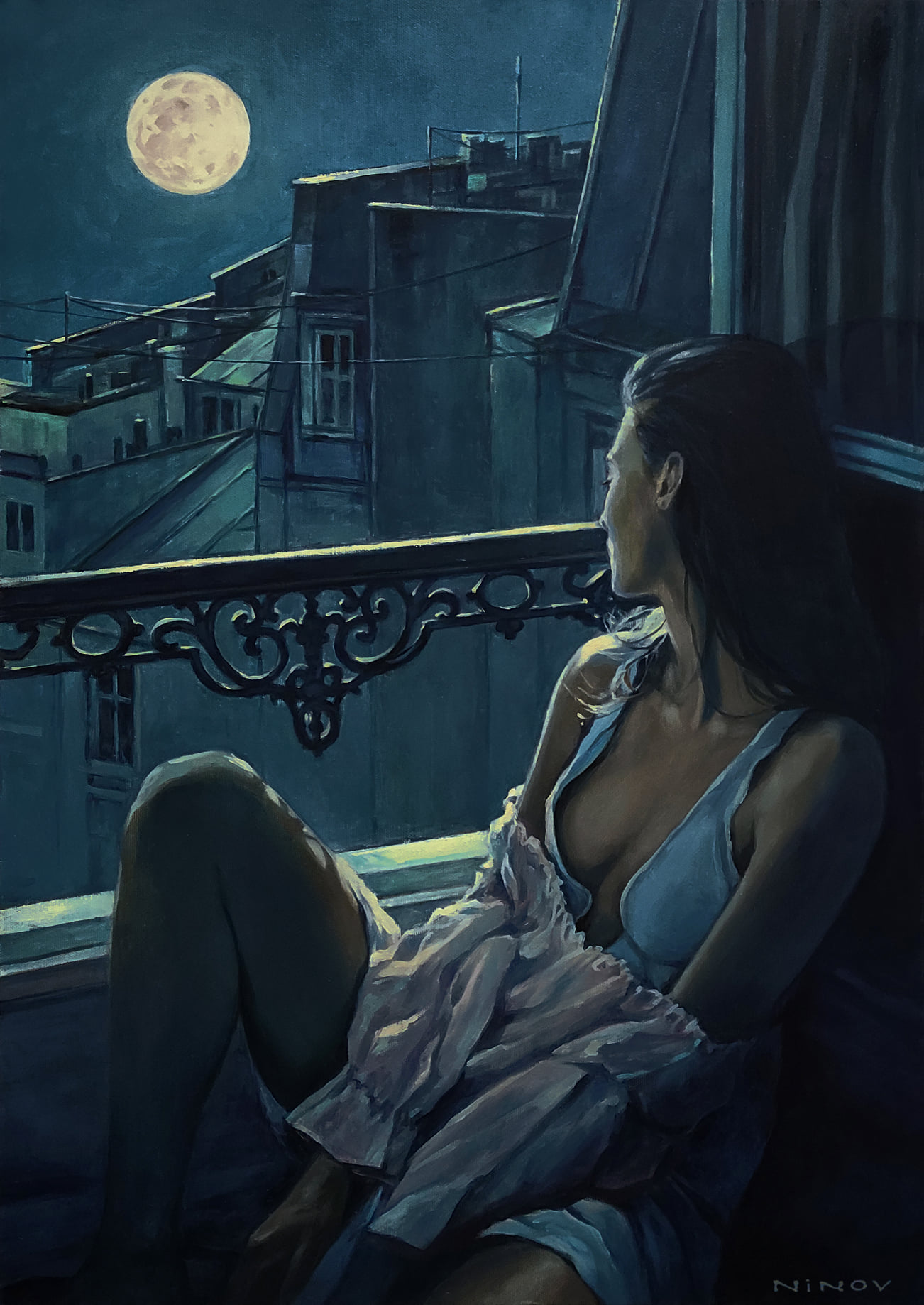
Nikolay Ninov, 1973

Nikolay Ninov is a Bulgarian artist, born in 1973. He graduated from SSHU for PI. Tryavna, and later VTU "St. st. Cyril and Methodius", specialty Sculpture by prof. Konstantin Denev and prof. Velichko Minekov.
Since 2009 he is the Associate professor at Varna Free University in Sculpture. Winner of prizes for contemporary arts, including the award for Young Artist from the National Biennial of Small Forms, Pleven (2004).
He has participated in numerous national and international festivals and symposiums for contemporary arts and sculpture.


Textual description of firstImageUrl

Lucio Olivieri, 1934 | Figurative sculptor

Lucio Oliveri is a contemporary Italian sculptor who lives and works in his native city of Milan.
For some year now, he has identified himself in a personalized figurative that aims to express states of mind and human attitudes through the synthesis/essential of the human figure.
Lucio Oliveri's artistic vocation was sparked in 1954 at the age of nineteen at the time of his father's death, when he decided to make a plasticine portrait of him.
In the 1970s he attended a sculpture course at the Centro Artistico Culturale Milanese for seven years under the guidance of Franco Zazzeri, completing his self-taught training.

Lucio Olivieri | Italian Figurative sculptor

Textual description of firstImageUrl

Truong Buu Giam, 1948 | Abstract impressionism painter

Vietnamese-born American painter Truong Buu Giam was born on Christmas Eve, in the province of Bên Tre, South Vietnam.
His parents felt grateful on the birth of their fifth child.
They named the infant Buu Giam with a fateful meaning: Preserving the Precious and the Beautiful.
Already in elementary school, his teachers loved to have him come to the chalkboard and draw pictures so other children could copy.


Textual description of firstImageUrl

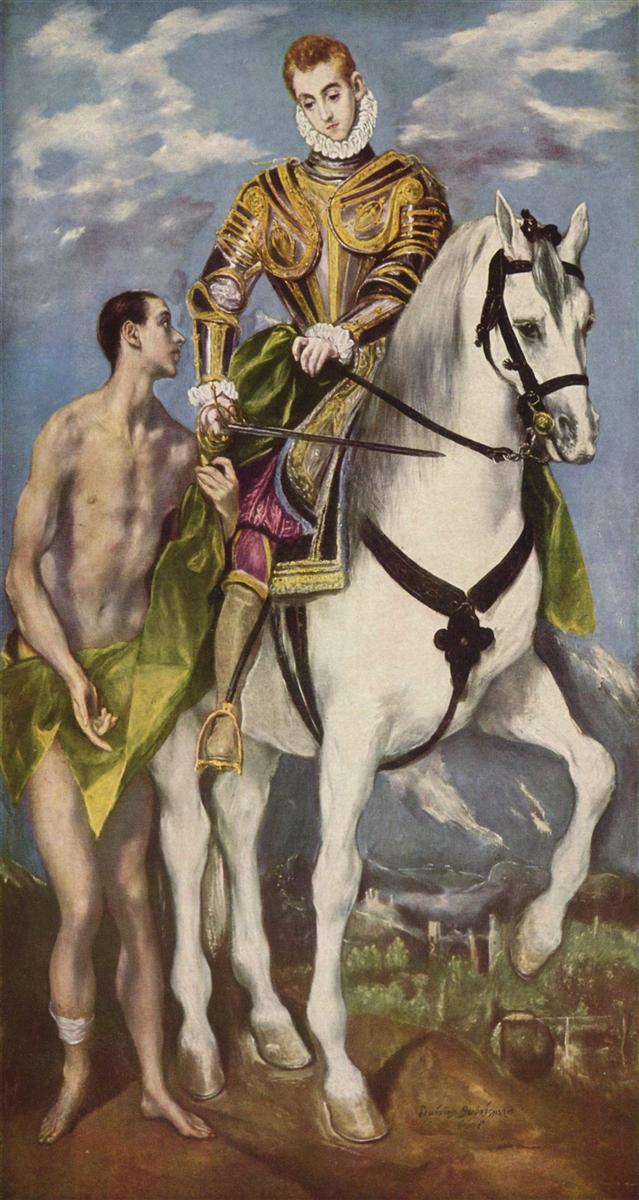
El Greco | Tecnica e stile

Uno dei principi fondamentali dello stile di El Greco è il primato dell'immaginazione e dell'intuizione sulla rappresentazione soggettiva della creazione.
El Greco rifiutò i principi classicisti come misura e proporzione. Credeva che la grazia fosse l'obiettivo principale dell'arte, ma il pittore ha raggiunto la grazia solo se riesce a risolvere le problematiche più complesse con facilità e disinvoltura.
El Greco pensava che il colore fosse l'elemento più importante e allo stesso tempo meno governabile di un dipinto, e dichiarò che il colore aveva la supremazia rispetto all'immagine.
Francisco Pacheco del Río, un pittore che fece visita ad El Greco nel 1611, scrisse che all'artista piacevano «grandi macchie di colori puri e non mescolati, come fossero immodesti segni della sua abilità».


Textual description of firstImageUrl

Paolo Veronese | Pittore Rinascimentale

Paolo Caliari, detto Paolo Veronese nacque a Verona nel 1528, da un Gabriele tagliapietra e da Caterina; morì a Venezia il 9 aprile 1588. Suo primo ed effettivo maestro, ricordato dai documenti, fu il pittore Antonio Badile (1518-1560) presso il quale il giovane Veronese fu a bottega; e non molto maggiore importanza per il principiante dovette avere l'arte di Domenico Brusasorci (nato nel 1516): ambedue codesti pittori non certo grandissimi discendevano da Gianfrancesco e Giovanni Caroto, artisti di quella branca che s'ingegnava a orientare la pittura veronese verso Venezia.
Sulla prima formazione tecnica di Veronese dovettero anche avere efficienza i maestri bresciani Romanino, Moretto e Savoldo, presenti con opere a Verona al suo tempo. Scarsamente tuttavia: ché il giovane Caliari aveva in sé troppa forza per poter soggiacere all'inferiorità espressiva dei citati; e, per quel tanto che volle seguire la loro via, preferì farlo rivolgendosi direttamente alla fonte delle novità tecniche ch'essi portavano in patria: a Venezia, cioè, la quale esercitò subito su di lui il suo altissimo fascino.


Textual description of firstImageUrl

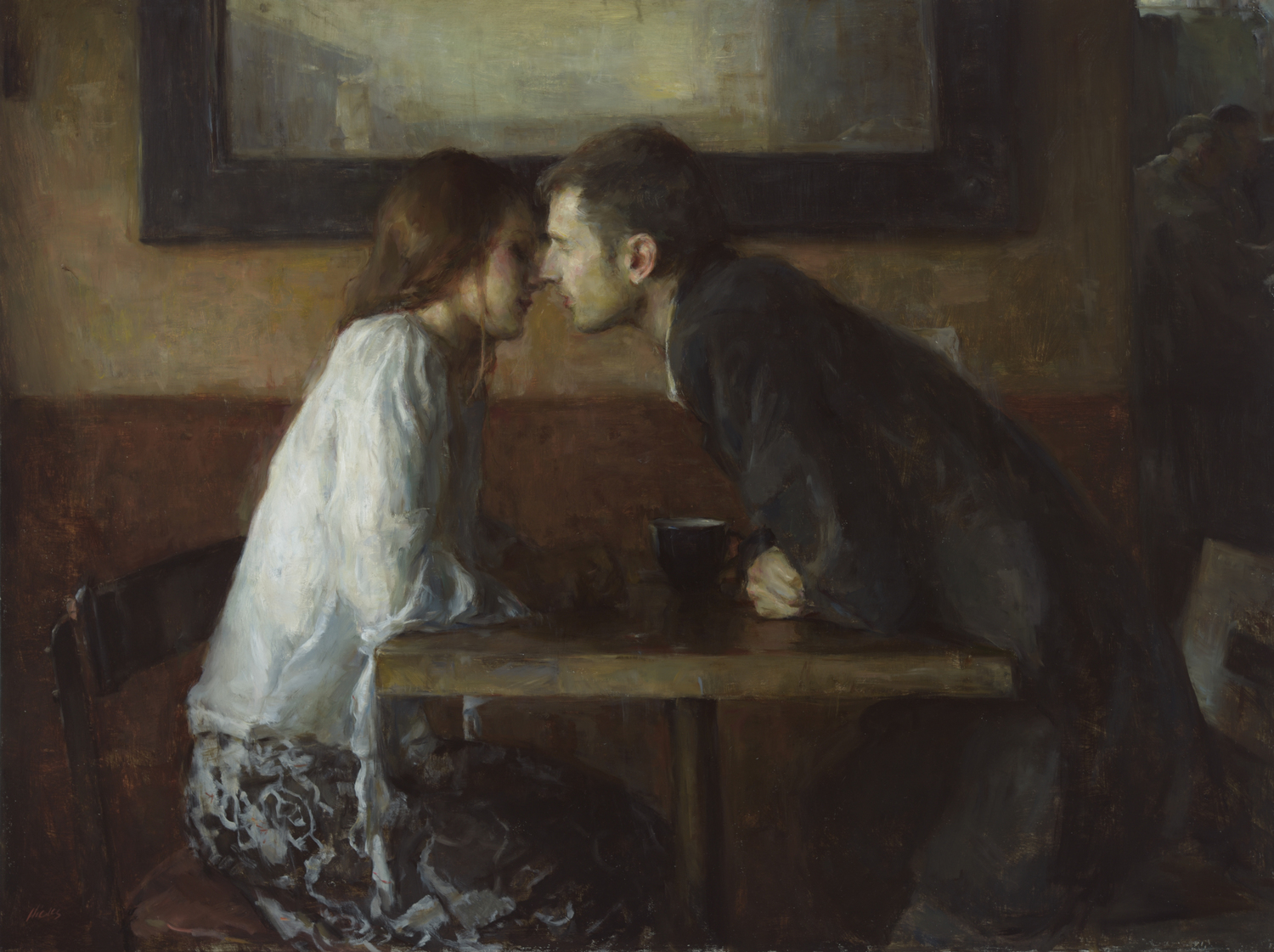
Pedro Salinas | Non ho bisogno di tempo / I don't need time..

Non ho bisogno di tempo
per sapere come sei:
conoscersi è luce improvvisa.
Chi ti potrà conoscere
là dove taci, o nelle
parole con cui tu taci?

Chi ti cerca nella vita
che stai vivendo, non sa
di te che allusioni,
pretesti in cui ti nascondi.

Ron Hicks | Stolen Kiss, 1965

Textual description of firstImageUrl

Norwegian Art History and Sitemap

For much of its history Norwegian art is usually considered as part of the wider Nordic art of Scandinavia. It has, especially since about 1100, been strongly influenced by wider trends in European art.
After World War II, the influence of the United States strengthened substantially. Due to generous art subsidies, contemporary Norwegian art has a high production per capita.
Though usually not especially a major centre for art production or exporter of art, Norway has been relatively successful in keeping its art; in particular, the relatively mild nature of the Norwegian Reformation, and the lack of subsequent extensive rebuilding and redecoration of churches, has meant that with other Scandinavian countries, Norway has unusually rich survivals of medieval church paintings and fittings.

Edvard Munch | The Scream, 1893

Textual description of firstImageUrl

Napoleone Nani (1841-1899) | Pittore di Genere

Nani, Napoleone - Nacque a Venezia da Luigi e da Elisa Fortes il 18 maggio 1839 e fu battezzato nella parrocchia di S. Geremia. Iscritto all'Accademia di belle arti della città natale dal 1853, subito ottenne premi e riconoscimenti: nel 1854 per gli "elementi di figura", nel 1856 per l’"invenzione della figura palliata" e per i "nudi in disegno" sia aggruppato sia semplice; nel 1858 per l’"insieme storico in cartone" nella sezione pittura.
Già agli inizi degli anni Sessanta iniziò la sua duplice attività d’insegnamento ed espositiva.
Venne nominato nel 1862 aggiunto provvisorio all'insegnamento degli elementi di figura, statuaria e anatomia dell’Accademia di Venezia, dove espose nel 1863 Il figlio del pescatore e, nel 1864, Mezza figura di donna (n. 123; Milano, Archivio studio Paul Nicholls).


Textual description of firstImageUrl

Grecia antica

Antica Grecia (o Grecia antica) è il termine utilizzato per descrivere la civiltà sviluppatasi nella Grecia continentale, in Albania, nelle isole del Mar Egeo, sulle coste del Mar Nero e quelle occidentali della Turchia, in Sicilia, nell'Italia Meridionale (poi chiamata Magna Grecia), nelle isole del Mediterraneo occidentale di Corsica e Sardegna, nonché sulle coste di Spagna e Francia e, successivamente, dell'Africa settentrionale.
La cultura Greca, nonostante la conformazione geografica del continente favorisse l'insorgere di molteplici unità politiche a sé stanti, fu un fenomeno omogeneo, che interessò tutte le genti elleniche, accomunate dalla stessa lingua e dalla stessa religione.

Età arcaica

Le prime civiltà di cui si ha notizia per la Grecia antica sono la civiltà egea, quella cicladica e quella micenea, influenzata dalla civiltà minoica, che sorse a Creta nell'età del bronzo.


Textual description of firstImageUrl

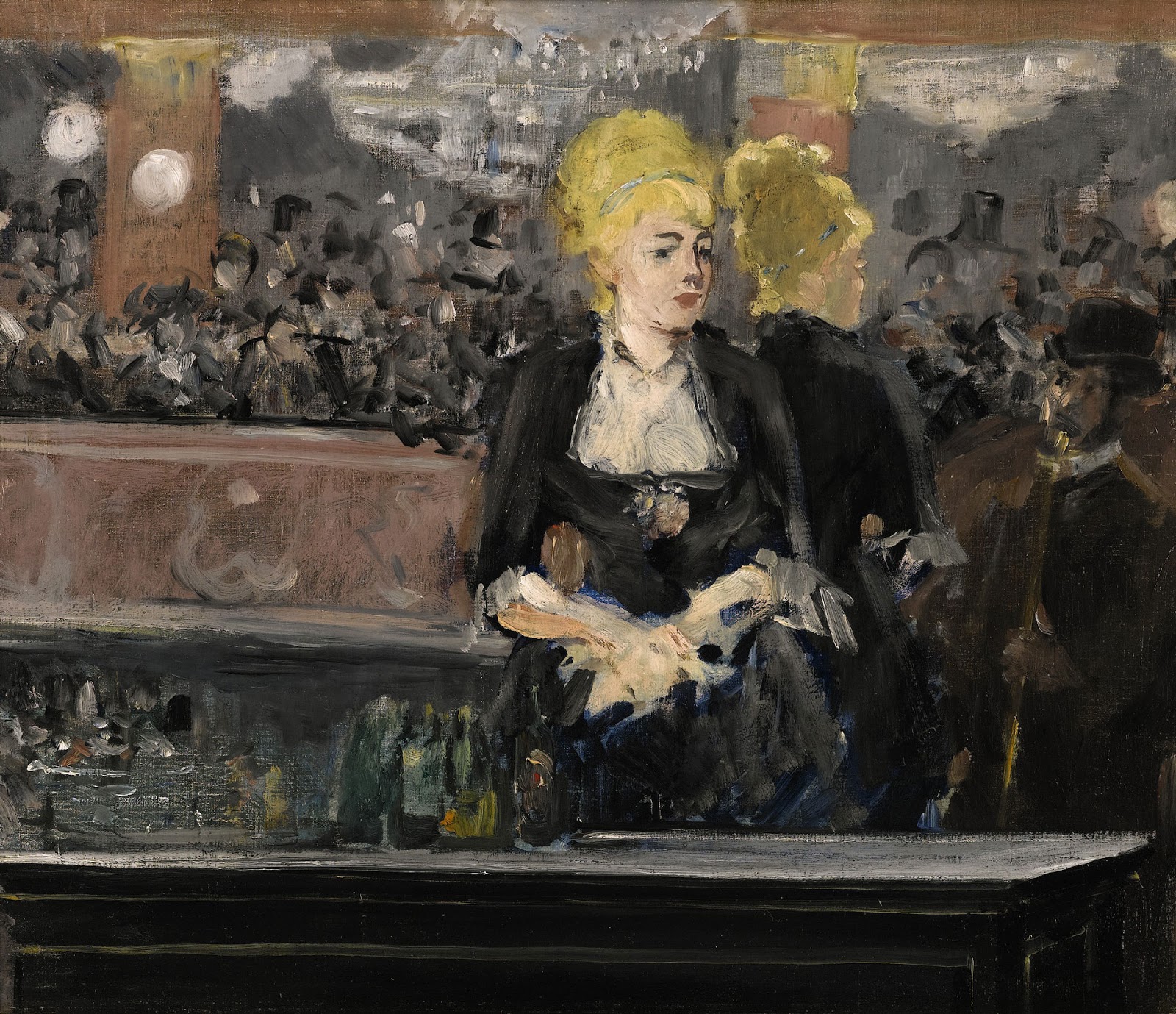
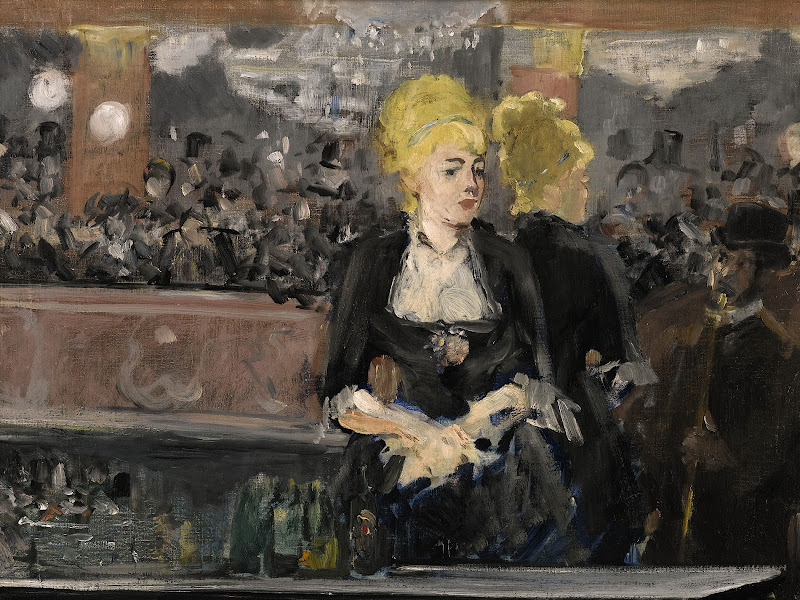
Happy Birthday Édouard Manet!

It’s Édouard Manet’s birthday - born on this day - January 23, 1832. To this day, Manet is still considered to be the father of Modernism.

Édouard Manet -the eldest son of an official in the French Ministry of Justice- had early hopes of becoming a naval officer. After twice failing the training school's entrance exam, the teenager instead went to Paris to pursue a career in the arts. There he studied with Thomas Couture and diligently copied works at the Musée du Louvre.
The biennial (and later, annual) Parisian Salons were considered the most expedient way for an artist to make himself known to the public, and Manet submitted paintings to Salon juries throughout his career. In 1861, at the age of twenty-nine, he was awarded the Salon's honorable mention for The Spanish Singer.


Textual description of firstImageUrl

Eugenio Montale | Ho sceso, dandoti il braccio / I went down, giving you my arm, 1967

Ho sceso, dandoti il braccio, almeno un milione di scale
e ora che non ci sei è il vuoto ad ogni gradino.
Anche così è stato breve il nostro lungo viaggio.
Il mio dura tuttora, né più mi occorrono
le coincidenze, le prenotazioni,
le trappole, gli scorni di chi crede
che la realtà sia quella che si vede.

William Brymner | In the Orchard Spring, 1892

Textual description of firstImageUrl

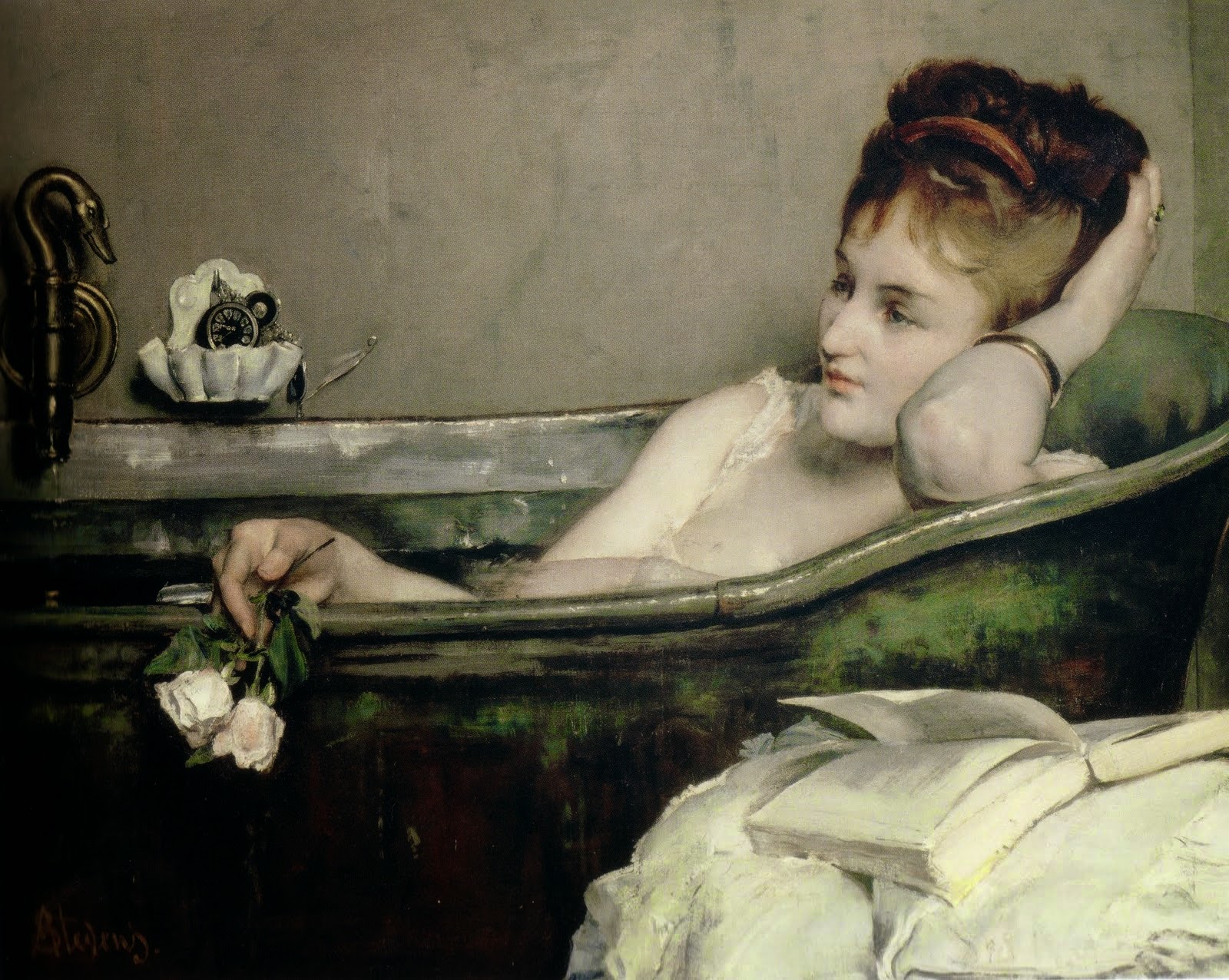
Alfred Stevens | Academic Classical painter

Alfred Émile Léopold Stevens (11 May 1823 - 24 August 1906) was a Belgian painter, known for his paintings of elegant modern women.
After gaining attention early in his career with a social realist painting depicting the plight of poor vagrants, he achieved great critical and popular success with his scenes of upper-middle class Parisian life.
In their realistic style and careful finish, his works reveal the influence of 17th-century Dutch genre painting.


Textual description of firstImageUrl

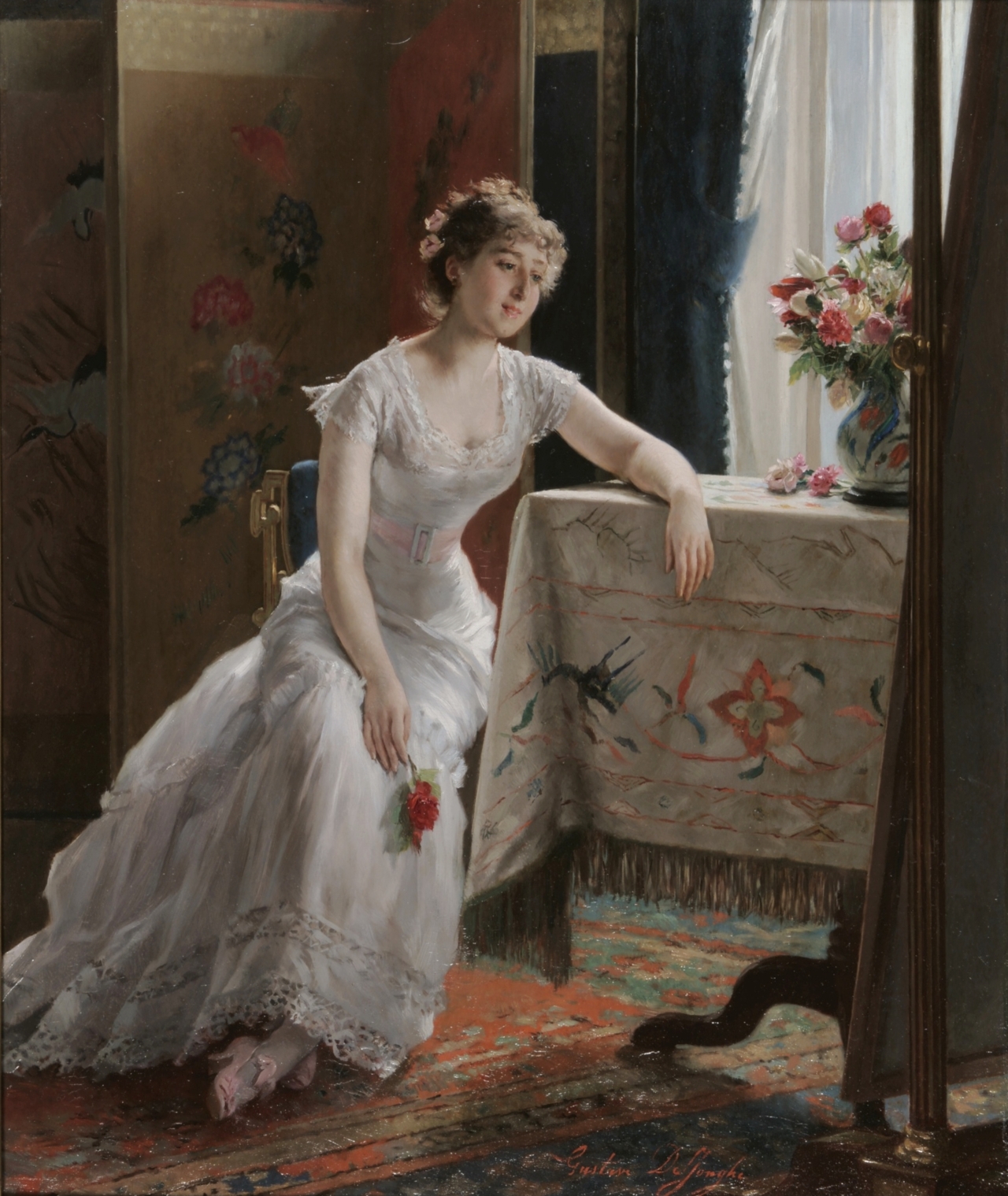
Gustave de Jonghe (1829-1893)

Gustave Léonard de Jonghe, Gustave Léonard De Jonghe or Gustave de Jonghe (4 February 1829 – 28 January 1893) was a Flemish/ Belgian painter known for his glamorous society portraits and genre scenes. After training in Brussels, he started out as a painter of historical and religious subjects in a Realist style. After moving to Paris where he spent most of his active career, he became successful with his scenes of glamorous women in richly decorated interiors.

Life

Gustave Léonard de Jonghe was born in Kortrijk as the son of the prominent landscape painter Jan Baptiste de Jonghe.
He received his first art lessons from his father. He continued his studies in Brussels at the Académie Royale des Beaux-Arts where leading Belgian painter François-Joseph Navez was one of his teachers.
The history painter Louis Gallait was his close friend and mentor. When de Jonghe’s father died when he was only 15 years old, his native city granted him a scholarship.