Textual description of firstImageUrl

Hans Baluschek (1870-1935) | Vita ed Opere

Hans Baluschek è stato un rappresentante di spicco del Realismo Sociale Tedesco, ed in quanto tale, cercò di ritrarre la vita della gente comune con vivida schiettezza.
I suoi dipinti si incentrarono sulla classe operaia di Berlino.
Appartenne al movimento della Secessione di Berlino, un gruppo di artisti particolarmente interessati agli sviluppi avanguardistici dell'arte - in particolare dell'Espressionismo Tedesco.
Nonostante ciò, lungo l'arco della sua vita egli fu conosciuto principalmente per le sue fantasiose illustrazioni del famoso libro per bambini "Peterchens Mondfahrt".
Dopo il 1920 divenne un membro attivo del Partito Socialdemocratico tedesco, che all'epoca professava ancora una visione marxista della storia.


Textual description of firstImageUrl

Salon des Refusés (May 15, 1863)

Salon des Refusés is generally known as an exhibition of works rejected by the jury of the official Paris Salon, but the term is most famously used to refer to the Salon des Refusés of 1863.
Today by extension, salon des refusés refers to any exhibition of works rejected from a juried art show.
Among the exhibitors were Paul Cézanne, Camille Pissarro, Armand Guillaumin, Johan Jongkind, Henri Fantin-Latour, James Whistler and Édouard Manet, who exhibited his famous painting "Le Déjeuner sur l’herbe", officially regarded as a scandalous affront to taste.

Édouard Manet | Le Déjeuner sur l'herbe, 1863 | Musée d'Orsay, Paris

Textual description of firstImageUrl

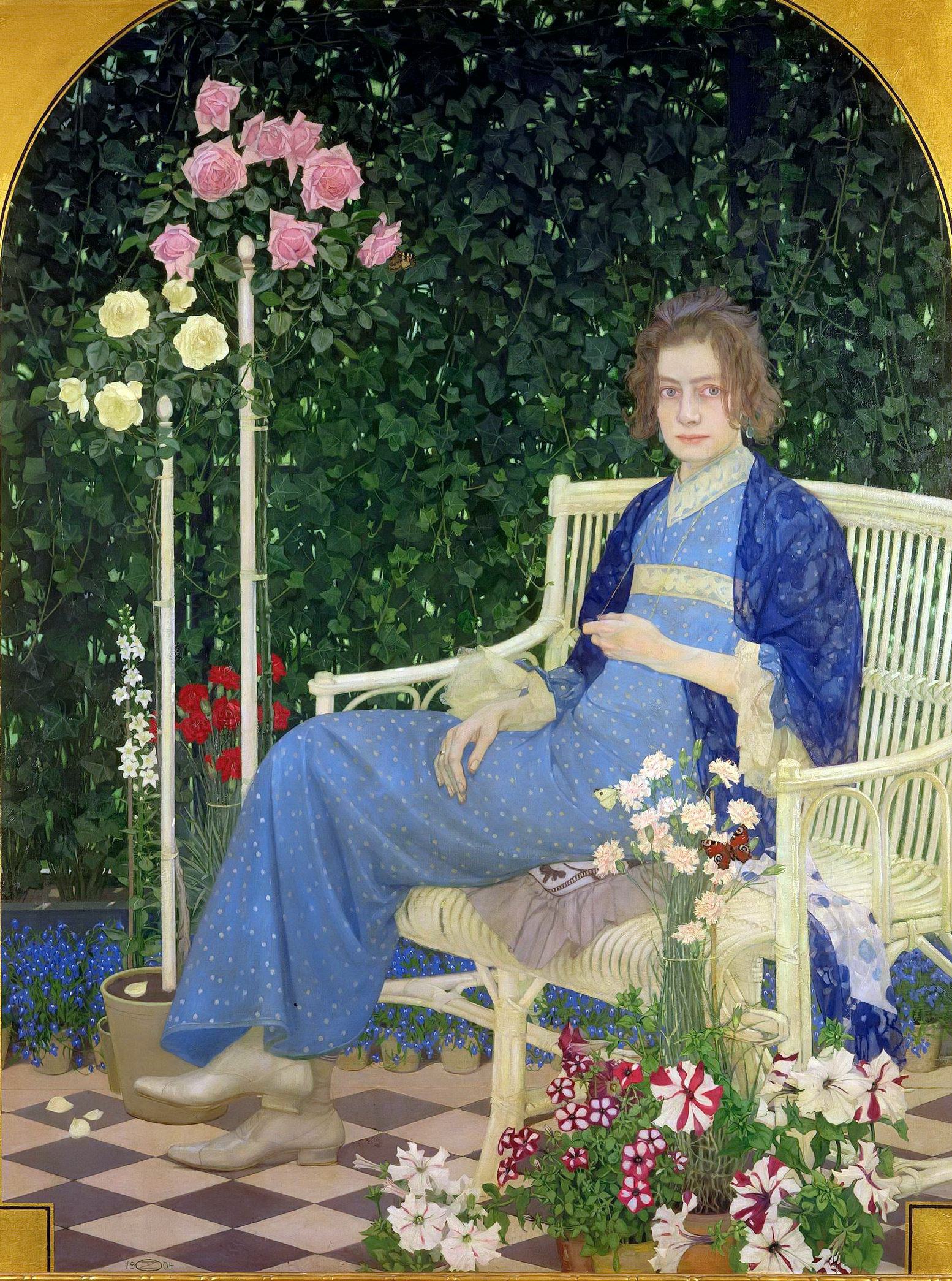
Oskar Zwintscher | Art Nouveau painter

Oskar Zwintscher (1870-1916) was a German painter. He is often associated with the Jugendstil movement.
From 1887-1890 he studied at the Hochschule für Grafik und Buchkunst Leipzig and, from 1890-1892 was a student of Leon Pohle and Ferdinand Pauwels at the Dresden Academy of Fine Arts.
After his studies, he became a free-lance painter in Meißen, where he received a stipendium, awarded to Saxon painters by the "Munkeltsche Legat". This enabled him to work for three years with no financial worries.
In 1898, he presented his first large collection of paintings to the public.
That same year, he was a prizewinner at a contest held by the entrepreneur Ludwig Stollwerck to select artists for a new line of trading cards.


Textual description of firstImageUrl

Blandford Fletcher | Genre painter

William Teulon Blandford Fletcher, noto come Blandford Fletcher (1858-1936), è stato un pittore naturalista Britannico.
Figlio di un commerciante di biancheria, contro la volontà del padre, Fletcher studiò alla South Kensington School of Art dall'età di sedici a vent'anni, dove vinse la medaglia d'argento ed il premio della Regina.
Durante quel periodo visitò anche la Bretagna e fece conoscenza per la prima volta con Stanhope Forbes ed i suoi amici.


Textual description of firstImageUrl

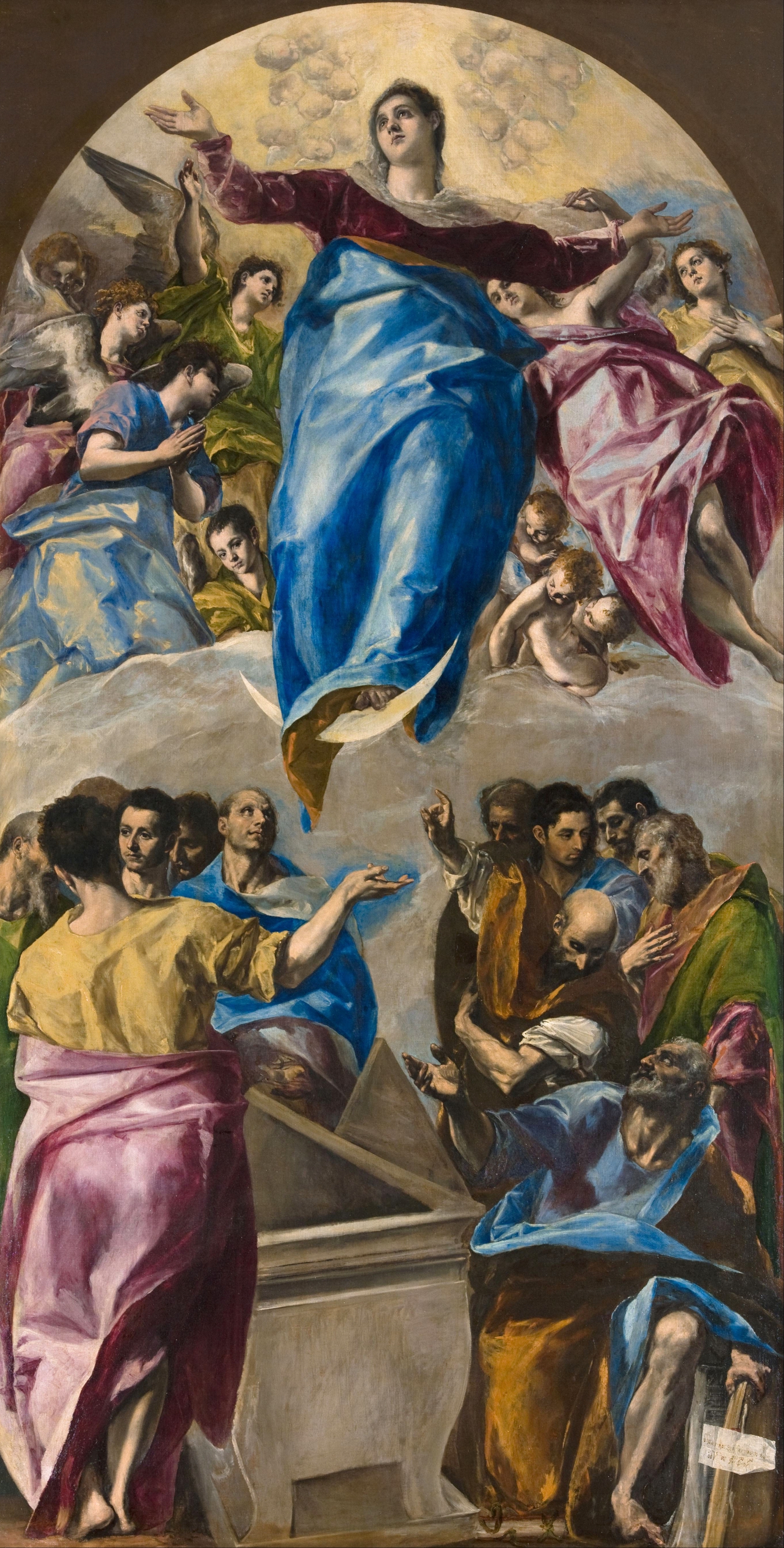
El Greco | Vita ed Opere

El Greco, nome d'arte di Dominikos Theotokòpoulos (Δομήνικος Θεοτοκόπουλος) - (Candia, 1541 - Toledo, 7 aprile 1614), è stato un pittore, scultore ed architetto greco vissuto in Italia ed in Spagna. È tra le figure più importanti del Rinascimento Spagnolo.
Nacque a Creta, che all'epoca faceva parte della Repubblica di Venezia ed era il centro di un importante movimento pittorico post-bizantino, chiamato Scuola Cretese.
Dopo l'apprendistato diventò maestro d'arte seguendo il corso di quella tradizione artistica, prima di intraprendere, all'età di 26 anni, il viaggio verso Venezia, usuale meta di apprendistato e crescita artistica tra i pittori greci dell'epoca.
Infatti nel 1567 si trasferì nella Serenissima, lasciando Creta e la propria moglie, probabilmente per trovare nuovi sbocchi di mercato e per confrontarsi direttamente con le famose botteghe di Tiziano, Bassano, Tintoretto e Veronese. Nel 1570 si recò anche a Roma dove aprì una bottega e dipinse una serie di opere.


Textual description of firstImageUrl

Francisco Goya | Vita ed Opere

Francisco José de Goya y Lucientes (Fuendetodos, 30 marzo 1746 – Bordeaux, 16 aprile 1828) è stato un pittore ed incisore Spagnolo.
Considerato il pioniere dell’arte moderna, è stato uno dei più grandi pittori spagnoli vissuti tra la fine del XVIII secolo e dell'inizio del XIX.
I suoi dipinti, i suoi disegni e le sue incisioni riflettevano gli sconvolgimenti storici in corso e influenzarono i più importanti pittori coevi e del secolo successivo.


Textual description of firstImageUrl

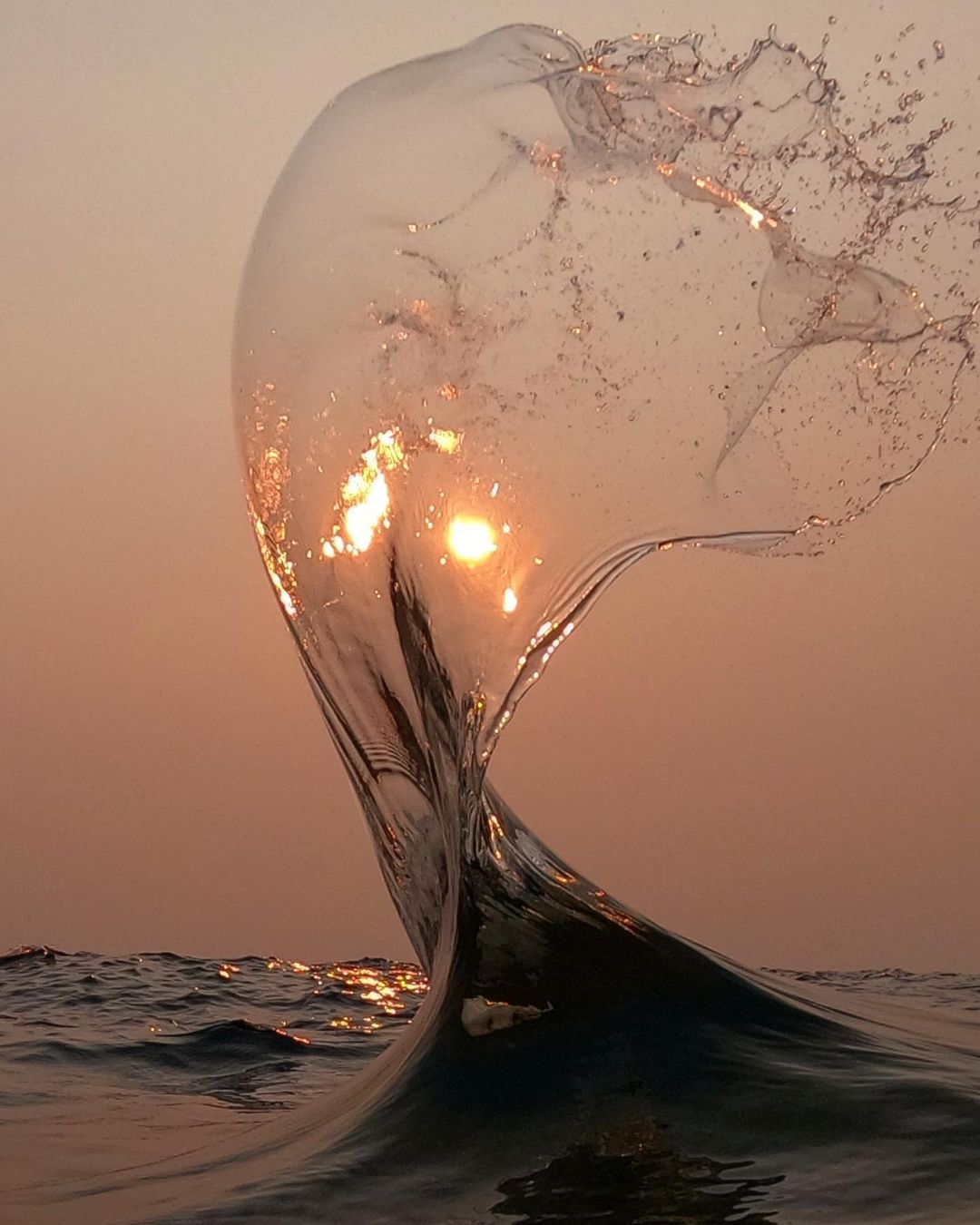
Shaun Smith | Ocean Waves

Shaun Smith is a playful water photographer who sees the bright side in the smallest things in life.
Like many surfers before him, Shaun started bringing a camera in the water to shoot his friends and document his own rides, as a way to relive the fun.
Growing up on the coast of California, Shaun started swimming age two, took to bodyboarding at seven and hasn’t stopped since.
"I love the feeling of getting barreled. There's really nothing else like it".

Starting at the Wedge and staring down barrels, Shaun found his style in the mini-waves movement, capturing in ripples the universal beauty of undulating water.
Shaun Smith is obsessed with listening to the call of the ocean, using the lens to record the mood of the sea, the dance of the waves in the wind, like the lonely but not lonely soul of the sea.


Textual description of firstImageUrl

Hemen Majumdar (India, 1894-1948)

Hemendranath Majumdar was an Indian painter who lived in Bengal. In 2002, there was a huge uproar when his painting was stolen and found with an art dealer.
His birthplace Kishoreganj now belongs to Bangladesh.
In 1911 he decorated the gates to welcome King George V, on his visit to India.

He was one of the founding members of Indian Academy of Fine Art, Kolkata in 1919 along with Jogeshchandra Seal, Jamini Roy, Bhabani Charan Law and Atul Bose.

He remained a celebrated artist during his lifetime and has been invited by many rulers to draw their portraits and also gave him the position of court artist.


Textual description of firstImageUrl

Tiziano Baravelli, 1963

Nato in provincia di Bologna, Tiziano Baravelli scopre l'arte fin da bambino, diventando prima un musicista e poi un produttore musicale.
Finché, a 40 anni, capisce che la sua vera passione è, invece, la pittura ed inizia a dipingere, affermandosi da subito nel panorama nazionale.
Tra i soggetti dei suoi quadri più famosi troviamo ritratti, dipinti di oggetti e paesaggi.
Oggi il pittore è apprezzato soprattutto per i suoi ritratti: il volto umano è descritto dal pittore come la massima espressione della complessità dell’essere umano.
Grande attenzione, ad esempio, è data alla figura femminile, dipinta in modo da sottolinearne la delicatezza con colori neutri ed opachi che riproducono sulla tela la grazia della donna.


Textual description of firstImageUrl

Pedro Salinas / Chagall | "Per vivere non voglio isole, palazzi, torri.."

To live I don't want
islands, palaces, towers.

What steeper joy
Than living in pronouns!

Take off your clothing,
features, pictures;
I don't want you like that,
masked as another,
always a daughter of something.

Marc Chagall | Over the town / Sulla città, 1918

Textual description of firstImageUrl

Luca Carlevarijs | Baroque Era / Veduta painter

Luca Carlevarijs or Carlevaris (1663-1730) was an Italian painter and engraver working mainly in Venice.
He pioneered the genre of the cityscapes (vedute) of Venice, a genre that was later widely followed by artists such as Canaletto and Francesco Guardi.
Carlevarijs was born in Udine.
He was also known as 'Luca Casanobrio' or 'Luca di ca Zenobrio', for his patronage by the latter family.


Textual description of firstImageUrl

Rainer Maria Rilke: "Un’opera d’arte è buona se nasce da necessità!"

Lettera ad un Giovane Poeta / Letter to a Young Poet, 1903

"Le Lettere ad un giovane poeta" - dieci lettere scritte da Rainer Maria Rilke (Scrittore, poeta e drammaturgo austriaco di origine boema, 1875-1926) al giovane Franz Xaver Kappus (Scrittore e giornalista Austriaco, 1883-1966), sono un manifesto della creazione artistica.

Studente ventenne della Accademia militare di Wiener Neustadt, Franz Kappus si dilettava a scrivere poesie, e sognava di condurre una vita diversa - non dedita ai servizi militari.
Scoprendo che la stessa Accademia, anni prima, era stata frequentata dal noto poeta Rilke, inizia a leggerlo nelle pause tra le lezioni ed un giorno decide di scrivergli.

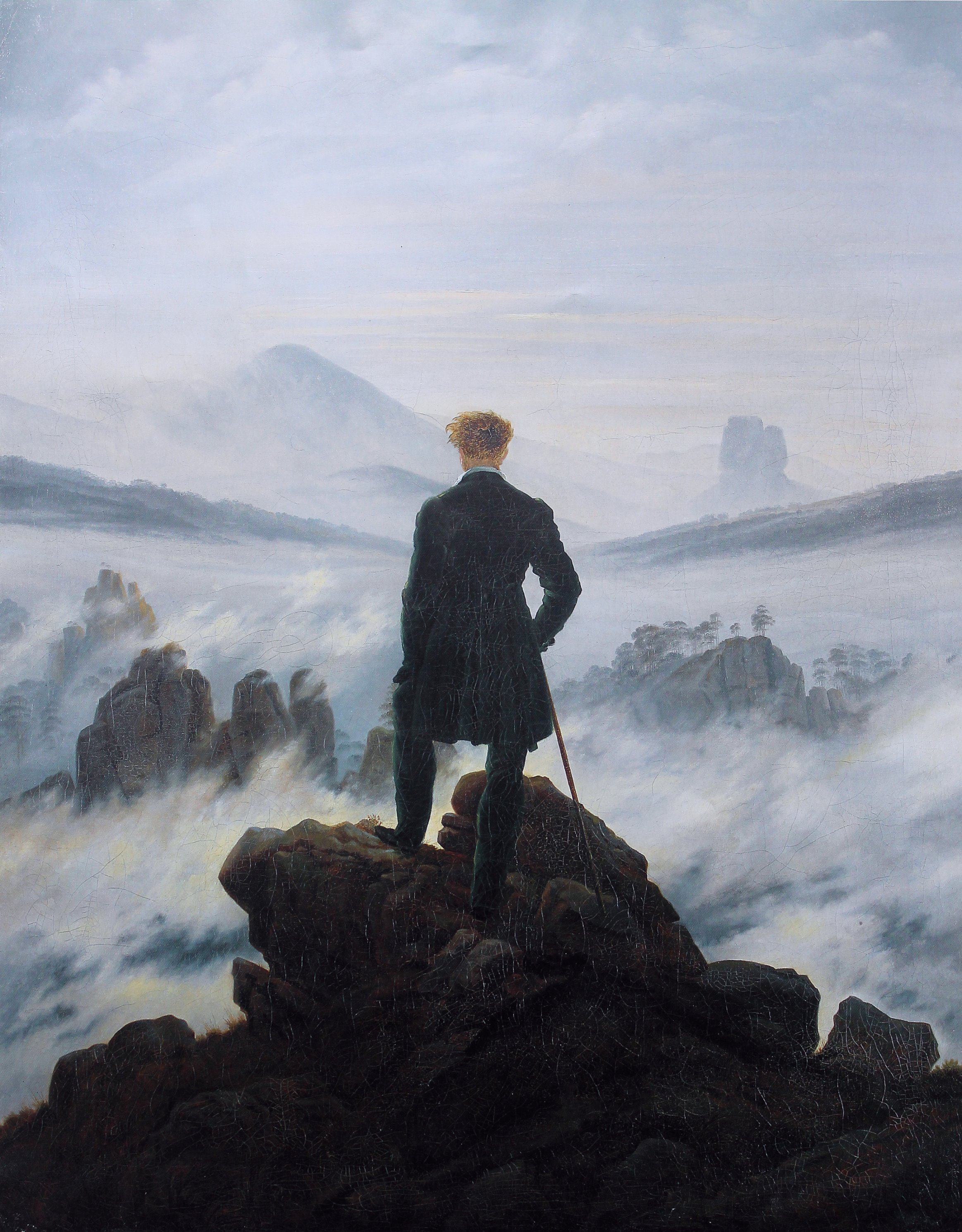
Caspar David Friedrich | Wanderer above the Sea of Fog, 1818

Textual description of firstImageUrl

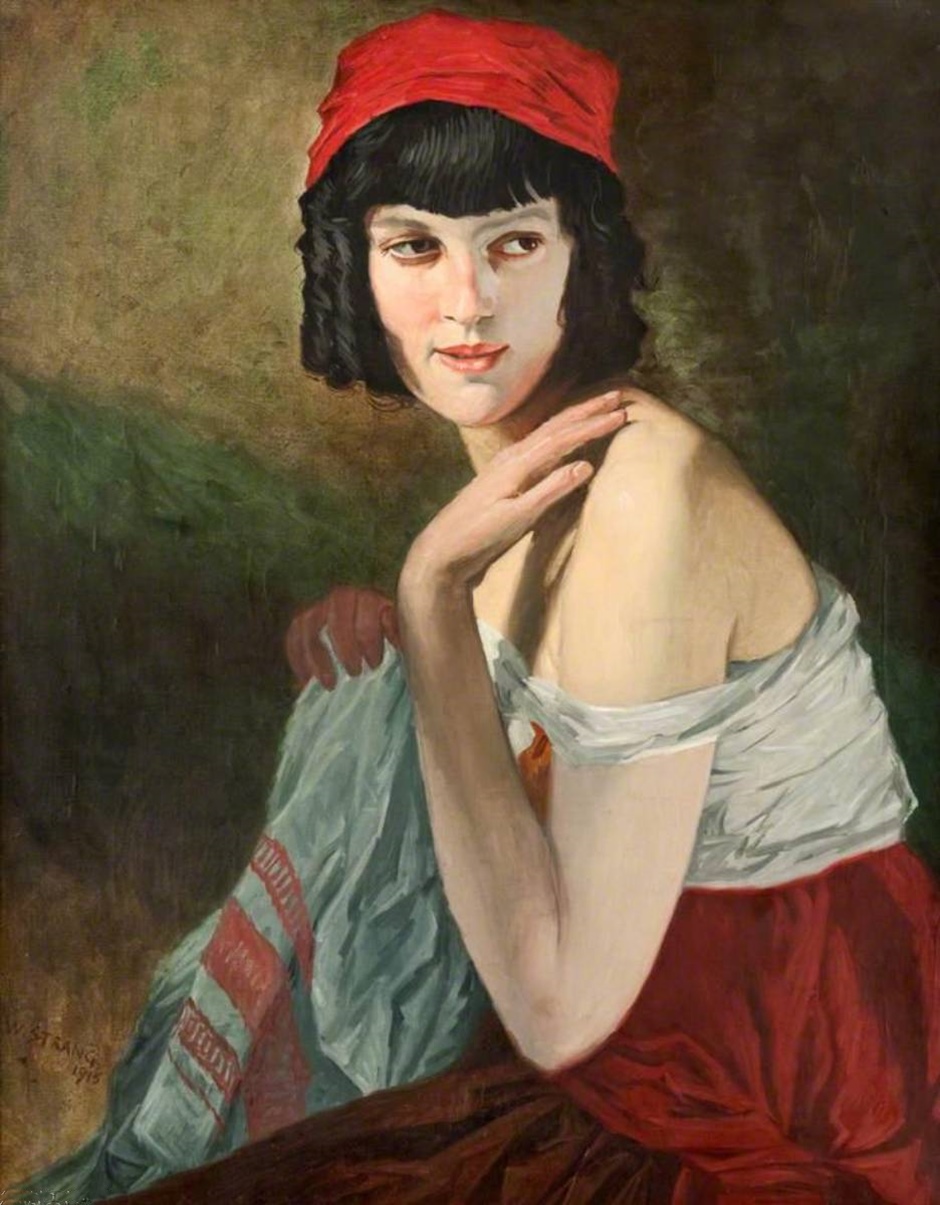
William Strang (1859-1921)

From National Galleries of Scotland:

During his lifetime, Dumbarton-born William Strang built up an international reputation as a highly skilled and imaginative printmaker, portraitist and painter.
His diverse subjects ranged from the fantastic to the very real, including uncompromising depictions of contemporary life and the effects of poverty and social injustice, landscapes, subjects from the bible, bewildering allegories, and narrative illustrations.
He was also a prolific and highly successful portraitist.


Textual description of firstImageUrl

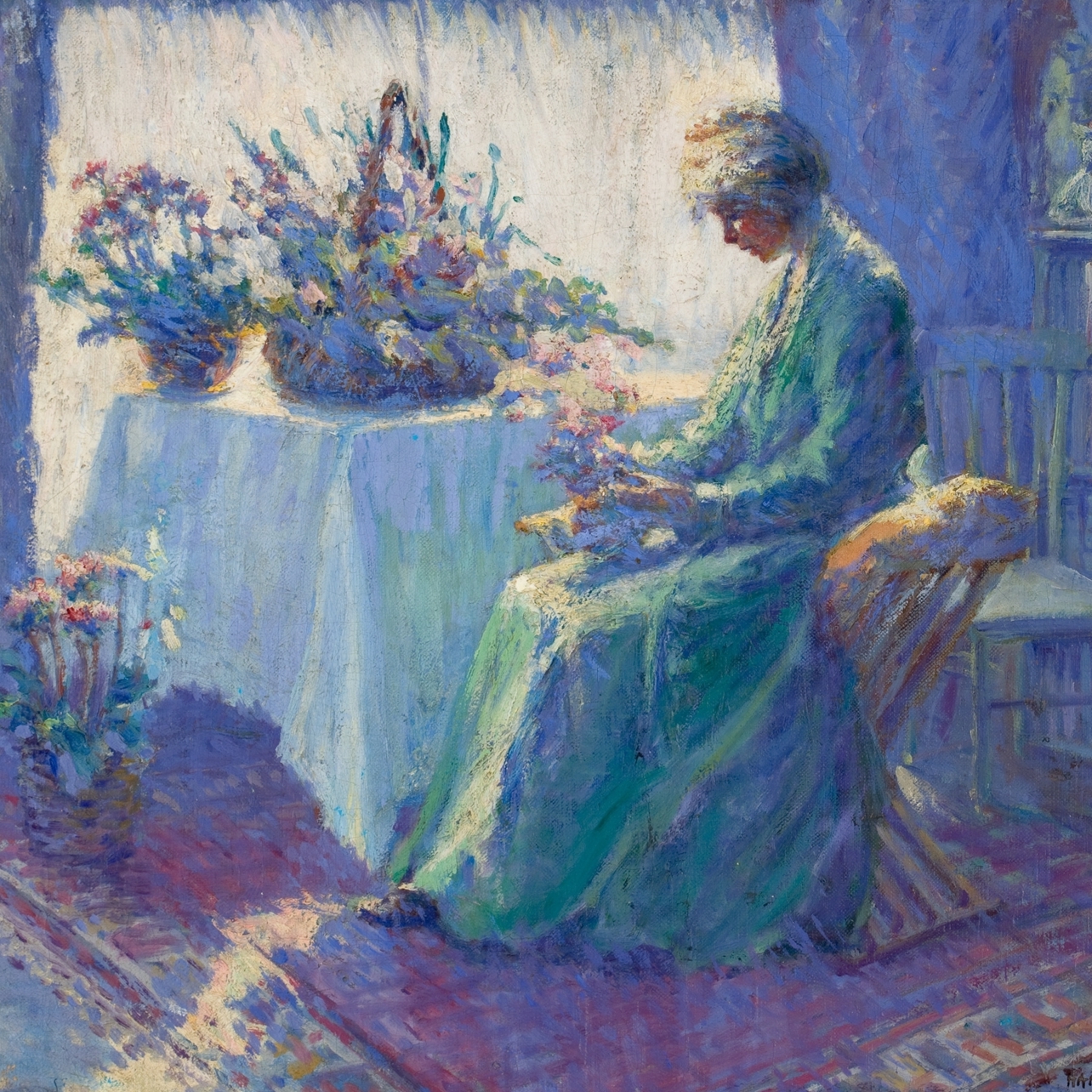
Harriette Bowdoin | Impressionist painter

Harriette Bowdoin (1880-1947) è stata una pittrice ed illustratrice impressionista nata a South Hadley Falls, nel Massachusetts.
Bowdoin si trasferì a New York in giovane età per studiare con Henry Snell - un importante impressionista, ed Elliott Dangerfield - un paesaggista.
Bowdoin ha viaggiato e si è formata in Europa, dove ha stretto amicizia con l'artista americana Jane Peterson mentre entrambe studiavano con Frank Brangwyn a Londra.


Textual description of firstImageUrl

Greta Gerell (1898-1982)

Anna Margareta Ulrika (Greta) Gerell (1898, Stockholm - 1982, Stockholm) was a Swedish painter and graphic artist.
Gerell was the daughter of Consul General Carl Peter Gerell and Anna, born Sellman. After evening and summer courses at Althin's painting school 1913-1915, she attended the Academy of Art 1915-1920 and Axel Tallberg's etching school.
In 1920 she came to the Académie de la Grande Chaumière in Paris and in 1921 to André Lhote in Paris.
Gerell first appeared with landscape and animal motifs. After study trips to France and the Netherlands, she devoted herself primarily to interior, portrait and figure painting.
Motivationally, her visual world can be reminiscent of contemporary art movements as well as older painters like Jean-Baptiste-Siméon Chardin or Dutch masters from the 17th century.


Textual description of firstImageUrl

Beppe Ciardi (1875-1932)

Figlio del pittore Guglielmo Ciardi, Beppe Ciardi ricevette l'educazione non solo dal nonno materno, Gian Francesco Locatelli, che dipinse ritratti in stile classico: quando era ancora un ragazzo, iniziò a lavorare con il padre nello studio di San Barnaba, prima di imparare a dipingere la forma umana con Ettore Tito all'Accademia di Belle Arti.
Il successo arriva quando l'artista ha solo diciannove anni, con sessanta studi dalla natura al Castello Sforzesco di Milano, dove torna nel 1906, insieme al padre ed alla sorella - belli quanto bravi - con undici "Silenzi notturni e crepuscolari" nella mostra per l'inaugurazione del Traforo del Sempione.


Textual description of firstImageUrl

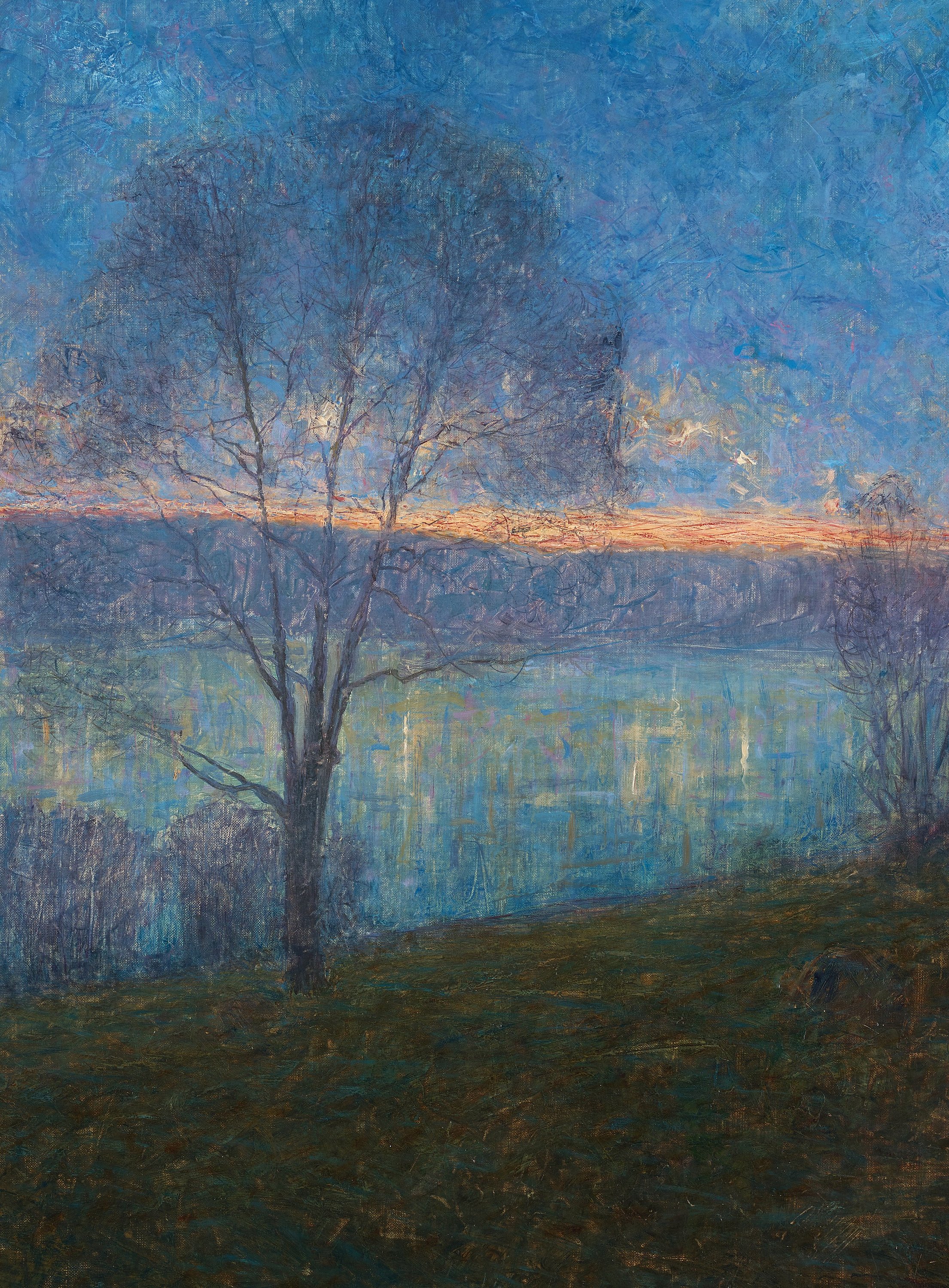
Eugène Jansson | The blue painter

Eugène Fredrik Jansson (1862, Stockholm – 1915, Skara) was a Swedish painter known for his night-time land- and cityscapes dominated by shades of blue. Towards the end of his life, from about 1904, he mainly painted male figures.
The earlier of these phases has caused him to sometimes be referred to as blåmålaren, "the blue-painter".

Life

Jansson's parents belonged to a social stratum straddling the working and the lower middle class, but they were interested in art and music and ambitious for their two sons, Eugène and his younger brother Adrian.
Eugène went to the German School in Stockholm and took piano lessons. An attack of scarlet fever at the age of fourteen caused him health issues from which he suffered for the rest of his life, including bad eyesight and hearing and chronic kidney problems. Jansson enrolled in the Tekniska skolan (now Konstfack) and studied with Edvard Perséus, a painter who ran a private art school in Stockholm.


He was accepted into the Antique school of the Royal Swedish Academy of Arts in 1881, but did not have the means to follow most of his contemporaries to Paris for further studies.
Remaining in Stockholm, which supplied him most of his motifs, his first trip outside the Nordic countries would come in 1900, when he had already become well-established as a painter and his economic situation had started to improve.
In his youth, he assisted Perséus in his portrait production and painted some still lifes, but he eventually found his favourite motifs in the city surrounding him.
He lived his whole life together with his mother and brother at Södermalm, the southern part of Stockholm.
They eventually settled in a flat at No. 40 Bastugatan, on a height with a view over most of central Stockholm including the Riddarfjärden bay and the Old town. Most of his paintings from the 1890s up to 1904 are night views over Riddarfjärden, as he would have seen it from his home, or street views from various parts of Södermalm.
They are dominated by shades of blue and very visible brush strokes, often crossing one another.
Over the years his paintings moved towards increasing simplification and abstraction, and at the end of his "blue" period, little more than the street lights and their reflections in the waters can be discerned from the mass of blue of the canvas.


After 1904, when he had already achieved success with his Stockholm views, Jansson confessed to a friend that he felt absolutely exhausted and had no more wish to continue with what he had done until then. He stopped participating in exhibitions for several years and went over to figure painting.
To combat the health issues he had suffered from since childhood, he became a diligent swimmer and winter bather, often visiting the navy bathhouse, where he found the new subjects for his paintings.
He painted groups of sunbathing sailors, and young muscular figure men lifting weights or doing other physical exercises.
Art historians and critics have long avoided the issue of any possible homoerotic tendencies in this later phase of his art, but later studies have established that Jansson was in all probability homosexual and appears to have had a relationship with at least one of his models.
His brother, Adrian Jansson, who was himself homosexual and survived Eugène by many years, burnt all his letters and many other papers, possibly to avoid scandal (homosexuality was illegal in Sweden until 1944). | © Wikipedia


Eugène Fredrik Jansson (Stoccolma, 1862 – Skara, 1915) è stato un pittore Svedese, conosciuto soprattutto per la sua pittura paesaggistica notturna ed urbana, dominata dai toni del blu (tanto da esser denominato "artista del blu"), in riferimento ai Notturni di Chopin, il suo musicista preferito.
Verso la fine della propria vita, a partire da circa il 1904 e fino alla morte, si è dedicato quasi esclusivamente a ritratti artistici maschili.

Vita ed opere

I genitori, pur appartenendo ad una classe sociale medio-bassa, coltivarono interessi nei confronti dell'arte e della musica ed ebbero progetti ambiziosi nei riguardi dei loro due figli, Eugène ed il fratello minore Adrian.
Eugène frequentò la scuola tedesca della capitale e prende lezioni di pianoforte, ma un acuto attacco di scarlattina all'età di quattordici anni gli causò problemi di salute di cui soffrì per il resto della sua vita, sia alla vista che all'udito.
Accettato all'"Royal Swedish Academy of Arts" nel 1881, non avendo i mezzi di sostentamento necessari per seguire la maggior parte dei suoi giovani colleghi fino a Parigi per proseguire ulteriormente gli studi, si trovò costretto a rimanere a Stoccolma. Il suo primo viaggio al di fuori della Scandinavia avvenne solamente all'inizio del 1900, quando acquisì una fama ben consolidata di pittore e la propria situazione economica iniziò lentamente a migliorare.


In qualità di allievo ed assistente del pittore Edvard Perséus, cominciò a produrre alcuni ritratti di natura morta, ma trovò infine il suo soggetto preferito nei motivi di ambiente cittadino che lo circondavano. Inizialmente rimase fortemente influenzato da Edvard Munch, e durante questo periodo aderì al gruppo artistico denominato "Opponenterna" (oppositori), tra i cui membri vi furono anche Carl Larsson, Ernst Josephson, Karl Nordström, Nils Kreuger e Richard Bergh.
Visse per tutta la vita assieme alla madre e al fratello a Södermalm, nella parte sud di Stoccolma, infine in una casa posizionata su un'altura con vista su Riddarfjärden, Gamla stan e l'intero centro di Stoccolma. Fervente socialista ebbe anche occasione d'incontrare e far la conoscenza con August Strindberg.
La maggior parte dei suoi dipinti, dal 1890 al 1904 ebbe come oggetto dei paesaggi, per lo più vedute notturne, dominati dalle tonalità di blu con pennellate molto visibili e spesso intersecate l'una con l'altra.


Lungo il corso degli anni il suo stile pittorico si mosse però sempre più verso una tecnica di semplificazione ed astrazione. Al termine del proprio "periodo blu" dalla massa blu scuro in sottofondo nella tela furono distinguibili solamente le luci della strada ed i riflessi nell'acqua.
Dopo il 1904, quando raggiunse un discreto successo, confessò ad un amico di essere assolutamente esausto e d non avere più alcuna voglia né forza di continuare con quello che aveva fatto fino ad allora; si avvicinò così alla pittura figurativa ed al ritratto.
Nel frattempo, per contrastare i problemi di salute che lo affliggevano fin da quando era poco più di un bambino, diventò un diligente nuotatore ed appassionato dei bagni invernali.


In questo periodo si recò spesso in visita presso lo stabilimento balneare della marina dove trovò nuovi soggetti da cui trarre ispeirazione per i suoi dipinti.
Cominciò a dipingere gruppi di marinai mentre prendono il sole in spiaggia e giovani uomini muscolosi, mentre si esercitano nel sollevamento pesi oppure impegnati in altri tipi di esercizio fisico.
Gli storici e i critici dell'arte della sua epoca che si sono dedicati a questo artista hanno a lungo evitato di accennare alle tendenze omoerotiche di questa fase della sua arte, ma successivamente alcuni studiosi hanno chiarito come Jansson fosse omosessuale e come, con molta probabilità, avesse avuto anche una relazione amorosa duratura con almeno uno dei suoi modelli.
A partire dal 1913 la sua salute cominciò rapidamente a deteriorarsi e due anni più tardi morì per un'emorragia cerebrale causata da un ictus.
Suo fratello Adrian (1871-1938), egli stesso omosessuale, che sopravvisse ad Eugène di molti anni, dopo la sua morte bruciò tutte le sue lettere e molta altra documentazione dell'artista, tra cui varie immagini di erotismo maschile, considerate moralmente compromettenti in quell'epoca.
L'atto del fratello fu forse attuato per evitare uno scandalo, considerando che l'omosessualità era al tempo illegale e rimase perseguita penalmente in Svezia fino al 1944. | © Wikipedia





Textual description of firstImageUrl

Floris Arntzenius (1864-1925)

Pieter Florentius Nicolaas Jacobus Arntzenius was a Dutch painter, water-colourist, illustrator and printmaker.

He is considered a representative of the younger generation of the Hague School.

Arntzenius was born in Surabaya on the island of Java where his father served in the Royal Dutch East Indies Army.
In 1875, at the age of 11, he was sent to the Netherlands to Amsterdam to live with his aunt and uncle in order to complete his education.
In 1882 he became a student of Frederik Nachtweh, under Nachtweh's supervision he gained admission to the Rijksacademie van Beeldende Kunsten. During his time at the Rijksacademie, from 1883-1888, his teachers included August Allebé and Barend Wijnveld, and amongst his fellow students were Isaac Israëls, George Breitner, Willem Witsen and Jan Veth.


Textual description of firstImageUrl

Pete "The Street" Brown, 1967 | Urban plein-air painter

Peter first came to Bath for a year in 1986 to study an art foundation course.
He went on to graduate from Manchester Polytechnic remaining a further two years working in a studio in Ancoats, an area just north of the city centre.
He then studied a PGCE in FE in Eltham, London before giving up painting.
Returning to Bath in 1993, inspired by the architecture and life of the town, he started to draw in charcoal moving back to working in oils three years later. And it was on the streets of Bath Peter began to earn his living and it was here he earned the nick name 'Pete the Street'.
Peter paints a great deal across the UK - its cities, landscapes and coastline and in particular London.


Textual description of firstImageUrl

Aleksandra Ekster | Avant Garde painter

Aleksandra Aleksandrovna Ekster (1882-1949) cubo-futurist, suprematist, constructivist and designer is one of most famous Russian Avant Garde female painters that gained international recognition.
She was a multi talented artist - a painter, ceramist, graphic artist, clothes designer.
Alexandra Ekster would also become a co-founder of the Art Déco.
In Paris, Aleksandra Ekster was a personal friend of Pablo Picasso and Georges Braque, who introduced her to Gertrude Stein.


Textual description of firstImageUrl

Vilhelm Hammershøi | La poesia del silenzio

Vilhelm Hammershøi (1864-1916) è stato un pittore Danese, noto per i suoi ritratti ed interni poetici e sommessi.

Vita

Vilhelm Hammershøi nacque a Copenhagen, in Danimarca. Figlio di un mercante benestante, Christian Hammershøi, comincia a studiare disegno all'età di otto anni con Niels Christian Kierkegaard e Holger Grønvold, oltre a dipingere con Vilhelm Kyhn.
Più grande, segue i corsi di Frederik Vermehren presso la Royal Danish Academy of Fine Arts.
Dal 1883-1885 studia con Peder Severin Krøyer debuttando alla "Mostra primaverile di Charlottenborg", nel 1885, con "Ritratto di una giovane ragazza" (che mostra sua sorella Anna).

Vilhelm Hammershøi | Ritratto di una giovane ragazza. La sorella dell'artista, Anna Hammershøi

Textual description of firstImageUrl

Frans Stracké | The Two Mothers, 1893 | Rijksmuseum

Franz Stracké created this sculpture in terracotta in 1893. The title "Two Mothers" refers to the woman and the dog, positioned at her feet looking upwards, whose puppies she is carrying. This work by Franz Stracké is exhibited at the Rijksmuseum in Amsterdam.

This sweet scene reflects increasing interest in the lives of fishermen. The statue shows a young woman holding her child, with her dog’s puppies gathered in her apron. Yet life is not a bed of roses for this barefoot fisherman’s wife. She has only two fish in her pouch, and the net that she drags behind her is empty. | Rijksmuseum

Frans Stracké | The Two Mothers, 1893 (detail) | Rijksmuseum

Textual description of firstImageUrl

Franz Skarbina | Impressionist painter

Franz Skarbina (1849-1910) was a German impressionist painter, draftsman, etcher and illustrator.
Born in Berlin, he was the son of a goldsmith from Zagreb. From 1865-1869, he studied at the Prussian Academy of Arts.
After graduation, he spent two years as a tutor to the daughters of Count Friedrich von Perponcher-Sedlnitzky (1821-1909), during which time he travelled to Dresden, Vienna, Venice, Munich, Nuremberg and Merano.
In 1877, he had acquired the funds to make a year-long study trip to the Netherlands, Belgium and France, where he came under the influence of impressionism.


Textual description of firstImageUrl

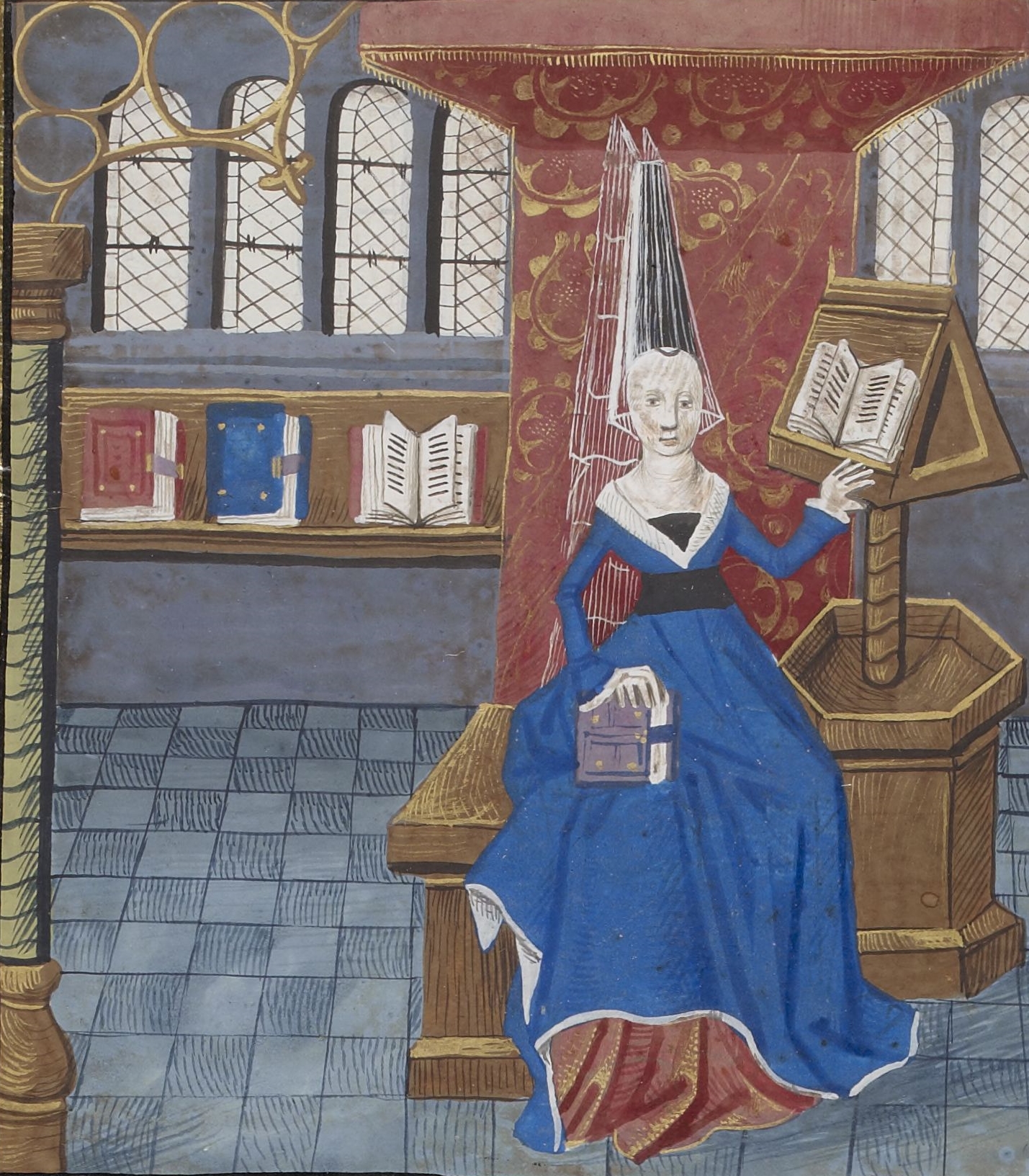
Christine de Pizan | The first professional woman writer

Christine de Pizan or Pisan, born Cristina da Pizzano (1364 - c. 1430), was a poet and author at the court of King Charles VI of France and several French dukes.
Venetian by birth, Christine served as a court writer in medieval France after the death of her husband. Christine's patrons included dukes Louis I of Orleans, Philip the Bold of Burgundy, and his son John the Fearless.
Her best known works include The Book of the City of Ladies and The Treasure of the City of Ladies, both written when she worked for John the Fearless of Burgundy. Her books of advice to princesses, princes, and knights remained in print until the 16th century.

Christine de Pizan - Bibliothèque nationale de France, Département des manuscrits, Français

Textual description of firstImageUrl

Vittorio Sgarbi: Roberto Ferri, un accademico appassionato

Vittorio Sgarbi: Roberto Ferri, un accademico appassionato

Roberto Ferri accende il mio orgoglio. Non ebbi dubbi sulla qualità della sua pittura, intesa anche come proprietà di esecuzione, quando, non molti anni fa, lo pose alla mia attenzione Fabio Isman, entusiasta per una grande mostra che aveva presentato.
Nessun dubbio che le opere chiamassero stupore e meraviglia secondo i precetti dell’estetica barocca. Ma Ferri era un contemporaneo e per di più giovanissimo. Colpiva in lui la borgesiana indifferenza per il tempo.
Come se si dicesse: se devo dipingere, devo dipingere bene, altrimenti meglio fare il pasticcere, o, anche, come molti raffinati (da Giulio Paolini a Damien Hirst), il vetrinista.
Ecco: una cosa possiamo dire di Ferri: non è un vetrinista.
Eppure è adatto alle vetrine, ama esibirsi ed essere esibito.


Textual description of firstImageUrl

Nicholas St John Rosse, 1960

Cornish artist Nicholas St.John Rosse has a traditional artistic background, honing his skill over the years. Draftsmanship and realism are central to his painting.
He focuses on the human figure, often exploring how posture conveys meaning.
Nicholas St John Rosse was educated at University College School.
From an early age he became interested in painting, encouraged and enthused by watching the landscape painter Donald Towner at work in the open air and visiting his studio.


Textual description of firstImageUrl

Claude Monet | The River, 1881 | Museum Barberini

Claude Monet depicted an evening on the river using a reduced formal vocabulary. The impulsive play of lines seems to be rapidly set down, as if the painter had wanted to complete the composition just before the sun disappeared.
Several branches glow in the red light of its last rays. Although the picture has the appearance of a sketch, the artist’s signature indicates that he considered it an independent, completed work.
According to Academic standards, a finished painting was characterized by a polished surface in which even subordinate elements should be developed in some detail.
Monet resisted this aesthetic of the fini by dissolving the traditional distinction between the preparatory sketch (esquisse or étude) and the painting intended for exhibition (tableau).


Textual description of firstImageUrl

François Habert (French, 17th Century)

These sumptuous still lifes are the work of the rare artist François Habert, active in France between 1643 and 1652, one of the most important still life painters of 17th Century France.


Textual description of firstImageUrl

François Batet | Pittore della Belle Époque

François Batet (1921-2015) pseudonimo di Francisco Batet Pellejero fu un pittore ed illustratore Spagnolo, noto soprattutto per il suo lavoro di illustratore della letteratura per l'infanzia e la gioventù nella casa editrice Hachette.
Il suo tema preferito fu la rappresentazione di figure femminili degli anni '20 in stile Art Déco
Francois Batet è nato a Barcellona, in Spagna. Ha studiato pittura alla Scuola di San Jordi (Beaux Arts) ed anche all'Accademia di Tarrega.
Quando viveva a Madrid studiò i grandi maestri come Goya e Valasquez. Si trasferì poi a Parigi e studiò vari famosi pittori impressionisti francesi.
Ha vissuto e lavorato in Francia dal 1950. Lo stile classico della Scuola di Parigi di Batet richiama lo spirito della Parigi degli anni '20 e '30.