
Textual description of firstImageUrl

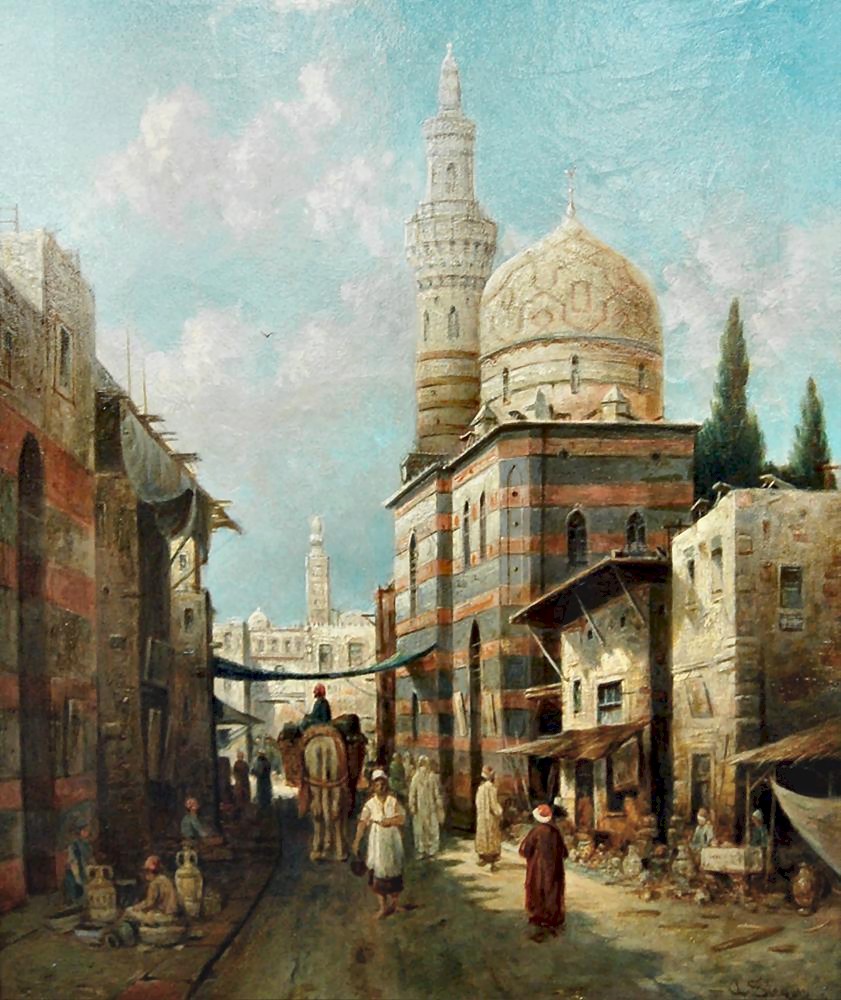
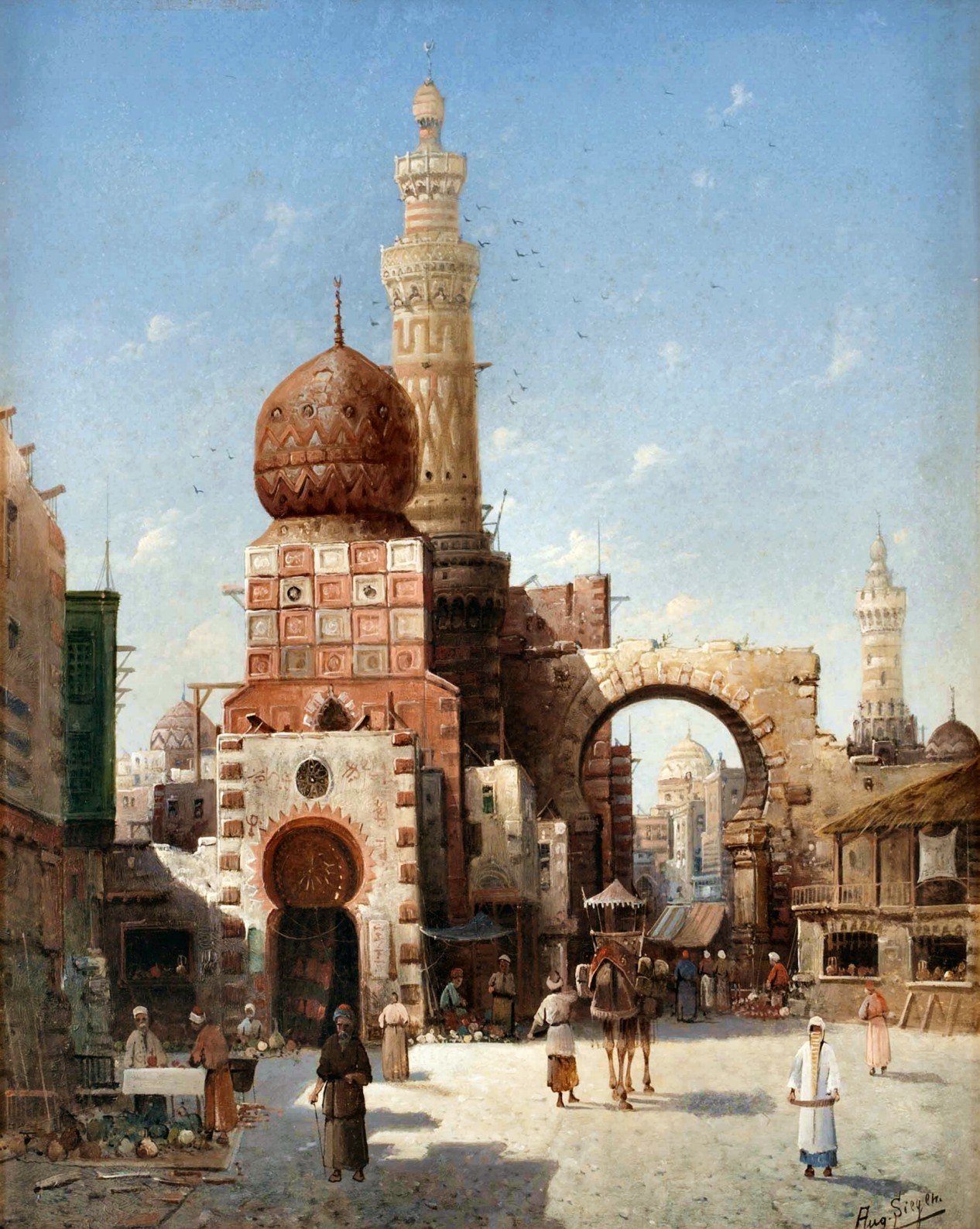
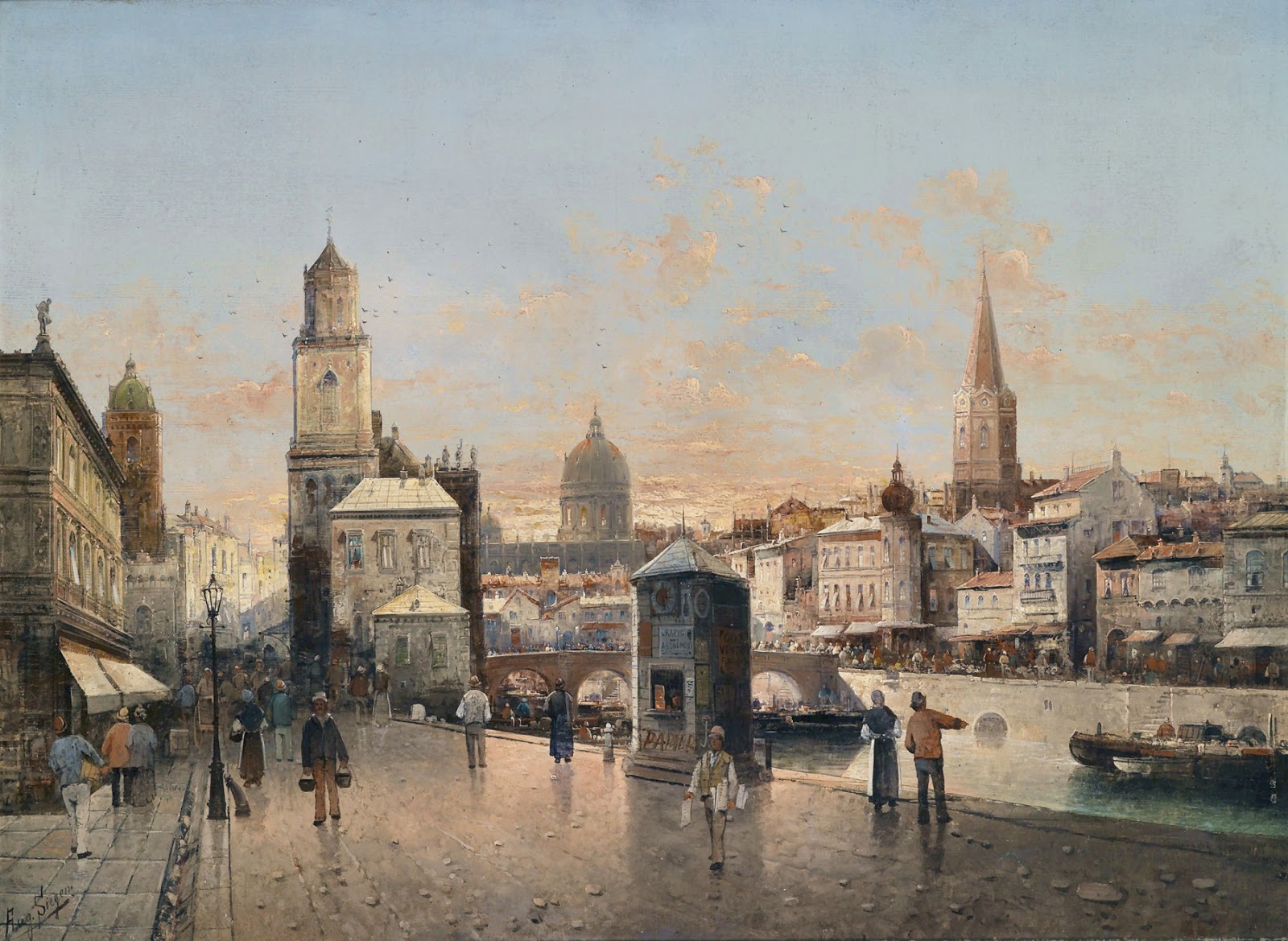
August von Siegen (German painter, 1850-1910)


August von Siegen was a German painter🎨 who specialized in cityscapes of in the style of European and "Oriental" -Eastern Mediterranean cities.
He lived in Munich but also lived and worked in Vienna. He travelled across Europe to Holland, Venice and Rome painting the architectural landscapes of cities and towns.
He also travelled to Izmir in Turkey and produced a number of Orientalist paintings. His works are highly popular with crisp, architectural details as in this fine example.






August von Siegen è stato un pittore Tedesco, attivo a Monaco e Vienna. Era un pittore di vivaci paesaggi urbani, paesaggi marini e dipinti con raffinate caratteristiche architettoniche.
Era anche considerato un artista orientalista.
Ha lavorato attivamente a Vienna e dintorni.
Mentre poco si sa di questo artista, i suoi dipinti che raffigurano paesaggi e paesaggi marini molto dettagliati sono molto ricercati quando compaiono nel mercato dell'arte.
I dettagli architettonici nei dipinti di Von Siegen possiedono una freschezza e un grande senso di luce e chiarezza.
Le sue scene di strada olandesi e tedeschi ed i paesaggi marini del XIX secolo sono tra i soggetti più desiderati da questo artista di grande talento.



Textual description of firstImageUrl

Jacques-Louis David (1748-1825)


The art of Jacques-Louis David embodies the style known as Neoclassicism, which flourished in France during the late eighteenth and early nineteenth century.
David championed a style of rigorous contours, sculpted forms, and polished surfaces; history paintings, such as his Lictors Returning to Brutus the Bodies of His Sons (Musée du Louvre, Paris) of 1789, were intended as moral exemplars.
He painted in the service of royalty, radical revolutionaries, and an emperor; although his political allegiances shifted, he remained faithful to the tenets of Neoclassicism, which he transmitted to a generation of students, including Anne-Louis Girodet-Trioson, François Gérard, Baron Antoine Jean Gros and Jean Auguste Dominique Ingres.

Textual description of firstImageUrl

Helena Lam | Art Déco painter

Helen Lam | Chinese-born Canadian Art Déco painter

The artwork of Helena Lam Chinese-born Canadian painter from Hong Kong, is inspired by the Art Déco era. This is a design style that blossomed in Paris in the 1920's and flourished internationally throughout the 1930's, into the World War II era.
The style influenced all areas of design, including architecture, interior design, industrial design, fashion, jewellery as well as the visual arts such as painting, graphic arts and film. At it's zenith, Art Déco embodied elegance, glamour, functionality and modernity.

Textual description of firstImageUrl

Georges Seurat | A Sunday Afternoon on the Island of La Grande Jatte, 1884

"Bedlam", "scandal", and “hilarity” were among the epithets used to describe what is now considered Georges Seurat’s greatest work, and one of the most remarkable paintings of the nineteenth century, when it was first exhibited in Paris.
Seurat labored extensively over A Sunday on La Grande Jatte, 1884, reworking the original as well as completing numerous preliminary drawings and oil sketches (the Art Institute has one such sketch and two drawings).

Georges Seurat | A Sunday on La Grande Jatte (detail) | Art Institute of Chicago

Textual description of firstImageUrl

Henri Fantin-Latour | Portrait of Madame Léon Maître, 1882

Henri Fantin-Latour (1836-1904) imbued his sitter - the sister-in-law of a friend - with an air of introspective melancholy, and the delicately rendered jewelry, fan, and corsage reveal his talent for still life.
While working on this portrait, the artist likely saw A Bar at the Folies-Bergère in the studio of his longtime friend Édouard Manet.
Madame Maître’s black, lace-trimmed evening dress, her choker, and the flowers at her décolletage are similar to the barmaid’s.

Henri Fantin-Latour | Portrait of Madame Léon Maître, 1882 | Brooklyn Museum

Both paintings were displayed at the 1882 Paris Salon, but whereas Manet’s ambiguous scene of a lower-class woman at work caused a public sensation, critics praised Fantin-Latour’s more sedate portraits, such as this one, as exemplars of femininity and breeding: "No one expresses like Monsieur Fantin-Latour the freshness of flowers and the natural gentleness of women of good solid bourgeois stock". | Source: © Brooklyn Museum

Textual description of firstImageUrl

Gustave Caillebotte | Paris Street, Rainy Day, 1877

This complex intersection, just minutes away from the Saint-Lazare train station, represents in microcosm the changing urban milieu of late nineteenth-century Paris.
Gustave Caillebotte grew up near this district when it was a relatively unsettled hill with narrow, crooked streets.
As part of a new city plan designed by Baron Georges-Eugène Haussmann, these streets were relaid and their buildings razed during the artist’s lifetime.
In this monumental urban view, which measures almost seven by ten feet and is considered the artist’s masterpiece, Caillebotte strikingly captured a vast, stark modernity, complete with life-size figures strolling in the foreground and wearing the latest fashions.


Textual description of firstImageUrl

William Turner | Romantic painter

J.M.W. Turner, in full Joseph Mallord William Turner, (born April 23, 1775, London, England - died December 19, 1851, London), English Romantic landscape painter whose expressionistic studies of light, colour, and atmosphere were unmatched in their range and sublimity.
Turner was perhaps the greatest landscapist of the 19th century.
Although brought up in the academic traditions of the 18th century, he became a pioneer in the study of light, colour, and atmosphere.


Textual description of firstImageUrl

Venice in the 19th-Century paintings

Friedrich Nerly🎨 (German painter, 1842–1919) Piazza San Marco in Venedig bei Mondlicht, 1871

A Visit to Venice

by Ivan Sergeevič Turgenev - Novel "On the Eve", 1860

"Whoever has not seen Venice in the month of April will find it hard to picture to himself the indescribable charm of this fairy city. The softness and mildness of spring are to Venice, what the bright summer sun is to glorious Genoa, or what the purple golden autumn is to ancient Rome.
Like spring, the beauty of Venice excites and arouses our softest desires; it animates and stirs the unspoiled heart like the promise of some near, undefined, mysterious pleasure".

Textual description of firstImageUrl

Marco Ortolan, 1973


Marco Ortolan - "Drawing is the fundamental basis of my painting, it is what keeps it afloat. I pay particular attention to composition and light. Our role as an artist is to awaken the spirit and sensitivity of the viewer as art is linked to the spirit".

Marco Ortolan was born in Arquitecto, Argentina.
Since 1985 he trained in the plastic arts at the Miguel Perez Macias Academy where he developed Drawing and Painting with references to the Italian Renaissance and French Impressionism.

Textual description of firstImageUrl

Friedrich Nietzsche | Venice / Venezia

Luca Carlevarijs (Italian painter, 1663-1730) | View of the Molo Venice looking west

Venice

By the bridge I stood
recently in the brown night.
From the distance came the sound of song;
golden drops surged away
over the vibrating surface.

Venezia

Stavo sul ponte,
poco tempo fa, nella notte bruna.
Di lontano giungeva un canto:
gocce d’oro affioravano
sulla superficie vibrante.

Textual description of firstImageUrl

Pietro Canonica | Figurative sculptor

The aim of the artist is to study truth in its purest form, concentrating the greatest possible emotion on it”, with these words Pietro Canonica (1869-1959) declared his predilection for an art capable of idealising and yet at the same time expressing the most secret motions of the soul.
In his sculptures he combines the proportions and balance of classical art, the refined models of fifteenth century Florentine work, the lightness of touch of neoclassicism, Romantic disquietude and nineteenth century sensibility.
Gifted with an absolute mastery of technique and great ability and speed in working the material, he received commissions from the aristocracy of all Europe, who sought after his refined taste and idealization.


Textual description of firstImageUrl

Charles Caryl Coleman | Genre painter

Charles Caryl Coleman (1840-1928) was an American artist who lived most of his life in Capri, Italy.
Coleman studied art with Andrew Andrews and W.H. Beard in Buffalo, NY in the 1850s.
Between 1859-1862, Coleman studied in Paris under Thomas Couture, returning during the American Civil War to serve with the Union Army during which he was seriously wounded in South Carolina and recovered in New York City.


Textual description of firstImageUrl

Augusto Lovatti | Genre / landscape painter


Born in Rome and active in Naples, Augusto Lovatti (1852-1921) painted various aspects of Capri, Sorrento, Amalfi, also Pompeian subjects, genre scenes, landscapes and seascapes.
Lovatti studied in Rome at the school of Cesare Maccari (1840-1919), then moving away from the capital, perhaps for reasons of a political nature, to move to live and work in Capri from the late 1980s.

Textual description of firstImageUrl

Friedrich Paul Nerly | Seascape painter


Friedrich Nerly or Federico Nehrlich (October 26, 1842 - 1919) was an German🎨-Italian painter who specialized in Seascapes.

Nerly was of Prussian nationality. He completed his first studies with his father, a well known Landscape artist.
He later enrolled in the Academy of Fine Arts of Venice, studying under professors Eugene de Blaas🎨, Federico Moja and Pompeo Mariano Molmenti.
From 1862-65 and in 1866, he served in the army. He visited the principal artistic cities of Germany: Düsseldorf, Weimar, Munich, and Dresden.
In 1868, he traveled to Francia, Austria, Dalmatia, and Montenegro, and visited Rome, Naples and Sicily.

Textual description of firstImageUrl

Pierre-Auguste Renoir | Artworks

Renoir's paintings are notable for their vibrant light and saturated color, most often focusing on people in intimate and candid compositions.
The female figure was one of his primary subjects. However, in 1876, a reviewer in Le Figaro wrote "Try to explain to Monsieur Renoir that a woman's torso is not a mass of decomposing flesh with those purplish green stains that denote a state of complete putrefaction in a corpse".
Yet in characteristic Impressionist style, Renoir suggested the details of a scene through freely brushed touches of colour, so that his figures softly fuse with one another and their surroundings.


Textual description of firstImageUrl

Halil Pasha | Impressionist painter

Halil Paşa (1857-1939) was a Turkish painter and art teacher.
He was one of Turkey's first Impressionists.
His family was originally from Rhodes and his father, Selim, was one of the founders of the Turkish Military Academy.
Like many early Western-style Turkish artists, he received his training in technical drawing and painting at the "Mühendishane-i Berrî-i Hümâyûn" (Military School of Engineering, now known as the Istanbul Technical University).


Textual description of firstImageUrl

Christian Schloe, 1948 | Pop Surrealism painter

Anything can happen in a world that holds such beauty.

Christian Schloe is a renowned artist and designer of Austrian origin dedicated to digital illustration, painting and photography.
Christian Schloe feature bizarre moments that draw viewers out of a concrete reality and into a dreamy, fictional world.
In his work, the digital artist creates expressive visual stories filled with soft color palettes, elegant birds and butterflies, soft flower petals, and otherworldly, majestic landscapes.


Textual description of firstImageUrl

L'uomo Renoir

Il figlio di Pierre-Auguste Renoir - Jean Renoir, offre un ritratto fisiognomico e caratteriale assai dettagliato del padre, delineandone anche le abitudini vestiarie e lo sguardo indice del suo carattere al contempo tenero ed ironico:
«Mio padre aveva qualcosa di un vecchio arabo e molto di un contadino francese, con la differenza che la sua pelle, sempre protetta dal sole per la necessità di tenere la tela fuori dai riflessi ingannatori, era rimasta chiara come quella di un adolescente. Quel che colpiva gli estranei che s’incontravano con lui per la prima volta erano gli occhi e le mani.
Gli occhi erano di un marrone chiaro, tendente al giallo; aveva una vista acutissima.
Spesso ci indicava all’orizzonte un rapace che sorvolava la valle della Cagnes, o una coccinella che si arrampicava lungo un filo d’erba nascosto fra gli altri fili d’erba.


Textual description of firstImageUrl

Zahari Zograf (1810-1853) | Fresco painter


Zahariy Hristovich Dimitrov / Захарий Христович Димитров, better known as Zahari Zograf (or Zahariy Zograf; Захари(й) Зограф) is a famous Bulgarian painter🎨 of the Bulgarian National Revival, noted for his church mural paintings and icons and often regarded as the founder of secular art in Bulgaria due to the introduction of everyday life elements in his work.

Textual description of firstImageUrl

Canaletto | Veduta painter


Giovanni Antonio Canal (1697-1768), popularly known as Canaletto, was born in 1697 in Venice, but resided in England for a large portion of his life.
His father, Bernardo Canal, was a scene painter, and he trained Canaletto from a young age.
His earliest paintings are mostly carefully composed, but freely painted, studies of older artists such as Van Wittel and Luca Carlevaris.

Textual description of firstImageUrl

Dante Gabriel Rossetti | Autumn Song, 1848

Know'st thou not at the fall of the leaf
How the heart feels a languid grief
⁠Laid on it for a covering,
⁠And how sleep seems a goodly thing
In autumn at the fall of the leaf?

And how the swift heat of the brain
Falters because it is in vain


Textual description of firstImageUrl

Renoir: "La fotografia ha liberato la pittura da molte faccende noiose.."

"The only way to understand painting is to go and look at it. And if out of a million visitors there is even one to whom art means something, that is enough to justify museums".
"L'unico modo per capire la pittura è andare a guardarla. E se su un milione di visitatori ce n'è anche uno per cui l'arte significa qualcosa, questo è sufficiente per giustificare i musei".
"Photography freed painting from a lot of tiresome chores, starting with family portraits".
"La fotografia ha liberato la pittura da molte faccende noiose, a cominciare dai ritratti di famiglia".


Textual description of firstImageUrl

Bulgarian Art History and Sitemap

 Pavel Mitkov, 1977 | Impressionist /Abstract painter

The early impetus of Bulgarian traditions in the arts was cut short by the Ottoman occupation in the 14th century, and many early masterpieces were destroyed.
Native artistic life emerged again in Bulgaria during the national revival in the 19th century.
Among the most influential works were the secular and realist paintings of Zahari Zograph in the first half of the century and Hristo Tsokev in the second half.
At the end of the 19th century and beginning of the 20th century, Bulgarian painters such as Anton Mitov and the Czech-born Ivan Mrkvichka produced memorable works, many of them depicting the daily life of the Bulgarian people.

Textual description of firstImageUrl

Gerrit Dou | L'eremita, 1664

Figlio di un incisore del vetro, Gerrit Dou (1613-1675) iniziò imparando ad incidere e dipingere il vetro.
Nel 1628 fu apprendista di Rembrandt.
Qui Dou apprese l'arte del chiaroscuro, il contrasto di luce e ombra che divenne la sua specialità: le sue scene a lume di candela divennero di gran moda.


Textual description of firstImageUrl

Pierre-Auguste Renoir | Portraits

  • "The work of art must seize upon you, wrap you up in itself and carry you away. It is the means by which the artist conveys his passion. It is the current which he puts forth which sweeps you along in his passion".
  • "L'opera d'arte deve afferrarti, avvolgerti in se stesso e portarti via. È il mezzo con cui l'artista trasmette la sua passione. È la corrente che egli emette che ti trascina nella sua passione".
- Pierre Auguste Renoir


Textual description of firstImageUrl

Gustave Caillebotte | Attività collezionistica

Dopo che nel 1876 il fratello minore René lo ammonì dell'inesorabile brevità della vita, Caillebotte - intimamente turbato - dispose il suo testamento a soli ventotto anni.
Una delle clausole ivi previste, in particolare, contemplava un lascito della sua intera collezione artistica al governo francese. Caillebotte, infatti, fu uno dei più convinti collezionisti di pitture impressioniste e, qualora ne avesse l'opportunità, non esitava ad aiutare i suoi colleghi acquistandone le opere.
Pian piano arrivò ad accumulare opere d'arte di vari artisti a lui contemporanei: Camille Pissarro (diciannove), Claude Monet (quattordici), Pierre-Auguste Renoir (dieci), Alfred Sisley (nove), Edgar Degas (sette), Paul Cézanne (cinque) ed Édouard Manet (quattro).


Textual description of firstImageUrl

Dante Gabriel Rossetti | La Bella Mano / Lovely hand

O lovely hand, that thy sweet self doth lave
In that thy pure and proper element,
⁠Whence erst the Lady of Love's high advent
Was born, and endless fires sprang from the wave:—
Even as her Loves to her their offerings gave,
⁠For thee the jewelled gifts they bear; while each


Textual description of firstImageUrl

Gustave Caillebotte (1848-1894)

Gustave Caillebotte - French painter, art collector and impresario who combined aspects of the academic and Impressionist styles in a unique synthesis.
Born into a wealthy family, Caillebotte trained to be an engineer but became interested in painting and studied at the École des Beaux-Arts in Paris.
He met Pierre-Auguste Renoir and Claude Monet in 1874 and showed his works at the Impressionist exhibition of 1876 and its successors.
Caillebotte became the chief organizer, promoter, and financial backer of the Impressionist exhibitions for the next six years, and he used his wealth to purchase works by other Impressionists, notably Monet, Renoir, Camille Pissarro, Paul Cézanne, Edgar Degas, Alfred Sisley and Berthe Morisot.


Textual description of firstImageUrl

Inna Tsukakhina, 1968 | Abstract painter


Russian painter Инна Цукахина was born in Krasnodar. In 1986 she graduated from Krasnodar Art College and in 1993 - the Academy of Fine Arts in Kiev. From 1995, a member of the Artists Union SF. From 2002, Master of the Academy of Artists in Prague.
Exhibited since 1990. Inna Tsukakhina - author Courteous "Floral Still Life", written easily in one breath.
The motif of a female body, or colors that are immersed in a conditional environment - the most common myth of their aesthetics. Image of the woman she always likened to a flower, ready to give its sweetness.

Textual description of firstImageUrl

Hector Berlioz | Art and Life Quotes

2019 marks the sesquicentenary - or 150th anniversary - of the death of French Romantic composer Hector Berlioz in Paris, in 1869.
To celebrate the life and music of this great artist, we offer you his art -life quotes.
Hector Berlioz, in full Louis-Hector Berlioz, (born December 11, 1803, La Côte-Saint-André, France - died March 8, 1869, Paris), French composer, critic and conductor of the Romantic period, known largely for his Symphonie fantastique (1830), the choral symphony Roméo et Juliette (1839) and the dramatic piece La Damnation de Faust (1846).
His last years were marked by fame abroad and hostility at home.

Hector- Berlioz by Émile Signol (French painter, 1804-1892) 1832

Textual description of firstImageUrl

Horace Fisher (1861-1928) | Genre painter


Horace Fisher was a British painter🎨, best known for his genre paintings🎨, paintings of scenes from everyday life, and his portraits both of everyday people.
Fisher's notable works include "Young Girls Picking Flowers", "A Peasant Girl on a Sunlit Veranda", "Lost in Thought" and "The Orange Sellers".


Horace Fisher è stato un pittore Britannico🎨, noto soprattutto per i suoi dipinti di genere, dipinti di scene della vita quotidiana e i suoi ritratti di persone comuni.
Le opere degne di nota di Fisher includono "Young Girls Picking Flowers", "A Peasant Girl on a Sunlit Veranda", "Lost in Thought" e "The Orange Seller".


Textual description of firstImageUrl

Guy Pène du Bois (1884-1958) Modern painter


Guy Pène du Bois (1884-1958) was an American painter🎨 and art critic. In characteristic figurative works of the 1920s, he depicted the upper class with a cold eye. Smooth, simplified volumes sculpt his society figures, who seem to have little capacity for personal relationships.
Although sometimes approaching social criticism, Pène du Bois's inherent satire generally yields to a fascination with chic and an apparent distaste for probing beyond appearances into the realm of character. As a writer, he championed the American realist tradition but also endeavored to explain modern currents.