Textual description of firstImageUrl

Theodore Wores | Impressionist painter

Theodore Wores (August 1, 1859 - September 11, 1939) was an American painter born in San Francisco, son of Joseph Wores and Gertrude Liebke.
His father worked as a hat manufacturer in San Francisco. Wores began his art training at age twelve in the studio of Joseph Harrington, who taught him color, composition, drawing and perspective.
When the San Francisco School of Design opened in 1874, Wores was one of the first pupils to enroll.


Textual description of firstImageUrl

Frank Myers Boggs (1855-1926)

American-born French painter Frank Myers Boggs was born in Ohio and raised in New York City, where he began his career as an engraver for "Harper's" magazine.
He went to Paris in 1876 and studied at the École des Beaux-Arts with Jean Léon Gérôme, who encouraged him to practice landscape painting rather than figure painting in the academic tradition. Two years later he returned to New York City and set up a studio on Shelter Island.


Textual description of firstImageUrl

Vincent van Gogh | The Olive Trees series

Vincent van Gogh painted at least 15 paintings of olive trees, mostly in Saint-Rémy-de-Provence in 1889. At his own request, he lived at an asylum there from May 1889 through May 1890 painting the gardens of the asylum and, when he had permission to venture outside its walls, nearby olive trees, cypresses and wheat fields.

One painting, "Olive Trees in a Mountainous Landscape", was a complement to "The Starry Night".

The olive tree paintings had special significance for van Gogh.

Vincent van Gogh | Couple Walking among Olive Trees in a Mountainous Landscape with Crescent Moon 1890 | Museu de Arte de Sao Paulo

Textual description of firstImageUrl

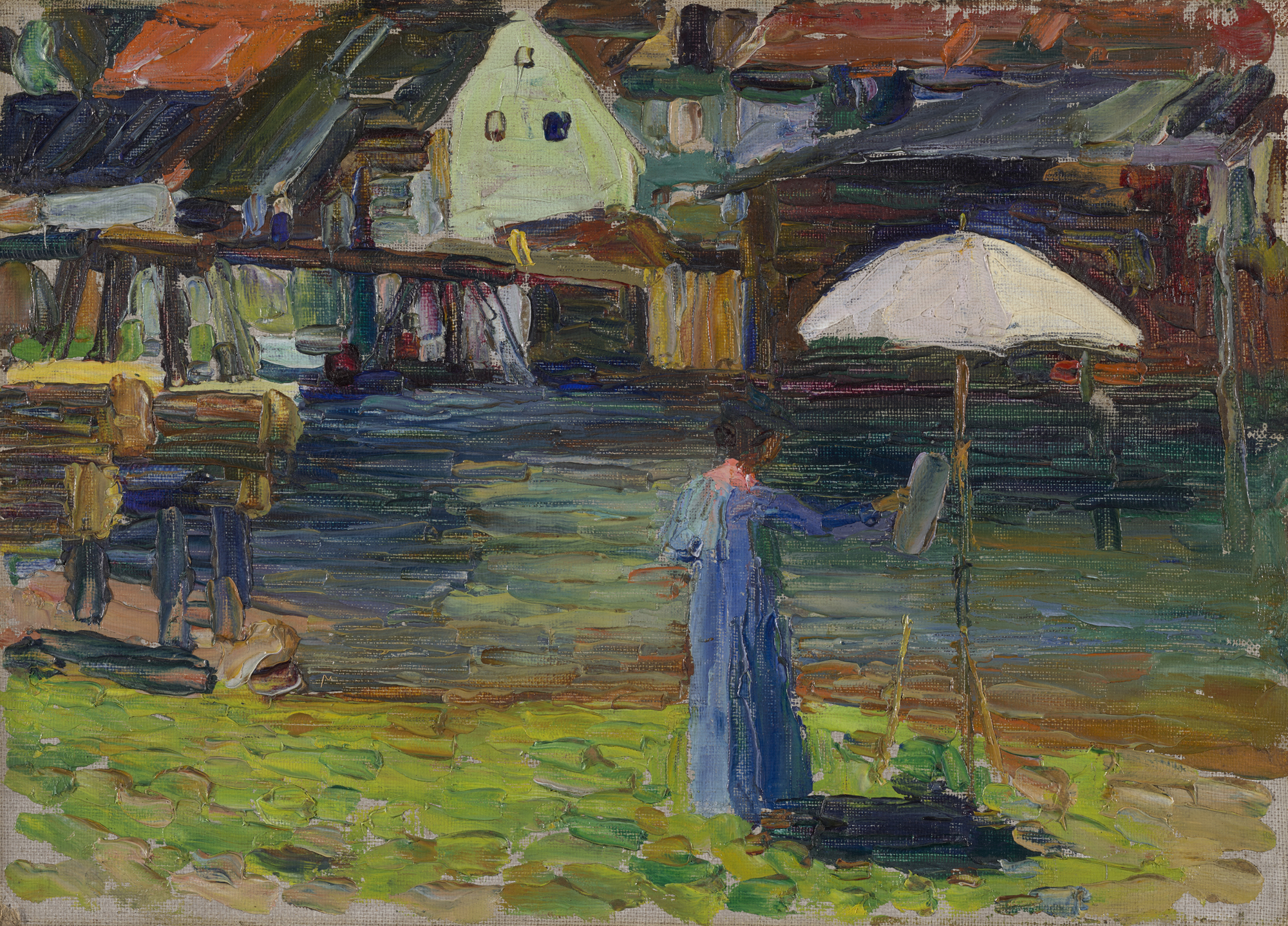
Wassily Kandinsky | VI. The language of Form and Color

Concerning the Spiritual in Art, 1910
Part II: About painting

The man that hath no music in himself,
Or is not moved with concord of sweet sounds,
Is fit for treasons, stratagems, and spoils;
The motions of his spirit are dull as night;
And his affections dark as Erebus;
Let no such man be trusted. Mark the music.

(The Merchant of Venice, Act v, Scene I.)

"Musical sound acts directly on the soul and finds an echo there because, though to varying extents, music is innate in man".
"Everyone knows that yellow, orange, and red suggest ideas of joy and plenty" (Delacroix).


Textual description of firstImageUrl

Roelof Rossouw, 1957 | Romantic Impressionist painter

Roelof Rossouw was born and grew up in Benoni, near Johannesburg. As a child he had a passion for comic heroes like Tarzan, Cisco Kid, Flash Gordon and Tintin which, with the artists of the sixties, inspired him to draw his own comics. Already at the age of fourteen Roelof started making oil paintings of landscapes and portraits.
When he was seventeen, a European art tour opened the doors for his vision to pursue art and travel. He gained a National Diploma in Arts and Design at Wits Technicon that taught him the value of training and not only relying on his raw talent.
In April 1882, whilst working for Medusa as a graphic artist and medical illustrator, he discovered modern impressionistic artists such as Ken Howard, Bernard Dunstan, Max Agostini and admired their loose style in painting.


Textual description of firstImageUrl

August Macke | Expressionist painter

August Macke, (1887, Meschede, Germany - 1914, Perthes-les-Hurlus, France) German painter who was a leader of Der Blaue Reiter (“The Blue Rider”), an influential group of Expressionist artists.
Macke studied at the Düsseldorf Academy from 1904-1906.
During his first trip to Paris in 1907 he was profoundly influenced by the work of the Impressionist painters, and he began to emulate their style, painting portraits in subtly dappled colours.


Textual description of firstImageUrl

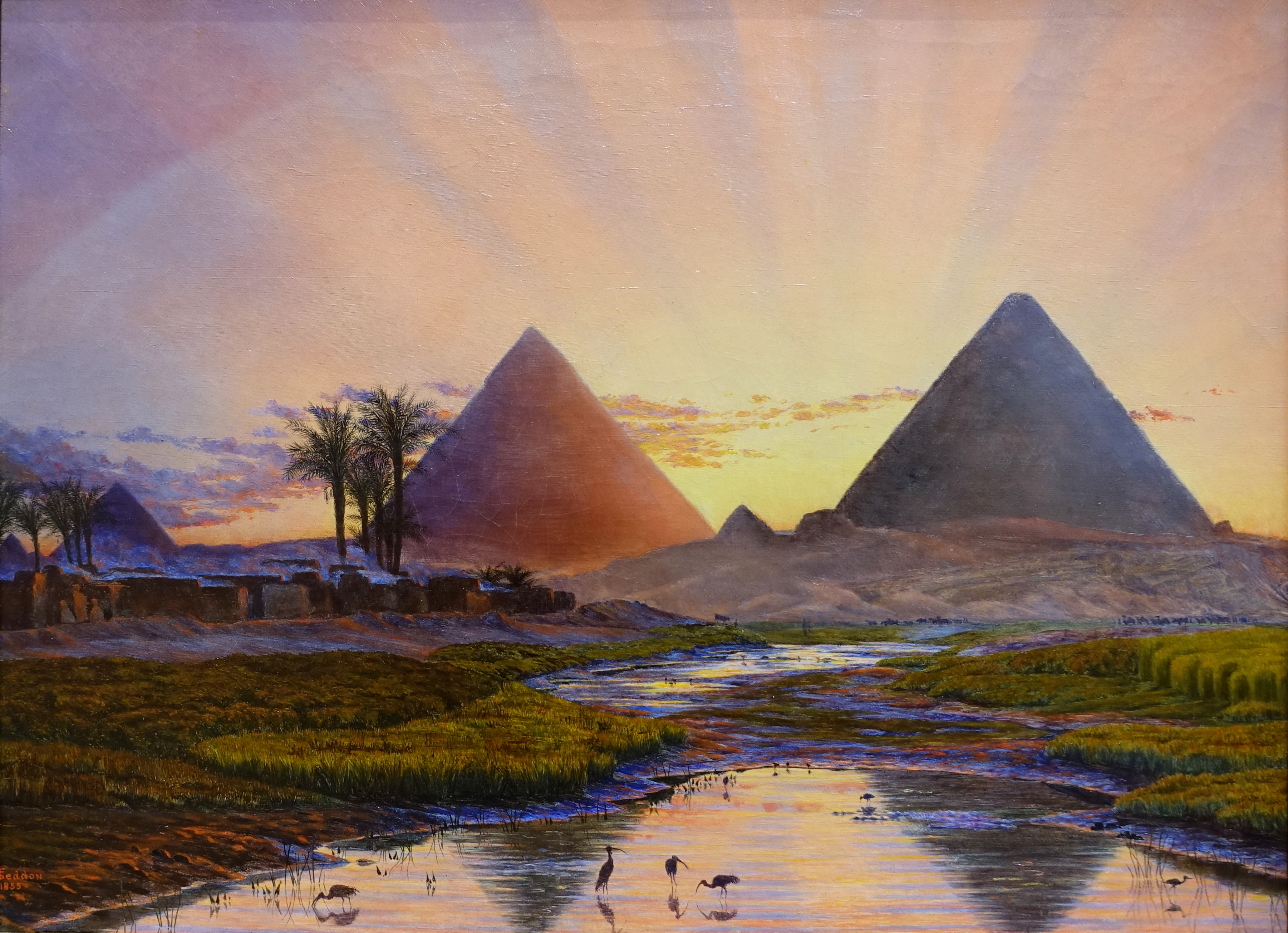
Thomas Seddon (1821-1856) | Pre-Raphaelite painter

Thomas Seddon was an British landscape painter associated with the Pre-Raphaelite movement, who painted colourful and highly detailed scenes of Brittany, Egypt and Jerusalem.
Seddon was born in Aldersgate Street in the City of London, the son of a well-known cabinet-maker of the same name.
He was educated at a school conducted on the Pestalozzian system by the Rev. Joseph Barron at Stanmore, and then worked for his father until 1841, when he was sent to Paris to study ornamental art.


Textual description of firstImageUrl

Garnet Ruskin Wolseley (1884-1967)

Garnet Ruskin Wolseley was a British landscape, figure and portrait painter. Born in London in 1884 he trained at the Bushey School of Painting winning a scholarship to Slade School of Fine Art.
He moved to Newlyn, Cornwall, in 1908 and became good friends with Harold and Laura Knight, the latter influencing his early work.
He painted mostly landscapes around Newlyn and the Lamorna Valley exhibiting regularly at the Royal Academy.


Textual description of firstImageUrl

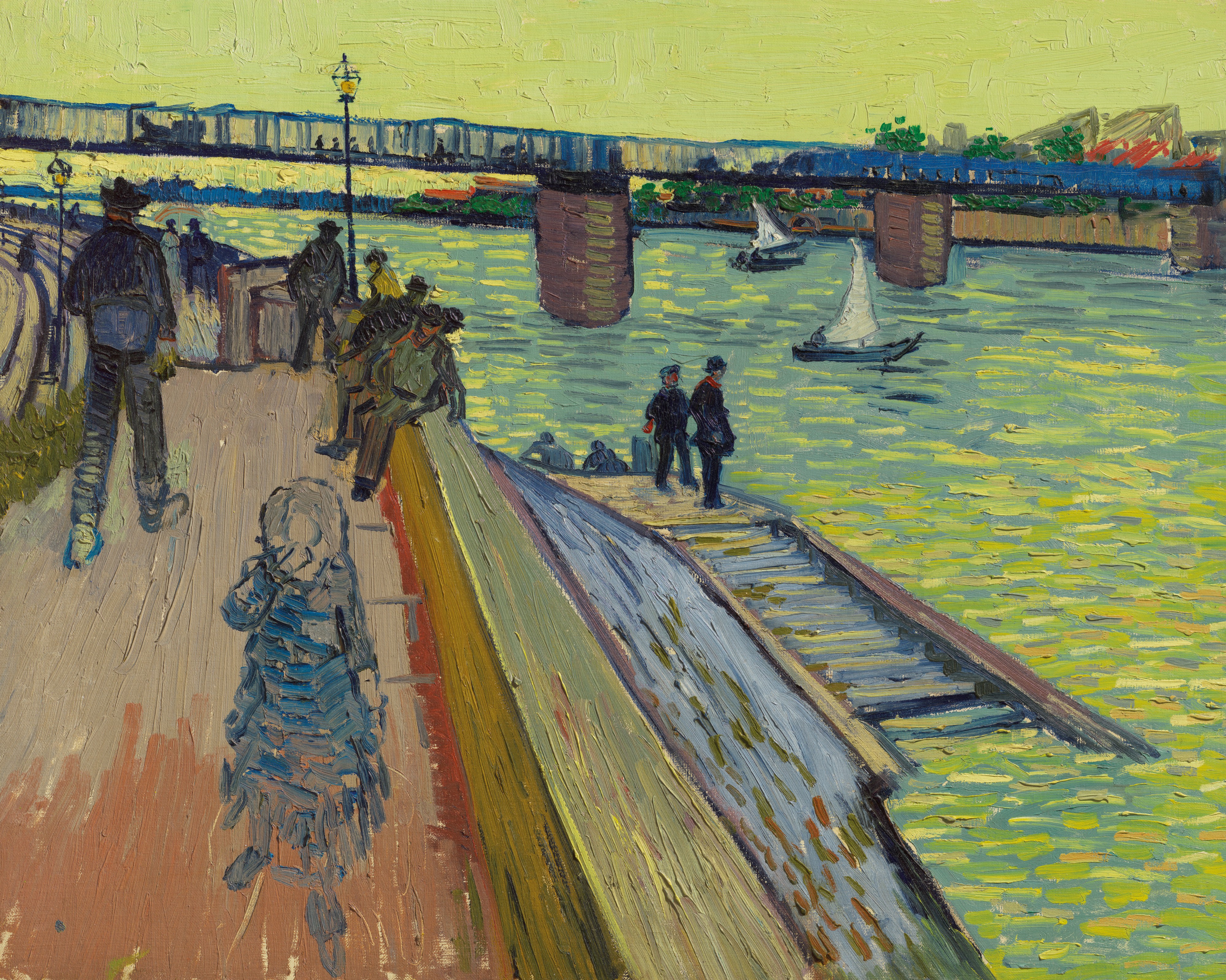
Vincent van Gogh | Le pont de Trinquetaille, 1888

The fifteen months that Van Gogh spent at Arles in 1888-1889 represent a pivotal moment in his career, "the zenith, the climax, the greatest flowering of Van Gogh's decade of artistic activity", according to Ronald Pickvance.
Freed from the pressures of urban life and inspired by the brilliant Provençal light, the artist integrated the results of months of experimentation and produced one modern masterpiece after another. With its bold composition and expressive palette, "Le pont de Trinquetaille" epitomizes his mature style.


Textual description of firstImageUrl

Anthony Hopkins: "Lascia andare le persone che non sono pronte ad amarti"..

"Let go the people who are not prepared to love you. This is the hardest thing you will have to do in your life and it will also be the most important thing. Stop having hard conversations with people who don't want change.

Stop showing up for people who have no interest in your presence. I know your instinct is to do everything to earn the appreciation of those around you, but it's a boost that steals your time, energy, mental and physical health".

Marc Chagall | La Promenade, 1917

Textual description of firstImageUrl

Rose Barton RWS (1856-1929) | Watercolor painter

Rose Mary Barton RWS was an Anglo-Irish artist; a watercolourist who painted landscape, street scenes, gardens, child portraiture and illustrations of the townscape of Britain and Ireland.

Barton exhibited with a number of different painting societies, most notably the Watercolour Society of Ireland (WCSI), the Royal Academy (RA), the Royal Hibernian Academy (RHA), the Society of Women Artists and the Royal Watercolour Society (RWS).


Textual description of firstImageUrl

Wassily Kandinsky | V - The psychological working of color

Concerning the Spiritual in Art, 1910
Part II: About painting

To let the eye stray over a palette, splashed with many colours, produces a dual result. In the first place one receives a PURELY PHYSICAL IMPRESSION, one of pleasure and contentment at the varied and beautiful colours.
The eye is either warmed or else soothed and cooled. But these physical sensations can only be of short duration.
They are merely superficial and leave no lasting impression, for the soul is unaffected. But although the effect of the colours is forgotten when the eye is turned away, the superficial impression of varied colour may be the starting point of a whole chain of related sensations.

On the average man only the impressions caused by very familiar objects, will be purely superficial.

Wassily Kandinsky | Roses, 1993

Textual description of firstImageUrl

Carlo Bossoli | Orientalist painter

Carlo Bossoli (6 December 1815, in Lugano - 1 August 1884, in Turin) was a Swiss-born Italian painter and lithographer, who spent his early career in Russia. He is best known for historical scenes from the Risorgimento.
His father was a stonemason of Italian origin, working in Switzerland. In 1820, his family moved to accept work in Odessa.
Until 1826, he studied with the Capuchins. After graduating, he worked in a shop that sold antiquarian books and prints. It was there that he began to draw and sketch.


Textual description of firstImageUrl

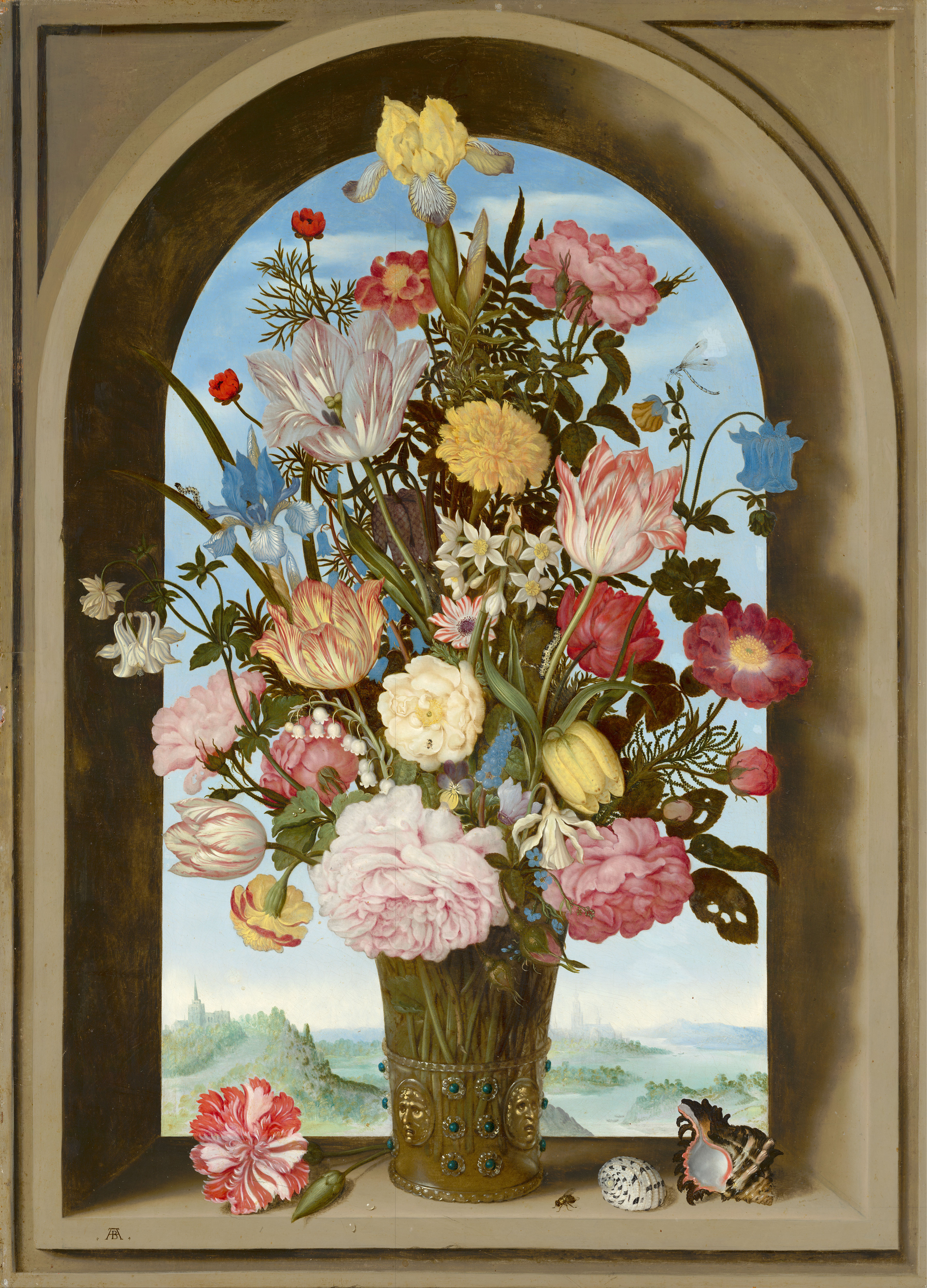
Ambrosius Bosschaert the Elder | Baroque painter

Ambrosius Bosschaert the Elder (1573-1621) was a Flemish-born Dutch still life painter and art dealer.
He is recognised as one of the earliest painters who created floral still lifes as an independent genre.
He founded a dynasty of painters who continued his style of floral and fruit painting and turned Middelburg into the leading centre for flower painting in the Dutch Republic.


Textual description of firstImageUrl

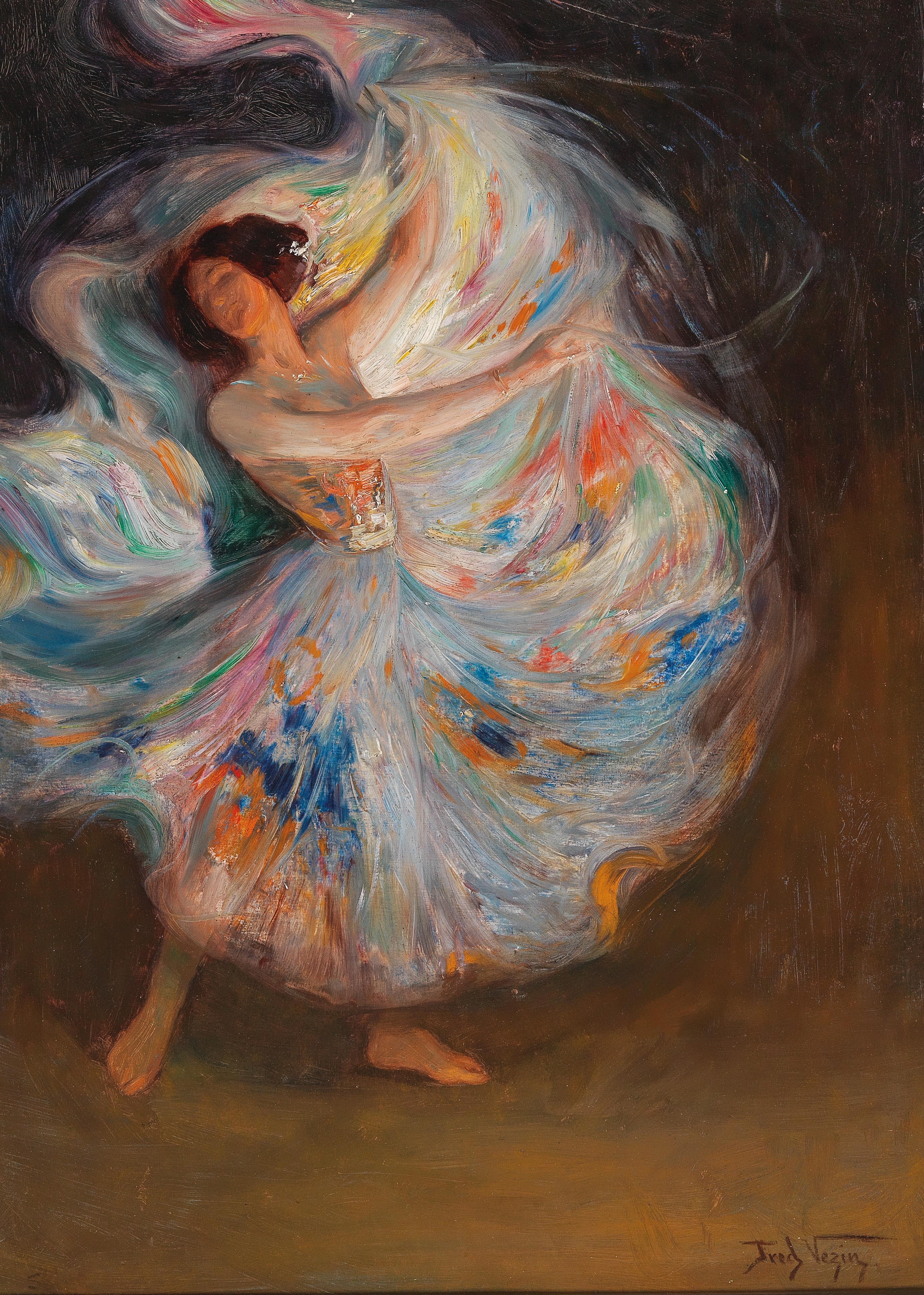
Frederick Vezin (1859-1933)

Frederick Vezin also Fred or Frederik was an American-born German painter, engraver and lithographer.
His family originally came from Saint-Florentin, Yonne in France.
According to Richard Böger, Pierre Vezin (1654-1727) was forced to flee after he gave assistance to the Huguenots, even though he was a Catholic.
He settled down in Hanover as a viola player.
For two generations, the Vezin family lived in Hanover and Osnabrück.


Textual description of firstImageUrl

Konstantin Razumov, 1974 | Impressionist painter

Born in Moscow, Konstantin Razumov / Константин Разумов studied at the Ilya Glazunov Russian Academy of Painting, Sculpture and Architecture, where his historical paintings achieved great acclaim.
Razumov is a brilliant impressionist painter and has painted all kinds of subjects, from figures to landscapes, young ballerinas, children and charming russian ladies in gardens and meadows.
His bright colours, the smoothness of the skin in his figures, the expressive features of his characters, distinguish his paintings.


Textual description of firstImageUrl

Wisława Szymborska | First Love / Il primo amore

They say
the first love's most important.

That's very romantic,
but not my experience.
Something was and wasn't there between us,
something went on and went away.

Andre Kohn | The burnt orange beret

Textual description of firstImageUrl

Patrice Murciano, 1969 | New Pop Art


French painter and sculptor Patrice Murciano has had a huge rise to fame because of his amazing and very different creative style.
Murciano was born in Belfort and then moved to Montpellier when very young.
He discovered his passion for art at an early age when he started reproducing characters from comics when he was 6 years old.
At the age of 8, he borrowed his mother’s makeup to draw portraits and female figures.

Textual description of firstImageUrl

Wassily Kandinsky | IV - The Pyramid

Concerning the Spiritual in Art, 1910

And so at different points along the road are the different arts, saying what they are best able to say, and in the language which is peculiarly their own. Despite, or perhaps thanks to, the differences between them, there has never been a time when the arts approached each other more nearly than they do today, in this later phase of spiritual development.

In each manifestation is the seed of a striving towards the abstract, the non-material.
Consciously or unconsciously they are obeying Socrates' command - Know thyself. Consciously or unconsciously artists are studying and proving their material, setting in the balance the spiritual value of those elements, with which it is their several privilege to work.


Textual description of firstImageUrl

Tito Conti (1842-1924) | Genre painter

Tito Conti was an Italian 19th Century painter who was born in Florence, mainly of genre costume or historical subjects.
He lived in Florence, where he studied at the Institute of Fine Arts.
He was resident professor at the Academic College of Fine Arts of Florence.

Among his works are: "La Presentazione"; "Il quarto d'ora di Rabelais e La musica" (1876); "Il brindisi alla bettoliera"; "L'addio"; "Portrait of his wife"; "Il sospetto"; "Il Cantastorie"; "Il Moschettiere"; and "Per la passeggiata" (1886, Florence). Among his pupils was Arturo Ricci.


Textual description of firstImageUrl

Wassily Kandinsky | V - La Pittura - L'effetto del colore

Lo spirituale nell'arte, 1910

Se si osserva una tavolozza coperta di colori si hanno due risultati:

1 - Si ha un effetto puramente fisico, cioè l'occhio è affascinato dalla bellezza c dalle qualità dei colori. L'osservatore prova un senso di appagamento, di gioia come un buongustaio che gusta una squisitezza. Oppure l'occhio viene stuzzicato, come lo è il palato da un cibo piccante.
O, ancora, può calmarsi e raffreddarsi, come quando un dito tocca il ghiaccio. Sono tutto sensazioni fisiche, che in quanto tali durano poco.
Sensazioni superficiali, del resto, che non fanno molta impressione a chi è insensibile. Proprio come, se si tocca il ghiaccio, si prova solo una sensazione fisica di freddo, che svanisce quando il dito si scalda, così, girato lo sguardo si dimentica l'effetto fisico del colore.

Wassily Kandinsky | Gabriele Munter Kallmunz, 1903

Textual description of firstImageUrl

Addio a Luciano Ventrone!

The Italian painter Luciano Ventrone died during the night in his house in Collelongo - Aquila, Italia.

Luciano Ventrone was born in Rome in 1942, he attended Liceo Artistico in Rome. After graduation in 1946 he started studying Architecture. In 1968 he left the University and focused on painting.

Even though Luciano Ventrone is internationally recognized as one of the master realist painters of his generation, he believes that his works are really about optics:
"Painting is not about the mere representation of an object, but its color and light", he says.
"The subject cannot be seen as it is but as an abstract element".


Textual description of firstImageUrl

Alda Merini | Superb is the Night / Superba è la notte, 2000

The superbest thing it is the night
When the last fears fall
And the soul thrust itself into adventure.
He hushes in your womb
As if reabsorbed into the blood

Daniel Gerhartz | Return To Me

Textual description of firstImageUrl

Benito Quinquela Martín (1890-1977)

Argentine painter Benito Quinquela Martín is considered the port painter-par-excellence and one of the most popular Argentine painters. His paintings of port scenes show the activity, vigor and roughness of the daily life in the port of La Boca.

Early years

His birthday could not be determined precisely as he was abandoned on March 20, 1890 at an orphanage with a note that stated "This kid has been baptized, and his name is Benito Juan Martín". From his physical appearance, the nuns who found him deduced that he should be around twenty days old; thus March 1 is regarded as his birthday.


Textual description of firstImageUrl

Jesús Helguera (1910-1971)

Mexican painter Jesús Enrique Emilio de la Helguera Espinoza, was born to spanish economist Alvaro Garcia Helguera and Maria Espinoza Escarzarga in Chihuahua, Mexico.
He lived his childhood in Mexico City and later moved to Córdoba in the state of Veracruz.
His family fled from the Mexican Revolution to Ciudad Real, Castilla la Nueva, Spain and thereafter moved to Madrid.
Jesús first gained interest in the arts during primary school and would often be found wandering the halls of the Del Prado Museum.
At the age of 14, he was admitted to the Escuela Superior de Bellas Artes and later studied at the Academia de San Fernando.


Textual description of firstImageUrl

Frederick Carl Frieseke (1874-1939)

Frederick Carl Frieseke was born in Owosso, Michigan. After studying for a short while at the Art Institute of Chicago and the Art Students League in New York, Frieseke left for France in 1898, and almost all of his career was spent as an expatriate, with ties to the United States maintained through his New York dealer, William MacBeth, and by occasional visits to America.
Following the pattern of innumerable young Americans, he enrolled at the Academie Julian where he studied with Benjamin Constant (1845-1902) and Jean-Paul Laurens (1838-1921).
He appears to have had at least brief contact with and to have been influenced by James McNeill Whistler, who had recently opened his Academie Carmen in Paris.
He married Eva Graham and in 1871 their daughter Edith was born. Their son, Frederick Carl, was born in Owosso in 1874.


Textual description of firstImageUrl

Edvard Munch | The dance of life, 1900

The Dance of Life or Life's Dance is an 1899–1900 expressionist painting by Edvard Munch, now in the National Museum of Art in Norway.
The Dance of Life was a key work in Munch's project "The Frieze of Life".
Munch’s painting shows several couples dancing in a luminous summer night. The central element of the composition is a couple, of whom the woman is wearing a bright red dress that wraps itself around the feet of her dancing partner.
Her loose hair swirling about him, they seem to become a single entity. This couple is flanked by two other women, one of them young and radiant in a white dress, the other pale, with sunken cheeks and dressed in black. It is as if a story were being told about various stages in a woman’s life.

Edvard Munch | The dance of life, 1899-1900 | National Museum of Art Oslo, Norway

Textual description of firstImageUrl

Henri Matisse | Canal du Midi, 1898

Canal du Midi belongs to a series of pictures painted by Henri Matisse near Toulouse during the winter of 1898-1899. Matisse, who left Moreau's studio in the autumn of 1897, married Amélie Parayre in January of the following year. After a brief honeymoon in London, the couple sojourned for six months in Ajaccio, Corsica.
Then, in August 1898, Matisse and his wife travelled to Toulouse, and stayed for six months with Amélie's parents.
This was the first time Matisse visited the South and he always remembered it as his first encounter with light and colour. Many of the landscapes he painted during that period, including the one we are commenting on, were probably executed outdoors, directly from the model. Yet the colour in them is not naturalistic.


Textual description of firstImageUrl

Wislawa Szymborska | Love at First Sight / Amore a prima vista

They’re both convinced
that a sudden passion joined them.
Such certainty is beautiful,
but uncertainty is more beautiful still.

Since they’d never met before, they’re sure
that there’d been nothing between them.
But what’s the word from the streets, staircases, hallways -
perhaps they’ve passed by each other a million times?

Ron Hicks | Tell me more

Textual description of firstImageUrl

Wassily Kandinsky | IV - La Piramide

Lo spirituale nell'arte, 1910

Così, lentamente molte arti si avviano a dire quello che hanno da dire, con i loro mezzi specifici.
E nonostante questa separazione, o grazie ad essa, le arti non sono state mai tanto unite come in quest'ultima fase della svolta spirituale.
In tutte si avverte la tendenza all'antinaturalismo, all'astrazione e all'interiorità. Consciamente o inconsciamente ubbidiscono al detto di Socrate: "Conosci te stesso!". Consciamente o inconsciamente, gli artisti si occupano sempre più del loro materiale, lo saggiano, pesano sulla bilancia spirituale il valore interiore degli elementi creativi.

Wassily Kandinsky | Unstable Compensation, 1930

Textual description of firstImageUrl

Giacomo Leopardi | Calm after the storm / La quiete dopo la tempesta, 1829

The storm hath passed;
I hear the birds rejoice; the hen,
Returned into the road again,
Her cheerful notes repeats. The sky serene
Is, in the west, upon the mountain seen:
The country smiles; bright runs the silver stream.

Giovanni Segantini | Dopo il temporale / After the thunderstorm

Textual description of firstImageUrl

Jane DeDecker, 1961 | Figurative sculptor

Jane DeDecker has been sculpting the human figure for over thirty-five years. She seeks to capture moments that reveal truths about the human condition, that, when stripped down to their essence, are understood intrinsically.
As a figurative sculptor, she communicates emotional experience through lyrical compositions that move the viewer.
DeDecker’s sculptures stop life in mid-sentence - somewhere between inhaling and exhaling - and gives it form. She tells a story through the simple moments that imprint our lives and define us.


Textual description of firstImageUrl

Manuel de Gracia (1937-2017)

Spanish painter Manuel de Gracia was born in Mora de Toledo. He started in Madrid practicing in the Círculo de Bellas Artes workshops and he held his first solo exhibition in 1963 in the Sala Toisón, together with Manuel Cano and José Suárez.
Later he exhibited individually at the Eureka gallery and after that he showed this work in Valladolid and Santander.


Textual description of firstImageUrl

Wassily Kandinsky | III - The Spiritual revolution, 1910

Concerning the Spiritual in Art, 1910

The spiritual triangle moves slowly onwards and upwards. Today one of the largest of the lower segments has reached the point of using the first battle cry of the materialist creed. The dwellers in this segment group themselves round various banners in religion. They call themselves Jews, Catholics, Protestants, etc. But they are really atheists, and this a few either of the boldest or the narrowest openly avow. "Heaven is empty", "God is dead".

In politics these people are democrats and republicans. The fear, horror and hatred which yesterday they felt for these political creeds they now direct against anarchism, of which they know nothing but its much dreaded name.


Textual description of firstImageUrl

Carl Frederic Aagaard (1833-1895)

Carl Frederik Peder Aagaard was a Danish landscape painter and decorative artist.
He studied at the Royal Danish Academy of Fine Arts and under P. C. Skovgaard. Many of his paintings focused on spots frequented by tourists.

Biography

He was the son of a shoemaker. He had his first painting lessons in Odense but, in order to improve his skills, moved to Copenhagen in 1852 and joined his brother Johan, who was a woodcutter.


Textual description of firstImageUrl

Emily Dickinson | I Fear a man of frugal speech / Temo l'uomo di poche parole

Poem 543

I fear a Man of frugal Speech
I fear a Silent Man
Haranguer I can overtake
Or Babbler entertain

Temo un uomo di poche parole
temo un uomo che tace
l'arringatore - posso superarlo
il chiacchierone - posso intrattenerlo.

Danielle Richard | Sometimes in Summer

Textual description of firstImageUrl

Wassily Kandinsky | III. La svolta spirituale

Lo spirituale nell'arte, 1910

Il triangolo procede lentamente verso l'alto. Oggi una delle più ampie sezioni inferiori ha raggiunto il livello dei primi postulati del "dogma" materialistico. Da un punto di vista religioso i suoi abitanti hanno vari nomi. Si chiamano Ebrei, Cattolici, Protestanti, ecc. In realtà sono atei, come i più audaci (o i più limitati) di loro riconoscono apertamente.
Il "cielo" è vuoto.
"Dio è morto".
Politicamente sono democratici o repubblicani. La paura, il disprezzo e l'odio che un tempo nutrivano per queste tendenze politiche li hanno riversati oggi sull'anarchia, di cui conoscono solo il terribile nome. In economia sono socialisti. Affilano la spada della giustizia per vibrare il colpo mortale all'idra capitalista e tagliare la testa al male.

Wassily Kandinsky | Amsterdam view from the window

Textual description of firstImageUrl

Wassily Kandinsky | II - Del movimento, 1910

Lo spirituale nell'arte, 1910

Un grande triangolo acuto diviso in sezioni disuguali, che si restringono verso l'alto, rappresenta in modo schematico, ma preciso, la vita spirituale. In basso, le sezioni del triangolo diventano sempre più grandi ed estese.

Il triangolo si muove lentamente, quasi impercettibilmente, verso l'alto e dove "oggi" c'è il vertice, "domani" ci sarà la prima sezione; quello cioè che oggi è comprensibile solo al vertice, e per il resto del triangolo è ancora un oscuro vaniloquio, domani diventerà la vita, densa di emozioni e di significati, della seconda sezione.
Al vertice sta qualche volta solo un uomo. Il suo sguardo è sereno come la sua immensa tristezza. E quelli che gli sono più vicini non lo capiscono. Irritati, lo definiscono un truffatore o un pazzo. Così disprezzarono Beethoven, che visse da solo, al vertice.

Wassily Kandinsky | Various actions

Textual description of firstImageUrl

Jean-François Millet at the National Museum of Wales

The goose girl's wistful gaze contrasts against the lively geese honking behind her and swimming in the water. In the background are the houses of Gruchy, the hamlet in Normandy where Millet was born.
This work was painted after his first visit to the area in nearly ten years.
There is a sense of personal nostlagia, less common to his works from Barbizon.

Jean Francois Millet | The goose girl at Gruchy | National Museum Wales

Textual description of firstImageUrl

Il cimitero monumentale di Staglieno


The Cimitero monumentale di Staglieno is an extensive monumental cemetery located on a hillside in the district of Staglieno of Genoa, Italy, famous for its monumental sculpture. Covering an area of more than a square kilometre, it is one of the largest cemeteries in Europe.

History

The design of the cemetery of the City of Genoa dates back to Napoleon's Edict of Saint-Cloud from 1804, when he forbade burials in churches and towns.
The original project was approved in 1835 by the City's architect Carlo Barabino (1768-1835). However, he died the same year as a result of the cholera epidemic that struck the city and the project passed to his assistant and pupil Giovanni Battista Resasco (1798-1871).

Textual description of firstImageUrl

Emilio Grau Sala (1911-1975) | Colorist painter

Emilio (Emi) Grau Sala was a Catalan painter. He studied at the Escuela de Bellas Artes de Barcelona.
He was a famous colorist (oil painting, watercolor and pastel) and illustrator.
Having made his debut at the Salon des Humoristes in Paris when extremely young, he had his first one-man show in Barcelona at the age of 18, and went on to have shows of his work throughout the world - Paris, Madrid, London, Buenos Aires, New York.


Textual description of firstImageUrl

Wassily Kandinsky | I - Dell'Estetica, 1910

Lo spirituale nell'arte, 1910
I. Introduzione

Ogni opera d’arte è figlia del suo tempo, e spesso è madre dei nostri sentimenti.
Analogamente, ogni periodo culturale esprime una sua arte, che non si ripeterà mai più.
Lo sforzo di ridar vita a princìpi estetici del passato può creare al massimo delle opere d'arte che sembrano bambini nati morti. Noi non possiamo, ad esempio, avere la sensibilità e la vita interiore degli antichi Greci.
E se in scultura tentassimo di adottare i loro princìpi non faremmo che produrre forme simili alle loro, ma prive di anima.
Come le imitazioni delle scimmie. Esteriormente i movimenti delle scimmie sono perfettamente uguali a quelli dell'uomo.

Wassily Kandinsky | Oval n°2, 1925

Textual description of firstImageUrl

Emily Dickinson | Heart! We will forget him! / Cuore! Lo dimenticheremo!

Heart! We will forget him!
You and I, tonight!
You may forget the warmth he gave,
I will forget the light!

Cuore! Lo dimenticheremo!
Tu ed io, questa notte!
Tu potrai dimenticare il calore che dava -
Io dimenticherò la luce!

Francine Van Hove, 1942

Textual description of firstImageUrl

Willem Kalf | Dutch Golden Age painter

Willem Kalf (1619-1693) was a Dutch Golden Age painter who specialized in still lifes. Later in his life, Kalf became an art dealer and appraiser.

Life and work

Willem Kalf was born in Rotterdam, in 1619. He was previously thought to have been born in 1622, but H. E. van Gelder's important archival research has established the painter's correct place and date of birth. Kalf was born into a prosperous patrician family in Rotterdam, where his father, a cloth merchant, held municipal posts as well.

Textual description of firstImageUrl

Wassily Kandinsky | The movement of the Triangle

Concerning the Spiritual in Art, 1910

Many grievous obstacles along this road must be conquered, so as to arrive at the first stage; and even then an evil, unseeing hand may toss more obstacles in the way, so that this road sometimes appears to be totally impassable, as all landmarks vanish.
It is then that there unfailingly arises some human being, no different from the rest of humanity but for a secret power of "Vision" within him.
He sees and points the way. Sometimes he would prefer to lay aside his power, as it is a heavy cross to bear; but he cannot do so. Though scorned and hated, he never lets go but drags the cartload of protesting humanity after him, ever forcing it forward and upward, over all obstacles in his way.


Textual description of firstImageUrl

Wassily Kandinsky | About General Aesthetic, 1910

Concerning the Spiritual in Art, 1910
Kandinsky's Introduction

Every work of art Is a child of its time, while often it is the parent of our emotions.
Thus, every cultural period creates art of its own, which can never be repeated again. An effort to revive art-principles of the past, at best, can only result in works of art resembling a still-born child. For example, it is impossible for us to relive or feel the inner spirit of the ancient Greeks.
The sculptor's attempts to employ Greek principles can only achieve a similarity in form, while the work itself remains for all time without a soul.


Textual description of firstImageUrl

Kandinsky | Lo Spirito dei colori

"Ogni opera d’arte è figlia del suo tempo, e spesso è madre dei nostri sentimenti" - Kandinsky

"Mi sembrava che l'anima viva dei colori emettesse un richiamo musicale, quando l'inflessibile volontà del pennello strappava loro una parte di vita", scriveva Wassily Kandinsky (1866-1944), il fondatore dell'Arte Astratta.
Nel sangue russo di Kandinsky si erano confusi quello tedesco della nonna materna e quello orientale della bisnonna paterna, che era una principessa cinese.
La musica diede una particolare impulso alla sua anima, Mussorgskij, Rimskji-Korsakov, Balakirev, Cui e Borodin erano i suoi preferiti.
Mentre, Monet, con i suoi Covoni esposti a Mosca nel 1895, gli diede la certezza della sua vocazione: egli ricorderà sempre quelle tele per l'impressione che ne aveva ricevuta d'esser la pittura in essa indipendente e comunque assai più forte della realtà per suo mezzo raffigurata.


Textual description of firstImageUrl

Edvard Munch | Kiss by the Window, 1892

"The Kiss by the Window" or "Kissing by the Window" is an 1892 oil on canvas painting by Edvard Munch, now in the National Gallery of Norway.
It forms part of his series known as The Frieze of Life, which treats the cycle of life, death and love and was produced between 1893-1918.
Kiss by the Window artwork depicts a couple who embrace each other as they fuse into one and their faces merge into a featureless single shape.
The kissing couple is surrounded by swirling darkness with the only source of light showing through the window which is covered by a curtain.

Edvard Munch | Kissing by the Window, 1892

Textual description of firstImageUrl

Edvard Munch | Summer Day, 1908

Munch began working on "Summer Day" in 1903, as part of a major commission by Dr Max Linde, for his children’s nursery room at their family home at Lübeck.
Linde (1862-1940) was an ophthalmologist and one of Munch’s devoted patrons. The artist first met Linde in 1902, and later that year was commissioned to produce graphic work for the Linde Portfolio of etchings of his house and garden and the members of his family.
In 1903 Linde published a book Edvard Munch und die Kunst der Zukunft and, alongside Gustav Schiefler, was to become the artist’s main supporter in Germany.

Edvard Munch | Summer Day or Embrace on the Beach (The Linde Frieze) 1908

Textual description of firstImageUrl

Frida Kahlo | Non ti chiedo di darmi un bacio..

I'm not asking you to kiss me,
nor apologize to me when I think you're wrong.
I won't even ask you to hug me when I need it most.

I don't ask you to tell me how beautiful I am,
even if it's a lie, nor write me anything beautiful.

Frida Kahlo and Diego Rivera