Textual description of firstImageUrl

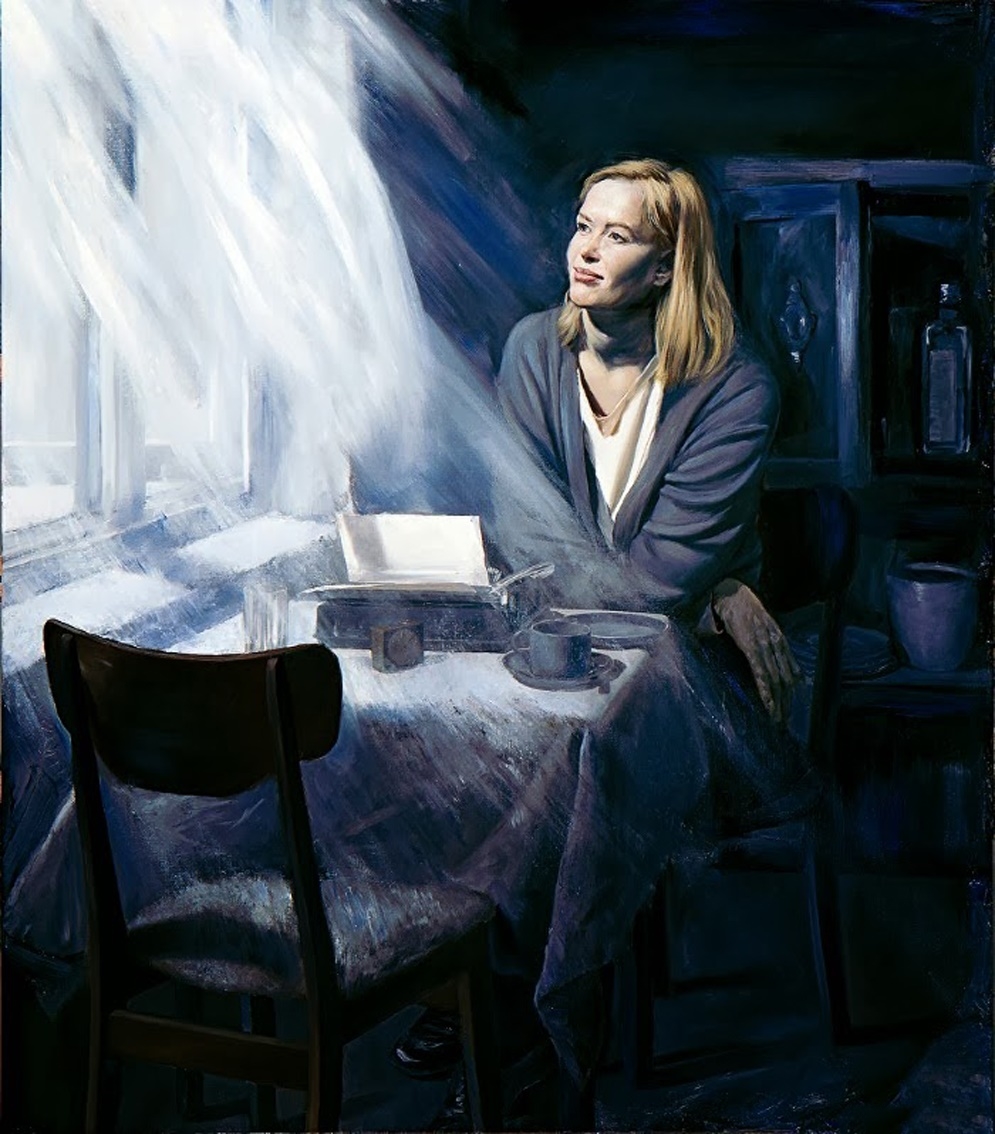
Gabriel Mark Lipper | Figurative painter

Gabriel Mark Lipper: "I love to paint. I’ve been blessed by timing. To be alive right now for this chapter in arts history is a phenomenal gift. Classicism, once pronounced “dead” is reemerging with a new contemporary vitality. The gifts of modernism: color, form, and abstraction, are now being seamlessly integrated with the craftsmanship and techniques of the past".

Gabriel Lipper’s work addresses the growing schism between Self and Other. Many of his paintings appear plastic both in surface and in content.
His emphasis on technique and application of oil paint serve as a classical anchor for his otherwise often vacuous contemporary subjects.
This dualism is borne out of an obsession with craftsmanship and a visceral response to the cannibalistic decadence of the new millennium.

Textual description of firstImageUrl

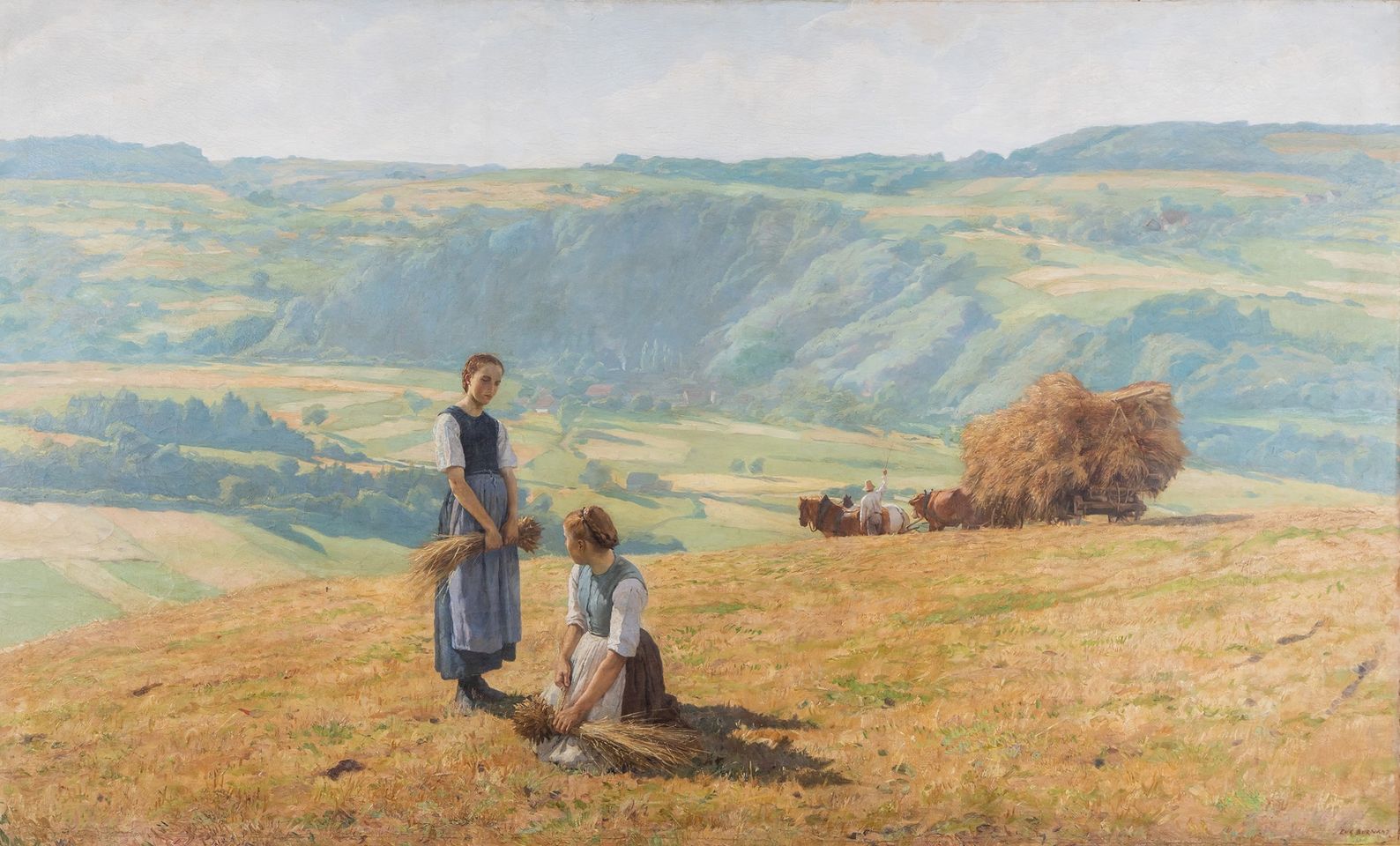
Eugenè Burnand | Naturalist painter

Eugène Burnand (1850-1921) was a prolific Swiss painter and illustrator from Moudon, Switzerland.
Born of prosperous parents who taught him to appreciate art and the countryside, he first trained as an architect but quickly realised his vocation was painting.
He studied art in Geneva and Paris then settled in Versailles.
In the course of his life he travelled widely and lived at various times in Florence, Montpellier, Seppey (Moudon) and Neuchâtel.


Textual description of firstImageUrl

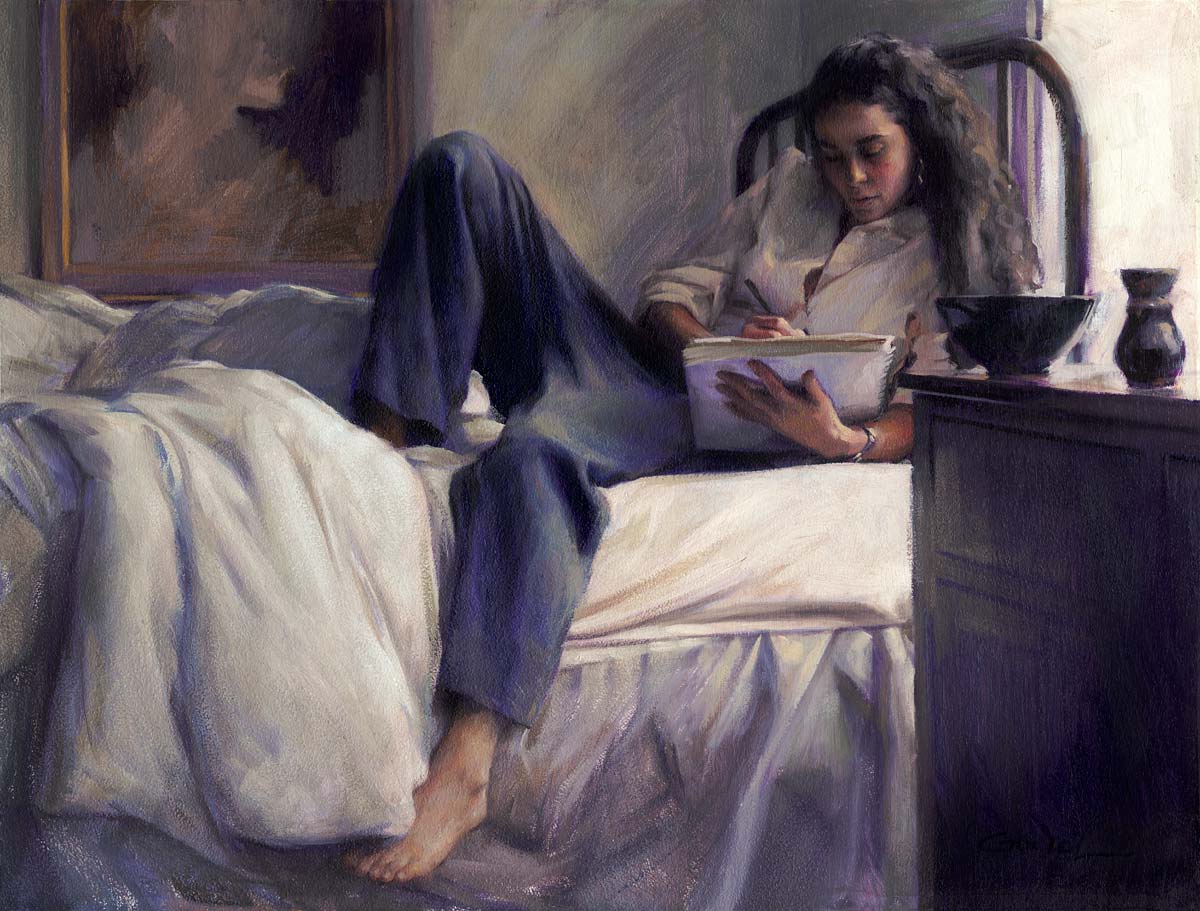
Claudio Bravo Camus | Hyperrealist painter

Claudio Bravo Camus (November 8, 1936 – June 4, 2011) was a Chilean hyperrealist painter.
He was greatly influenced by Renaissance and Baroque artists, as well as Surrealist painters such as Salvador Dalí.
He lived and worked in Tangier, Morocco, beginning in 1972. Bravo also lived in Chile, New York and Spain.
He was known mainly for his paintings of still lifes, portraits and packages, but he had also done drawings, lithographs, engraving and figural bronze sculptures.
Claudio Bravo Camus was born in Valparaíso, Chile.


Textual description of firstImageUrl

Edward Willis Redfield | Impressionist painter

Among the New Hope impressionists painters, Edward Willis Redfield (1869-1965) was the most decorated, winning more awards than any American artist except John Singer Sargent.
Primarily a landscape painter, Redfield was acclaimed as the most "American" artist of the New Hope school because of his vigor and individualism. Redfield favored the technique of painting En Plein Air, that is, outdoors amidst nature.


Textual description of firstImageUrl

Alejandro Decinti, 1973


Chilean-Italian painter Alejandro DeCinti is a painter born in Santiago de Chile.
He obtained his Bachelor's degree in Fine Arts from the University of Chile. Since 2001 he is based in Spain.
He was awarded with the Scholarship for Academic Excellence in the 1991 admission process to Chilean universities.
First prize in the Arte en Vivo competition in 1994 and the Fundación Arte y Autores Contemporáneos postgraduate scholarship in 2001.

Textual description of firstImageUrl

Chilean Art History and Sitemap

Chilean art refers to all kinds of visual art developed in Chile, or by Chileans, from the arrival of the Spanish conquerors to the modern day. It also includes the native pre-Columbian pictorial expression on modern Chilean territory.

Pre-Columbian art

Ceramics were the greatest artistic contribution of the northern peoples. These examples of Diaguita ceramics show this people's fascination with geometric figures.
Prehistoric painting in Chile, also called pre-Columbian Chilean painting, refers to any type of painting or painting technique used to represent objects or people during the period before the Spanish conquest.
Developed prior to the existence of written sources, study of this period is based on the material remains and vestiges of the cultures that developed.

Mario Irarràzabal | La Mano del Desierto / The Hand of the Desert, 1992

Textual description of firstImageUrl

Carolina Landea, 1960 | Moments

Chilean painter Carolina Landea residing in the small coastal village of Cachagua, Chile, Carolina's paintings are stories of life; capturing moments, landscapes and the people who weave a certain magic through the spaces between.
Born in Santiago de Chile, Carolina spent part of her childhood and teen years in Spain where she began her training in the art world as a student of Jose Luis Azparren, a professor at the San Fernando Academy of Madrid.
On her return to Chile, she continued her studies with Reinaldo Villasenor and Edwardo Vilches.


Textual description of firstImageUrl

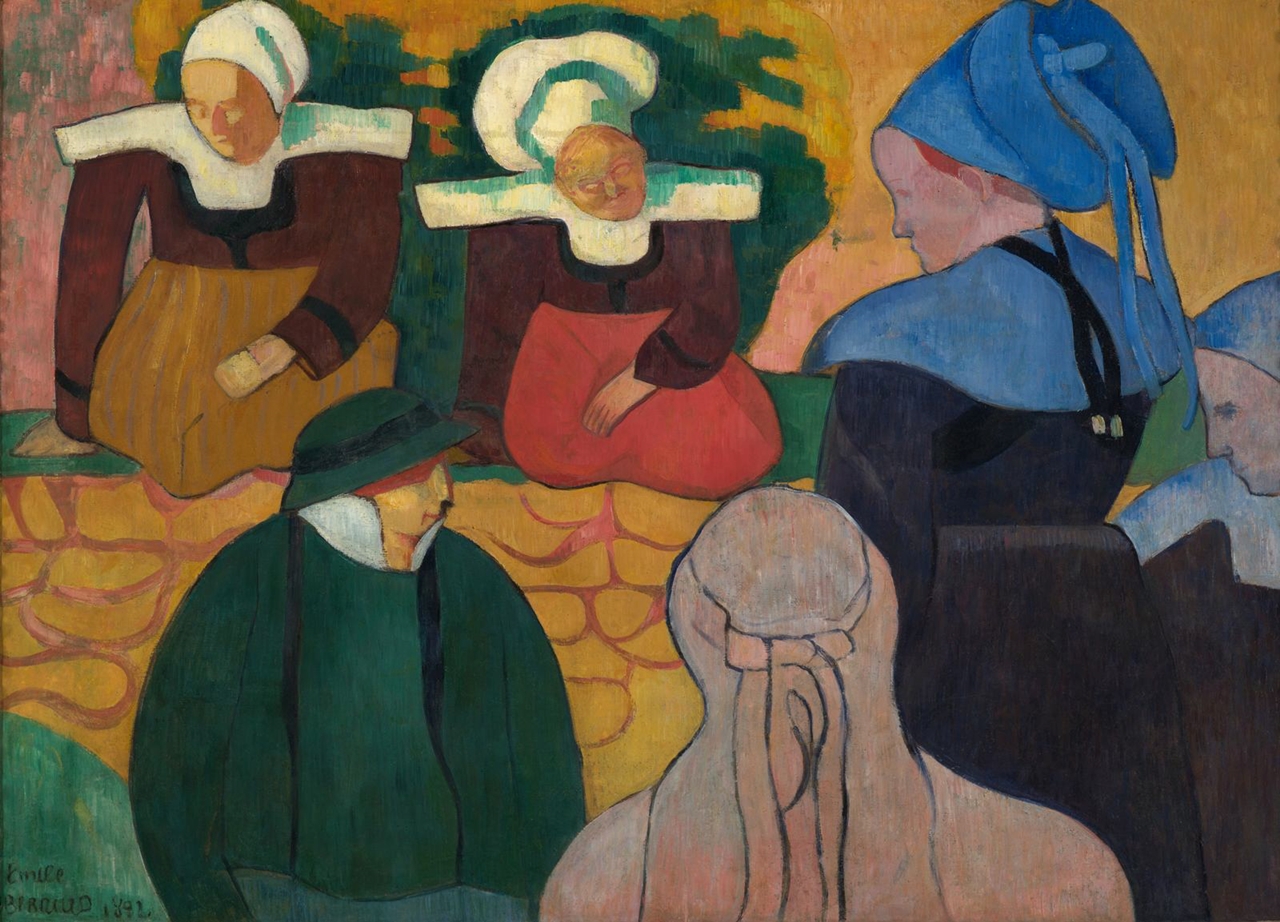
Émile Bernard | Symbolist painter

Émile Bernard (1868-1941) was a French painter known for his involvement in the Cloisonnism movement - a post-Impressionist style defined by flat, bold planes and dark contours - as well as his contributions to Synthetism.

Émile Henri Bernard was born in Lille, France in 1868. As his younger sister was quite sick and required his parent’s full attention, Bernard was raised by his grandmother, who owned a laundry in Lille; she was an early supporter of Bernard’s interest in art. In 1878, Bernard’s family moved to Paris, which allowed him to attend the Collège Sainte-Barbe.

In the early 1880s, Bernard began studying at the École des Arts Décoratifs, experimenting with Impressionism and Pointillism alongside fellow artists Louis Anquetin and Henri de Toulouse-Lautrec. However, Bernard was soon suspended from the school for being overly expressive in his painting; so, instead, Bernard took to exploring Brittney by foot.


Textual description of firstImageUrl

Max Leenhardt (1853-1941)

Michel Maximilien Leenhardt was a French painter, known for landscapes, history paintings and genre scenes.

Biography

His father was a bank manager. In 1872, he entered the "École supérieure des beaux-arts de Montpellier", where he studied with the history and genre painter, Ernest Michel. During his time there, he made a study trip to Austria.
In 1877, together with his cousin, Eugène Burnand, he went to Paris, where he studied briefly at the École Nationale Supérieure des Beaux-Arts with Alexandre Cabanel.


Textual description of firstImageUrl

Gulyás László, 1960 | Le ballerine

Nato a Budapest, il pittore ungherese Laszlo Gulyas si è diplomato all'Accademia di Belle Arti ed Arti Applicate con una laurea in grafica pubblicitaria e dal 1983 al 1987 è stato studente presso il College of Fine Arts, specializzandosi in riproduzione grafica.
Laszlo ha continuato i suoi studi come studente dell'Accademia di Belle Arti tra il 1983-il 1987.
L'artista ha sviluppato il suo mondo individuale di immagini e ha acquisito le tecniche pittoriche dei primi maestri della pittura sotto l'influenza dell'arte universale di Rembrandt.


Textual description of firstImageUrl

Cloisonnisme (1888-1894)

Introduction and History

In French painting, the term "cloisonnism" (after the French for "partition") describes a style of expressionism associated, in particular, with Emile Bernard (1868-1941), Louis Anquetin (1861-1932) and Paul Gauguin (1848-1903).
Based on a two-dimensional pattern, featuring large patches of bright colour enclosed within thick black outlines, in the manner of medieval cloisonné enamelling or stained glass, the word Cloisonnism was first coined in 1888 by the art critic Edouard Dujardin.

Paul Gauguin | Seated breton girl, 1889

One of the lesser known modern art movements, albeit an influential style of Post-Impressionist painting, the distinctive characteristics of Cloisonnism were its areas of pure colour (devoid of most shading or 3-D modelling effects) which gave it a strong two-dimensional appearance.

Émile Bernard

Textual description of firstImageUrl

Paul Cézanne | Corrispondenza con Émile Bernard

Aix, 27 giugno 1904

Mio caro Bernard,
ho ricevuto la vostra del... che ho lasciato in campagna. Se ho tardato a rispondervi, è perché sono soggetto a disturbi cerebrali, che mi impediscono di agire liberamente. Resto sotto l'urto delle sensazioni e, malgrado l'età, inchiodato alla pittura.
Il tempo è bello, ne approfitto per lavorare; bisognerebbe fare dieci buoni studi, e venderli cari, visto che gli amatori ci speculano sopra.

Ieri è arrivata qui una lettera indirizzata a mio figlio, che la signora Brémond [la governante di Cézanne] ritiene sia vostra; gliel'ho inviata in rue Duperré 16, Parigi, IX distretto. Sembra che Vollard abbia dato qualche giorno fa una serata danzante, in cui si è molto gozzovigliato. C'era tutta la giovane scuola, sembra, Maurice Denis, Vuillard eccetera. Si sono incontrati Paul e Joachim Gasquet. Credo che la cosa migliore sia lavorare molto. Voi siete giovane, realizzate e vendete.


Textual description of firstImageUrl

Hua Chen, 1952 | Impressionist Figurative painter

Hua Chen was born in Shanghai, People's Republic of China. Between the years of 1973-1976, Chen earned a Bachelors Degree of Fine Art from the Anhui Teacher's University, Anhui, China.
He then went on to attain a Master of Fine Art Degree in sketching, watercolor and oil painting from the Central Institute of the Fine Arts in Beijing, China.
Chen has earned several titles and awards including Chairman of Anhui Oil Painting Research Association in China and is a member of the Artists Association of China.


Textual description of firstImageUrl

Paul Cézanne | Figure e Lettere

Durante la sua vita il pittore Paul Cézanne ha tenuto molta corrispondenza - oltre 250 lettere, scritte a familiari, amici, colleghi artisti e mercanti, e che abbracciano le principali figure culturali della fine del XIX secolo.

Corrispondenza con Émile Bernard (French Symbolist painter, 1868-1941)

Aix en Provence, 15 aprile 1904

Caro signor Bernard,
"quando riceverete questa mia, avrete molto probabilmente già ricevuto una lettera dal Belgio, o almeno lo spero, indirizzata in rue Boulegon. Sono felice della testimonianza di simpatia artistica che avete voluto gentilmente offrirmi con la vostra lettera.
Permettetemi di ripetere quello che vi dicevo qui: trattare la natura secondo il cilindro, la sfera, il cono, il tutto posto in prospettiva, in modo che ogni lato di un oggetto o di un piano si diriga verso un punto centrale.


Textual description of firstImageUrl

Lord Frederic Leighton | Victorian-era painter

Frederic Leighton, Baron Leighton, also called Sir Frederic Leighton, Baronet (born Dec. 3, 1830, Scarborough, Yorkshire, Eng.-died Jan. 25, 1896, London), academic painter of immense prestige in his own time.
After an education in many European cities, he went to Rome in 1852, where his social talents won him the friendship of (among others) the English novelist William Makepeace Thackeray, the French novelist George Sand, and the English poet Robert Browning.
Leighton’s painting Cimabue’s Madonna, shown at the Royal Academy’s exhibition in 1855, was bought by Queen Victoria.


Textual description of firstImageUrl

Nicolae Vermont | Genre painter


Nicolae Vermont 1866-1932 was one of the masters of Romanian Realist painting and one of the most interesting painters, muralists and draftsmen of his time, as many viewed him as an associate of Stefan Luchian.
He was a prolific and surprisingly innovative artist, with a strong, original style and manner and quite a broad choice of subjects, but he preferred landscapes and still lifes.
Vermont was one of the most interesting and influential voices of his generation, marking and changing the landscape of Romanian painting, as he always tried to offer something more, something new, to challenge rules and themes, to offer the viewer an artistic experience that was strikingly beautiful and shockingly fresh and alive. A great master and a great name.

Textual description of firstImageUrl

Alexander Sheversky | Hyperrealist painter

Striking a harmonic balance between classical composition and modern disposition an original oil painting by Alexander Sheversky speaks to an appreciation for the vocation to contemporary realism.
Each canvas is stately and monumental, extolling the virtues of discipline and emotion styled by the foremost of his teachers - Rembrandt and Vermeer.


Textual description of firstImageUrl

Joe Bowler (1928-2016)

Born in Forest Hills, New York in 1928, Joe began to draw when he was three. His first illustration for a national magazine was published by Cosmopolitan when he was nineteen.
While working as an apprentice at the prestigious Charles E. Cooper Studios, Inc. he had the opportunity to learn the craft from some of the finest artists in the profession.
At Cooper Studio, Joe was inspired by the illustrations he saw being done by the top artists in the field.
During the day Joe’s time was spent cleaning palettes and brushes, matting paintings and running errands.


Textual description of firstImageUrl

James Nelson-Lewis, 1953

Before deciding to dedicate full time to painting, James Nelson Lewis has had years of professional experience as an illustrator, art director, designer, and University art instructor.
His painting is influenced by those experiences and time spent painting on location "en plein air".
The result is a sense of order, balanced by spontaneity and energetic palette knife and brushwork, direct and intuitive a poetic synthesis of simplification and expression.


Textual description of firstImageUrl

Dora Wahlroos | En plein air painter

Anna Dorothée (Dora) Wahlroos (19 December 1870, Pori – 21 March 1947, Kauniainen) was a Finnish painter who participated in the painting movement en plein air towards the end of the 19th century.

Biography

She was born in Pori to province land surveyor Johan Henrik Wahlroos and Dorothée Augusta Henrietta Fehn.
She studied at the Turku Drawing School in 1886–1888 and under Victor Westerholm in 1889–1890. She was one of the artists who joined Westerholm in the artists colony at Önningeby on the island of Åland.
She was accepted to the Finnish Art Society in 1890–1891, where her class was taught by Gunnar Berndtson. In the Fall of 1890 she got engaged to sculptor Emil Wikström.
The two went to study together at Paris in 1891–1892.


Textual description of firstImageUrl

Carlton Alfred Smith | Genre painter

Carlton Alfred Smith, RBA RI ROI (1853-1946) was a British watercolourist, oil painter and genre artist who often made images of cottage interiors showing domestic life and figures in cottage interiors in a romantic manner towards the end of the nineteenth century.
He was the son of a steel engraver and spent some of his early years being educated in France.
The artist also studied at the Slade School of Art, winning gold and silver medals.
He became one of the most technically accomplished watercolorists of the late Victorian period.


Textual description of firstImageUrl

Der Blaue Reiter (The Blue Rider)

The Blue Rider was a German Expressionist movement that was established in December 1911 by Kandinsky, Franz Marc and Gabriele Münter.
Painters Kandinsky and Marc worked on an almanac in which they showed their artistic conceptions. The title of the almanac, which then became the name of the group, Der Blaue Reiter - The Blue Rider, came from the painting by Kandinsky.
His Blaue Reiter Blue Rider was an adventure in the simplification and stylization of forms and the connection between music and painting.

Wassily Kandinsky | The Blue Rider

Textual description of firstImageUrl

Marianne Stokes | Victorian painter

Marianne Stokes (1855-1927), born Marianne Preindlsberger, was an Austrian painter. She settled in England after her marriage to Adrian Scott Stokes (1854-1935), the landscape painter, whom she had met in Pont-Aven. Stokes was considered one of the leading women artists in Victorian England.

Biography

Preindlsberger was born in Graz, Styria. She first studied in Munich under Lindenschmit, and having been awarded a scholarship for her first picture, Muttergluck, she worked in France under Pascal Adolphe Jean Dagnan-Bouveret (1852–1929), Colin and Gustave Courtois (1853-1923).


Textual description of firstImageUrl

Maurice Denis | Les Nabis Group

Even today Maurice Denis' (1870-1943) place in the history of art remains unspecified. Known as the "Nabi of the beautiful icons", he is celebrated alongside Vuillard and Bonnard as one of the most importan Nabi painters, a founder of the movement and its brilliant theoretician.
Everyone remembers his famous dictum of 1890 when he was twenty years old and unknown. "Remember that a painting – before being a battle horse, an anecdote of some sort is essentially a flat surface covered with colours, put together in a certain order".


Textual description of firstImageUrl

Wassily Kandinsky | VII - Teoria della Pittura

Lo spirituale nell'arte, 1910
Seconda parte: La Pittura

Dalla natura della nostra armonia si deduce che oggi non si può costruire una teoria compiuta, creare un basso continuo in pittura. Questi tentativi condurrebbero in pratica allo stesso risultato dei cucchiaini di Leonardo, che citavamo prima. Ma sarebbe imprudente affermare che in pittura non esisteranno mai regole fisse, princìpi paragonabili al basso continuo, e che qualsiasi regola condurrebbe inevitabilmente all'accademismo.

Anche la musica ha una sua grammatica: una grammatica che si modifica nel tempo, come ogni cosa vivente, ma che è sempre stata utile, come una specie di vocabolario.

Wassily Kandinsky | Pond in the park

Textual description of firstImageUrl

Wassily Kandinsky | VIII - L'Opera d'Arte e l'Artista, 1910

Lo spirituale nell'arte, 1910
Seconda parte: La Pittura

La vera opera d'arte nasce "dall'artista" in modo misterioso, enigmatico, mistico.
Staccandosi da lui assume una sua personalità, e diviene un soggetto indipendente con un suo respiro spirituale e una sua vita concreta.
Diventa un aspetto dell'essere. Non è dunque un fenomeno casuale, una presenza anche spiritualmente indifferente, ma ha come ogni essere energie creative, attive.

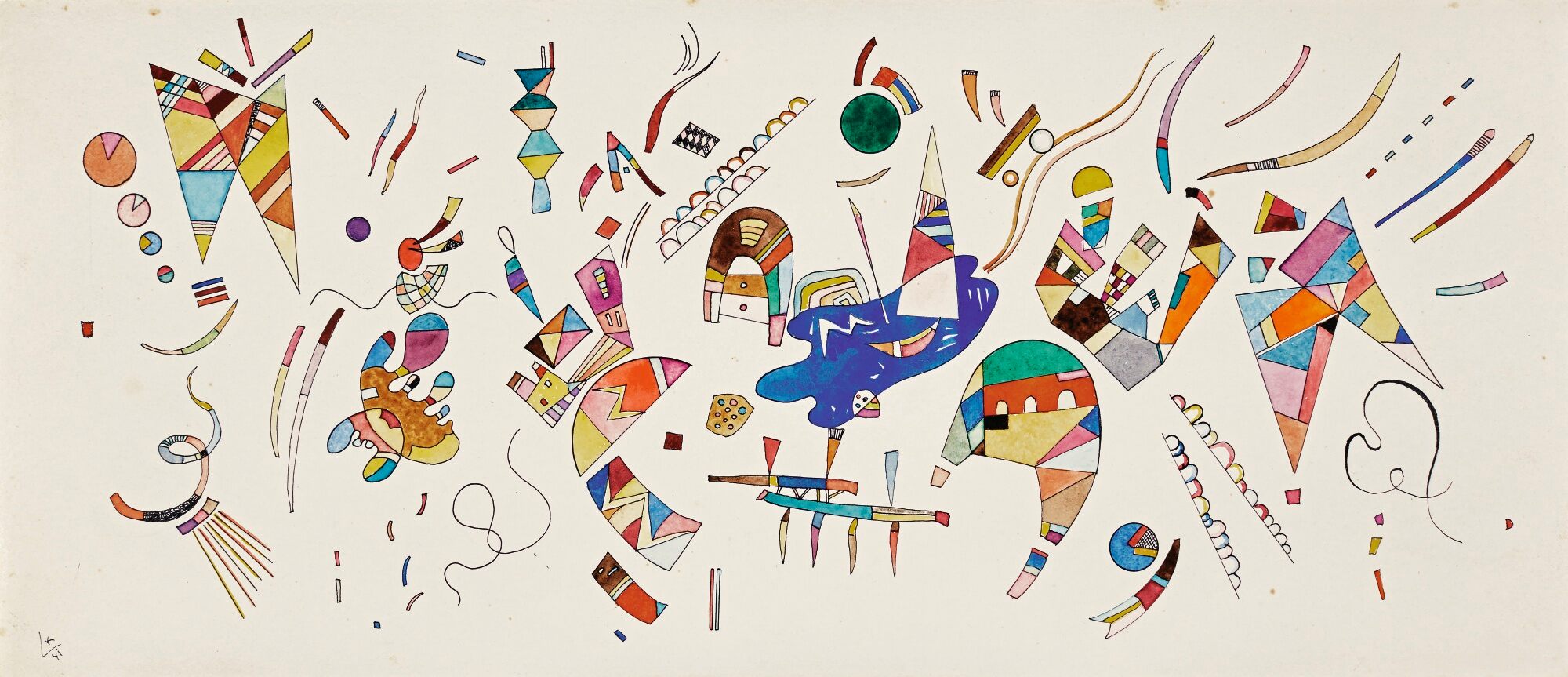
Wassily Kandinsky | Delicate tension, 1923

Textual description of firstImageUrl

Maria Wiik (1853-1928)

Maria Catharina Wiik was a Finnish painter.
She worked principally with still life, genre, landscape paintings and portraits. Wiik was born in Helsinki.
She was the daughter of architect Erik Johan Wik (or Wiik) (1804-1876) and his wife Gustava Fredrika Meyer.
She was born and grew up in Brunnsparken and attended the Swedish language school Svenska fruntimmersskolan in Helsingfors. She then studied drawing with art professor Adolf von Becker.
Encouraged by her family, she studied art during 1874-1875 at the Academy of Fine Arts in Helsinki.


Textual description of firstImageUrl

Hovsep Pushman | Orientalist painter

Hovsep Pushman [Armenian: Յովսէփ Փուշման] (1877-1966) was an American artist of Armenian background. He was known for his contemplative still lifes and sensitive portraits of women, often in exotic dress.
He was most closely associated during his lifetime with the Grand Central Art Galleries, which represented him from its opening in 1922 until his death in 1966.

Life

Hovsep Pushman was born and grew up in the town of Dikranagerd in the Ottoman Empire, where his family, originally "Pushmanian", was in the carpet business. Pushman showed artistic ability early, and at age 11 was the youngest student ever admitted to Istanbul's Imperial School of Fine Arts.
In 1896, Pushman's family emigrated to Chicago, where he studied Chinese culture, immersing himself in Asian art, and began to teach at the age of 17. He then moved to Paris and studied at the Académie Julian under Jules Joseph Lefebvre, Tony Robert-Fleury and Adolphe Déchenaud.


Textual description of firstImageUrl

Wassily Kandinsky | VIII - Art and Artists

Concerning the Spiritual in Art, 1910
Part II: About painting

In an obscure and puzzling way, the artist develops a work of art. As it gains a life of its own, it becomes an entity, an independent spiritual life, which as a being, leads the life of material realism.
It is, therefore, not simply a phenomenon created casually and Inconsequentially indifferent to spiritual life.
Instead as a living being, it possesses creative active forces. It lives, has power, and actively forms the above-mentioned spiritual atmosphere.
From an innermost point of view, the question finally should be answered as to whether creation is strong or weak. If too weak in its form, it is impotent to cause any kind of spiritual vibration.

Wassily Kandinsky | Succession, 1935

Textual description of firstImageUrl

André Lhote | Pittore Cubista

André Lhote (1885-1962) was a French Cubist painter of figure subjects, portraits, landscapes and still life. He was also very active and influential as a teacher and writer on art.

Early life and education

Lhote was born 5 July 1885 in Bordeaux, France and learned wood carving and sculpture from the age of 12, when his father apprenticed him to a local furniture maker to be trained as a sculptor in wood.
He enrolled at the École des Beaux-Arts in Bordeaux in 1898 and studied decorative sculpture until 1904.
Whilst there, he began to paint in his spare time and he left home in 1905, moving into his own studio to devote himself to painting.
He was influenced by Gauguin and Cézanne and held his first one-man exhibition at the Galerie Druet in 1910, four years after he had moved to Paris.


Textual description of firstImageUrl

Paul Verlaine | Poichè l'alba si accende.. / Puisque l'aube grandit..

Poiché l'alba si accende, ed ecco l'aurora,
poiché, dopo avermi a lungo fuggito, la speranza consente
a ritornare a me che la chiamo e l'imploro,
poiché questa felicità consente ad esser mia,

facciamola finita coi pensieri funesti,
basta con i cattivi sogni, ah! Soprattutto
basta con l'ironia e le labbra strette
e parole in cui uno spirito senz'anima trionfava.

Lionel Noel Royer (French painter, 1852-1926) | Jeune Femme en Bord de Mer, 1928

Textual description of firstImageUrl

Salvatore Quasimodo | Anno Domini MCMXLVII

Avete finito di battere i tamburi
a cadenza di morte su tutti gli orizzonti
dietro le bare strette alle bandiere,
di rendere piaghe e lacrime a pietà
nelle città distrutte, rovina su rovina.

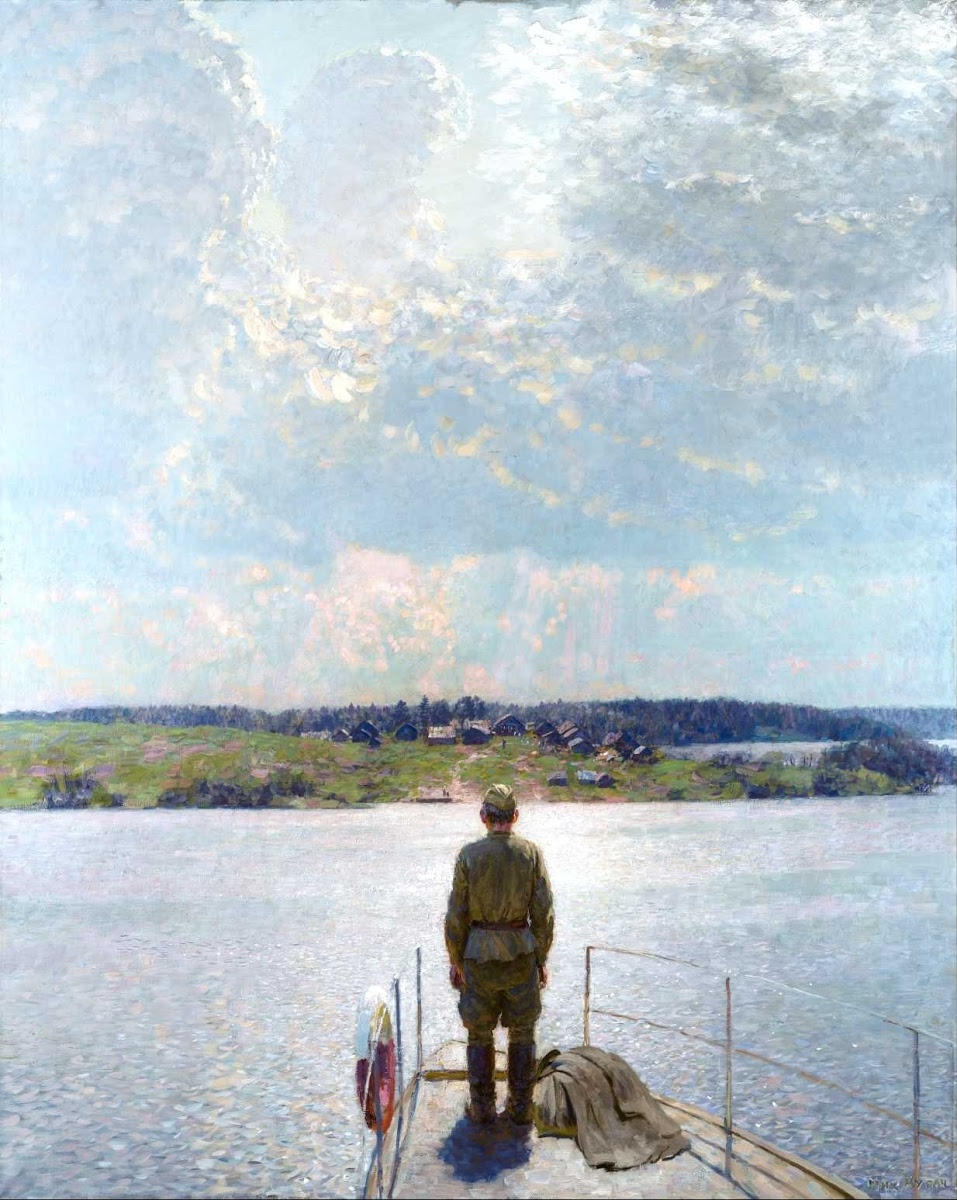
Mikhail Y. Kugach / Михаил Юрьевич Кугач (Russian painter, 1939) | The Return

Textual description of firstImageUrl

Sir George Clausen RA (1852-1944)

Landscape and mural painter in oil and watercolour, etcher, mezzotinter and occasional lithographer.
Born April 1852 in London, son of a Danish interior decorator.
1867-73 apprenticed in the drawing office of Messrs Trollope - a London firm of decorators - attending evening classes at the National Art Training Schools, South Kensington, London.
Worked in the studio of Edwin Long, classical painter (1829-91), visited Holland and Belgium in 1878.


Textual description of firstImageUrl

Bruno Cerboni, 1948

Bruno Cerboni is an Italian artist who uses third millennium techniques and Artificial Intelligence to create his works.
Cerboni was born in Castel del Piano (GR) Italy.
Graduated in Engineering at "La Sapienza" - University of Rome, he has a 30-year career as manager of large companies and entrepreneur.
He has always been committed to the themes of innovation and information technology, and has been awarded the Italian National Innovation Award and the Red Herring 100 Europe.


Textual description of firstImageUrl

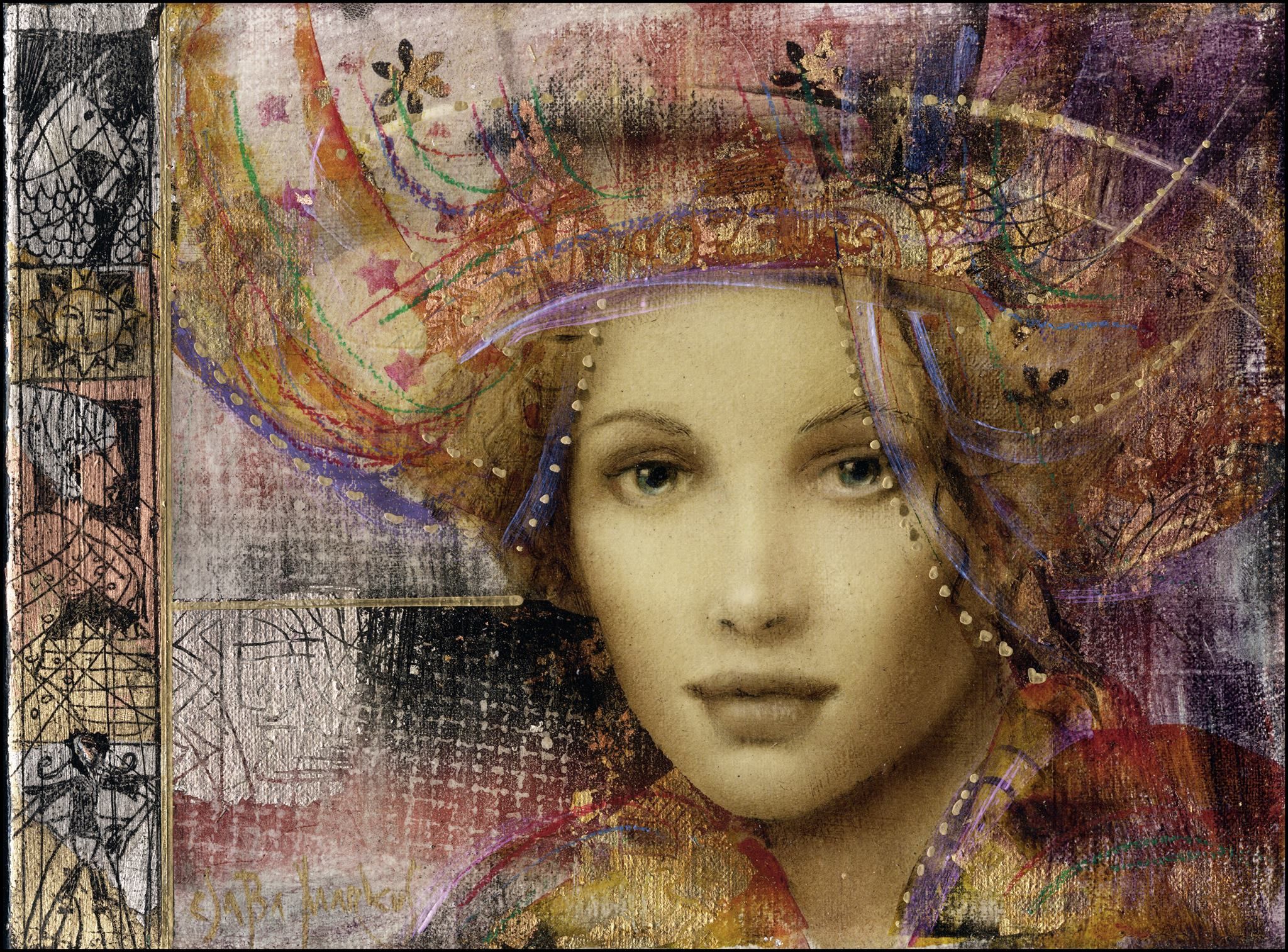
Csaba Markus, 1953

Csaba Markus is a Hungarian-American artist, painter, sculptor and publisher. As an artist, he primarily works in the field of printmaking, with a particular focus on etching and serigraphy.
His work also includes oil painting, drawing, glass art, photography and sculpture. Markus's painting titled "Pure Love" has been selected as one of the World's 10 most sensual paintings by Toronto Sun newspaper.

Life and work

Markus was born in Budapest, Hungary.
His mother is Szőllős Erzsébet and father Károly Márkus. His childhood in Hungary, where he frequented museums, is an influence on his work.
He is also influenced by avant-garde art and abstraction.
Markus began his career as a sculptor. At the age of fourteen, he and his work were featured on international public television. He became increasingly frustrated with teachers and the confines of communism, realizing his Renaissance-inspired emphasis on the individual conflicted with Hungarian communist beliefs.


Textual description of firstImageUrl

Gustave Jacquet | Portrait / Genre painter

During the 19th century, particularly in France, people developed a vivid fascination with the past and paintings of the bygone eras were in demand.
Jacquet specialised in painting figures, portraits and genre subjects in which he evoked the elegance of the 16th, 17th and 18th centuries. These works were exquisitely painted with every attention paid to detail; his use of colour is rich and vibrant and his rendition of luxurious cloth is outstanding.


Textual description of firstImageUrl

Alfred Eberling (1872-1951)

Alfred Rudolfovich Eberling, was a successful painter and photographer in the early 20th century.
A pupil of Ilya Repin, he never deviated from realism (in the broad sense of the word) and left a number of striking works executed in the painterly two-dimensional manner typical of that time.
Eberling’s portraits, entirely in the spirit of salon art in terms of imagery and not devoid of a chocolate-box prettiness, were always marked by refined, often unexpected combinations of colors.

Alfred Eberling | Portrait of Ballerina Tamara Karsavina, 1911

Textual description of firstImageUrl

Charles William Wyllie (1853-1923)

Charles William Wyllie was a British painter of landscape and marinescape.
Born in London he was the son of William Morison Wyllie and brother of William Lionel Wyllie (1851-1931).
While his brother William established a strong reputation as a marine painter and etcher, Charles moved away from straightforward representations of the British coastline and developed an interest in painting allegorical and mythological subjects beside the sea.


Textual description of firstImageUrl

Edgar Allan Poe | To Helen / Ad Elena, 1848

Ti vidi una volta, una sola volta - anni fa:
non voglio dir quanti – non molti, tuttavia.
Era notte, di Luglio; e dalla grande luna piena
che, come la tua anima, ricercava, elevandosi,
un suo erto sentiero per l'arco del cielo,
piovve un serico argenteo velo di luce,
con sé recando requie, grave afa e sopore,
sui sollevati visi d'almeno mille rose
che s'affollavano in un incantato giardino,
che nessun vento – se non in punta di piedi - osava agitare.

Charles William Wyllie, RBA (British, 1859-1923) The Backwater

Textual description of firstImageUrl

Titian | The Venus of Urbino, 1538 | Uffizi Gallery

Toward the beginning of his career Titian had brought to completion Giorgione's unfinished canvas of Venus asleep in a landscape; some twenty-five years later he adapted the central motif of the recumbent figure to a new setting and transformed its meaning by domesticating that pastoral deity. Giorgione's Venus - withdrawn in a private dream of love that we can share, to a degree, only by an effort of the imagination - has been brought indoors; fully awake now and aware of her audience, she displays her charms in a deliberately public proclamation of love.


Textual description of firstImageUrl

Michail Lermontov | Il Demone, 1829 | Seconda parte

Capitolo I

"Padre, padre non minacciarmi più,
la tua Tamara non rimproverare;
vedi che piango, vedi queste lacrime
che già non sono più le prime. Invano
s'affollano, venuti da lontano,
i pretendenti per cercarmi in sposa...
Non sono poche in Gruzia le fanciulle!
Ma io non sarò sposa di nessuno!...

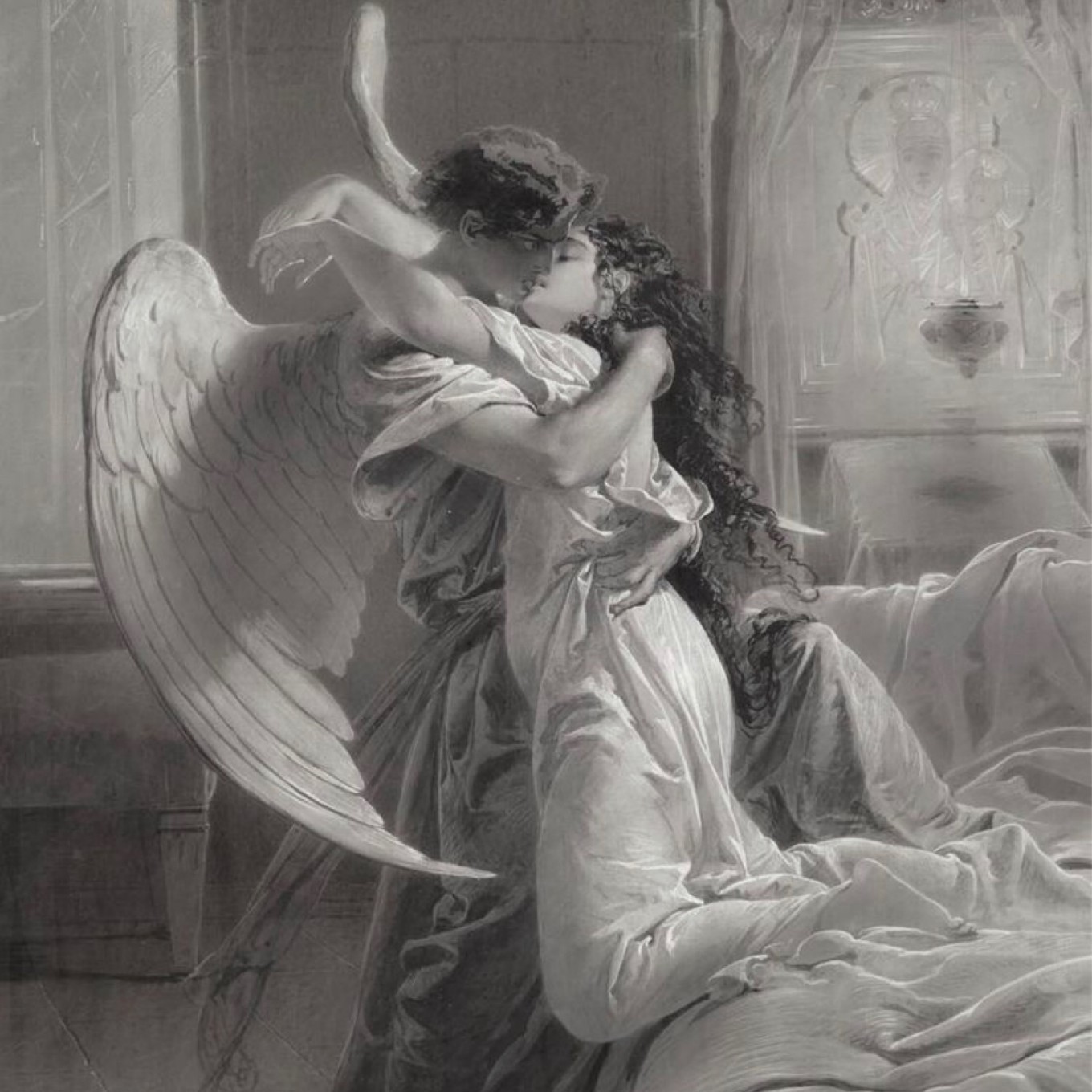
Mihaly von Zichy (1827-1906) Tamara and Demon

Textual description of firstImageUrl

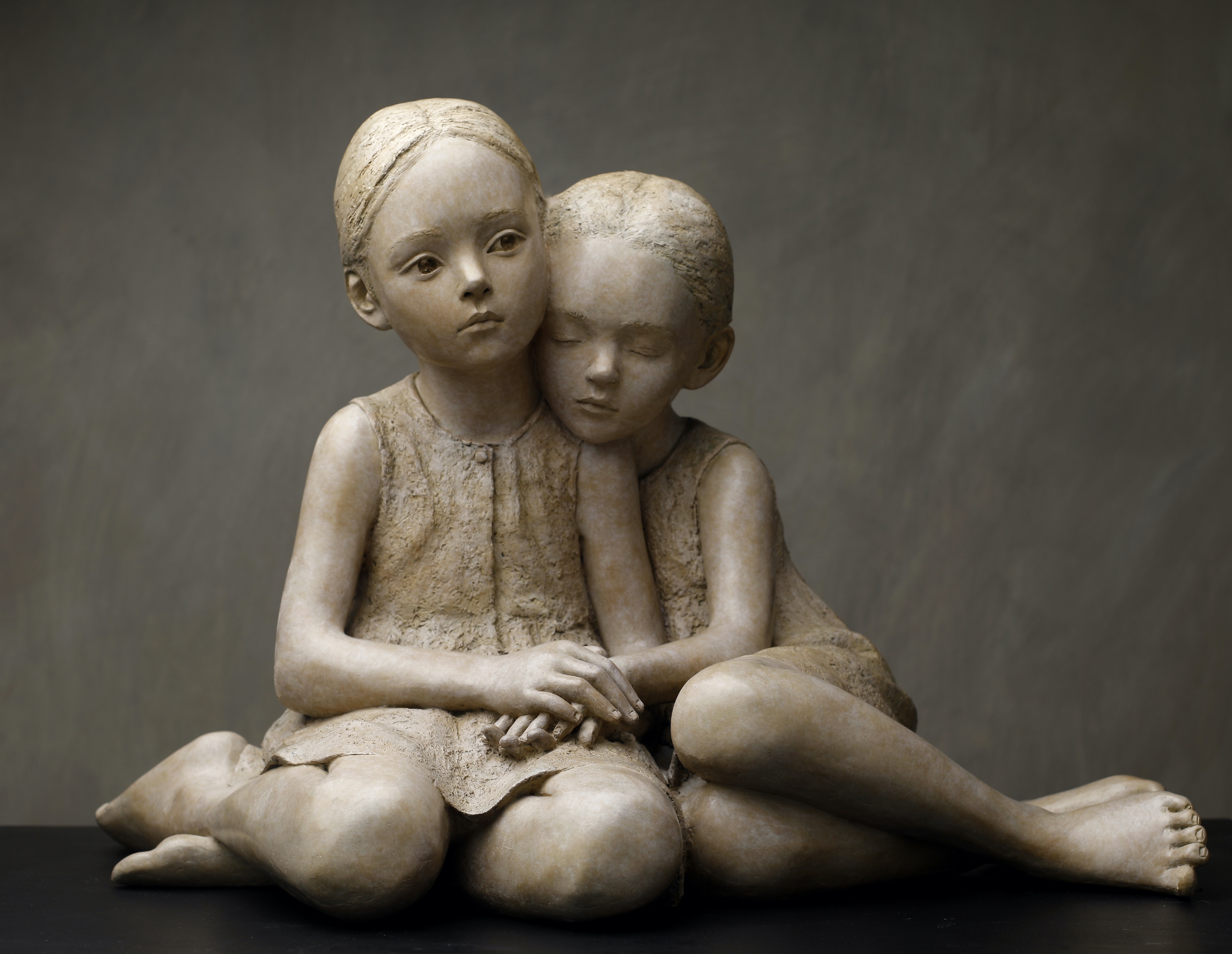
Berit Hildre, 1964 | Figurative sculptor

Berit Hildre is a self-taught artist, born in Aalesund, in Norway.
For Berit Hildre, the vocation is late, it is born from his meeting with the painter Louis Tresseras with whom she lives today in France.

- "I'm a Norwegian. Twenty years ago, I left my country to travel. I met Louis on Crete. I began to model the earth, just to try. I continued for pleasure" - Bérit
This exceptional sculptor offers us all the innocence of childhood.
Her delicate and graceful little girls and girls embody the state of grace that is childhood, but also its fragility.


Textual description of firstImageUrl

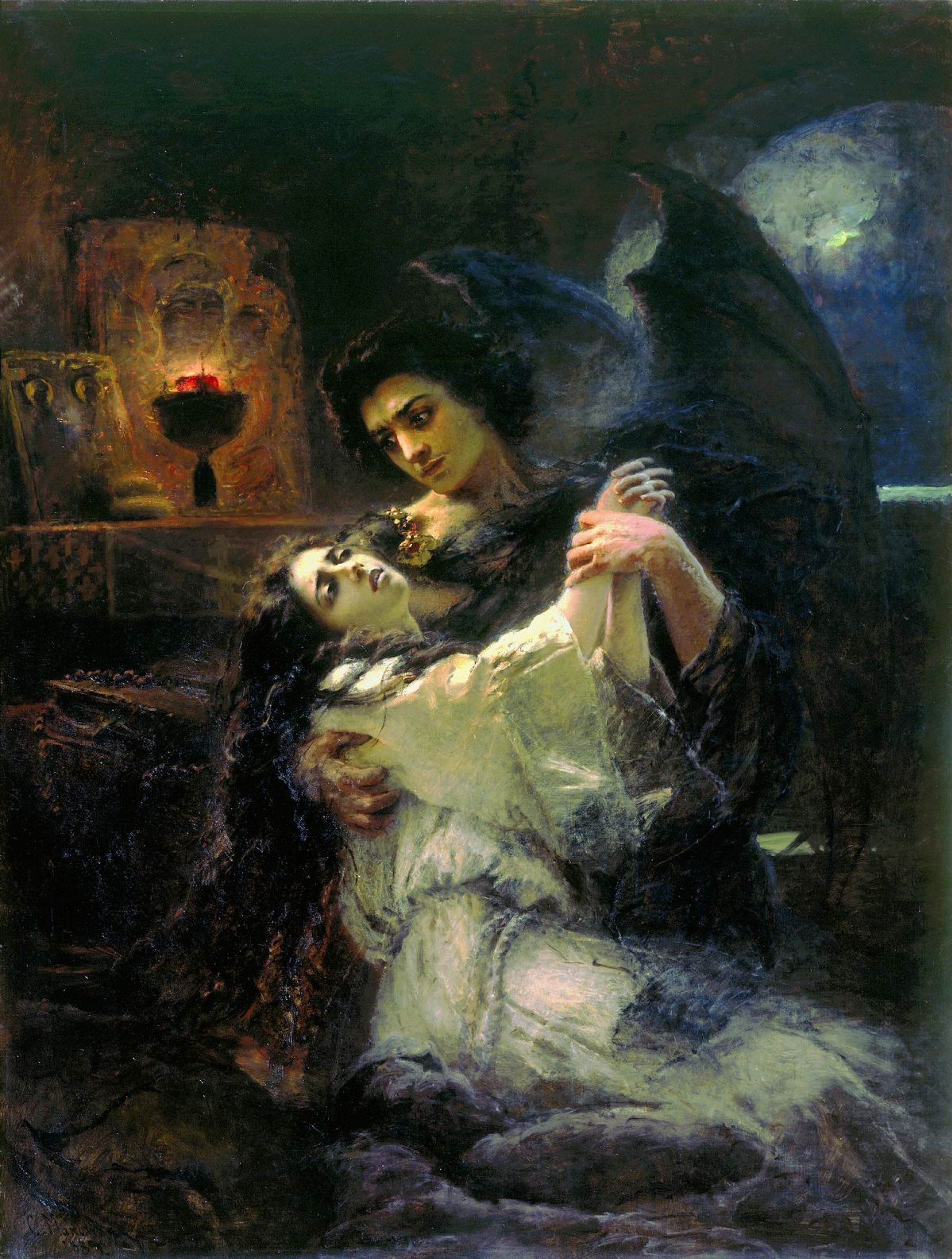
Mikhail Lermontov | Demon, 1829 | Chapter I

Demon / Демон is a poem by Mikhail Lermontov, written in several versions in the years 1829-1839.
It is considered a masterpiece of European Romantic poetry.
Lermontov began work on the poem when he was just 14 or 15, but completed it only during his Caucasus exile. Lermontov wrote six major variations of the poem, and the final version was not published until 1842, after his death.
The poem is set in Lermontov's beloved Caucasus Mountains. It opens with the eponymous protagonist wandering the earth, hopeless and troubled. He dwells in infinite isolation, his immortality and unlimited power a worthless burden. Then he spies the beautiful Georgian Princess Tamara, dancing for her wedding, and in the desert of his soul wells an indescribable emotion.
The Demon, acting as a brutal and powerful tyrant, destroys his rival: at his instigation, robbers come to despoil the wedding and kill Tamara's betrothed. The Demon courts Tamara, and Tamara knows fear, yet in him she sees not a demon nor an angel but a tortured soul.
Eventually she yields to his embrace, but his kiss is fatal.
And though she is taken to Heaven, the Demon is left again "Alone in all the universe, Abandoned, without love or hope!..."

Tamara and the Demon | Konstantin Makovsky, 1889

Textual description of firstImageUrl

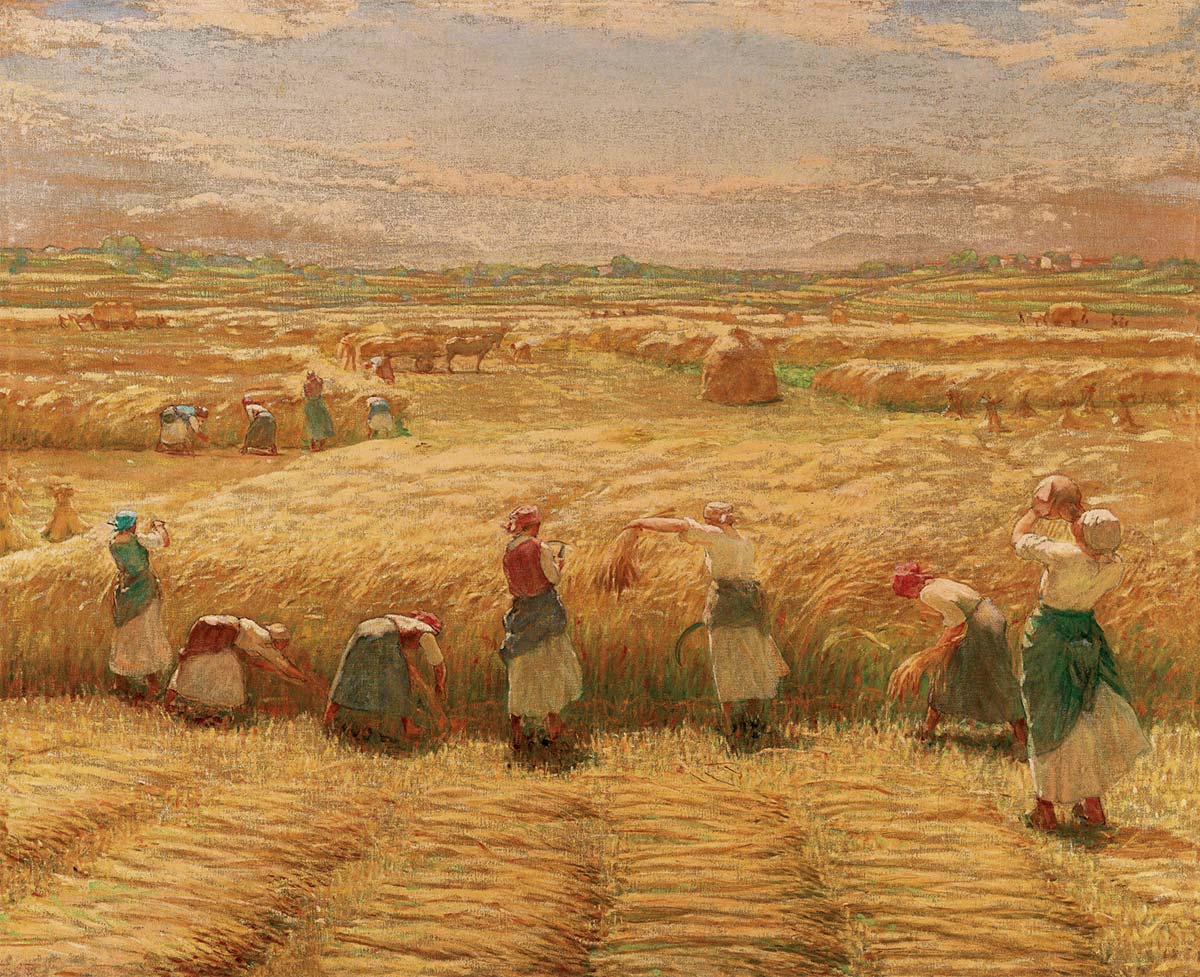
Salvatore Quasimodo | Lament for the South / Lamento per il Sud

La luna rossa, il vento, il tuo colore
di donna del Nord, la distesa di neve...
Il mio cuore è ormai su queste praterie,
in queste acque annuvolate dalle nebbie.

Ho dimenticato il mare, la grave
conchiglia soffiata dai pastori siciliani,
le cantilene dei carri lungo le strade
dove il carrubo trema nel fumo delle stoppie,

Baldassarre Longoni (1876-1956) | Terre dorate d'Italia, Mietitura, 1940

Textual description of firstImageUrl

Wassily Kandinsky | VII - Painting Theory

Concerning the Spiritual in Art, 1910
Part II: About painting

From the nature of modern harmony, it results that never has there been a time when it was more difficult than it is today to formulate a complete theory, or to lay down a firm artistic basis.
All attempts to do so would have one result, namely, that already cited in the case of Leonardo and his system of little spoons. It would, however, be precipitate to say that there are no basic principles nor firm rules in painting, or that a search for them leads inevitably to academism. Even music has a grammar, which, although modified from time to time, is of continual help and value as a kind of dictionary.


Textual description of firstImageUrl

Pablo Neruda | Per tanto amore la mia vita.. / De tanto amor mi vida..

Per tanto amore la mia vita si tinse di viola
e andai di rotta in rotta come gli uccelli ciechi
fino a raggiungere la tua finestra, amica mia:
tu sentisti un rumore di cuore infranto

e lì dalle tenebre mi sollevai al tuo petto,
senz'essere e senza sapere andai alla torre del frumento,
sorsi per vivere tra le tue mani,
mi sollevai dal mare alla tua gioia.

Leonid Afremov (1955-2019) | Romantic Impressionist painter

Textual description of firstImageUrl

Walt Whitman | Non lasciare che finisca il giorno senza essere cresciuto un po'..

Non lasciare che finisca il giorno senza essere cresciuto un po',
senza essere stato felice, senza avere aumentato i tuoi sogni.
Non lasciarti vincere dallo scoraggiamento.
Non permettere che nessuno ti tolga il diritto ad esprimerti,
che e' quasi un dovere.
Non lasciar cadere la tensione di fare della tua vita
qualcosa di straordinario.

Jon Bøe Paulsen, 1958 | The Blue Hour

Textual description of firstImageUrl

Martha Walter (1875-1976) | Impressionist painter

Martha Walter was an American impressionist painter.

Education

A Philadelphia native, Walter attended Girls High School.
She studied art at the Pennsylvania Museum and School of Industrial Art (now the University of the Arts College of Art and Design) from 1895-98 and at the Pennsylvania Academy of the Fine Arts, Philadelphia.
She was taught by William Merritt Chase. She won the school's Toppan Prize (1902) and Cresson Traveling Scholarship (1908).
In 1909 she also won the school's Mary Smith Prize for the best painting by a resident female artist.


Textual description of firstImageUrl

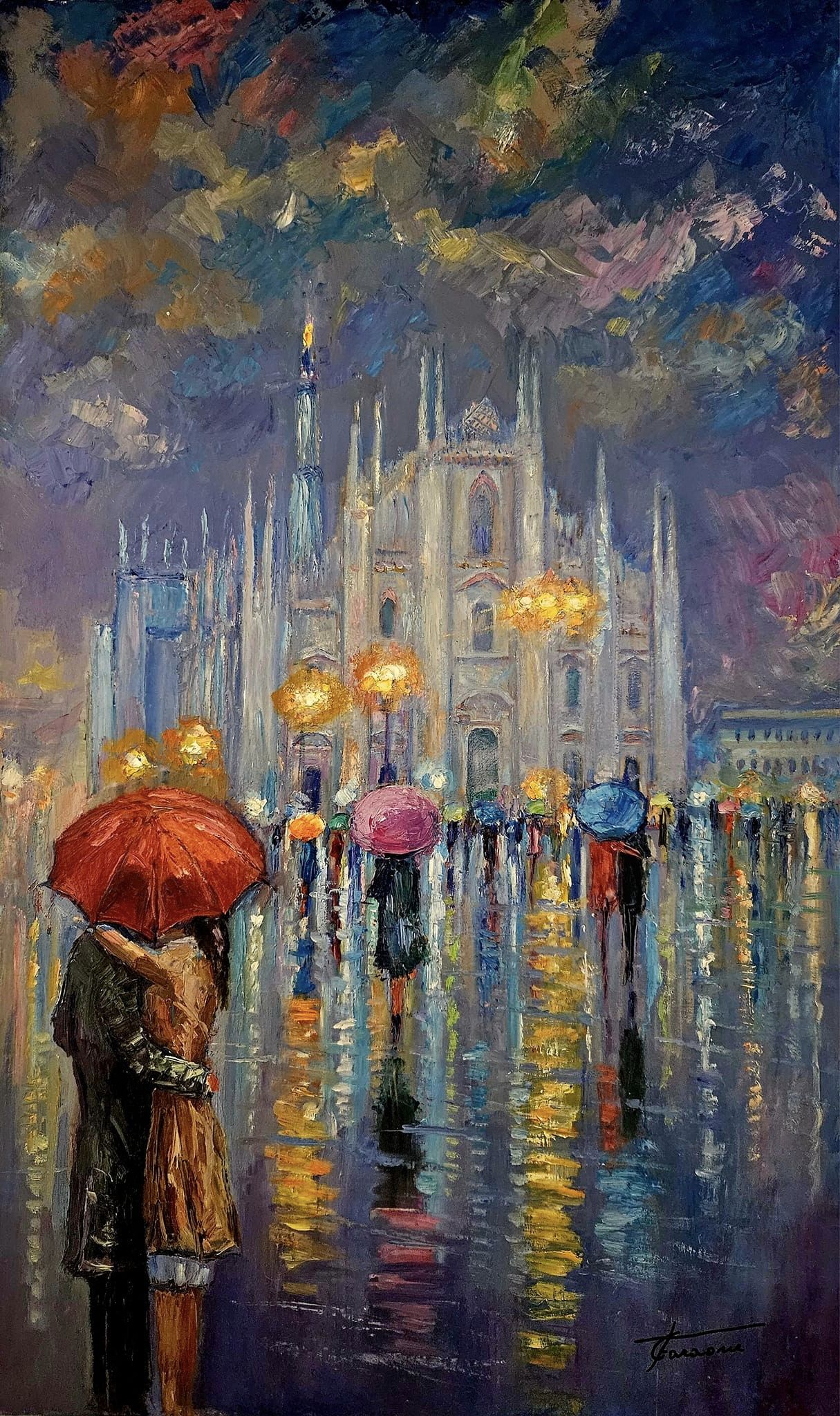
Giuseppe Faraone, 1954 | Impressionist painter

Born in Picerno (Potenza), Giuseppe Faraone attended the Art School of Potenza, before moving to San Donato Milanese on the outskirts of Milan, where he still lives and works.
Here he started his relentless pursuit of a variety of drawing techniques and the use of colors.
He understands the art of painting, having perfected his talent in Italy and abroad.
Faraone fined tuned his skills in the Impressionist style by painting in the same places where French Impressionism was born.